As you can imagine, the Academic World at the time roared with laughter.
But never forget!
The number of Views that The Shakespeare Code has enjoyed to this date stands at:
397, 520!!!
But when our Chief Agent, in 1971, submitted his Finals Long Essay to the English Faculty at Cambridge University he was equally derided.
In fact he was instructed by his Supervisor NOT to submit it – an injunction Stewart ignored.
He had no other essauy to submit!
And what was so shocking? Stewart’s assertion that, from his study of the Sonnets, William Shakespeare was Bi-Sexual!
THIS IS NOW A TRUTH UNIVERSALLY ACKNOWLEDGED!!!
(almost)
The Code, as Brothers and Sisters well know, is a great admirer of John Dover Wilson – who sadly came to the Sonnets too late in life.
He famously said that you needed more than one lifetime to understand them…
Dover Wilson argued that Shakespeare was intimately tied up with the Earl of Southampton’s circle of friends – and many of his plays were a debate with Southampton and Essex about the wisdom (or otherwise) of their plot to overthrow Queen Elizabeth.
Sadly he was mocked and derided by his nemesis W.W. Greg….
…….a textual scholar who hated real life to be brought into Shakespeare Studies – an attitude that was still around during our Chief Agent’s time at Cambridge University.
Greg described Dover Wilson’s ideas about Shakespeare as “the careerings of a not too captive balloon in a high wind”.
THE HORROR IS DOVER WILSON LISTENED TO HIM!
He even went as far to withdraw his ideas – saying he no longer believed in them.
BUT HE WAS RIGHT!
Dover Wilson believed that ‘Macbeth’ was first performed in Scotland in 1599 in an attempt to involve King James VI in the Essex Plot. The Code believes this is true – and has been developing these ideas on this blog and in a film script.
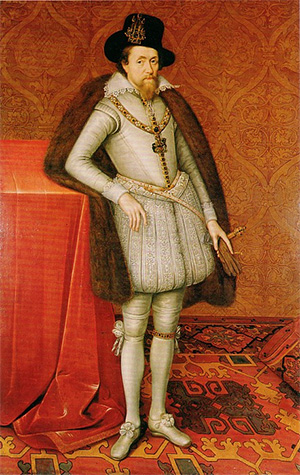
We believe that Shakespeare fled to Scotland after the Essex Plot failed – and became an intimate friend of King James VI.
The two men influenced each others thinking.
For example, both wrote poems comparing their male lovers to the fabulous Phoenix Bird…
The Code also believes that Shakespeare was up in Scotland earlier – in 1594 – as part of the English party to celebrate the baptism of Prince Henry at Stirling Castle.
The Earl of Sussex represented Queen Elizabeth.
He was part of the Southampton-Essex circle – and his men had performed ‘Titus Andronicus’ at the Rose Theatre earlier that year.
Originally King James was to include a live lion in the masque – they had one in Stirling Castle! – but dropped the idea because he thought the women would be frightened….Shakespeare, of course, recycles this in ‘A Midsummer Night’s Dream’….
‘You ladies you whose gentle hearts do fear
The smallest monstous mouse that creps
May now perchance to quake and tremble here
While lion rough in wildest rage doth roar
Then know that I as Snug the joiner am…’
King James had built a replica of the Temple of Solomon at Stirling Castle….
….together with a Vault.
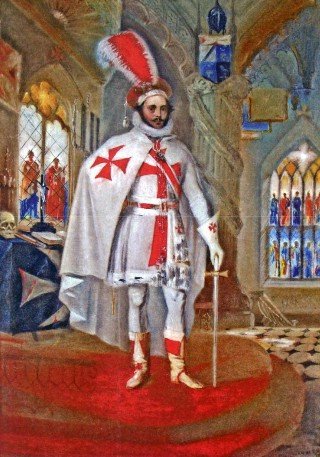
He staged pageants where the Templar Knights defeated the Turks – and wandered round dressed as a Templar Knight….
Recent research suggests that Freemasonry has its roots in Scotland – and was developed both by King James VI and his Master of Works, William Schaw……
…….who is known as ‘The Father of Freemasonry’. He designed the Temple at Stirling Castle.
The Temple of Solomon – both before its completion and after its destruction – is the setting for many Masonic rites – as is the Temple’s ‘Sacred Vault’.
Were Masonic Rites performed there in 1594? And was Shakespeare in attendance?
The Code will try to answer these questions – but in a ‘synchronistic’ way….
When Your Cat was on her Rehabilitation Programme she became very attracted to Muscular Christianity – and started to become a bit of a Church Cat.
Among the churches she visited was St. Mary le Strand……
……designed in 1714 by a young Scottish Freemason – and Jacobite! – called James Gibbs……
…….known to friends as ‘Signor Gibbi’.
Your Cat fell in love with the Church – and dragged the Code’s Chief Agent along with her – and he fell in love with it too. So much so that he became a member of the Parish Church Council there – and a Trustee!
Stewart became fascinated by the Church’s history – particularly a symbol in the apse….
He had a ‘hunch’ about it – as he does with most of his research – and followed it up.
The result is the Posts – ”Is St. Mary le Strand a Jacobite Church’ – Parts I, II and III – which will follow in the next few days…..
Jacobitism leads to Freemasonry leads to Scotland leads to James VI leads to William Shakespeare himself!
So Brothers and Sisters- please check for new posts – and above all
The Shakespeare Globe are currently staging ‘All’s Well that Ends Well’ – and they have come to the conclusion that Bertram and Parolles are having a gay affair….
The Shakespeare Code came to this conclusion some time ago – so we thought it was time to re-post our thoughts on the play….
Enjoy!
In the eighteenth century, Samuel Johnson wrote:
I cannot reconcile my heart to Bertram; a man noble without generosity, and young without truth; who marries Helen as a coward, and leaves her as a profligate: when she is dead by his unkindness, sneaks home to a second marriage, is accused by a woman whom he has wronged, defends himself by falsehood, and is dismissed to happiness.
In the twentieth century, Arthur Quiller-Couch wrote :
We hold this play to be one of Shakespeare’s worst.
Even John Dover Wilson…..
…..the eminent Shakespearean who, in 1933, first suggested Shakespeare had been a teacher, factotum and entertainer for the Southampton family in Titchfield – wrote:
In the final scene it is hard to tell whether the verse or the sentiment it conveys is the more nauseating.
So is the play a failure?
It all depends on what Shakespeare was setting out to do….
Samuel Taylor Coleridge……
……the great poet and critic, was the first to suggest (in 1813) that…
All’s Well that Ends Well as it has come down to us, was written at two different and rather distant points of the poet’s life.
Coleridge thought that there were two distinct styles, not only of thought but of expression. This, The Shakespeare Code believes, also springs from the change in Shakespeare’s INTENTION from the first play to the second.
But what was this first play? And where and when was it performed?
The clue comes from a passage in Palladis Tamia, written by Francis Meres in 1598:
…..witness his [Shakespeare’s] Gentlemen of Verona, his Errors, his Love labors lost, his Love labors wonne, his Midsummers night dream, & his Merchant of Venice…
In All’s Well that Ends Well Helena says to Bertram:
Will you be mine, now you are doubly won?
…and the whole play rests on her heroic labours to make her husband love her.
It is The Code’s belief that Love’s Labour’s Won was the first version of All’s Well that Ends Well, that it was an answer to Love’s Labour’s Lost and, like that play, was performed in 1592 by a cast of professional actors and aristocrats (women as well as men) in private performance in Titchfield – to a commission from Mary Browne, Second Countess of Southampton.
Love’s Labour’s Lost is a light hearted, satirical play in praise of heterosexual love.
But it does not resolve in marriage: the Princess of France’s father dies in the course of the action.
This is because Countess Mary’s father, Lord Montague…..
…..and twin brother Anthony were both dying when the play was first performed at Whitsun.
A joyous ending to the play would have been totally inappropriate.
By December, though, both men were dead and it is highly probable from the title (though obviously we don’t have the text) that Love’s Labour’s Won was….
a Christmas comedy
…..that ended happily in love and marriage.
Given the bitterness of All’s Well that Ends Well, this may seem hard to believe: but Shakespeare’s source for the play – William Paynter’s translation of Boccaccio’s The Story of Giletta from his Decamerone – is a warm hearted romance, a fairy-story even….
‘Giletta’, who loves the ‘aimiable and fair’ Count Beltramo, [let’s call them Helena and Bertram from now on] is the rich and beautiful daughter of a celebrated Physician who has died. Because Bertram is an aristocrat, he has to leave Rossillion and became the King’s Ward of Court.
Helena – who from childhood has loved him…..
more than is meet for a woman of her age
…..determines to follow him and win his hand in marriage.
She does this by curing the King’s fistula with one of her father’s prescriptions….
….and the help of God.
The King has promised her that she can have the husband of her choice if she succeeds in curing him, but is horrified when she chooses the aristocratic Count Bertram .
Bertram is also horrified at the thought of marrying a commoner , but obeys his King.
However, he rushes off to the wars without consummating the marriage and Countess Helena returns to Rossillion , which has fallen into disrepair because Bertram has been away.
She gains everyone’s respect by the way she restores Rossillion, then sends word to her husband that she is prepared to leave the city if her presence there means he will never return.
Bertram replies that he will only live with her when she has his ring – valued for its healing powers – in her possession and…..
…a son in her arms begotten by me.
When she hears this, Helena leaves Rossillion so that he can return and, much to her subjects distress, sets off to become a Pilgrim.
By chance she encounters Bertram, from a distance, and learns he has fallen in love with another woman, respectable but poor.
Helena persuades the woman to gain Bertram’s ring as a token of his love, then, under cover of night, sleeps with her husband, posing as the woman he loves.
God arranges it that Helena conceives and, when she knows she is pregnant, she and the woman, richly rewarded by Helena, leave the town .
Helena gives birth to twins and nurses them while Bertram, urged back by his subjects, returns to Rossillion.
One day he is about to celebrate the All Saints Festival when Helena arrives in her pilgrim’s clothes, with two sons, not one, in her arms and her husband’s ring.
Bertram is astonished at her ‘constant mind and good wit’, clothes her in a beautiful dress fit for a Countess and….
….kept great chere. From that time forth, hee loued and honoured her, as his dere spouse and wyfe.’
Bertram, in the Boccaccio story, is in a situation very similar to Henry Wriothesley, Third Earl of Southampton (‘Harry Southampton’), the Countess Mary’s only son .
Harry, like Betram, had a father who had died and was a ward of court. He was eager, like Bertram, to go off to fight the wars and, also like Bertram, was being asked to wed against his will.
Lord Burghley, his guardian…….
…….wanted Harry to marry Elizabeth de Vere, his granddaughter…….
…..and was threatening to impose a tremendous £5,000 fine on the Southampton family.
But there was one major difference between Harry and the Bertram in the story:
Harry was gay!
Countess Mary had commissioned Shakespeare to write seventeen Sonnets for Harry’s seventeenth birthday in 1590, urging him to marry Elizabeth and father a son and heir.
Mary had followed this up with another commission two years later – Love’s Labour’s Lost – in which a group of aristocratic men swear to give up the company of women to pursue their studies, but one by one succumb to their charms.
Shakespeare cast the dark-skinned musician and courtesan, Amelia Bassano – whom he had met and fallen in love with on the Queen’s Progress to Hampshire in 1591 – as the dark skinned coquette, Rosaline.
He cast himself as Berowne (a play on Countess Mary’s family name) as a Lord who attempts to seduce her…
After the show Amelia stayed on at Titchfield because the plague was raging in London and, as we know from Shakespeare’s Sonnets, art turned into life.
Harry was jealous of Amelia (he wanted to be the centre of Shakespeare’s attention) and when Shakespeare asked him to plead his love-suit with Amelia, Amelia swooped on Harry. Harry (despite himself) also swooped on Amelia.
A painful love-triangle ensued which ended in Amelia’s pregnancy and marriage to a minstrel ‘for colour’. It also ended in Shakespeare’s own realisation he was more in love with the boy than he was with the girl.
But Shakespeare knew that, as an aristocrat, Harry had to get married and have a son. Shakespeare, after all, was married with children himself. So he was happy to pen Love’s Labour’s Won to please Countess Mary and celebrate the worth of women and the worth of marriage.
But why, in All’s Well that Ends Well, written fifteen years later, did Shakespeare turn Bertram/Harry into a psychopath – that is, someone displaying……
…….amoral and antisocial behaviour, lack of ability to love or establish meaningful personal relationships, extreme egocentricity and failure to learn from experience?
The King in the play even suspects Bertram of murder….
Why did Shakespeare turn Bertram in to a psychopath?
The answer can again be found in Shakespeare’s Sonnets.
They reveal an affair between Shakespeare and Harry that lasted from 1592…..
…….to 1605…..
There were infidelities and betrayals on both sides – lots of door-slamming and walk outs.
But the love survived Harry’s sudden onset of heterosexuality when he married Elizabeth Vernon – whom he adored…..
……and the birth of daughters.
It even survived the Essex Rebellion when Harry, along with his intimate friend the Earl of Essex, tried to overthrow Queen Elizabeth.
Essex was beheaded…….
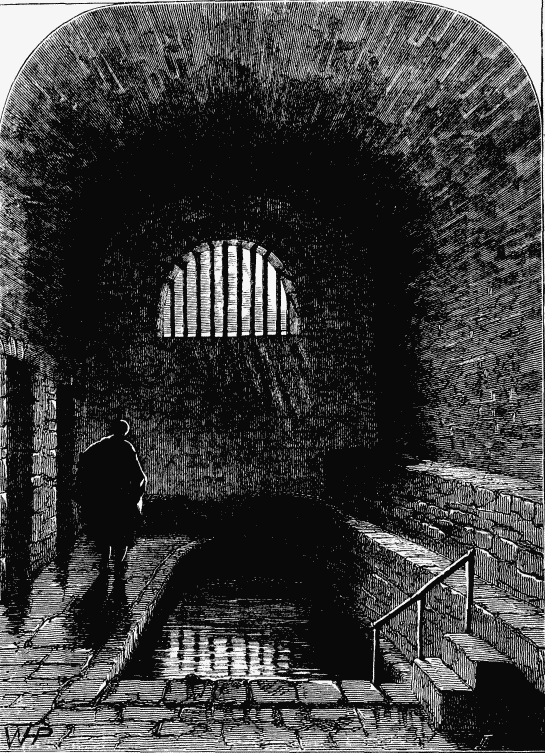
…. and Harry, under sentence of death, was locked in the Tower.
What Shakespeare’s affair with Harry couldn’t survive, though, was the birth of a son to Elizabeth in 1605.
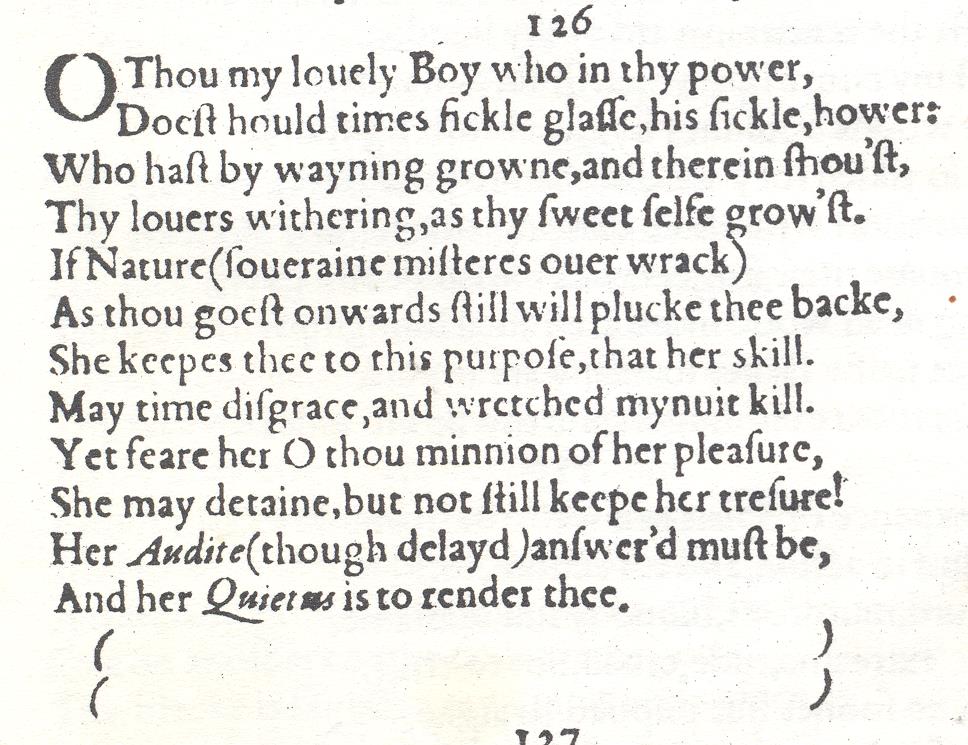
Shakespeare writes about this in Sonnet 126…..
O thou my lovely boy, who in thy power
Dost hold time’s fickle glass, his sickle hour,
Who hast by waning grown, and therin shows
Thy lover’s withering as thy sweet self growst;
Shakespeare had used the phrase……
…..sweet self……
…..in his Birthday Sonnets, fifteen years earlier, to mean Harry’s baby boy.
By having a son, Harry is able, miraculously, to both wane and wax at the same time.
He will grow weaker as time passes, but his baby will grow stronger.
Harry, besotted with his son, had neglected Shakespeare and this had led to his…..
….lover’s [Shakespeare’s] withering’….
In fact Harry had done more than neglect Shakespeare: he had rejected him outright.
Harry had hoped to become King James’s new boyfriend when he was released from the Tower: but James preferred prettier, younger men. The Tower and illness had taken their toll on Harry’s good looks.
Pushed from the gay centre of power, Harry became bitterly homophobic. He wanted his son to grow up to be a brave, straight soldier.
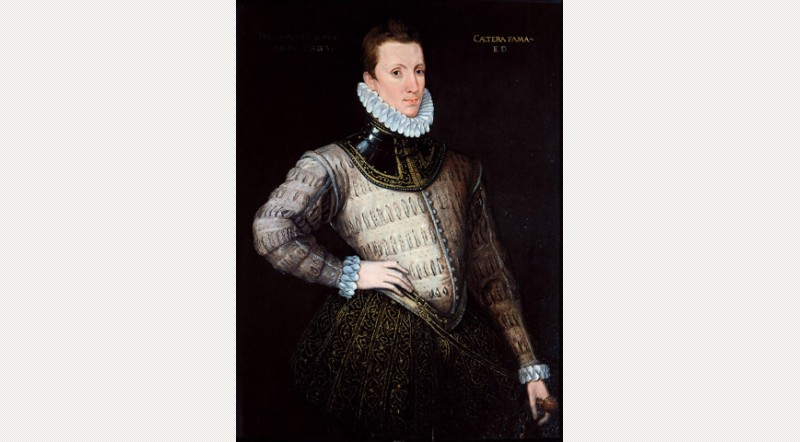
Sir Philip Sidney…….
…….Harry’s hero…..
…… had demonstrated in his Arcadia that a man could dress up as a woman on one day….
……and kill a lion the next.
Prince Pyrocles – cross-dressed as the Amazon Warrior, Zalmena – prepares to kill a lion. (From Sir Philip Sidney’s ‘Arcadia’).
But times had changed.
Shakespeare, the Player, had to go.
In Sonnet 126 Shakespeare finally wishes death on Harry:
If nature, sovereign mistress over wrack,
As thou gowest onwards still will pluck thee back,
She keeps thee to this purpose: that her skill
May time disgrace, and wretched minute kill.
Yet fear her, O thou minion of her pleasure:
She may detain, but not still keep her treasure!
Her audit, though delayed, answered must be,
And her quietus is to render thee.
Dame Nature might be keeping him preternaturally young and beautiful, but in the end she will have to give him over to Old Father Time and
….render….
….him – break down his body – in the grave….
The brackets at the end of the ‘Sonnet’……
….which at 12 lines isn’t a Sonnet at all…..
…..indicate that lines are missing from the poem….
…..and represent the yawning family tomb waiting for Harry in St. Peter’s Church in Titchfield.
Shakespeare then turned his attention to Love’s Labour’s Won.
He re-wrote it as an attack on his old lover.
All of Bertram’s redeeming features in the Boccaccio tale are wiped out.
He is no longer
a goodly young gentleman…
…or even…
….a courteous knight well-beloved in the city.
He becomes an unredeemed brute, snobbish, selfish, manipulative, mendacious, lustful and foolish….
…..whom even his mother condemns and disowns.
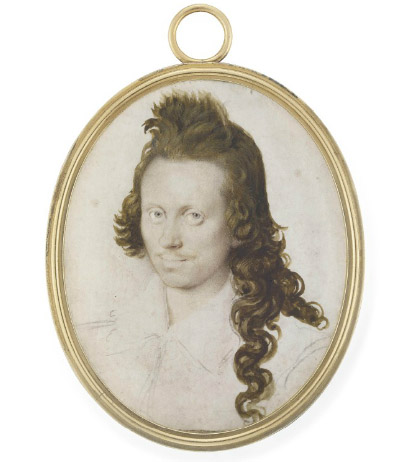
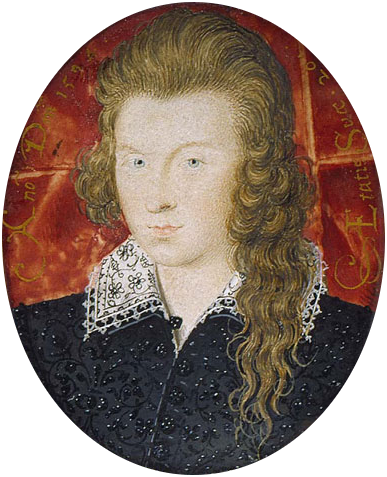
To make sure the audience would know Bertram was Harry, all the actor would have needed was to enter with a wig with long curly hair…..
But Shakespeare flashes up Bertram’s identity in the text as well….
Bertram becomes a General of Horse: Harry was a General of Horse on the Irish campaign.
Bertram woos Diana with song: Harry, in Shakespeare’s mind at least, was…..
…..music to hear……
Bertram hates cats: Harry hated cats.
He had himself painted with one in the Tower to show he had mastered his passions.
But Shakespeare’s intention wasn’t solely revenge.
He makes a fascinating change to the Boccaccio tale by introducing Bertram’s mother, the Countess of Rossillion.
Countess Mary died in 1607……
…….the year scholars now think Shakespeare wrote the play……
…..and was entombed close to her first husband, the Second Count of Southampton, in the family vault of St. Peter’s, Titchfield.
Shakespeare clearly loved Mary, who gave him his first real chances in life.
He celebrates her warmth and her wisdom and even her Roman Catholicism.
She makes a coded reference to the Virgin Mary in the play, Bertram’s only hope!
What angel shall
Bless this unworthy husband? he cannot thrive,
Unless her prayers, whom heaven delights to hear
And loves to grant, reprieve him from the wrath
Of greatest justice.
This was something very dangerous for a playwright to do two years after the Roman Catholic Gunpowder Plot.
Shakespeare also acknowledges the remarkable part Count Mary played in his relationship with Harry.
In this re-write of Love’s Labour’s Won, Helena is clearly Shakespeare in drag.
Boccaccio’s Helena is rich and independent: the All’s Well Helena is poor and vulnerable….
…..just as Shakespeare was when he joined the Southampton household in 1590.
When Helena says:
Twere all one
That I should love a bright particular star
And think to wed it, he is so above me:
In his bright radiance and collateral light
Must I be comforted, not in his sphere
…it could be Shakespeare himself speaking about Harry…..
….a point made by the visionary scholar Dover Wilson, in his Essential Shakespeare, as far back as the 1930s.
It is my belief that the remarkable scene in which Helena confesses her love to the Countess happened in real life….
…. and that Shakespeare confessed his love for Harry to Mary.
Early in her marriage, Countess Mary had fallen deeply in love with….
…..a common person…..
…..and her husband, Henry, the Second Count of Southampton…..
….disowned her and turned gay.
According to Countess Mary he made…
…His manservant his wife….
Mary swore in a letter to her father, Lord Montague……
…..England’s leading Roman Catholic….
…..that she had fallen in love with someone other than her husband……
…..but had never made love to him.
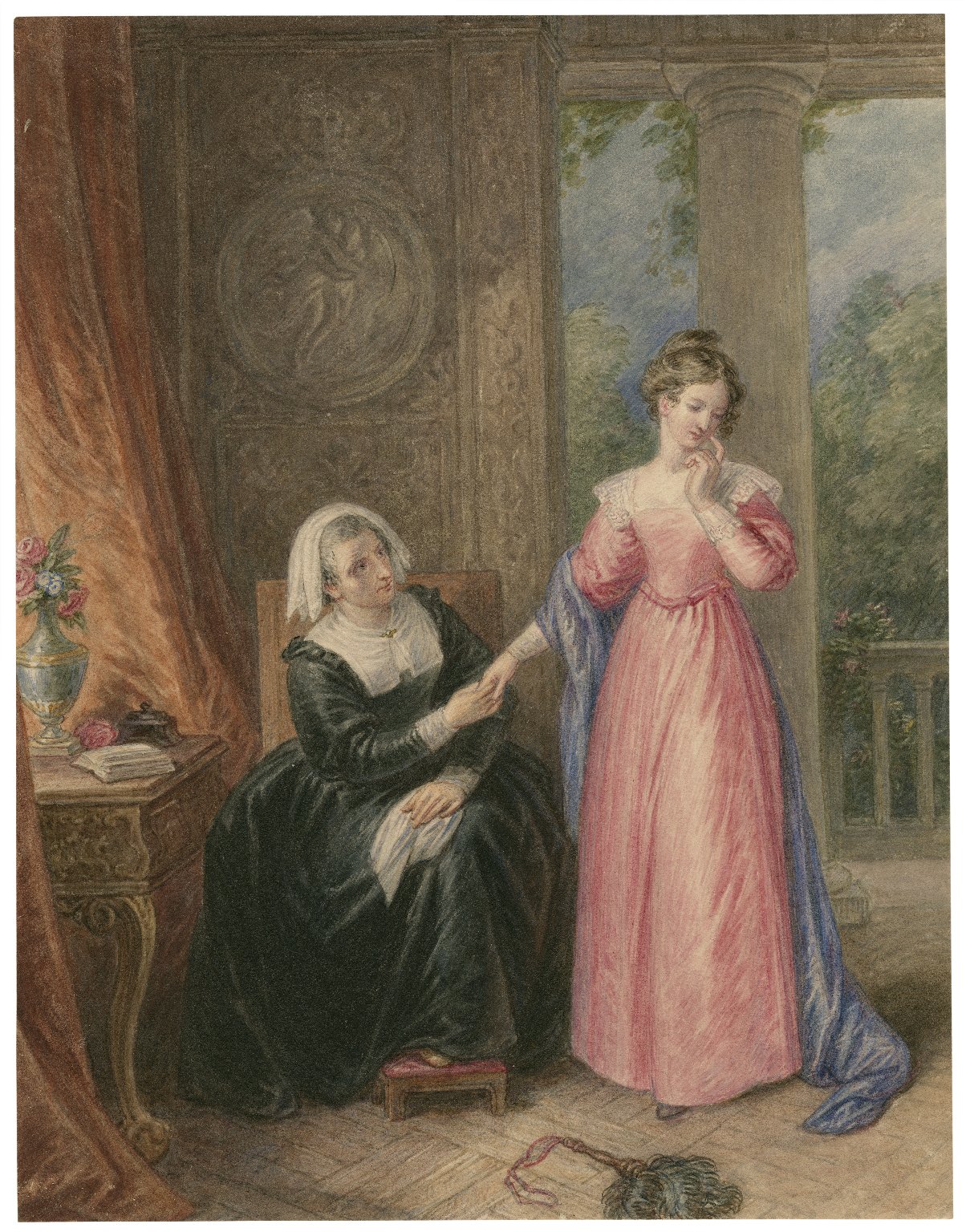
Helena, in the play, asks the Countess to empathise with her love for Bertram.
Had she herself ever loved passionately in her youth?
But restrained herself from acting out that love…..
….finding fulfilment in an act of non-fulfilment?
but if yourself,
Whose aged honour cites a virtuous youth,
Did ever in so true a flame of liking
Wish chastely and love dearly, that your Dian
Was both herself and love: O, then, give pity
To her, whose state is such that cannot choose
But lend and give where she is sure to lose;
That seeks not to find that her search implies,
But riddle-like lives sweetly where she dies!
The Countess, silently saying ‘yes’, gives her blessing to Helena’s liaison with her son…..
…..just as Mary gave hers to Shakespeare.
The Countess’s love had crossed barriers of class……
Shakespeare’s love crossed barriers of sex as well.
Shakespeare, in the play, was clearly examining his own feelings and behaviour.
He had often been a ‘Helena’ in his relationship with Harry…..
……besotted, passive and accepting…….
……sometimes waiting for hours for Harry to turn up.
Being your slave, what should I do but tend
Upon the hours and times of your desires?
I have no precious time at all to spend,
Nor services to do, till your require:
Nor dare I chide the world-without-end hour
Wjhilst I, my sovereign, watch the clock for you,
Nor think the bitterness of absence sour
When you have bid your servant once adieu. (Sonnet 57)
Had he been right to cast himself as a…
…slave..
….and Harry as his….
…sovereign….?
As he was writing All’s Well, Shakespeare was also working on A Lover’s Complaint …..
……a narrative poem which concluded the volume of his Sonnets.
Here he does something similar to All’s Well……
….he casts himself as another woman and Harry as another psychopath!
To make sure everyone knew it was Harry, he described his….
….browny locks
…..which hung…..
…..in crooked curls
And every light occasion of the wind
Upon his lips their silken parcels hurls…
The woman/Shakespeare describes her seducer’s….
…..passion
…..like Harry/Bertram’s, as
…..an art of craft…..
She/he also observes that…
When he most burned in heart-wish’d luxury
He preached pure maid, and praised cold chastity.
But at the conclusion of the poem the woman – who is ‘the lover’ of the title – claims that she would go through the whole affair again!
A Lover’s Complaint was published a year or two after the first performance of All’s Well.
Had Shakespeare reached the same, positive conclusion when he wrote the play?
Not quite.
He was still trying to establish the truth of things.
He admits that Bertram/Harry…..
……however appalling they are as lovers…..
……are brave and skilful on the field of war.
That is what redeems them.
As the First Lord, speaking in what is surely Shakespeare’s own voice, says:
The web of our life is of a mingled yarn, good and ill together: our virtues would be proud, if our faults whipped them not; and our crimes would despair, if they were not cherished by our virtues.
Also the Countess notices that, when Diana produces the ring that six generations of Bertram’s family have worn…..
…..and which he has traded in for a one-night stand with her…..
Bertram has the decency to blush.
So Harry was not entirely Satanic!
But what about Parolles?
Samuel Johnson wrote:
Parolles is a boaster and a coward, such as has always been the sport of the stage, but perhaps never raised more laughter or contempt than in the hands of Shakespeare.
Parolles – design by Osbert Lancaster.
Also:
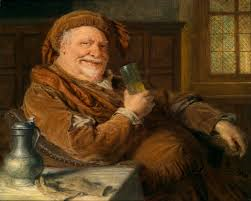
Parolles has many of the lineaments of Falstaff and seems to be the character which Shakespeare delighted to draw, a fellow that has more of wit than virtue.
It is The Shakespeare Code’s belief that Parolles featured in the original Love’s Labour’s Won and has been re-written in All’s Well to make him darker and more loathsome.
He is sometimes similar to the braggart Spaniard, Armado, in Love’s Labour’s Lost…..
………who started off life as a satire on Sir Walter Raleigh…..
…….and even uses some of the same words and phrases.
But is the Parolles of All’s Well a satire as well?
The Code believes he is.
First of all, he is a satire on a ‘type’.
Harry Southampton had a taste for lower class young men, just as his mother had.
In his famous ‘They that have power to hurt’ Sonnet (94) Shakespeare warns Harry of the political, moral and sexual consequences of mixing with – and making love to – men outside his class.
It is better to masturbate than go to bed with a pleb!
The summer’s flower is to the summer sweet,
Though to itself it only live and die
But if that flower with base infection meet
The basest weed outbraves his dignity.
‘Base infection’ here means both moral contamination and the very real chance of contracting venereal disease.
The final couplet graphically nails this idea home:
For sweetest things [!] turn sourest by their deeds;
Lilies that fester smell far worse than weeds.
Parolles contaminates Bertram.
Old Lafew describes him as…..
a snipt-taffeta fellow whose villanous saffron would have made all the unbaked and doughy youth of a nation in his colour
By the time Shakespeare came to write All’s Well, he had a real Captain in mind – Piers Edmondes.
A manuscript in the Marquis of Salisbury’s collection states:
Captain Piers Edmondes was also known to the Earl of Essex: he was so favoured as he often rode in a coach with him, and was wholly of his charges maintained, being a man of base birth in St. Clement’s Parish.
The Earl of Essex pursued a secret gay life from his own private bath house on the Strand…..
For a man to ride in a coach at the time was considered the height of effeminacy: for two men to ride together was an act of gross indecency. A….
coach-companion
…..according to Francis Bacon’s mother, was a synonym for a…..
bed-companion.
During the trial of Essex and Southampton after the Rebellion a letter was produced from William Reynolds (probably brother of Essex’s secretary, Edward) in which he…
marvelled what had become of Piers Edmondes, the Earl of Essex’s man, born in the Strand near me, who had many preferements by the Earl. His villainy I have often complained of. He was Corporal General of the Horse in Ireland under the Earl of Southampton. He ate and drank at his table and lay in his tent. The Earl of Southampton gave him a horse which Edmunds refused a hundred marks for him, the Earl of Southampton would cole and huge [embrace and hug] him in his arms and play wantonly with him. This Piers began to fawn and flatter me in Ireland, offering me great courtesy, telling me what pay, graces and gifts the Earls bestowed upon him, thereby seeming to move and animate me to desire and look for the like favour.
Just after the Rebellion, Edmondes himself had written to a Mr. Wade, explaining that….
….he had spent 20 years in the Queen’s service and when his old hurts received in that service burst out afresh, he was enforced to come to London for remedy but two days before that dismal day [the Rebellion] by which mischance, being among his Lordship’s people innocently, he stands in the like danger they do.
Hugging and kissing Harry to get presents from him, fawning and flattering Reynoldes to recruit him as a rent boy, sucking up to the two Earls for cash and favours and explaining to Wade that he may have been physically present at the Essex Rebellion but was NOT part of it, is pure, pure Parolles.
Simply the thing he was made Edmondes live…..
Two Academic Footnotes:
(1) Samuel Taylor Coleridge…..
……loved the character of Helena but was disturbed that she told a lie when she said to the widow:
His face I know not.
This was not a lie – it was an equivocation!
The word…..
face
…….for the Elizabethans and Jacobeans could mean the genital area.
As King Lear says at the height of his madness and sexual disgust…..
Behold yon simpering dame whose face between her forks presages snow….
And as Shakespeare says in his own voice in Sonnet 94, in praise of chaste people who do not sleep around:
They rightly do inherit heaven’s graces
And husband nature’s riches from expense [seminal emission]
They are the lords and owners of their faces
Others but stewards of the excellence.
So, as Helena had not yet been to bed with her husband at that point in the play, she was telling ‘the truth’!
(2) The Shakespeare Code has established that the text of All’s Well has NINE words or phrases that Shakespeare never uses again – but which Thomas Nashe does……
At the Q. and A. session after The Shakespeare Code’s talk to the Titchfield History Society, there was one question on everybody’s lips…..
How could Titchfield – and the Earl of Southampton – have been so airbrushed from The Rise of a Genius – the BBC T.V. biography of Shakespeare?
Why was there no mention of the man to whom Will had dedicated, in respectful and loving terrms, two, long, narrative poems?
Several theories were put forward…..
The first was power. Stratford-upon-Avon was in no mood to yield its supremacy in the Shakespeare story.
The Code’s Chief Agent revealed that Melvyn Bragg…..
……..had written a letter to him (at the start of the century!) which said:
‘Watch out, Stratford-upon-Avon!’.
Also there are two modern assumptions which blinded the BBC to the truth:
(1) A genius is a lone figure producing masterpieces in solitude.
What the Titchfield Theory offers is the idea of a collective genius – a group of people coming together with like aims and ambitions – one of whom, at least, is very talented……
……and one of whom, at least, is very rich!
(2) Good art will always make money.
You only have to run a theatre, as The Code’s Chief Agent has done, to realise this is simply not true. The public are reluctant to attend anything that’s new or strange – and writers producing challenging scripts needs all the financial aid they can muster.
Southampton not only supplied Shakespeare with £1,000 – he provided him with an appreciative, intelligent, educated and daring public….
….the Elizabethan…..
…….and Jacobbean…….
…….royalty and aristocracy.
But there is another factor – which we have named ‘Swift Syndrome’.
Johnathan Swift…….
…….wrote:
‘When a true genius appears in the world, you may know him by this sign, that the dunces are all in confederacy against him’.
We have observed, in our research for this talk, this phenomenon occurring time after time.
For example….
In 1709 Nicholas Rowe sleuths out two great stories about Shakespeare….
1. He poached deer from Sir Thomas Lucy’s park.
2. Harry gave him a gift of £1,000.
Edmond Malone – who never once visits Stratford – comes along seventy years later and rubbishes these discoveries.
Scholars then parrot what Malone said for the next 150 years!
Dover Wilson – linking literature with history – posits the theory in the 1920s and 30s that Will was a tutor to Harry at Titchfield, got involved in the Essex Rebellion and travelled to Scotland to persuade King James to invade England.
Dover Wilson’s nemesis, W.W. Greg, the editor of the Malone Society no less, describes Dover Wilson’s theories as…..
‘the careerings of a not too captive balloon in a high wind.’
Sadly, Dover Wilson, a sensitive man, takes this criticism to heart, and rescinds many of his theories.
He even follows fashion by declaring that ‘the lovely boy’ is in fact William Herbert.
This fashion comes largely from E. K. Chambers…….
…..(the first President of the Malone Society) who had originally thought ‘the lovely boy’ was Harry – but changes his mind in 1930 and names him as William Herbert, the Third Earl of Pembroke.
Many of the scholar-lemmings follow.
As late as 2010, Katharine Duncan-Jones – in her updated Arden edition of the Sonnets – writes:
‘Dover Wilson’s speculations are attractive. He suggested that the Countess of Pembroke ‘asked [Shakespeare] to meet the young lord at Wilton, on his seventeenth birthday’ and commissioned him to compose an appropriate number of pro-marriage sonnets for the occassion’. This would locate sonnets 1-17 in April 1597.’
But the Herbert Theory can be demolished in a second…..
In Sonnet 13 Will writes to the young man:
You had a father – let your son say so.
William Herbert’s father, though ill, was still alive in 1597.
Harry Southampton’s father in 1590 – the year of Harry’s seventeenth birthday – had been dead for nearly a decade!
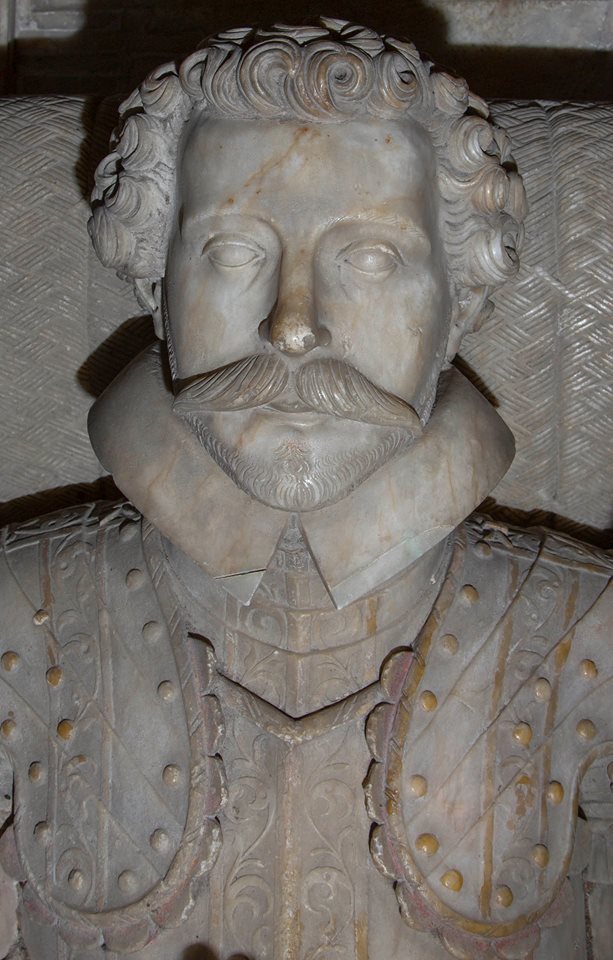
[The Second Earl of Southampton – Photo Ross Underwood]
The Shakespeare Code sincerely hopes that it will hear no more about William Herbert as ‘the lovely boy’.
He was clearly Harry Southampton!
To return to ‘Swift Syndrome’….
The distinguished Cornish historian, A. L. Rowse….
……discovers in 1973 that the Dark Lady of the Sonnets was Amelia Bassano/Lanyer.
She fits the role to perfection – down to her musicianship, her flirtations and even the way she ‘rolls’ her eyes….
Rowse writes an article for The Times, makes a couple of unimportant technical mistakes and Stanley Wells rubbishes the whole theory on BBC radio…..
……..putting back Shakespeare Studies by at least fifty years.
Prof. Roger Prior – who believes, along with the Shakespeare Code, that Amelia was the Dark Lady and Harry the ‘lovely boy’ and that Will visited Italy in 1593 – puts Wells’s response down partly to the ‘New Criticism’ – a movement that came from America in the 1920s and 30s – which….
‘…removes the author from the text.The author’s thoughts and intentions, it is claimed, can never be known, and are in any case quite irrelevant to our understanding of his work. A Shakespeare sonnet may seem to be addressed to the Earl of Southampton, but this may be no more than a clever fictional trope…the literary work of art has nothing to do with the world…..’
This movement was inspired by an essay written by T.S. Eliot….
…..over a hundred yhears ago!
He wrote:
‘The more perfect the artist, the more completely separate in him will be the man who suffers and the mind which creates; the more perfectly will the mind digest and transmute the passions which are its material.’
The reason Eliot wrote this is that he was afraid that when people discovered how appalling he was in his private life, they would shun his poetry.
But F. R. Leavis – a Cambridge, bicycling don…..
…….was flattered by Eliot’s attention – and taken in by him – even if his wife Queenie wasn’t.
So Eliot’s beliefs swamped the whole of Academic life in Britain and America – up to Rowse’s ‘Dark Lady’ discovery in 1973.
But Stanley Wells is still everywhere….
Even the Code’s Chief Agent has been attacked by him!
He wrote Love’s Labour’s Found in 2000…
…….and appeared in a Meridian TV documentary – developing Dover Wilson’s theory that Love’s Labour’s Lost was first performed at Titchfield.
Wells – now the Director of the Shakespeare Birthplace Institute no less – describes the book as….
……’charming’….
…..but finally dismisses the book as….
‘semi-fiction’.
At least Stanley used the word ‘semi’!
He promised to write his own book on Will and Harry – but it has never seen the light of day.
*********
On the way back to West London on the train, Stewart shared an amazing coincidence with Your Cat.
His mother had been a talented tailoress – and had worked in the rag trade at Malone’s old house in London W1.
She managed to get a flat round the corner for her son – where he lived for seven years.
Now the extraordinary thing is that Malone’s house was in Langham Street –
….which was on property once owned by the Earl of Southampton…..
(It’s best to read ‘When Will met Harry – a Riposte to the B.B.C’ – first.)
John Aubrey………
….. got his information about Will being country schoolmaster from the actor William Beeston – whom John Dryden described as ‘the chronicle of the age’. William in turn got the information from his father Christopher Beeston – who had been apprenticed to the actor Augustine Phillips, and who later acted with Will in the Lord Chamberlain’s Men.
We know that there is a schoolhouse at the gates of Titchfield Abbey…..
The question is: did Will teach there?
There was an earlier William Beeston – who became part of the Southampton entourage – who died in Posbrook Farm in 1638.
The question is – was he related to Christopher Beeston? The almost universal cry has been ‘No’ – but let’s briefly examine the timeline for October 1638:
On 4th October Christopher Beeston – writing he is ‘sick and weak in body’, has ‘many great debts’ and is ‘engaged for great sums of money’ – completes his will – but signs it:
‘Christopher Hutchinson’.
7th October: Christopher Beeston/Hutchinson writes a codicil to his will.
Two days later – on 9th October – William Beeston of Posbrook Farm – stating he is ‘weak in body’ and bequeathing ‘to every child that God hath sent me five shillings a piece for their portions’ signs his will.
Seven days later – on 17th October – Christopher Beeston/Hutchinson is buried in St. Giles-in-the-Fields in London.
Seven weeks later, on 3rd December, William Beeston of Posbrook Farm is buried at St. Peter’s, Titchfield.
Either this is a coincidence of cosmic proportions or there is a link of some sort between the two men….
Let The Shakespeare Code propose one!
Christopher Beeston had an alternative name ‘Hutchinson’ – which suggests he might have been illegitimate. William Beeston of Posbrook Farm writes about the children ‘that God hath sent him’ which sounds to us like a euphemism for children born out of wedlock.
William Beeston of Posbrook fathers Christopher out of wedlock. Christopher studies at the Titchfield Grammar School and is briefly taught by Will, who encourages him to become the boy actor known as Kitt.
William Beeston of Posbrook becomes respectable because of his association with the Southampton family. He even marries a much younger wife in the 1630s, fathers legitimate children and 1637 even acquires a Coat of Arms.
Christopher, on the other hand, after acting with Will in The Chamberlain’s Men, gets wilder and wilder – he runs a brothel, gets accused of rape and sometimes uses an alias – ‘Christopher Hutchinson’.
William Beeston of Posbrook disowns him. But Christopher gets very ill and begs his natural father to visit him – and he does so out of humanity.
Christopher, completely impoverished, asks his father to help his son, named William after him, financially – but William Beeston of Posbrook – who by now has his own little William – refuses. Christopher cuts himself off completely from his father by using his Christopher Hutchinson name when he signs his will, and even refers to his son as ‘William Hutchinson’. William Beeston of Posbrook gives five shillings to all his children – legitimate and otherwise – as a blocking bequest to stop them from claiming any more. He leaves everything to his wife.
Unfortunately Posbrook Beeston catches the plague from his son and dies soon afterwards.
We cannot (at the moment at least) prove this theory – but The Code believes that forming a credible story from the known facts is a legitimate way of investigating the truth.
What we know for certain is that Harry Southampton graduated from St. John’s College, Cambridge, in 1589 and was in residence in Titchfield in 1590. He was to turn 17 that year and massive pressure was being put on him by his guardian, Lord Burghley……
…….Queen Elizabeth’s Secretary of State – to marry his grand-daughter Elizabeth de Vere.
Harry was refusing – so his family faced an enormous £5,000 fine.
But Harry wasn’t interested in girls. His father, the Second Earl of Southampton…..
[Photo by Ross Underwood]
…..had accused his mother, Mary, of adultery with ‘a commonperson’ and had snatched his son away from her at the age of 6. In the words of Mary, the Second Earl ‘made his manservant hiswife’ and surrounded himself with….
‘a whole troupe of at least a hundred well-mounted gentlemen and yeomen and tall goodly fellows that kept a constant pace.’
The Second Earl had died when Harry was eight – and Harry became part of Lord Burghley’s household where he met the young Earl of Essex…..
….who had also lost his father.
Greene’s famous attack on Will suggests he did much more for the Southampton household than simply tutor Harry. Greene described him as….
‘an upstart Crow, beautified with our feathers, that with his tiger’s heart wrapped in a Players hide, supposes he is as well able to bombast out a blank verse as the best of us: and being an absolute Iohannes factotum, is in his own conceit the only Shake-scene in a country.’
A word of warning. It is highly unlikely Greene wrote these words. Nashe claimed to have found the manuscript in Greene’s garret after he died – but many people – including Will – thought that Nashe himself had written the libel, passing it off as off as Greene’s dying curse.
Nashe swore his innocence, but ‘divers of worship’ – most likely the Southampton family – complained to the publisher of the pamphlet, Henry Chettle, who issued a grovelling retraction and described Will’s…
‘uprightness of dealing which argues his honesty, and his facetious grace in writing, which approves his art’.
To add to the complication, Nashe might well have been in Titchfield at the time – collaborating with Will when he wasn’t stabbing him in the back.
Intriguingly, Nashe dedicated his pamphlet ‘Strange Newes’ to a Mr. William Apis-Lapis.
‘Apis’ is Latin for ‘Bee’ and ‘Lapis’ Latin for ‘Stone’. Bee Stone. Mr William Bee-Stone – Mr. William Beeston. Posbrook Beeston even had bees on his coat of arms!
But back to the other Will…
As a ‘fac totum’ Will might well have taught the local schoolboys – and an American hand-writing expert – Charles Hamilton – discovered a letter signed by Harry that he believes to be in Will’s hand.
But Will was also the Southampton family poet. We know this for certain because of the Dedication of his two narrative poems to the Earl of Southampton – neither of which is mentioned by the B.B.C.’s ‘Rise of a Genius’.
The one to Venus and Adonis in 1593 is formal and tentative: this is because Harry’s mother had commissioned it. Harry had not yet come of age:
‘I know not how I shall offend in dedicating my unpolished lines to your Lordship, nor how the world will censure me for choosing so strong a prop to support so weak a burden’.
But the next dedication – to Lucrece – was written in 1594 when Harry was in full control of his finances . Will let’s his feelings fly:
‘THE love I dedicate to your lordship is without end; whereof this pamphlet, without beginning, is but a superfluous moiety. The warrant I have of your honourable disposition, not the worth of my untutored lines, makes it assured of acceptance. What I have done is yours; what I have to do is yours; being part in all I have, devoted yours. Were my worth greater, my duty would show greater; meantime, as it is, it is bound to your lordship, to whom I wish long life, still lengthened with all happiness’.
This outpouring of love for Harry brings us naturally to Will’s Sonnets…
There are 154 of them. Some of them are letters, some of them reflections, some of them flatter, some of them insult, some of them seduce, some of them reject, some of them glory in life, some of them despair of it. In short, Will reveals there is not a single emotion that characters go through in his plays that he has not gone through himself.
We might say we know more about him than any man who has ever lived were it not for one thing. Will – when he published the Sonnets in 1609 – did not print them in chronological order – rather in two piles – ‘to him’ and ‘to her’. The ‘to him’ pile is much, much bigger than the ‘to her’ pile.
Using a data base built up over the years, The Shakespeare Code has put all the poems into chronological order – and we believe a tremendous story emerges which involves a Lovely Boy, a Dark Lady and a Rival Poet.
Can we assume, for the moment, that Nathan Drake was right in 1817 and Dover Wilson in 1932 when they named Harry as the Lovely Boy?
And can we also assume, for the moment, that A. L. Rowse was right in 1973 when he named Amelia Lanyer, nee Basanno, as the Dark Lady?
Can we also assume that the Rival Poet was the Spirit Medium George Chapman….
…..who would summon up the ghost of Christopher Marlowe at the drop of a hat.
So here is the story – drawing on history and anecdote, along with Will’s plays and sonnets.
Mary Southampton commissions Will to write seventeen sonnets to celebrate Harry’s seventeenth birthday in 1590 – urging him to marry and have a son. She chooses the fourteen-line sonnet form because it has been perfected by the late Sir Philip Sidney……
….who lived at Wilton – a day’s horse-ride away – whom young Harry worships because of his bravery and chivalry.
Will argues that a son will give Harry another ‘self’ – his son – who will ‘wax’ like the moon while he himself ‘wanes’.
But Will – stepping way outside his brief – hints that he could also make Harry immortal by the power of his verse alone.
But these seventeen sonnets have the reverse effect of what Mary intended. Harry becomes attracted to his tutor – and though Will has been introduced to same-sex love by Marlowe in London, and admits to finding Harry, with his shoulder length hair, even more attractive than a woman, denies any physical interest in the boy. Will wants their love to be platonic.
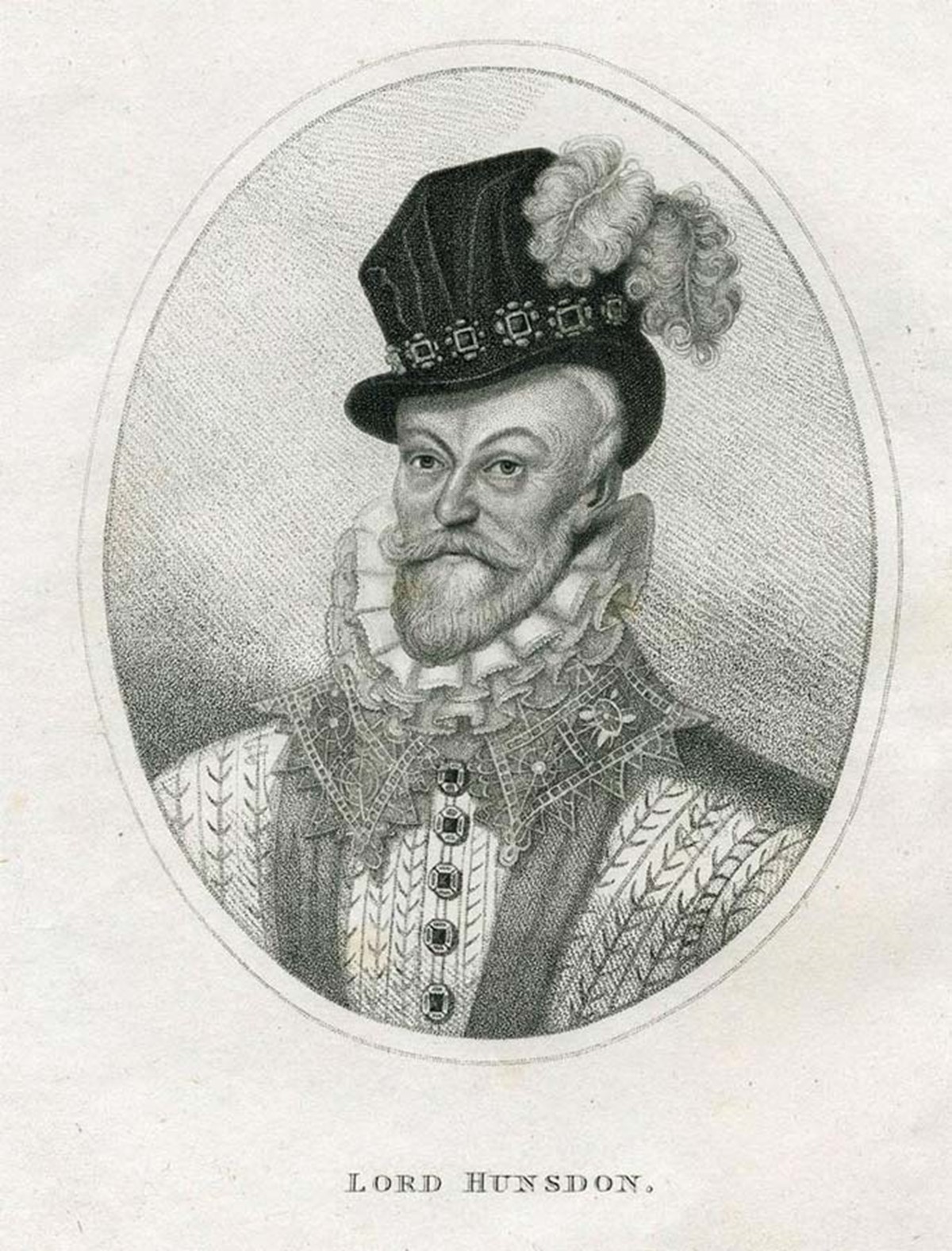
In 1591 Queen Elizabeth arrives on her progress to Cowdray and Titchfield. In her entourage is the Basanno family – dark-skinned Sephardic Jews who are renowned for their music making. Among them is the beautiful young clavichord player, Amelia Basanno, who is the mistress of the Queen’s cousin – old Lord Hunsdon…….
Plague is raging in the city – so Amelia stays in Titchfield as an entertainer and companion to Mary Southampton. Will falls desperately in love with Amelia – and writes the part of the dark-skinned Rosaline for her in Love’s Labour’s Lost – a play which satirises Queen Elizabeth and which Harry and his aristocratic friends perform in the Park of Place House at Whitsun in 1592.
Will attempts to seduce Amelia by playing Rosaline’s lover, Berowne, and sending her sonnets which flatter her and tease her. But Amelia has no interest in the balding, prematurely aged, playwright. In desperation, Will asks Harry to plead his case with Amelia – but Amelia takes the opportunity to seduce young Harry – and Harry plays along because it will upset Will.
Will, indeed, is distraught – and goes on tour with Lord Strange’s Men. As he thinks about things, he realises that he is more in love with the boy than the girl. Amelia gets pregnant and is married off to a minstrel. Will returns to Titchfield and declares his love for Harry in Sonnet 18 – one of the greatest poems ever written….
Shall I compare thee to a summer’s day?
Thou art more lovely and more temperate.
Rough winds do shake the darling buds of May
And summer’s lease hath all too short a date:
[Do you want me to compare you to a summer’s day as other poets might? You are much more beautiful and even-keeled than that! In England even in May harsh winds can shake the buds of the flowers and summer is so quickly over- like a short lease on a property.]
Sometime too hot the eye of heaven shines,
And often is his gold complexion dimmed;
And every fair, from fair, sometime declines
By chance, or nature’s changing course untrimm’d:
[Sometimes the sun is too hot and often it is covered with clouds – and everything beautiful on a summer’s day will at some point lose its beauty – either by chance events or simply the unaided workings of nature.]
But thy eternal summer shall not fade,
Nor lose possession of that fair thou ow’st,
Nor shall death brag thou wandr’st in his shade
When in eternal lines to time thou grow’st:
[But you will not be subject to this change – nor will you fade as the summer flowers fade, nor will you lose your beauty. Nor will you even die. Your summer will be an eternal because I am writing about you in verse.]
So long as men can breathe or eyes can see,
So long lives this, and this gives life to thee.
[This poem will survive as long as men are still alive to recite it or read it – and this will give you eternal life.]
Will has started off with praise of Harry – but ends up with lashings of praise for himself!
Mother Mary…..
…….finds out about Harry’s liaison with Will.
And mother Mary isn’t pleased….
*****
To find out what happened next, read When Will met Harry – Part Three…
To be published, Deo Volente, at midnight (G.M.T.) on Monday, 8th January, 2024.

































 The Shakespeare Code