Feeds:
Posts
Comments


Brothers and Sisters of The Shakespeare Code….

…..William Shakespeare’s Sonnets are the greatest poems known to Man…

…..or Cat….

(Well, in English, anyway….)

But they are written in LANGUAGE of ENORMOUS COMPLEXITY…

Because Shakespeare lived in TIMES of ENORMOUSLY COMPLEXITY….

It is the UTTER CONVICTION of The Shakespeare Code that…..

You CANNOT understand SHAKESPEARE’S SONNETS without understanding SHAKESPEARE’S LIFE….

To that end, Your Cat now offers you….

 TRIXIE’S BACKGROUND JOTTINGS!!!

 A lightning tour of all you need to know….

To be IN the know….

About SHAKESPEARE’S SONNETS…..

So, fasten your seat belts..….

 Queen Elizabeth…..

….also known as ‘The Moon’…

….was six years into her reign when William Shakespeare was born.

Elizabeth’s step-mother, Katherine Parr….

….had encouraged the young Princess to adopt the Protestant views of John Calvin….

So when Elizabeth became Queen, she was determined to rid England of ‘superstitious’ Roman Catholicism….

William Shakespeare, however, was born into a deeply Papist family…..

On his mother Mary’s side were the Ardens…..

One of the oldest, noblest, Catholic families in the land…

And his father, John….

……though of yeoman stock and unable to write…..

… ..put his sign on a Roman Catholic Testament of Faith that could have led to his death.

Robert Dudley, the Earl of Leicester….

…also known as ‘The Bear’….

…the most ferocious of beasts in the eyes of the Elizabethans…

…was Queen Elizabeth’s lover.

He had murdered and slept his way to the top….

…but had the audacity to proclaim himself the leader of the English Puritans…

He rebuilt KenilworthCastle…..

…..not half a day’s ride from Stratford-upon-Avon…

….and used it as the centre for his intrigues…

….sexual and political….

(He even stopped all the clocks whenever Queen Elizabeth came to call so The Bear and The Moon, undistracted by Time, could devote themselves to pleasure…)

The strait-laced Ardens were outraged….

Edward Arden, the Sheriff of Warwickshire….

…..refused to wear Leicester’s livery….

…..would not sell him any land….

…..denounced him as an adulterer and murderer…

…..and declined his invitation to attend a Kenilworth entertainment for the Queen…

So Leicester had Edward Arden hanged drawn and quartered….

….ostensibly for keeping a Catholic priest on his payroll….

The young William Shakespeare also clashed with one of Leicester’s agents….

….the sadistic Sir Thomas Lucy…..

….licensed to hunt down Catholics and destroy them…

Shakespeare poached hares and deer from Lucy’s estate as a Papist revenge…

Sir Thomas whipped him savagely and imprisoned him….

……so the lad was sent away, for his own safety, to Lancashire…..

….to an old Catholic family at Hoghton Hall….


……where he learnt to make himself indispensable…

 ….as a factotum, entertainer…

…. and generally nice person to have around.

But the Hoghton family in turn was persecuted for its faith….

….so Shakespeare had to return to Stratford….

…..where he wooed Anne Hathaway….

……a woman ten years his senior….

…..with a ballad that played on her family name…..

I hate from hate away she threw,

And saved my life, saying ‘not you’.

Shakespeare impregnated her….

…..but did the decent thing and married her….

He then returned to his attack on Sir Thomas…..

This time he wrote an obscene ballad abut him….

…….playing on his family name…..

Lucy is lousy….

Shakespeare performed it all over Stratford….

…..then stuck the lyrics on Sir Thomas’s gates….

Shakespeare had to get out of town….

…..so he fled to London…..

…. and shacked up with another ‘grammar school’ boy, ‘Sporting’ Thomas Kyd…..

Together they worked on pamphlets and plays…..

….and befriended the gay, louche, Cambridge graduate, Christopher Marlowe…

But two other university ‘wits’….

….Robert Greene….

…and Thomas Nashe….

…..made coded attacks on Shakespeare and Kyd in their own pamphlets and plays…

…..turning them into animals……

Kyd became the ‘kid’ in Aesop……

……and Shakespeare, famously, an….

upstart crow….

Greene and Nashe were deeply offended that mere ‘grammarians’ should set themselves up as writers….

As an M.P., Lucy was often in London…

To gain protection from him, Shakespeare cultivated the friendship of Robert Crowley…..

…..the radical Protestant vicar in charge of St. Giles’, Cripplegate….

…..where Sir Thomas worshipped….

Crowley believed in voluntary re-distribution of wealth…..

…..hated all affectation in language and behaviour…..

…..and loathed women who wore wigs and make-up….

…..even the Queen….

Crowley wrote and printed ballads to popularise Christianity…

…..and encouraged Shakespeare to write plays….

…. based on Biblical stories and Moralities….

Shakespeare set up his own acting company…

….and then toured the Midlands…..

But audiences got tired of this homely fare…..

…..and when the Spanish Armada attacked England…..

……there were no jobs in the theatre for anyone anyway.

Actors were despised as unmanly…

……. and unpatriotic.

Audeiences ripped the costumes off the actors’ backs to give to soldiers and sailors…

Christopher Marlowe joined Bess of Hardwick’s household as a tutor….

…..Thomas Kyd joined Lord Strange…..

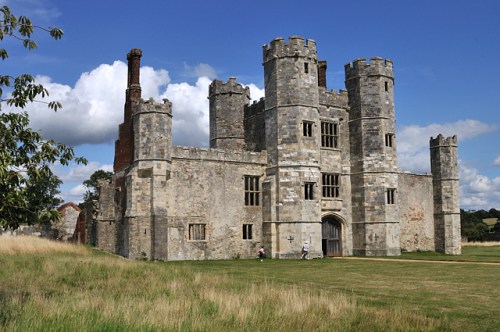
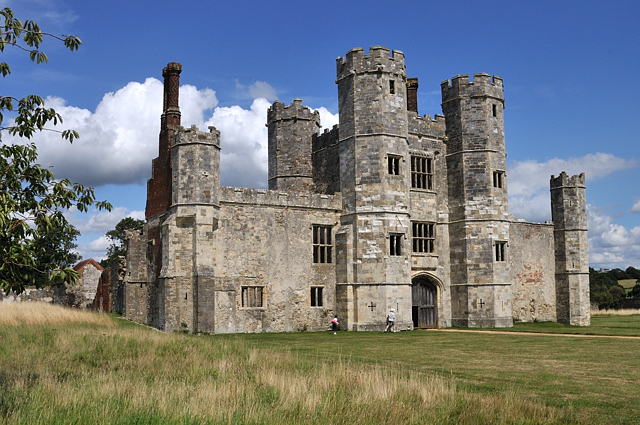
…..and William Shakespeare joined the deeply Roman Catholic Southampton household in Titchfield….

….. in 1590…..

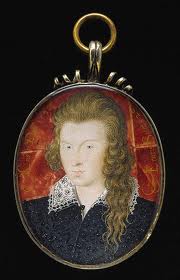
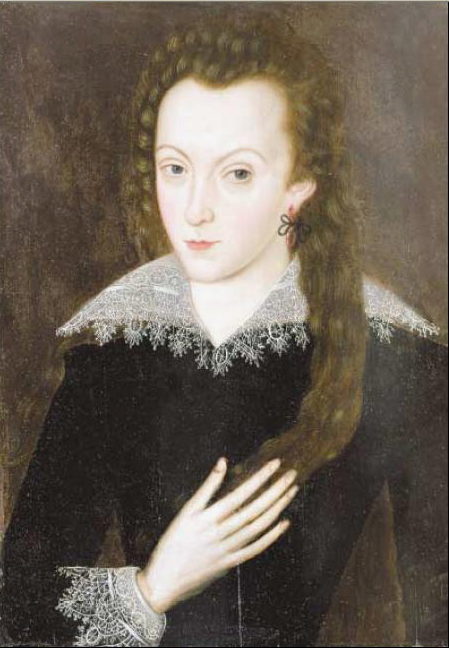
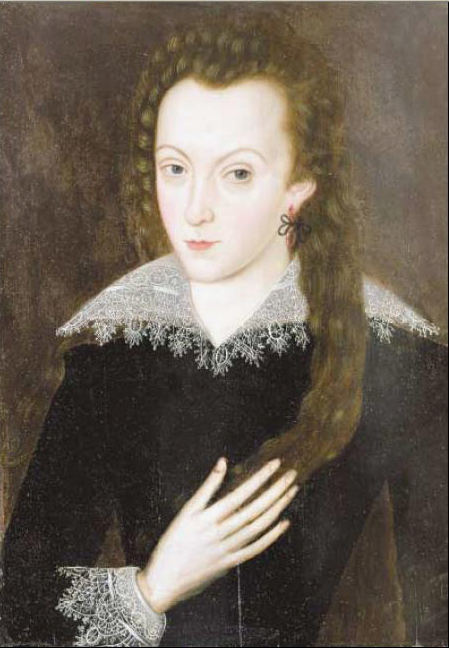
This was the year the young Third Earl of Southampton, Henry Wriothesley…..

…..pronounced ‘Ryosley’….

…..but known  as ‘Harry Southampton….

….reached the age of 17.

Harry’s father was dead….

….so Harry was the ward of Lord Burghley….

…..Queen Elizabeth’s Secretary of State….

…..nick-named ‘Old Saturnus’….

Burghley wanted Harry to marry his grand-daughter, Lady Elizabeth de Vere…..

…..the oldest daughter of Edward de Vere, the 17th Earl of Oxford….

But Harry much preferred male company….

When Harry was six years old, his father, the 2nd Earl of Southampton, had accused his mother, Mary, 2nd Countess of Southampton….

….of adultery with ‘a common person’….

The 2nd Earl had snatched Harry away from his mother……

…..surrounded him with all-male company…..

….and proceeded to make his male servant….

….his wife…..

Two years later, the 2nd Earl died….

But by then Harry had been taught to hate all women…..

And his mother in particular…

….(who was distantly related to Shakespeare’s own mother)…

The Countess was now putting pressure on Harry to carry out Lord Burghley’s wishes…..

….as was her father, Sir Anthony Browne, Viscount Montague….

….one of England’s leading Roman Catholics…..

….and whose title Shakespeare was to use in Romeo and Juliet…

Lord Montague was an intimate friend of King Philip II of Spain…

Burghley had the legal right to insist that Harry marry a woman of his choice….

…..and was about to impose on the Southampton family a £5,000 fine….

….. £2-and-a-half million in our money.

So Shakespeare was given the job of writing seventeen Sonnets for Harry’s seventeenth birthday…..

…….to persuade him to marry and have a son….

The 14 line Sonnet form…..

…..(Sonnet means ‘little song’)….

……with its three quartrains of four lines……

….. and its concluding couplet of two lines…..

…..and its ‘volte’…..

…..its sudden change of mood or subject….

…… had been introduced from Italy early in the sixteenth century by Sir Thomas Wyatt, the Elder…

…and Henry Howard, the Earl of Surrey….

Sir Philip Sidney…..

….the soldier, courtier and poet…

….had developed the Sonnet form at nearby Wilton….

In the 1580’s he had written a Sonnet sequence,  Astrophil and Stella, about his love for the married beauty, Lady Penelope Rich….

….the sister of Robert Devereux, the Second Earl of Essex…

….and had played on her married name, claiming she was….

……Rich in all beauties…..

And had only one misfortune…..

……that Rich she is…..

i.e. , married to Mr. Rich….

Samuel Daniel…..

….also based at Wilton, wrote his Delia Sonnet sequence, in praise of his employer, Sir Philip Sidney’s sister, Mary Herbert, the Countess of Pembroke…

In his Birthday Sonnets to Harry, Shakespeare calls him his….

rose…..

…….playing on  his family name……

…..Wriothesley/Ryosley….

…….but he failed to persuade Harry to marry…..

However,  he stayed in Titchfield as tutor and companion to Harry…..

…..and as schoolmaster to the local boys….

He became acquainted with Harry’s aristocratic friends….

…Robert Devereux, the Second Earl of Essex….

…who was the Queen’s current lover….

….Charles Blount, pronounced ‘Blunt’, later 8th Baron Mountjoy……

….who had been the Queen’s former lover….

(Elizabeth had ‘picked him up’ when he was a teenager)

….and Roger Manners, 5th Earl of Rutland….

….who, it seems, was never a lover of anyone at all…

….well, not of women anyway…..

He never consummated his marriage with his wife…

Shakespeare couples the married name of Penelope Rich with the family name of Lord Mountjoy (Blount/Blunt)….

So am I as the rich whose blessed key

Can bring him to his sweet up-locked treasure,

The which he will not ev’ry hour survey

For blunting the fine edage of seldom pleasure….

And the family name of the Earl of Rutland (Manners)….

My tongue-tied Muse in manners holds her still,

While comments of your praise richly complied…

Shakespeare went on to write more Sonnets to Harry……

…..using them to send up Harry’s guardian, Lord Burghley (‘Old Saturnus’)…..

…..who, gout-ridden, walked slowly and painfully with the aid of a stick….

From you I have been absent in the spring,

When proud pied April (drest in all his train)

Hath put a spirit of youth in every thing

That heavy Saturn laughed and leaped with him….

Shakespeare also uses the Sonnets to praise Harry’s beauty….

……which, unlike women’s, has been…..

…..with Nature’s own hand painted…..

Shakespeare promises Harry immortality through his verse…

And all in war with Time for love of you [Harry]

As he takes from thee, I engraft you new…

But though Harry wanted an affair with Shakespeare….

….(like his mother Mary, he had a taste for lower class men)…

….Shakespeare warded off Harry’s advances….

But since she [Dame Nature] prickt thee out for women’s pleasure,

Mine be thy love, and thy love’s use their treasure….

A liaison with Harry had never been part of his job description…..

And he didn’t want to offend mother Mary.

‘The Resolute’ John Florio…..

…..the translator of Montaigne and compiler of an Italian/English dictionary….

…..soon replaced Shakespeare as schoolmaster….

…..and became Harry’s Italian tutor….

‘Old Saturnus’ placed Florio in Titchfield to spy on the Southamptons….

……and to monitor their recusant activities…..

Mary, Countess of Southampton….

……with her old family friend, the schoolmaster Swithin Wells….

……later to be made a Saint…..

……would recruit ardent young Catholics….

……like Edmund Gennings….

…..(also later to be made a Saint)….

…..send them to the Continent of Europe to be trained as priests……

…..then bring them back to England…..

….. to suffer death as Catholic martyrs…

Gennings, on his return, was arrested for saying a Latin mass….

The authorities dressed him up in a fool’s outfit…..

….. which had been found in Wells’s house….

……then hanged, drew and quartered him in 1591….

This was the year Queen Elizabeth visited Titchfield….

In her entourage was the beautiful, dark-skinned Jewess, Emilia Bassano…..

…..the mistress of the Queen’s randy old cousin, Henry, Lord Hunsdon….

…..and a professional musician…

….who played the clavichord…..

Her family had originated in Morocco….

…..(her nick-name was ‘The Moor’)…

…. and had lived in Venice as musicians to The Doge….

Emilia stayed on at Titchfield because a plague was raging in London

Shakespeare fell in love with her….

He decided that ‘Black was Beautiful’…

……and set out, in his Sonnets and plays, to prove it….

He particularly liked the fact that Emilia with…..

black wires

….on her head and a dark skin needed no wigs or make-up….

Shakespeare then wrote Love’s Labour’s Lost to satirise Queen Elizabeth’s visit to Hampshire….

And performed it with a Pro-Am cast…..

……including women…..

……in a private performance, at Titchfield…

He sent up Florio as the pedantic schoolmaster, Holofernes…

…..Sir Walter Raleigh….

…as the sonneteering Spanish braggart, Don Armado….

Shakespeare also plays on the Walter/Water sound similarity in the Sonnets….

Love’s fire heats water, water cools not love….

(Sir Walter had a thick Devon accent all his life: and Queen Elizabeth used to send him up by saying ‘I thirst for Water…..’)

Shakespeare sends up George Chapman…..

….as the gossipy, grinning, lisping, effeminate sycophant, Boyet….

He even uses Chapman’s name……

The Princess of France says:

Good Lord Boyet, my beauty, though but mean,

Needs not the painted flourish of your praise.

Beauty is bought by judement of the eye,

Not uttered by base sale of chapmen’s tongues…..

Both Raleigh and Chapman were friends of the Wizard Earl…..

….Henry Percy, 9th Earl of Northumberland, who lived at nearby Petworth…

The Petworth ‘set’ was attacked by the Jesuits as ‘The School of Atheism’….

And by Shakespeare as ‘The School of Night’…

….Chapman even claimed to have raised the spirit of Homer, an….

….affable, familiar ghost….

….to help him translate his verse…

Shakespeare cast Emilia as the dark-skinned Rosaline…..

…..and then proceeded to woo her, very publicly, in the character of Berowne…

…..a play on Countess Mary’s family name, ‘Browne’.

Penelope Rich played the Princess of France….

….and Shakespeare played on her married name ‘Rich’…..

….. as Sidney had done in his Sonnet sequence…

Sweet hearts, we shall be rich ere we depart….

(The word ‘rich’ appears FIVE more times in the same scene….)

Emilia, though, played hard to get….

So Shakespeare asked Harry to plead his love-suit for him….

Emilia seized her chance….

She seduced Harry….

….and Harry allowed himself to be seduced….

….in order to hurt Shakespeare…

Shakespeare was forced to admit that he was more in love with Harry than he was with Emilia….

He left Titchfield and went on tour again…..

…..but continued his Sonnet correspondence with Harry…

…..and finally, in the great Sonnet…….

Shall I compare thee to a summer’s day…..

 ………told him that he loved him…

Emilia became pregnant…..

……converted to Chrisitanity….

…. and was married off to a ‘minstrel’ called Lanier ‘for colour’.

Shakespeare makes two  joking references to ‘The Moor’s’ pregnancy in The Merchant of Venice…

Lorenzo says…..

I shall answer that better to the commonwealth than you can the getting up of the negro’s belly: the Moor is by child with you Launcelot.

….and Launcelot Gobbo says….

It is much that the Moor should be more than reason: But if she be less than an honest woman, she is indeed more than I took her for….

Shakespeare uses a variation of her name ‘Bassano’ in the same play as ‘Bassanio’…..

And in Titus Andronicus invents two characters called ‘Aemelius’ and ‘Bassianus….’

In Titus Shakespeare also plays on Burghley’s nick-name, Old Saturnus, by naming a character ‘Saturninus’.

He plays the same trick in the Sonnets:

From you [Harry] I have been absent in the spring

When proud, pied April (drest in all his trim)

Hath put a spirit of youth in every thing:

That heavy Saturn  laught and lept with him

(The gout-ridden Burghley walked slowly and painfully with the aid of a stick: sometimes he was carried round in a chair….)

Shakespeare returned to Titchfield…..

…..and, with the Countess’s blessing,…

…..began an affair with Harry that was to last sixteen years…..

There were to be infidelities on both sides….

…..and Shakespeare worried about Harry’s taste for lower class men….

He thought, correctly, that it would be used against him….

But why thy odour matcheth not thy show

The soil is this, that thou doth common grow…

But the relationship was strong enough to resist advances on Harry from George Chapman….

……the so-called ‘rival poet’….

Chapman wanted to replace Shakespeare in Harry’s affections….

…..and payroll.

(Harry was to give Shakespeare a gift of £1,000 – £500,000 in our money)

Sometimes Shakespeare’s bisexual orientation distressed him – as it distresses Antonio in The Merchant of Venice who describes himself as….

the tainted wether of the flock….

And Shakespeare, in his own voice in the Sonnets, writes:

When in disgrace with fortune and men’s eyes

I all alone beweep my outcast state

And trouble deaf heaven with my bootless cries

And look upon myself and curse my fate….

But at other times Shakespeare positively exults in his sexuality:

I am that I am and those that level at my abuses

Reckon up their own…

Harry and Shakespeare visited Europe, in secret, in 1593…..

…..as amateur spies for the Earl of Essex…

They travelled to Madrid to visit King Philip II of Spain……

Here Shakespeare saw Titian’s paintings Venus and Adonis….

…..and The Rape of Lucrece…

…..which inspired him to write his two narrative poems…

….and even to use the same perspectives and colours in his verse as Titian does in his paintings…

Harry and Shakespeare also visited ‘The Eternal City’,  Rome….

….where they saw the famous obelisk that Pope Sextus V had placed in front of St. Peter’s Basilica seven years before….

It was a holy object to Catholics….

…..the last thing St. Peter saw before he was crucified in Rome….

Harry and Shakespeare also saw the famous gilt orb which had been on the top of the obelisk….

…..once rumoured to contain the ashes of Julius Caesar….

….and which had been shot at and damaged by Protestants during the ‘Sack of Rome’ in 1527…

….brass eternal slave to mortal rage….

Harry and Shakespeare returned to England…

 They found that Marlowe had been killed in a tavern brawl in Deptford….

….and Kyd tortured by the State on suspicion of atheism…

Harry came of age…..

So Countess Mary had to leave Titchfield….

…..(she and Harry had never got on)…

….and married Sir Thomas Heneage….

….yet another of the Queen’s old lovers…

Mary commissioned Shakespeare to write A Midsummer Night’s Dream to celebrate the marriage….

…which was performed at Copped Hall in Essex…

The long-legged Penelope Rich played Helena….

…..and Emilia Bassano/Lanier, the dark-skinned little minx, Hermia….

The love triangle with Harry, Shakespeare and Emilia, started all over again….

…..with Emilia’s….

….bed-vow [marriage-vow] broke and new faith [Christianity] torn….

Suddenly, though, Hamnet, Shakespeare’s eleven year old son, died….

Shakespeare……

Made lame by fortune’s dearest spite…..

….. went right off the rails…

He drank, he gambled, he visited prostitutes…

He was even bound over by a London magistrate to keep the peace….

…..a scandal so great that, for a time, Shakespeare had to avoid Harry’s company…

But in the end, Harry became Shakespeare’s surrogate son…

And then surprised everyone…..

 He fell in love with the Earl of Essex’s cousin, the lovely Elizabeth Vernon….

….one of Queen Elizabeth’s Ladies-in-waiting…

Shakespeare, though he favoured the marriage…

….(he was, after all, married himself with children)….

….was worried that, though he would love Harry to the end of time he might be side-lined in Harry’s affections…

Love is not love which alters

When it alteration finds…

But his affair with Harry continued unabated….

….even after Elizabeth  had a little baby girl….

But The Queen was furious….

She had not been consulted about the marriage…

And she was notoriously jealous of her young Ladies -in-Waiting

Shakespeare anticipated ‘The Moon’s’ fury in Romeo and Juliet….

But soft, what light from yonder window breaks?

It is the East and Juliet is the sun!

Arise fair sun and kill the envious moon

Who is already sick and pale with grief

That thou her maid art far more fair than she…..

Harry was out of favour with the Queen….

….and Elizabeth was also growing tired of Essex…

Essex and Harry formed a plot to topple Elizabeth….

….or at least force her to name her successor as King James VI of Scotland…

Shakespeare, initially, was in favour of this plan…

He wanted tolerance for Catholics…

….and, like everyone else……

….was worried civil war would break out at Elizabeth’s death…

Essex was sent to quell the rebellion in Ireland…

…. but the Irish, led by the canny rebel, Hugh O’Neill, the Earl of Tyrone….

….ran circles round Essex.

He rushed back to England, deserting his post….

….and, more important, rushed into Elizabeth’s bed-chamber….

….before she had time to put on her make-up…

… and before she had time to put on her wig….

Essex was finished…

…a pitiful thriver in [his] gazing spent….

And Shakespeare knew this…

But Essex and Southampton were determined to go ahead with their rebellion…

They put on a performance of Richard II to give themselves heart….

…..then rushed into the streets of London to rouse the citizens….

The citizens didn’t want to know….

Essex was beheaded and Southampton was locked in the Tower….

Shakespeare, once more, had to get out of town….

He left London, thinking he would never see Harry again…

However, two years later….

The mortal moon…..her eclipse endured….

Queen Elizabeth died….

King James VI of Scotland became King James I of England….

….and everything turned round.

Harry became a hero…

…..and hoped to be the new favourite of the King…

He commissioned a painting of himself to be sent to James….

…accompanied by two Sonnets by Shakespeare….

Shakespeare became a Groom of the Chamber….

…..and, dressed in red livery,….

…..held the canopy over James during his coronation…

…..an honour he thought worth nothing compared to his love for Harry…

The coronation route was lined with wooden obelisks….

….which reminded Shakespeare of the obelisk at Rome….

No! Time thous shalt not boast that I do change;

Thy pyramids [obelisks] built up with newer might

To me are nothing novel, nothing strange;

They are but dressings of a former sight….

But St. Peter’s obelisk was constructed of stone….

 …which, in its strength and permanence…..

….symbolised Shakespeare’s love for Harry…

It fears not policy, that heretic,

Which works on leases of short-numbered hours,

But all alone stands hugely politic,

That it nor grows with heat, nor drown with showers…

Shakespeare calls on…..

….. the fools of time……

……all the Catholic martyrs, like Edmund Gennings in his jester’s coat…

……to witness the validity of his love for Harry….

Shakespeare had profound respect for Catholicism…..

…. and employed religious imagery in describing his love….

….but he could never become a religious himself….

…..he was too attached to life…

Harry did not become James’s favourite…

King James  preferred younger, prettier men…

Harry, shut out from power, started to become homophobic…

Then his wife had a baby boy, James….

….who would need a manly father to look up to….

….not one in a relationship with an actor…

Shakespeare…..

….withering 

……as fast as little baby James (Harry’s ‘sweet self’ ) was growing…

…..had to go.

Shakespeare’s life and work entered its darkest phase

His grief for Hamnet came flooding back.

Now he had lost TWO sons…

He had promised immortality to Southampton….

….now he promised him the certainty of death….

Dame Nature’s audit….

….though delayed, answered must be.

And her Quietus [settlement] is to render thee….

Shakespeare took his revenge by publishing all his Sonnets…

…..dedicated to ‘Mr. W. H.’…..

….. code for ‘Mr. H. W’…..

…..’Mr. Henry Wriothesley’….

…..so the whole world would know the intimate details of his affair with Harry.

But even at this stage, Shakespeare was starting to take a more positive view of events….

With the Sonnets he published A Lover’s Complaint

A  young woman…..

…..i.e. Shakespeare….

….has been mistreated by a psychotic lover….

…..i.e Harry…..

But in the end she decideds that the whole experience has been so sublime…..

…..SHE WOULD GO THROUGH THE WHOLE AFFAIR AGAIN!!!

Besides, Shakespeare had already begun another liaison…..

But that, Brothers and Sisters of The Code…..

……is another story…..

‘Bye, now…..

If you were interested in Trixie’s Post, you might also be interested in: Why did William Shakespeare write the Sonnets?

and: The Dedication to Shakespeare’s Sonnets Decoded.

and: Trixie the Cat’s Guide to the Sonnets (2) The Birthday Sonnets.

Yes, Brothers and Sisters, FIVE new countries have taken the Cat’s Shilling since last we spoke….

GIBRALTAR

LIBYAN ARAB JAMHIRYA

ZIMBABWE

VIRGIN ISLANDS (U.S.A.)

BAHAMAS

This brings the number of participating countries to…….

ONE HUNDRED AND THIRTY-FOUR!!!

Also, Your Cat would like it to be known that she has added VITAL NEW INFORMATION to her…..

‘JULIUS CAESAR DECODED’ POST.

1. The Ditchley Portrait of Queen Elizabeth……

In the Post Your Cat argues that the character of Julius Caesar is a satirical portrait of Queen Elizabeth.

When Cassius says of Caesar…..

Why, man, he doth bestride the narrow world

Like a Colossus, and we petty men

Walk under his huge legs and peep about

To find ourselves dishonourable graves…

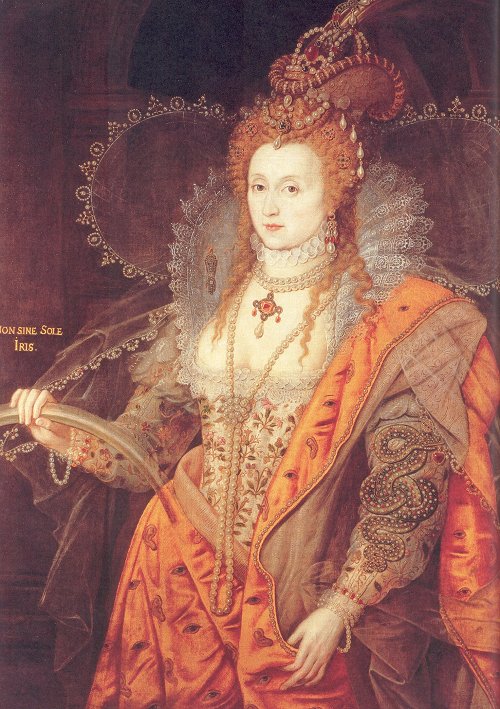
…..Your Cat believes that those in the know would think of the Ditchley Portrait…..

(Shakespeare also refers to this painting in Love’s Labours’s Lost. See full ‘Julius Caesar Decoded’ Post.)

2. In the ‘Julius Caesar Decoded’ Post, Your Cat also shows how Shakespeare links the family names of Penelope Rich with Charles Blount, Eighth Baron Mountjoy, in Sonnet 37.

While researching for my upcoming Post……

‘Trixie the Cat’s Guide to the Sonnets of William Shakespeare’

…..Your Cat discovered that Shakespeare has done EXACTLY THE SAME THING with Penelope Rich and Roger Manners, the Fifth Earl of Rutland, in Sonnet 85…..

To read the full, revised, ‘Julius Caesar Decoded’ Post – and this Pawnote – please click: HERE.

‘Bye, now…..

It is with great joy that the Agents announce that on 22nd August, 2012, The Shakespeare Code received its….

55,000th VIEW!!!

It also admitted to the Brotherhood and Sisterhood of The Code….

SIX NEW COUNTRIES!!!

(No coercion was put, or has ever been put , NOR SHALL EVER BE PUT, on nations, however small, to join. The Shakespeare Code prides itself on being a TOTALLY VOLUNTARY organisation, devoted to the advancement of Shakespearean studies and the rights of cats.)

The nations who have nailed The Code’s colours to the mast are:

THE BAILIWICK  (‘Ballywick’) OF GUERNSEY

MACAO

NAMIBIA

DOMINICAN REPUBLIC

GHANA

PAPUA NEW GUINEA

This brings the number of participating to countries to……

ONE HUNDRED AND TWENTY-NINE!!!

To watch a march-past of all the member nations……

PLEASE CLICK: HERE!

The Code will NEVER have favourites, but it is delighted to report that Papua New Guinea has joined up….

It was here, on the island of Samarai, that Chief Agent Stewart Trotter spent the happiest years of his childhood…

(See: Biography. )

Here he is preparing to climb a coocnut tree……

Indeed, he has been stuck up one tree or another all his life…

Here is where he lived…..

The tanks outside were for collecting rain-water from the roof….

The water was then purified through filters and drunk….

Perhaps it’s not surprising that Stewart came down with gastric malaria….

And here he is preparing to dive into the island’s primitive swimming pool…..

So primitive that one day he dived in and came face to face with a giant turtle….

The locals had caught it and put it in the swimming pool to keep it fresh…..

Before they ate it….

Now over to Trixie the Cat……

First, Brothers and Sisters, we all hope you like the new lay-out for The Code – with subjects for perusal laid out on the Home Page…..

Simply click on a bar and you’ll be off….

Second, can Your Cat reply to the HUNDREDS of questions that have been ended up on her desk at Head Office?

We were told that The Agents of The Code were training for the Heptathlon at the London Olympics…..’

…..you cry….

But when it came to it, they were nowhere to be seen…..

Some irate Brothers and Sisters have questioned the probity of The Code’s Agents…..

Some have even suggested that they might not exist AT ALL!

Well, Trixie the Cat’s real enough, isn’t she?

Let HER explain what happened…..

The Agents WERE picked for ‘Team G.B.’……

But they decided to yield their places to younger British athletes…….

…… to give them a chance….

Believe me, our Agents are not the sort of men to boast…..

……. or burst into tears on the podia….

They are filled with a gentlemanly modesty which forces Your Cat to speak on their behalf.

They do, however, have half an eye to Brazil…..

‘Bye now,

By Trixie….

…your own Theatre Cat…

Brothers and Sisters of  The Shakespeare Code,

….Your Cat has been prowling the West End again….

….and has come up trumps!

She has seen William Shakespeare’s Julius Caesar

…..at the DIVINE Noël Coward Theatre, St. Martin’s Lane…

….directed by the DIVINE Greg Doran…..

(See Mr. Doran’s Celebrity Endorsement)

Julius Caesar is the all-time political play…

And Greg D. gets to the heart of it!

He sets the play in modern-day AFRICA…..

…..where the power struggles, bloodletting and naked superstition….

……mirror Elizabethan life EXACTLY!!!

It’s impossible to watch this brilliant production without thinking about ‘modern politics’….

But that’s partly because Shakespeare was thinking about ‘modern politics’ himself….

But what were ‘modern politics’ for Shakespeare?

Your Cat will reveal ALL….


We know EXACTLY when Julius Caesar was first performed – and we can thank Switzerland for that….

A Swiss tourist, visiting London, saw Julius Caesar on September 21st, 1599 at ‘about 2 o’clock’.

He reports that there were fifteen in the cast, the production was ‘excellent’ and culminated in ‘a most elegant and curious dance’ performed by four men….

……two of them in drag…

Nothing changes in Southwark…

So, what was happening in September, 1599?

EVERYTHING!

At the end of March, 1599, the Queen had sent her young favourite, the Earl of Essex…..

…..to Ireland to quell the rebellion led by the foxy Hugh O’Neil, the Earl of Tyrone….

As Essex left , there was thunder on a clear day followed by a shower of rain…

Essex was then tossed to and fro as he crossed the Irish Channel….

All of which were seen as omens…

The secret plan of the Essex/Southampton entourage was…..

1.  Essex would have a military triumph in Ireland…

2. ….then return to Wales at the head of his English/Irish army….

3. …..then join up with King James of Scotland at the head of his Scottish army

4. ……then march on London…..

5. ….. then  persuade Queen Elizabeth to name King James as her successor….

This, it was thought, would prevent Civil War from breaking out when Queen Elizabeth died.

Essex, of course, would take the opportunity of the uprising to ‘prick’ his enemies….

….people like Sir Walter Raleigh, Sir Robert Cecil, Lord Cobham and the Earl of Nottingham….

Charles Blount, the eighth Baron Mountjoy – another of Queen Elizabeth’s dishy ‘toy-boys’….

….was in on the act….

He was the lover of the Earl of Essex’s sister, Penelope Rich.

But Blount was loyal to Elizabeth – who had literally ‘picked him up’ when he was a teenager – and didn’t want to go so far as to topple Elizabeth from her throne…

(‘Blount’ was pronounced ‘Blunt’, just like James ‘You’re Beautiful’ Blount/Blunt….

….the high-falsetto soldier-singer….)

William Shakespeare, as Southampton’s intimate friend, was in on the act as well…

He backed the succession of King James because of his promise of tolerance to Catholics…..

Not to mention homosexuals….

In 1599 he wrote Henry V to celebrate Essex’s departure to Ireland…..

One of the play’s Choruses invites the citizens of London to greet Essex and his army on their return to Blackheath….

In readiness for the Great Rebellion…. 

(See: Shakespeare: The Movie II)

Shakespeare also travelled to Scotland in 1599 to write and stage Macbeth…..

The purpose of the play was to show King James that Destiny was offering him the throne of England…..

…..and that he had a MORAL OBLIGATION to remove Elizabeth….

Like the Macbeths…….

……Elizabeth had usurped the throne from its rightful owner, James’s mother, Mary Queen of Scots….

……and had killed her…..

(See: Shakespeare in Scotland).

But in Ireland, everything went wrong….

Essex infuriated Elizabeth by making Southampton his General of Horse….

…….by delaying his confrontation with Tyrone

…….and by creating dozens of knights….

The Irish themselves were running circles round him….

….and Tyrone even suggested that the two of them should join up and fight Elizabeth together!

Sick, sad and lonely, Essex took consolation in the love of his Irish pageboy, Henry Tracey, who worked as his courier to England…

Indeed, this love was so strong, William Camden, a contemporary historian, even mentions it in his official account of the times…

On 30th August Essex sent Henry with a letter to the Queen which read:

From a mind delighting in sorrow; from spirits wasted with travail, care and grief; from a heart torn in pieces with passion; from a man that hates himself and all things that keep him alive, what service can Your Majesty possibly reap….

Essex had decided the time had come to invade England…

Southampton advised against….

And for Shakespeare, too, the penny had finally dropped….

Essex was too honourable, too intellectual, too romantic….

….and finally too dim….

….to lead a successful rebellion against the Queen.

But one of Essex’s ‘spin-doctors’ was still advocating a military attack on England….

…..Henry Cuffe, a low born, cynical, ex-academic and crook, who spent his time ransacking the Classics to make political points to the Earls of Essex and Southampton….

…..and ripping off any army officer who sought to buy his influence….

What could Shakespeare do to counteract influence of the ‘churlish philosopher’ Cuffe?

He could write a play….

He could write Julius Caesar…


It is the firm belief of The Shakespeare Code that Julius Caesar is an attempt to warn Essex of the dire consequences of rebelling against Elizabeth….

Essex is the noble, but naïve and unworldly Brutus, who genuinely believes that he found….

…..no man but he was true to me…

…..and who takes consolation in his love for his page-boy, Lucius…

Cuffe is the ‘lean and hungry’ war-profiteer, Cassius, who seldom smiles….

…..and smiles in such a sort

As if he mocked himself, and scorn’d his spirit

That could be mov’d to smile at anything….

……and who activates the dark side of Brutus/Essex and pushes him to his ruin…

Elizabeth is Caesar – ‘the sick girl’  – who, like the English Queen, constantly vacillates, is subject to fits….

….but who believes he is ……

…..constant as the northern star….

(Elizabeth’s motto was ‘Semper Eadem’ – always the same….)

Even Cassius’s famous description of Caesar…..

Why, man, he doth bestride the narrow world

Like a  Colossus, and we petty men

Walk under his huge legs, and peep about

To find ourselves dishonourable graves…

….is coded reference to Queen Elizabeth.

In the Ditchley portrait of the Queen….

….she ‘bestrides’ Oxford and the Home Counties….

(Shakespeare had already made a reference to this portrait in Love’s Labour’s Lost.

Berowne says:

O, if the streets were paved with thine eyes,

Her feet were much too dainty for such tread.

And Dumaine replies:

O vile! Then, as she goes, what upward lies

The street should see as she walked overhead….)

Shakespeare believed that if the rebellion were to succeed – and if Elizabeth were to be assassinated – warfare would break out among the conspirators…..

…..and that…..

….domestic fury and fierce civil strife

shall cumber all the parts…..

….. of England….

Mountjoy, who maintained his love for the Queen (she called him her ‘kitchen-maid’!) would soon have been at daggers-drawn with Essex….

…..as Mark Anthony is with Brutus…

It is the firm belief The Shakespeare Code….

….and Trixie the Cat…..

….that Mark Anthony is Charles Blount, eighth Lord Mountjoy….

Like bon viveur Anthony, who loves wine, women and plays….

……Mountjoy….

For his diet….used to fare plentifully and of the best, so as no Lord in England might compare with him in that kind of bounty….He fed plentifully both at dinner and supper, having the choicest and most nourishing meats, with the best wines, which he drank plentifully….He loved private retiredness, good fare and some few friends.  He delighted in study….in playing at shovel-board or at cards; in reading play-books for recreation….In his love to women, he was faithful and constant……

Thus wrote Fynes Moryson – Mountjoy’s secretary. But what he doesn’t mention is a less comfortable quality Mountjoy shares with the Antony of Julius Caesar – an iron, ruthless, manipulative will….

Mountjoy was to go on to decimate Ireland….

All these coded references would have been instantly picked up by the Essex and Southampton entourage…..

……but Shakespeare was always pushing the envelope….

He makes a coded reference to Mountjoy’s family name in the play itself…..

Sir Philip Sidney started this custom in his Sonnet Sequence Astrophil and Stella. 

 In Sonnet 37, he plays on the married surname of the Earl of Essex’s sister, Penelope Rich….

 Rich in the treasure of deserv’d renown,

Rich in the riches of a royal heart,

Rich in those gifts which give th’eternal crown;

Who though most rich in these and every part,

Which make the patents of true worldly bliss,

Hath no misfortune, but that Rich she is….

 It is the firm belief of The Shakespeare Code that Penelope Rich played the Princess of France in the first performance of Love’s Labour’s Lost at Titchfield…..

…..and that Shakespeare plays on her name in an identical way.

 In the last scene of the play, the Princess says….

Sweet hearts we shall be rich ’ere we depart….

And the word ‘rich’ is mentioned FIVE MORE TIMES in the same scene…

(See: Love’s Labour’s Found by Stewart Trotter)

In Sonnet 52, Shakespeare plays on the family names of both Penelope and her lover, Charles Blount, Lord Mountjoy….

 So am I as the rich whose blessed key

Can bring him to his sweet up-locked treasure,

The which he will not every hour survey

For blunting the fine point of seldom pleasure….

Samuel Johnson said that Shakespeare would sacrifice EVERYTHING for the sake of….

…a quibble…

And we see Shakespeare doing that very thing in Julius Caesar…..

And at the height of his funeral oration over the body of Caesar, Mark Antony/ Charles Blount says….

I am no orator as Brutus is

But as ye know me all a plain blunt man…

‘Bye now….


 Pawnote:

William Shakespeare also plays on Penelope Rich’s family name with the family name of another of the Essex/Southampton entourage….

Step forward, Roger Manners, 5th Earl of Rutland….


Manners  was the great, younger, Cambridge friend of the Earl of Southampton……

He famously never consummated his marriage……

Some say he damaged his manhood on a Continental tour….

Some imply other….

Be that is it may, Sonnet 85 begins…

My tongue-tied Muse in manners holds her still

While comments of your praise, richly compiled

Reserve your character with golden quill….

‘Bye, again….

It all started as a commission from Mary, the second Countess of Southampton…..

Her seventeen year old son, Henry, was refusing to marry his guardian’s grand-daughter. And as his guardian was Lord Burghley, Queen Elizabeth I’s Secretary of State….

…..this was a serious matter.

It involved a £5,000 fine – £2 and half million in our money.

 Sonnet sequences were all the rage in the stately homes of England – so Countess Mary asked Shakespeare to produce seventeen sonnets on the joys or marriage and fatherhood for Henry’s seventeenth birthday. Henry……

…..more interested in young men at the time, didn’t want to know…

 But Shakespeare got hooked on the form and used it for every purpose imaginable: to woo, to flatter, to seduce, to attack, to apologise, to assert, to boast, to cringe, to despair, to praise, to argue, to excuse, to confess, to insult, to meditate, to persuade, to arouse, to satirise, to warn, to immortalise, to condemn, to prophesy, to forgive, to grieve, to accuse, to pray, to explain, to threaten, to justify, to insinuate, to mock, to moralise, to comfort, to worship, to disturb, to propagate, to intimidate and to amuse.

 He would sometimes send the Sonnets as letters – sometimes he would read them aloud. In either case the intention was the same – to make an ACTOR’S impact on the reader – to enthral him and change him as Shakespeare changes himself. For the Shakespeare of the fourteenth line is often very different from the Shakespeare of the first. He goes on a journey of discovery in each Sonnet and often has NO IDEA AT ALL where he is going to end up.

 And the Sonnets themselves present no coherent philosophy. Indeed they are often comically at variance as Shakespeare’s feelings for his loved ones change from rapture to repulsion. They are telegrams from his heart – charged with the feelings he is undergoing AT THAT PARTICULAR MOMENT. One thought leads to another in the chaotic way that is life itself.

 The Sonnets are the raw material for Shakespeare’s plays. There isn’t a single emotion in the drama that Shakespeare hasn’t lived through himself. As such, the Sonnets are a treasure trove for the actor. The more they are understood and worked on, the more colloquial and natural they become.

They should be a part of every actor’s repertoire.

 And part of every actor.

To read ‘The Dedication to Shakespeare’s Sonnets Decoded’, please click: HERE

To read ‘Just how Gay was the Third Earl of Southampton’, please click: HERE.

To read ‘Trixie the Cat’s Guide to the Sonnets. (1) Background Jottings, please click: HERE

To read ‘Trixie the Cat’s Guide to the Sonnets. (2) The Birthday Sonnets, please click: HERE

To read ‘Trixie the Cat’s Guide to the Sonnets. (3) Was Christopher Marlowe the Rival Poet?, please click: HERE.

To read ‘Trixie the Cat’s Guide to the Sonnets (4) The Rival Poet Revealed!’ please click: HERE.

To read ‘Amazing New Light on Sonnet 86’, please click: HERE.

To read ‘The Bath Sonnets Decoded’, please click: HERE.

To read ‘Sonnet 126 Decoded’, please click: HERE.


  S.T.


 OUR COUSIN WILL

 An Interlude

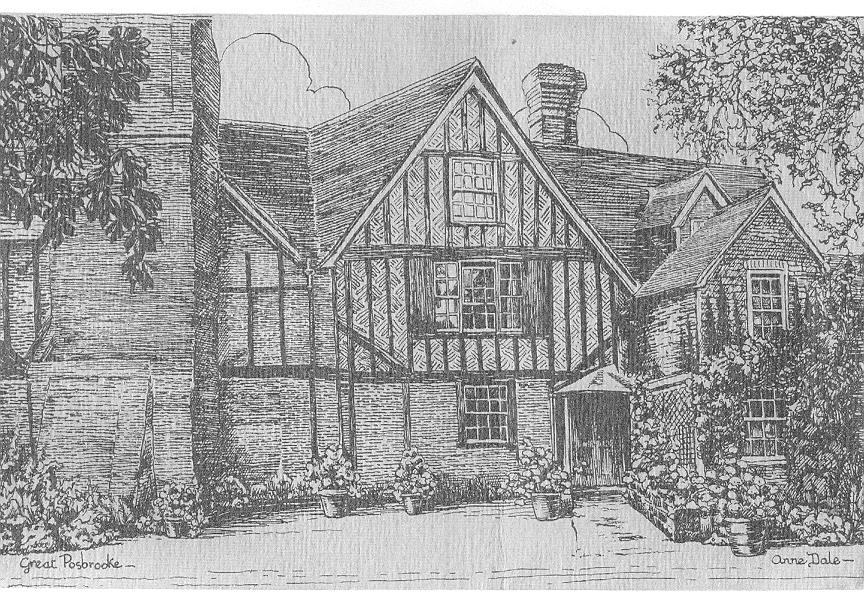
 Being the True Account of the Life of William Shakespeare, performed by Mr. William Beeston, Gent., and his Troop of Alchemical Spirits, at Posbrook Farm, Titchfield, Hampshire, in the Year of Our Lord, 1623.

 Re-created by Stewart Trotter

 © Stewart Trotter.  14th August, 2012

This is Episode One of  OUR COUSIN WILL – a stage-play in Two Acts. More Episodes will follow.

The Play has been ‘workshopped’ at Titchfield and in London and is fully copyrighted.

SIMON CALLOW……

….as kind enough to read an early draft of the play and pronounced it…..

a delight…..

The distinguished actor director and teacher , ANDREW JARVIS….

…took part in a recent read-through of the play in London and wrote to Stewart Trotter…

I think your play is wonderful. I thought it read absolutely beautifully – and it was a joy to be part of….

THE PERFORMING RIGHTS, WORLD-WIDE, ARE NOW AVAILABLE.

TRANSLATION RIGHTS ARE ALSO AVAILABLE

If your company is interested in performing the piece, please leave your contact details for Stewart Trotter at ‘Leave a Comment’ at the foot of the post. These details will not be published and will be treated in the utmost confidence.

OUR COUSIN WILL is in the form of an ‘Interlude’ – an entertainment which was popular in Elizabethan times.

Interludes told stories and were often performed in private houses. They included direct address to the audience, stand-up comedy, satire, dancing, poetry, singing, philosophy, debate and spectacle. Women would take part in the shows and entrances were often through the audience itself.

William Beeston really existed, really lived at Posbrook Farm, really practised alchemy and, the author believes, really was the model for Falstaff. The author also believes this ‘Life of Shakespeare’ to be, in essence, true. It is based on research he carried out for his 2002 book, Love’s Labour’s Found……

…… and which he has continued in his widely-read blog, The Shakespeare Code. (Over 75,000 Views)

But the play’s the thing and, in total disregard of the absurd theory that a writer’s life has no relation to his work, it draws on much of Shakespeare own writing to make its point…

Alchemy was regarded as a Science in William Shakespeare’s day and many of the greatest ‘Scientists’ of the age – like Dr. John Dee……..

……..practised it and summoned up spirits and angels to help them in their task. Dr. Dee claimed he had produced alchemical gold and Queen Elizabeth’s Treasury even had a Department of Alchemy which attempted to produce gold coins…

But this entertainment also examines the massive hold the Roman Catholic Church held over intellectuals, writers and artists….

And continues to hold…

OUR COUSIN WILL, in this draft, is cast in its optimum form – requiring trap-door, flies and access from the stage to the audience. But it can easily be adapted to a smaller, fringe theatre form – indeed, can even be performed, with doubling, by a cast as small as 8 or 9. The rôle of Shakespeare should be played by two actors – a younger and an older. The older actor should wear a fat suit for the first and last scenes of the Interlude.

The performers are, as we shall see, Spirits who can change their shape and appearance at will….

All you need is the service of a first-rate magician….                             S. T.

EPISODE ONE

 Will Beeston’s den at Posbrook Farm, Titchfield, Hampshire, 1623…….

Night-time. Beeston, a Falstaff look-alike, sits at a table, down right, as the audience comes in.  Lute music.

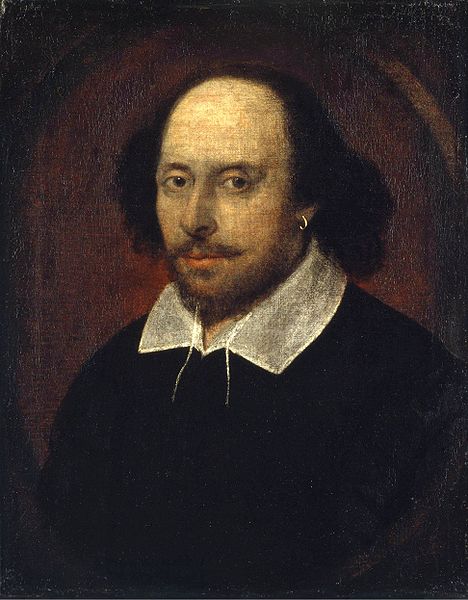
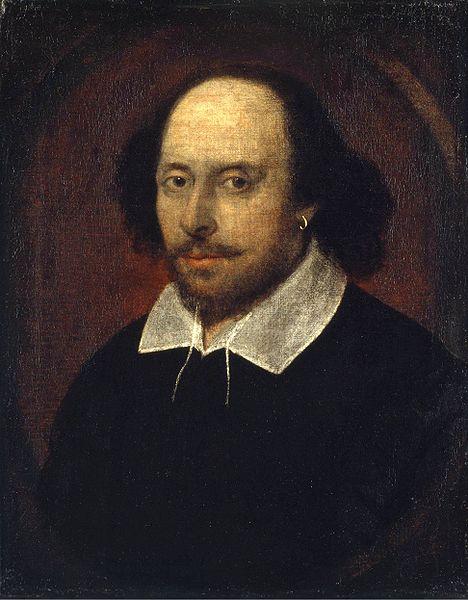
 Beeston is reading Shakespeare’s Sonnets by candlelight, drinking cider from a tankard and eating cheese. He is clearly relishing all three. His table is packed with parchments, quills and books. By his side is an easel, stacked with paintings, with the Chandos painting of Shakespeare at the top…..

Behind Beeston is a screen.

 Beeston  has bookshelves crammed with books and walls hung with paintings and painted cloths. All around are barrels, vats, cheese presses and a big, farmhouse table.

 Sometimes Beeston goes to the window to look out on the moonlit night.  He is expecting something…

 Sometimes he acknowledges someone arriving in the audience…

 Sometimes he helps himself to more cider from a huge barrel…

 Sometimes he cuts himself some more cheese.

 Sometimes he offers cider and cheese to a member of the audience he knows.

 Suddenly there is a knock at the door. BEESTON, delighted, says ‘Excuse me’ and walks to the off-stage door…

 BOY’S VOICE (off stage)

 Parcel for Beeston.  Sixpence to pay….

 (We hear BEESTON groan, pay up and slam the door. He walks back into the den, hugging a large parcel. Another knock at the door. BEESTON walks off stage again)

  BOY’S VOICE (off stage)

 And tuppence porterage. It’s sixty miles from London. And a dark night.

 (BEESTON groans even louder and slams the door even harder)

 BOY’S VOICE (departing)

Wouldn’t like to go drinking with you….

 (BEESTON returns and opens the parcel. It is a big book. BEESTON holds it aloft like a Bible, then kneels and kisses it)

 BEESTON

 It’s finally made it to Hampshire, Ladies and Gentlemen. Hot off the press. (Opens the book and reads) ‘Mr. William Shakespeare’s Comedies, Histories and Tragedies. Printed by Isaac Jaggard and Edward Blount, 1623’

 (He shows the audience the frontispiece, with the engraved portrait of SHAKESPEARE…..

……then reads from the book again)

This figure that thou here sees’t put,

It was for gentle Shakespeare cut:

Wherein the graver had a strife

With Nature to outdo the life:

O, could he have but drawn his wit

As well in brass, as he hath hit

His face, the print would then surpass

All that was ever writ in brass.

But since he cannot, reader, look

Not on his picture, but his book…..’

I’ve invited you all down to my den at Posbrook Farm, not to look on Will’s picture. Not even to look on Will’s book. I want you to do something far more dangerous.

(BEESTON puts the First Folio carefully on his table)

I want you to look on his life.

He’s seven years dead. And already the lies have started to ferment. Some half-bakes are even proclaiming that his plays were written by some old Lord…

I want to tell you the TRUTH about Will before I die myself.

I knew him well. Perhaps too well….

My name is Will Beeston, pig-breeder, poetry lover, wine merchant, cheese-maker and man of science.

 (BEESTON goes behind the screen)

Freed from the shackles of Medieval Theology and Papist Superstition, (emerging from behind the screen in full magus robes and staff) I AM AN ALCHEMIST!


(BEESTON points his staff at a dark corner of the room. There is a huge explosion and a flash.  An alchemical furnace bursts into life and a limbeck, full of gold coloured liquid, starts to bubble on top.  BEESTON laughs)


BEESTON

Please don’t be frightened of this new technology. It can be very lucrative indeed. The liquid in the limbeck is pure gold – produced last night with the aid of my homunculi – alchemical spirits I can summon up at will…

(BEESTON bangs his staff on the ground. To music, the limbeck, still glowing and bubbling, rises up from the furnace and slowly circles the room an, if possible, the auditorium)

And dismiss at will.

 (BEESTON bangs his staff again – and the limbeck returns to the furnace – and settles on the top. The light dies down)

My spirits can also take on human shape – well, almost human shape – and tonight they will recount the story of Will’s life…

…..IN THE FORM OF AN INTERLUDE!

Sometimes I will take a part in the Interlude myself….

 (BEESTON bangs his staff on the floor to summon up the SPIRIT playing the OLDER SHAKESPEARE)

Shakespeare arise! Be dust no more….

 (Music and rumblings.  OLDER SHAKESPEARE enters, through smoke, via  a trapdoor. He looks fat and is wearing flashy clothes……

……but, like all BEESTON’S  SPIRIT performers, does not look entirely human…)

 SHAKESPEARE

(Looking down at his bulk and sighing)

Dust!

 BEESTON

(Smugly) Will Shakespeare, when he got to his forties, got very fat. He had spent a fortune on food and drink and clothes….

(SHAKESPEARE crosses himself and kneels)

But, being an unreconstructed Papist, was worried about the state of his soul

 (BEESTON pronounces the word ‘soul’ with a scientist’s distaste, then  disappears behind the screen)

 SHAKESPEARE

Poor soul! The centre of my sinful earth…..

(Looking down again  at his clothes and bulk)

Feeding these rebel powers that thee array,

Why dost thou pine within and suffer dearth,

Painting thy outward walls so costly gay….?

 BEESTON

 (Poking his head out from behind the screen)

Poor old Will was slapping paint on the walls of a building that was falling apart….

(BEESTON disappears again behind the screen)

SHAKESPEARE

Why so large cost, having so short a lease,

Dost thou upon thy fading mansion spend?

Shall worms, inheritors of this excess

Eat up thy charge? Is this thy body’s end?

 BEESTON

 (Re-entering, having changed out of his magus robes)

Will resolved to starve his body to feed his soul….And lead a religious life….

 (BEESTON has complete contempt for orthodox ’ religion’)

 SHAKESPEARE

Then soul, live thou upon thy servant’s loss,

And let that pine to aggravate thy store;

Buy terms divine in selling hours of dross:

Within be fed, without be rich no more….

(SHAKESPEARE gets more and more excited and rises to his feet)

So shalt thou feed on death, that feeds on men,

And death once dead….

(Holding up his dyed cloak)

THERE’S NO MORE DYEING THEN!!!

(BEESTON claps. SHAKESPEARE speedily exits down the trapdoor)

 BEESTON

 Did Will conquer death? Did he lead a religious life? Or was it all just another one of his jokes? To-night, Ladies and Gentleman, my spirits and I will reveal all!

(Looking at audience)

 But I can see some whipper-snappers out there who weren’t even born when Good Queen Bess was on the throne….So I’d better fill them in….

(He takes the easel to the centre of the stage) When baby Will was born, (taking painting ofShakespeare off the easel to reveal painting of Queen Elizabeth underneath. A rack, attached to the easel, catches the paintings when they have been shown) Elizabeth had been our Queen for six years.


(Takes painting of Elizabeth off easel, revealing Henry VIII) 

Henry VIII was her father. (Takes painting of Henry down, revealing Anne Boleyn)  Anne Boleyn, his second wife, was her mother.

 Henry chopped off Anne’s head (BEESTON knocks painting of Anne Boleyn off the easel – revealing Jane Seymour beneath)

…..and married four more times.

 (Knocks down the paintings in quick succession)

Divorced. (Jane Seymour down. Anne of Cleves up)

Divorced. (Anne of Cleves down. Kathryn Howard up)

Beheaded. (Kathryn Howard down. Katharine Parr up)

Died…

 But this last wife, Katherine Parr, wormed her way into Elizabeth’s brain. Katherine was a crypto Protestant, a follower of John Calvin……..

……who believed that…

CALVIN

(Entering at the back of the auditorium and making his way to the stage) God knows EXACTLY what you have done….God also knows EXACTLY what you are going to do. He decided, long before you were born, whether you are going to heaven or hell….If you are going to heaven, he has given you wealth, joy and power….If, however, you are going to hell, he has given you debt, misery and servitude…But take comfort, brothers and sisters. (Turning to go) There’s nothing you can do about it.  Nothing at all.

(CALVIN exits)

BEESTON (who has cleared the easel)

King Henry was succeeded by his young son, Edward, who was a Protestant. Then Bloody Mary who was a Catholic. (To BEESTON Catholics and Protestants are equally deluded) She believed that the more Protestants she burnt the more likely it was that God would make her pregnant. Terrified that Princess Elizabeth was after her throne, she sent her to the Tower. By way of Traitors’Gate….

(SPIRIT playing young ELIZABETH enters)

BEESTON

Elizabeth prayed to God to help her….

(ELIZABETH kneels and prays: an ANGEL flies down with a crown)

BEESTON

So when she was released and crowned Queen of England, (ANGEL places crown on her head) she thought….

ELIZABETH

(Rising) God must be a Protestant!

(BEESTON Claps. ELIZABETH exits. ANGEL reverses back up to heaven)

BEESTON

So Elizabeth set out to destroy Popery in England. For ever…

Will Shakespeare’s father, John, a Papist, had….

(Enter JOHN SHAKESPEARE with a pottle pot of ale)

JOHN SHAKESPEARE

…..seen it all before. (Sitting) Edward turned us all into Proddies….Queen Mary, bless her, (crosses himself) turned us all back into Papists….( takes a swig of ale) Now Elizabeth wants us to be Proddies all over again….It’ll blow over…..Always does…Old England’s the land of the Old Faith….

(Goes to cross himself and take a swig of ale, but mixes the actions up)

Look, I HAVE to drink this stuff. I’m official Taster of Ale to the County! (Turns to go, butreturns). Now, if any of you needs to borrow a bit of money from old John in these difficult times, just drop into to my (drawing a glove from his pocket and smiling at it lasciviously)‘glove’ shop…

 BEESTON (smiling)

For the benefit of any innocent out there, gloves can be a wonderful contraceptive. Chevril gloves in partic’lar….(Shivers in excitement)

(JOHN SHAKESPEARE exits.)

Will’s mother, Mary Arden, came from one of the oldest Papist families in the land….When Will was a boy, his uncle Edward had his coddes cut off (BEESTON looks down at his genitals and shudders) and his guts and heart ripped out, just for saying his prayers in Latin.

But Edward’s real crime had been to attack ‘The Bear’ – Robert Dudley, the Earl of Leicester. He was the secret lover of ‘The Moon’ – Queen Elizabeth herself. He built a FairyCastle for her – Kennilworth – not a morning’s ride from Stratford-upon-Avon. When she came to call, all the clocks would be stopped. Then the Moon would shine on the Bear for days on end….

The Bear’s henchman was Sir Thomas Lucy, M.P. and sadist. His ambition was to invent a way of killing Papists more painful than chopping them up alive. John Shakespeare’s son, Will, an eccentric boy, full of songs and fun…..(YOUNG SHAKESPEARE, thin and eager, enters singing and dancing)….took his revenge on Sir Thomas by poaching his hares…(YOUNG SHAKESPEARE produces two dead hares from behind his back)

YOUNG SHAKESPEARE

Nicked!

(TWO HENCHMAN enter. One punches YOUNG SHAKESPEARE in the stomach who doubles up in pain. The other knees SHAKESPEARE in the face)

HENCHMEN

(With their hands on YOUNG SHAKESPEARE’S shoulders)

Nicked!

(THE HENCHMEN lead YOUNG SHAKESPEARE off)

BEESTON

Sir Lucy whipped the young lad till he was bloody mess….

He was sent, for his own safety, to Lancashire, to a posh old Papist family.There he learnt how to fit in with aristocrats…..

(BEESTON, strikes an aristocratic pose. YOUNG SHAKESPEARE enters and strikes an identical pose. MUSIC underneath this scene – like a speeded up Silent Movie)

……how to charm them….

(YOUNG SHAKESPEARE waves his arms in the air and bows deeply and ingratiatingly to BEESTON)

……how to entertain them….

(YOUNG SHAKESPEARE whispers something into BEESTON’S ear.  BEESTON laughs. YOUNG SHAKESPEARE leads BEESTON to a chair)

……and how to make himself indispensable….

(At high-speed, SHAKESPEARE mimes combing BEESTON’S hair and beard, polishing his shoes, polishing his nails, then holding out a mirror for BEESTON  to inspect himself)

YOUNG SHAKESPEARE

(Producing a long glove from his pocket) Anything for the weekend sir?

(Music stops. YOUNG SHAKESPEARE exits)

BEESTON

But The Moon persecuted Papists just as effectively in Lancashire as she did in Warwickshire. Will’s boss was imprisoned and Will himself had to flee back to Stratford. There he wooed Anne Hathaway, a woman ten years older than himself ….

(ANNE enters and sits demurely on a bench. YOUNG SHAKESPEARE enters, holding a bunch of flowers. He kneels beside her and gives her the flowers)

BEESTON

Anne yielded instantly…

(ANNE tosses away the flowers, grabs SHAKESPEARE and makes violent love to him)

ANNE

Oh Will! Oh Will! Will, Will, Will…..

YOUNG SHAKESPEARE

Oh Anne! Oh Anne! Anne, Anne Anne….(He breaks off and feels in his pockets) Damn! No gloves! Oh what the hell…

(YOUNG SHAKESPEARE jumps back onto ANNE to ANNE’S delighted squeals. They exit, still fornicating, via the trapdoor)  

BEESTON

Nature had its way. Will did the decent thing and married Anne, who had a baby girl, Susanna. Will would escape from family life to The Bear Tavern in Bridge Street…

(FULL COMPANY OF SPIRITS, enter including JOHN SHAKESPEARE, carousing and dancing.  BEESTON becomes the Barman. A raucous tune is being played and people are dancing, stamping and clapping to it…YOUNG SHAKESPEARE enters with a paper and quill…JOHN SHAKESPEARE sees his son and shouts over the music…)

JOHN SHAKESPEARE

WHY AREN’T YOU AT HOME WITH ANNE AND THE BABY?

YOUNG SHAKESPEARE

 IT’S QUIETER HERE!

(YOUNG SHAKESPEARE buys a pint tankard of ale from BEESTON and sits to write. The dance finishes and everyone cheers)

JOHN SHAKESPEARE

Will, make up words for that tune – EXTEMPORE – and I’ll buy you a pottle pot!

YOUNG SHAKESPEARE

(Rising happily to his father’s challenge) Let’s hear it again! (People play and hum it through to him and YOUNG SHAKESPEARE drinks for inspiration…) Right! I’ll sing it and someone can write it down….

(Silence…then)

JOHN SHAKESPEARE

You’re the only one who can write here, son. You’re the only one who’s been to Grammar School….If you can sing it AND write it down, I’ll buy you TWO pottle pots!

(Cheers)

YOUNG SHAKESPEARE

You’re on!

(The band start the tune once more as YOUNG SHAKESPEARE stands and sings…)

YOUNG SHAKESPEARE

A Parliament member, a justice of peace,

At home a poor scarecrow in London an ass,

If Lucy is lousy as some volke miscall it

Sing Lousy Lucy whatever befall it…..

CHORUS repeat….

A Parliament member, a justice of peace,

At home a poor scarecrow in London an ass,

If Lucy is lousy as some volke miscall it

Sing Lousy Lucy whatever befall it…

(During the Chorus Repeat YOUNG SHAKESPEARE runs back to the table and writes down the lyrics he has just composed, takes a sip of ale then sings again…He repeats this throughout the song, getting drunker and drunker and staggering more and more)

YOUNG SHAKESPEARE

He thinks himself great, yet an ass in his state,

We allow by his ears but with asses to mate….

CHORUS rpt.

If Lucy is lousy as some volke miscall it

Sing Lousy Lucy whatever befall it…

YOUNG SHAKESPEARE

To the sessions he went and did sorely complain

His park had been robbed and his hares they were slain

CHORUS rpt.

If Lucy is lousy as some volke miscall it

Sing Lousy Lucy whatever befall it…

YOUNG SHAKESPEARE

(by this time hardly able to stand or speak) If a juvenile frolic he cannot forgive

We’ll sing Lousy Lucy as long as we live

And Lucy the Lousy a libel may call it

We’ll sing Lousy Lucy whatever befall it…

CHORUS rpt.

 If a juvenile frolic he cannot forgive

We’ll sing Lousy Lucy as long as we live

And Lucy the Lousy a libel may call it

We’ll sing Lousy Lucy whatever befall it…

(YOUNG SHAKESPEARE manages somehow to get back to the table and write the last verse down…He then leads the company in a mad eccentric dance and finally holds aloft the completed ballad to cheers. JOHN SHAKESPEARE presents YOUNG SHAKESPEARE with a pottle pot. He downs it one.  Cheers.Then JOHN SHAKESPEARE presents him with a second)

YOUNG SHAKESPEARE

Dad, a challenge!

(YOUNG SHAKESPEARE hands the tankard back to JOHN SHAKESPEARE.  JOHN SHAKESPEARE takes up the challenge – and to everyone’s cheers, down the tankard in one as well. The two men collapse, affectionately, into one another’s arms)

YOUNG SHAKESPEARE

And now, worthy cubs of The Bear Tavern, I shall hang this ballad on the gates of Sir Thomas Lucy’s estate!

(The company roars with laughter and JOHN SHAKESPEARE turns away to share the joke with a friend. YOUNG SHAKESPEARE quickly exits. Doubled over with laughter, JOHN SHAKESPEARE turns back to find his son has gone)

JOHN SHAKESPEARE

Will! (then frantic) WILL! (He rushes out.  All are aghast. He returns) Holy Mother of God. He meant it….

TO READ EPISODE TWO, PLEASE CLICK: HERE
TRIXIE AT THE THEATRE

Your Cat’s been out and about…

To the Royal National Theatre, no less…..

As a guest of the LEGENDARY Alexander Technique teacher, Sue Laurie…..

…who has taught generations of actors at the National Theatre and the Royal Shakespeare Company…

We dined first at the glorious Café at the theatre – DELICIOUS deep-fried crab….then on to ICE CREAM in the interval….

But the play was the thing:  Shakespeare’s magnificient Timon of Athens in a magnificent production by Nicholas Hytner with the magnificent Simon Russell Beale as Lord Timon…

The story of the play is quickly told:

Timon, a generous and noble-hearted patron, loses all his money and is abandoned by his ‘friends’. He rejects the town and lives in the forest on roots and berries. While digging for food, he discovers gold – but by this stage he despises money and all it stands for. He ignores the taunts of the low-born ‘philosopher’ Apemantus and the offer to join in a military revenge on Athens by Alcibiades. He also rejects the appeal from his fellow Athenians to save the town. He stoically prepares for his death and burial by ‘the very hem o’ th’ sea’ and even composes his own, misanthropic epitaph:

Here lies a wretched corse, of wretched soul bereft:

Seek not my name. A plague consume you, wicked caitiffs left!

Here lie I, Timon, who, alive, all living men did hate.

Pass by and curse thy fill, but pass and stay not here thy gait….

Alcibiades, at the end of the play, settles for a negotiated peace with Athens..

Of course, in reality we DON’T get the woodlands, roots and berries…..or the…..

hundred springs….within this mile…..

We get an urban jungle instead….

…..slabs of decaying concrete, crushed plastic bottles and abandoned metallic food cartons….

…..and Simon Russell Beale as a bag person….

The distinguished theatre critic, the late D.A.N.Jones, believed that ALL modern directors HATED NATURE…

BUT Sir Nick, a true Brother of The Code, (See: Celebrity Endorsement (4) ) has realised that the play is entirely POLITICAL….

Athens IS London…..

The painter (in this production a woman, played with full mockney accent and champagne stagger by Penny Laden)…

…..IS in reality……

And, Apemantus, played by Hilton Macrae (who looks more like Paul Scofield by the hour)…

….hangs round drinks parties, cursing his establishment hosts in snarling Glaswegian accent…

….rather like The Code’s own Fellow, Eddie Linden, is wont to do….

But who were the targets of  Shakespeare’s OWN political satire?

Who precisely was HE getting at?

There is no doubt WHATSOEVER in the mind of Your Cat that Timon represents Robert Devereux,  the Second Earl of Essex……

In the autumn of 1600, the disgraced Earl was freed from house arrest in London and ordered by Queen Elizabeth to retire to the country….

(Essex, it will be remembered, had left his post in Ireland without permission and had rushed into the Queen’s bedroom before she had time to put on her wig or make-up.)

Essex writes, with typical flamboyance, that he….

kissed her [Elizabeth’s] royal hand and that rod which had corrected him, not ruined him: but he could never be possessed of his wonted joy till he beheld again those benign looks of hers which had been his Star to direct and guide him….

Essex also declares he will….

Go into the country, like Nebuchadnezzar, till he was summoned…

(Nebuchadnezzar was exiled from the Court for seven years and, believing himself to be an ox….

….ate grass….)

Essex even bursts into verse at the prospect of pastoral retreat…….

Happy were he could he finish forth his fate

In some enchanted desert, most obscure

From all society, from love, from hate

Of worldly folk, then would he sleep secure;

Then wake again and yield God ever praise,

Content with hips and haws and bamble berries,

In contemplation passing still his days

And change of holy thoughts to make him merry;

And when he dies, his tomb may be a bush,

Where harmless robin dwells with gentle thrush.

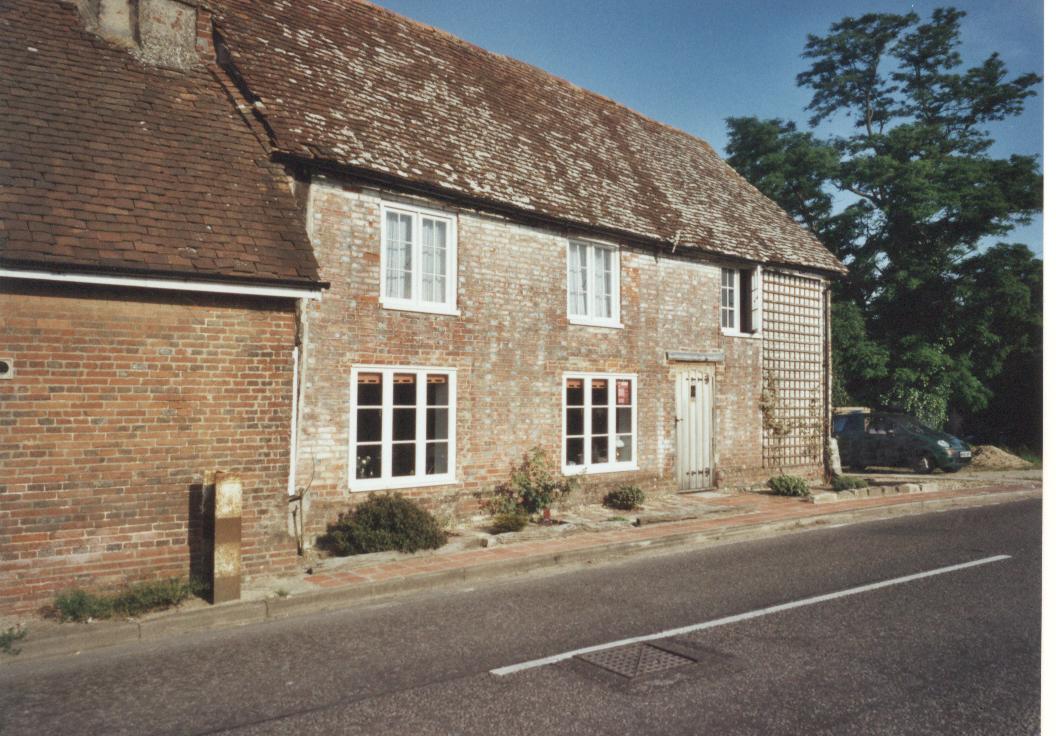
Essex opted for Barnes, which then was deep in the country……

….because his wife had a house there, Ewelme Lodge (now Essex Lodge)…

It had originally belonged to Elizabeth’s spymaster, Sir Francis Walsinham, who conducted the Armada campaign from there….

(He loved to run his greyhounds along the Thames….)

Essex, though an Earl, had come fom an impoverished family; but as the Queen’s favourite, he was given the ‘farm’ on ‘sweet wines’ i.e. the tax on imported white wine. This allowed him to fulfill his obligations as a Lord, entertain lavishly and patronise painters, artists and writers – including William Shakespeare….

As a punishment, Elizabeth took all this money away on 22nd September, 1600. Essex, who had huge debts, was left penniless…

Many of his entourage deserted him. As Robert Cecil wrote:…..

…[Essex] walks alone without greeting from his summer friends.

Those who stayed loyal to Essex were divided about what to do next. One half was led by the cynical, plebeian, ‘kindle-coal and make-bate’, Henry Cuffe, who, The Code believes, was the model for Apemantus….

And, indeed, the model for Iago….

Cuffe believed that Essex could only restore his former glory if he made some ‘desperate attempt’ by saving England from ‘the corrupt managery of certain persons’. He loved quoting the words of Lucan:

arma tenenti, omnia dat qui justa negat….

…….which means….

he who denies what is wrong yields all to one that is armed…..

He taunted Essex for being faint-hearted and low-spirited…..

…..in just the way Apemantus taunts Timon for his….

……poor unmanly melancholy…..

The other half of the entourage advocated appeasement with the Queen….

Shakespeare belonged to this group and that is why he wrote Timon of Athens….

There is no record of the play ever having been performed and it is not even divided into acts or scenes. The Code believes it was intended for Essex to READ….

Shakespeare wanted to convince him that, in his current state of mind, political action would be catastrophic.

Elizabeth’s god-son, John Harington……

……inventor of the water closet…..

….  thought that Essex, at this stage, was insane:

He shifteth from sorrow and repentance to rage and rebellion so suddenly, as well proveth him devoid of good reason as of right mind. In my last discourse he uttered strange words, bordering on such strange designs, that made me hasten forth and leave his presence…..His speeches of the Queen become no man who hath mens sana in corpore sano. He hath ill advisors and much trouble hath sprung from this source. The Queen well knoweth how to humble the haughty spirit; the haughty spirit knoweth not how to yield, and the man’s soul seemeth tossed to and fro like the waves of a troubled sea….

In Timon of Athens Shakespeare is trying to show Essex that retreat from the world has its own heroic honour. It gives Timon the ability both to observe life properly…..

……and to conquer it by naming the exact day on which he will die….

The war-like Alcibiades is Lord Mountjoy…….

 …..who was succesfully fighting the Irish at the time Shakespeare was writing the play. Mountjoy had been in on earlier plots to topple Elizabeth, so Shakespeare is using the play to advise him that a peaceful settlement would be far superior to the bloodshed of a civil war…

Mountjoy, we know…

….delighted….in reading play-books for recreation…

….so he could have read the play in Ireland…

Shakespeare continues this theme of appeasement at Christmas (1600/1)  in Twelfth Night  – with its flattering portrait of Elizabeth as Olivia and Essex as her love-sick courtier, Orsino….

See: Olivia as Queen Elizabeth and Orsino as the Earl of Essex.

But all of this had no effect whatsoever on Essex. He wrote:

The Queen hath thrust me down to a private life. I cannot serve with base obsequiousness.  I am not conscious to myself of having done amiss: I have been unjustly committed to custody: Princes have not an infinite power; they may err as well as others. I have received wounds from my adversaries all my body over. Their violence in oppressing me shall not be greater than my constancy in bearing what they can do against me. Let them triumph: I will never follow their triumphal chariot….

Five weeks after the first night of Twelfth Night Essex led a rebellion against Elizabeth.

Three weeks after that he was dead….

‘Bye now,

………CROWS TRIXIE THE CAT…..

Yes, Brothers and Sisters, on…….

5th July, 2012

……..The Code received its 50,000th View!!!

On top of that, FIFTEEN new countries have elected, of their own free will, to join The Shakespeare Code…..

They are:

SAUDI ARABIA

MYANMAR

NEPAL

 FIJI

KYRGYZSTAN

CYPRUS

SURINAME

HONDURAS

MONGOLIA

SUDAN

BAHRAIN

LAOS

AALAND ISLANDS

NEW CALEDONIA

IRAN


This brings the total number of participating countries to a heady……

ONE HUNDRED AND TWENTY-THREE!!!

Soon, The Agents of The Code, like Alexander the Great…….

…… will lie down and weep because…

THEY HAVE NO MORE WORLDS TO CONQUER!!!

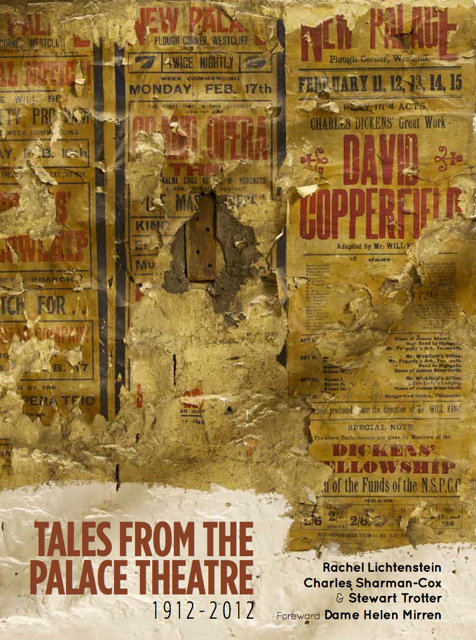
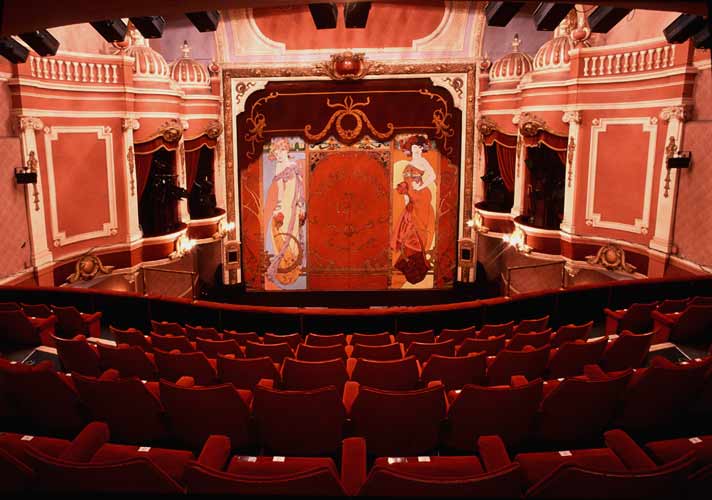
Paul Greenhalgh as Alexander the Great in Sir Terence Rattigan’s ‘Adventure Story’ at The Palace Theatre, Westcliff. MUCH MORE TO FOLLOW!

The Code’s Chief Agent, Stewart Trotter, is thrilled that Iran has joined the Brother and Sisterhood……

Trotter taught at the University in the beautiful city of Isfahan…….

….. as part of the late Shah’s ‘White Revolution’…..

See: BIOGRAPHY.

When, in 1979, the Shahanshah – the King of Kings – was hurled from his fabulous Peacock Throne…


…..there was general rejoicing in the British Press…..

The Guardian Newspaper claimed that the people of Iran were on a glorious path of self-determination….

But Agent Trotter, defying the trend, went on a programme called ‘Look, Stop and Listen’ on Radio London and said….

The Shah may have his faults but what we are going to get in Iran now is going to be a lot worse than when the Shah was in control…..

This statement was thought to be so outrageous to liberals it was reported in the 8th February, 1979 edition of the B.B.C.’s weekly journal, The Listener…..

….but it has proved a prophecy of BREATH-TAKING ACCURACY!!!

Trotter,  who has worked as a fortune teller for one of the greatest Maharajahs in India, boasts Romany blood on his mother’s side….

He prophesised that SIR NICHOLAS HYTNER….

…..would run the Royal National Theatre……

….. BEFORE HE HAD DIRECTED A SINGLE PROFESSIONAL PLAY!!!

To that end, Trotter gave Nick his first directing job at The Northcott Theatre in Exeter…

…..where Trotter was Artistic Director for five years…..

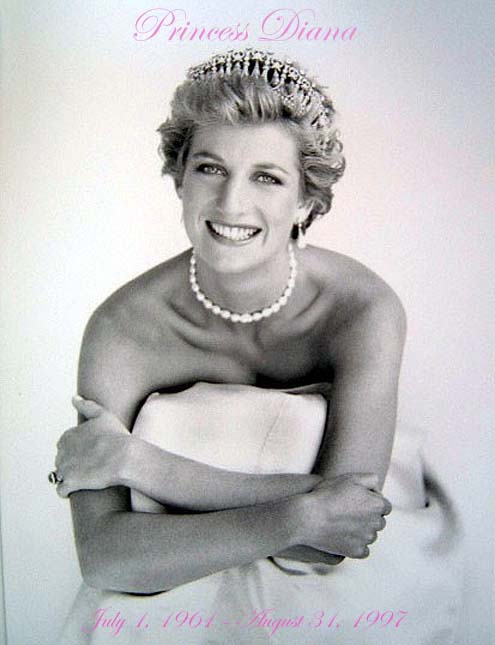
Trotter also prophesied, ON PRINCESS DIANA’S  WEDDING DAY……

……that she would set out to DESTROY the House of Windsor….


Trotter also prophesied that JOHN MAJOR….

……would be judged by history as a great Prime Minister……

He told Major, to his face (when he had just been hounded from office) that he had governed England brilliantly….

That’s history…..

…. replied a visibly moved Major…..

It will be HISTORY INDEED…..

…..insisted Trotter.

The British Press, having completely dismissed Major at the time of his premiership, now parrots The Chief Agent’s  opinion….

(Major kept Britain out of the dreaded Euro, initiated the Peace Process in Ireland and NEVER sucked up to Rupert Murdoch)

As for Tony Blair……

……Trotter’s prophecies about him – before he even took office – were of such a terrifying nature that they are locked to this day in a safe at The Code’s Head Office in West London…..

And if your Cat, Trixie, could be allowed her own moment of purr-time….

SHE was the first to review EDDIE LINDEN F.S.C.‘s brilliant Collection of Poems, A Thorn in the Flesh…

….which immediately sold out and received rave reviews from COPY-CATS everywhere else….

Indeed, at a recent book auction for Labour Party Funds, Eddie’s slim volume raised far more money than former Mayor of London,  Ken Livingstone’s ‘weighty’ autobiography….

And Eddie has been invited to read his poems in cities all over the world…

Your Cat’s interview with: MAGGIE OLLERENSHAW  F. S. C. ……

……a.k.a. Wavy Mavis of Open All Hours….

…. was The Code’s most popular single post…….

……beating Richard III by a short-head…….

……until last month when the delightful STEPHEN FRY…..

…… ‘Tweeted’ the ‘Old Schoolhouse’ in Titchfield….


…..declaring that he was…..

……very keen to know of the Bard’s gay affair….

This made….. ‘Just how gay was Henry Wriothesley, the third Earl of Southampton?’ 

……AT OVER 5,000 VIEWS….

THE CODE’S MOST POPULAR POST!!!

…..and  led to rejoicing in every Gay Bar in Titchfield….

 So, stay tuned to The Shakespeare Code, your Station of the Stars…..

……because……

YOU WILL ALWAYS HEAR IT HERE FIRST!!!
‘Bye, now….


It’s best to read In Defence of the Vicar of Titchfield: (1) ‘Romeo and Juliet’ first.

 G. P. V. Akrigg continues his attack on Rev. Canon Morley by writing in his Shakespeare and the Earl of Southampton (1968)….

The Parish guide is incorrect in claiming that Shakespeare’s fellow actor, Beeston, was a Titchfield man……

He then states categorically that…..

 No Beestons are listed in the register during this period.

Akrigg transcribed the Parish Register from its beginning in 1587 to the burial of the Third Earl of Southampton in 1624.

How he must wish he had transcribed a few years more…..

On the 5th May, 1629 ‘Mis Elizabeth Bestenn’ was baptised at St. Peter’s. On 25th February, 1632 ‘Mary Beestone of William Beestone gener’ was married there – and on 20th March, 1633, ‘Mrs Fraunces Beestone’ baptised.

In the Second Volume of the Titchfield Parish Register (1634-1678)…….

……brilliantly transcribed by the Titchfield History Society –  there are ELEVEN references to the name ‘Beeston’ and its variants.

Akrigg attacks Morley’s scholarship……

He should have got his own house in order first….

Even the Titchfield History Society itself can’t resist a bit of Vicar-bashing….

What is it about Vicars?

Why do they bring out the worst in everybody?

In April, 1981, two Distinguished Members of the Titchfield History Society…….

….no names, no pack-drill…..

….wrote in The Hampshire Field Club Local History Newsletter 1 (3):

Morley recorded in his parish guide the ‘incontrovertible fact’ that the family of Shakespeare’s ‘great friend and fellow actor William Beeston lived in Titchfield. The actor who for a time (about 1598) was in the Lord Chamberlain’s Company was in fact Christopher Beeston; it was his son, William Beeston who knew John Aubrey of the Brief Lives . There is however no evidence that this Beeston family had any connection with a family of some standing who lived at Posbrook in Titchfield in the 1630’s….

‘NO EVIDENCE’ !!!

Chistopher Beeston – who signed himself on this occasion  Christopher ‘Hutchinson’ – completed his will on 4th October, 1638. 

He stated he was ‘sick and weak in body’.

He wrote a codicil to his will on 7th October, 1638.

TWO DAYS LATER on 9th October 1638, William Beeston, of Posbrook Farm, Titchfield signed his will….

He said he was ‘weak in body’.

Chistopher Hutchinson/Beeston was buried in St. Giles-in-the-Fields on 16th October, 1638 and William Beeston was buried at St. Peter’s, Titchfield, on 3rd December, 1638.

EITHER THIS A COINCIDENCE OF COSMIC PROPORTIONS OR THERE WAS A LINK BETWEEN THE TWO MEN!!!
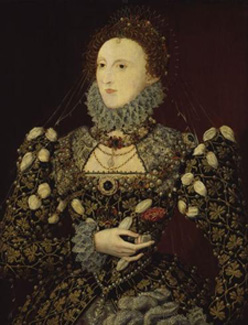
The Shakespeare Code is of the firm opinion that William Beeston of Titchfield was the natural father Christopher Hutchinson/Beeston who was illegitimate – hence his two names.

By 1638 William Beeston had acquired a legitimate family as well. 

That’s why he writes……

 I bequeath to every child that God hath sent me five shillings….

The phrase ‘every child that God hath sent me’ covers his illegitimate children along with his legitimate.

By leaving Christopher et al a paltry 5 shillings each – £125 in today’s money – the wealthy William Beeston (he had just acquired a coat of arms) prevented any further claims on his estate from his illegitimate children.

The bulk of his estate he left to his….

Beloved wife Elizabeth….

The Code believes that Christopher Hutchinson/Beeston begged his natural father, Titchfield William Beeston, to visit him when he was dying.

He wanted to persuade him to leave his family some money…..

Titchfield William Beeston was infected with Christopher’s disease, probably the Plague…

The Code further believes that the Titchfield William Beeston was in fact a friend of William Shakespeare – as he was a friend of Thomas Nashe who nick-named him William ‘Apis Lapis’…

Apis= Bee and Lapis = Stone……Beestone…..

Nashe in his pamphlet Strange Newes also mentions Beeston’s illegitimate children….

And though he was not a professional actor, The Code believes Titchfield William Beeston played the part of Bacchus in Nashe’s entertainment Sommer’s Last Will and Testament……

Bacchus’s advocacy of wine was, The Code believes, Beeston’s own sales pitch…..

….he was, amongst other things, a vintner…..

And this inspired Shakespeare and Nashe to create the immortal fat knight, Falstaff…..

Brothers and Sister of The Code can read more about this in the article…..

Why Falstaff is Fat

or the longer essay……

The Strange Case of Mr. Apis Lapis.

In 1964, George P. V. Akrigg, of The University of British Columbia, Vancouver, visited Titchfield in Hampshire, England.

He was doing research for his book, Shakespeare and the Earl of Southampton, which was published in London in 1968….

He called in at St. Peter’s Church, where the magnificent tomb of the Southampton family lies, and saw a ‘little guide’ to the Parish which was ‘sold at the door there’.

Written by Rev. G. Stanley Morley, M.A., it had been published in 1934, for sixpence.

Morley had graduated from Magdalen College, Cambridge in 1898, had been a Curate at Huntingdon, a Chaplain and Assistant Master at Seafield Park College in Fareham and an Inspector of Schools for the Diocese.

He became the Vicar of Titchfield in 1919 and stayed in the post till 1936. He was clearly a Shakespeare enthusiast…

Morley states that it was the Third Earl of Southampton’s……

 romance…….

…..i.e. his wooing of Queen Elizabeth’s Lady-in-Waiting, Elizabeth Vernon

….against the express wishes of the Queen herself…..

….on which Shakespeare….

……founded his play Romeo and Juliet, which is believed to have been acted for the first time in Titchfield.

Akrigg responds:

A local tradition that Romeo and Juliet was performed at the great house by Shakespeare’s company is too late to have any authority…

But how can Akrigg possibly know WHEN the tradition started?

A Vicar who had stayed fifteen years in his post would have been given access to generations of old family stories.

Akrigg then cites Morley’s Guide, without even mentioning the author’s name, and adds:

Those who place faith in such traditions would do well to read Lord Raglan’s chapter on Local Traditions in The Hero (London, 1936).

Fitzroy Richard Somerset, Fourth Baron Raglan, anthropologist, self-styled debunker-of-myth, lapsed soldier and bee-keeper….

…….writes:

There are various ways in which a local tradition, so called, comes into existence. In the first place there is to be found, in most rural areas, some clergyman or schoolmaster with a smattering of history or archeology who enjoys speculating about the past and invariably ends, if he does not begin, by regarding himself as a more than sufficient authority for his own statements. He is regarded as the expert and nobody dreams of questioning what he says or of checking it, even with the most readily accessible works of reference….

One would expect Rev. Canon Morley, as a Cambridge M. A., to have had more than ‘a smattering of history’. 

And what if  ‘local tradition’ tallies exactly with known history?

Jane Wriothesley, later 1st Countess of Southampton, had hosted theatrical entertainments at Titchfield before the conversion of Titchfield Abbey to a Stately Home had even been completed.

In 1538, one of Thomas Wriothesley’s servants wrote to him….

She [Jane] also handleth the country gentlemen, the farmers and their wives to your great worship and every night is as merry as can be with Christmas plays and masques with Anthony Gedge and other of your servants…

Thomas Wriothesly himself…..

…… was a keen amateur actor. John Leland recalled how, when he acted in college plays at Cambridge…

Your beauty so shone upon your brow, your head of golden hair so glistened, the light of your keen mind was so effulgent, and your winning virtue so adorned you, that, one amongst many, you were seen to be a pattern for all.

The Code’s Chief Agent, Stewart Trotter, has also found a letter, written in 1543, from Nicholas Udall to Thomas Wriothesley, thanking him for trying to get his old job back as a schoolmaster at Eton.

Udall had been sacked for suspected theft of college plate and ‘buggery’ of one of his ex-pupils…

But Udall was also the author of one of the first English language comedies, Ralph Roister Doister. Udall scholars believe that the play was performed by schoolboys after 1541, but before 1551. They do not know, though, at which school.

It cannot have been Eton as plays were only performed in Latin there till 1560. A monitor would hold up a stick so that the boys knew when to laugh…

In his letter to Wriothesley, Udall writes…..

….since my coming from Titchfield…

….which implies that he was once living there.

There is an Old Schoolhouse in Titchfield, where, The Shakespeare Code believes, Shakespeare once taught….

It is entirely possible that Ralph Roister Doister was first performed at Titchfield by local schoolboys as another  Christmas entertainment….

Morley (contra Akrigg) does not say that Romeo and Juliet was performed by Shakespeare’s company or that it was performed in Place House. Indeed, one local tradition has it that Romeo and Juliet was first performed in The Great Barn…..

The Shakespeare Code has always argued that many of Shakespeare’s early plays were performed at Titchfield and Wilton and that the casts were a mixture of aristocrats (including women) and the emerging ‘professional’ players.

See: Shakespeare: The Movie

The Code believes that Morley was right.  Romeo and Juliet WAS first performed in Titchfield for the following reasons…..

1. The story had deep resonance for the Southampton family. The Third Earl of Southampton’s maternal grandfather, Antony Browne……

 ….. was one of England’s leading Roman Catholics. King Philip II of Spain (when he was King of England) first made him his  Master of Horse and then created him Viscount MONTAGUE in September, 1554

Browne had some claims to the old name of Montague, but it was chosen primarily because Henry Pole, the last ‘Baron’ Montague, had been ‘attainted’ (stripped of his title and lands) and beheaded five years earlier.

King Philip then appointed Browne the English Ambassador to the Pope and to Venice. So in 1555, the new Viscount Montague travelled to Italy…

Here the story of the rivalry between the houses of Montecchi and Capuletti went back to Dante in the fourteenth century…..

2. By 1562, when Arthur Brooke published his Romeus and Juliet – a verse translation into English from the Italian poem by Bandell – the two families were called the ‘Montagews’ and ‘Capelets’ and were said to have lived in Verona.

Indeed, Brooke states that he had by then seen…..

the same argument lately set forth on the stage with more commendation than I can look for….

This means there was already a stage version of the Romeo and Juliet story TWO YEARS before Shakespeare was born!

3. In 1572, Viscount Montague decided to hold a double wedding for two of his children, Anthony and Elizabeth. (Anthony was the twin brother of Mary Browne, mother to Shakespeare’s patron and lover, the Third Earl of Southampton). They were to marry Mary and Robert, children of Sir William Dormer.

Eight of Viscount Montague’s relatives decided it would be fun to present a Masque for the event, dressed up as Venetians. They bought…..

furniture of silks etc. and had caused their garments to be cut of the Venetian fashion.

But it suddenly dawned on them that dressing as Venetians for an English wedding….

…. would seem somewhat obscure.

…..so they asked George Gascoigne to come up with an entertainment that would explain their dress….

Gascoigne remembered Montague was an Italian name. So for the purpose of the Masque, he made Montague a….

 noble Venetian.  

The entertainment featured a ‘pretty boy’, born in England,  whose mother was from the house of Montague but whose father was from the house of Mounthermer – a branch of Viscount Montague’s family.

In the story, the boy’s father is slain fighting the Turks and the boy himself is carried off to Turkey.  However, some wandering Montagues from Venice rescue him because the boy had taken care to wear a ‘token’ in his hat….

…..which the Montacutes do bear always, for

They covet to be known from Capels when they pass

For ancient grutch which long ago  tween those two houses was.

The Montagues embrace the lad and sail back to Venice. However a storm blows them to the shores of England instead – just in time for the double wedding.

The notion that ALL the wedding guests should be dressed as Venetians was abandoned on grounds of cost….

4. The Montague and Southampton families were soon acting out the original Romeo and Juliet story for real.  The 2nd Earl of Southampton in 1577 suspected his wife, Mary (the daughter of Viscount Montague) of adultery with ‘a common person’  called Donesame. He warned her never to see the man again and snatched their eight year old son, Harry, away from her….

Then, in 1580, the Earl was told his wife had been seen with Donesame in Dogsmerfield…

….in compromising circumstances…

It was war between the  Southamptons and the Montagues.

As Gregory, the Capulet family servant, says in Shakespeare’s play:

The quarrel is between our masters and us their men

And on  23 February, 1580…..

This day Edmund Prety, servant to the Earl of Southampton was, for certain misdemeanours by him used against Mr. Anthony Browne, the eldest son of the Lord Montacute…committed to the Marshalsea….

5. Years later, at Harry Southampton’s coming of age party in 1594, his two friends, the Danvers brothers, arrived a day early and covered with blood. They had just killed Henry Long. The Long family and the Danvers family had long borne an ‘ancient grudge’ in Wiltshire.

The following year, 1595, Harry Southampton went to the Court of Queen Elizabeth. The Earl of Essex was tired of being the Queen’s lover and hoped the dashing Harry would take over…..

In 1592,  Harry had fallen in love with the dark-skinned beauty, Amelia Bassano, when she had played Rosaline in Love’s Labour’s Lost at Titchfield.

This had infuriated Shakespeare. He was trying to have an affair with her himself….

But it had made him realise that he was more in love with Harry than he was with Amelia. When Amelia became pregnant and was married off ‘for colour’ to a ‘minstrel’, Shakespeare and Harry began their affair…

But, by decoding the anonymous Willobie his Avisa,  we know that Amelia was back on the scene a couple of years later, playing Hermia in A Midsummer Night’s Dream at Copt Hall…

….and making another bid for Harry.

Her technique, though, was to play hard to get…..

So Harry fell in love with her all over again…..

……sighing and weeping and hiding himself away….

Then he went to the Court and proceeded to fall in love yet AGAIN – this time with one of the Queen’s Ladies-in-Waiting, the beautiful, if highly volatile, Elizabeth Vernon….

She was a far more suitable match for Harry as she was a cousin, albeit poor, of the Earl of Essex.

It was good news for Harry’s Mother, Mary, as the Southampton line now had a chance of surviving….

It was ambivalent news for Shakespeare. He wanted Harry to procreate; but it would mean sharing Harry’s love with yet another person…

It was dreadful news for Queen Elizabeth. She was jealous of her young Ladies-in-Waiting and hated them to have love affairs – or even get married – without her permission.

In the circumstances, Essex decided that Harry and Elizabeth Vernon needed a lot of encouragement.

He commissioned Shakespeare to write Romeo and Juliet because:

1. The names and story had long been associated with the Montague/Southampton family and….

2. It showed that love could be stronger than the tyrannical forces opposed to it…..

…..in this case the Queen of England!

As a bisexual man, Shakespeare could also empathise with Juliet’s forbidden love for Romeo. He loads the language of the two lovers with Catholic imagery – just as he loads his own language in his love sonnets to Harry.

Shakespeare also calls Harry his ‘rose’: and Juliet famously says….

A rose by any other name would smell as sweet.

Shakespeare expresses the turmoil of his own feelings in the figure of Mercutio – a character profoundly disturbed by the sex-life of his friend, Romeo.

John Dryden claimed that Shakespeare had to kill Mercutio before Mercutio killed him.

The Shakespeare Code believes that Shakespeare played Mercutio in the premiere of the play at Titchfield….

And that Harry and Elizabeth Vernon played the star-crossed lovers….

……as a form of therapy….

Romeo/Harry at the beginng of the play, is still tearfully in love with the dark-eyed Rosaline – the name of the character Amelia played in Love’s Labour’s Lost.

In the course of the action, Romeo/Harry transfers his love to Juliet/Elizabeth Vernon as his passion for her grows stronger….

All this would have been kept from Elizabeth for as long as possible…

(But the play, of course, went on to be a smash hit in public performance) 

There was another good reason for the play’s initial secrecy…..  

It contains a coded attack on the Queen….

Elizabeth loved to be associated with the Moon – cool, mysterious and chaste….

So Shakespeare plays with fire when he has Romeo say:

But soft, what light through yonder window breaks?

It is the east and Juliet is the sun!

Arise fair sun and kill the envious moon

Who is already sick and pale with grief

That thou her maid art far more fair than she.

Be not her maid since she is envious,

Her vestal livery is but sick and green

And none but fools do wear it…

Richard II was written at the same time as Romeo and Juliet and given in private performance for the same reason….

Both plays fore-shadow the 1601 Rebellion, led by Essex and Southampton, against the Queen….

Please now read: In Defence of the Vicar of Titchfield: (2) ‘The Beeston Family.’