Feeds:
Posts
Comments

In 2012, Charles Sharman-Cox, F.S.C., and Shakespeare Code Director, Stewart Trotter, edited a book about the Palace Theatre, Westcliff, called…..

One of the chapters was called Paul Greenhalgh’s Tale and it was an account of life in a weekly rep in the 1960s.

Sadly, Paul, who was a great friend of Stewart’s, died this week……

…..and as a tribute The Code is re-blogging extracts from this chapter.

When you look at the photographs it seems extraordinary to us now that these productions were created in a single week.

Thanks for all your hard-work and good humour, Paul.
Rest in Peace and Rise in Glory….

Actor PAUL GREENHALGH ….

……. was only 24 when he encountered PETER ALEXANDER RITCHIE BRIDGE….

……….who ran The Palace Theatre , Westcliff, from 1965 to 1969.

Paul’s agent had fixed an audition for him at Mr. Bridge’s  flat in Notting Hill, London…

…..where Paul takes up the story…..

PAUL’S TALE

The flat was very strange and very dark…..

……..Peter used to pretend that he was into Satan and black magic….

He once said to me:

I woke up one morning and the wall was covered with blood.

But it was just a case of terrible damp when you went in to see it…..

…….just a big streak of wet wall which needed a damp course.

I loved Peter, but he was a terrible liar. 

He had a secretary called Hilary Clulow. When you went to meet him, he used to say:

Oh, Hilary, would you just get this contract off to Diana Dors…..

…..and….

Oh, take this contract off to Mandy Miller….

…….a famous child star then. It just happened that I knew Mandy Miller, so I rang her up.

Of course, she knew nothing about it…..

They called it Weekly Rep, but in reality you didn’t have a whole week to put on a play.

With Peter you started rehearsals on the Tuesday and you had two matinees during the week, Wednesday and Saturday. So those afternoons were gone because you finished rehearsing about twelve.

Peter had a very short attention span. He would be very keen on the first morning of rehearsals…….

………but by four o’clock in the afternoon he had totally lost interest……

He would be eating cream cakes in the foyer.

Peter directed one play – I think it was an Agatha Christie – which he hadn’t read.

He didn’t read half the things he directed….

Very often we didn’t even have a run through….

At the Dress Rehearsal on the Monday, you would go in and the set would be half up. Then about half past three you might start to vaguely go through it. Often we never even got to the end.

Sometimes they would drop the curtain and we would carry on doing the Dress Rehearsal while the audience was coming in…..

At times, Roz Elvyn [the Acting A.S.M.] would hide behind the sofa with a book in her hand, feeding me the lines. 

I do remember once there was a play with a lot of telephone calls. I would pick the phone up and say

 Hello

…..and I’d think:

Who is this? What am I supposed to say?

Michael Hyatt, the Stage Manager who sat in the prompt corner, would hold up cards telling me who was on the other end of the line….

On one first night Peter had a meeting to go to so he didn’t turn up. He never came to see the show during the week because he couldn’t be bothered. He had directed a show that he never saw….

We never read the stage directions in the plays.

We would simply wait for Peter to say:

You come on over there.

Then he would let you do what you liked…..

He would say:

Oh, I want you over here.

And then you’d have to find a way of getting there.

He did have a very good eye for things.  He was very good at making pictures on the stage….

I’m sure Peter fiddled the finances….

When he got big stars down, he always paid them in cash….

June Bronhill, for instance…….

.

…..got her money in a brown envelope. I think she thought:

If I don’t get it in cash, I’m never going to get it….

Peter, and this sounds terribly arrogant, was in love with me.  Everybody thought that we were lovers, everybody, and it was completely untrue.  He just, for some reason, loved me. He wanted to turn me into the ‘Star of Southend.’

I loved Peter. I absolutely loved him. I really did.  And although he was in love with me, he never tried to make a pass at me, ever.  But he did everything in his power to keep people away from me.  If he thought anybody was getting too close, he would sack them….

The other thing Peter used to do, and this is something we discovered quite early on, was cause trouble. He would go to everybody and say:

Oh, you know so-and-so says this about you.

And for a few weeks we all really didn’t like each other. ..

He had a deep, deep love of the theatre.  He loved everything about it and had a great knowledge of plays.  He would come up with some that I had never heard of.  And he knew all the authors and where they had been produced

Because he had this love of the theatre, his parents thought:

Oh, we’ll buy him one.

Norman, his dad, was extremely wealthy and his mother, Eileen Farrow……..

…….was a dreadful contralto who always sang as though she had a pound of plums in her mouth. 

She was like Hyacinth Bucket.  She had this posh voice which she would drop out of at times.

She kept bees in her garden and would say:

 Oh, I’m going ’ome to get the ’oney……

Then, as she was leaving, she would turn around and say:

Good neet.

Once, in the middle of a performance of Robert and Elizabeth, Peter was having trouble with a scene change. He sent ‘Mother’ out to cover by singing……

She chose a song from Show Boat – which had nothing to do with the show – but sang…..

Birds gotta swim, fish gotta fly…..

When the mistake was later pointed out to her, she didn’t turn a hair.

She thought no-one had noticed.

Norman was in charge of the finances and had his office at The Theatre. I loved Norman. He was absolutely adorable….

But I came in one day during the first week of the pantomime rehearsals and found the Stage Manager and the ASM sitting on the stairs, crying with laughter. 

And I said:

What’s the matter?

And they replied: ‘

We’ve just gone to Norman for money for props for the pantomime and he’s given us a pound.

A pound to prop the entire panto! 

Peter, on the other hand, was the complete opposite….. 

He would say things like:

Oh, we need a horse here.

And, lo and behold!, someone would turn up with a horse. We had one in Adventure Story – a play about Alexander the Great…….

As Alexander, I had to come on riding Bucephalus, who was famously white. But they couldn’t get a white horse so I had to make do with a brown one….

Alexander also always wore a red cloak, but they couldn’t get a red cloak either. So I had a white one.

……And the horse came on, led by a man in a costume which didn’t reach the floor, so you could see his trainers.

On the first night, the horse shat and pissed everywhere, which summed up the production.

To be honest, it wasn’t that bad…..

All the costumes were from the film of Antony and Cleopatra. I had all Richard Burton’s outfits. This was a great idea, but none of them fitted me.

All the old ladies at the matinees would applaud when I came on with these wonderful outfits……..

…….but I couldn’t turn my back to them because I was all held together with safety pins….

Peter wanted to be Diaghilev and that’s what he looked like. He used to wear black coats down to the ground. But he couldn’t quite carry it off. He was like a twelve year old.

For instance, he brought down Elsie Randolph, a Musical Star…….

…….to play in Hay Fever. We actually managed to do a run through of this production, but at the end she went forward to ask Peter for notes……

He was lying in the second row with his feet up, fast asleep… 

Peter did manage to get audiences for his productions…..

…… and he would get stars to play in them.

I remember one day he said:

Oh, I want to do A Taste of Honey.

He always chose plays that had a good part for me.

We asked:

So who is going to play the girl?

He was getting frustrated with us, so blurted out:

 Una Stubbs.

And we thought,

Yes I bet. Una Stubbs.

And, lo and behold, who turned up on the Monday  morning but Una Stubbs!

He had employed Oriel Ross……

Self Portrait by Oriel Ross

…… who was Max Reinhardt’s leading lady. I don’t know how she had been his leading lady because she was just a piss-artist, drunk most of the time…..

She would always make her entrance through the fireplace – because she couldn’t get the idea that it wasn’t a door.  So in the end Peter just let her do it. Every night she would come on, carrying a basket of flowers, through this huge stone fireplace. 

Jessie Matthews and Wee Georgie Wood came down to do Palace of Varieties.  Some of these stars were absolutely delightful and some of them weren’t. 

Jessie Matthews wasn’t particularly nice….

Chili Bouchier was a Film Star in the 40’s and she came down to do Gigi. I didn’t like her very much either. 

She was one of those actresses who, when she acted, looked at the top of your head. ….

She never, ever looked you in the eye. I was doing a scene with her and the set was very dark.

Peter suddenly said:

Oh, Chili, I think we will have a lime on you here.

And she replied:

Oh, how lovely.

I was even more in darkness than she was, so I said:

What about my effing lime? 

She looked as if she could have killed me…. 

So for the rest of the show, there was Chili Bouchier in a limelight…..

 ……..a hissing stick of sodium which burnt so brightly it almost blinded you…..

………while all the rest of us were dancing around in the dark…..

When Peter did My Fair Lady I went to The Theatre to see a rehearsal. The poor man playing Professor Higgins was in a terrible state….

Peter had said to him:

Step forward here and the cloth will come down behind you. Then you do your song in front of the cloth.

When it came to the Dress Rehearsal, the cloth wasn’t there.

Peter said:

Come on, come forward.

And the actor replied: ‘

I thought you said the cloth was coming down behind me?

And Peter said: ‘

Can you see it up there?

And the actor replied:

No.

So Peter said:

 Well it won’t be coming down then, will it?…..

I loved Clarkson Rose, the great pantomime dame……..

…….and he loved me……..

I was no threat to him.  He had worked with all those incredible principal boys, Norman Wisdom and people like that, who had stolen the show from him. Of course, I didn’t. 

I just did exactly what I was told…. 

I had this wonderful letter from him saying:

You are the best Principal Boy I have ever worked with.….

When people took against Peter, they really hated him; but I never knew how anyone could hate him, even when he was being a monster….

And believe it or not, he would write his own reviews for the local paper.  I don’t know how he got them in there, but they were always glowing, especially about me and Mother.

We received rave reviews, week after week after week. I don’t know who they thought he was, unless, of course, he was paying somebody.

He called himself Peter Quartermain…..

The Palace has the most fantastic stage to act on. It’s what you imagine a real theatre should be, beautiful and really, really intimate. You feel as though you are wearing it when you are performing. There isn’t a dead seat in the house.

All the Fans used to come and sit in the Gallery……

Towards the end Peter had got a terrible reputation in Southend.  A lot of people were out to get him. 

The Council didn’t get their rent and that was probably the trouble…..

Peter’s Dad had also run out of money and just couldn’t continue….

Peter’s last production was a Palace of Varieties called The Last Laugh.

I kept in touch with Peter and did tours of Novello musicals for him……..

…….He thought I was the re-incarnation of  the body of Ivor……

…..while he had inherited the soul……

The dates, of course, don’t tally at all…..

I’m not particularly proud of the productions I did for Peter. But I’m proud of the fact that we went through it all and survived.

If you got a group of people together now and said:

Right, we are going to put Adventure Story on by next Monday…

…..I mean, you wouldn’t even dream of it……

I went to Peter’s funeral. Mother……

……. had banned everyone from the service who had fallen out with him. ….

She believed everything Peter said, you, see.  As far as she was concerned, Peter could do no wrong.

Peter should have stayed the rich boy who directed all the amateurs. 

That’s what he should have done.

He would have been great at that.


Michael Hyatt writes: 

I was in Alexander (Peter) Bridge’s first season at Westcliff and was there again for the latter half of his second.I arrived at the same time as Marilyn Chenney, who has added a very funny comment here.  We were both ASM’s and spent the week before rehearsal started washing down the dressing room walls.Paul Greenhalgh has remained one of my closest friends and there is hardly a time when we are together that Westcliff is not mentioned.   Mounting 25 productions in as many weeks without a single day off was very hard work  but, I would not have missed it for the world.  All the permanent company got on so well and regardless of the hard work we did have lots and lots of laughs.   We did some very good things despite the fact that everything had to be done in a week.  The productions always looked good thanks to the talent and ingenuity of our set designer John Page. At the start of rehearsals one week John went to father, NormanBridge, to ask for money for curtains, ‘What do you want new curtains for?’ Norman replied.  ‘You had new curtains last week’. Without the professionalism and respect we had for each other we would not have survived.  Everything I learned at Westcliff carried me through the rest of my theatre career.

Marilyn Aslani (Cheney) writes:

I’ve cried laughing at Paul’s stories. I joined Alexander Bridge in 1965 as an ASM for the first six months, then found myself playing leading roles, such as Irma La Douce and Corrie in Barefoot in the Park. Meeting stars like, Hetty King, Ronnie Shiner, Gladys Henson and Sandy Powell was a weekly occurrence. When I was in charge of props Peter would send me off to find, numerous live animals, including a horse, a St Bernard, an Afghan Hound and a goat. The latter would eat scripts left on the props table and butt everyone on it’s way to the stage. When it shat on stage, the rake sent it’s pellets bouncing down to the footlights, which they bounced off of and launched into the orchestra pit and the laps of the front row punters! I’ll never forget ‘Mother Bridge’ rapping on the piano in rehearsal, to halt our singing. In her best Hinge and Bracket voice she announced, “Just a minute, someone is singing different from like what I am”! God bless them all for some of the happiest years of my life.


A Review of King Lear at the Globe Theatre, Southwark

by Trixie the Cat.

Brothers and Sisters of The Shakespeare Code…

It’s been TEN long years since Your Cat sloped up to the Globe in Southwark….

This was to see the great Michelle Terry play the Princess of France in Love’s Labour’s Lost….

Way back then, Michelle and Your Cat met at a supper given by the National Theatre’s brilliant Alexander Teacher, Sue Laurie….


We were both in agreement….

The Princess of France really is Queen Elizabeth!!!

(See: ‘The Princess of France is Queen Elizabeth’ )

Michelle is to take over the Artistic Directorship of the Globe Theatre in 2018…..

Great things will happen!

Your Cat has been an ardent supporter of the Globe….

And loved, particularly, Mark Rylance as Cleopatra….


BUT – and it’s a big but…….

……productions began to get coarse and cater for..

…..the groundlings ……

……American tourists, mostly, all too eager to be raucous and crude.

Poetry got lost in stage business….

Also the Volunteer Stewards could be overweeningly  bossy….

(Why are volunteers nearly always a pain in the neck?)

However, there was no question that Your Cat would see King Lear….

…starring Kevin McNally….

….who has won world-wide acclaim as Pirate Joshamee Gibbs in the Pirates of the Carribean films..

…..not that Your Cat has ever seen any of the films…..

….She’s far too much of a snob!

[She is, though, a big fan of Johnny Depp…..

….who sometimes drops into her local, the Old Bell in the Kilburn High Road….]

No! Your Cat has been a close follower of Kevin M. since he was a student at RADA…..

….and played a sublimely funny Young Marlowe in Stewart Trotter’s production there of She Stoops to Conquer….

To this day Your Cat remembers him twitching nervously every time Kate Hardcastle clicked her fan.

Now, such is Kevin M’s INTERNATIONAL fame, Your Cat could hardly get in to see the first night….

But the play IS going to be screened in cinemas up and down the land on Thursday, 21st September…..

So book for that if you can’t get into the Globe.

As for his Lear?


STUNNING! 

Kevin M. has thrown away all the traditional, monotone, delivery of the part from the past…..

Like Paul Scofield’s dire performance in Peter Book’s dire film….

Not a lot of laughs here…

Kevin M. has realised that the old King really IS…..

…more sinned against than sinning….

He is loved by his followers who are prepared to die for him….

…..Kent, the Fool, Cordelia, Edgar and Gloucester….

……and tell him to his face when he is being an old idiot.

His strength is also his weakness……

 He is a man of utter spontaneity!

His fault has been too much love for Cordelia (Anjana Vasan) – his youngest daughter – and not enough for his other two, Goneril and Regan, splendidly performed by  Emily Bruni and Sirinne Saba…..

This King Lear loves fun and jokes…..

Loves the company and banter of his fool (the highly musical Loren O’Dair)

And makes new friends with ease…..

The banished Kent, for example, incisively played by Saskia Reeves….


Kevin M. makes his King an everyman….

He’s EVERYONE’s old rascally father, used to getting his way…..

A bit like Old Steptoe…


The lesson that Lear has to learn is that two of his own daughters hate him in a way he has never hated anyone in his life.

And it breaks his heart.

He is a blunt old soldier, a man’s man, who has never quite got the hang of women….

Kevin M. is superb in the mad scenes where he takes the place of the Fool – even looks like the Fool –

and plays the crowd like a stand-up comic.

This really is…

…reason in madness….

…..Shakespeare’s satire on the corruption of late Elizabethan and Jacobean life.

Your Cat saw the first night and is confident Kevin M. will grow and grow to sublimity in the lyrical last scenes with Cordelia….

This is the most completely HUMAN Lear you will ever see.

And the production? Nancy Meckler has assembled an excellent cast all round – as articulate as they are ethnically diverse.

Burt Caesar made a wonderfully superstitious Gloucester….


A good, loyal man, he is entirely vulnerable to the machinations of his lying, bastard, son  Edmund – played as a cocky, Jack the Lad, by Ralph Davis….

….as is his legitimate son, Edgar – played by Joshua James as a nice-but-dim, camp, aristocrat.

The cast bangs drums during the action which creates wonderful effects for the storm scene and battle. 

But what an uncompromising play this is!

Shakespeare goes right against his sources and has the Baddies win.

It is The Shakespeare Codes belief that the Bard was going through a period of dark despair when he wrote the play.

He had been cast out by his patron and lover of fifteen years, the Earl of Southampton….


….after the birth of his son in 1605…..

….just as Lear in the play is cast out.

See: ‘Sonnet 126 Decoded’

The characters in the play think that things are so bad, the world must be coming to an end….

…..as people did in the last, dark years of Queen Elizabeth.

The play shows it just needs a handful of evil people to seize power to make everyone’s life a misery.

But those evil people will finally turn against each other and destroy themselves.

And everywhere there are shown to be ordinary, decent people willing to come out of the shadows to help….

…..even at risk to their own lives.

In fact the play and this production – and Kevin M’s towering performance – prove the truth of Philip Larkin’s great line:

What will survive us is love….

‘Bye now…


Brothers and Sisters of The Shakespeare Code might also like:
The Background to ‘Lear’ and the Original Ending.


……informing her that the Reading Room was to be renamed….

The Tom Stoppard Reading Room…….

……in honour of it’s President for the last fifteen years……

…..Sir Tom……

Culture can sink no lower…..

But Your Cat has a cunning ploy…..

The Comedy Theatre…….

…. was quite recently re-named The Harold Pinter Theatre.

….in honour of Sir Harold…

In what was probably Sir Tom’s only true moment of wit, he said to Pinter:

Couldn’t you have changed your name to Harold Comedy?

In the same way I suggest Sir Tom change his name to ….

Reading Room

That way everything can be left exactly as it is….

‘Bye now…


Brothers and Sisters of The Shakespeare Code….

If you would like to read Trixie the Cat’s review of the new movie Dunkirk…..

…..on our dazzling new sister blog, The View from the Hill….

Please click:

http://theviewfromthehillblog.wordpress.com


Over on our sister blog, ‘The View from the Hill’

http://theviewfromthehillblog.wordpress.com

…..is the obituary Stewart Trotter wrote in The Guardian for his dear friend, D. A. N. Jones….

…..the novelist and critic – who tragically died in a house fire fifteen years ago.

More memories of ‘Jonesy’ will follow….

R. I. P.


Brothers and Sisters of The Shakespeare Code

If you LOVE William Shakespeare…..

…….the odds are you will LOVE Jane Austen as well!

On our sister blog, The View from the Hill…..

http://theviewfromthehillblog.wordpress.com

…has just posted Teacher’s Pet….

….a review of D.D. Devlin’s Jane Austen and Education….

….which The Code’s Chief Agent, Stewart Trotter, penned for Ian Hamilton…..

…..who published it in The New Review….

SOMETIME IN THE LAST CENTURY!!!

Stewart believes that Mansfield Park is one of the greatest novels ever written….

….and its heroine, Fanny Price, one of the most mis-understood characters in fiction!

Here’s Billie Piper in the role……

PREPOSTEROUSLY MISCAST!!!

Read how the part SHOULD have been played by clicking:

http://theviewfromthehillblog.wordpress.com

Here at The Shakespeare Code we are preparing for something amazing……

Your Cat will REVEAL ALL soon!

‘Bye, now….


Brothers and Sisters of The Shakespeare Code….

It is with the greatest of pride that Trixie the Cat…..

…..and I…..

…..announce the creation of a SISTER BLOG to The Shakespeare Code…..

THE VIEW FROM THE HILL


http://theviewfromthehillblog.wordpress.com

But why The View from the Hill?

Well, I’m at that stage in life when I’m certainly at the top of the hill on life’s journey…..

…..if not over it.

But the advantage is that you can look back on your life and onward to the life to come.

……will feature articles for newspapers and magazines I have written in the past – and reviews of current plays and books.

It will also feature reminiscences and observations.

And I plan to be as truthful as the laws of libel will allow me to be.

‘The Hill’ is also my beloved Maida Hill – where I have lived for nearly forty years.

For a long time I thought I lived in Maida Vale.

It took an American – the late great Dan Crawford, who ran the King’s Head Theatre in Islington…..

….to tell me otherwise.

But as the ‘Vale’ and the ‘Hill’ are both virtual anyway, the difference is academic….

….something I swear this blog will NEVER be!

When she is not too busy working at The Shakespeare Code offices, Trixie  the Cat will contribute pieces to The Hill.

Readers might like to start with Ruling Poses……

…..a review I wrote of the SCANDALOUS memoirs of Tom Driberg…..

….for the BBC’s The Listener

IN 1977!!!!

Click:http://theviewfromthehillblog.wordpress.com

It’s best to read ‘Why did Shakespeare write All’s Well that Ends Well?’ 

Part One 

and

Part Two

first.

Samuel Johnson wrote:

Parolles is a boaster and a coward, such as has always been the sport of the stage, but perhaps never raised more laughter or contempt than in the hands of Shakespeare.

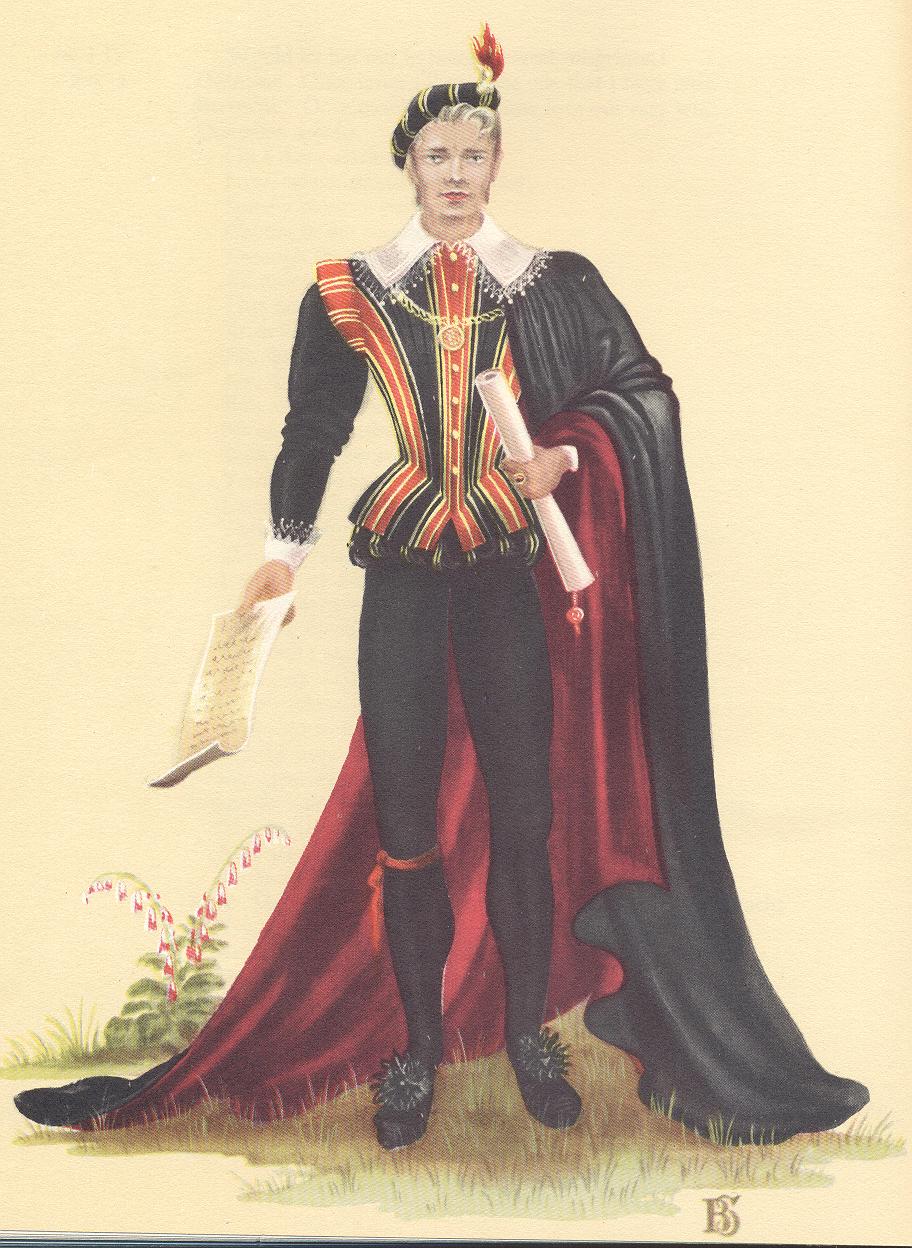
Parolles – design by Osbert Lancaster.

Also:

Parolles has many of the lineaments of Falstaff and seems to be the character which Shakespeare delighted to draw, a fellow that has more of wit than virtue.

It is The Shakespeare Code’s belief that Parolles featured in the original Love’s Labour’s Won and has been re-written in All’s Well to make him darker and more loathsome.

He is sometimes similar to the braggart Spaniard, Armado, in Love’s Labour’s Lost…..

………who started off life as a satire on Sir Walter Raleigh…..

…….and even uses some of the same words and phrases.

But is the Parolles of All’s Well a satire as well?

The Code believes he is.

First of all, he is a satire on a ‘type’.

Harry Southampton had a taste for lower class young men, just as his mother had.

In his famous ‘They that have power to hurt’ Sonnet (94) Shakespeare warns Harry of the political, moral and sexual consequences of mixing with – and making love to – men outside his class.

It is better to masturbate than go to bed with a pleb!

The summer’s flower is to the summer sweet,

Though to itself it only live and die

But if that flower with base infection meet

The basest weed outbraves his dignity.

‘Base infection’ here means both moral contamination and the very real chance of contracting venereal disease.

The final couplet graphically nails this idea home:

For sweetest things [!] turn sourest by their deeds;

Lilies that fester smell far worse than weeds.

Parolles contaminates Bertram.

Old Lafew describes him as…..

a snipt-taffeta fellow whose villanous saffron would have made all the unbaked and doughy youth of a nation in his colour

By the time Shakespeare came to write All’s Well, he had a real Captain in mind – Piers Edmondes.

A manuscript in the Marquis of Salisbury’s collection states:

Captain Piers Edmondes was also known to the Earl of Essex: he was so favoured as he often rode in a coach with him, and was wholly of his charges maintained, being a man of base birth in St. Clement’s Parish.

The Earl of Essex pursued a secret gay life from his own private bath house on the Strand…..

The Earl of Essex’s bath house in the Strand. It is said to still exist!

For a man to ride in a coach at the time was considered the height of effeminacy: for two men to ride together was an act of gross indecency. A….

coach-companion   

…..according to Francis Bacon’s mother, was a synonym for a…..

bed-companion.

During the trial of Essex and Southampton after the Rebellion a letter was produced from William Reynolds (probably brother of Essex’s secretary, Edward) in which he…

marvelled what had become of Piers Edmondes, the Earl of Essex’s man, born in the Strand near me, who had many preferements by the Earl. His villainy I have often complained of. He was Corporal General of the Horse in Ireland under the Earl of Southampton. He ate and drank at his table and lay in his tent. The Earl of Southampton gave him a horse which Edmunds refused a hundred marks for him, the Earl of Southampton would cole and huge [embrace and hug] him in his arms and play wantonly with him. This Piers began to fawn and flatter me in Ireland, offering me great courtesy, telling me what pay, graces and gifts the Earls bestowed upon him, thereby seeming to move and animate me to desire and look for the like favour.

Just after the Rebellion, Edmondes himself had written to a Mr. Wade, explaining that….

….he had spent 20 years in the Queen’s service and when his old hurts received in that service burst out afresh, he was enforced to come to London for remedy but two days before that dismal day [the Rebellion] by which mischance, being among his Lordship’s people innocently, he stands in the like danger they do.

Hugging and kissing Harry to get presents from him, fawning and flattering Reynoldes to recruit him as a rent boy, sucking up to the two Earls for cash and favours and explaining to Wade that he may have been physically present at the Essex Rebellion but was NOT part of it, is pure, pure Parolles.

Simply the thing he was made Edmondes live…..

Two Academic Footnotes:

(1) Samuel Taylor Coleridge…..

……loved the character of Helena but was disturbed that she told a lie when she said to the widow:

His face I know not.

This was not a lie – it was an equivocation!

The word…..

face

…….for the Elizabethans and Jacobeans could mean the genital area.

As King Lear says at the height of his madness and sexual disgust…..

Behold yon simpering dame whose face between her forks presages snow….

And as Shakespeare says in his own voice in Sonnet 94, in praise of chaste people who do not sleep around:

They rightly do inherit heaven’s graces

And husband nature’s riches from expense [seminal emission]

They are the lords and owners of their faces

Others but stewards of the excellence.

So, as Helena had not yet been to bed with her husband at that point in the play, she was telling ‘the truth’!

(2) The Shakespeare Code has established that the text of All’s Well has NINE words or phrases that Shakespeare never uses again – but which Thomas Nashe does……

…..once, twice and even three times!

See: Thomas Nashe was Shakespeare’s collaborator on ‘All’s Well that Ends Well.’

Thomas Nashe died in 1601 – which means that parts of the All’s Well text MUST have been written before that date.

This is further proof that All’s Well that Ends Well was originally entitled Love’s Labour’s Won…..

….and was first performed in Titchfield, at Christmas, in 1592.


It’s best to read: How Coleridge got ‘All’s Well that Ends Well’ right AND wrong!

….and: How John Dover Wilson got ‘All’s Well that Ends Well’ NEARLY right! (Part One)

and

How John Dover Wilson got ‘All’s Well that Ends Well’ NEARLY right! (Part Two)

and

Thomas Nashe was Shakespeare’s collaborator on ‘All’s Well that Ends Well’

and

Why did Shakespeare write ‘All’s Well that Ends Well’ Part One.

FIRST!!!

Why did Shakespeare turn Bertram in to a psychopath?

The answer can again be found in Shakespeare’s Sonnets.

They reveal an affair between Shakespeare and Harry that lasted from 1592…..

…….to 1605…..

There were infidelities and betrayals on both sides – lots of door-slamming and walk outs.

But the love survived Harry’s sudden onset of heterosexuality when he married Elizabeth Vernon – whom he adored…..

……and the birth of daughters.

It even survived the Essex Rebellion when Harry, along with his intimate friend the Earl of Essex, tried to overthrow Queen Elizabeth.

Essex was beheaded…….

…. and Harry, under sentence of death, was locked in the Tower.

What Shakespeare’s affair with Harry couldn’t survive, though, was the birth of a son to Elizabeth in 1605.

Shakespeare writes about this in Sonnet 126…..

O thou my lovely boy, who in thy power

Dost hold time’s fickle glass, his sickle hour,

Who hast by waning grown, and therin shows

Thy lover’s withering as thy sweet self growst;

Shakespeare had used the phrase……

…..sweet self……

…..in his Birthday Sonnets, fifteen years earlier, to mean Harry’s baby boy.

By having a son, Harry is able, miraculously, to both wane and wax at the same time.

He will grow weaker as time passes, but his baby will grow stronger.

Harry, besotted with his son, had neglected Shakespeare and this had led to his…..

….lover’s [Shakespeare’s] withering’….

In fact Harry had done more than neglect Shakespeare: he had rejected him outright.

Harry had hoped to become King James’s new boyfriend when he was released from the Tower: but James preferred prettier, younger men. The Tower and illness had taken their toll on Harry’s good looks.

Pushed from the gay centre of power, Harry became bitterly homophobic. He wanted his son to grow up to be a brave, straight soldier.

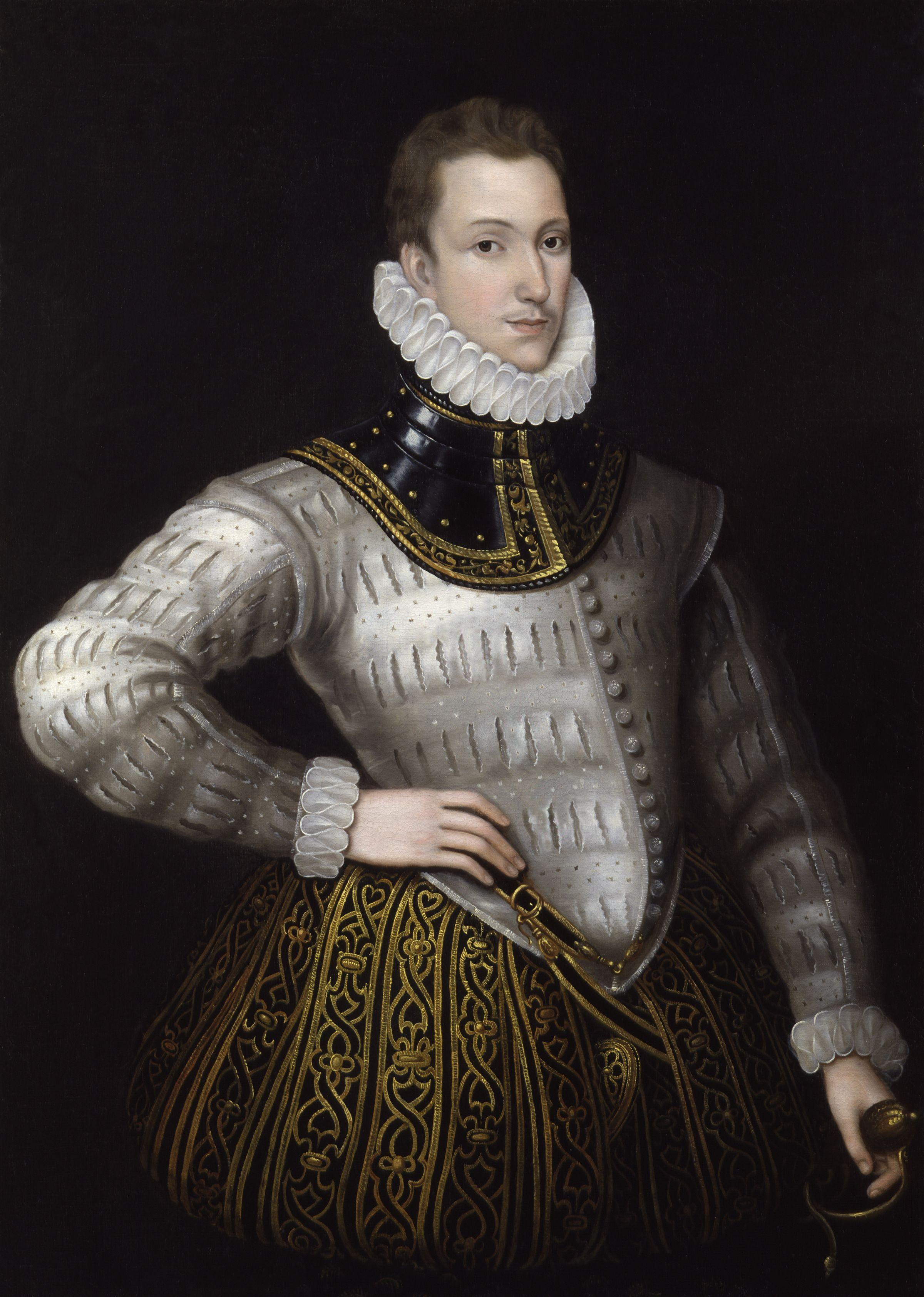
Sir Philip Sidney…….


…….Harry’s hero…..

…… had demonstrated in his Arcadia that a man could dress up as a woman on one day….

……and kill a lion the next.

Prince Pyrocles – cross-dressed as the Amazon Warrior, Zalmena – prepares to kill a lion. (From Sir Philip Sidney’s ‘Arcadia’).

But times had changed.

Shakespeare, the Player, had to go.

In Sonnet 126 Shakespeare finally wishes death on Harry:

If nature, sovereign mistress over wrack,

As thou gowest onwards still will pluck thee back,

She keeps thee to this purpose: that her skill

May time disgrace, and wretched minute kill.

Yet fear her, O thou minion of her pleasure:

She may detain, but not still keep her treasure!

Her audit, though delayed, answered must be,

And her quietus is to render thee.

Dame Nature might be keeping him preternaturally young and beautiful, but in the end she will have to give him over to Old Father Time and

….render….

….him – break down his body – in the grave….

The brackets at the end of the ‘Sonnet’……

….which at 12 lines isn’t a Sonnet at all…..

…..indicate that lines are missing from the poem….

…..and represent the yawning family tomb waiting for Harry in St. Peter’s Church in Titchfield.


See: Sonnet 126 Decoded.

Shakespeare then went on to write his great, nihilistic masterpiece King Lear, in which an old King is thrown out of his Kingdom…..

……as Shakespeare had been thrown out of the Southampton household….

……and is left hurling impotent insults at the universe.

The play proclaims that nothing in life has worth.

Or if it does, it will be brutally snatched away…..

Shakespeare’s despair distilled into revenge…

He decided to publish all his private Sonnets to Harry……

…..the abusive ones as well as the loving ones……

…..and made sure that everyone knew that Harry was the recipient….

See: The Dedication to Shakespeare’s Sonnets Decoded

Shakespeare then turned his attention to Love’s Labour’s Won.

He re-wrote it as an attack on his old lover.

All of Bertram’s redeeming features in the Boccaccio tale are wiped out.

He is no longer

a goodly young gentleman…

…or even…

….a courteous knight well-beloved in the city.

He becomes an unredeemed brute, snobbish, selfish, manipulative, mendacious, lustful and foolish….

…..whom even his mother condemns and disowns.

To make sure the audience would know Bertram was Harry, all the actor would have needed was to enter with a wig with long curly hair…..


But Shakespeare flashes up Bertram’s identity in the text as well….

Bertram becomes a General of Horse: Harry was a General of Horse on the Irish campaign.

Bertram woos Diana with song: Harry, in Shakespeare’s mind at least, was…..

…..music to hear……

Bertram hates cats: Harry hated cats.

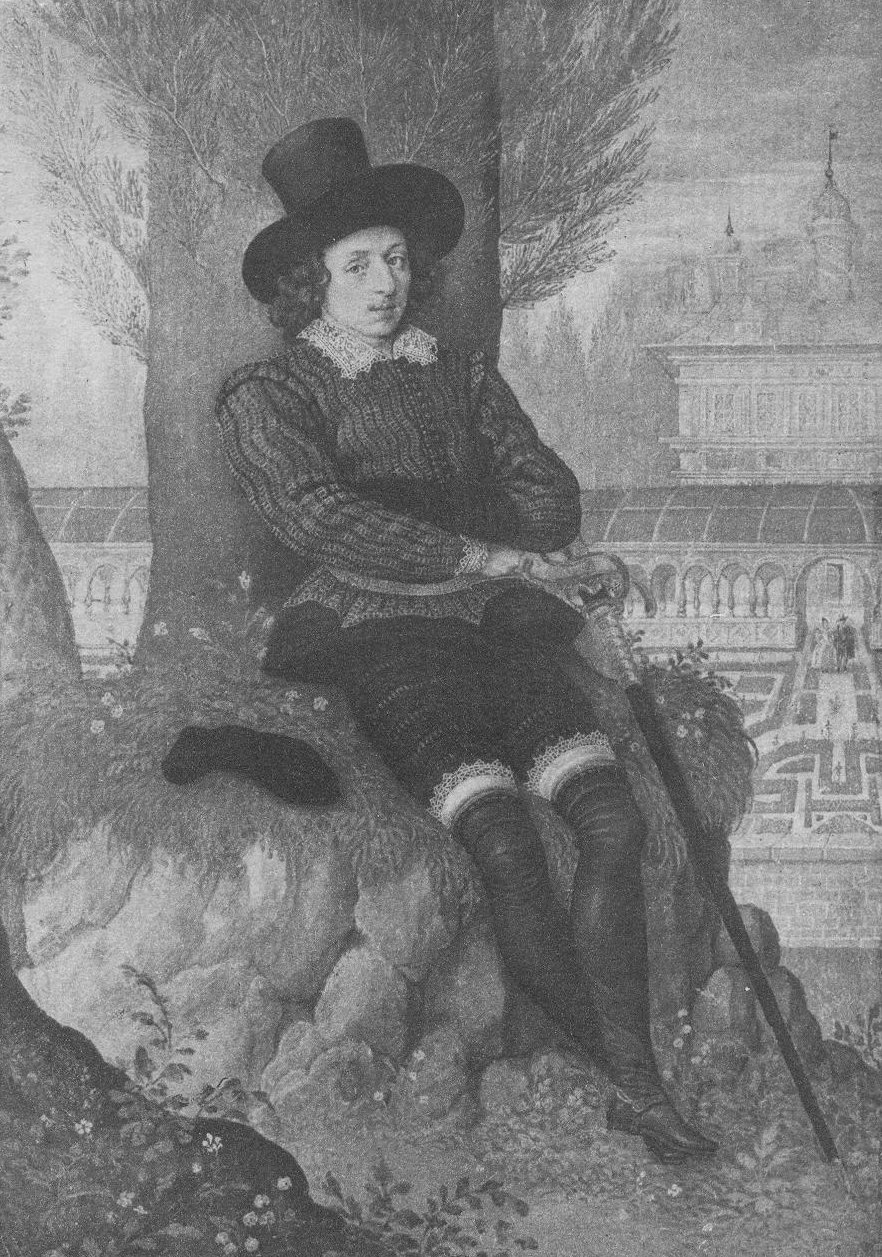
He had himself painted with one in the Tower to show he had mastered his passions.

See: The Earl of Southampton and Trixie the Cat.

But Shakespeare’s intention wasn’t solely revenge.

He makes a fascinating change to the Boccaccio tale by introducing Bertram’s mother, the Countess of Rossillion.

Dame Peggy Ashcroft as the Countess of Rossillion.

Countess Mary died in 1607……

…….the year scholars now think Shakespeare wrote the play……

…..and was entombed close to her first husband, the Second Count of Southampton, in the family vault of St. Peter’s, Titchfield.


Shakespeare clearly loved Mary, who gave him his first real chances in life.

He celebrates her warmth and her wisdom and even her Roman Catholicism.

She makes a coded reference to the Virgin Mary in the play, Bertram’s only hope!

What angel shall

Bless this unworthy husband? he cannot thrive,

Unless her prayers, whom heaven delights to hear

And loves to grant, reprieve him from the wrath

Of greatest justice.

This was something very dangerous for a playwright to do two years after the Roman Catholic Gunpowder Plot.

Shakespeare also acknowledges the remarkable part Count Mary played in his relationship with Harry.

In this re-write of Love’s Labour’s Won, Helena is clearly Shakespeare in drag.

Helena – design by Osbert Lancaster.

Boccaccio’s Helena is rich and independent: the All’s Well Helena is poor and vulnerable….

…..just as Shakespeare was when he joined the Southampton household in 1590.

When Helena says:

Twere all one

That I should love a bright particular star

And think to wed it, he is so above me:

In his bright radiance and collateral light

Must I be comforted, not in his sphere

…it could be Shakespeare himself speaking about Harry…..

….a point made by the visionary scholar Dover Wilson, in his Essential Shakespeare, as far back as the 1930s.

It is my belief that the remarkable scene in which Helena confesses her love to the Countess happened in real life….

…. and that Shakespeare confessed his love for Harry to Mary.

Early in her marriage, Countess Mary had fallen deeply in love with….

…..a common person…..

…..and her husband, Henry, the Second Count of Southampton…..

Photo of Second Earl of Southampton by Ross Underwood.

….disowned her and turned gay.

According to Countess Mary he made…

…His manservant his wife….

Mary swore in a letter to her father, Lord Montague……

…..England’s leading Roman Catholic….

…..that she had fallen in love with someone other than her husband……

…..but had never made love to him.

Helena, in the play, asks the Countess to empathise with her love for Bertram.

Had she herself ever loved passionately in her youth?

But restrained herself from acting out that love…..

….finding fulfilment in an act of non-fulfilment?

but if yourself,

Whose aged honour cites a virtuous youth,

Did ever in so true a flame of liking

Wish chastely and love dearly, that your Dian

Was both herself and love: O, then, give pity

To her, whose state is such that cannot choose

But lend and give where she is sure to lose;

That seeks not to find that her search implies,

But riddle-like lives sweetly where she dies!

The Countess, silently saying ‘yes’, gives her blessing to Helena’s liaison with her son…..

…..just as Mary gave hers to Shakespeare.

The Countess’s love had crossed barriers of class……

Shakespeare’s love crossed barriers of sex as well.

Shakespeare, in the play, was clearly examining his own feelings and behaviour. 

He had often been a ‘Helena’ in his relationship with Harry…..

……besotted, passive and accepting…….

……sometimes waiting for hours for Harry to turn up.


Being your slave, what should I do but tend

Upon the hours and times of your desires?

I have no precious time at all to spend,

Nor services to do, till your require:

Nor dare I chide the world-without-end hour

Wjhilst I, my sovereign, watch the clock for you,

Nor think the bitterness of absence sour

When you have bid your servant once adieu. (Sonnet 57)

Had he been right to cast himself as a…

…slave..

….and Harry as his….

…sovereign….?

As he was writing All’s Well, Shakespeare was also working on A Lover’s Complaint …..

……a narrative poem which concluded the volume of his Sonnets. 

Here he does something similar to All’s Well……

….he casts himself as another woman and Harry as another psychopath!

To make sure everyone knew it was Harry, he described his….

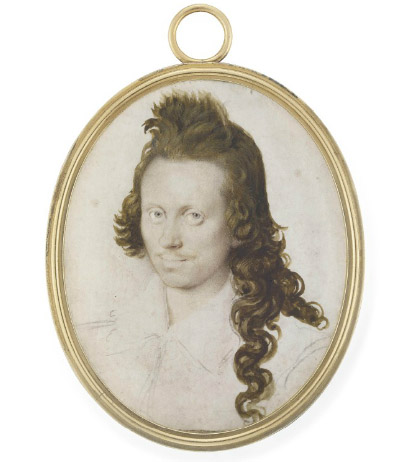
….browny locks

…..which hung…..

…..in crooked curls

And every light occasion of the wind

Upon his lips their silken parcels hurls…

The woman/Shakespeare describes her seducer’s….

…..passion

…..like Harry/Bertram’s, as

…..an art of craft…..

She/he also observes that…

When he most burned in heart-wish’d luxury

He preached pure maid, and praised cold chastity.

But at the conclusion of the poem the woman – who is ‘the lover’ of the title   – claims that she would go through the whole affair again!

A Lover’s Complaint was published a year or two after the first performance of All’s Well.

Had Shakespeare reached the same, positive conclusion when he wrote the play?

Not quite.

He was still trying to establish the truth of things.

He admits that Bertram/Harry…..

……however appalling they are as lovers…..

……are brave and skilful on the field of war.

That is what redeems them.

As the First Lord, speaking in what is surely Shakespeare’s own voice, says:

The web of our life is of a mingled yarn, good and ill together: our virtues would be proud, if our faults whipped them not; and our crimes would despair, if they were not cherished by our virtues.

Also the Countess notices that, when Diana produces the ring that six generations of Bertram’s family have worn…..

…..and which he has traded in for a one-night stand with her…..

Bertram has the decency to blush.

So Harry was not entirely Satanic!

But what about Parolles?

Parolles – design by Osbert Lancaster.

To find out, click: HERE!


It’s best to read: How Coleridge got ‘All’s Well that Ends Well’ right AND wrong!

….and: How John Dover Wilson got ‘All’s Well that Ends Well’ NEARLY right! (Part One)

and

How John Dover Wilson got ‘All’s Well that Ends Well’ NEARLY right! (Part Two)

and

Thomas Nashe was Shakespeare’s collaborator on ‘All’s Well that Ends Well’

FIRST!!!

In the eighteenth century, Samuel Johnson wrote:

I cannot reconcile my heart to Bertram; a man noble without generosity, and young without truth; who marries Helen as a coward, and leaves her as a profligate: when she is dead by his unkindness, sneaks home to a second marriage, is accused by a woman whom he has wronged, defends himself by falsehood, and is dismissed to happiness.

In the twentieth century, Arthur Quiller-Couch wrote :

We hold this play to be one of Shakespeare’s worst.

Even John Dover Wilson…..

…..the eminent Shakespearean who, in 1933, first suggested Shakespeare had been a teacher, factotum and entertainer for the Southampton family in Titchfield – wrote:

In the final scene it is hard to tell whether the verse or the sentiment it conveys is the more nauseating.

So is the play a failure?

It all depends on what Shakespeare was setting out to do….

Samuel Taylor Coleridge……

……the great poet and critic, was the first to suggest (in 1813) that…

All’s Well that Ends Well as it has come down to us, was written at two different and rather distant points of the poet’s life.

Coleridge thought that there were two distinct styles, not only of thought but of expression. This, The Shakespeare Code believes, also springs from the change in Shakespeare’s INTENTION from the first play to the second.

But what was this first play? And where and when was it performed?

The clue comes from a passage in Palladis Tamia, written by Francis Meres in 1598:

…..witness his  [Shakespeare’s]  Gentlemen of Verona, his Errors, his Love labors lost, his Love labors wonne, his Midsummers night dream, & his Merchant of Venice…

In All’s Well that Ends Well Helena says to Bertram:

Will you be mine, now you are doubly won?

…and the whole play rests on her heroic labours to make her husband love her.

It is The Code’s belief that Love’s Labour’s Won was the first version of All’s Well that Ends Well, that it was an answer to Love’s Labour’s Lost and, like that play, was performed in 1592 by a cast of professional actors and aristocrats (women as well as men) in private performance in Titchfield – to a commission from Mary Browne, Second Countess of Southampton.

See: ‘Love’s Labour’s Lost’ Revisited.

Love’s Labour’s Lost is a light hearted, satirical play in praise of heterosexual love.

But it does not resolve in marriage: the Princess of France’s father dies in the course of the action.

This is because Countess Mary’s father, Lord Montague….. 

…..and twin brother Anthony were both dying when the play was first performed at Whitsun.

A joyous ending to the play would have been totally inappropriate.

By December, though, both men were dead and it is highly probable from the title (though obviously we don’t have the text) that Love’s Labour’s Won was….

a Christmas comedy

…..that ended happily in love and marriage.

Given the bitterness of All’s Well that Ends Well, this may seem hard to believe: but Shakespeare’s source for the play – William Paynter’s translation of Boccaccio’s The Story of Giletta from his Decamerone – is a warm hearted romance, a fairy-story even….

‘Giletta’, who loves the ‘aimiable and fair’ Count Beltramo, [let’s call them Helena and Bertram from now on] is the rich and beautiful daughter of a celebrated Physician who has died.  Because Bertram is an aristocrat, he has to leave Rossillion and became the King’s Ward of Court.

Helena – who from childhood has loved him…..

 more than is meet for a woman of her age

 …..determines to follow him and win his hand in marriage.

She does this by curing the King’s fistula with one of her father’s prescriptions….

….and the help of God.

The King has promised her that she can have the husband of her choice if she succeeds in curing him, but is horrified when she chooses the aristocratic Count Bertram .

Bertram is also horrified at the thought of marrying a commoner , but obeys his King.

However, he rushes off to the wars without consummating the marriage and Countess Helena returns to Rossillion , which has fallen into disrepair because Bertram has been away.

She gains everyone’s respect by the way she restores Rossillion, then sends word to her husband that she is prepared to leave the city if her presence there means he will never return.

Bertram replies that he will only live with her when she has his ring – valued for its healing powers – in her possession and…..

 …a son in her arms begotten by me.

When she hears this, Helena leaves Rossillion so that he can return and, much to her subjects distress, sets off to become a Pilgrim.

By chance she encounters Bertram, from a distance, and learns he has fallen in love with another woman, respectable but poor.

Helena persuades the woman to gain Bertram’s ring as a token of his love, then, under cover of night, sleeps with her husband, posing as the woman he loves.  

God arranges it that Helena conceives and, when she knows she is pregnant, she and the woman, richly rewarded by Helena, leave the town .

Helena gives birth to twins and nurses them while Bertram, urged back by his subjects, returns to Rossillion.

One day he is about to celebrate the All Saints Festival when Helena arrives in her pilgrim’s clothes, with two sons, not one, in her arms and her husband’s ring.

Bertram is astonished at her ‘constant mind and good wit’, clothes her in a beautiful dress fit for a Countess and….

….kept great chere. From that time forth, hee loued and honoured her, as his dere spouse and wyfe.’

Bertram, in the Boccaccio story, is in a situation very similar to Henry Wriothesley, Third Earl of Southampton (‘Harry Southampton’), the Countess Mary’s only son .

Harry, like Betram, had a father who had died and was a ward of court. He was eager, like Bertram, to go off to fight the wars and, also like Bertram, was being asked to wed against his will.

Lord Burghley, his guardian…….

…….wanted Harry to marry Elizabeth de Vere, his granddaughter…….

…..and was threatening to impose a tremendous £5,000 fine on the Southampton family.

But there was one major difference between Harry and the Bertram in the story:

Harry was gay!

Countess Mary had commissioned Shakespeare to write seventeen Sonnets for Harry’s seventeenth birthday in 1590, urging him to marry Elizabeth and father a son and heir.

See: Trixie the Cat’s guide to the Birthday Sonnets.

Mary had followed this up with another commission two years later – Love’s Labour’s Lost – in which a group of aristocratic men swear to give up the company of women to pursue their studies, but one by one succumb to their charms.

Shakespeare cast the dark-skinned musician and courtesan, Amelia Bassano – whom he had met and fallen in love with on the Queen’s Progress to Hampshire in 1591 – as the dark skinned coquette, Rosaline.

He cast himself as Berowne (a play on Countess Mary’s family name) as a Lord who attempts to seduce her…

After the show Amelia stayed on at Titchfield because the plague was raging in London and, as we know from Shakespeare’s Sonnets, art turned into life.

Harry was jealous of Amelia (he wanted to be the centre of Shakespeare’s attention) and when Shakespeare asked him to plead his love-suit with Amelia, Amelia swooped on Harry. Harry (despite himself) also swooped on Amelia.

A painful love-triangle ensued which ended in Amelia’s pregnancy and marriage to a minstrel ‘for colour’.  It also ended in Shakespeare’s own realisation he was more in love with the boy than he was with the girl.

But Shakespeare knew that, as an aristocrat, Harry had to get married and have a son. Shakespeare, after all, was married with children himself. So he was happy to pen Love’s Labour’s Won to please Countess Mary and celebrate the worth of women and the worth of marriage.

But why, in All’s Well that Ends Well, written fifteen years later, did Shakespeare turn Bertram/Harry into a psychopath – that is, someone displaying……

…….amoral and antisocial behaviour, lack of ability to love or establish meaningful personal relationships, extreme egocentricity and failure to learn from experience?

The King in the play even suspects Bertram of murder….

To find the answer, click: HERE!