Feeds:
Posts
Comments

Archive for the ‘Uncategorized’ Category

It’s best to read ‘Shakespeare’s Walk Out’ Part 31 first.

Amelia has been cast as Hermia in A Midsummer Night’s Dream and, when she meets up again with Shakespeare, wants to have a full-blown affair with him.

She has been dropped by Harry when she became pregnant – and a loveless marriage has been arranged for her with the ‘minstrel’ Alphonse Lanier.

He has squandered what money and jewels she possessed- and Amelia, with a two year old son, Henry, to look after, needs love.

Shakespeare is still is still besotted with Amelia physically, but is wary of being hurt by her again….

97. (151)

Love is too young to know what conscience is,

Yet who knows not conscience is born of love?

Then gentle cheater urge not my amiss,

Lest guilty of my faults thy sweet self prove.

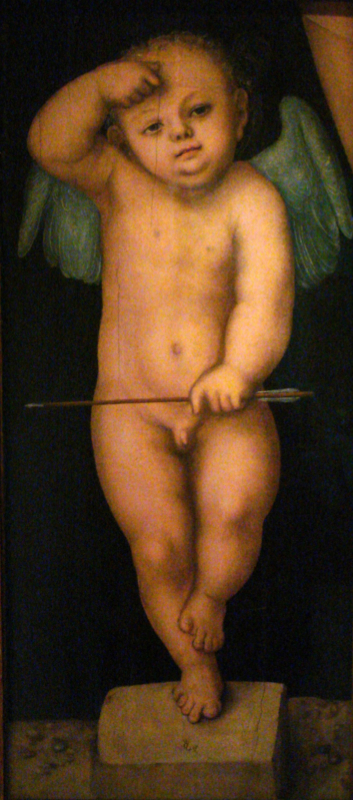
Cupid is too young to have ‘conscience’, which means (1) Moral sense and (2) Knowledge of the female organ.

[‘Con’ was pronounced ‘Cun’.]

Shakespeare asks Amelia – who would be cheating on her new husband – not to encourage him to betray his wife, Anne, lest Amelia become guilty of the same sin herself –  infidelity to Shakespeare.

For, thou betraying me, I do betray

My nobler part to my gross body’s treason;

My soul doth tell my body that he may,

Triumph in love, flesh stays no farther reason,

Because, Shakespeare says, if you betray my trust in you by going off with someone else, I will in turn have betrayed my soul which tells my body it may throw itself into a passionate, physical affair with you. And, believe me, my body needs no persuasion to do this….

But rising at thy name, doth point out thee,

As his triumphant prize, proud of this pride;

He is contented thy poor drudge to be

To stand in thy affairs, fall by thy side.

Shakespeare claims he has an erection just thinking of Amelia’s name – and his aroused penis points at Amelia’s body, claiming it as his prize.

His penis is also prepared to be Amelia’s slave as well as her master – to stand up for her and die in her service…..

…..i.e. enter her pudend, achieve orgasm and fall flaccid.

No want of conscience hold it that I call,

Her love, for whose dear love I rise and fall.

So it cannot be because of a lack of ‘conscience’ [i.e., (1) Lack of moral sense or (2) Lack of carnal knowledge]that Shakespeare calls Amelia his ‘love’. Because of his love for Amelia, Shakespeare, paradoxically, rises and fall at the same time.

This means: (1) He becomes erect and makes love to Amelia, but afterwards his penis resumes its  normal, flaccid state.

(2) He is elevated to the position of masterful lover, but falls morally because he is being unfaithful to his wife.

Anne Hathaway

Amelia has promised to be faithful to Shakespeare this time round – but Shakespeare realises that this is all a game – a game, however, which he is happy, for the moment, to play.

98. (138)

When my love swears that she is made of truth,

I do believe her though I know she lies,

That she might think me some untutor’d youth,

Unlearned in the world’s false subtleties.

Shakespeare says that when Amelia promises she will be faithful to Shakespeare, he knows from experience that she is lying; but he believes her in the hope that Amelia will think he is a naïve young man who doesn’t know how the world wags.

‘Made’ can = ‘maid’ – ‘a virgin’ – quite a playful description of an ex-courtesan.

Shakespeare was thirty in 1594: but the hard life of touring with Lord Strange’s company had prematurely aged him, as we know from Sonnet 131. (73)

Thus vainly thinking that she thinks me young,

Although she knows my days are past the best,

Simply I credit her false-speaking tongue;

On both sides thus is simple truth suppresst.

Thinking ‘vainly’ [(1) In vain (2) With vanity] that Amelia believes he is a young man, although she knows Shakespeare is past his best – Shakespeare ‘simply’ believes Amelia’s lies – ‘simply’ = (1) Straightforwardly and (2) Stupidly. This way ‘simple’ truth is denied i.e. (1) The plain truth and (2) The stupid truth.

If lies make you happy, then the truth is stupid.

But wherefore says she not she is unjust?

And wherefore say not I that I am old?

O love’s best habit is in seeming trust,

And age in love, loves not t’have years told.

But why doesn’t Amelia admit the truth about herself? That she can never be faithful to one man? And why doesn’t Shakespeare – who was prematurely bald – admit that he is old?

Shakespeare’s answer is that best ‘habit’ (garment) love can wear is to seem to trust the other person – and when a lover is older, he doesn’t want to be reminded of the fact.

‘Told’ can also = ‘tolled’ – the ringing of a bell to mark the passage of time and the progress towards death.

Therefore I lie with her, and she with me,

And in our faults by lies we flatter’d be.

So Shakespeare and Amelia ‘lie’ with each other [= (1) Tell lies and (2) Make love to each other] and so flatter each other’s shortcomings – Amelia’s promiscuity and Shakespeare’s age.

This arrangement cannot last. Shakespeare discovers Amelia has been unfaithful to him and writes to her…

  1. (152)

In loving thee thou know’st I am forsworn,

But thou art twice forsworn to me love swearing,

In act thy bed-vow broke and new faith torn,

In vowing new hate after new love bearing.

Shakespeare tells Amelia that by loving her he is breaking his wedding vow to his wife, Anne. But Amelia is breaking two vows by swearing love to Shakespeare: (1) Her wedding vow to Alphonso Lanyer that she would love him and be faithful to him, and (2) Her new Christian faith – the religion to which she has converted from Judaism.

She now hates her husband (‘new hate’) after swearing to love him (‘new love’) in a Christian church.

Amelia’s conversion wasn’t simply for convenience. She became a genuine convert having dreamt the line ‘Salve Deus Rex Judaeorum’ – ‘Hail God, King of the Jews’.  Amelia went on to write at length about her conversion to Christianity.

See: How Shakespeare’s Dark Lady found God.

But why of two oaths’ breach do I accuse thee,

When I break twenty? I am perjur’d most,

For all my vows are oaths but to misuse thee,

And all my honest faith in thee is lost.

But Shakespeare says he is in no position to condemn Amelia for breaking two vows when he himself has broken twenty. For his vows of love have completely misrepresented Amelia – and all the faith he had in her has been lost.

For I have sworn deep oaths of thy deep kindness,

Oaths of thy love, thy truth, thy constancy,

And, to enlighten thee, gave eyes to blindness,

Or made them swear against the thing they see.

Shakespeare has sworn, to himself and to others, that Amelia is kind, loving, true and constant. In order to make her seem a creature of light, he has made his ‘eyes’ blind – or if not blind, they have denied the reality of the ‘thing’ they see.

‘Eyes’ can = ‘testicles’ and ‘thing’ can = ‘pudend’.

Shakespeare’s physical attraction to Amelia has blinded his true judgement of her worth. 

For I have sworn thee fair: more perjur’d eye,

To swear against the truth so foul a lie.

Shakespeare has sworn that Amelia is ‘fair’ [(1) Honourable and (2) Beautiful] and so his ‘eye’ is perjured: ‘eye’ = (1) Literal eye that sees (2) Shakespeare’s penis – which is unfaithful to Anne (3) Shakespeare’s ‘I’ – his spiritual sense of himself.

This was a complete denial of the truth.

Amelia is, in fact, ‘foul’.

Shakespeare’s affair with Amelia has come to an end.

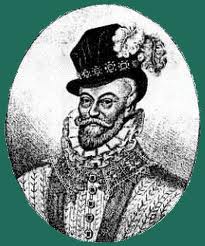
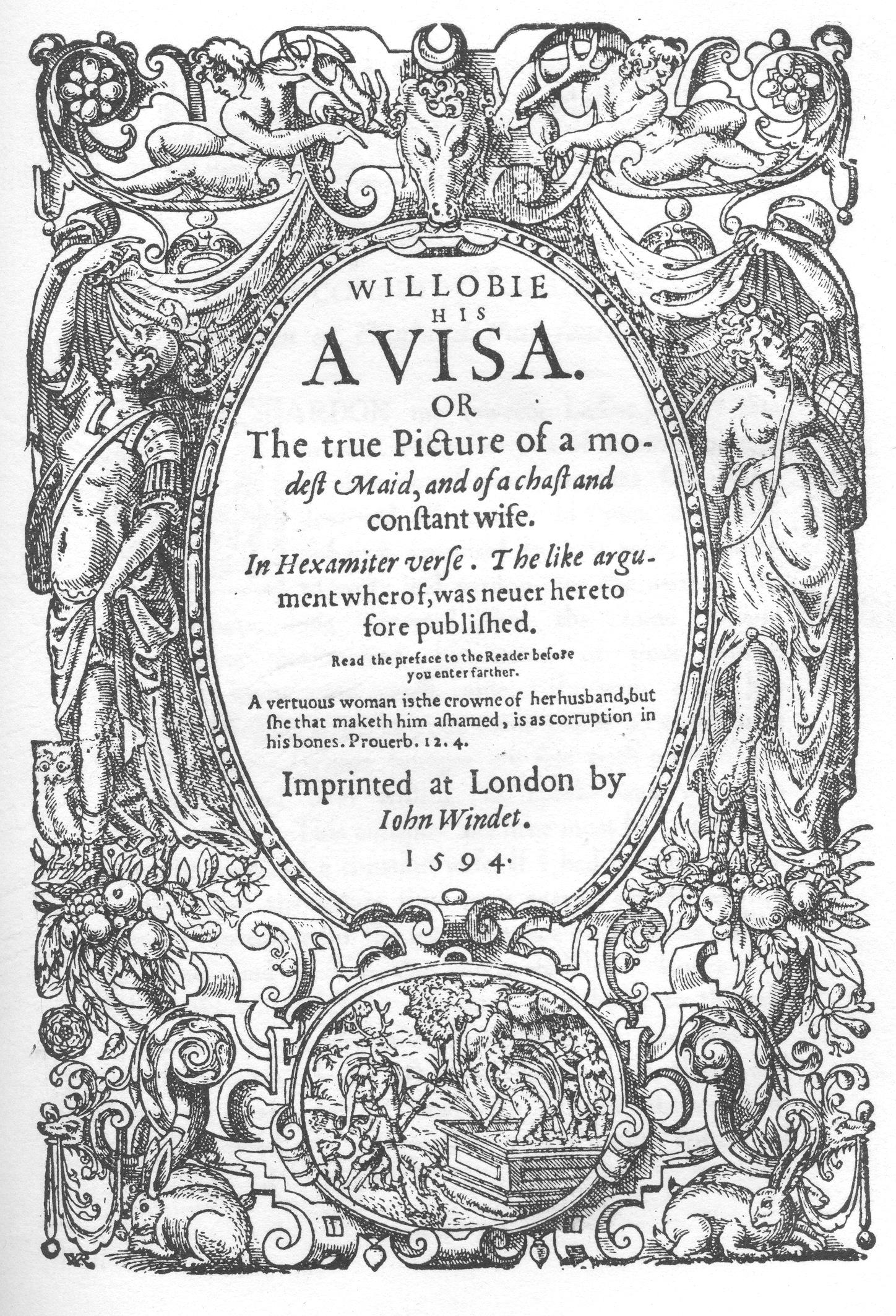
Amelia got her revenge by writing an anonymous satire later that year (1594) about the men in her life, including Lord Hunsdon, her keeper…..

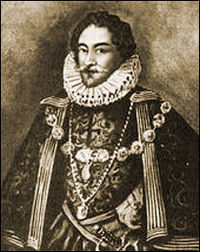
Henry Carey, Lord Hunsdon.

….and Harry (H.W.)…..

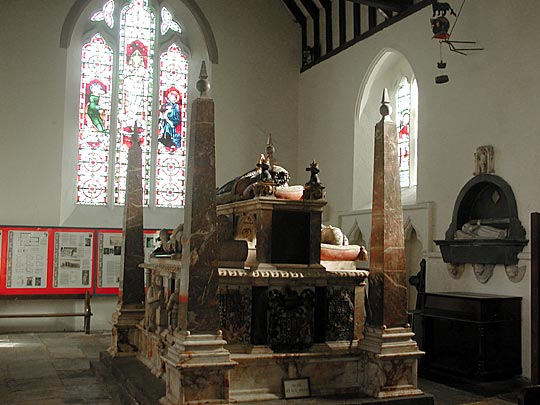
Henry Wriothesley on the Southampton tomb at St. Peter’s,Titchfield. (1594)Photo: Ross Underwood.

……and Shakespeare, (‘W.S. An Old Player’)

Willobie his Avisa – published in 1594 – even has verbal echoes of A Midsummer Night’s Dream in which Amelia played Hermia.

See:‘Willobie his Avisa Decoded.


To read ‘Shakespeare on Tour Again’, Part 33, click: HERE


Read Full Post »

It’s best to read ‘Marlowe’s Ghost’ Part 30 first.

1594 Titchfield

Harry Southampton’s adoption of George Chapman as his poet and lover was finally too much for Shakespeare.

He walked out of Titchfield and walked out of his job. This Sonnet is his abrasive resignation letter.

96.87

Farewell! Thou art too dear for my possessing,

And like enough thou know’st thy estimate;

The Charter of thy worth gives thee releasing,

My bonds in thee are all determinate.

Shakespeare tells Harry that he is too ‘dear’ for Shakespeare to own. ‘Dear’ = (1) Loved and (2) Expensive – fi

This is another attack on Chapman – ‘Chapman’ = ‘Merchant’. According to Shakespeare, Chapman ‘merchandises’ his love for Harry as though it were a commodity. See Sonnet 82. (102).

Shakespeare had also attacked Chapman by satirising him as the lisping, fawning effeminate, Boyet, in Love’s Labour’s Lost……

…….whom the Princess of France rebukes….

Good Lord Boyet, my beauty, though but mean,

Needs not the painted flourish of your praise:

Beauty is bought by judgement of the eye,

Not utter’d by base sale of chapmen’s tongues.

Shakespeare believes that Chapman cheapens love by treating it as a commodity that can be praised, bought and sold – as a merchant (‘Chapman’) does.

Shakespeare, in the Sonnets,  equates Chapman’s love with merchandising, and in this Sonnet tells Harry that Harry is fully aware of his own value – and it’s this value that gives Harry every reason to break off his affair with Shakespeare.

For how do I hold thee but by thy granting,

And for that riches where is my deserving?

The cause of this fair gift in me is wanting,

And so my patent back again is swerving.

Shakespeare says he is totally subject to Harry’s power: he can only ‘possess’ Harry as a lover if Harry agrees – and what does Shakespeare possess – physically and financially – that deserves Harry’s love and patronage? Shakespeare lacks the qualities that would justify Harry’s gift of himself and so Shakespeare’s special privilege has come to an end.

‘Riches’ is another oblique reference to Lady Penelope Rich.

Thy self thou gav’st, thy own worth then not knowing,

Or me to whom thou gav’st it, else mistaking,

So thy great gift upon misprision growing,

Comes home again, on better judgement making.

When Harry ‘gave’ himself to Shakespeare – sexually as well as emotionally – Harry was unaware of his own value: either that, or he mistook who or what Shakespeare was. So Harry takes back the great gift of himself as he starts to despise Shakespeare (‘misprision’ =’ contempt or scorn’, 1592) and can see what the true situation is.

Thus have I had thee as a dream doth flatter:

In sleep a King, but waking no such matter.

Shakespeare compares his relationship with Harry to a wish-fulfilling dream in which he believes he is a king – but wakes to find he is a pauper.

Shakespeare cast himself as Lord Berowne in Love’s Labour’s Lost – playing opposite Harry as the King of Navarre.

‘Berowne’ is a re-working of ‘Browne’ – the Countess of Southampton’s family name.  But this was play-acting. Shakespeare has to face the fact that he is now back as a penniless, lower-class man.

This is the similar to the situation Christopher Sly finds himself in in The Taming of the Shrew. He is a tinker, who gets drunk then awakes to find himself treated like a Lord…

Shakespeare has been treated as a King by Harry – but it has all been a dream  in the same way that Sly has been tricked.

Shakespeare had been working on The Taming of the Shrew – reworked from an older play The Taming of a Shrew which is set in Ancient Athens – after his return from Italy in 1593.

This Sonnet is full of ‘feminine ending’ – a double syllable at the end of each line. Katharine Duncan-Jones suggests that repeated ‘ing’ sound = ‘Ingle’ – ‘passive young homosexual’, (1592). So this is a coded attack on Harry’s sexuality – and his affair with the older Chapman.

Walking out is a massively bold step for Shakespeare at a time when, if you had no money, you starved…..

……as Robert Greene did when he walked out of Titchfield in 1592.

Robert Greene, writing in his shroud.

But, as one door closes, another opens….

Harry was to come of age in 1594 – so his mother, Mary Southampton, who had a fractious relationship with her son, had to get out of Titchfield. 

She married an old family friend and old lover of Queen Elizabeth, Sir Thomas Heneage…..

……and moved to the Savoy Palace in London….

…. Copt Hall in Essex….


Mary commissioned Shakespeare to write A Midsummer Night’s Dream to celebrate her marriage to Sir Thomas – a play which celebrated the topography of Copped Hall the way Love’s Labour’s Lost celebrated Place House and grounds at Titchfield.

After Amelia had fallen pregnant in 1592, she had been married off, ‘for colour’, to the ‘minstrel’ Alphonse Lanyer. ‘Minstrel’ was code for ‘homosexual. The couple had been married at St. Botolph’s Aldgate on 18th October, 1592.

Amelia had played the dark-skinned, coquettish Rosaline in Love’s Labour’s Lost…….

……which Mary Southampton had commissioned. Amelia got on well with aristocratic women – and so Mary asked Shakespeare to write a part for Amelia in the new play.

Amelia played the dark skinned Hermia…

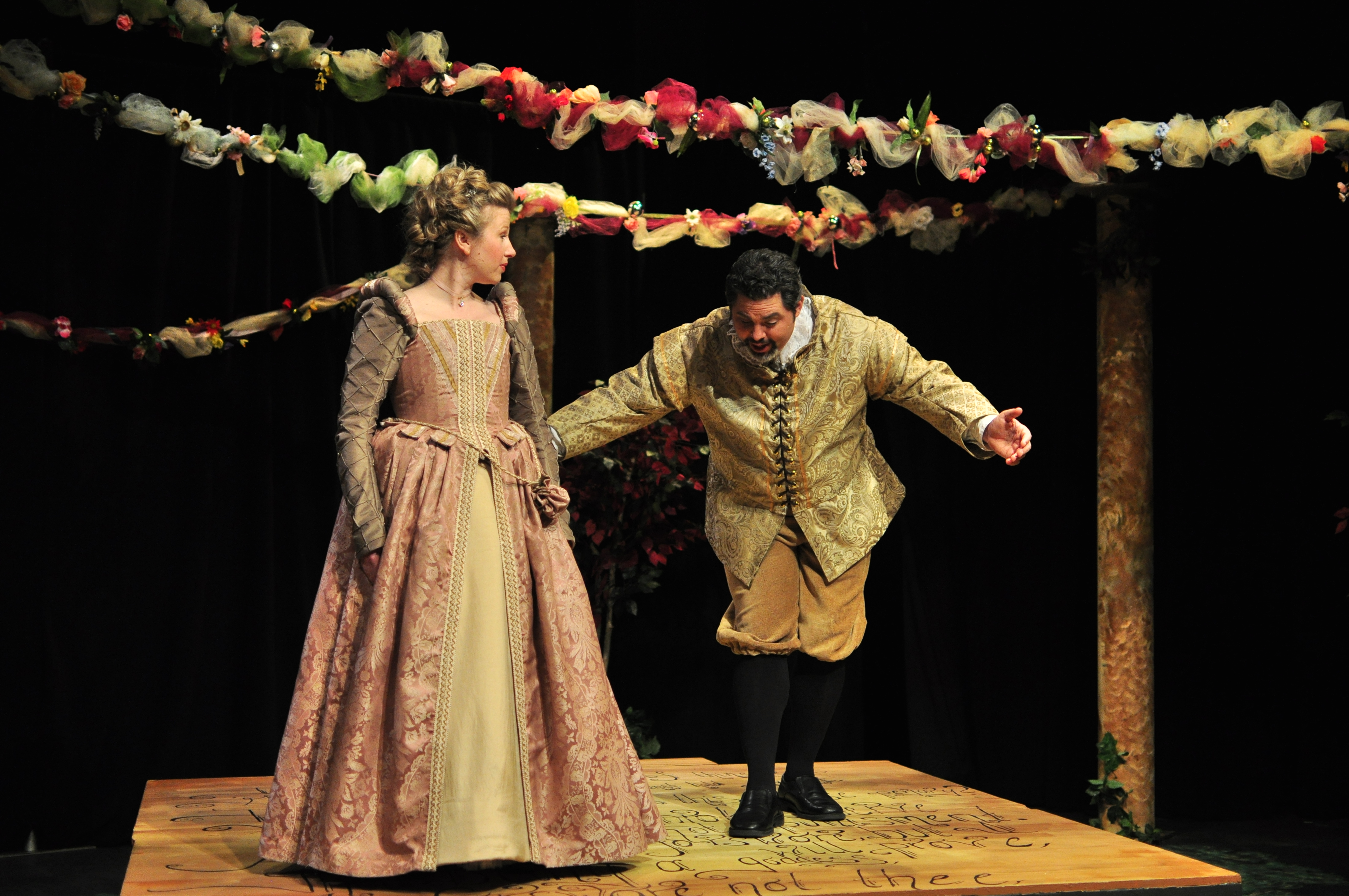
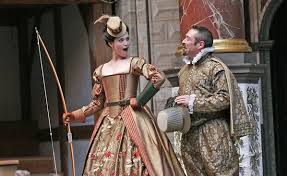
A modern day Hermia…


In the course of A Midsummer Night’s Dream, Lysander addresses Hermia as an ‘Ethiope’ and a ‘tawny tartar.’ Penelope Rich…….

……. played the long-legged Helena – teaming up again with Amelia. In Love’s Labour’s Lost Lady Penelope had played the Princess of France.

Amelia was in a very different frame of mind from the ‘love-triangle year’, 1592, when she played ‘prick-teasing’ games with Shakespeare and never went to bed with him.

We know from her astrological consultation with Simon Forman three years later (1597) that her husband, Alphonse, ‘dealt hardly with her’ and quickly squandered the money from the jewels that her keeper, old Lord Hunsdon, had given her.

Amelia was now lonely and vulnerable and when she met up with Shakespeare again at Copped Hall she wanted a full love affair with him…..

To read ‘The Return of the Dark Lady’, Part 32, click: HERE


Read Full Post »

It’s best to read ‘The Rival Poet (III) Part 29 first.

1594. Titchfield.

91. (82)

I grant thou wert not married to my Muse,

And therefore mayst without attaint ore-look

The dedicated words which writers use

Of their fair subject, blessing every book.

Shakespeare admits that Harry was not married to Shakespeare’s Muse and so without condemnation can read the Dedications other writers use about their handsome subject – Harry – whose presence blesses any book he is mentioned in.

Thou art as fair in knowledge as in hew,

Finding thy worth a limit past my praise,

And therefore art inforc’d to seek anew,

Some fresher stamp of the time bettering days.

You, Harry, are as beautiful in knowledge as you are in looks and consider your worth far greater than the praise my verse bestows upon it…..

‘Hew’ = anagram for ‘Henry Wriothesley, Earl,’ and is spelt and used that that way also in Sonnets 19.(20) – when it is printed  Hews = Henry Wriothesley, Earl of Southampton. ‘Hew’ – as opposed to ‘hue’ also appears in Sonnets 60. (140), 62. (98), 145. (67) and twice in The Lover’s Complaint where the psychotic seducer is indentified with Harry.

Shakespeare says that Harry has no choice but to seek a new, printed book representing the ‘time-bettering days’ = (1) days in which everything, including writing, is improving (2) time-serving days, when everyone is on the make, including Chapman.

And do so love; yet when they have devis’d

What strained touches Rhetorick can lend,

Thou, truly fair, wert truly sympathiz’d,

In true plain words, by thy true telling friend.

Shakespeare encourages Harry to read books other poets have dedicated to him: but Harry will find their language strained and artificial compared to Shakespeare, who empathises with Harry completely and uses natural, truthful language to describe Harry’s natural, truthful beauty.

And their gross painting might be better us’d

Where cheeks need blood: in thee it is abus’d.

Shakespeare compares Chapman’s praise of Harry to putting make-up on Harry’s cheeks – an insult to Harry’s full-blooded complexion.

It is also another oblique attack on Chapman, who wrote sycophantic verse praising Queen Elizabeth, whose cheeks, by this stage, were so sunken she stuffed them with cloth.

Shakespeare here is following the teachings of Robert Crowley, the Rector of St. Giles, Cripplegate…..

St. Giles’, Cripplegate. Victorian painting.

…..who took the young Shakespeare under his wing and taught him to despise artifice in dress and make-up and artifice in language.

92. (83)

I never saw that you did painting need,

And therefore to your fair no painting set;

I found (or thought I found) you did exceed

That barren tender of a Poet’s debt.

Shakespeare claims that he never thought that Harry’s beauty needed artificial improvement – in verse or make-up – and so never ‘painted’ him in words or colours.

Shakespeare thought Harry was a cut above paying a poet to praise him with hollow, bought words.

And therefore have I slept in your report,

That you, your self being extant, well might show

How far a modern quill doth come too short,

Speaking of worth, what worth in you doth grow.

That’s why, Shakespeare says, he hasn’t been writing about Harry of late (having been busy with Lucrece) so that Harry, still being alive, can show how much his ‘worth’ – moral and physical –  exceeds all modern descriptions of it – worth that is still in the process of developing.

This silence for my sin you did impute,

Which shall be most my glory being dumb;

For I impair not beauty being mute,

When others would give life, and bring a tomb.

So what Harry interprets as sinful (Shakespeare’s silence) Shakespeare himself thinks of as his glory: at least by staying quiet, he hasn’t marred Harry’s beauty the way Chapman has – who kills Harry off with bad writing.

There lives more life in one of your fair eyes,

Than both your Poets can in praise devise.

Shakespeare says there is more vitality in one of Harry’s eyes than both Chapman and Shakespeare, working in collaboration, could capture.

‘Eye’ also can = ‘testicle’. Both poets were having an affair with Harry.

For ‘eye’=’testicle’ see especially Sonnet 8. (7)

93. (84)

Who is it that says most, which can say more,

Then this rich praise, that you alone, are you,

In whose confine immured is the store

Which should example where your equal grew.

Shakespeare asks who can say more than ‘Harry is Harry’ – which is hugely rich praise in itself.

Nature is locked up in you – nature which ought to be producing your equal but cannot. You are unique.

Lean penury within that Pen doth dwell,

That to his subject lends not some small glory;

But he that writes of you, if he can tell

That you are you, so dignifies his story.

A writer is utterly mean who does not give a glory of some sort to you: but if a writer can express that ‘you are you’ that alone makes his verse worth while.

Let him but copy what in you is writ,

Not making worse what nature made so clear,

And such a counter-part shall fame his wit,

Making his style admired every where.

If a writer can simply copy what occurs in you naturally – not marring the clear lines that nature has set down – his intelligence and talent  will become world-famous and his writing style praised wherever he goes.

You to your beauteous blessings add a curse,

Being fond on praise, which makes your praises worse.

But Harry – in the midst of his advantages – is cursed. He loves being praised – and so inspires rubbish verse like Chapman’s.

94. (85)

My tongue-tied Muse in manners holds her still,

While comments of your praise, richly compil’d,

Reserve their Character with golden quill,

And precious phrase by all the Muses fil’d.

Out of good ‘manners’ my inarticulate Muse remains inactive while Chapman praises you with a rich vocabulary and golden style of writing, refined by all the other nine Muses.

‘Manners’ is a coded reference to  Roger Manners, Fifth Earl of Rutland…..

…..and ‘richly’ to Lady Penelope Rich…….

Both these aristocrats performed in the original production of Love’s labour’s Lost at Titchfield in 1592.

See: Aristocratic Actors

Also: Penelope Rich plays the Princess of France.

I think good thoughts whilst other write good words,

And like unlettered clerk still cry ‘Amen’

To every Hymn that able spirit affords,

In polisht form of well refined pen.

Shakespeare claims that he thinks good thoughts while ‘spirit’ Chapman writes articulate verse and, like an illiterate cleric, Shakespeare cries ‘Amen’  at the end of every polished and refined hymn to Harry which Chapman composes.

‘Hymn’ is a reference to the sycophantic poem Chapman wrote  in praise of Queen Elizabeth, Hymnus in Cynthiam, which was published in 1594.

Hearing you prais’d, I say ‘Tis so, tis true’,

And to the most of praise add some-thing more;

But that is in my thought, whose love to you

(Though words come hind-most) holds his rank before;

Shakespeare listens to Chapman’s praise and affirms it – but adds something more: his thoughts of love for Harry – which is greater than any words can be.

Then others, for the breath of words respect,

Me for my dumb thoughts, speaking in effect.

Shakespeare says that Harry should respect Chapman for his ‘breath of words’ (words that are just breath) but he should also respect Shakespeare for his loving thoughts which are not expressed in words but in actions.

95. (86)

Was it the proud full sail of his great verse,

Bound for the prize of (all too precious) you,

That did my ripe thoughts in my brain inhearse,

Making their tomb the womb wherein they grew?

Shakespeare asks whether he was intimidated by the thought that Chapman’s ‘great’ verse was heading towards Harry – and this is what made his ideas – ripe and ready to be converted into verse – die within his brain, converting what gave them birth – his brain – into their tomb.

‘The proud full sail of his great verse’ suggests, also, Chapman’s sexual excitement at ‘wooing’ Harry. (‘Proud’ can = ‘erect’).

Shakespeare is suggesting Chapman is approaching Harry as a sexual predator and that Harry is his ‘prize’.

Also, ‘sail’=’sale’ – another play on Chapman as Merchant.

Was it his spirit, by spirits taught to write,

Above a mortal pitch, that struck me dead?

No, neither he, nor his compeers by night

Giving him aid, my verse astonished.

Shakespeare asks if it was the ‘spirit’ of Chapman – taught to write by spirits of the dead, like Homer, that Chapman summons up – that had killed him. But he rejects the idea – also that it was Chapman’s ‘compeers by night giving him aid’ that stifled Shakespeare’s writing.

The ‘compeers by night’ were the loose collection of free-thinkers – Matthew Roydon, the mathematician, Ferdinando Lord Strange…

…the ‘Wizard Earl’, 9th Earl of Northumberland…….

…..and George Carey (later 2nd Lord Hunsdon)….

…..all dedicatees of Chapman’s The Shadow of Night – and sent up by Shakespeare as ‘the school of night’ in Love’s Labour’s Lost.

‘School’ has an additional association with gambling (‘bank and school’ ) and the men loved to gamble late into the night.

‘Compeers’ = ‘Chapman’s equals’. But some were literal Peers as well!

‘Aid’ also means the material aid the men gave Chapman – whose inheritance as youngest son had been £100 and two silver spoons.

He, nor that affable familiar ghost

Which nightly gulls him with intelligence,

As victors of my silence cannot boast,

I was not sick of any fear from thence.

Neither Chapman nor that friendly, genial ghost who comes to Chapman each night and bamboozles him with his ‘intelligence’ are not the reason for Shakespeare’s poetic silence: neither Chapman nor the ghost scared him.

The ghost is of Christopher Marlowe…..

…….Shakespeare’s friend and lover who had died the year before. The ‘intelligence’ is (1) Marlowe’s own native wit and (2) a reference to the spying activities Marlowe had undertaken for the State in the Lowlands – rather in the way that Shakespeare and Harry had spied for the Earl of Essex in Europe in 1593.

Marlowe had died the year before (1593) before completing his poem Hero and Leander. Chapman claimed that Marlowe came to him to dictate the second half of the poem which was published four years later in 1598.

But when your countenance fill’d up his line,

Then lackt I matter, that infeebl’d mine.

Shakespeare says it was the beauty of Harry’s face that Chapman described – not the verse itself – that caused Shakespeare to lose poetic heart.

To read ‘Shakespeare’s Walk Out’, Part 31, click: HERE


Read Full Post »

It’s best to read ‘The Rival Poet (II)’ Part 28 first.

1594: Titchfield.

87. (38)

How can my Muse want subject to invent

While thou dost breathe that pour’st into my verse

Thine own sweet argument, too excellent

For every vulgar paper to rehearse:

Shakespeare claims that his Muse has no excuse for her lack of invention, having Harry as her subject – a subject too good for common or garden poets like George Chapman.

Oh give thy self the thanks, if aught in me,

Worthy perusal stand against thy sight;

For who’s so dumb that cannot write to thee,

When thou thy self dost give invention light?

Shakespeare says that it is Harry who is to be praised if Shakespeare produces poetry that’s any good….

There is also gay banter with the line – ‘If aught in me,/Worthy perusal stand against thy sight’. Shakespeare is referring to the massive sexual excitement Harry arouses in him with his beauty.

Shakespeare equates poetic invention with his erections. He uses ‘stand’ = ‘erection’ in Sonnet 96. (151).

Be thou the tenth Muse, ten times more in worth

Then those old nine which rimers invocate;

And he that calls on thee, let him bring forth

Eternal numbers to out-live long date.

Shakespeare urges Harry to be the tenth Muse – the other nine are women! – worth ten times more than the other Muses which writers invoke.

Shakespeare challenges people, like Chapman, who invoke Harry, to produce poetry that will last for ever.

If my slight Muse do please these curious days,

The pain be mine, but thine shall be the praise.

Shakespeare says that if his own Muse – much less powerful than the Harry Muse – can win approval in these days of fastidious taste, the labour of writing will be Shakespeare’s, but the praise will all be Harry’s.

Shakespeare is casting himself as Harry’s ‘spin-doctor.’ Harry will soon be powerful politically and will benefit from Shakespeare’s praise.

88. (78)

So oft have I invok’d thee for my Muse,

And found such fair assistance in my verse,

As every Alien pen hath got my use,

And under thee their poesy disperse.

Shakespeare claims that he has written so often about Harry and found ‘assistance’ from him (that is (1) inspiration and (2) financial support) that every ‘Alien’ writer has imitated Shakespeare and distributes his own verse ‘under’ Harry.

‘Alien’ refers to Chapman (1) As a stranger (2) A writer of foreign work. 

Chapman was famous in his own day for his translations of Homer – and was later to be praised by John Keats…..

…… in his poem: ‘On First Looking into Chapman’s Homer’ when he talks about Homer’s poetic voice sounding ‘loud and clear’ in Chapman’s translation.

‘Alien pen’ can also mean ‘strange penis’ and ‘use’ of Harry can also = sexual relationship’. Shakespeare uses ‘use’ in this way in Sonnet 19.20: ‘Thine be my love and they love’s use their [women’s] treasure.’

‘Under thee’ – this means (1) In Harry’s name as Chapman’s patron and (2) Under Harry as his passive sexual partner.

Thine eyes, that taught the dumb on high to sing,

And heavy ignorance aloft to fly,

Have added feathers to the learned’s wing,

And given grace a double Majesty.

Shakespeare claims that, before encountering Harry’s eyes, he was mute and weighed down with illiteracy – but Harry’s eyes have taught him to ‘sing’ – write verse – and ‘fly’ – escape his lack of education.

‘Eyes’ can also = ‘testicles’ – see especially Sonnet 8. (7). So Shakespeare is again equating his production of verse with his erections – ‘flying aloft’.

Harry’s eyes, Shakespeare argues, have also inspired Chapman – but all Harry has done, by becoming his patron, is to give extra feathers to Chapman’s wings, which were already in existence, and a grace in writing to an established poet who already had it.

Yet be most proud of that which I compile,

Whose influence is thine and born of thee;

In others’ works thou dost but mend the style,

And Arts with thy sweet graces graced be:

Shakespeare says that Harry should be more proud of what Shakespeare writes than Chapman does: Harry has not only influenced Shakespeare’s verse, he has actually created it. With Chapman, Harry’s qualities simply improve an already existing style, and embellish an art that is already in existence.

But thou art all my art, and dost advance

As high as learning my rude ignorance.

Shakespeare claims that any talent he has comes solely from Harry – and that it is Harry who converts him from being an illiterate into being a scholar.

Shakespeare is not only praising the character of Harry who inspires him – but the material benefits he gains from being part of Harry’s – and his mother’s – entourage.

Clearly Chapman was having an affair with Harry. Patron’s expected their protegees to go to bed with them.

89. (79)

Whilst I alone did call upon thy aid,

My verse alone had all thy gentle grace;

But now my gracious numbers are decay’d,

And my sick Muse doth give an other place.

Shakespeare is no longer the sole recipient of Harry’s ‘aid’, which is (1) The inspiration derived from Harry’s personality and (2) The financial assistance Harry provides.

[Chapman was notoriously hard up and constantly needed new patrons.]

While Shakespeare was the sole recipient of Harry’s ‘aid’, his verse was unique in being full of Harry’s graciousness. But now – because this source is shared with Chapman (and consequently polluted by him) Shakespeare’s verse has rotted and his Muse sickened because she has been forced to take second place to Chapman’s Muse.

I grant (sweet love) thy lovely argument

Deserves the travail of a worthier pen,

Yet what of thee thy Poet doth invent,

He robs thee of, and pays it thee again.

Shakespeare admits that his ‘sweet love’ deserves the services of a more talented writer – but insists that what Chapman writes about Harry, he has just stolen from Harry and given back to him.

He lends thee virtue, and he stole that word,

From thy behaviour; beauty doth he give

And found it in thy cheek: he can afford

No praise to thee, but what in thee doth live.

Chapman simply lends Harry his virtue, having first stolen it from Harry’s conduct: he gives Harry beauty, but he found it in Harry’s face in the first place. Chapman cannot give Harry any praise except what he observes in Harry in the way he lives his life.

Then thank him not for that which he doth say,

Since what he owes thee, thou thy self dost pay.

Shakespeare says that Harry should not thank Chapman for his for his flattery because what Chapman ‘owes’ Harry – Harry has to ‘pay’ him for. ‘Owes’ = (1) His inspiration from Harry and (2) The money he gets from him. Harry ‘pays’ Chapman by giving back to Chapman (1) the qualities he possesses and (2) money for his verse.

90. (80)

Oh how I faint when I of you do write,

Knowing a better spirit doth use your name,

And in the praise thereof spends all his might,

To make me tongue-tied speaking of your fame.

Shakespeare claims that he loses heart when he writes about Harry knowing that a better ‘spirit’ has Harry as a patron whom he writes about.

Shakespeare uses the word ‘spirit’ because Chapman claimed to be a medium who could summon up the spirits of the dead. In Love’s Labour’s Lost Boyet – Shakespeare’s satire on Chapman – says to the Princess in his opening line:

‘Now Madam, summon up your dearest spirits’.

In his poem in praise of Queen Elizabeth – Hymnus in Cynthiam – Chapman had suggested that the Queen herself was an enchantress, in control of spirits…

She is the great enchantresse that commands
Spirits of euery region, seas, and lands

In the play the Princess of France (Queen Elizabeth)……

….. puts Boyet’s flattery down by saying:

‘Beauty is bought by judgement of the eye [‘eye’ can also = ‘penis’]

Not utter’d by base sale of chapmen’s tongues.’

Here ‘chapmen’= ‘Chapman’!


Chapman claimed to have summoned up the spirit of Homer in Hitchin…….

……. and that the spirit of the dead Kit Marlowe visited him at night……

….. and helped him to complete the second half of Hero and Leander which Marlowe had left unfinished at his death.


But since your worth (wide as the Ocean is)

The humble as the proudest sail doth bear,

My saucy bark (inferior far to his)

On your broad main doth wilfully appear.

But since Harry’s worth is as wide as the ocean, it can allow the humblest as well as the grandest sail boat can keep afloat.

‘Proud’ can = ‘erect’ – so Shakespeare is comparing Chapman’s mast to an erect penis.

So Shakespeare’s cocky little boat – not in Chapman’s league – can ride on the ocean of Harry which is fathomless – in terms of (1) Moral worth and (2) Money.

Shakespeare’s boat appears ‘wilfully’ a reference to (1) Shakespeare’s name and (2) His erection at the thought of Harry – again not in Chapman’s league with his ‘proudest sail’.

Your shallowest help will hold me up a float,

Whilst he upon your soundless deep doth ride,

Or (being wrack’t) I am a worthless boat,

He of tall building and of goodly pride.

Shakespeare says that Harry’s ‘shallowest help’ will keep his little boat afloat: this means (1) Shakespeare’s little boat will not displace much water and (2) The tiniest amounts of Harry’s money will keep Shakespeare going.

If the two ships are wrecked, Harry will lose nothing because Shakespeare is like a worthless boat – but Chapman is a high-maintenance vessel, full of itself. 

Then if he thrive and I be cast away,

The worst was this, my love was my decay.

Shakespeare says if Chapman wins the battle for Harry’s patronage the worst thing can be said of Shakespeare is that ‘his love was his decay’ – i.e. (1) It was because Shakespeare loved Harry so much that he came a-cropper or (2) Harry was the cause of his ruin.

To read ‘Marlowe’s Ghost’, Part 30, click: HERE


Read Full Post »

It’s best to read ‘The Rival Poet (I) Part 27 first.

1594. Titchfield.

83. (103)

Alack what poverty my Muse brings forth,

That having such a scope to show her pride,

The argument all bare is of more worth

Then when it hath my added praise beside.

Shakespeare admits his Muse is totally inadequate given what its subject is – Harry. Just this theme itself – with no embellishement – is worth more than Shakespeare can add to it.

Oh blame me not if I no more can write!

Look in your glass and there appears a face

That over-goes my blunt invention quite,

Dulling my lines, and doing me disgrace.

But don’t blame me, Shakespeare argues, if I cannot write about you any more. Look in a mirror and there is a face – (1) a literal face and (2)  Harry’s genitals – which cannot be described with my dull talent – which makes my lines of verse boring and brings me disgrace.

Sonnets in which ‘face’ can = ‘genitals’ see Sonnets 4.(3), 32. (130), 33.(137), 37. (147).

Were it not sinful, then, striving to mend,

To mar the subject that before was well?

For to no other pass my verses tend

Then of your graces and your gifts to tell.

Isn’t it wrong to try to improve a subject that was fine in the first place – and in so doing spoil it? My verse has no other purpose than to praise your moral and physical beauty.

And more, much more, than in my verse can sit

Your own glass shows you, when you look in it.

And your mirror will praise you much, much more, when you gaze at it, than my verse ever can.

Shakespeare often uses ‘blunt’ in his Sonnets and Complaint six times. ‘Blunt’ can have a literal meaning – but it can also suggest (1) an un-erect penis that is not ‘sharpened’ like an erect one (2) Charles Blount (pronounced ‘Blunt’ who in 1594 was made 6th Baron Mountjoy.

Charles Blount was part of the Essex/Southampton entourage. He was the lover of Penelope Rich – the sister of the Earl of Essex. Shakespeare plays on Blount’s name in Love’s Labour’s Lost….

See: ‘Love’s Labour’s Lost Revisited. 3. Aristocratic Actors.’

Shakespeare also plays with the words ‘rich’ and ‘manners’ in the Sonnets – after Penelope Rich and Roger Manners, 5th Earl of Rutland – who is also mentioned in Love’s Labour’s Lost.’

Shakespeare is clearly starting to be irritated by Harry’s insistence that all his poetry should be devoted to himself! He has not welcomed Shakespeare’s move into new territory with Lucrece.

The end couplet really has a sting to it:

And more, much more, than in my verse can sit

Your own glass shows you, when you look in it.

What Shakespeare is implying is that Harry, when he looks into a mirror, admires himself in a way that Shakespeare cannot possibly equal.

But Shakespeare needs Harry and loves him. He relies on the fact that Harry, intellectually, is a beat or two behind…..

84. (105)

Let not my love be call’d Idolat’ry,

Nor my beloved as an Idol show,

Since all alike my songs and praises be,

To one, of one, still such, and ever so.

Queen Elizabeth’s conversion of England from Roman Catholicism to Calvinist Protestantism was firmly established by 1594. Anyone found to possess a statue of the Virgin Mary……

…..or items for ‘massing’, would be thrown into jail. If they were a priest their fate would be far worse…

The Southampton family at Titchfield had a private chapel where the old Latin Mass would have been celebrated in secret – while in public they would have attended St. Peter’s Church where the ‘new’ English Communion Service would have been held.

In 1594 Mary Southampton commissioned the tomb for the Southampton family there…..

Shakespeare and Harry clung on to the Old Faith – and Shakespeare incorporated its imagery into their gay love. Sonnet 70. (31) talks about Shakespeare’s ‘dear religious love’.

In this Sonnet, Shakespeare says his worship of Harry might well be mistaken for the ‘idolatry’ – and Harry himself taken for a religious ‘idol’ – especially as his praise for Harry is ‘all alike’ – ‘To one, of one, still such and ever so.’ This echoes the phrasing of the Book of Common Prayer, describing the Holy Trinity – ‘the Three-in-One’: ‘Such as the father is, such is the son and such is the Holy Ghost.’

It also echoes the Southampton family motto: ‘Ung part tout’ – ‘One for All’ or ‘All is one’ – which is also used in Sonnets 9. (8), 26.(135), 40.(133), 47.(42), 70.(31).

Kind is my love to-day, to-morrow kind,

Still constant in a wondrous excellence;

Therefore my verse to constancy confin’d,

One thing expressing, leaves out difference.

Shakespeare’s love for Harry is natural and faithful – both now and in the future – so it’s no surprise that his verse, like his love, all has a similar theme, expressing ‘one thing’ – (1) Harry and (2) Harry’s penis.

Fair, kind, and true, is all my argument,

Fair, kind, and true, varying to other words,

And in this change is my invention spent.

Three themes in one, which wondrous scope affords.

Shakespeare writes constantly about Harry’s three great qualities – his fairness, his kindness and his truth – and by describing ‘Three themes in one’ again compares Harry to the Holy Trinity.

Fair, kind, and true, have often liv’d alone,

Which three till now, never kept seat in one.

Shakespeare said that you could find one person who was handsome, one that gentle and one that was faithful – but till the birth of Harry, all three qualities never existed in one individual.

Again, the Southampton family motto – ‘Ung Par Tout’ – ‘All in One’ is evoked.

Shakespeare, in this Sonnet, risks blasphemy in the eyes of the Protestants (and possibly the Catholics!) so it would have to be kept secret – shown, if at all, only to Shakespeare and Harry’s ‘private friends’.

Thus, the lack of variation in the theme of Shakespeare’s Sonnets is converted by Shakespeare into a proof of his love for Harry…..

85. (76)

Why is my verse so barren of new pride?

So far from variation or quick change?

Why with the time do I not glance aside

To new-found methods, and to compounds strange?

Shakespeare gives more reasons to justify the ‘monotony’ of his verse. It is ‘barren’ like an infertile woman and lacking ‘pride’ – the sexual force that produces erections. He asks why he doesn’t adopt the new fashions – as in herbalism, where herbalists, instead of prescribing one herb for a complaint, had started to prescribe several herbs (‘compounds’).

Why write I still all one, ever the same,

And keep invention in a noted weed,

That every word doth almost tell my name,

Showing their birth, and where they did proceed?

Echoing ‘Ung par tout’ – ‘all one’ – Shakespeare says he confines his verse to one form for which he is well-known, the Sonnet form (derived from Sir Philip Sidney) – in the way a man will be known for the clothes he wears – ‘noted weed’.

Shakespeare’s verse is an aspect of Shakespeare the man – and his style is known to everyone.

O know sweet love, I always write of you,

And you and love are still my argument:

So all my best is dressing old words new,

Spending again what is already spent:

Shakespeare says that his verse is always about Harry – and Shakespeare’s love for him. So Shakespeare task is to find new forms for old words – like dressing them up in new clothes – and producing new verse daily – in the way he continues to ejaculate when he has already ejaculated before.

‘Spend’ can = ‘ejaculate’.  See Sonnets 5. (4), 10.(9), 34. (149)

For as the Sun is daily new and old,

So is my love still telling what is told.

Shakespeare compares his production of love verse for Harry to the natural daily process of the sun rising and setting – which can also have a sexual suggestion to Shakespeare.

See Sonnet 8. (7)

86. (21)

So is it not with me as with that Muse,

Stirr’d by a painted beauty to his verse,

Who heaven itself for ornament doth use,

And every fair with his fair doth rehearse,

The ‘Muse’ here changes sex from female to male and becomes George Chapman!

Shakespeare says he is not like Chapman who has been inspired by a miniature of Harry to write his flattering verse.

Chapman uses heaven, a holy place, for its decorative vale – ‘ornament’ – and uses everything beautiful in the world to compare with ‘his fair’ Harry.

Chapman, in Shakespeare’s eyes, is now audaciously claiming Harry as his own.

Making a couplement of proud compare

With Sun and Moon, with earth and sea’s rich gems:

With April’s first born flowers and all things rare,

That heaven’s air in this huge rondure hems.

Chapman compare Harry grandiosely with the sun and the moon, the gems in the earth and the sea, the first flowers of spring and everything precious ‘that heaven’s air in this huge rondure hems’ – meaning (1) that this huge rondure hem in heaven’s air or (2) that heaven’s air hems in this huge rondure’.

Shakespeare here is parodying Chapman’s inflated, ambiguous language.

O let me true in love but truly write,

And then believe me: my love is as fair

As any mother’s child, though not so bright

As those gold candles fixt in heaven’s air:

Shakespeare says because his love for Harry is sincere, so is the language in which he writes to him. He claims that Harry is as beautiful as any person ever born to any mother – but not as ‘bright as those gold candles fixt in heaven’s air’ i.e., in simple language, stars. Shakespeare here is attacking the artificiality of Chapman’s language – and so questioning its sincerity.

Let them say more that like of hear-say well,

I will not praise that purpose not to sell.

Shakespeare urges Chapman to continue, if he wants, with second-hand ideas: Shakespeare will not praise Harry the way Chapman does, like a merchant talking up the goods he wants to sell.

Here Shakespeare, with ‘purpose not to sell’, plays again on Chapman’s name = merchant. See Sonnet 82. (102).

To read ‘The Rival Poet (III), Part 29, click: HERE

Read Full Post »


It’s best to read ‘Lilies that Fester’ Part 26 first.

1594. Stratford and Titchfield.

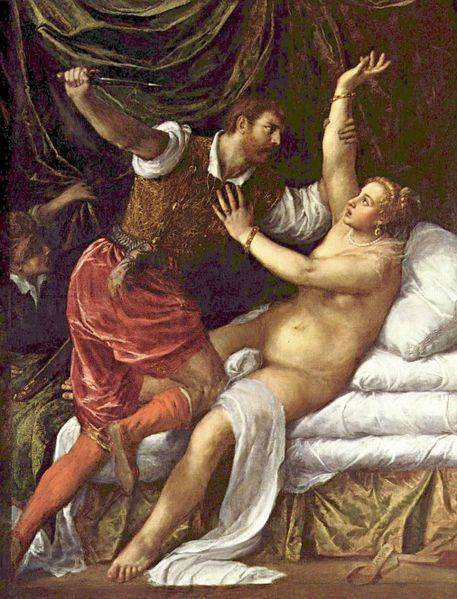
Shakespeare writes Lucrece based on the Titian painting he has seen in Philip II’s collection in Madrid in 1593.

He even has the same green counterpane and scarlet trousers in his poem.

This is the ‘graver labour’ he promised in his Dedication to Harry of Venus and Adonis – and again is based on a story from Ovid’s Metamorphoses which he knew from Golding’s translation – though he did have, according to Ben Jonson, ‘small latin’.

This was Shakespeare’s bid to become a great poet like Ovid……

….and to be immortal as he was.

The poem, written partly in the ‘seclusion’ of Stratford needed all this concentration.  This was to have serious dangers in his relationship with Harry who was ‘fond on praise’.

Shakespeare’s ‘absence’ both physical and emotional was exploited by another rival poet – George Chapman….

…whom Shakespeare had satirised as the sycophantic, effeminate Boyet in Love’s Labour’s Lost who flatters the Princess of France…

Now Chapman was flattering Harry – and Harry asks Shakespeare why he no longer flatters him the way he used to…

Sonnet 79 is Shakespeare’s excuse…

79. (23)

As an unperfect actor on the stage,

Who with his fear is put beside his part,

Or some fierce thing replete with too much rage,

Whose strength’s abundance weakens his own heart;

Just like an incompetent actor who in a fit of stage-fright forgets his lines – or an over-excited penis that malfunctions in the act of love-making…..

So I for fear of trust, forget to say,

The perfect ceremony of love’s rite,

And in mine own love’s strength seem to decay,

Ore-charg’d with burthen of mine own love’s might:

So I, not trusting myself, neglect to tell you how much I love you and seem to love you the less when in fact I love you all the more – and that love inhibits me.

O let my books be then the eloquence

And dumb presagers of my speaking breast,

Who plead for love, and look for recompense,

More than that tongue that more hath more expresst.

Shakespeare is asking Harry to take the books he has written for him – Venus and Adonis and now Lucrece – as tokens of his love that he wants ‘recompensed’ – ‘returned’ by Harry and indeed ‘subsidised’ by Harry who will shortly come into his inheritance.

In the Dedication to Lucrece Shakespeare describes the poem as a ‘pamphlet’ – a small book.

My works show more love to you than Chapman does who simply tells you how much he loves you…

O learn to read what silent love hath writ;

To hear with eyes belongs to love’s fine wit.

Shakespeare asks Harry to interpret the Lucrece poem as a love poem to him…..

In deed, he declares his love openly in the Dedication……

THE love I dedicate to your lordship is without end; whereof this pamphlet, without beginning, is but a superfluous moiety. The warrant I have of your honourable disposition, not the worth of my untutored lines, makes it assured of acceptance. What I have done is yours; what I have to do is yours; being part in all I have, devoted yours. Were my worth greater, my duty would show greater; meantime, as it is, it is bound to your lordship, to whom I wish long life, still lengthened with all happiness.

Your lordship’s in all duty,
WILLIAM SHAKESPEARE

But this excuse was not good enough for Harry – he wants poems directly ABOUT him – not oblique assertions of love about somebody else!

80. (100)

Where art thou Muse that thou forget’st so long

To speak of that which gives thee all thy might?

Spend’st thou thy fury on some worthless song,

Dark’ning thy power to lend base subjects light?

Shakespeare addresses his ‘Muse’ – his poetic invention –  as though it is something different to himself – and dismisses The Rape of Lucrece as  ‘a worthless song’ because it is not about Harry. His Muse has been too busy writing about ‘a base subject’ – a rape of a woman by a man – when she should have been writing about what makes her strong – Harry himself.

Shakespeare uses the word ‘base’ 11 times in Lucrece.

For example…..

‘So shall these slaves be king, and thou their slave;
Thou nobly base, they basely dignified;
Thou their fair life, and they thy fouler grave:
Thou loathed in their shame, they in thy pride:
The lesser thing should not the greater hide;
The cedar stoops not to the base shrub’s foot,
But low shrubs wither at the cedar’s root’.

So Harry would have no doubts about the poem Shakespeare was alluding to.

Return forgetful Muse, and straight redeem

In gentle numbers time so idly spent,

Sing to the ear that doth thy lays esteem,

And gives thy pen both skill and argument.

Shakespeare rebukes his Muse for wasting time on the subject of Lucrece when she should have been writing to Harry – someone who appreciates her ‘voice’ and who inspires her.

Rise resty Muse, my love’s sweet face survey,

If time have any wrinkle graven there:

If any, be a Satire to decay,

And make time’s spoils despised every where.

Shakespeare tells his lazy Muse to get out of bed and look at Harry’s face to see if any wrinkles have appeared on huis face – and, if so, to attack decay by satirising it so that everyone will despise the ravages of Time.

Give my love fame faster then time wastes life,

So thou prevent’st his scythe and crooked knife.

Shakespeare again offers Harry the prospect of fame by writing about him – and this fame will come faster than time can age Harry – and will be a way of conquering death.

Shakespeare is having a sly dig at Harry’s vanity in this Sonnet – uses irony when he is talking about the worthlessness of his poem compared to his Sonnets about Harry. It is also a back-handed compliment when he says that people will despise Harry’s decay when Shakespeare’s Muse satirises it…..they would despise it anyway!

81. (101)

O truant Muse what shall be thy amends,

For thy neglect of truth in beauty dy’d?

Both truth and beauty on my love depends:

So dost thou too, and therein dignified.

Shakespeare continues to rebuke his Muse and asks what reparation it will make for neglecting truth permanently coloured with beauty – for both truth and beauty are dependent on Harry as is Shakespeare’s Muse and gets her dignity from Harry.

Make answer Muse, wilt thou not haply say:

‘Truth needs no colour, with his colour fixt,

Beauty no pencil, beauty’s truth to lay:

But best is best, if never intermixt.’

Shakespeare expects the response of his Muse to be the assertion that truth does not need the colour of verse when it already has the permanent colouring of Harry himself and beauty needs no paintbrush to praise it – in fact, it is better if it’s left alone because it is so perfect.

Because he needs no praise, wilt thou be dumb?

Excuse not silence so, for’t lies in thee,

To make him much out-live a gilded tomb,

And to be prais’d of ages yet to be.

Shakespeare questions this response: just because Harry needs no praise, that is no reason to withhold it from him. Shakespeare’s Muse has the power to make his memory last longer than the gilded tombs both men have seen in Rome – and to be praised by future generations not yet born.

Then do thy office Muse, I teach thee how,

To make him seem long hence, as he shows now.

Shakespeare tells his Muse to do her duty – and he will show her how to do it – to make him seem to live in future times the way he lives now.

82. (102)

My love is strengthen’d though more weak in seeming;

I love not less, though less the show appear.

That love is merchandiz’d, whose rich esteeming,

The owner’s tongue doth publish every where.

Shakespeare argues that although his love for Harry might appear more weak it is actually stronger. He claims that by writing openly about his love for Harry, Chapman is cheapening his emotion by treating it as a commodity the way a merchant would.

Shakespeare here is playing on Chapman’s name. Chapman=Merchant.

Shakespeare makes this equation even more directly in Love’s Labour’s Lost.

When Boyet grossly flatters the Princess of France – in the same way that Chapman flattered Queen Elizabeth in his Hymnus in Cynthiam – she replies:

‘Good Lord Boyet, my beauty though but mean

Needs not the painted flourish of your praise.

Beauty is bought by judgement of the eye

Not uttered by base sale of chapmen’s tongues.’

Our love was new, and then but in the spring,

When I was wont to greet it with my lays,

As Philomel in summer’s front doth sing,

And stops her pipe in growth of riper days.

Shakespeare here recalls the time of his first meeting with Harry – the spring of 1590 – four years earlier when he started to write verses to him. At that time, their love was in its Springtime – and Shakespeare ‘sang’ to Harry in the way that the nightingale sings in the spring and early summer – but stops at the end of July.

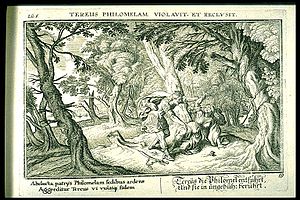
‘Philomel’ = ‘Philomela’ – a woman who, according to Ovid was raped by her sister’s husband, Tereus and is transformed into a nightingale.

Philomela was very much on Shakespeare’s mind because he compares Lucrece’s plight to hers…….

Not that the summer is less pleasant now

Than when her mournful hymns did hush the night,

But that wild music burthens every bough,

And sweets grown common lose their dear delight.

Shakespeare is quick to add that his love for Harry is still as powerful as it was before when he wrote his poems – as beautiful and sad as the voice of the nightingale that entrances the night – but now wild birdsong can be heard on every tree branch – the birds weighing down the branches (‘burden’) as they sing their songs (‘burden’). And because there are so many birds now singing – in the way Chapman does, birdsong – verse – loses its value.

Therefore like her, I some-time hold my tongue,

Because I would not dull you with my song.

Shakespeare, like the nightingale that stops singing in August, stops writing verse to Harry for fear of boring him.

To read ‘The Rival Poet (II), Part 28, click: HERE

Read Full Post »

It’s best to read ‘The Order of the Garter’ Part 25 first.

78. (94)

They that have pow’r to hurt, and will do none,

That do not do the thing, they most do show,

Who, moving others, are themselves as stone,

Unmoved, cold, and to temptation slow:

Shakespeare here is using ‘hurt’ in the way Geoffrey Chaucer uses it in The Knight’s Tale – to arouse people sexually.

‘But I was hurt right now thurgh-out myn ye/Into my hert’ and ‘And with that sight hir beautee hurte him so.’

We know that Shakespeare was familiar with The Knight’s Tale because he based his collaboration with John Fletcher – The Two Noble Kinsmen – on the tale…..

…..also Jane, First Countess of Southampton….

Jane, First Countess of Southampton. Photo by Ross Underwood.

…..possessed a copy of the Complete Works of Chaucer, so it would have been in the Southampton family library

So ‘They that have power to hurt and will do none’ means ‘those will the ability to raise sexual attraction in others and who do not exploit the situation….’

Harry was attractive and in Sonnet 19.20 Shakespeare describes how he ‘Steals men’s eyes and women’s souls amazeth’.

‘That do not do the thing they most do show’ is a reference to elaborate men’s codpieces which Queen Elizabeth, who feminised her men, was trying to stamp out……

….despite the fact that her father Henry VIII was a great exponent…..

‘Thing’, as usual, can = ‘penis’. So Shakespeare is praising handsome, well-endowed men who display their manhood with pride but do not chase after other men’s penes.

By ‘moving others’ means arousing others – but staying unaroused themselves and not subject to temptation.

They rightly do inherit heaven’s graces,

And husband nature’s riches from expense;

They are the Lords and owners of their faces,

Others, but stewards of their excellence.

These chaste men, though they do not win the favours of other men, win favours from heaven instead (‘graces’).

‘Husbanding nature’s riches from expense’ – means ‘conserving their seminal fluid’. Shakespeare has used the image of ‘spending money’ as seminal emission in the Birthday Sonnets 5.(4) and in Sonnet 43.(129)

‘Face’ here can = ‘genitals’ as in 4.(3), 37.(147), 71.(33). So Shakespeare is saying that chaste men own their genitals, but promiscuous men are more like servants of their genitals – their ‘excellence’.

The summer’s flow’r is to the summer sweet,

Though to itself it only live and die;

But if that flow’r with base infection meet,

The basest weed out-braves his dignity:

The summer flower that lives and dies without contact with anything else – i.e., the young man who masturbates in private – is sweet in the sun’s eyes: but if that flower meets with ‘base infection’ – both venereal disease caught from lower class men AND their moral depravity – then weeds – lower ranking men – will be superior.

Harry as an aristocrat, has further to fall than lower class men.

‘Dies’ = ‘orgasm’ as in 4.(3) and 8.(7)

Harry as an aristocrat, has further to fall than lower class men.

For sweetest things turn sourest by their deeds;

Lilies that fester, smell far worse than weeds.

‘Thing’ = ‘penis’. Shakespeare is talking about a penis that has become ravaged with VD. He observes the truth that rotting lilies have a worse smell than weeds have.

Harry as an aristocrat, has further to fall than lower class men.

The lily was also a symbol of chastity associated in the Roman Catholic mind with the Virgin Mary.

Shakespeare often fuses his gay love with Roman Catholicism. See Sonnet 70. 31, ‘dear religious love’.

This Sonnet is crucial to an understanding of Shakespeare’s relationship with Harry. He knows that Harry’s gay association with lower class men will injure him politically – as indeed proved the case when his affair with a Captain on the Irish campaign became common knowledge.

But does Shakespeare, in his heart, want Harry to be ‘cold’ and like a ‘stone’? This would never happen anyway – Harry was warm-blooded and impetuous.

Also, compared to the aristocratic Harry, Shakespeare himself is ‘common’. But as he mixes with aristocrats, he half thinks he is one – a delusion compounded with his play acting where he plays ‘Lord Berowne’ to Harry’s ‘King of Navarre.’

Shakespeare, as we shall see, was to be savagely awakened.

Shakespeare seems to be offering Harry political advice – but in reality he wants to keep Harry for himself alone.

To read ‘The Rival Poet George Chapman’, Part 27, click: HERE


Read Full Post »

It’s best to read ‘Harry’s Infidelity’ Part 24 first.

1593. Henry Wriothesley, at the age of 20, is nominated for the Order of the Garter – the highest  honour in the land.


Henry Wriothesley on the Southampton tomb at St. Peter’s, Titchfield. Photo: Ross Underwood.

It helped, of course, being the close friend of the Second Earl of Essex……

…and the ward of Lord Burghley……

But his own merits must have been extraordinary to have been thought of for this honour, and he was later to prove a brave and gallant soldier and knight….

So Shakespeare was completely justified in describing Harry – in the Dedication to Venus and Adonis – as:

the world’s hopeful expectation.

But Harry was starting to make appearances at Court – and the Court was full of vipers, jealous of Harry and out to destroy him.

In this Sonnet, Shakespeare takes up the role of mentor to Harry.

His recent gay activity with lower class young men could play against him.

Queen Elizabeth’s father, Henry VIII, had brought in laws against ‘buggery’ which Queen Mary had rescinded.

But Elizabeth restored them the year before Shakespeare’s birth, 1563.

These laws weren’t often acted on – indeed there were many gay men in Elizabeth’s Court – but they acted as a threat to those working against Elizabeth.

74. (69)

Those parts of thee that the world’s eye doth view,

Want nothing that the thought of hearts can mend:

All tongues (the voice of souls) give thee that due,

Utt’ring bare truth, even so as foes Commend.

The aspects of Harry that are visible to the eye are beyond improvement: everyone admits that, even his enemies.

Thy outward thus with outward praise is crown’d;

But those same tongues, that give thee so thine own,

In other accents do this praise confound

By seeing farther than the eye hath shown.

Your exterior parts are openly acknowledged to be admirable: but those same people who praise you, rescind that praise when they examine your interior nature.

They look into the beauty of thy mind,

And that, in guess, they measure by thy deeds;

Then churls their thoughts (although their eyes were kind)

To thy fair flower add the rank smell of weeds.

They investigate the working of your mind and guess its nature by what you do. Then, though they liked your outward appearance, they meanly add the stink of weeds to the beautiful flower of yourself.

‘Eyes’ here can again = ‘genitals’. His detractors, though they condemn him, are attracted to him.

But why thy odour matcheth not thy show

The soil is this, that thou dost common grow.

The reason that there is a contradiction between Harry’s appearance and his reputation is that he is mixing with lower class men and having sex with them. 

In this he is like Prince Hal in the Henry IV plays who hangs round with the dubious Poins….

75. (70)

That thou art blam’d shall not be thy defect,

For slander’s mark was ever yet the fair;

The ornament of beauty is suspect,

A Crow that flies in heaven’s sweetest air.

Shakespeare says that Harry cannot be blamed for being slandered because that is what happens to attractive people. They are always the object of suspicion – there must be something suspect, people think, about their beauty – the way a black crow flies across a clear sky.

So thou be good, slander doth but approve

Thy worth the greater, being woo’d of time;

For Canker vice the sweetest buds doth love,

And thou present’st a pure unstained prime.

If you stay a good man, praise of you will grow all the greater, for the caterpillar, Vice, loves to attack sweet young buds – and you look innocent and sweet.

William Blake’s Sick Rose.

Thou hast past by the ambush of young days,

Either not assail’d, or victor being charg’d;

Yet this thy praise cannot be so thy praise,

To tie up envy, evermore enlarg’d:

You have managed to escape attacks of envy so far – either because no-one has tried to attack you – or if they have, they failed to do so. But even this praise is not strong enough to dispel envy – which grows ever stronger .

If some suspect of ill maskt not thy show,

Then thou alone kingdoms of hearts shouldst owe

Shakespeare claims that Harry could become a potent political force, with many followers, if people didn’t think there was something wrong with him.

Shakespeare’s mind is turning to political action…..

‘Virtutis comes invidia’ – ‘Envy is the companion of virtue’ – was the motto of the Essex family.

Penelope Rich, sister to the Earl of Essex.


76. (95)

How sweet and lovely dost thou make the shame,

Which, like a canker in the fragrant Rose,

Doth spot the beauty of thy budding name?

Oh in what sweets dost thou thy sins inclose!

Shakespeare claims that Harry himself makes the shame of his gay promiscuity seem a lovely thing – like a rose, attacked by a canker worm which sullies its beauty. Harry masks his sin with his sweetness – a poison bonbon.

That tongue that tells the story of thy days,

(Making lascivious comments on thy sport)

Cannot dispraise, but in a kind of praise,

Naming thy name, blesses an ill report.

People, who talk about you and speak disparagingly of your affairs with rough young men, cannot attack you because simply naming your name exonerates your behaviour.

Oh what a mansion have those vices got,

Which for their habitation chose out thee,

Where beauty’s veil doth cover every blot,

And all things turns to fair that eyes can see!

Shakespeare describes the delight that vice takes in occupying Harry, whose beauty acts as mask for sin – and transforms ugly things into beautiful things.

Take heed (dear heart) of this large privilege,

The hardest knife ill-us’d doth lose his edge.

Shakespeare warns his lover Harry to beware of the opportunities his beauty gives him to act in a depraved way. The strongest knife will lose its cutting force if used incorrectly.

The knife represents Harry’s phallus – which, if engaged in promiscuous sex, will become diseased and useless.

‘Large privilege’ also suggests that Harry has a large member.

77. (96)

Some say thy fault is youth, some wantonness;

Some say thy grace is youth and gentle sport.

Both grace and faults are lov’d of more and less

Thou mak’st faults graces that to thee resort.

Shakespeare says that some people say that Harry is to blame because he is young – others, because he is lustful. But others say that Harry’s youth is a blessing from God and his sexual activity a ‘sport’ that aristocrats are entitled to indulge in. Everyone, of whatever class, love the blessings of heaven and sexual activity – and you make these lapses blessed by heaven to anyone who sleeps with you.

As on the finger of a throned Queen

The basest Jewel will be well esteem’d:

So are those errors that in thee are seen

To truths translated, and for true things deem’d.

Like the cheap, flashy jewels that Queen Elizabeth uses in her rings – which people think MUST be expensive because she is a  monarch – so people think that your lies must be truths because you are so attractive.

Queen Elizabeth I’s ring – which contained a miniature of her mother, Anne Boleyn.

Shakespeare cannot resist another knock at Queen Elizabeth, whom he hated. See Sonnet 12. (11)

How many Lambs might the stern Wolf betray

If like a lamb he could his looks translate;

How many gazers mightst thou lead away,

If thou wouldst use the strength of all thy state?

If a wolf could look like a lamb how many lambs he could mislead and kill. Similarly how many people who look at you, Harry, you could seduce if you exploited your sexuality and rank.

But do not so: I love thee in such sort,

As thou being mine, mine is thy good report.

Shakespeare asks Harry not to use this power because Harry belongs to him – and any criticism of Harry would be a criticism of Shakespeare himself.

To read ‘Lilies that fester’, Part 26, click: HERE


Read Full Post »

It’s best to read ‘Marlowe’s Death’ Part 23 first.

HARRY’S INFIDELITY

Titchfield, 1593.

Shakespeare, from the beginning, has urged Southampton to sleep with women: it is the natural thing for young men to do and Harry must become a father – as Shakespeare is.

See Sonnets 2-18.

But sleeping with men is a completely different matter….

While Shakespeare was away at Stratford-upon-Avon, Harry had an affair with a man whom Shakespeare considers ‘base’

Like his mother, the Countess of Southampton……..

……Harry is attracted to men who are from a class lower to him.

His mother fell in love with ‘a common person’.

Shakespeare’s praise of Harry’s truth and constancy was wishful thinking……

See Sonnets 15. (14), 67. (53), 68.(54)

71. (33)

Full many a glorious morning have I seen

Flatter the mountain tops with sovereign eye,

Kissing with golden face the meadows green,

Gilding pale streams with heavenly alchemy:

Shakespeare writes that he has often seen the morning sun shine in flattery on the tops of mountains, kissing green meadows with golden beams and turning pale-coloured streams into golden through alchemy.

‘Eye’ can also = ‘penis’ ……..

See 2.(1) 3. (2) 8. (7) 10. (9) 19.20.

and ‘face’ can also = ‘the genital area’.

See: King Lear: ‘Behold yond simpering dame/Whose face between her forks presages snow’

See especially Sonnet, 78. (94) – coming up.

Anon permit the basest clouds to ride

With ugly rack on his celestial face,

And from the for-lorn world his visage hide,

Stealing unseen to west with this disgrace:

But a moment later he allows the beams of his face to be hidden by low-natured, ugly clouds and hurries off to set in the west to hide his disgrace from the world.

‘Base’ can mean (1) Morally base (2) Lower class. In Shakepeare’s mind the two go together, even though Shakespeare himself is only yeoman class.

The ‘celestial face’ can also suggest Harry’s genitals – and the base clouds ‘riding’ on it, a sexual act.

Even so my Sun one early morn did shine

With all triumphant splendour on my brow;

But out alack, he was but one hour mine,

The region cloud hath mask’d him from me now.

Shakespeare describes Harry as his ‘sun’ – with a play on ‘son’. Harry, eight years younger than Shakespeare, becomes Shakespeare’s surrogate son – even though Shakespeare has a real son in Stratford-upon-Avon, Hamnet, who is eight years old.

Harry the sun has shone on Shakespeare, given him all his love and attention, but only for a brief period of time. He has been replaced by lower class men.

Yet him for this, my love no whit disdaineth,

Suns of the world may stain, when heaven’s sun staineth.

But Shakespeare claims he does not love Harry the less. A worldly sun is allowed to sin if the heavenly sun  sins himself.

Harry for Shakespeare is no longer the divine being that he was. ‘Heaven’s sun’ has the suggestion of ‘Heaven’s son’ = Christ himself – as in St. Paul’s First Letter to the Thessalonians, 1. 10:

and for to loke for his sonne from heven whom he raysed from deeth: I mean Iesus which delivereth vs from wrath to come.  (Tyndale’s translation of the Bible)                          

72. (34)

Why didst thou promise such a beauteous day

And make me travail forth without my cloak,

To let base clouds ore-take me in my way,

Hiding thy brav’ry in their rotten smoke?

Shakespeare compares himself to a traveller that has been misled by the sun. 

Why did the sun (Harry) promise a bright, sunny day (exclusive love to Shakespeare) so Shakespeare didn’t think he needed a cloak  (protection from hurt)? But ‘base clouds’ – lower class chancers and rent boys – have beaten Shakespeare to the sun of Harry’s love and obscure Harry’s nobility by their putrid and diseased nature.

Katharine Duncan-Jones quotes: ‘The base contagious clouds’ surrounding Prince Hal in Henry IV Part One.

Clouds were thought to be the bearers of diseases – and conveys the idea is that Harry’s ‘lovers’ had venereal disease.

‘Tis not enough that through the cloud thou break

To dry the rain on my storm-beaten face,

For no man well of such a salve can speak,

That heals the wound, and cures not the disgrace:

Shakespeare says that it’s not enough that Harry pauses in his promiscuity to give love to Shakespeare – to wipe the tears from his face.

Shakespeare has said in Sonnet 69. (30) that he is ‘unused’ to weeping. Being in a relationship with Harry – and subject to Harry’s character and behaviour – has made crying a habit with Shakespeare. This has released Shakespeare emotionally – but it has also made him vulnerable.

Shakespeare describes his face as ‘storm-beaten’. This suggests (1) the upset that Harry’s betrayal has given him – and looks forward to the storms in King Lear when the old king, betrayed by to of his daughters, walks out into a tempest……

……. and (2) the fact that the rigours of touring in Lord Strange’s company have prematurely aged him.  Later on in the Sonnets, he mentions his loss of hair.

When Amelia attacks him the next year (1594) in Willobie his Avisa she describes ‘W.S.’ as ‘an old player’.

Nor can thy shame give physicke to my grief,

Though thou repent, yet I have still the loss;

Th’offender’s sorrow lends but weak relief

To him that bears the strong offence’s cross.

[Note: Q has ‘loss’ repeated but most editors substitute ‘cross’ as it is highly unlikely that Shakespeare would use loss twice].

‘Physicke’ = ‘medicine’.

Shakespeare says that Harry’s shame at his own promiscuity cannot cure Shakespeare’s upset. Though Harry is sorry for what he has done, Shakespeare still suffers from the loss of the trust he had in Harry. The pain is as great as Christ felt when he was made to carry his own cross to Golgatha.

Titian’s version of Christ carrying his cross.

(This sonnet picks up the Christ imagery of the Sonnet before it, 71. (33)

Ah, but those tears are pearl which thy love sheeds,

And they are rich, and ransom all ill deeds.

But at the conclusion, Shakespeare changes his mind. Harry’s repentant tears are as precious as pearls. They are costly and act as a ransom for Harry’s sin.

Sir Walter Raleigh with his famous pearl in his ear.

73. (35)

No more be griev’d at that which thou hast done;

Roses have thorns, and silver fountains mud;

Clouds and eclipses stain both Moon and Sun,

And loathsome canker lives in sweetest bud.

Shakespeare now comforts Harry and tells him not be upset at his infidelity. Every beautiful thing has its ugly side: roses have thorns and silver fountains have mud at their bottom – even the moon and sun are subject clouds covering them and eclipses diminishing them or making them disappear altogether. And vile caterpillars can eat away at the sweetest flower bud.

But ‘bud’ can also = ‘the tip of the penis’. See Sonnet 2. (1) ‘Canker’ can also suggest ‘chancre’ – and the ravages of venereal disease on the genitals. Harry has already brought up the idea that Harry might be infected with venereal disease in Sonnet 46. (144) because of his liaison with Amelia.

All men make faults, and even I in this,

Authorizing thy trespass with compare,

My self corrupting salving thy amiss,

Excusing thy sins more than thy sins are:

Every man is fallible and even I myself – making excuses for what you have done by comparing your misdeeds to other things – become guilty myself. My sin in doing this is greater than your original one.

‘Trespass’ is the word for sin from ‘The Lord’s Prayer’ – so Shakespeare draws on religious ideas again.

For to thy sensual fault I bring in sense,

Thy adverse party is thy Advocate,

And ‘gainst myself a lawful plea commence:

Shakespeare uses reason to defend what in Harry has been a sensual fault – promiscuity – thereby using the thing that Harry has most transgressed – ‘sense’ – to argue in Harry’s favour.

Such civil war is in my love and hate,

That I an accessary needs must be,

To that sweet thief which sourly robs from me.

Shakespeare’s internal war between love for Harry and hatred for what Harry has done, leads to a paradox. He must be an ‘accessory’ to the crime of theft from Harry – theft of his trust – by justifying it and so colluding with the sin.

But ‘accessory’ can also mean ‘a minor fitting or attachment’: so Shakespeare also needs to be ‘attached’ to Harry – suggesting both oral and anal sex.

Shakespeare may be ostensibly forgiving Harry for his infidelity – but he makes him squirm in the process!

Shakespeare self-consciously claims the moral high ground.

To read ‘The Order of the Garter’, Part 25, click: HERE


Read Full Post »

It’s best to read ‘Venus and Adonis’ Part 22 first.

1593. Stratford-upon-Avon.

At the end of May, 1593, Christopher Marlowe was killed in a drunken, gay brawl in Deptford….

He was born at the end of February, 1564 while Shakespeare was born at the end of April in the same year. Both their fathers worked with leather, Kit’s as a cobbler and Shakespeare’s as a glover.

When Shakespeare had fled to London in his late teens to escape Catholic persecution, he had shacked up with Thomas Kyd – who was also a friend of Marlowe’s. Kyd and Marlowe were later to share lodgings.

Marlowe’s line: ‘Whoever loved who loved not at first sight’ profoundly influenced Shakespeare’s art and work. And Marlowe himself brought out Shakespeare’s gay side.

The following two Sonnets reveal that Shakespeare and Marlowe had been lovers – and that Shakespeare had been involved in promiscuous gay life before he became part of the Southampton family entourage at Titchfield.

Shakespeare, still at Stratford and away from Harry, is reflecting on Marlowe’s death which has upset him deeply.

69. (30)

When to the Sessions of sweet silent thought

I summon up remembrance of things past,

I sigh the lack of many a thing I sought,

And with old woes new wail my dear time’s waste:

Shakespeare compares the thoughts he has to a court session as he summons up the past like a witness at a trial. He regrets that the things he sought he no longer has and that things he held dear have now vanished.

‘Things’ can = ‘penises’. So ‘many a thing I sought’ is Shakepeare’s acknowledgement of his own promiscuous gay past before he met Harry.

Then can I drown an eye (un-us’d to flow)

For precious friends hid in death’s dateless night,

And weep a fresh love’s long since cancell’d woe,

And moan th’expense of many a vanisht sight.

Shakespeare admits that it is not his habit to weep, but he does so, remembering his dear friends who are now dead – like Kit Marlowe – and reliving the painful memories of affairs he thought he had long got over.

Then can I grieve at grievances fore-gone,

And heavily from woe to woe tell ore

The sad account of fore-bemoaned moan,

Which I new pay as if not paid before.

Sadness from the past comes flooding back to Shakespeare and he relives the agonies of love afresh as though he had not experienced them before.

(The ‘oh”oh’ ‘or’ ‘or’ ‘oh”or’ sounds in this stanza sound like Shakespeare groaning at loss….)

But if the while I think on thee (dear friend)

All losses are restor’d, and sorrows end.

But just the thought of Harry dispels all this sadness and lost.

70. (31)

Thy bosom is endeared with all hearts,

Which I, by lacking, have supposed dead,

And there reigns Love, and all Love’s loving parts,

And all those friends which I thought buried.

Your breast, Harry, is made all the more valuable for being filled with the hearts of lovers – like Kit Marlowe – who I thought were either literally dead – or at lest dead to me.  Love reigns supreme there – and everything that comes along with love – both romance and sexual activity – and all the people I thought I would see no more or think about no more.

How many a holy and obsequious tear

Hath dear religious love stol’n from mine eye,

As interest of the dead, which now appear

But things remov’d that hidden in thee lie.

Shakespeare has grieved for his lovers as in a religious rite – gay love for Shakespeare is holy – but now realises that his lovers are not dead at all but get a second life with Harry – they are simply ‘things removed’ that now all live in Harry.

The ‘tears’ that are shed by Shakespeare’s ‘eye’ is also gay banter. The ‘eye’ can represent the genital area and the ‘tear’ seminal emission. And ‘thing’, of course can = ‘penis’.

Thou art the grave where buried love doth live,

Hung with the trophies of my lovers gone,

Who all their parts of me to thee did give,

That due of many now is thine alone.

Shakespeare argues, paradoxically, that Harry is the grave where not only his literally dead lover, Kit, is reborn, but all his many former lovers as well. Lovers who once gave Shakespeare their minds and bodies now take them away from Shakespeare to give to Southampton. This means that Shakespeare – who has led a promiscuous life before meeting Harry – is now completely faithful to him because all Shakespeare’s lovers are contained in Harry himself.

Their images I lov’d, I view in thee,

And thou (all they) hast all the all of me.

The men I loved before I now see in you and you – representing all of them – possess me completely – spiritually, emotionally and physically.

There is a suggestion here that Shakespeare can act as a passive sexual partner to Harry. ‘All’ can = ‘awl’ – a tool to piece wood and leather that can represent the penis. Harry, when he plays a dominant role, becomes an ‘awl’ to Shakespeare.

Shakespeare puns on ‘all’ and ‘awl’ in Julius Caesar:

Truly, sir, all that I live by is with the awl: I
meddle with no tradesman’s matters, nor women’s
matters, but with awl. I am, indeed, sir, a surgeon
to old shoes; when they are in great danger, I
recover them. As proper men as ever trod upon
neat’s leather have gone upon my handiwork

There is also a play on the Southampton family motto: ‘Une par tout’ – ‘One for all’ or ‘one becomes all’ – as Harry, though one person, becomes all of Harry’s former lovers.


But this ‘honeymoon’ period in Shakespeare’s affair with Harry was about to end…..

To read ‘Harry’s Infidelity’, Part 24, click: HERE


Read Full Post »

« Newer Posts - Older Posts »