Feeds:
Posts
Comments

Archive for the ‘Uncategorized’ Category

An Important Statement from Trixie the Cat.

Brothers and Sisters of the Shakespeare Code….

All at Code Headquarters in West London wish you a Very Happy 2024!

Just before Christmas, the Shakespeare Code’s Chief Agent – Stewart Trotter – accompanied by Your Faithful Cat – travelled down to Titchfield in Hampshire to address a packed meeting of the august Titchfield History Society….

Here is Stewart’s talk…

Your Cat read the quotes!

‘Bye, now!

***

The BBC has just televised a three part, three hour, life of William Shakespeare – titled…

The Rise of a Genius.

It makes no mention at all of Titchfield – or even Henry Rosely, the Third Earl of Southampton.

I pronounce his surname ‘Rosely’ because that’s how the aristocratic branch of the Wriothesley family is named in the local Parish Register. The non-aristocratic branch called themselves Risley – and even spelt their surname Risley.

The Third Earl of Southampton called himself ‘Harry’ in his letters and Shakespeare called himself ‘Will’ in his Sonnets. So let’s call them ‘Harry and Will’.

For the last quarter of a century I have taken Will’s link with Titchfield and the Southampton family as a truth universally acknowledged. But clearly it isn’t. Or not by the BBC anyway. So I thought the best thing to do for this talk was to take a fresh look at the evidence to see if it really does stack up.

What it boils down to is this:

Do we believe what Nicholas Rowe says in his ‘Some Account of the Life of Mr. William Shakespear’ – …..the first ever biography of Will published in 1709?

It must be admitted, for a start, that Rowe spells ‘Shakespeare’ without the final ‘e’. Not a good sign.

Rowe writes:

What grace so ever the Queen conferred upon Shakespeare it was not to her only he owed the fortune which the reputation of his wit made. He had the honour to meet with many great and uncommon marks of favour and friendship from the Earl of Southampton, famous in the histories of that time for his friendship to the unfortunate Earl of Essex. It was to that noble Lord that he dedicated his Venus and Adonis, the only piece of his poetry which he ever published himself.

Rowe forgets that Will had also dedicated Lucrece to Harry – and in 1709 Will’s Sonnets had just been printed. Rowe had a copy – but hadn’t read them. Not a good sign either.

Rowe continues:

There is one incidence so singular in the magnificence of this patron of Shakespeare’s, that if I had not been assured that the story was handed down by Sir William D’Avenant, who was probably very well acquainted with his affairs, I should not have ventured to have inserted, that my Lord Southampton, at one time, gave him [Will] a thousand pounds to enable him to go through with a purchase which he heard he had a mind to. A bounty very great and very rare at any time, and almost equal to that profuse generosity the present age has shown to French dancers and Italian eunuchs.’ 

£1,000 is thought by some to be worth half a million pounds in today’s money – or even a million.

Can we rely on this story? Rowe was a playwright himself – and had just edited an edition of Shakespeare’s plays. He got his information from Thomas Betterton…

….a hugely admired actor, famous for his Hamlet…
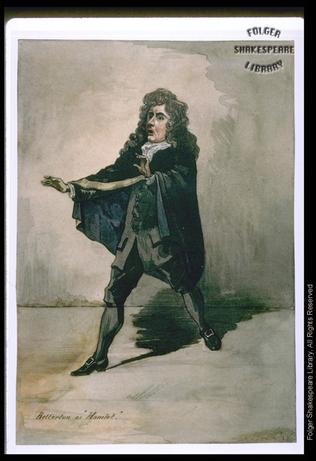
…..who had visited Stratford-upon-Avon toward the end of his life to gather information.

Betterton had acted for Davenant – who John Aubrey tells us – believed he was Will’s illegitimate son. Will had certainly been Davenant’s Godfather – and the teenage Davenant had written an ode on Will’s death.

Davenant also knew ‘old Mr. Lowen’ who had been directed by Will – so the story has a provenance going back to the Bard himself.

And in 1806, R.B. Wheeler provided back up evidence. He wrote in his ‘History and Antiquities of Stratford upon Avon….’

‘the unanimous tradition of this neighbourhood is that by the uncommon bounty of the Earl of Southampton, Shakespeare was enabled to purchase houses and land in Stratford’.

But Edmond Malone…..

– an Irish ex-barrister with inherited wealth – was having none of it.

In 1770 he wrote:

‘that Lord Southampton gave Shakespeare a thousand pounds in order that he might complete a purchase is totally unworthy of credit since no such extensive a purchase ever appears to be made by him as will be seen when we come to make an estimate of the property which he possessed.’

Malone never even visited Stratford – but since his time, Shakespeare Scholars have simply repeated what he wrote.

Up to 2011, that is. A finance director turned academic called David Fallow wrote a Ph D for Exeter University in which he showed that purchases Will made between 1597 and 1614 cost him £1,400 – far in excess of the maximum of £60 a year he could have made in the theatre.

He must have had another source of money.

Now it has to be said that Dr. Fallow has other ideas about where the money came from. However, the facts fit Rowe’s account. 

But how did Will come to meet Harry? Why did he leave Stratford in the first place?

The BBC series suggests it was simply an ambition to be a writer: but in the reign of Elizabeth that would have been suicidal.

Robert Greene…..

……whom the BBC presents as the successful ‘University Wit’ who gave Will his first writing break – ended up in the garret of a kind-hearted cobbler who found him dying of starvation in the street.

Rowe has a far more convincing story. He states that Will, on leaving school, joined the family business – butchery and gloving:

‘In this kind of settlement he continued for some time, till an extravagance that he was guilty of, forced him both out of his country and his way of living which he had taken up, and though it seemed at first to be a blemish on his good manners, and a misfortune to him, yet it afterwards happily proved the occasion of exerting one of the greatest Genius’s that ever was known in dramatic poetry.

He had by a misfortune common enough to young fellows, fallen into ill company; and amongst them, some that made a frequent practice of deer-stealing, engaged with them more than once in robbing a park that belonged to Sir Thomas Lucy of Charlecote, near Stratford.

For this he was prosecuted by that Gentleman, as he thought, somewhat too severely; and in order to revenge that ill usage, he made a ballad upon him.

And though this, probably the first essay of his poetry, be lost, yet it is said to have been so very bitter, that it redoubled the prosecution against him to that degree, that he was obliged to leave his business and family in Warwickshire, for some time, and shelter himself in London.

Malone, again, dismisses this story: but it is backed up by three different sources that pre-date Rowe – including a man called Thomas Jones – born in neighbouring Tarbick three years before Will died.  He not only remembered the story – but remembered the ballad as well, which he sang way into his nineties! It has a refrain of:

‘Lucy is lousy’.

Joshua Barnes, a Cambridge don, reported, in the 1680s, he had heard the words of the ballad sung by his hostess at a Stratford inn – and in 1688 Richard Davies – an Oxford man – inherited notes about Will from a Gloucester clergyman called William Fullman. Davies records:

Shakespeare was much given to all unluckiness in stealing venison and rabbits, particularly from Sir — Lucy who oft had him whipped and sometimes imprisoned and at last made him fly his native country to his great advancement’.

At the end of his account Davies writes:

‘He died a Papiste’.

This hits the crux. Robert Dudley, the First Earl of Leicester……

……moved to Kennilworth – a dozen miles from Stratford – when Will was twelve years old. Leicester – an intimate of Queen Elizabeth – claimed to be England’s leading Puritan and terrorised Roman Catholics.  Thomas Lucy was his agent.

We know Will’s father, John, was also a Catholic because he signed a Testament of Faith which he hid in the walls of his house. The authenticity of this document was, of course, challenged by Malone. But other Testaments were later found in other places with exactly the same wording.

John Shakespeare had once been the Bailiff of Stratford and so rich he actually lent money to the Council. But his recusancy led him into direct conflict with the authorities and this ruined his business. He had to take Will out of school – but it seems a Catholic network was at hand to help.

John Cottom – a Lancashire Catholic who came to teach at Stratford – recognised Will’s talent and managed to get him a position as children’s entertainer with the Catholic Hoghton family at Hoghton Tower.

But Hoghton died, and Leicester’s thugs were circling, so Will had to return Stratford.

He wooed Anne Hathaway…..

…..eight years his senior – with ballads and songs – one of which we still have – and married her when she became pregnant. It was at this period – around 1582 – that Will began poaching Lucy’s deer – first to help feed his family, but later to take a Catholic revenge.

Leicester had accused Will’s aristocratic cousin, Edward Arden……

…….of plotting to assassinate Queen Elizabeth – and had him hanged, drawn and quartered in 1583.

When Will wrote his scandalous poem about Lucy – and according to Betterton hung it on the gates of Charlecote Park…….
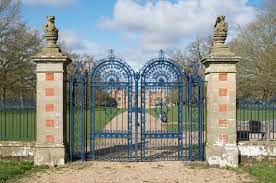
……..Will had to flee. Again the Catholic network, it seems, was there to help him. It engineered a collaboration with Thomas Kyd……

…..not a University Wit as the BBC series asserted, but a fellow grammar school boy – a ‘grammarian’- from a Catholic family.

Evidence for this can be found in the pamphlets of the University Wits Robert Greene…..

…and Thomas Nashe……

…..who describe Will and Kyd as:

‘deep read Grammarians, who having no more art in their brain, than was nourished in a serving-man’s idleness, will take upon them to be the ironic censors of all, when God and poetry doth know, they are the simplest of all.’

According to the Wits, Will and Kyd, had day jobs in Westminster as ‘noverints’ – that is to say, solicitors’ clerks – which was the profession Kyd’s father followed. They would write by candlelight at night. And then….

‘for recreation, after their candle stuff, having starched their beards most curiously, make a peripatetical path into the inner parts of the City…

…..where Elizabethan gentlemen got up to no good.

To make sure readers knew who the grammarians were, the Wits quote the ‘kid in Aesop’ and Will’s ‘killcow conceit’ – a reference to Will’s former profession as a butcher and glover. 

Will was the junior collaborator to Kyd, who was already established. Computer analysis suggests that Kyd produced early versions of Hamlet, King Lear, King John, Henry V, and The Taming of the Shrew or The Taming of a Shrew as it was then called.

According to a coded poem by Ben Jonson…..
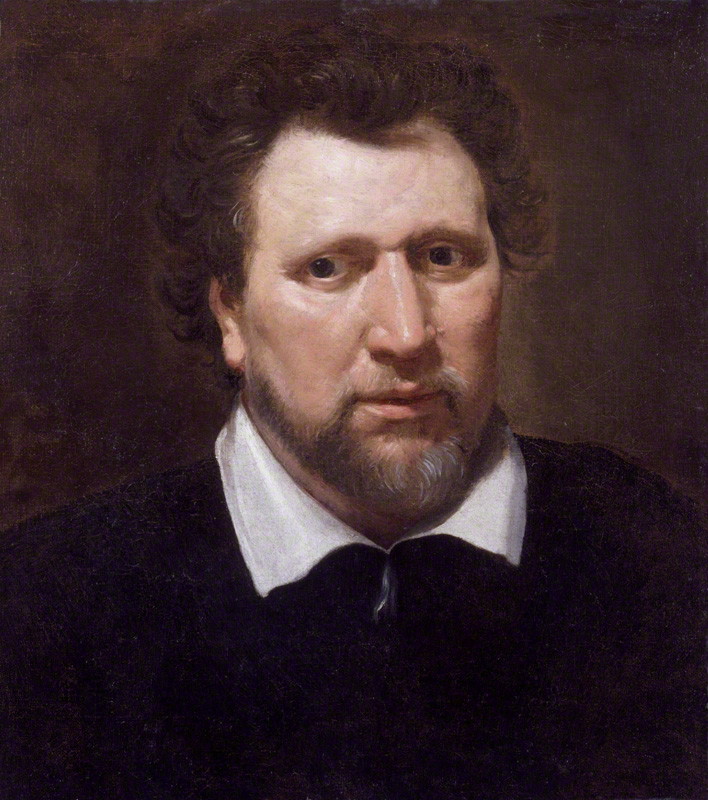
…..Will Shakespeare….

……‘the poet-ape who would be thought our chief’…..

…..bought the rights to these plays when Kyd died in 1594 and developed them into the masterpieces they became. In the BBC series there was hardly a mention of Will’s extensive collaborations – or the fact he lifted the vast majority of his plots from other men’s work.

Richard Simpson – an Anglican priest in Queen Victoria’s reign who converted to Rome – was the first person in modern times to suggest that Will was a Catholic. But Simpson also traced – through the coded satires of Greene and Nashe – a massive influence on Will of a radical Anglican priest, poet and printer, Robert Crowley, the Rector of St. Giles Without Cripplegate.

Greene writes:

‘If they [Kyd and Will] come to publish anything, it is either distilled out of ballads or borrowed of theological poets and he that cannot write true English without the help of clerks of Parish Churches will need make himself father of interludes…in charity be it spoken, I am persuaded the sexton of St. Giles without Cripplegate would have been ashamed of such blasphemous rhetoric.

And Nashe writes:

‘I must needs send such idle wits [Kyd and Will] to shrift to the Vicar of St. Fooles….their ghostly father.’

Crowley believed that all wealth should be voluntarily re-distributed – and gave his own stipend to the poor. He believed that everything should be shared – and that everything should be simple and natural. He hated artifice in language and artifice in adornment. He hated wigs and he hated make-up. These are the massive themes of Will’s Sonnets – and the great, later plays.

But how did Will – a committed Catholic – come to meet Crowley – a priest so Protestant he refused to wear a surplice?

St. Giles without Cripplegate was the Church Sir Thomas Lucy used when he was in London. His second daughter, Margaret, who died at around 19 is buried there – and there is a memorial to his granddaughter, Constance Whjitney. It would only be natural for Will to try to enlist the priest’s support in his ongoing battle with Lucy.  In return Will wrote the quasi-Biblical play The Fair Em to please Crowley – and toured the Midlands with it in Lord Strange’s Company.

So, if Rowe was right about Lucy, it could well mean that he was right about Harry and the £1,000 as well.

The Spanish Armada in 1588 spelt the death – for a time – of the theatre. The public were engaged in their own drama with Spain – and actors were seen as shirkers. Kyd joined Lord Strange’s household and Christopher Marlowe……

– whom Kyd and Will had befriended in London – joined Bess of Hardwick’s.

What happened to Will?

The great Shakespeare scholar, John Dover Wilson…..

……believed that Will joined Mary Southampton’s household in Titchfield as tutor to her teenage son, Harry – another indication that there was a Catholic network at work as the Southampton family were ardent followers of the Old Faith.

John Aubrey also states that Will…

‘understood Latin pretty well because he had been in his younger years a schoolmaster in the country’.

But was the country Hampshire?

****

To find out read ‘When Will met Harry: Part Two’!!!

Read Full Post »

It is with great sadness that The Shakespeare Code records the passing of one of its most distinguished Fellows – the great Glaswegian poet – Eddie Linden. Here is his photo, rightly placed in the National Portrait Gallery of London.

And here is his most celebrated poem about Glasgow – ‘City of Razors’:

Cobbled streets, littered with broken milk bottles,

Reeking chimneys and dirty tenement buildings,

Walls scrawled with FUCK THE POPE and blue-lettered

Words GOD BLESS THE RANGERS.

An old woman at the corner, arms folded, babe in pram,

A drunk man’s voice from the other pavement,

And out come the Catholics from evening confessional;

A woman roars from an upper window

‘They’re at it again, Maggie!

Five stiches in our Tommie’s face, Lizzie!

Eddie’s in the Royal wi’a sword in his stomach

And the razor’s floating in the River Clyde.’

There is roaring in Hope Street,

They’re killing in the Carlton,

There’s an ambulance in Bridgeton,

And a laddie in the Royal.

R.I.P. Fab Eddie.

Read Full Post »

by Trixie the Cat

Brothers and Sisters of The Shakespeare Code

Tomb Raiders, Lord Montagu of Beaulieu….

ralph-montagu-fourth-baron-montagu

….and Laura Croft…

laura croft

Sorry! Your Cat meant Laura Matthias…

laura m

……..have done a magnificent job!

They have managed to persuade the Ecclesiastical Authorities to let them open the Southampton Family Vault….

…..and they presented their findings last night to a packed and excited audience in St. Peter’s Church, Titchfield, Hampshire.

A slide show was part of the presentation, but because of the sensitive nature of the material – many dead bodies – photography was forbidden.

So Your Cat will have to fall back on her descriptive powers….

Now the fact is that most of what The Tomb Raiders discovered is actually in the public domain.

But legend has long shrouded the truth – and the truth really did set us free, last night, in a shocking way.

The tomb was last opened in the 1950s when a Visiting Preacher fell through the floor – and the whole structure of the Church had to be stabilised.

The Vicar of St. Peter’s at the time – Norman Miller – gave an honest account of what he saw in the vault:

Fifteen to twenty great lead coffins, piled one on top of each other, the lower ones being in a poor state of preservation.

This tallies with a description by William Pavey in 1719 – when the vault was still being used….

[The bodies are] in lead coffins or wrapped in lead with inscribed plates indicating their identities and dates of death.

The last internment was made in 1737 and the tomb was sealed. Around 1899 the vault was opened by the Victorians, who had no qualms in taking of the lids of the coffins and reporting that the bodies had been embalmed.

This lead to a journalistic caprice in 1950.

Our Chief Agent, Stewart Trotter, came across a 1950 newspaper article stored in the Winchester Record Office, describing how the lids of the coffins had been taken off – and the bodies found swimming in the purest honey – perfectly preserved.

This story turned into fact – and was included in Church Literature and Guides.

So you can imagine the consternation last night which followed Laura’s photo of the contents of the vault…

….lumpen lead coffins, falling apart, imploding, thrust, higgledy-piggledy and disrespected, into the left corner of the vault.

If the vault had been in this condition when Mary Browne died she wouldn’t have asked to be placed ‘as near as may be’ to her beloved husband: she would have asked to be thrown in his general direction. 

And there is evidence that the vault was always a touch chaotic. It seems to have been a general, public vault, commandeered by the Southampton family.

They built their memorial ‘tomb’ away from the East Wall……

titchfield-tomb

– and, under a slab of stone in front of the tomb, built a stairway and brick passsageway which led to the old vault which may or may not have contained bodies from other families.  

Rev. Norman Miller bricked up the entry to the old vault and removed the Tudor steps down to the crypt. He must have thought that was that.

But it certainly wasn’t. The Tomb Raiders now want to identify the bodies. They have smashed down Miller’s brick wall and re-built the steps.

But DNA tests have been forbidden by the Authorities, so only two bodies have been ‘confirmed’:

  1. Elizabeth Vernon….

eliz vernon old


….who became the wife of Henry Wriothesley, Third Earl of Southampton….

Harry Southampton old.

2. James Wriothesley, Lord Wriothesley, the son of the Third Earl, who died of dysentery at the age of nineteen, five days before his father. They were onn a military campaign in the Lowlands.

The Tomb Raiders have not identified any remains yet of Mary Browne….

mary-browne


……BUT they do have one the ‘inscribed plates’ William Pavey described in 1719 with Mary’s name on it.

So it seems that her son DID respect her dying wish and allowed her into the family vault.

BUT we don’t know if she or her coffin are still there.

So, as Your Cat said at the beginning…..

Mary Browne’s body lies a-mouldering in the grave. And doesn’t.

Just call me Schrodinger’s Cat!

‘Bye, now!

paw-print-smallest


Read Full Post »

A Reminder from Trixie the Cat!

Trixie

Just a couple of days to Lord Montagu’s talk on the Southampton tomb on Monday!
For Your Cat, the big question is whether Mary Southampton’s coffin was placed ‘as near as may be’ near to her first husband, the Second Earl of Southampton.
Her son, Henry, Third Earl of Southamton. was busy in Titchfield at the time trying to establish industry in the area – and he had never got on with his mother.
In fact Mary went as far as to say that her son ‘never was kind to me’ – and that he had been ‘unnatural and undutiful’.
Mary had married Thomas Heneage in 1594 – but he had died soon afterwards. She went on to a third marriage with William Harvey – who was little older than her son – and the third Earl was furious that she intended to go ahead with the ceremony while he was in jail, for angering the Queen with his own marriage to Elizabeth Vernon.
Mary – when she made her plea in her will to be interred near her first husband –  made Harry a gift of sixteen loose diamonds to be set into a George of gold for him to wear in memory of her – and the ‘best’ part of her goods – if not the ‘most’ which she left to her new husband.
Did the bribe work?
Was she placed near her first husband?
Was her body even placed in the tomb?
Lord Montague will reveal all!

Read Full Post »

An Important Statement from Trixie the Cat

Trixie

Brothers and Sisters of The Shakespeare Code!

Your Cat brings you the most important news for Shakespeare Scholarship this Century!

In September 2021, Lord Montagu, Fourth Baron of Beaulieu….

ralph-montagu-fourth-baron-montagu

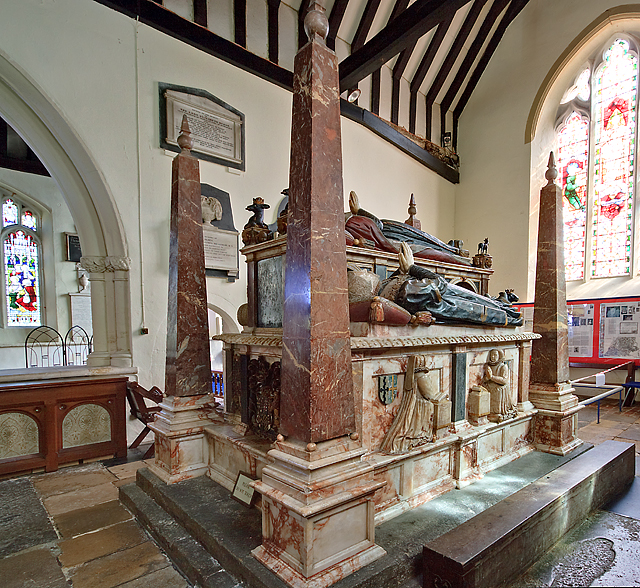
…was given permission to open the spectatcular tomb of the Southampton family in St. Peter’s Church, Titchfield!

titchfield-tomb

In attendance was the Revd Susan Allman….

susan-allman

….who had been Priest-in-Charge at St. Peter’s Church…..

susan-allman-tomb

…..and returned to bless the proceedings.

The Shakespeare Southampton Legacy Trust reported that:

The Southampton monument is supported by a vaulted Tudor passage running its entire length to the north. Access to the Wriothesley vault was re-established through the original acces point on the chapel floor near the organ. Access involved lifting one stone slab that was fully re-instated upon completion.

There are three recumbent figures in alabaster on the tomb.

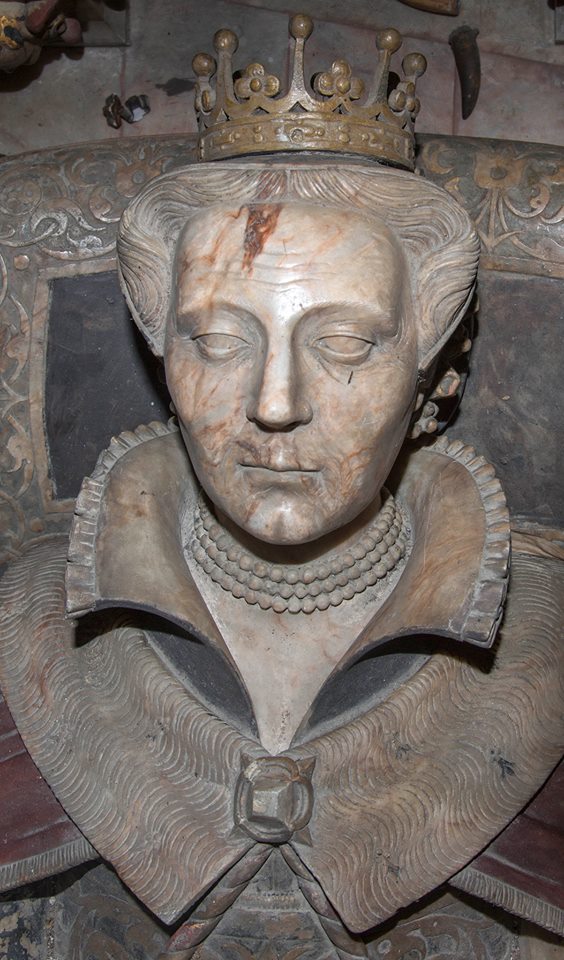
On the top is Jane, first Countess of Southampton….

jane-southampton

[Photo: Ross Underwood]

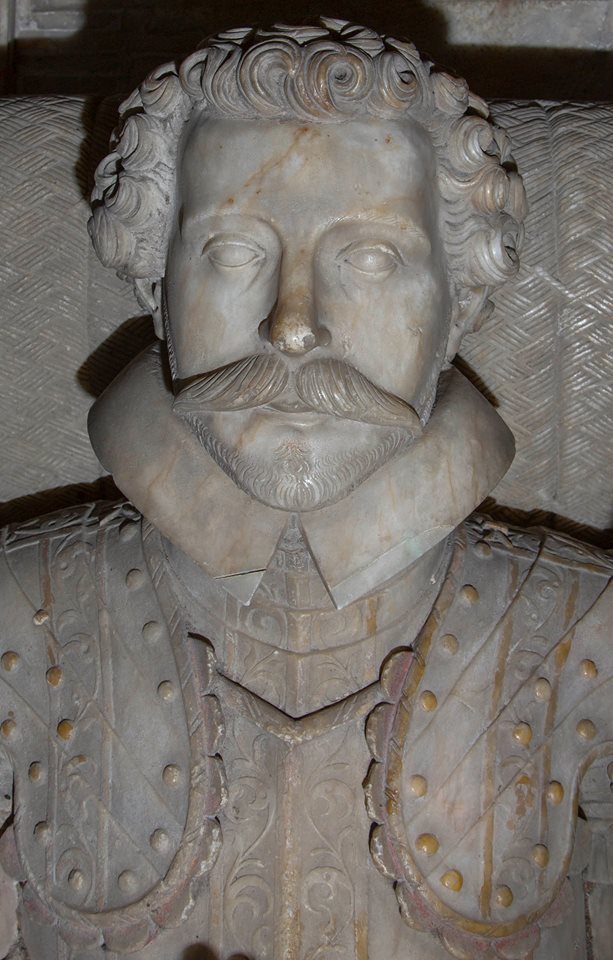
To her right lies her husband Thomas Wriothesley, First Earl of Southampton…

first-earl-of-southampton

[Photo: Ross Underwood]

…..and to her left her handsome son, Henry, Second Earl of Southampton….

second-earl-of-southampton

[Photo: Ross Underwood]

Henry was married to Mary, Second Countess of Southampton, née Browne….

mary-browne-1

…..who was daughter of Anthony Browne, First Viscount Montagu…..

anthony-browne

…….England’s leading Roman Catholic.

On the side of the tomb is depicted, kneeling in prayer, the young Henry Wriothesley – Third Earl of Southampton….

third-earl-of-southampton-1

…..known as ‘Harry Southampton’ – the son of Mary, Second Countess of Southampton and Henry, Second Earl of Southampton.

A St. Peter’s Church tomb was commissioned by Henry, Second Earl. But when he died in 1581, his orders were not carried out by his widow.

He wanted a tomb for his father Thomas and mother Jane – and a tomb for himself…..

A SINGLE TOMB!

This was intended to be a direct insult to his wife Mary – who he believed had commited adultery with a lower-class person – a charge she swore in a letter to her father, Viscount Montague – was untrue.

But she added:

He may blame me of folly, but never justly condemn me of fault.

The ‘folly’ The Shakespeare  Code believes, was to fall in love.

Mary disregarded her husband’s wishes – and ordered a single tomb – the one we have now – thirteen years later in 1594.

That was also the year her son – Harry Southampton – came of age and might have his own ideas about the family tomb….

For the Second Earl had snatched little Harry at the age of six away from his mother – and taught him to hate her – and, it seems to hate all women.

Mary confessed to her father her husband had made her so unhappy that she wanted to die…..

…..but in a way she was glad he had been so horrible to her because it meant she could forget him all the sooner.

BUT….

…in her will she asked to be interred…..

as near as may be unto the body of my honorable and dearly beloved Lord and Husband, the Late Earl of Southampton.

So what had happened?

WILLIAM SHAKESPEARE!

chandos-shakespeare

We believe at The Shakespeare Code that in 1590 Shakespeare took up residence in Titchfield – as part of the Southampton family entourage.

Among his duties was tutoring Harry Southampton and Mary Southampton commissioned Shakespeare to write 17 sonnets on Harry’s seventeenth birthday to persuade him to get married.

However, the sonnets had the reverse effect……

Harry and Shakespeare became long-term lovers.

In 1594 Mary Southamton also re-married, and we believe she commissioned Shakespeare to write an entertainment to celebrate the wedding…

But Shakespeare – a Roman Catholic like Mary and her son – and indeed her dead husband the Second Earl – believed that the spiritual discord of Mary’s first marriage needed to be healed before the second could prosper.

For Elizabethan Catholics, the Fairy World – with its blessing,benedictions and enchantments – had become a substitute for Roman Catholicism….

…indeed, Bishop Richard Corbett – who would have been twelve years old when the play was written – went so far as to observe that, though Fairies had been seen in the reign of Queen Mary, they had not been seen in the reigns of Elizabeth or James….

By which we note that fairies were of the old profession/Their songs were Ave Maries/Their dances were procession.

The ‘old profession’ was the ‘Old Faith’.

With all this in mind, Shakespeare set about writing….

A MIDSUMMER NIGHT’S DREAM

puck

The Fairy Protagonists – Oberon the King….

oberon

…..and Titania the Queen…..

titania-1

…like Mary Southampton….

mary-browne-1

……and the Second Earl…..

second-earl-of-southampton-2

…..are in a fight over a little boy……

changeling-boy

….like the fight over the young Harry Southampton……

third-earl-of-southampton-1

Also Titania suffers the ‘folly’ of falling in love with an ass…..

titania-ass

The contention between the Fairy King and Queen creates disorder in the seasons in the play….

…..and in real life the summer of 1594 was the coldest and wettest anyone could recall…

But order is restored when Oberon and Titania fall back in love…

…and dance together….

titania-oberon-dance

……and the fairies bless the house, not with holy water, but with field dew….blessing-fairy

Shakespeare by writing the play has reconciled the souls of Mary and the Second Earl.

He has performed the role of a Priest.

Whether Mary’s wish was honoured – to be interred ‘as near as may be’ to the body of her dead first husband…..

…..or whether her body had even been interred in the tomb…..

……will be revealed by Lord Montagu in Titchfield on Monday night…..

Your Cat will certainly be there!

Swooning at his Lordship’s feet….

So watch out all Church Mice…..

Your Cat wouldn’t miss this for the world!!!
‘Bye, now…

paw-print-smallest


leaflet-montagu

Read Full Post »

Read Full Post »

[Photograph by Jianwei Chen]

Once on a morning of sweet recreation

I heard a fair lady a-making her moan,

With sighing and sobbing and sad lamentation,

Aye singing, ‘My Blackbird for ever is flown!
He’s all my heart’s treasure, my joy, and my pleasure,

So justly, my love, my heart follows thee;

And I am resolved, in foul or fair weather,

To seek out my Blackbird, wherever he be.

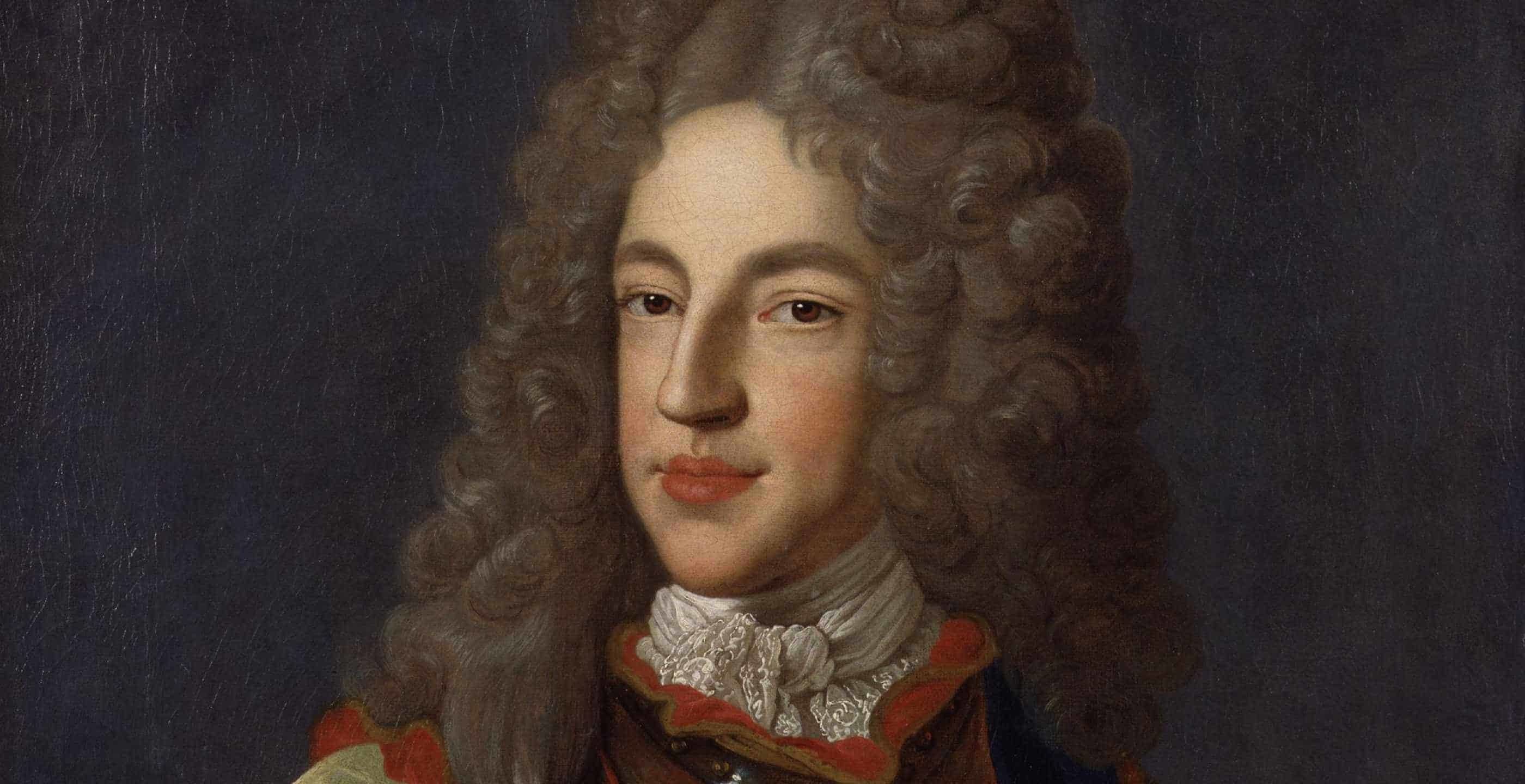
This song was sung in Scotland both before the 1715 Jacobite Rebellion and after it – and as James Hogg, the Editor of ‘The Jacobite Songs and Ballads’ (1861) makes clear, ‘The Blackbird’ was the nick-name his friends gave to the Old Pretender – James Frances Edward Stuart.

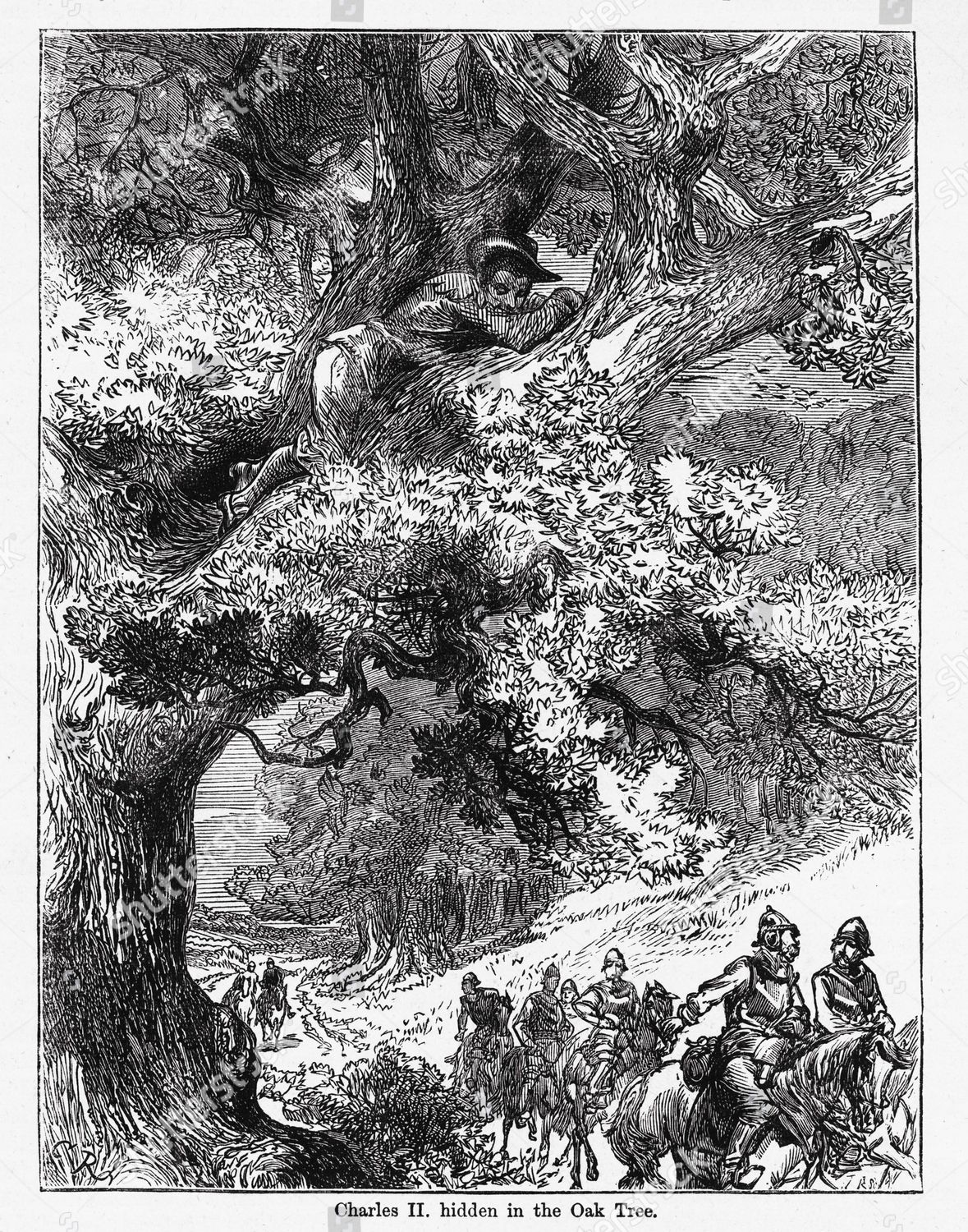
He had a very dark hair – a characteristic he shared with his father-in-law, Charles II, who was named ‘The Black Boy’ by his mother – and described as a ‘tall, black man’ on Wanted Posters after his escape by hiding in Boscobel Oak.

Both men probably inherited their dark hair and skins from Charles II’s Spanish maternal grandmother, Marie de Medici…

‘Black Boy’ Taverns sprung up for people loyal to King Charles to drink in – and people later loyal to the Old Pretender, ‘James III’ did the same thing…

Rich Jacobites would also include black page-boys in the household to show their loyalty to the Stuart cause.

James Gibbs began his decoration of St. Mary le Strand after the failure of the 1715 Jacobite Rebellion – which was led by his Patron John Erskine, the Earl of Mar…

Gibbs worked as a secrent Jacobite agent for Mar – telling him about the loyalty and strength of the Jacobites in both England and Scotland – and used the language of architecture as a code.

‘Lodge’ for example didn’t mean a house or a villa – as historians used to think it meant. It signified a secret enclave of Jacobites, prepared to over-throw the monarchy.

Gibbs – as we have seen – used symbols to promote the Jacobite cause – symbols that could mean one thing or another.

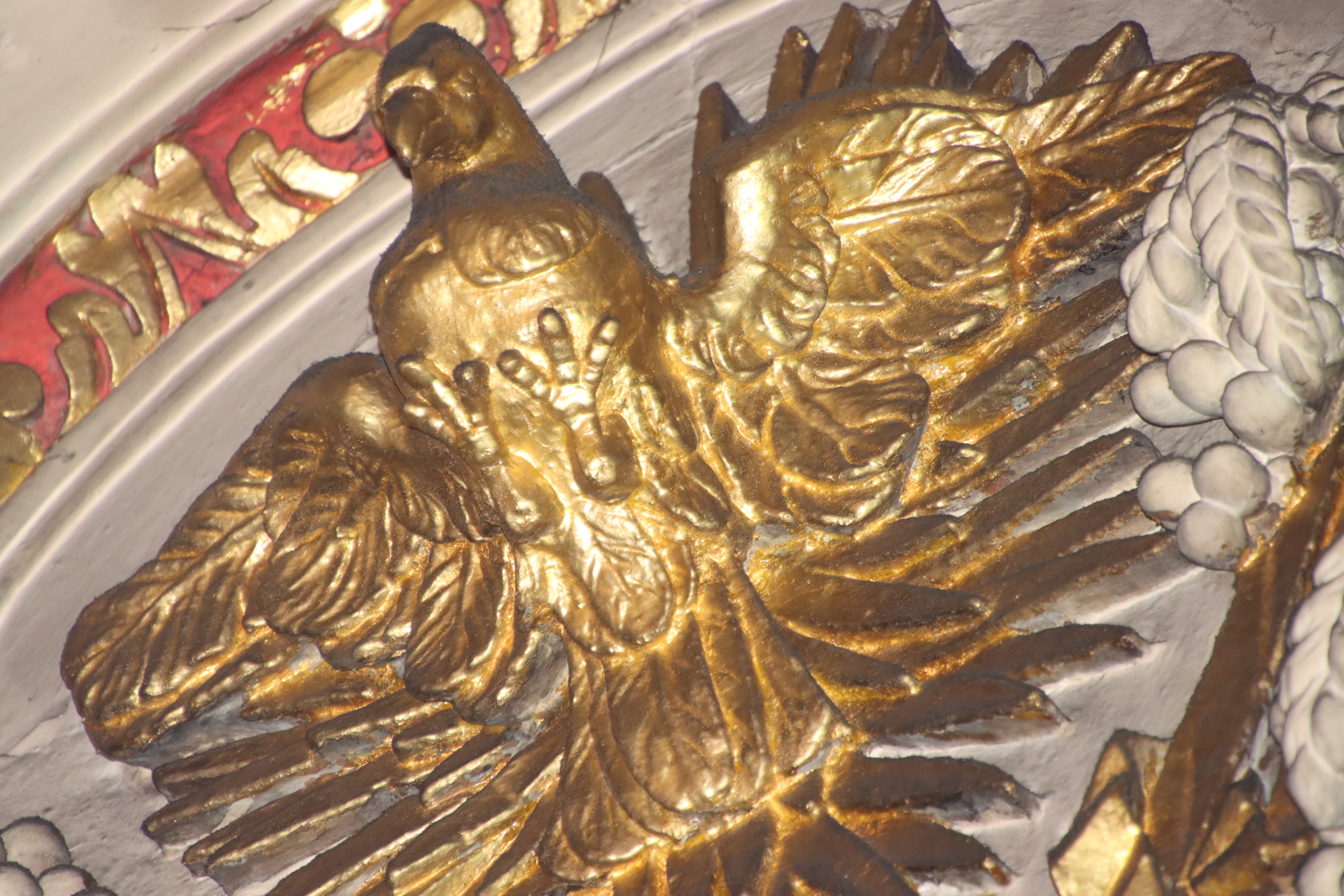
The bird, for example in the apse…

……has been taken to represent the Holy Spirit that descended on Jesus…..

This image has an empty alt attribute; its file name is holy-spirit-on-jesus.jpg

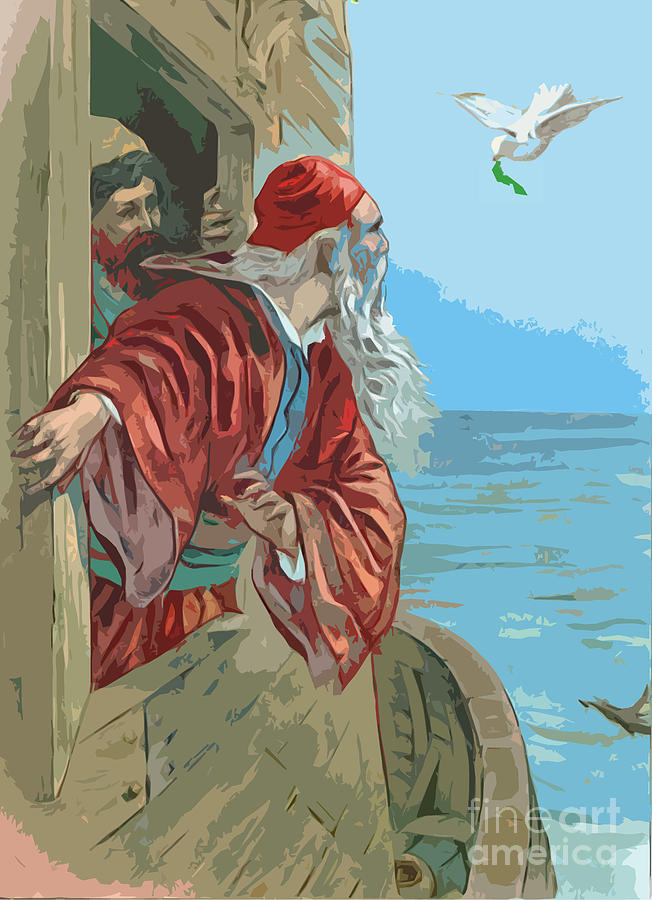
……and the dove returning to Noah on his ark, carrying an olive branch…..

But the problem is that the bird is not descending on Christ, neither does it have an olive branch in its beak…..

So what does it represnt?

The answer, strangely, lies in a parody William Hogarth made of William Kent’s altarpiece to the church neighbouring St. Mary le Strand, St. Clement Danes….

….which is a Christopher Wren Church – but the steeple of which Gibbs designed – under duress.

Gibbs HATED steeples!

William Kent – a Jacobite Freemason –

…….painted an altar-piece of Saint Cecilia for this church in 1725….

[The only remaining photograph, copied from Ricky Pound’s excellent article ‘Jacobite Symbolism at Chiswick House’]

The congregation rebelled because they thought – rightly – that ‘Saint Cecilia’ – on the right of the painting on the keyboard – was in fact the Old Pretender’s striking wife – Maria Clementina Sobieska….

In 1725 Sobieska had rowed with her husband about how Bonnie Prince Charlie should be educated in religion – and had taken shelter in the Nunnery di Santa Cecilia in Travestere in Rome.

She was to remain there for two years – watching the services at the adjoining Basilica from her room.

The congregation of St. Clement’s Dane were loyal to their new King George I – and demanded the painting was removed. It was stored in the Vestry of the Church – and hired out for clandestine Jacobite celebrations – until it was destroyed by enemy action in WWII.

William Hogarth had a satirical response to all this.

He issued his own version of the painting – with Sobieska, now an ‘angel’, off keyboards and playing a harp – in which he claimed it was NOT Sobieska and her children…

The statement at the bottom reads:

The Print is exactly Engrav’d after the celebrated Altar-Piece in St. Clement’s Church which has been taken down by order of the Lord Bishop of London as tis thought to prevent disputes and laying of wagers among the Parishoners about the artist’s meaning in it. For public satisfaction here is a particular explanation of it humbly offered to be writ under the original that it may be put up again by which means the parishes 60 pounds which they nicely gave for it may not be entirely lost. Tis not the Pretender’s Wife and Children as our weak brethren imagine – nor St. Cecilia as the Commoisseurs think, but a choir of angels playing in consort.

XXX

Hogarth’s denial, of course, re-inforces the idea that it IS Sobieska and her children.

But the really interesting thing about this parody is the upper section…

The flying bird and the Cherubs are nowhere to be seen on the original painting. Hogarth has added them. And they correspond completely to the apse of St. Mary le Strand…

…….with its cherubs….

……and its flying bird…..

If we look at the Hogarth parody again…..

….we can see that the flying bird is casting down its light and power on the Old Pretender’s wife and children….

It is my contention that the bird – although gold! – is in reality the Old Pretender – the ‘Blackbird himself!

The beloved King Over the Water – waiting to fly back to his land and his people – and siring Stuart heirs a-plenty – because it is the will of God.

The flying bird as a symbol of the Old Pretender also features on Jacobite drinking glasses.

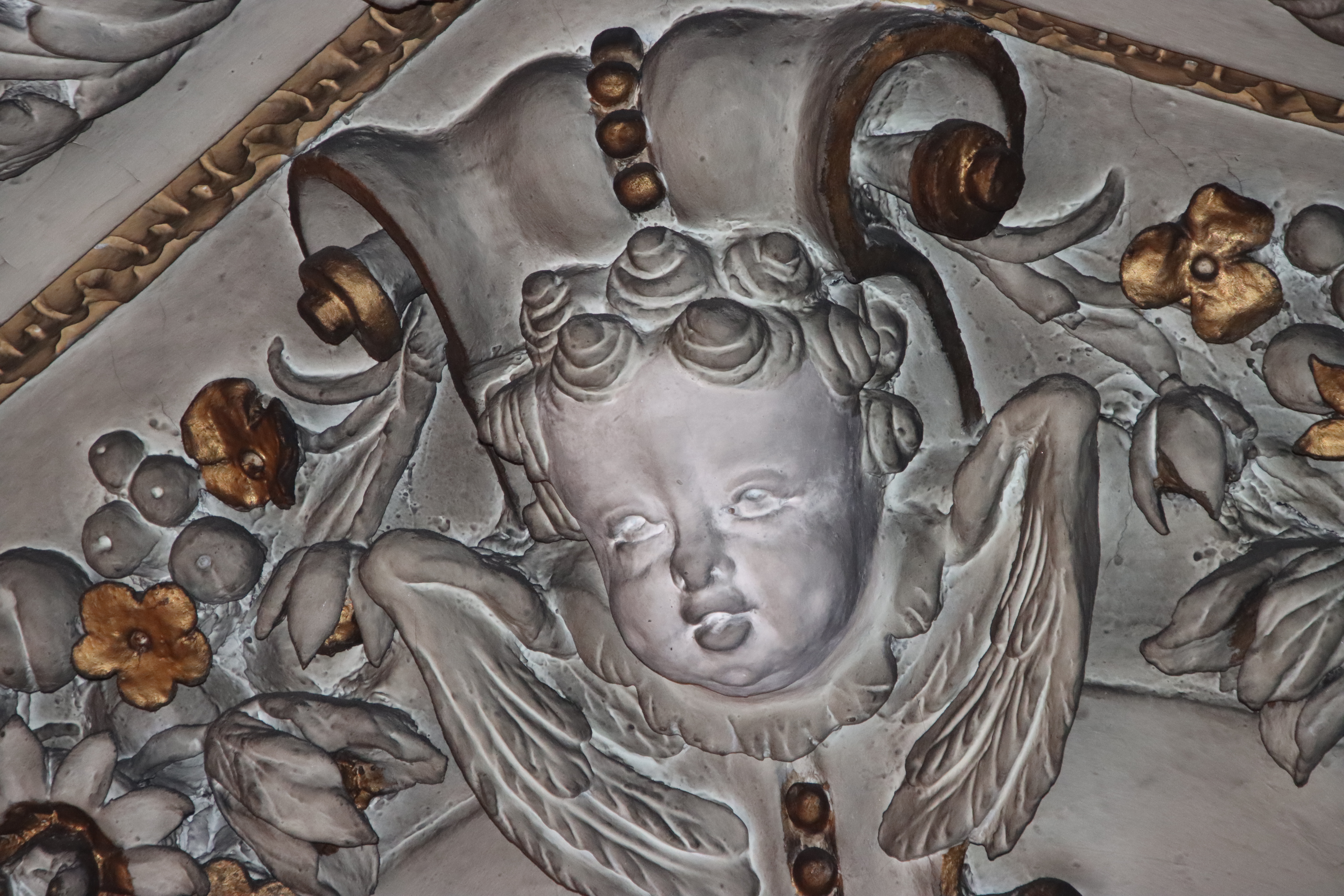
But what are we to make of the Cherubs? Two of them are so stupid they are colliding together….

Could they possibly be what Alexander Pope calls ‘Dunce the First’ and ‘Dunce the Second’?

George I and George II who famously were ‘at loggerheads’.

The cherubs near to the viewers are attractive – and might even represent the young Bonnie Prince Charlie with his ostrich feathers as Prince of Wales….

The Cupids in St. Mary le Strand become more unprepossessing the higher up in the apse they are carved – and the further away from the viewers….

……and here’s one from the same group that looks positively demonic!

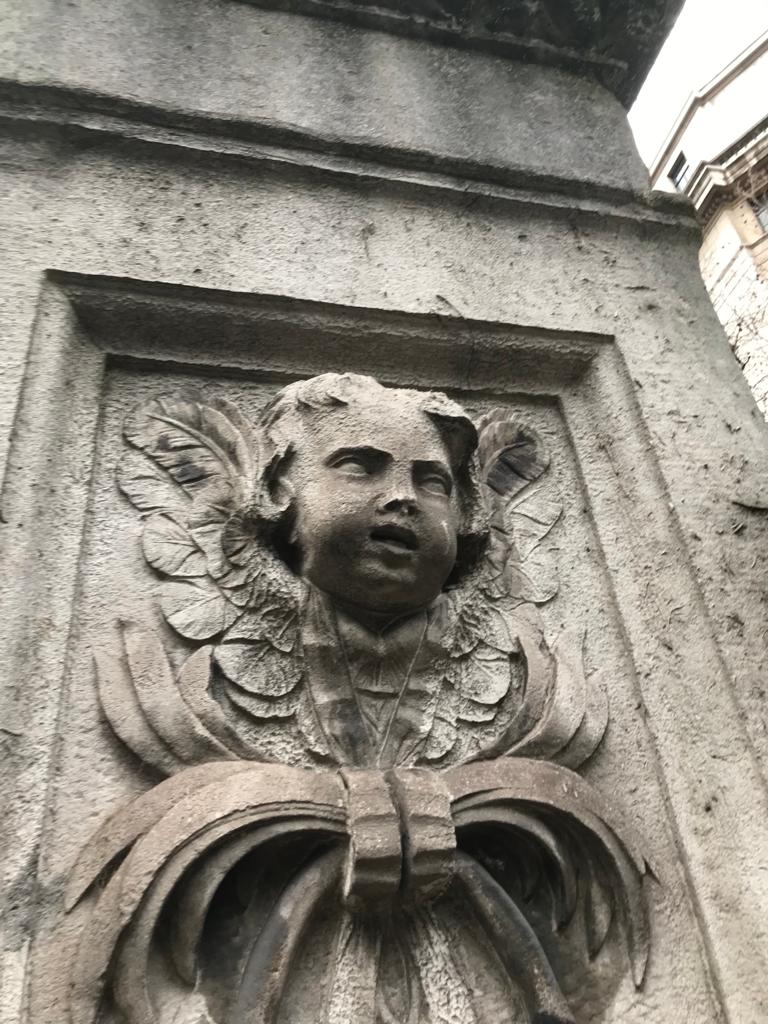
Gibbs had designed St. Mary le Strand to re-create the Temple of Solomon – so the inhabitors of the Holy of Holies should, strictly speaking, be Cherubim – NOT Cherubs!

Cherubim were second down to Seraphim in the ranking of angels – and although descriptions of them differ – they are meant to be adults with long wings – sometimes with faces that combine the human and the animal…

The other job of the Cherubim was to guard the Gates of Eden – hardly a job you’d leave to grumpy toddlers….

So what is going on? Johnathan Swift satirises George I as the King of Lilliput, wearing shoes with the lowest heels in the Kingdom and with….

….an Austrian lip and an arched nose…

Is Gibbs engaged in satire as well? Is he carrying on the fine old tradition of the Masons who built the Cathedrals – and carved caricatures of living people into the stonework?

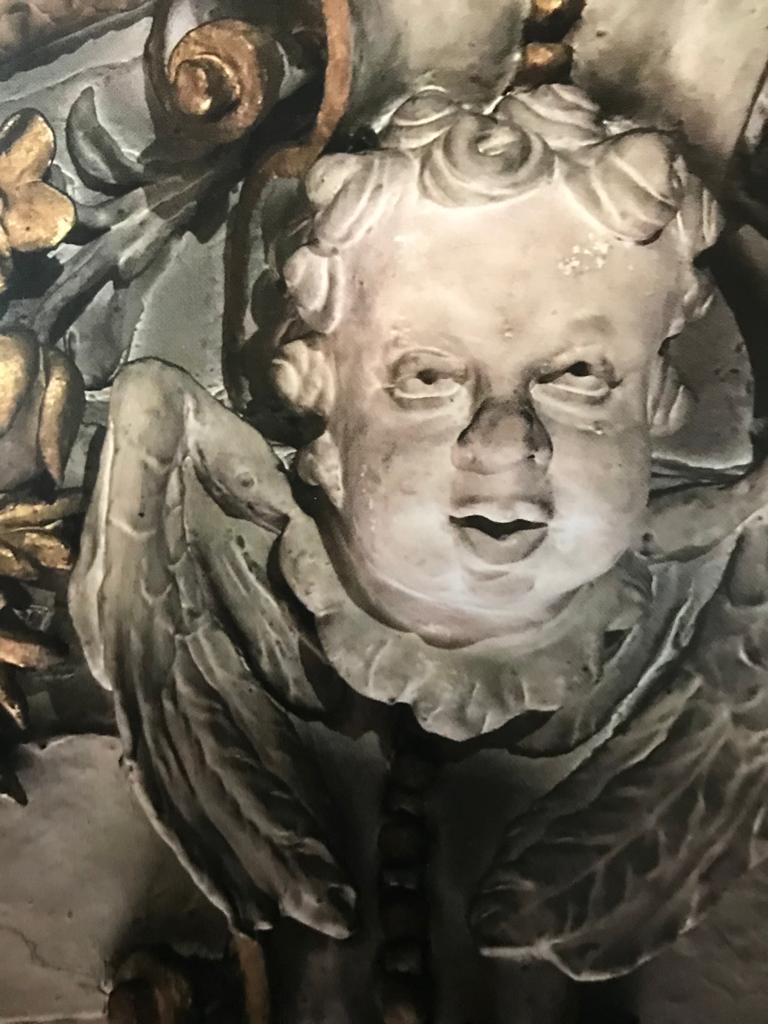
Are the chubby cheeked Cherubs – with their prominent lips and noses – satires on an immature monarch who – when angry would throw his wig onto the fire?

Are the dozens of Cherubs dozens of satires on the hated monarch, George I?

His wife-to-be, Sophia, when shown a miniature of George, famously cried: ‘I will not marry the pig snout’

Is this Cherub – high up in the corner of the ceiling – pig snout himself?

I leave it to you.

Read Full Post »

The Lion and the Unicorn

At the Parish Church of St. Mary le Strand, nothing is quite as it first appears!

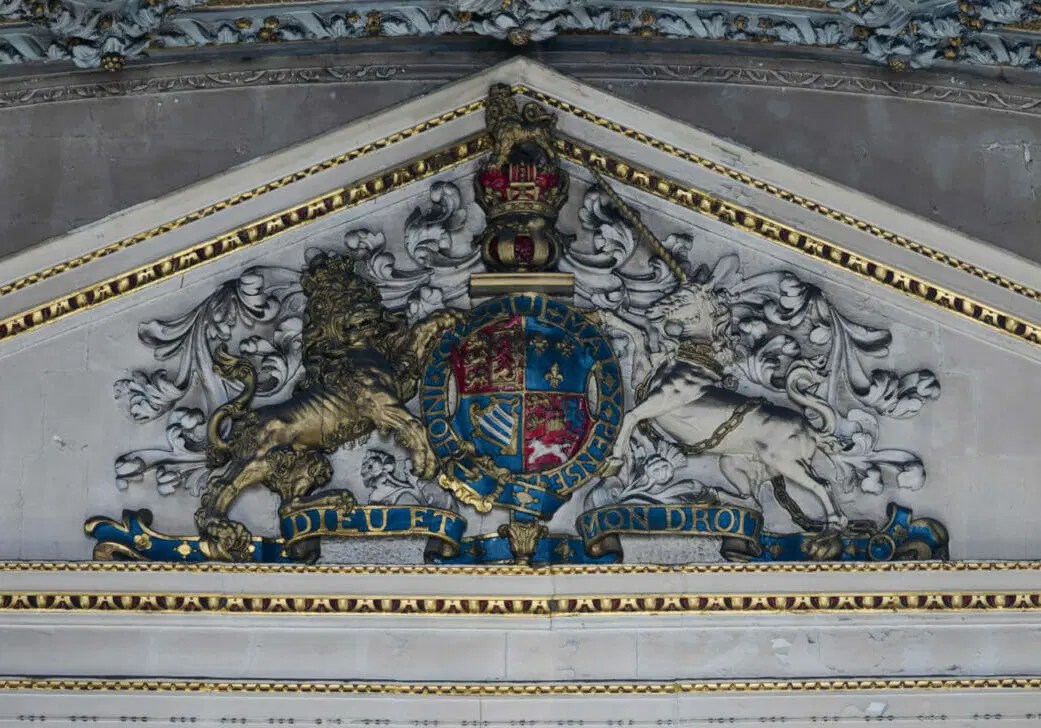
Here, for example, is the ‘official’ photograph of the Hanoverian Crest of King George I which sits above the apse…..

But we asked our photographer, Jianwei Chen, to photograph the crest from a different angle – and this is what we discovered…..

A unicorn with a monster-sized horn – almost hidden from viewers on the ground.

Remember, the decoration of the interior of St. Mary le Strand began in 1719 – after the failure of the 1715 Jacobite Rebellion, led by John Erskine, 6th Earl of Mar….

James Gibbs – the designer of St. Mary le Strand….

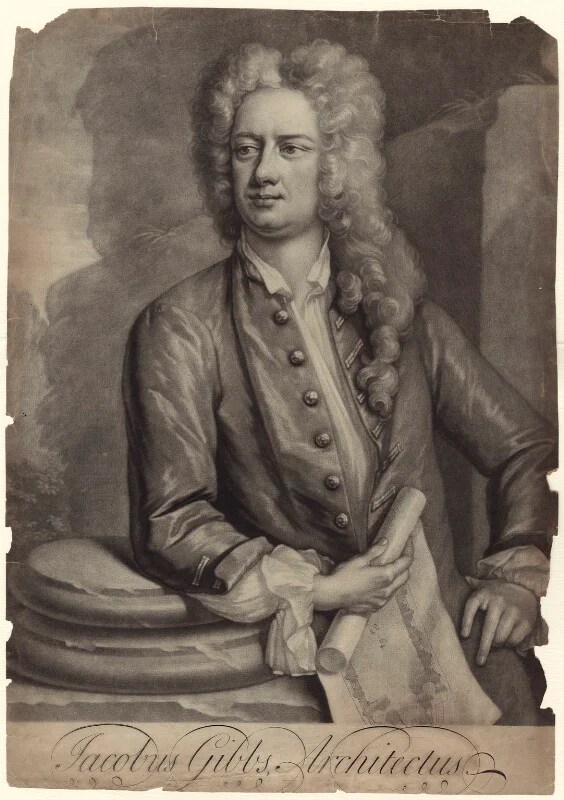
……..described here in the Latin as ‘Jacobus Gibbs’…..was also a convinced Jacobite, determined, as a Roman Catholic, to bring the Catholic friendly – and indeed Roman Catholic – Stuart family back to the throne of Britain….

He worked as a Jacobite agent for Mar in London – while posing as loyal to the new Hanoverian King, George I…

He went so far as to write in his introduction to his book on architecture…..

designs should not be altered by the caprice of ignorant, assuming Pretenders

…..but by ‘Pretenders’ he didn’t mean the Stuart ‘Old Pretender’ and ‘New Pretender’….

He was referring to Georges I and II who, in his view, had no right to the British throne whatsoever!

So in his design of the the Church’s interior, Gibbs is often supporting the Jacobite cause – codedly!

…and making fun of the Hanoverian one.

The unicorn’s unbelievably long horn is a case in point.

The Jacobite fight was, in part, the fight between the Scots – protecting the Scottish Catholic Stuart family……

….and the English – protecting the English, Protestant Hanoverian family….

In the crest, the Lion has always represented England and the Unicorn Scotland…..

And so with the unicorn’s horn, Gibbs is making the Scots more powerful than the English to encourage further Jacobite Rebellions.

But there is always a further meaning with Gibbs….

In Jacobite songs, King George is referred to as ‘cuckold Geordie’ – so the Unicorn’s gigantic horn is also a cuckold’s horn.

When he was Elector of Hanover, George had married the beautiful, buxom, Princess Sophia Dorothea of Zell…..

……but he preferred the company of his mistresses. Sophia in turn, had taken a lover, Count Koningsmark……

When George found out about this, he tried to strangle Sophia and had Koningsmark assassinated. Sophia was incarcerated and reduced to the title of ‘Duchess’ – and when he arrived in England, George was accompanied by two mistresses – nick-named the Elephant and the Maypole…..

George was tubby and small – a ‘wee, wee, German Laidie’ – and no match for the sweep and style of ‘King James the VIII’!

George’s ‘horns’ are referred to directly in another Jacobite song that compares him to a ‘huge, black bull’

We’ll twist his horns out of his skull

And drive the old rogue to Hanover.

But if you look carefully, the ‘Hanover Crest’ becomes even more subversive….

Surrounding the Lion and the Unicorn are leaves that might possibly be oak….

…..as there are on many of the wood-carvings in St. Mary le Strand, such as the pulpit….

Oak-leaves were important to the Jacobites because they symbolised the House of Stuart.

After the Battle of Worcester in 1651, King Charles II disguised himself as a peasant…..

…..and hid in an oak-tree at Boscobel……

On his return to England in 1660, King Charles wore a garland of oak-leaves as he rode on horseback in his procession down the Strand on his birthday, 29th May – and Royalists held breat branches of oak to celebrate his escape.

Oak-leaves became very subversive during the reign of the two George’s – people were imprisoned for wearing them – so for Gibbs to decorate the Hanoverean crest with them – however high up in the air – was a truly dangerous, anarchic act.

But equally anarchic was another symbol that appeared in the crest…..

Beneath the Unicorn – and above ‘mon droit’ [my right] you can see a thistle – entirely invisible to viewers on the ground – but known to the Jacobite carvers and plasterers!

The thistle was the ultimate Jacobite Symbol and its use entirely banned in Hanoverian England.

When the Earl of Mar raised the blue Jacobite Standard at Braemar on 6th September 1715 – on one side, wrought in gold – were the arms of Scotland – and on the other side, the thistle.

And beneath the Lion, you can see a Stuart rose, also invisible to viewers on the ground.

In the Jacobite Song ‘The Gathering of the Hays’ these two lines appear:

Dark as the moutain’s heather wave

The rose and the thistle are coming brave….

But it was one thing to put ‘the rose and the thistle’ way out of sight – but Gibbs has put thistles at ground level – but hidden in plain sight!

If you look at the stone piers at the entry to the Church Garden……

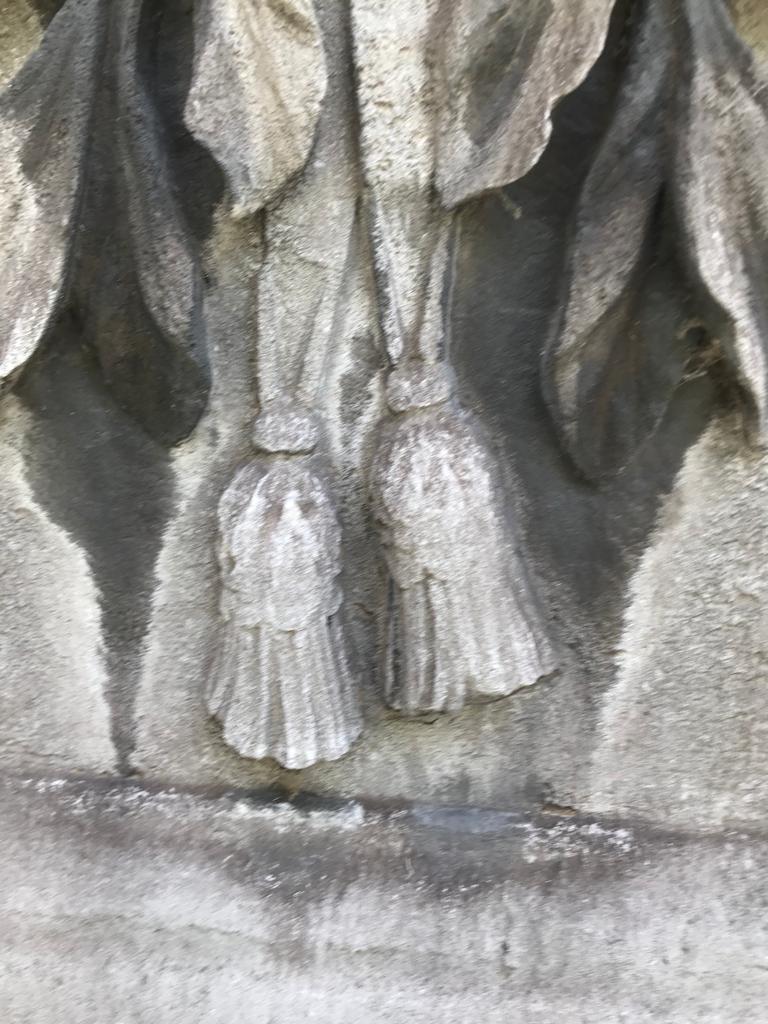
You will see a couple of tassles…..

But invert them – and hey presto! Thistles!

And if you look at the pier again…..

……you will the Saltire – the Cross of St. Andrew!

Gibbs also used the saltire as the basis for a castle he designed – but never built – for the Earl of Mar…

Compare with…..

The two piers are a bit of a mystery. They appeared around 1720 – and there is no evidence that the Church had paid for them.

1720 was the year the Young Pretender was born – and it is possible the piers were a Jacobite gift.

The cherubs have wings that look suspiciously like ostrich feathers…..

The Young Pretender – Bonnie Prince Charlie – was created the Prince of Wales the day he was baptised…..

…and the cherubs on the church ceiling have something on their heads – possibly crowns….

The piers are also decorated with Jacobite roses…

James Gibbs was next given St. Martin-in-the-Fields to design. He originally wanted to build a round, Knight’s Templar Church……

– but it proved too expensive.

James Anderson – a fellow Aberdonian – reports in ‘The Constitution of the Masons’ (1738) how ‘Brother Gibb’ joined a masonic procession – with full aprons – in 1721 to celebrate the placing of the Foundation Stone.

He repeated his Unicorn horn joke – in a slightly modified form – in the external Hanoverian Crest…..

And he created another starburst – only recently re-discovered –

…..to celebrate the birth of Bonnie Prince Charlie in 1720…..

Read Full Post »

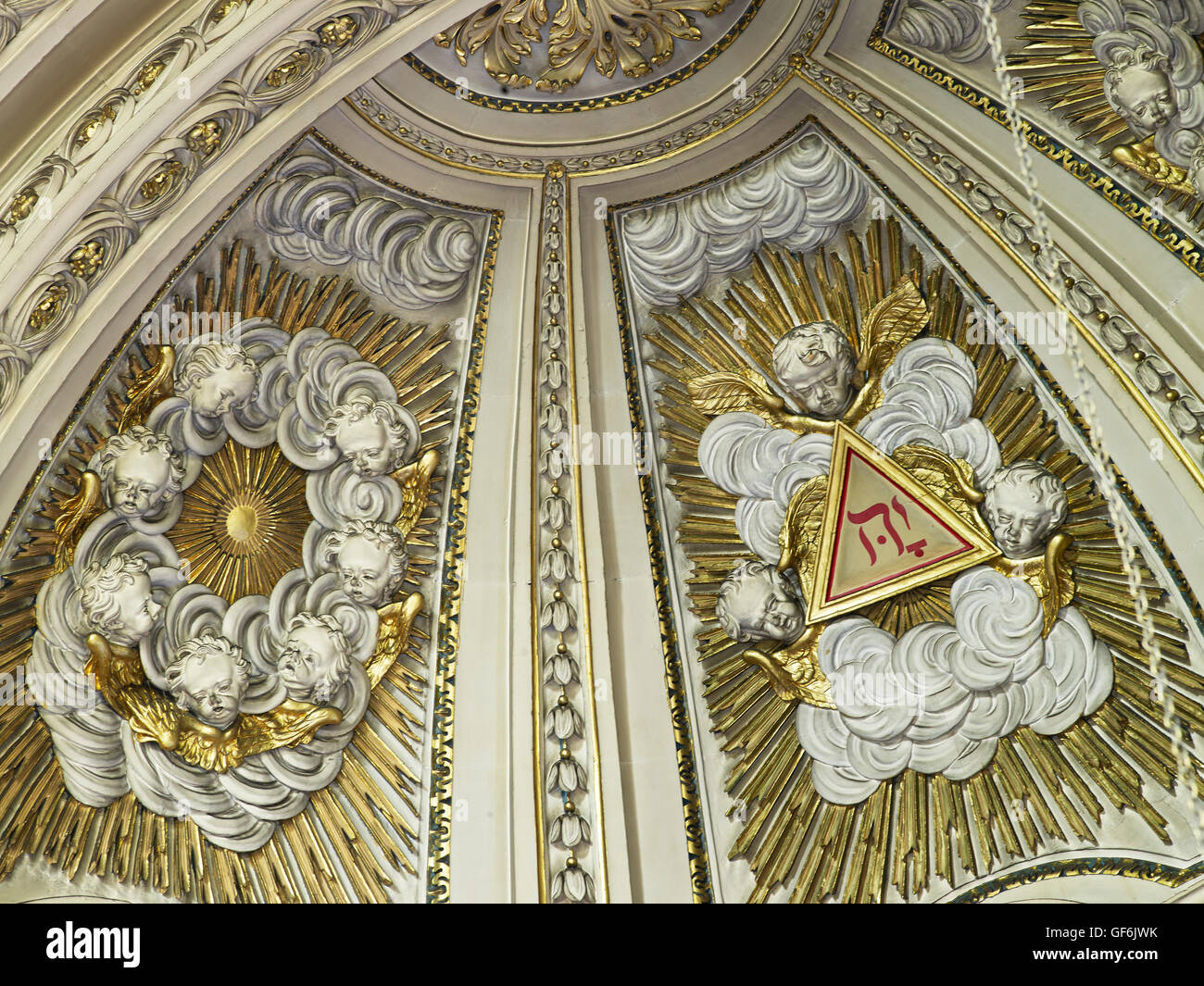
  1. The Golden Triangle in the Apse.

[Photograph by Jianwei Chen]

The Golden Triangle – with the first two Hebrew Letters for ‘God’ – is associated with the Knights Templar. They were said to have found the ‘Delta of Enoch’ hidden in a sacred vault in the Temple of Solomon – and brought it to Scotland when they fled persecution in France. In gratitude, the Knights fought with Robert Bruce against the English at the Battle of Bannockburn in 1314 – and won!

John Graham of Claverhouse – the great Jacobite hero ‘Bonnie Dundee’ –

…….was said to have worn the Knights Templar Cross beneath his breastplate at the Battle of Killiecrankie in 1689. He was shot dead at the height of his victory in the battle……

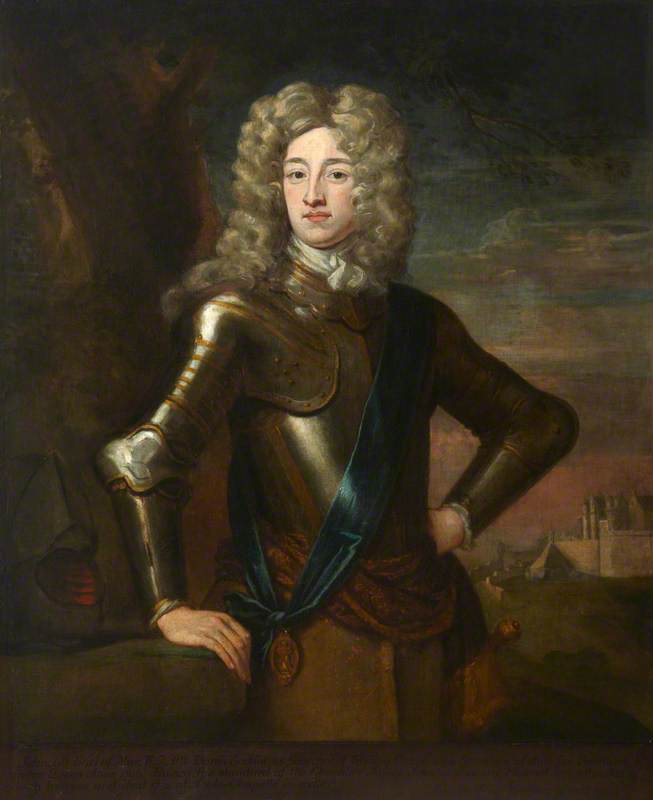
……..so John Erskine, 6th Earl of Mar ……

– the patron of St. Mary le Strand’s architect, James Gibbs – revived this Order of the Temple and recruited all the Chieftains of the Scottish Clans to restore the House of Stuart to Britain.

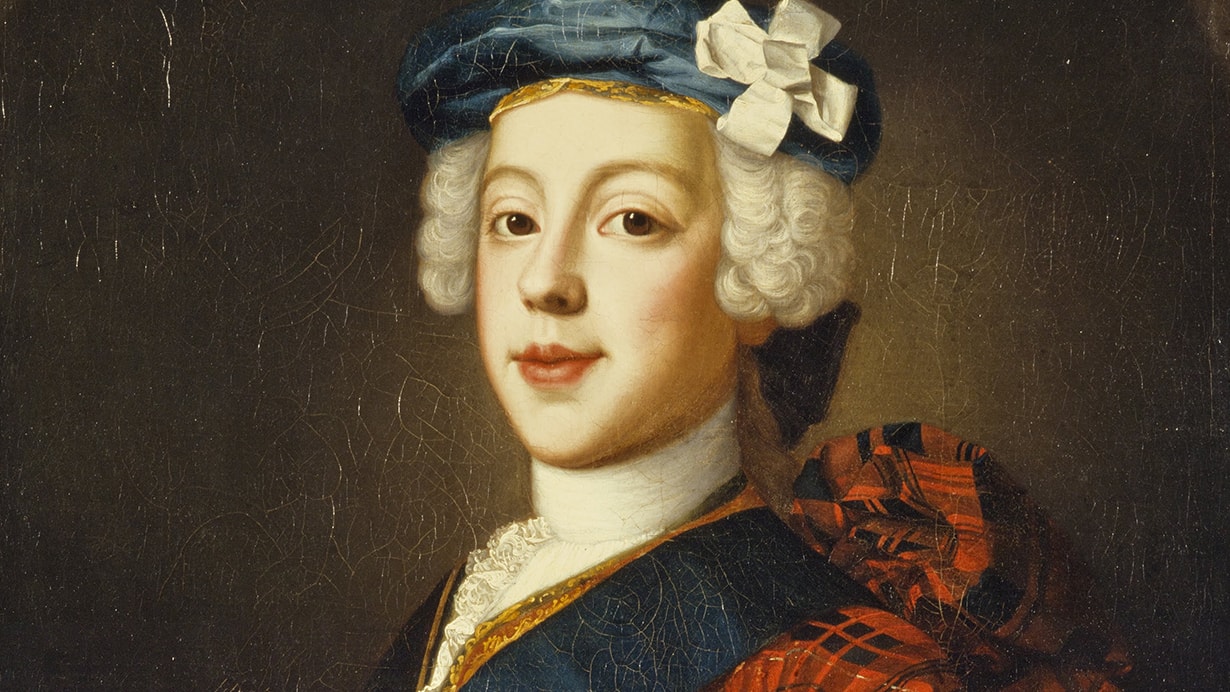
When the Earl of Mar died in exile in Germany in 1732, Charles Edward Stuart – ‘Bonnie Prince Charlie’ – took over Leadership of the Order – and on 30th September, 1745, during the last Jacobite Rebellion – held a private audience for the Knights of the Temple in Holyrood Palace in Edinburgh. Of this gathering the Duke of Perth wrote to Lord Ogilvy that:

‘It is truly a proud thing to see our Prince in the Palace of his fathers with all the best blood in Scotland around him. Our noble Prince looked most gallant in the white robe of the Order and took his profession like a worthy Knight.’

2. The White Flowers on the Ceiling

[Photograph by Jianwei Chen]

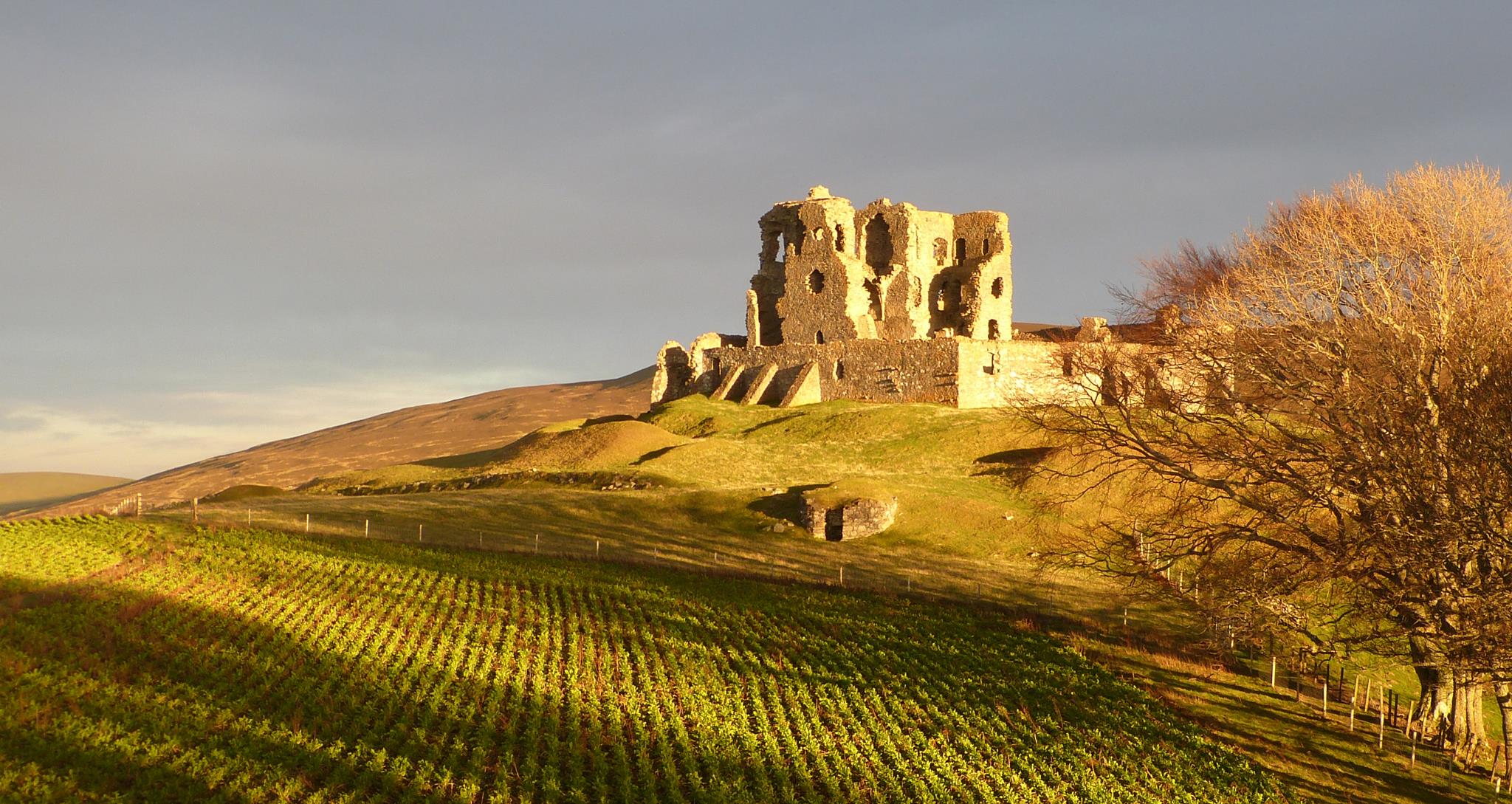
On 10th June 15 Northern Jacobites met at the ruined Auchindown Castle in Scotland…..

– which had been the temporary headquarters of Bonnie Dundee during the 1689 Rebellion – to celebrate the birthday of James Francis Edward Stuart – ‘the Old Pretender’.

The men and women drank the health of ‘Jamie the Rover’ – then picked white roses and wore them on their breasts and bonnets.

When they came to fight in both 1715 and 1745 – they wore white cockades – bunches of white ribbon – on their bonnets.

In a Jacobite Song a woman exclaims:

Betide what may, my heart is glad

To see my lad with his white cockade.

3. Starbursts – with Cherubs – in the Apse

[Photograph by Jianwei Chen]

After the failure of the 1715 Rebellion, the Old Pretender lost heart – but on 31st December, 1720 – Hogmanay! – Charles Edward Stuart – ‘Bonnie Prince Charlie’ – was born in Rome. He was baptised the same day by the Bishop of Montefiascone…..

– and created the Prince of Wales.

The Jacobites claimed that a new star had appeared in the sky – which proved that God was on the side of the Jacobites.

After 1720 starbursts began to appear on Jacobite glasses….

Bonnie Prince Charlie always appeared with a star pinned onto his chest – the Order of the Garter.

A Jacobite Song claims that:

on his breast he wears a star

You’d take him for a God of War.

Read Full Post »

St. Mary Le Strand Speaks!

Dear Visitors! Welcome! Might I be allowed to introduce myself?

I am the Parish Church of St Mary le Strand – and I have stood on this spot for three hundred years. 

How I came to be here – stuck in the middle of the Strand – is a question I’m often asked.  I hope to answer it briefly – well, as briefly as a very old building can – but I’d advise you to take a pew.

In Queen Anne’s time – at the start of the eighteenth century – so many people in London wanted to go to Church there weren’t enough of us to go round. So a Commission was set up – composed of the great and the good – to build fifty more Churches – of which I was one of the first – and, some might argue, the best….

I am, after all, Grade One Listed….

In the space right in front of me there was a huge maypole, hung with ribbons, which people loved to dance round. 

There were theatres and taverns, and everyone was out for a good time.

It was, in short, the most notorious red light district in London.

Queen Anne – famous for her piety…..

……..wanted to raise the tone of the place – so she gave orders to build me. She also wanted to upstage the maypole – by erecting a column of stone and putting a statue of herself right at the top….

The column was started – but never finished. Anne died in 1714. That’s when the trouble began.

Anne had no children – despite nineteen pregnancies – and never named her successor. So factions had formed everywhere – even in the Commission for Building Fifty Churches…

Especially in the Commission for Building Fifty Churches.

Queen Anne’s nearest relative was James Francis Edward Stuart – later nick-named ‘The Old Pretender’ – from the same Stuart family as Anne…..

But he was a Roman Catholic, and so in exile, barred by an Act of Parliament from becoming King. In spite of that, he called himself James the Third….

The members of the Tory Party on the Commission favoured his succession, hoping he would turn into an Anglican. They were called Jacobites because Jacobus was the Latin name for James.

Anne’s nearest non-Catholic relation was Prince George of Hanover – a strict Lutheran Protestant.

The members of the Whig Party on the Commission favoured his succession – hoping he would learn to speak English. They were called Hanoverians because they backed the House of Hanover.

The Jacobites believed in religious tolerance for all – including Roman Catholics and Jewish people.

The Hanoverians believed Britain should be strictly Protestant and were anti-Catholic and anti-Semitic.

The Tory party was, as usual, hopelessly divided – so the Whigs won. Prince George of Hanover became King George the First of Great Britain and Ireland.

So when they finally came to design me, everyone thought I would be very Lutheran, very Protestant, very Plain Jane.

But just look at me! Look at my ceiling, arched like the sky!

Look at my gold, real gold, cascading down to the altar!

Look at my cherubs! Look at my star-bursts!

And if the architect had had his way, my ceiling would be awash with blue…….

……..and my walls swirling with paintings….

(The Chapel at Wimpole – which Gibbs designed without the constraints of the Commissioners)

A lot of people ask if I’m Roman Catholic. No – I’m an Anglican Parish Church – and proud of it.

So how did I come to look like this?

For a start, my Scottish architect, James Gibbs, was a devout Roman Catholic – so devout he travelled to Rome to be ordained. But he left after a violent argument with the Rector of the College there – and pursued his other great love – architecture.

He returned to Britain in his mid-20s and, like many Scotsmen before him, came down to London to seek his fortune.

To begin with he starved – but within a few years he was appointed Surveyor to the Commission for Fifty Churches – then, at the age of 30 – he was given the great honour of designing me.

He had never built a public building in his life – and he won the commission in direct competition with Sir John Vanbrugh…..

– who had built Blenheim Palace and had been knighted by King George.

How could this possibly have happened?

Contacts!

The young Gibbs was personable…….

…..and gregarious – people called him ‘Signor Gibbi’ – and he was a Jacobite Tory. But of even more use, he was a Freemason. A Jacobite Freemason.

Even the Freemasons split up into Jacobites and Hanoverians…

The Earl of Mar – a fellow Scot –

Kneller, Godfrey; John Erskine (1675-1732), 6th Earl of Mar;

…….put pressure on fellow Jacobite Freemason Christopher Wren to promote Gibbs.

Wren stacked the Commission meetings with his placemen – including his son – and pushed Gibbs’s appointments through.

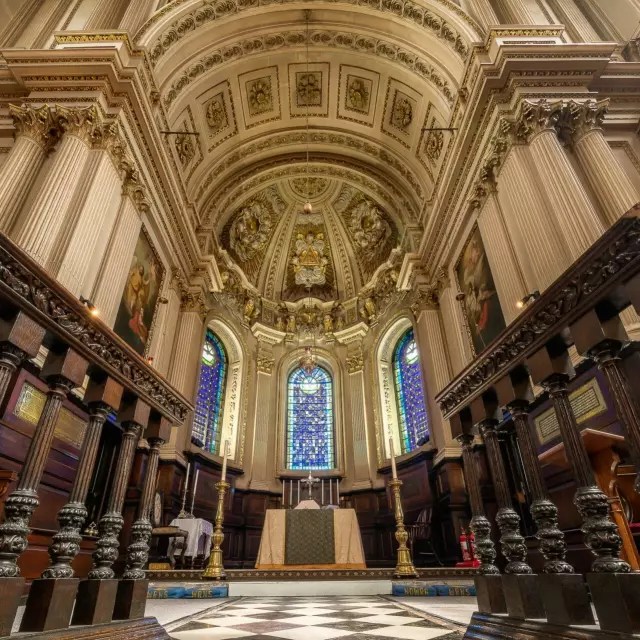
In defiance of King George – who wanted all the Jewish people to leave England – Gibbs based my design on the Temple of Solomon in Jerusalem. 

Outside, you can see I have two pillars……

……and a porch….

Inside, an inner sanctum with high windows….

….. and a Holy of Holies…..

The Temple of Solomon was special to Freemasons, for whom it represented the highest point in human civilisation.

But it was also special to the Stuart family. King James the Sixth of Scotland……

…….way back in the sixteenth century – had built his own Temple of Solomon at Stirling Castle –

…..and when he became King James the First of England, he was painted as King Solomon on the ceiling of the Banqueting House in London. 

King James the Second – his grandson…..

……was pushed from the throne in 1688 for being a Roman Catholic and forced to flee abroad. He compared his Stuart family to the Jews in exile. Gibbs – by re-creating the Temple – was willing the Stuarts – by magic almost – to return to the land that was rightly theirs.

But everything nearly fell apart for Gibbs.

In 1715 the Earl of Mar – Gibss’s champion, led a Jacobite rebellion to bring the Old Pretender back to the throne. Gibbs, was accused by a rival Scots architect of being a ‘disaffected person’ – a charge he vigorously denied. But the truth is, he worked as a Jacobite agent for Mar.

He was sacked from the Commission – now completely Hanoverian – but offered to complete me entirely for free.

This was an offer the Commission could not refuse – but they lived to regret it. By not paying Gibbs, they had no control over him – so as well as bringing Jerusalem to the Strand, he brought the Vatican.

The Commission got alarmed – and demanded to see his designs – but Gibbs carried on, regardless. He covered my walls and ceiling with cheeky Jacobite symbols – and added more when the Old Pretender gave birth to the Young Pretender in 1720 – Bonnie Prince Charlie…

I’ll talk about these symbols when we next meet …

Bonnie Prince Charlie led another rebellion against the English in 1745. But it failed – and ended in the carnage of Culloden…

Five years later the Young Pretender travelled secretly to London – and David Hume, the Scottish philosopher…..

who had a house on the Strand….

…….says that Bonnie Prince Charlie paid me a visit…

Some modern historians have pooh-poohed this story – but I am here to tell you that it’s true – and that Signor Gibbi – by then in the last years of his hugely successful life – was waiting in the shadows to kneel before the man he considered to be the true Prince of Wales.

And here’s a thought: if the Young Pretender had been crowned, he would have become King Charles the Third…

Anyway, that’s how I remember it all. But as I said at the beginning – I’m a very old building…

When we meet again, I’ll tell you more of my tales – but for the moment, God bless – and stay safe….

© Stewart Trotter 15th December 2022.

Read Full Post »

« Newer Posts - Older Posts »