An Extract from ‘The Book that Never Was….’
On 15th March 1604, King James processed through the City of London.
Shakespeare, as a Groom of the Chamber, was given four and a half yards of scarlet material to march in livery.
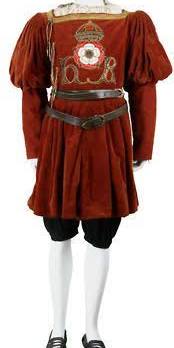
Lining the route were tall constructions of wood and plaster, the tallest of which was ninety foot high. Ben Jonson describes a huge rainbow in the Strand, supported by ‘two magnificent pyramids of 70 foot in height, on which were drawn his Majesty’s several pedigrees of Eng and Scot.’
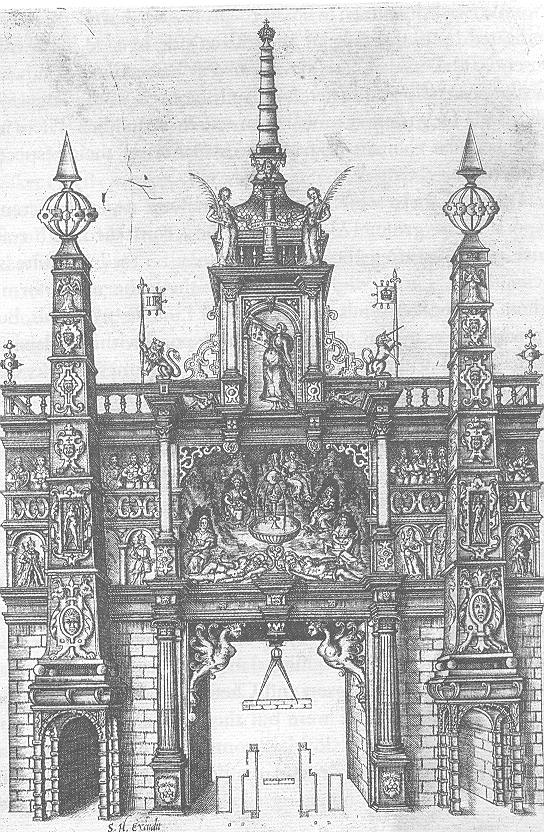
What Jonson calls a ‘pyramid’ we would now call an obelisk.
Shakespeare writes in Sonnet 123:
‘No! Time, thou shalt not boast that I do change;
Thy pyramids built up with newer might,
To me are nothing novel, nothing strange;
They are but dressings of a former sight’.
The former sight was in Rome. In 1586, seven years before Southampton, Nashe and Shakespeare had visited the city, Pope Sixtus the V had re-sited an ancient Egyptian obelisk in front of St. Peter’s.
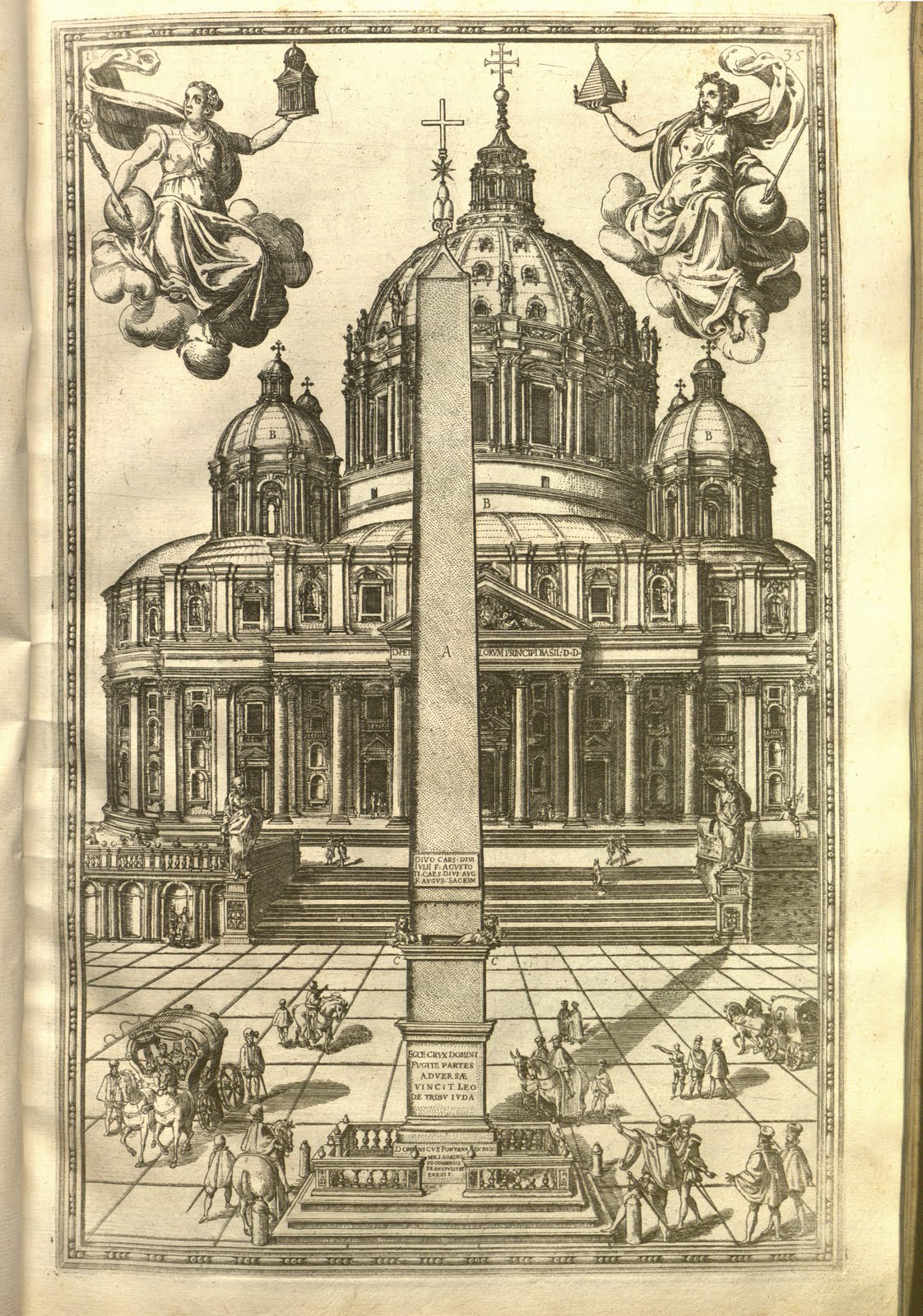
It had originally been looted from Alexandria by Caligula and in Nero’s time stood in the Circus Maximus. According to Catholic tradition, this was the site where St. Peter was crucified upside down.
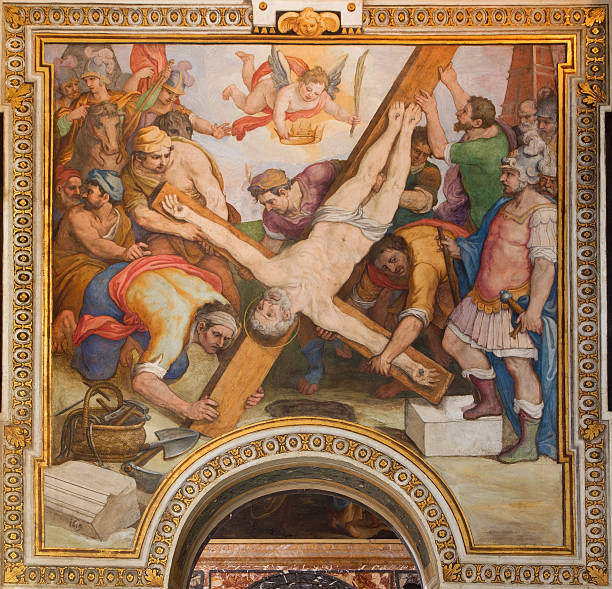
The obelisk was the last earthly sight the saint’s eyes beheld.
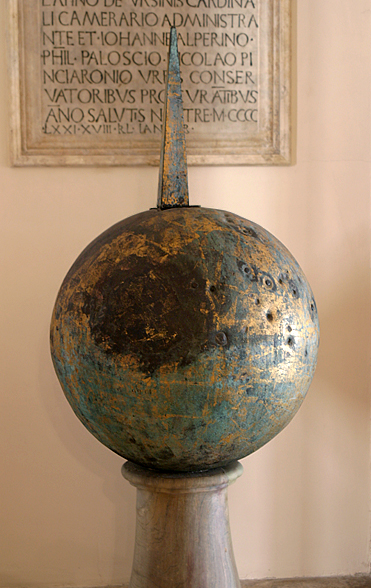
The Pope wanted to place this holy relic in front of St. Peter’s, where St. Peter himself was said to be buried. First it had to be taken down, exorcised, blessed and its bronze orb (rumoured, falsely, to contain the ashes of Julius Caesar) replaced with a crucifix.
Shakespeare refers, codedly, to this event in Sonnet 64, whose topography evokes the ruins of Rome:
‘When I have seen by time’s fell hand defaced
The rich proud cost of outworn buried age;
When sometime lofty towers I see down razed
And brass eternal slave to mortal rage’.
The ‘lofty tower’ was the obelisk and ‘the brass eternal’ the bronze orb in ‘the Eternal City’. But what does ‘slave to mortal rage’ mean?
In 1527, during the Protestant Sack of Rome, soldiers of Charles V……

…….fired at the famous orb on top of the obelisk. Lead bullets – the ‘mortal rage’ of the Protestants – can still be seen, embedded in the orb, in a museum in Rome.
Shakespeare warns Harry in Sonnet 125 that these pasteboard coronation obelisks, which represent temporal power, cannot lay ‘great bases for eternity’ in the way the Roman obelisk can. These coronation decorations will prove ‘more short than waste or ruining’.
Like the obelisk, like Rome, like the Catholic Church itself, Shakespeare declares in Sonnet 124 that his love for Harry was ‘builded far from accident’ and ‘all alone stands hugely politic/That it nor grows with heat, nor drowns with showers’.
He even calls on ‘the fools of time’ – the Catholic martyrs of Rome and England – ‘which die for goodness who have lived for crime’ – to affirm the truth of his love.
Yet, a only couple of years after this euphoria, Shakespeare writes his darkest, greatest, most despairing work, King Lear.
Why?
●
In Sonnet 4, from the marriage sequence Mary Southampton commissioned……..

……Shakespeare writes:
‘For having traffic with thyself alone
Thou of thyself thy sweet self doth deceive’.
What this ‘self’ means is made clearer in Sonnet 10:
‘Make thee another self for love of me
That beauty may still live in thine and thee.’
The ‘self’ is code for ‘son’. Another code is introduced in Sonnet 11:
‘As fast as thou shalt wane, so fast thou grow’st
In one of thine, from that which thou departests.
And that fresh blood which youngly thou bestow’st
Thou may call thine, when thou from youth convertest’
The paradox of being able to ‘grow’ at the same time as ‘wane’ is also explained by the birth of a son who will also allow Southampton a ‘defence’ against ‘time’s scythe’ which he can ‘brave’ by ‘breeding’.
Shakespeare re-iterates this whole argument in Sonnet 13:
‘Against this coming end you should prepare
And your sweet semblance to some other give:
So should that beauty which you hold in lease
Find no determination; then you were
Yourself again after yourself’s decease
When your sweet issue your sweet form should bear.’
Now we can interpret ‘Sonnet’ 126, the Sonnet written after the ecstatically joyful Sonnets 124 and 125, which, consisting of twelve lines, is not a sonnet at all:
O thou my lovely boy, who in thy power
Dost hold time’s fickle glass, his sickle hour,
Who hast by waning grown, and therein shows
Thy lover’s withering as thy sweet self growst;
If nature, sovereign mistress over wrack,
As thou goest onwards still will pluck thee back,
She keeps thee to this purpose: that her skill
May time disgrace, and wretched minute kill.
Yet fear her, O thou minion of her pleasure:
She may detain, but not still keep her treasure!
Her audit, though delayed, answered must be,
And her quietus is to render thee…
( )
( )
Shakespeare is stating that Southampton is now in a position of power over ‘time’s fickle glass, his sickle hour’. He has ‘grown’ by ‘waning’ and as the ‘sweet self’ grows, his lover, the ignored Shakespeare, ‘withers’.
The two daughters born to Elizabeth, the young Countess of Southampton had not affected Southampton’s love for Shakespeare: but in 1605 Elizabeth gave birth to a boy. Southampton no longer needed Shakespeare. No longer the pretty boy, Southampton became violently homophobic.
Shakespeare, devastated, wishes death upon Southampton in this poisonous sonnet. In the struggle between Nature and Death, Death will always win he argues. The brackets at the end of the sonnet are the grave waiting, inevitably, to consume Southampton.
Shakespeare’s own son, whom he had hardly known, had died at the age of eleven. Now Harry, his surrogate son, was as good as dead as well.
This impelled Shakespeare to re-write King Leir in which the King, stripped and tortured, is left holding the body of his child in his arms, howling his anguish at a deaf, indifferent universe.

Shakespeare had lost his faith: but he was now a free man.
●
Brothers and Sisters of The Shakespeare Code…
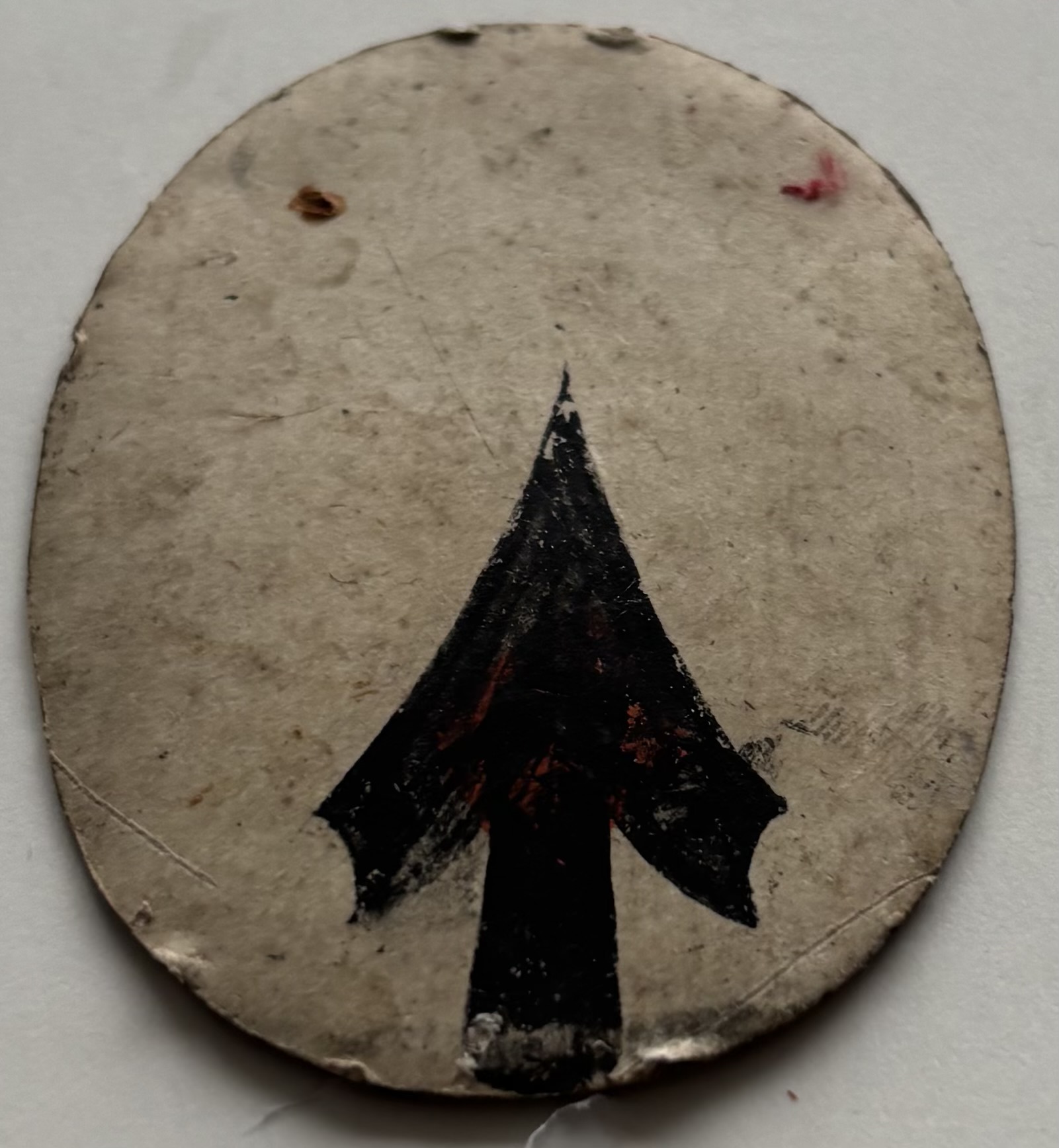
Strong evidence that Sonnet 126 is a ‘poison pen’ letter from Shakespeare and Southampton has recently emerged. A miniature of Southampton has been identified….

………with a black ‘spear’ painted on its back…..
You can read the full story in Stewart Trotter’s new book…….
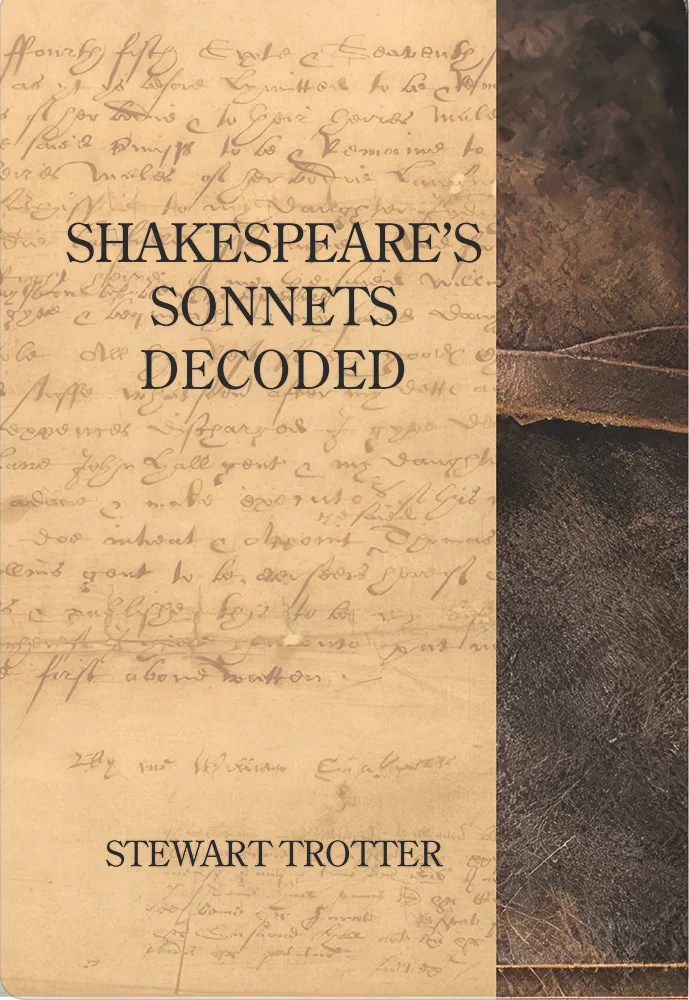
Shakespeare’s Sonnets Decoded – Magic Flute Publishing
Next Tuesday 10th November, God Willing, we shall post the final extract from ‘The Shakespeare Code’……
‘GAY LIBERATION’
‘Bye, now!


Leave a Reply