An Extract from ‘The Book that Never Was’…
A letter exists written by Southampton………
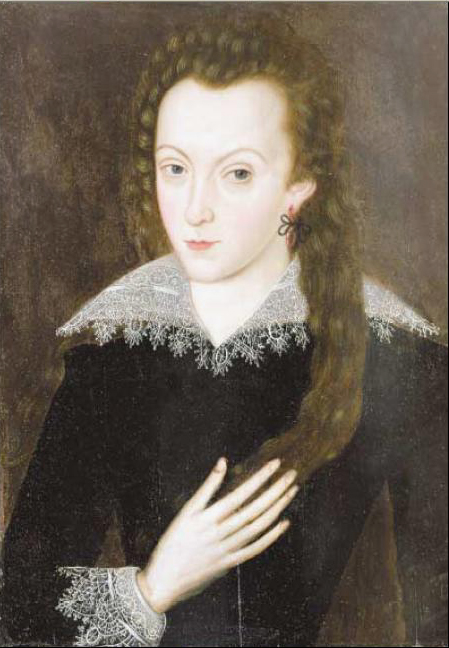
……… to Essex……..
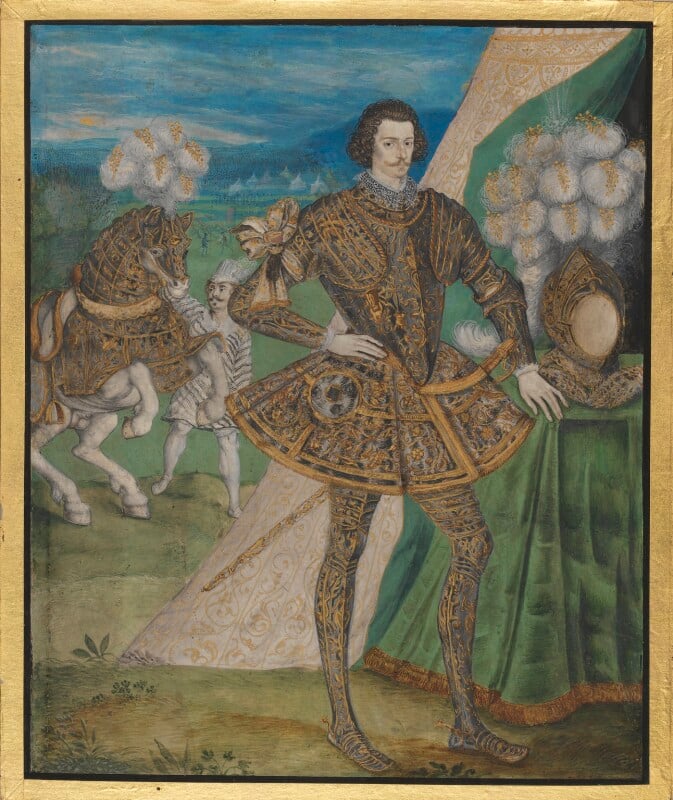
……… from Dieppe, dated 2nd March.
The full text reads:
‘Though I have nothing to write about worth your reading, yet can I not let pass this messenger without a letter, be it only to continue the profession of service which I have heretofore verbally made unto your Lordship, which howsoever in itself it is of small value, my hope is, seeing it wholly proceed from a true respect born to your own worth, and from one who hath no better present to make you than the offer of himself to be disposed of by your commandment, your Lordship will be pleased in good part to accept it, and ever afford me your good opinion and favour, of which I shall be exceedingly proud, endeavouring with myself always with the best means to deserve it. As I shall have opportunity to send into England I will be bold to trouble your Lordship with my letter, in the mean time wishing your fortune may even prove answerable to the greatness of your own mind, I take my leave &c…’
Southampton did not record the year. Historians have given two possible dates, 1591 and 1598.
The first date has now been dismissed: the seventeen year old aristocratic Southampton would never have been allowed by the Privy Council to travel to France at a time of war.
The second date, though, is equally unlikely. Southampton writes about his ‘profession of service’ to Essex having been ‘verbally made unto your Lordship’ and consequently ‘of small value’. By 1598 Southampton had fought gallantly for Essex on the Islands Campaign and so his loyalty had been proved by action rather than words.
1593 fits the circumstances perfectly.
From the beginning of March till the end of June 1593, the book will argue, Southampton, Shakespeare and Nashe travelled through France, the Low Countries, Germany, Spain and Italy.
The visit was a secret one and references to it were highly coded.
The first was in Nashe’s The Unfortunate Traveller, entered in Stationer’s Register on 27th June, 1593.
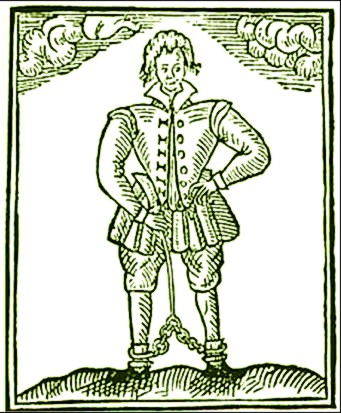
The prototype of the picaresque novel, it chronicles Jack Wilton’s adventures in Europe with his master the Earl of Surrey – code for Nashe and Southampton.
Nashe even dedicates the book to Southampton (a dedication Southampton later forced him to withdraw) as ‘a lover and cherisher’ ‘as well of the lovers of poets (Aemelia) as of poets themselves’ (Shakespeare).
Many of Nashe’s details suggest direct observation. Jack/Nashe describes how his long hair, light-coloured clothes and dagger with unblunted tip were all forbidden in Rome.
He also writes: ‘The name of the place I remember not, but it is as one goes to St. Paul’s Church not far from the Jews’ piazza.’
The Earl changes places with Jack ‘to take more liberty of behaviour’ in Italy, the land of ‘whoring’ and ‘sodomitry’. This is exactly the same plot device Shakespeare was to use in his re-write of The Taming of a Shrew: Lucentio changes place with his adoring servant Tranio.
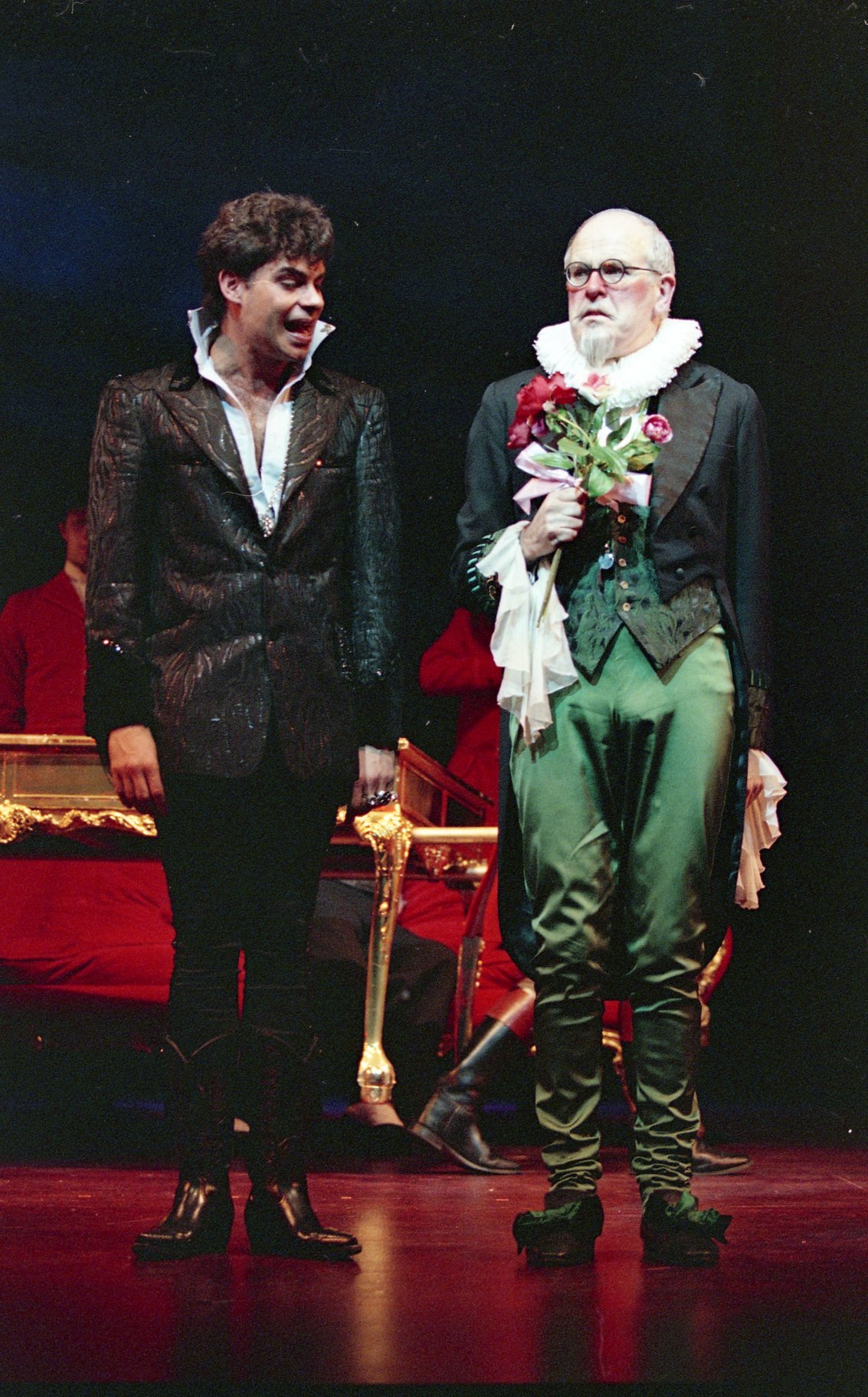
Given Southampton’s taste for lower class men, it would be useful to him to masquerade as a servant.
●
A year later, in May 1594, Shakespeare’s poem Lucrece, based on the rape of Lucretia by Tarquinus Superbus, was entered at the Stationer’s Register.
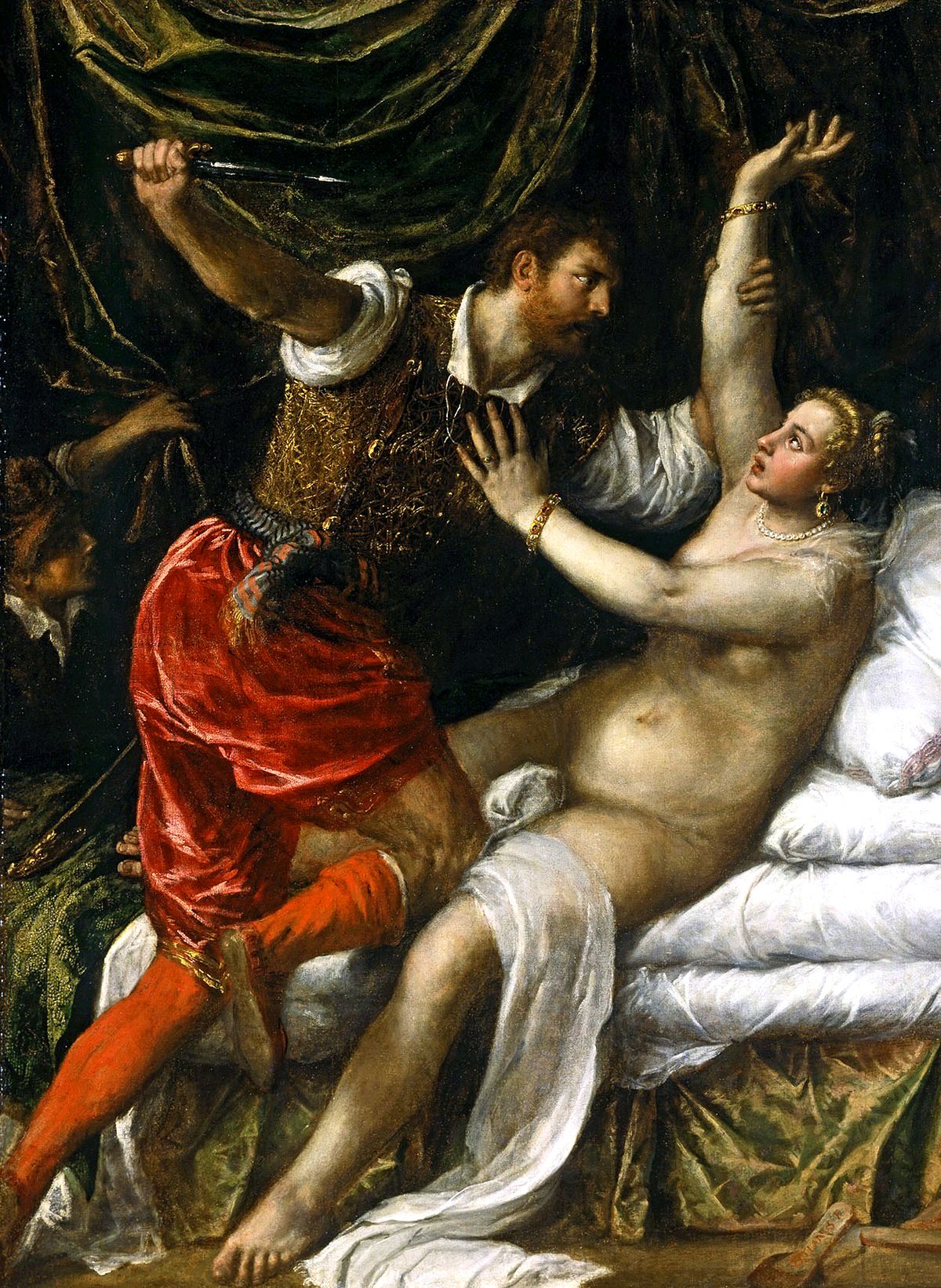
Venus and Adonis was based on a Titian painting: so was Lucrece. Titian painted at least three versions of the incident: Shakespeare clearly saw the one now housed in the Fitzwilliam Museum at Cambridge.
He writes:
‘Without the bed her [Lucrece’s] other fair hand was
On the green coverlet whose perfect white
Show’d like an April daisy on the grass….’
In the Fitzwilliam painting, Lucretia has an identical green coverlet on the bed and Tarquin holds his knife ‘like a falcon tow’ring in the skies’ over her and ‘her pity-pleading eyes are sadly fixed/In the remorseless wrinkles of his face.’
In Titian’s other two versions of the scene, now in Bordeaux and Vienna, Tarquin threatens the knife upwards and Lucretia looks away.
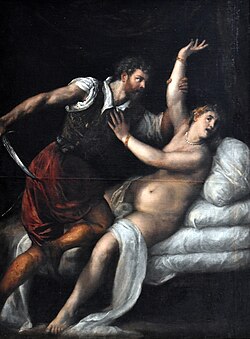
Shakespeare’s poem speaks of Tarquin’s ‘scarlet lust’: the Fitzwilliam painting shows Tarquin clothed in a deep red. In the poem Tarquin opens ‘wide’ the door: in the painting Tarquin places his knee, violently, between Lucretia’s legs.
Nashe saw the painting too. In The Unfortunate Traveller he writes of ‘chastity’s first martyr, Lucrecia’ and describes a rape in which a woman down ‘on the hard boards and used his knee as an iron ram to beat ope the two lead gates of her chastity.’
In 1593 the Fitzwilliam Titian was in the possession of Philip II in Madrid.
●
Later, in September, in 1594, a scandalous book called Willobie his Avisa was entered on the Stationer’s Register. It was a poem left in his study by one Henry Willobie before he went off, never to return, to fight for Queen and country. His friend, Hadrian Dorrell, felt obliged to publish it.
The book attacks ‘W. S’ ‘an old player’ (Shakespeare) and his ‘familiar friend’ H.W. (Henry Wriothesley). H.W. described as ‘Italo-Hispalensis’, asserts:
‘A thousand features I have seen,
For traveller’s change and choice shall see,
In France, in Flanders and in Spain,
Yet none, nor none could conquer me’.
Hadrian Dorrell is also in the know about the influence of Titian on Shakespeare:
‘Yet Tarquin pluckt his glistering grape
And Shake-speare paints poor Lucrece rape.’
●
Before she kills herself, Lucrece, in Shakespeare’s poem, studies a ‘piece/Of skilful painting’ of the Sack of Troy. Her empathy with the painting, her ‘deep surmise of others’ detriment’ exactly mirrors Shakespeare’s empathy with Titian’s masterpiece.
Tarquin’s lust is Shakespeare’s lust: Lucrece’s remorse, his remorse. In fact Shakespeare, who as we know from the sonnets was obsessed with painting, makes the startling assertion that to see something is far more powerful than to hear about it – that language itself can be redundant:
‘To see sad sights moves more than hear them told,
For then the eye interprets to the ear
The heavy motion that it doth behold
When every part a part of woe doth bear.
‘Tis but a part of sorrow that we hear:
Deep sounds make lesser noise than shallow fords,
And sorrow ebbs, being blown with wind of words.’
●
Giulio Romano painted a mural of the sack of Troy in the Sala di Troia in Mantua.
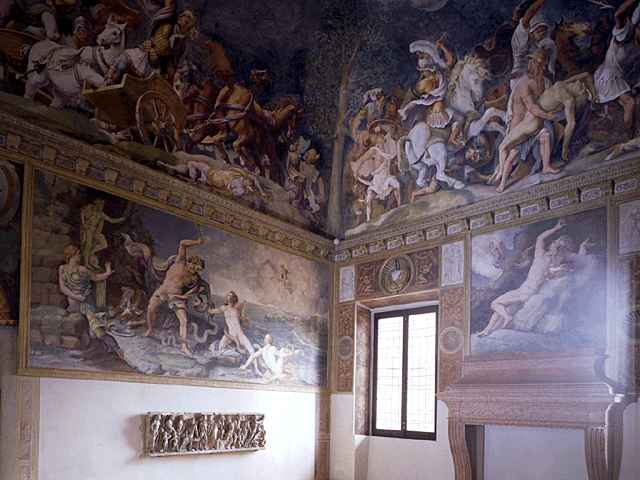
Also in Mantua is the epitaph to the famous sculptor and painter.
Professor Ernesto Grillo, himself an Italian, suggests that Shakespeare was quoting directly from this epitaph when he wrote his own praise of Romano in The Winter’s Tale: ‘had he himself eternity and cut breath into his work’.
Grillo, in Shakespeare and Italy, argues that Shakespeare had a first hand knowledge of Italian phrases, customs and topography. In his day it was possible to embark at the gates of Milan for ports on the Adriatic Sea and Valentine in Two Gentlemen of Verona could travel by ship from Verona to Milan by an extensive canal system.
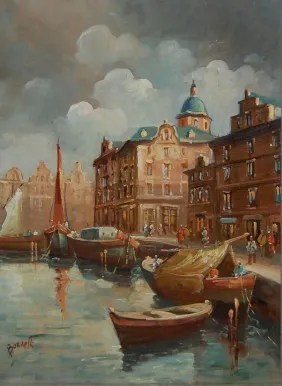
Tranio’s father (The Taming of the Shrew) could well have been ‘a sail-maker in Bergamo’. There was and is a ship-building industry in the land-locked town.
Non-Italians forget about the Lakes.
Portia tells Nerissa in The Merchant of Venice that they ‘must measure twenty miles today’, the exact distance between Monte Bello and Padua, from where you could catch a ferry to Venice.
Shakespeare’s famous ‘mistakes’ were never mistakes at all.
Before 1593 Shakespeare had not set a single play in Italy. By the time of the First Folio (1623) ten plays – over a quarter of the canon – had been set in Italy or have scenes in Italy. There are around 800 references to Italy and 400 to Rome alone.
In The Unfortunate Traveller Nashe/Wilton has ‘a wonderful ardent inclination to see Rome, the Queen of the world and metropolitan mistress of all other cities’ but he emphasises the fact that the ‘Earl of Surrey’ himself does not travel to the Eternal City.
It would be too dangerous to suggest that recusant Southampton had visited the home of the Pope.
Shakespeare waited till the reign of King James to tell us, in code, that he had.
●
Trixie the Cat says…..
Brothers and Sisters of The Shakespeare Code….
Stewart was to return to the theme of Shakespeare in Italy in detail – and devoted eight posts to the subject……
(Click below….)
He has also dealt in deetail with the influence of Rome on Shakespeare – with its obelisks and its ruins – in his new book Shakespeare’s Sonnets Decoded……
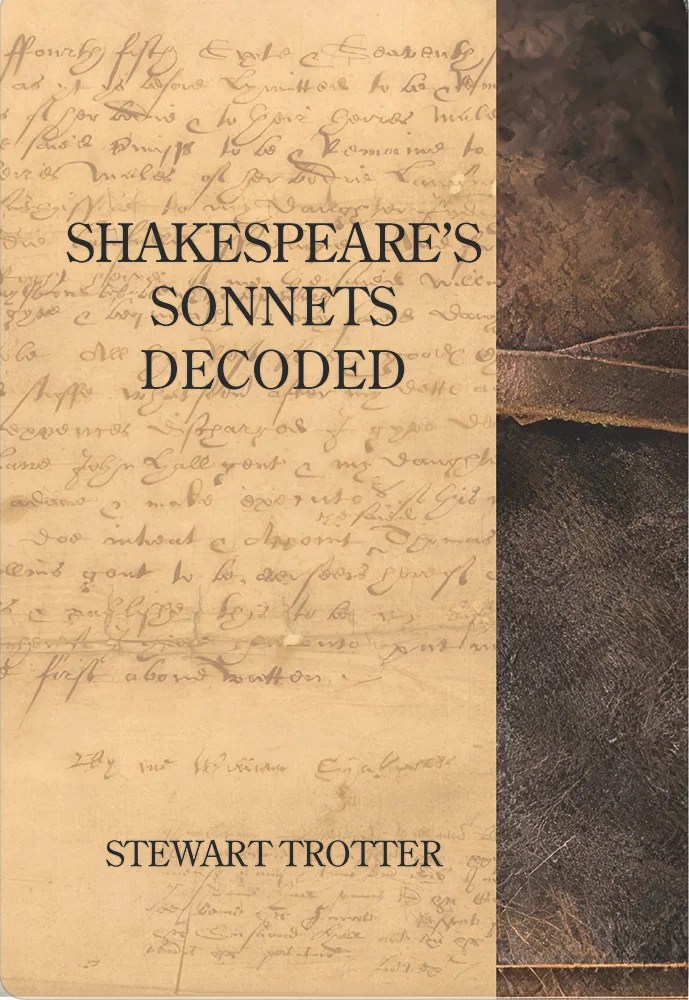
Shakespeare’s Sonnets Decoded – Magic Flute Publishing
So, God Willing, see you all on Tuesday 29th September for ‘The Dead Shepherd’.
‘Bye, now!


Leave a Reply