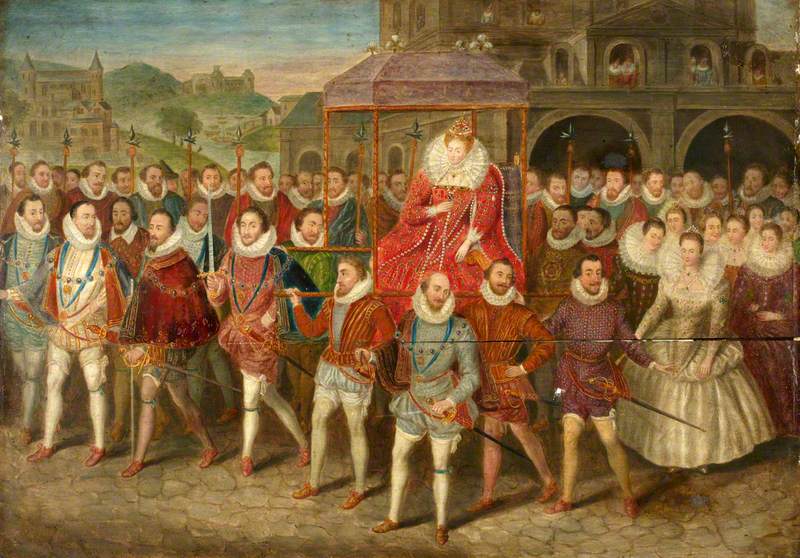
Shakespeare was able to observe Queen Elizabeth at close quarters later that year (1591) on her progress to the South Coast.
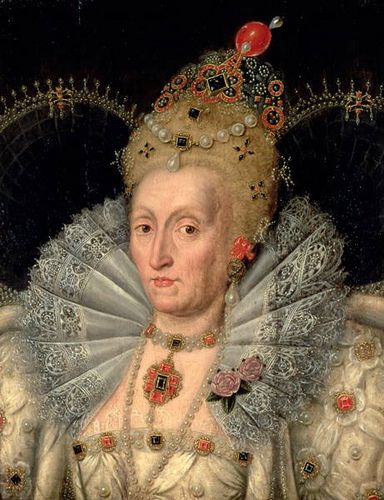
Elizabeth was a complex, not to say divided, character. She suffered from a secret ill-health that was so debilitating her closest courtiers often secretly thought she was near death. She had to give the impression of great strength and vigour, so her Summer Progresses were a tremendous opportunity for self-projection.

[Queen Elizabeth, displaying her good health, by dancing ‘La Volta’]
At an innocent level, Elizabeth, like Shakespeare, adored the English countryside. She thought its variety demonstrated the abundance of God. If she stayed with her hosts longer than was planned, it was taken as a great, if expensive, compliment to them and their district.
She loved to work the public. Anyone, of any class, could approach her. She would listen, and always reply to, petitions from all of her subjects. Once, not to disappoint them, she stood in the pouring rain to hear schoolchildren sing.
She also expected extravagant gifts and entertainments, arrived with hundreds of courtiers and set spies on her hosts to check they were Protestant, patriotic and pro-Elizabeth. At Norwich she had actually imprisoned her hosts when a Madonna was found in a barn.
There was no chance of that at Petworth, thirty miles away from Titchfield. It was the home of Henry Percy, ninth Earl of Northumberland, the famous ‘Wizard Earl’.
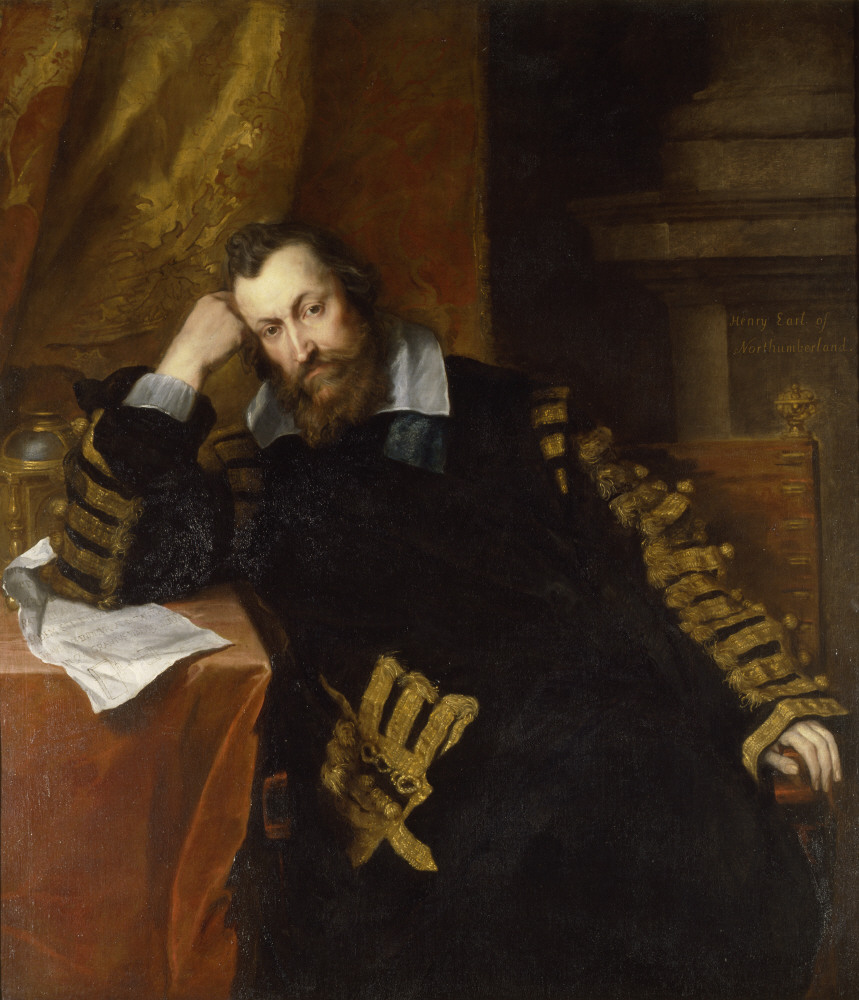
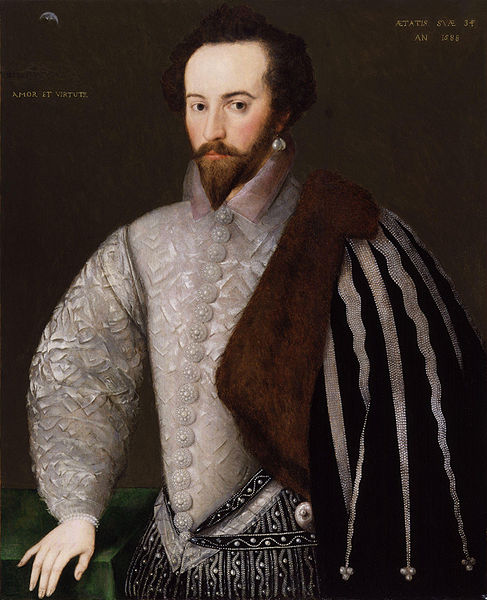
Although Northumberland’s family had been ardent Catholics (his uncle had led the rebellion of the Northern Lords) he ‘troubled not much himself’ with religion. Deaf, and addicted to tobacco, he surrounded himself with ‘scientific’ free-thinkers like Sir Walter Raleigh…….
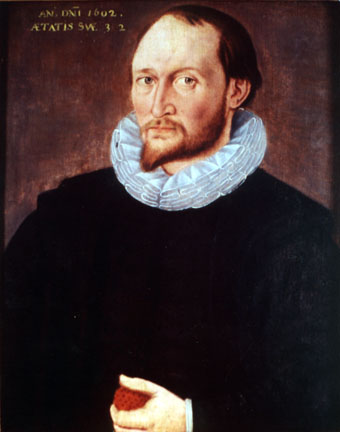
……..the mathematician Thomas Harriot……..
…..and the poet George Chapman…….
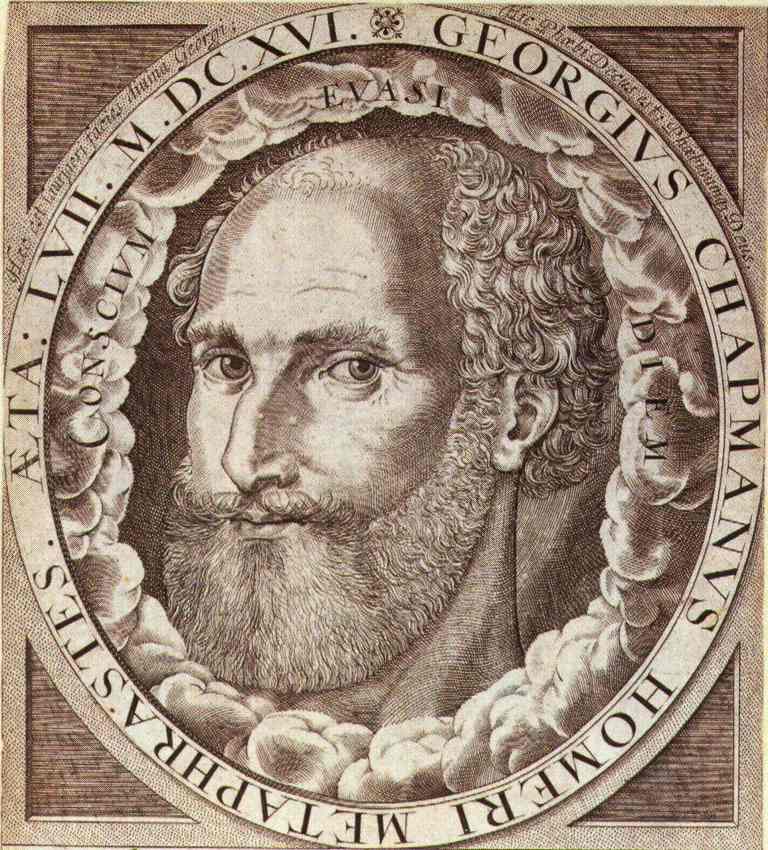
Chapman claimed to have summoned up the spirit of Homer in the unlikely surroundings of Hitchin.
Elizabeth’s visit to Cowdray, though, was a nightmare for Lord Montague.
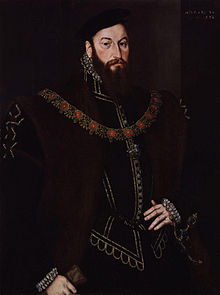
He still had Catholic priests on his payroll, who, disguised in his livery, celebrated secret masses. His family had to vacate their house so Elizabeth’s Privy Council could hold its meetings there.
The Queen, when she arrived at Cowdray, was pre-occupied. She had ordered Essex, in a letter he claimed never to have received, to return from the Protestant campaign in France. She had even travelled down to Portsmouth to meet him. Publicly stood-up, she vented her fury by shooting four deer at as they were run helplessly before her in Cowdray Park.
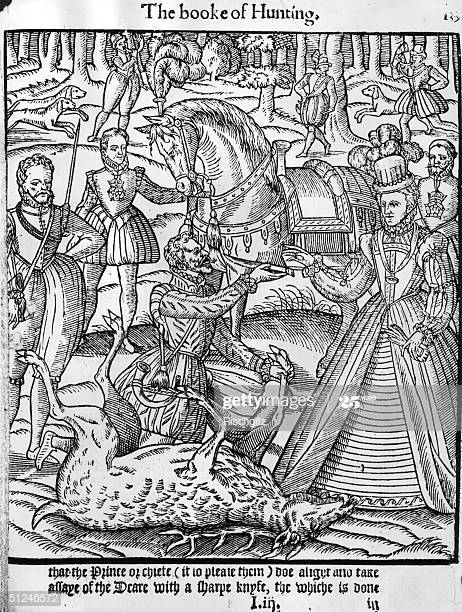
Montague’s sister, who had the temerity to shoot just one, was forbidden the Queen’s table.
Shakespeare was much more interested in one of the musicians who provided the music for the deer cull: the dark-skinned Jewess, Aemelia Bassano, the striking, mixed-race young mistress of the Queen’s cousin and Privy Counsellor, old Lord Hunsdon.
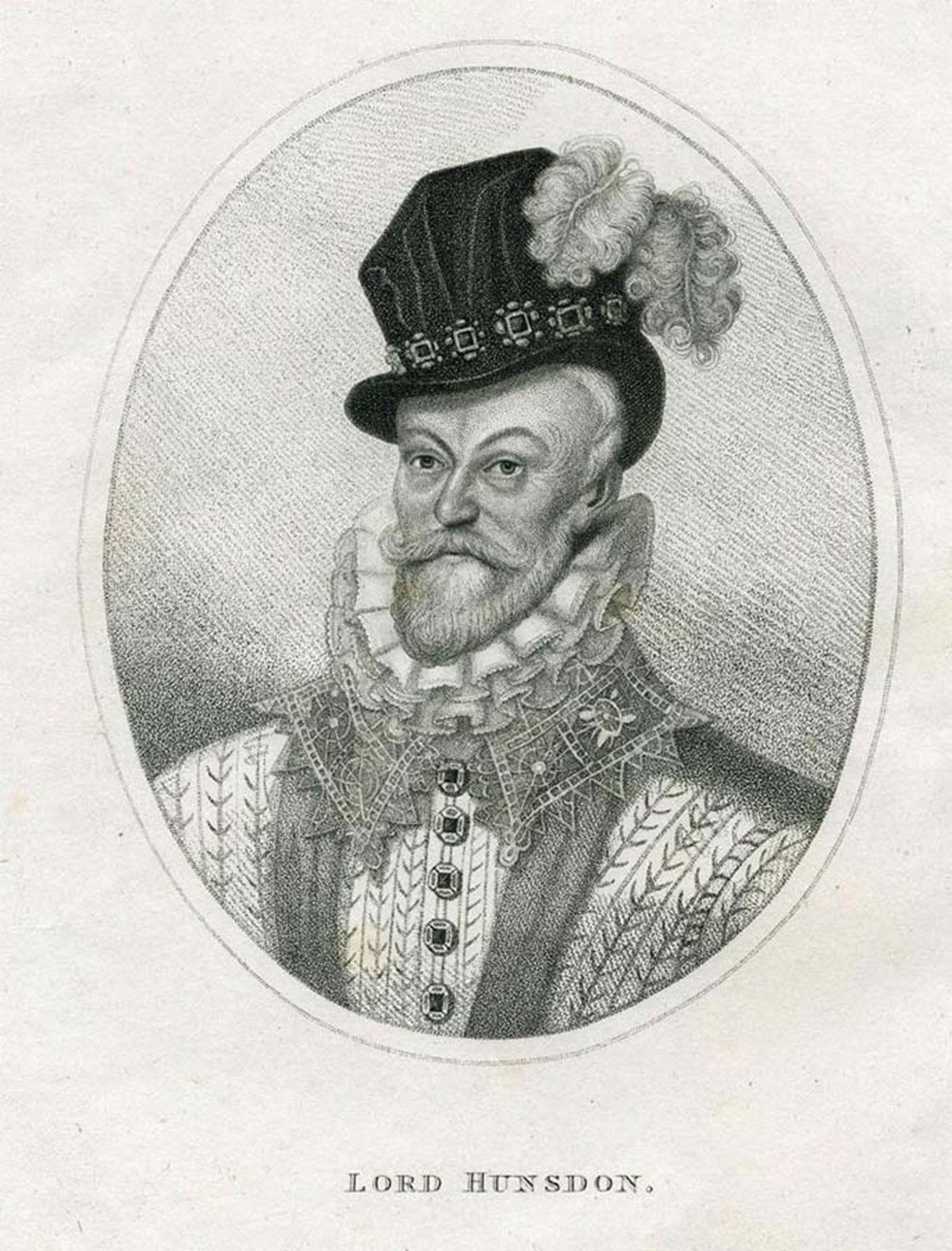
She wore no make-up or wig and her hair curled naturally. Shakespeare began to realise, contrary to Elizabethan convention, that ‘black was beautiful’. He had begun to fall in love with his famous ‘Dark Lady’.
Florio had replaced Shakespeare as the Titchfield Schoolmaster…….

Now he replaced him as the house poet. It was Florio, a safer pair of hands than Shakespeare, who penned the ingratiating Cowdray entertainment and appeared as the much travelled ‘Pilgrim’ before Elizabeth in the walks of Montague’s estate. The Pilgrim uses the word ‘rough-hew’: Shakespeare snaps it up for Hamlet.
The Progress moved on to Titchfield, then to Elvetham, where Shakespeare had more luck. Lord Hertford……
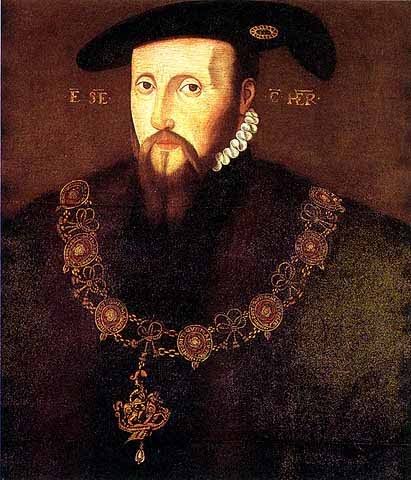
……..whose son had a better claim on the throne than Elizabeth herself, allowed Shakespeare a hand in his ruinously extravagant, but highly successful Progress entertainment. (It was repeated at Court that Christmas then Hertford’s Men folded).
Shakespeare recycled his old King of the Fairies to give Aemelia the role of the Fairy Queen with a wonderful line that only he could write:
‘For amorous stars fall nightly in my lap…’
●
Shakespeare and Nashe now had a bigger task in hand. They had to rehabilitate Southampton’s friend, Essex.
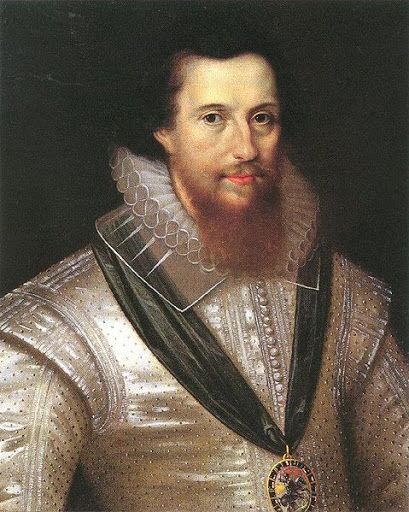
Though financially dependent on Elizabeth, Essex violently disagreed with her policies. He wanted the establishment of a British empire, a professional army, freedom of worship for Catholics, unification of the British Isles and a secure succession of King James, son of Mary Queen of Scots, to the throne of England.
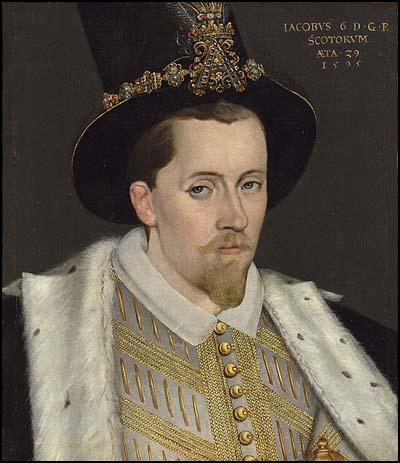
Essex was popular with everyone, except his rivals at court. They plotted against him in his absence in France and the Queen, when she discovered he had gone hawking behind enemy lines, rebuked him for his bravado. She wanted a live lover, not a dead hero.
The death of Essex’s beloved brother, Walter, on the campaign, together with the Queen’s disfavour, had brought the temperamental Essex close to breakdown. He had to be carried around in a litter.
Shakespeare and Nashe rushed to his defence with Harry the 6th , a patriotic celebration of Lord Talbot, who had died gloriously in battle with his young son (a good part for Harry) ‘parked and bounded in a pale/A little herd of England’s timorous deer’ – just like the deer at Cowdray. Talbot was also the ancestor of Lord Strange, so Shakespeare could flatter two Lords at once.
The play, like many of ‘Shakespeare’s’, has all the confusions of joint authorship. It has a Joan of Arc who sometimes appears as a Catholic Saint (Shakespeare’s hand) and sometimes a Protestant whore (Nashe’s). Nashe was again to hint at his contribution by later praising the piece in Pierce Pennilesse:
‘How it would have joyed brave Talbot (the terror of the French) to think that after he had lain two hundred years in his tomb, he should triumph again on the stage and have his bones new embalmed with the tears of ten thousand spectators at least’.
The self-promoting Nashe would never have described a rival’s work as a ‘triumph’ if he’d had no hand in it.
●
Harry the 6th (now Henry the VI Part One) was followed with a Christmas entertainment for Titchfield: The Comedy of Errors, a play about twins for Mary Southampton…..
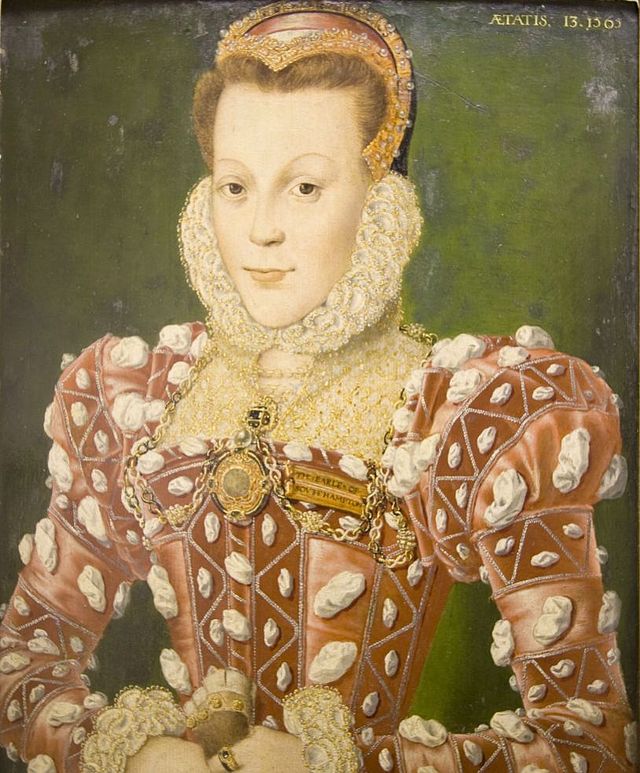
……..whose twin brother, Anthony Browne, would be part of the audience.
The play begins with the threat of an execution. Swithin Wells…….
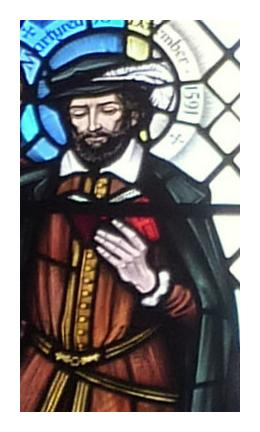
……the Titchfield schoolmaster Shakespeare had replaced and life-long friend of the Southamptons, had been hanged at the beginning of the month, outside the Southampton’s London home.
The Abbess, who talks about ‘the Abbey here’, is called ‘Aemelia’ as a joke: prostitutes then, as now, were often referred to as ‘nuns’. Aemelia herself, sheltering in Titchfield from the plague raging in London, played the part of the courtesan (as she was to play many parts in private performances) who cries ‘Forty ducats is too much to lose’, a coded reference to her boasted allowance of £40 (£20,000) each year from Lord Hunsdon.
Nashe wrote and played the part of the madcap servant Dromio of Syracuse, ‘the little ape’ – Nashe’s own description of himself in Strange News (‘I was a little ape at Cambridge’).
Mary herself would have played the wise Abbess; the whole play was about bringing together a scattered, dysfunctional family.
●
In January 1592 the Earl of Essex returned to England from the Siege of Rouen in France, a disaster spun as a success, to find that Queen Elizabeth had promoted ‘The Ape’ [Robert Cecil] to the Privy Council.
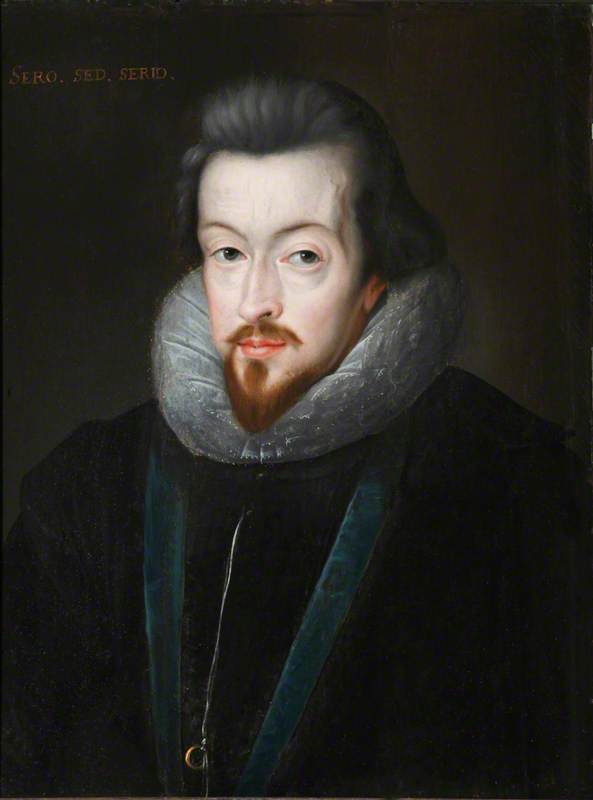
Essex, lusting after the position himself, resolved to set up a spy network on the Continent so he could be first with the news and so first with the power.
He employed Anthony Bacon (Francis’s equally homosexual brother)…..
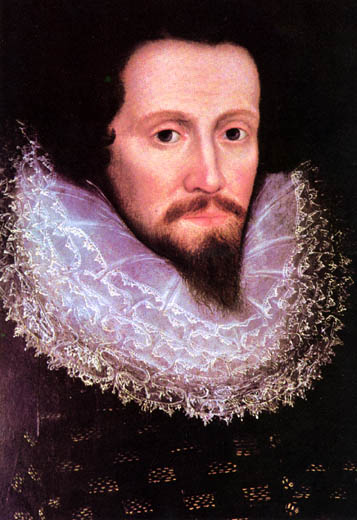
…..on the run from a page-boy scandal in France. Anthony, who was rumoured to have sex information that could destroy Essex, set up a web of gentlemen spies which stretched all over Europe.
Essex escaped from the Queen to visit his Hampshire friends for the famous Whitsun Fair celebrations at Titchfield. Shakespeare and Nashe cobbled together two plays for event – Edmund Ironside and Love’s Labour’s Lost.
Edmund Ironside which has a good ‘black Egyptian’ role for Aemelia, invents the unhistorical character of the chivalrous Earl of Southampton, and is set, in part, round Southampton Castle, once owned by the Southamptons. It flatters Essex, seated in the audience, as ‘Edmund’, a Christ-like hero. There is also a good villain’s part for Shakespeare, ‘Base Edricus’ described as ‘a fatal crow’.
The play ends with a cliff-hanger. Should Southampton still back the official, but brutal, King of England, Canutus (code for Elizabeth)? Or should he defect to Edmund?
The other piece, Love’s Labour’s Lost, with its rapturous praise of heterosexual love, continued Mary Southampton’s attempt to turn Harry straight. Aemelia played the dark-skinned beauty, Rosaline, and Shakespeare played Berowne, a coded reference to the Browne family. He used the play to publicly seduce his ‘whitely wanton’.

Why is a dark-skinned woman called ‘whitely’? Titchfield holds the answer. Whitely Lodge was a residence of louche report owned by the Southampton family. Aemelia most likely bedded down there with old Lord Hunsdon on the Queen’s Progress.
In the last act of the play the Princess of France says ‘Sweet hearts, we shall be rich ere we depart’. The word ‘rich’ is used five more times in the same scene. It is a joking reference to Penelope Rich, for whom the part was written.
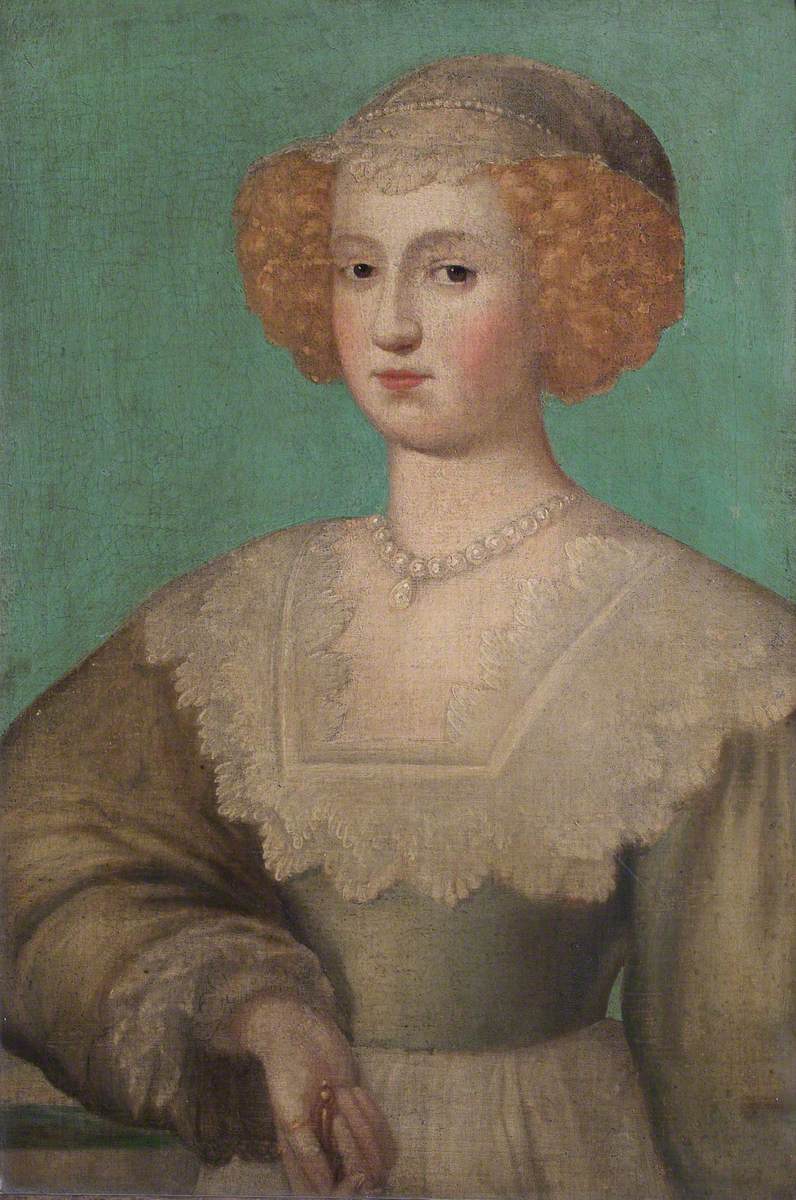
Penelope was Essex’s stunningly beautiful sister, the original ‘Stella’ of Sidney’s sonnet cycle, the wife of Robert, Lord Rich and mistress to Charles Blount, later Lord Mountjoy………
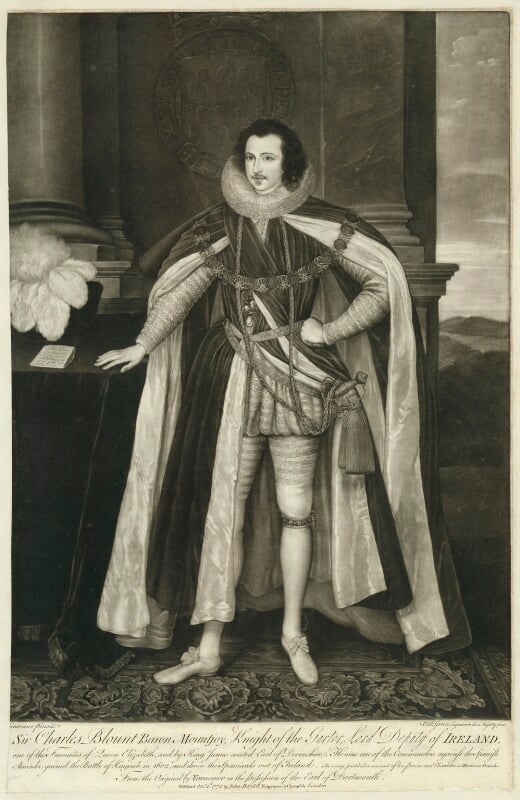
……..another dazzling young favourite of Elizabeth’s. Shakespeare plays on her married name in exactly the way Sidney did in Astrophil and Stella.
The entertainment, in which the Princess of France shoots deer from a stand, is a parody of Elizabeth’s progress to Hampshire six months before.
The high-spirited, volatile and politically active Penelope would have relished sending up her enemy, the Queen.
Shakespeare, in turn, relished the opportunity of trying to enter the Queen’s mind. Topcliffe, M.P., sadist and State torturer would write to Elizabeth, whom he addressed as ‘Goddess’, about his intended tortures. He had recently boasted to a Catholic prisoner that he had caressed her thighs and stomach and that she had given him, in return, a pair of ‘linen hose, wrought with white silk.’
In the play the Princess of France, calling for her bow, (the very bow Elizabeth had left at Cowdray) admits that she is prepared to shed the blood of a deer to gain the praise of her subjects. Shakespeare is asking how any woman could be so sensitive, so intelligent, so articulate and yet so cruel.
Even here, though, there is a coded double meaning. The blood also represents semen. The Princess adds, sadistically: ‘Praise we may afford/To any lady that subdues a lord’.
Shakespeare satirises the whole ‘Petworth Set’ in the play. A Jesuit propagandist had attacked them early in 1592 as a ‘School of Atheism’. In Shakespeare’s hands they become ‘The School of Night’. Sir Walter Raleigh is guyed as Don Armado, the boastful, penniless, infatuated Spaniard.
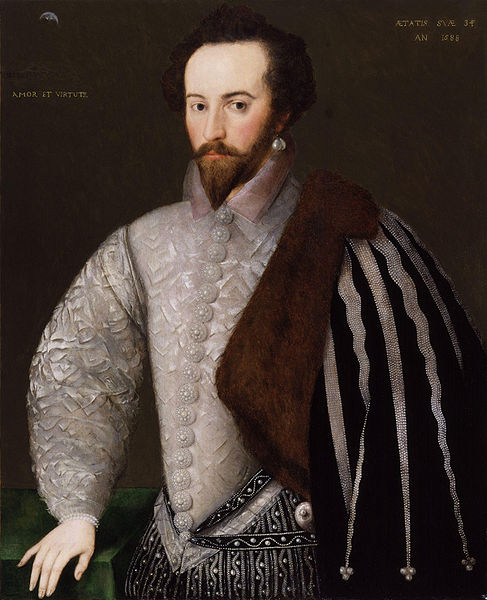
The version of Love’s Labour’s Lost that has come down to us is the revised text performed at Elizabeth’s Court at Christmas in 1597. In that year Raleigh was back in favour after an exile of five years, so Shakespeare shifts the attack to Don Perez, a flamboyant homosexual who had been part of Essex’s entourage, and who, like Armado, was known as the ‘oracle’.

Enough of the original attack on Raleigh remains. Armado greets the pedant Holofernes with a full-blown Devonian ‘Chirrah’ and impregnates Jaquenetta in the same way Raleigh had impregnated one of the Queen’s ladies-in-waiting, Bess Throckmorton.
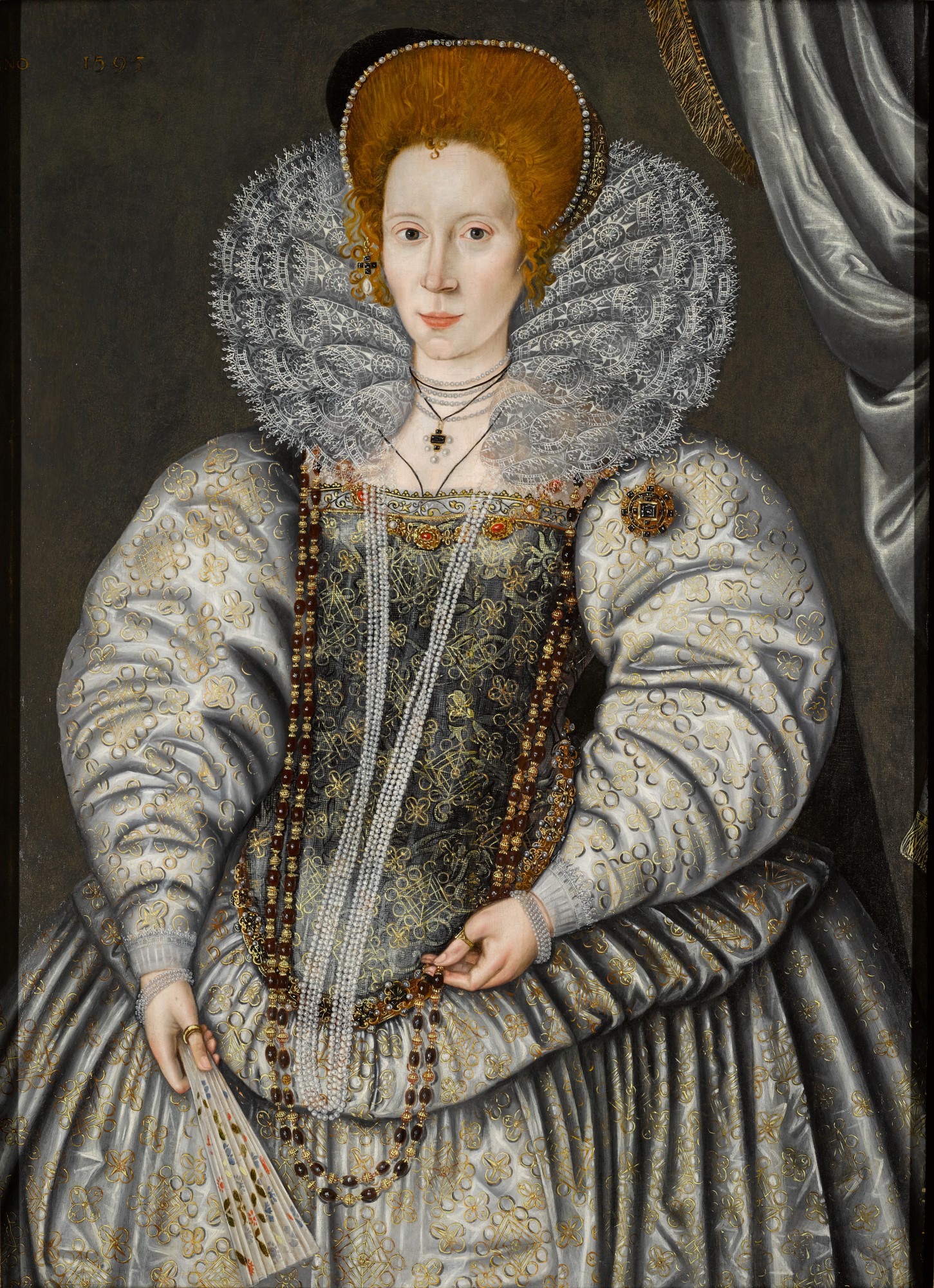
When the play was originally performed, Raleigh was cowering in Falmouth, hiding from the Queen’s wrath.
The ‘psychic’ Petworth poet George Chapman, is satirised as the sycophantic Boyet, (‘Now madam summon up your dearest spirits’).
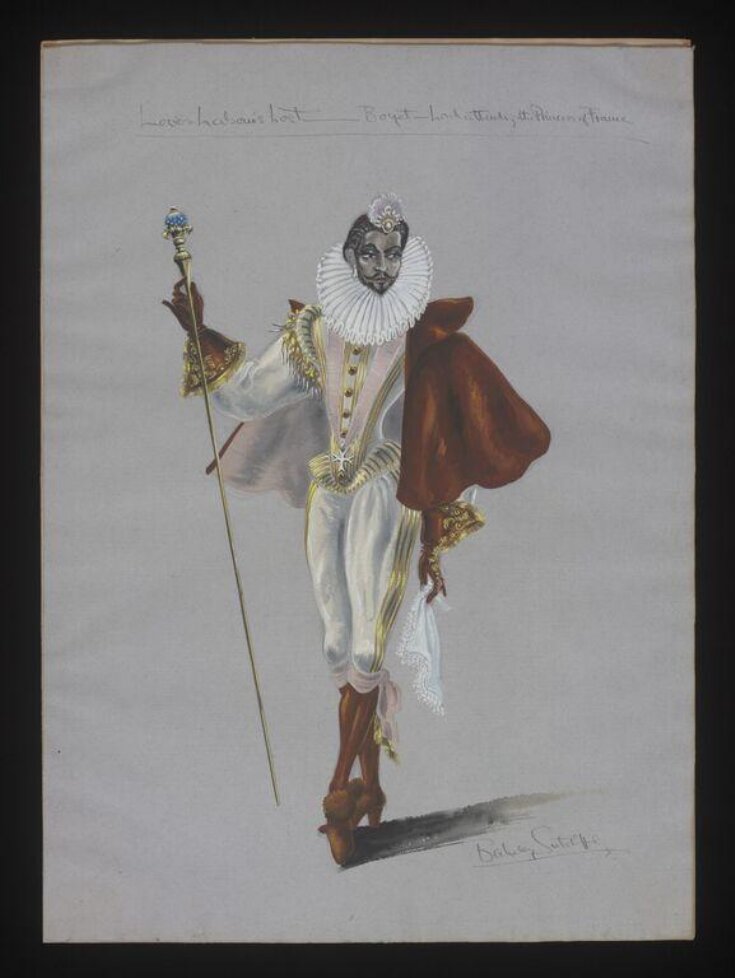
The Princess pointedly says to him that her ‘beauty’ though ‘but mean’ needs not the ‘base sale of chapmen’s tongues’.
Shakespeare transforms his household rival, Florio, into the pedant Holofernes. Like Florio, Holofernes pens an entertainment for visiting royalty and, like Florio, Holofernes never uses one word where ten will do.
In his Italian-English Dictionary, The World of Words, Florio defines ‘caelo’ as ‘heaven, the sky, the firmament or welkin’: Holofernes talks about ‘caelo, the sky, the welkin, the heaven’.
In an exchange which has puzzled scholars, Armado asks Holofernes: ‘Do you not educate youth at the Charge-house on the top of the mountain? Holofernes replies: ‘Or Mons, the hill’.
‘Mons’ is clearly an Elizabethan joke about the ‘hill of Venus’. But what is meant by ‘Charge-house’ and ‘mountain’.
Again, Titchfield itself supplies the answer. John Leland, writing about the town in 1542, had said there was ‘a grammar School close to a river bank’. This school, now a private house, still exists and has the remains of a secure room in the upper storey.

In medieval and Tudor times (the school dates back to the reign of Henry VI) schools would often double as toll-houses (or charge houses). The Titchfield Grammar School is sited on an old road.
The ‘mountain’ (spelt ‘mountaine’) is a coded reference to Florio’s great work at Titchfield: his translation into English of the Essays of Montaigne.
Shakespeare, as the ‘borrowings’ in his plays reveal, possessed a copy.
●
Love’s Labour’s Lost does not resolve. ‘Jack’ does not have ‘Jill’ because the Princess is told, in a superb coup, that her father is dead. Shakespeare could not write a full blown comedy: both Mary Southampton’s twin brother and her father, Lord Montague, were dying.
In London the plague was raging. Nashe wrote he was ‘detained with my lord in the country’ through ‘fear of infection’. He, Shakespeare and Aemelia continued to put on plays and entertainments; but, in the boredom of the pandemic summer, their greatest amusement was themselves.
Shakespeare reveals in the Sonnets how he fell in love with Aemelia, Harry became jealous, Armelia seduced Harry, Harry slept with Aemelia to upset Shakespeare and Shakespeare came to realise that he was more in love with Harry than he was with Aemelia.
Later in All’s Well that Ends Well Shakespeare was to show how a commoner, Helena, (code: Shakespeare) falls in love with the aristocratic Bertram (code: Harry) with his ‘arched brows, his hawking eye, his curls’.
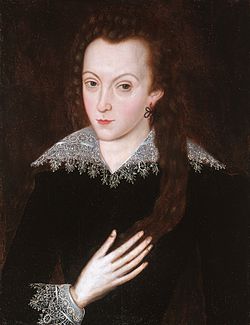
His mother, the Countess (code: Mary Southampton) forces ‘Helena’ to admit her love:
‘Then I confess
Here on my knee, before high heaven and you,
That before you, and next unto high heaven,
I love your son’
The Countess in the play, just like the Countess of Southampton, had earlier fallen in love with ‘a common person’ so she is sympathetic to Helena’s love which leaps barriers of class.
Shakespeare confessed to Mary Southampton his love for her son – a love that was stronger even than his love for her. In a sensational act of imagination, Mary endorsed a passion which leapt barriers of sex.
●
Trixie the Cat says…

Brothers and Sisters of The Shakespeare Code…
Much of the content of this extract is a development of Stewart’s book, Love’s Labour’s Found, published in 2002 – and still available online!
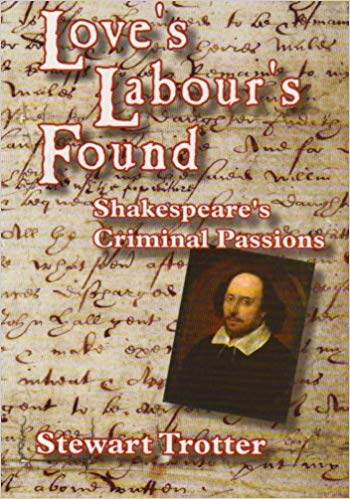
Carol White made it into a documentary for Meridian T.V.
The love-triangle between Shakespeare, Southampton and Aemilia is analysed in full in Stewart’s Shakespeare’s Sonnets Decoded…
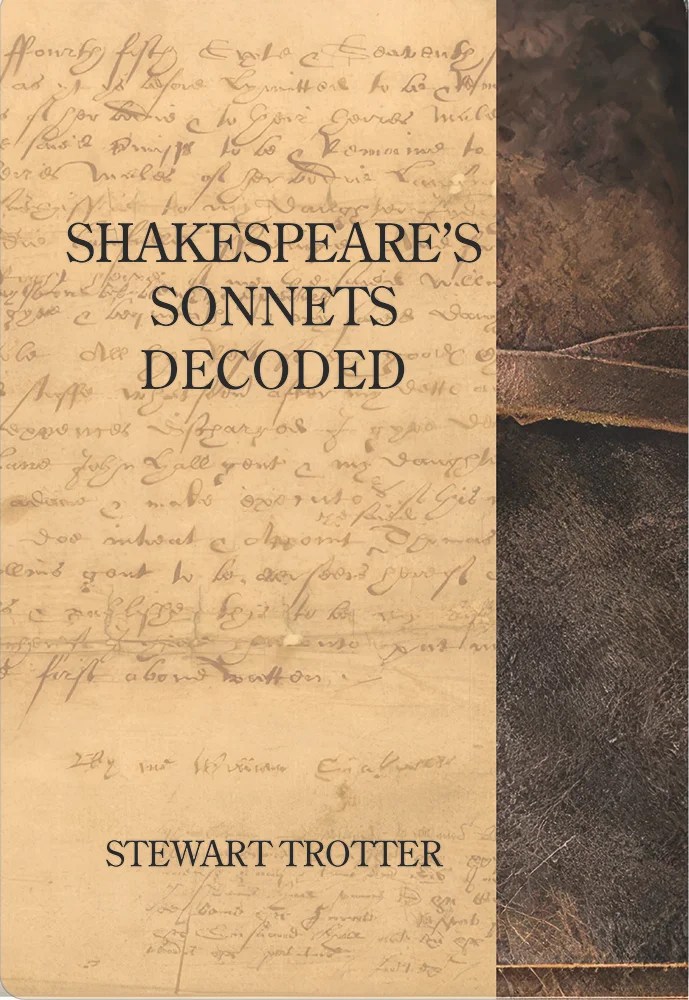
…..available at £12.95 from Magic Flute Publishing……
Shakespeare’s Sonnets Decoded – Magic Flute Publishing
Next Tuesday’s Post is entitled ‘Tom Nashe’s Revenge’.
Stewart has argued from the beginning of the century that Tom Nashe was the true author of the ‘Upstart Crow’ attack – NOT Robert Greene!
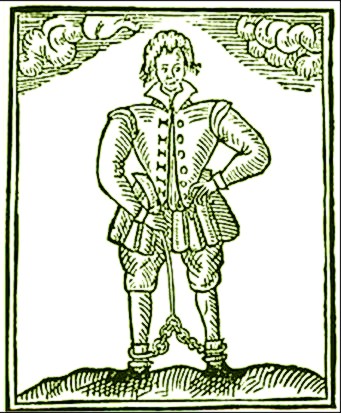
Now Academe has finally caught up with him…..
But finally…….
THE SHAKESPEARE CODE SALUTES CHINA!

As of today (8th September, 2026) The Shakespeare Code has received a STAGGERING 414,947 Views…..
And the Code is thrilled to report that Brothers and Sisters from China are increasing in numbers faster than any other country on Earth!!!
In the last seven days the Code has received Views from no less than SIXTEEN different Chinese Cities and Towns….
They are: Bejing, Nanjing, Mian Yang, Chenddu, Shanhai, Jinan, Dezhou, Weifang, Taizhou, Xintang, Zhouku, Harnin, Xingtai, Cangzhou, Langfang and Prattein.
Our Chief Agent, Stewart Trotter, worships the Culture of China. He is a Christian – but a TAOIST Christian who has consulted the I Ching for over forty years.
As well as studying Shakespeare and writing and directing, Stewart holds a Full Licenece in Acupunture – and for 10 years worked for the National Health Service in treating people with addiction problems….
He welcomes Chinese Brothers and Sisters with all his heart…..
And invites them and all Brothers and Sisters of the Code to leave greetings in the box below…..
As does Your Cat, Trixie, who, God Willing, will see you all next Tuesday 15th September…..
‘Bye, now!


Leave a Reply