Brothers and Sisters of The Shakespeare Code…..
What is it about men and their studies? They can be neat, efficient and tidy in the rest of their lives – but enter their studies (if you are allowed to) and the place is a bombsite – books and papers all over the place – desks, beds, floors. You half expect them on the ceiling.
Stewart Trotter – our Chief Agent – is no exception – and we have an agreement I hardly ever go into his room in Maida Vale. But yesterday I had to – none of us could find a ten year old password for something or other that was vital.
Now Your Cat is good at finding things – and I did. But I also found an outline for a book Stewart had written that he’s never mentioned – called ‘The Shakespeare Code’ no less!
Your Cat flicked through it and was hookeed.
Why had I not read it before?
Stewart told me the story. In 2008 – yes EIGHTEEN YEARS AGO! – a distinguished Editor got interested in Stewart’s ideas about William Shakespeare – and asked him to submit a book proposal to his equally distinguished publishing house. The Editor loved it – but no-one else did!
Well, it was eighteen years ago…
Stewart – instead of submitting it elesewhere just let it rest – and began to get interested in the Internet. This is where ‘The Shakespeare Code’ blog comes in – as does Your Trixie the Cat!
Stewart and I have been working on it together since 2011 – and we’ve chalked up 411, 374 Views…
I’ve persuaded Stewart to post his book – EXACTLY as he wrote it in 16 installments – with the opportunity for him to comment, if he wants to, as we go along.
So, Brothers and Sisters, Your Cat is proud to present ‘The Shakespeare Code’ –
The Book that Never Was!
(1) The Theory
William Shakespeare had to write in code.
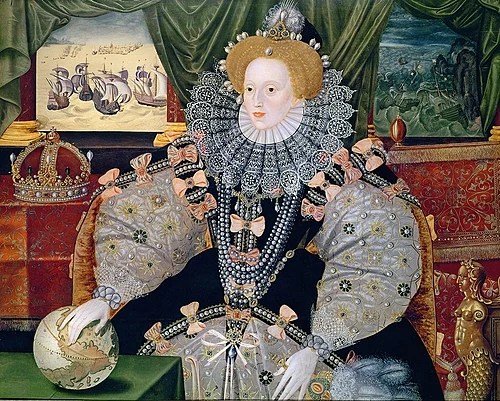
Elizabeth I was not the liberal cinema has made her out to be. She loathed free speech, even from her Parliament, and if you libelled her, or ‘the State’ (which could mean anyone or anything) you could be imprisoned, racked, hanged, drawn and quartered.
Elizabeth believed that God had freed her from the Tower and placed her on the throne of England for one purpose only: to turn the whole country Protestant. She had no interest in conquering other lands. She simply wanted to be shepherdess to her island flock. Fearing that diversity of belief would lead to Civil War, she wanted everyone in England to think the same way that she did.
This would be a challenge to any writer: but it was a particular challenge to Shakespeare, who had inherited from his wheeler-dealer father a mischievous, anarchic streak. From his teenage years any figure of authority had been fair game. He began with the powerful persecutor of Catholics, Sir Thomas Lucy, whose sex-life and personal hygiene he lampooned in a ballad. He ended up with Elizabeth herself.
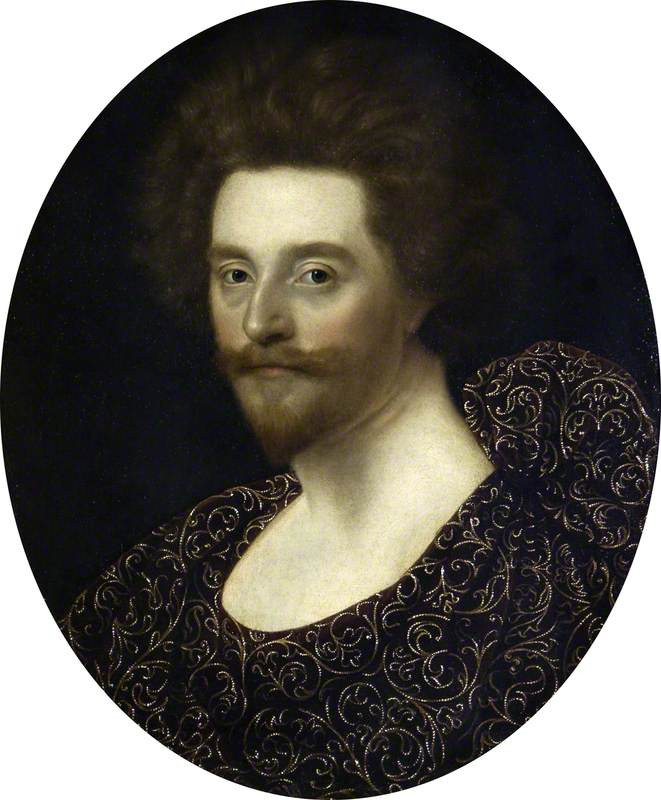
Fascinated by politics, Shakespeare knew that to stay alive he needed to find new ways of saying the unsayable. He had to develop a series of codes which his audience would understand but which would bamboozle the authorities. If challenged, Shakespeare must be able to throw up his hands and say:
‘What on earth are you talking about? It’s all in your mind!’
One of his most powerful weapons was history. The Tudors thought the world was in irreversible decline and likely to end soon. They considered their ancestors to be every bit as clever, and wicked, as they were. The past was an inspiration to them. And a caution.
For Elizabeth it was also a threat. Obsessed with her place in history, she did not want her subjects to judge her by history. So she span it. In 1590 she recalled Holinshed’s recently published historical Chronicles on the grounds they were ‘fondly set out’. She ordered her players, the Queen’s Men, to perform Pro-Tudor historical propaganda instead.
One of the plays was a risible version of Richard III (‘A horse! A horse! A fresh horse!). It portrays the hunch-backed King, enemy of Elizabeth’s grandfather Henry VII, as a cannibal. At the end of the piece a messenger miraculously prophesies the glory of Elizabeth’s reign:
‘She is the lamp that keeps fair England light
And through her faith her country lives in peace
And she hath put proud Anti-Christ to flight
And been the means that civil wars did cease.
Then England kneel upon thy hairy knee, [sic]
And thank that God that still provides for thee.’
The real historical challenge to Elizabeth came from an anonymous book, published in 1584, called Leicester’s Commonwealth. Francis Bacon possessed a manuscript copy and several pages are in Shakespeare’s hand.

It is a demolition job on Robert Dudley, Earl of Leicester, a childhood friend of Elizabeth who had given her money, love and hope during the dark days of her sister Mary’s reign.
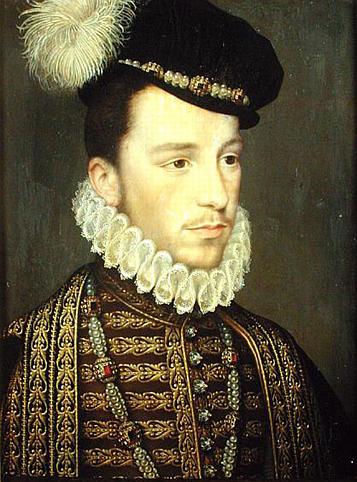
When Elizabeth became Queen he became the most powerful man in England. Two years later his teenage bride, Amy Robsart, was found with her neck broken at the bottom of a short flight of stairs.
Detested for his greed, his lust, his murders, his adultery, his lies and his hypocrisy, Leicester was given Kenilworth Castle, a dozen miles from Stratford-upon-Avon, around the time that Shakespeare was born. Claiming, preposterously, to lead the Puritan religious cause, Leicester oppressed all Warwickshire Catholics, including Shakespeare’s family.
Leicester’s Commonwealth compares Leicester and Elizabeth with all the weak or villainous figures from the past: Richard II, Richard III, Richard of York, Henry VI, Warwick, Queen Margaret, her lover the Earl of Suffolk and even the Ancient Roman rapist, Tarquinus Superbus…..

All of them feature heavily in Shakespeare’s plays and poems.
Many of Elizabeth’s subjects thought it was perverse for a woman to rule over them. It was even more perverse for Leicester to submit to one. When Shakespeare writes about feeble kings, boy kings, tyrannical kings, over-bearing mothers and adulterous lovers from history, his audience would know he was really talking about ‘now’.
Mythical, pre-Christian settings were a way of dealing with taboo subjects like religion. Though born and brought up a Catholic, the worldly, hedonistic, malt-hoarding, tax-avoiding, litigious Shakespeare was never a fanatical follower of the Old Faith. He was a ‘political’ Catholic.
He had seen his own family members suffer for their belief and one relative had even been executed. So Shakespeare actively supported the movement for religious toleration, equating it with freedom of speech.
In 1605, as the result of a devastating emotional crisis which the book will de-code from Sonnet 126, Shakespeare lost all his faith: but he fought hard to regain it and, mixing Paganism with Christianity in his later plays, he ‘died a Papist.’
Symbols are also a vital part of the Shakespeare Code. Queen Elizabeth, for example, loved to be compared to the moon. Shakespeare has great fun sending up this idea…
It was well known that Elizabeth was violently jealous of her young Ladies-in-Waiting. She forbad them to flirt with any of her courtiers, put them in the Tower if they married without her consent and forced them to wear black and white dresses to set off the splendid colours of her own. One of these ladies was Elizabeth Vernon…….
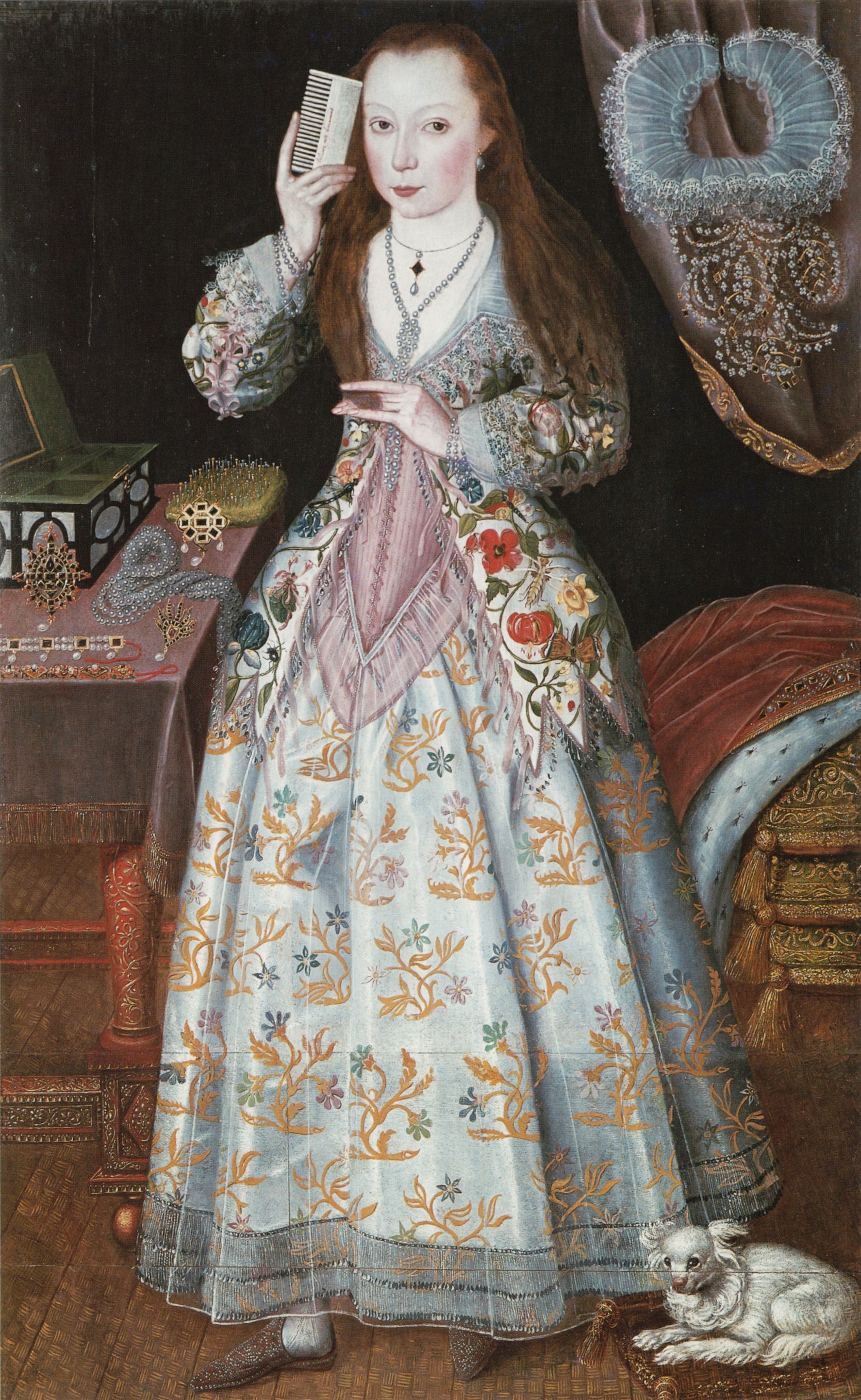
……a cousin of Robert Devereux, 2nd Earl of Essex.
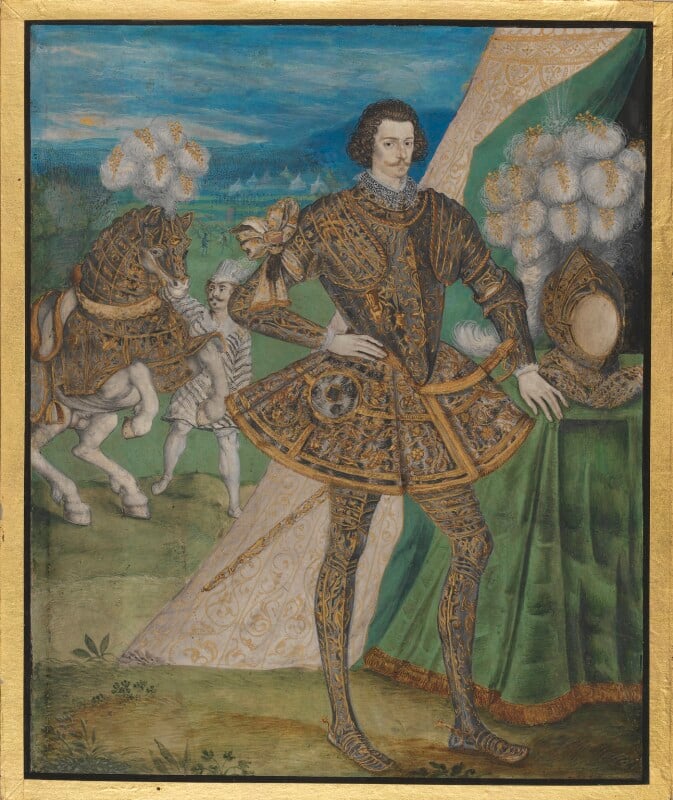
She had caught the eye of Henry Wriothesley, (‘Harry Southampton’) 3rd Earl of Southampton, Shakespeare’s patron, friend and lover.
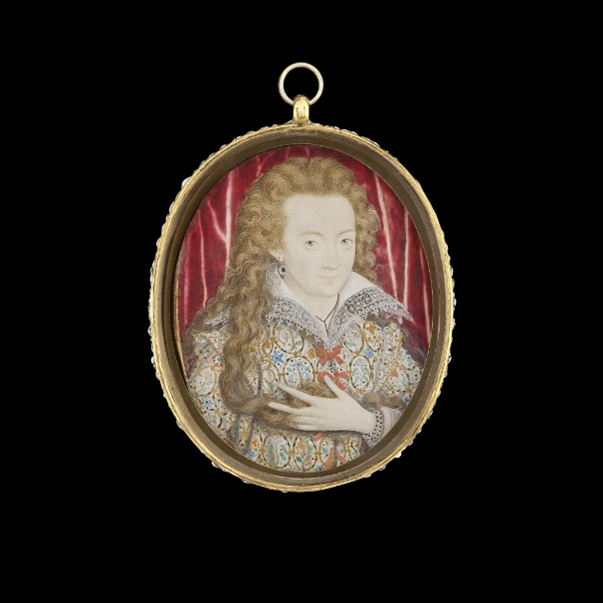
Essex, the book will argue, knowing that the tentatively heterosexual Harry would need encouragement, commissioned Shakespeare to write Romeo and Juliet. So when Romeo says:
‘But soft! What light through yonder window breaks
It is the East and Juliet is the sun.
Arise fair sun and kill the envious moon
Who is already sick and pale with grief,
That thou her maid are far more fair than she’
– Shakespeare really was playing with fire.
Even more outrageous is the line from A Midsummer Night’s Dream, performed when Elizabeth was in her sixties: ‘But O! methinks how slow this old moon wanes…’
Animals could also be a code for people. Sir Robert Cecil, Burghley’s son, small and round-shouldered, became ‘The Ape’……
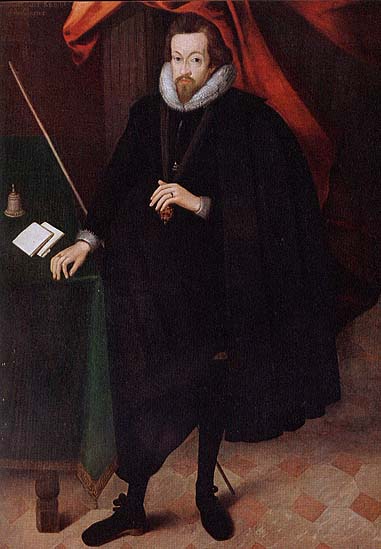
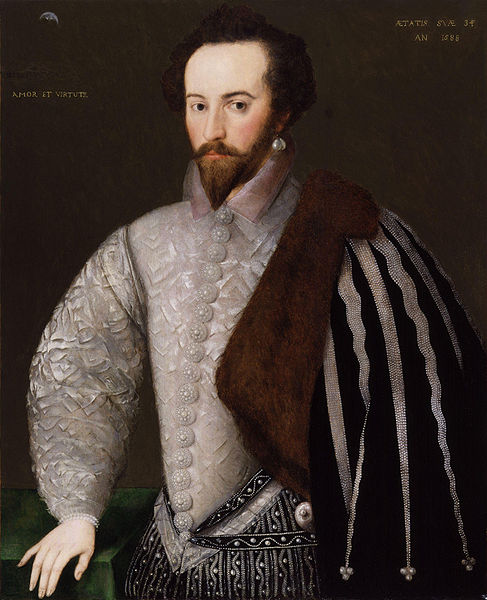
……..the ruthlessly crafty Sir Walter Raleigh ‘The Fox’…..
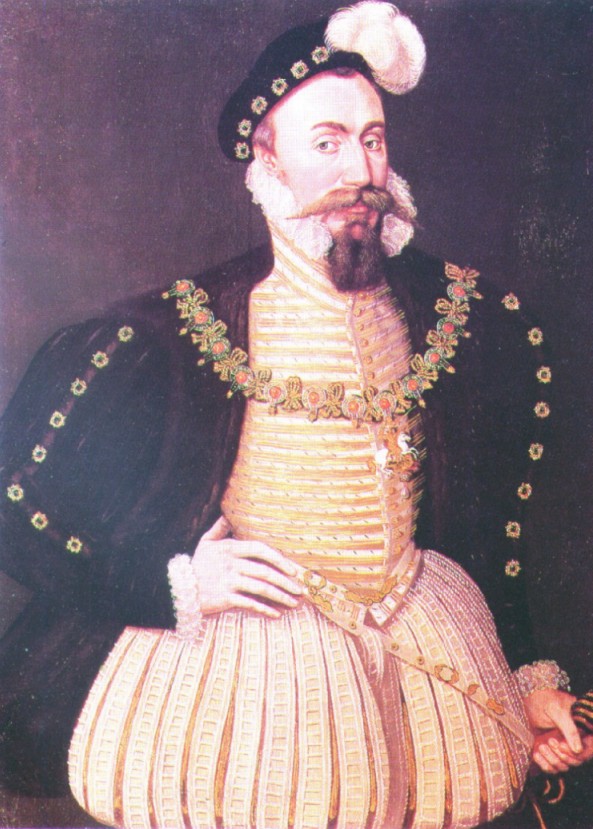
………and Leicester, who inherited the Warwick family’s heraldic device of the Bear and Ragged Staff, ‘The Bear’…..
Shakespeare’s most potent code, though, was the English language itself. When he began writing, English was despised, even by the English themselves, as barbarous; by the time of his death it was celebrated as the glory of Europe. Shakespeare and his contemporaries had so refined, developed and enriched the language that a complex ambiguity was the inevitable outcome. Ambiguity breeds code. Shakespeare needed that code to protect his life.
Like many men in Elizabethan England, Shakespeare led what we would now call a ‘bisexual’ love-life. In 1563, the year before his birth, Elizabeth had made what she called ‘buggery’ punishable by death. Her father Henry VIII had introduced anti-homosexual laws, but her Catholic sister Mary had rescinded them when she came to the throne. Elizabeth reintroduced them because ‘diverse evil-disposed persons have been more bold to commit the said most horrible and detested vice of buggery, to the high displeasure of almighty God.’
And, of course, the high displeasure of Elizabeth who insisted on being the heterosexual centre of everyone’s attention. She teased the homosexual men, like Francis Bacon, at her Court; but she exercised control by the existence of the law. It could be enforced at any time.
The book will show that for fifteen years, from 1590 to 1605, Harry Southampton was the overwhelming love of Shakespeare’s life. Shakespeare wanted to express that love in words that would last for ever, but did not want to be executed. So he developed a code which Harry and his friends would understand but which other people might miss. He was so successful in this that for over three hundred years scholars did not realise that Shakespeare was bisexual. Some do not till this day.
The code uses the imagery of wounding, hunting, death and blood to represent falling in love, love-play and orgasm. The vocabulary of the face can also represent the genitals: ‘beard’, for example, can mean pubic hair and ‘eye’ the testicle or penis. Money, in all its forms, can symbolise semen, and spending money, ejaculation. Abstract words (‘largesse’ or ‘excellence’) can also be bantering references to the genitals.
For example, Sonnet 94 begins: .
‘They that have power to hurt, and will do none,
That do not do the thing they most do show
Who moving others are themselves as stone,
Unmoved cold and to temptation slow.’
The ‘power to hurt’ has the additional Chaucerian meaning of ‘the power to arouse others sexually’. ‘The thing they most do show’ is a joking reference to a penis in an elaborate cod-piece.
So the opening lines really mean:
‘Those that have the ability to arouse love in others and refrain from doing so; who do not engage in making love, no matter how much their cod-pieces show off their manliness, who, although they excite others, remain stone-like themselves, unroused, cool and reluctant to rise to temptation…’
‘They rightly do inherit nature’s graces
And husband nature’s riches from expense
They are the lords and owners of their faces,
Others but stewards of their excellence’
‘Nature’s riches’ is semen which chaste young men conserve through refraining from sex. ‘Faces’ means ‘genitals’ and implies that these pure men are really the ‘lords and owners’ of their bodies. Young men who sleep around are merely the stewards, not the possessors, of ‘their excellence’.
‘The summer’s flower is to the summer sweet
Though to itself it only live and die,
But if that flower with base infection meet,
The bravest weed outbraves his dignity’.
The flower here also symbolises the penis and ‘dying’ is code for orgasm. Shakespeare is praising masturbation: it is better to satisfy yourself alone than meet with ‘base infection’, that is, consort with lower class men who will contaminate you both by their lack of breeding and their venereal disease.
‘For sweetest things turn sourest by their deeds
Lilies that fester smell far worse than weeds’
This is a graphic description of a penis poisoned with disease and a soul poisoned by association with unworthy companions. The moral and physical collapse of an aristocrat (the lily) is more total than it is for a ‘base fellow’ (the weed) for whom there are no high expectations. ‘Base’ itself was often code for ‘homosexual’.
Shakespeare employed code to attack other people. Other people used code to attack him.
Re-naming Shakespeare ‘upstart crow’, ‘ignorant ale-knight’, ‘unlearned sot’, ‘brainless buzzard’, ‘unlearned idiot’, ‘rude rhymer’, ‘idleby’, ‘peaking pageanter’, ‘scoffing fool’, ‘artless idiot’, ‘babble book-monger’, ‘upstart antiquary’, ‘father of interludes’, ‘Posthast’, ‘Roberto’, ‘poet ape’, ‘mimic ape’, ‘base groom’, ‘ragged groom’, ‘hostler’, ‘buckram gentleman’, ‘country author’, ‘Caesar’, ‘johannes fac totum’, ‘absolute interpreter of the puppets’, ‘Old Player’, ‘broking Pander’, ‘unkind gent’, ‘usurping Sol’, ‘saucy upstart Jack’, ‘base insinuating slave’, ‘son of parsimony and disdain’, ‘dunghill brat’, ‘trencher slave’, ‘drone’, ‘self-conceiving breast’, ‘Sir Simon two shares and a half’, ‘gloomy Juvenal’, ‘Cuthbert Coney-Catcher’, ‘petulant poet’, ‘malicious papist’, ‘Sir Adam Prickshaft’, ‘Ovidius Naso’, ‘Fungoso’ and the not very subtle ‘W.S.’, ‘Shake-bag’, ‘Shake-rag’ and ‘Shake-scene’, jealous writers lambasted Shakespeare’s class, his lechery, his drunkenness, his meanness, his ingratitude, his boastfulness, his plagiarism, his ruthlessness, his ambition and, obliquely, his brilliant, immortal talent.
A consistent picture of Shakespeare emerges from the attacks, and sometimes praise, of his contemporaries Greene, Nashe, Peele, Chettle, Marston, Jonson, Spenser, Weever, Barnfield, Meeres, Amelia Bassano/LanyerLanyer, Will Kempe and the anonymous authors of poems, the play Histrio-Mastix, The Parnassus Plays and the pamphlet Ratsei’s Ghost.
These insults give us vital information about Shakespeare’s life. By cracking all the codes we can build up a complete and detailed story.
The ‘lost years’ were never really lost at all.
End of Part 1.
Stewart says…..
‘At the time I submitted this outline, the cinema was full of praise for Queen Elizabeth – and her darker, sadistic side was hardly touched on. I had forgotten that Shakespeare sends her up so dangerously as ‘The Moon’ in his plays. It was also still a bit early for the public to accept that the Bard was bisexual – even though I’d been saying it since 1971!’
I also now think that at the beginning of his life, Shakespeare was more than a ‘political’ Roman Catholic. I think he ardently believed.
Trixie says:
‘The next installment is called ‘The Lost Years Found’ – and if you want know what Stewart thinks of the Sonnets, do try his latest book – ‘Shakespeare’s Sonnets Decoded’. Click the link!


Shakespeare’s Sonnets Decoded – Magic Flute Publishing
Bye, now!


Leave a comment