[Please read Parts I and II first]
Or even a Masonic one?
The Evidence
It has often been said that if you fell asleep and woke up in St. Mary le Strand, you would think you were in Rome.

What is remarkable is that the Church was consecrated in 1724 – ten years into the reign of a Lutheran King.
Many of the people on the Commission for Building 50 Churches were Jacobites and must have known what Gibbs was going to design. And as Gibbs was given the commission AFTER the Coronation of George I, it is hard not to see the building of St. Mary le Strand as an act of subversion.
Gibbs liked to live dangerously. In the introduction to his 1728 book on architecture he wrote:
‘Designs should not be altered by the caprice of ignorant, assuming Pretenders.’
Anyone with the slightest knowledge of Gibbs would know by ‘Pretenders’ he wasn’t referring to James III and Bonnie Prince Charlie – he was referring to what were for him the real ‘Pretenders’ Kings George I and George II – or Dunce the First and Dunce the Second – as Gibbs’s great friend, Alexander Pope, called them.

[The bust of Pope which Gibbs commissioned and was found in Gibbs’s house after Gibbs’death]
Also Gibbs was a Scottish Freemason and, as we have seen, Freemasonry there was associated with second sight. Swift’s ‘Grand Mistress of the Female Masons’ goes even further to suggest that Scottish Freemasons were thought to be ‘conjurers and magicians’.
By creating a ‘Roman Catholic’ church, was Gibbs willing Roman Catholicism back into the country – and with it James III?
Gibbs remained a Catholic and Jacobite all his life. He took the Last Rites and left money for a Mass to be said for him on his death.
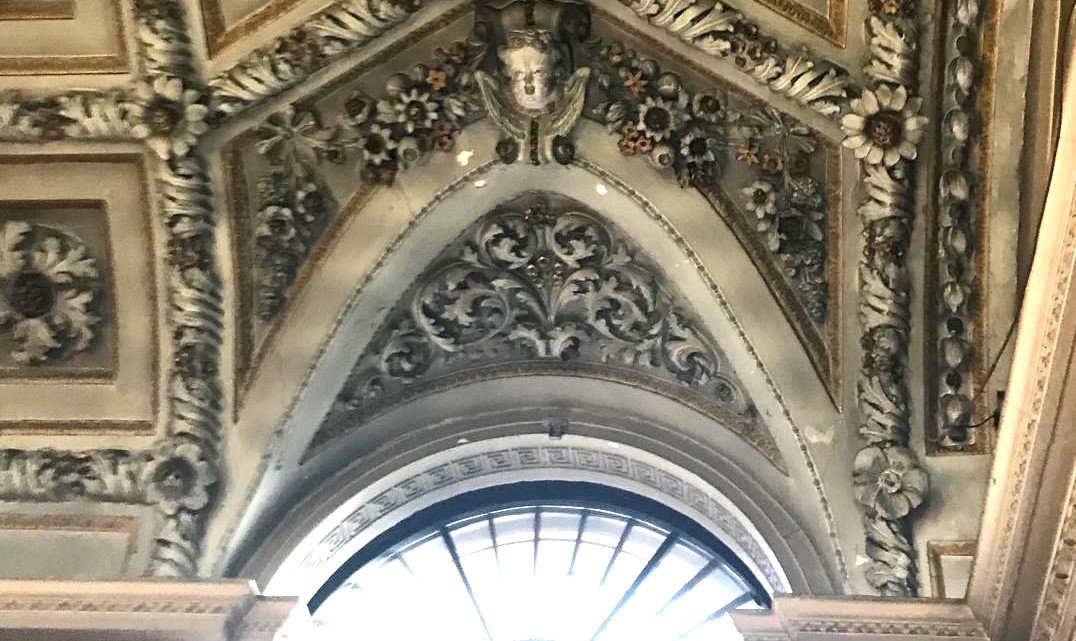
The most striking feature of St. Mary le Strand is its ceiling, filled with white flowers.….

But if you look closer you can see oak leaves and fruits….
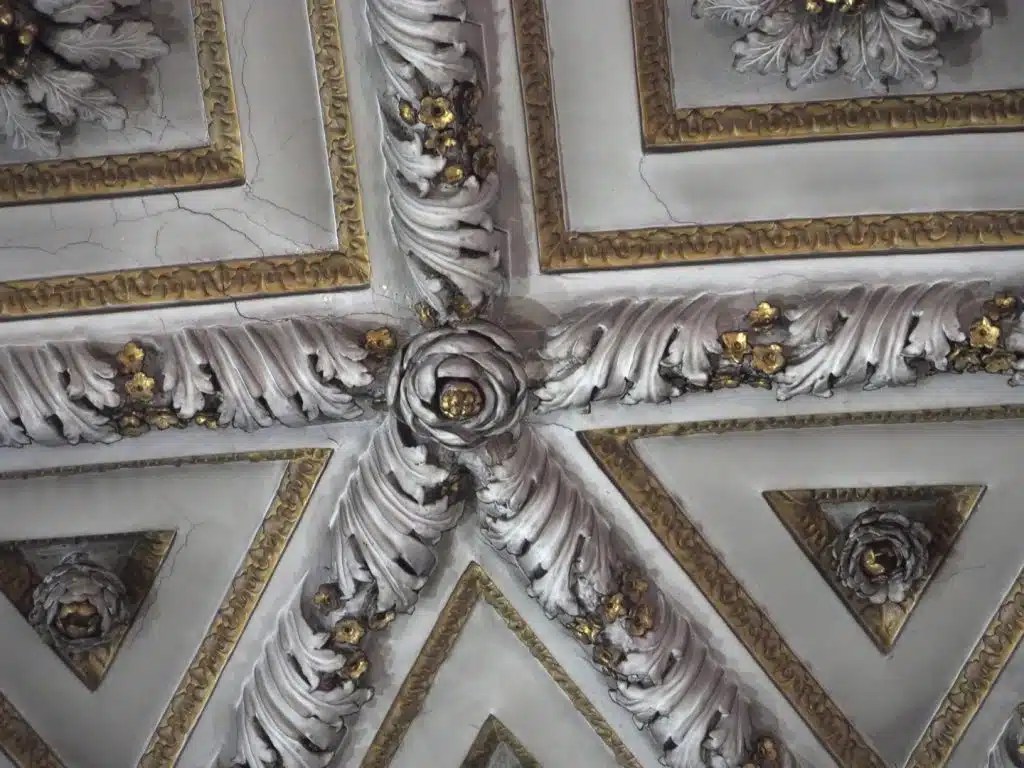
And if you look closer still, the five leaf rosa alba….

….the inspiration for the White Cockade.

Chrysostom Wilkins plastered the ceiling to Gibbs’s design in 1718 – the very year white roses were banned from London.
The walls of the church were left blank….
.
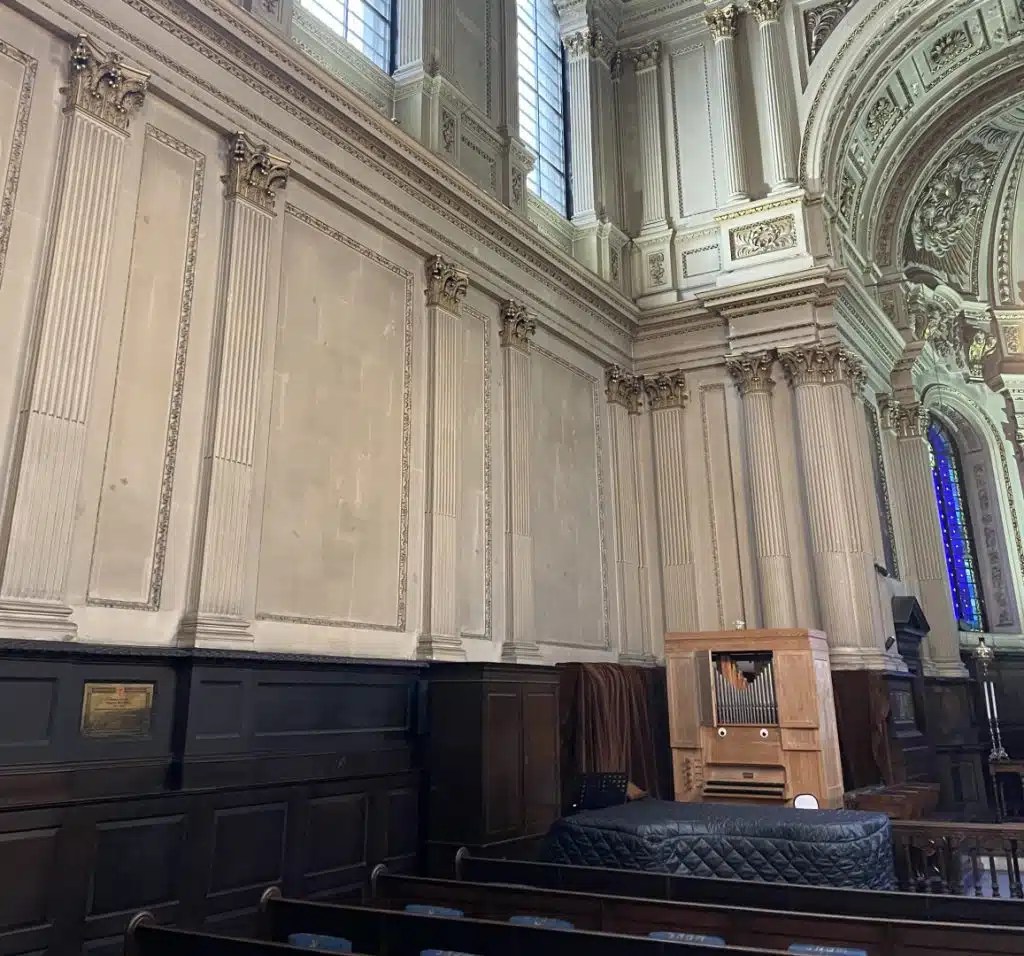
……but clearly Gibbs hoped they would one day be painted – as they were in the chapel of Wimpole Hall which he designed for Edward Harley, 2nd Earl of Oxford….

Perhaps the subject would have been ‘King Solomon’ – in honour of King James VI and I, ‘The Scottish Solomon’ – or the ‘Return of the Israelites to Israel’ – pre-figuring the return of the Stuarts….
Perhaps even celebrating it.
On 17th March 1720 the Commission for Building 50 Churches demanded to see the design for the pulpit – and they were right to do so. Not only is it oak – a subversive act in itself – it is covered with carvings of oak leaves….

……with little faces peeping through them – like re-incarnations of King Charles II hiding in the tree.
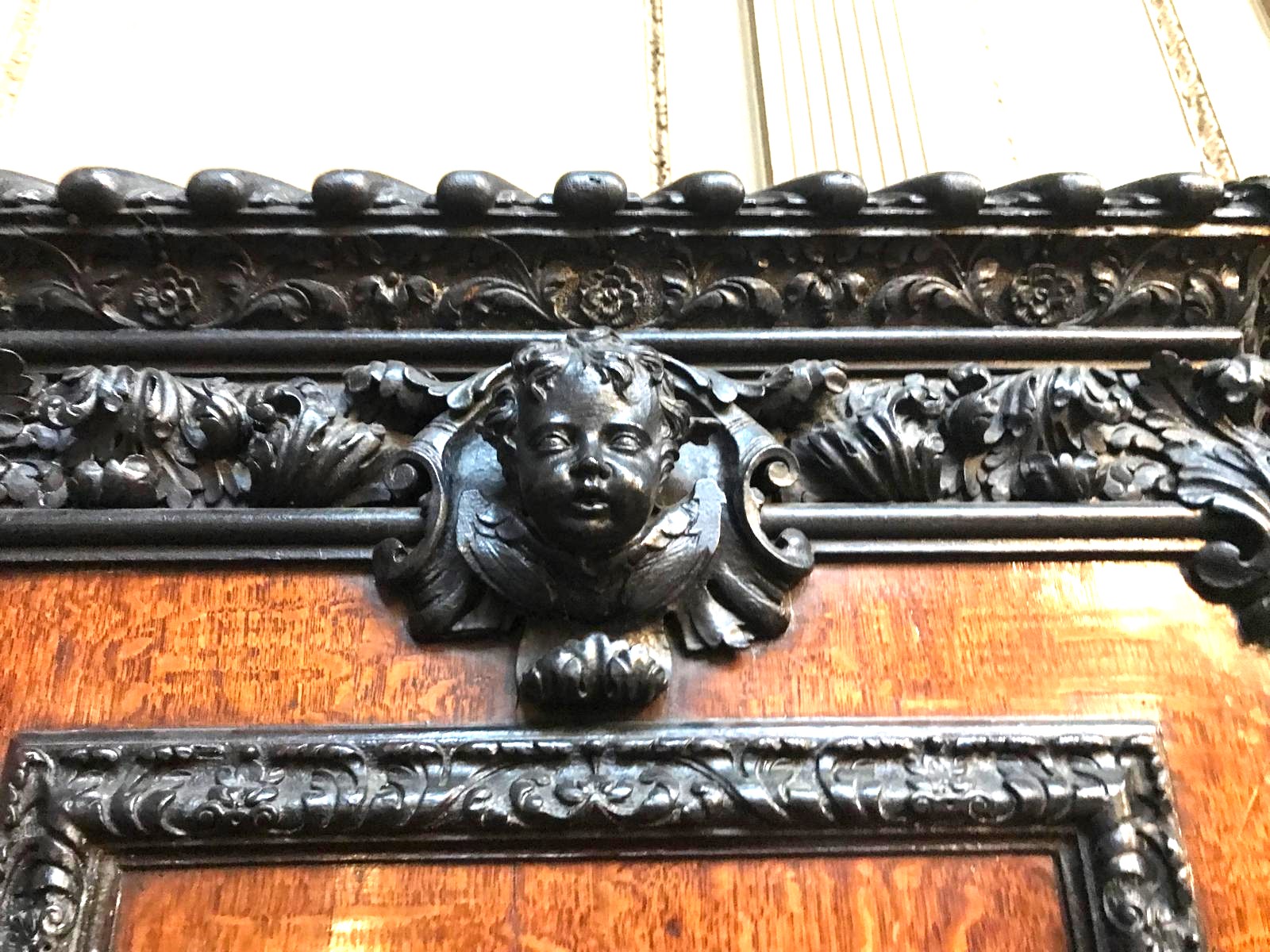
Bonnie Prince Charlie was still a toddler when these putti were carved.
If we move to the apse we see a bird flying towards us – and we experience Parker’s Civil War ballad, carved in stone.
It is Noah’s dove of peace returning to England.

…..as it does on Jacobite drinking glasses….
But it is also the Blackbird – James III – flying back to his home, surrounded by luscious fruits and grapes – symbols of the Stuart fertility.
There are starbursts in the apse – suggestive of the star that appeared at the birth of Bonnie Prince Charlie….

And the putti here – and indeed – all over the Church – have wings that – as at Chiswick House – could be taken for the ostrich feathers of the Prince of Wales.

Gibbs also went in for caricature – the equivalent in plaster and stone of the ‘Wee, wee German Lairdie’ song.
As the putti get higher and more out of sight…

……..they get more grotesque…..

……..and even demonic…
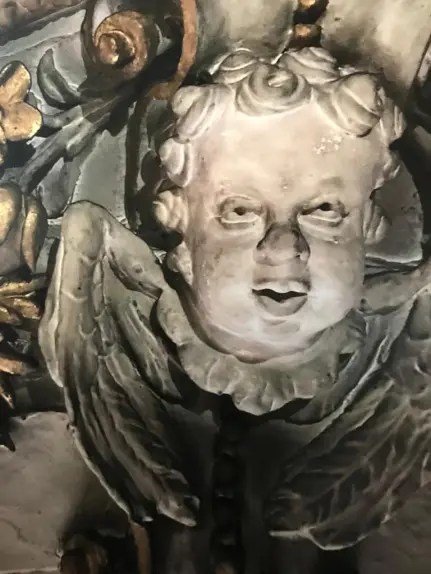
…….and start to look more and more like ‘Pig Snout’!
And even the Hanoverian crest isn’t all it seems to be.
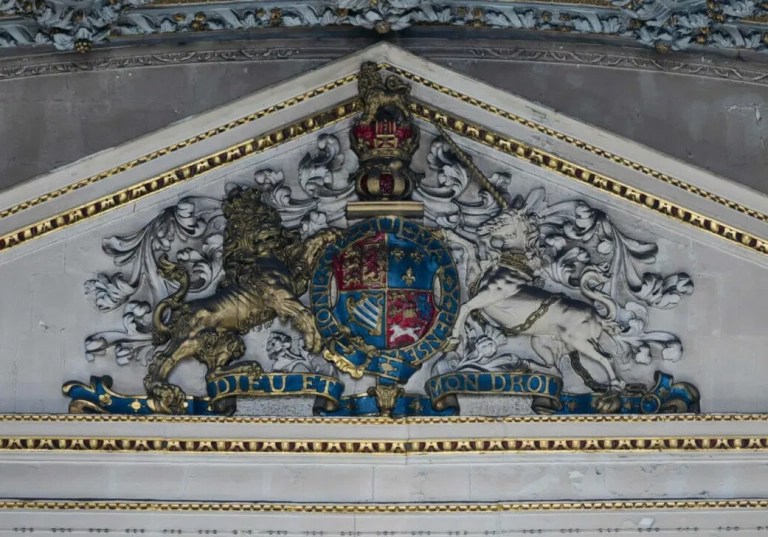
If you look closely at the unicorn you’ll see it has a massive horn – a mocking reference to ‘cuckold Geordie’.

And it even has Stuart oak leaves carved into it….

But the real mystery are the two pillars that lead into the Church Garden.

They were not part of the original design and seem to have appeared around 1740. There is no record of the church having paid for them – so they seem to be a gift….
In 1740 Bonnie Prince Charlie was 20 – and the Jacobites were hoping he would lead another rebellion. They were even sending him tartan trews and a sword and buckler.
The piers show more putti with Prince of Wales feathers round them –

……..and even disguised ‘saltires’ – St. Andrew’s Crosses…

……….at the same angle as Gibbs designed a house for the Earl of Mar in Scotland…..
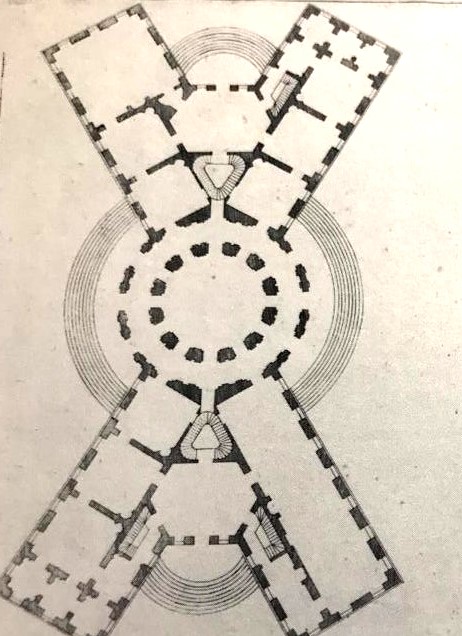
There are even thistles….then banned in England….
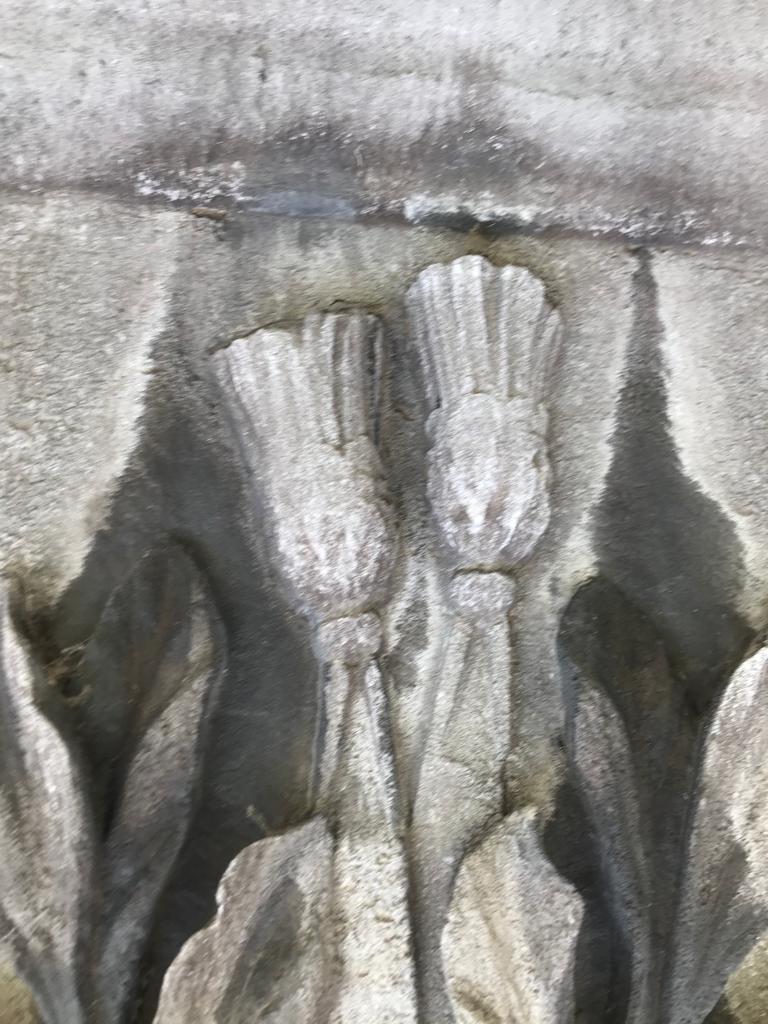
……but carved upside down…..
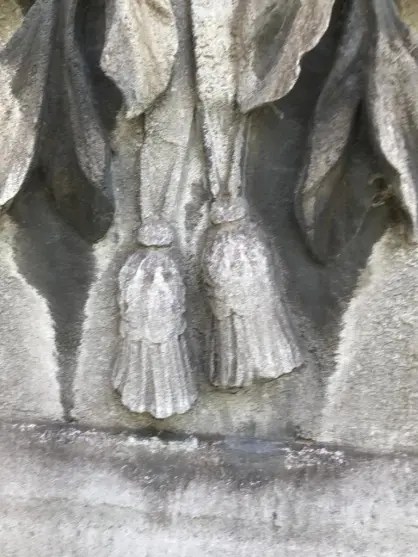
…….pretending to be tasells!
If you look for them, you can even find five petal Jacobite roses…..

Were these a ‘magic’ enticement to Bonnie Prince Charlie to make a bid for the British throne?
All of the elements on these pillars add up to the insignia of ‘The Order of the Thistle’ – given to Bonnie Prince Charlie the day he was born – and this is said to be the flash he wore at Culloden….

Who paid for these pillars? And, it must be asked, who really paid for the Church?
Officially the Hanoverian Commisioners – who on 26 January 1721 were demanding ‘plain and cheap carving’ for Deptford Church – finally paid a total of £17,000 for St. Mary le Strand – the equivalent of just over £4 million in today’s money.
It has recently been estimated that to replace St. Mary le Strand today – with all its elaborate stone carving – would cost around £32 million.
Who had the equivalent of that sort of money in the 1720s?
Is the answer carved high up on the outside East wall of the Church?

Here we can see, if we know what we’re looking for (and our eyesight is good enough!) an ouroboros again – with the background of a ‘V’.
Is this a reference to the Jacobite ‘National Anthem’? ‘Send him Victorious’?
The ouroboros – as well as being the symbol of Charles II and the Freemasons – was the symbol of a Jacobite group on the Welsh border called the ‘Cycle of the White Rose’ Club’ – who struck a commemorative medal in 1780.

This Club – which also campaigned for the abolition of slavery – was quasi-Masonic, with codewords and secret handshakes, but met in each others houses around Wrexham. Their habit was to toast the ‘King over the Water’ by standing with one foot on a chair, another on the table, and holding their glasses of claret over a massive bowl of rosewater.
The Tories drank claret because it was from France, while the Whigs drank port, because it was not.
Unmarried women – accompanied by a companion – were sometimes invited to meetings, perhaps in a long-term bid to boost numbers…
The club – consisting mostly of landed gentry – was run by a Welsh Tory land-owner of such fabulous wealth he was called ‘The Prince of Wales’ – Sir Watkin Williams-Wynn. He died in a fall from his horse, leaving debts of £120,000 – the equivalent today of £34 million.
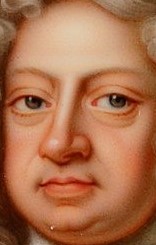
Here he is shown wearing the ‘True Blue’ of a Tory.

He was also an M.P. – so he was often in London – and, like Burlington, financed the Jacobite Rebellion. He secretly organised Jacobite riots, but publicly burnt a portrait of George I in 1722. In 1740 he even offered to help finance the French Army if they were to invade Britain with Bonnie Prince Charlie.
Like Lord Burlington, he was a double agent. At the same time as serving in Henry Pelham’s ministry, he secretly travelled to Versasilles to plot with King Louis XV – even though France and England were at war at the time.
Sir Watkin was a devout, High Church Anglican – who would have loved Gibbs’s work on St. Mary le Strand.
He was also a great friend of William King – the Jacobite Master of St. Mary’s College, Oxford – who in turn was one of Gibbs’s closest friends. King and Gibbs later created the Radcliffe Library in Oxford – and Sir Watkin Williams acted as their Trustee.
In 1719 Sir Watkin added the ‘Wynn’ to his name because he had inherited the land of the Wynn family. The Wynn family crest included an eagle – and on a Jacobite drinking glass engraved with his name……
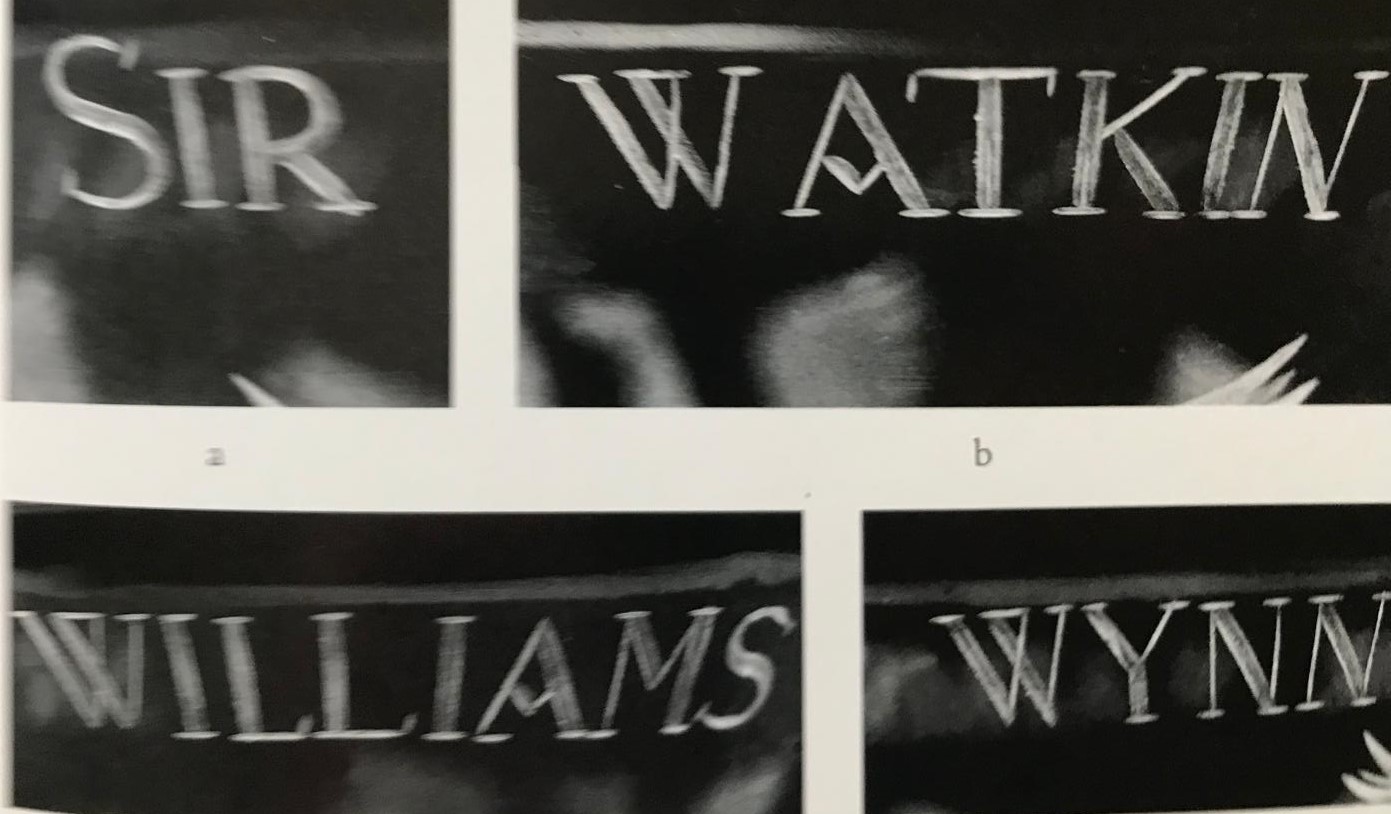
….. Sir Watkin has added that eagle.
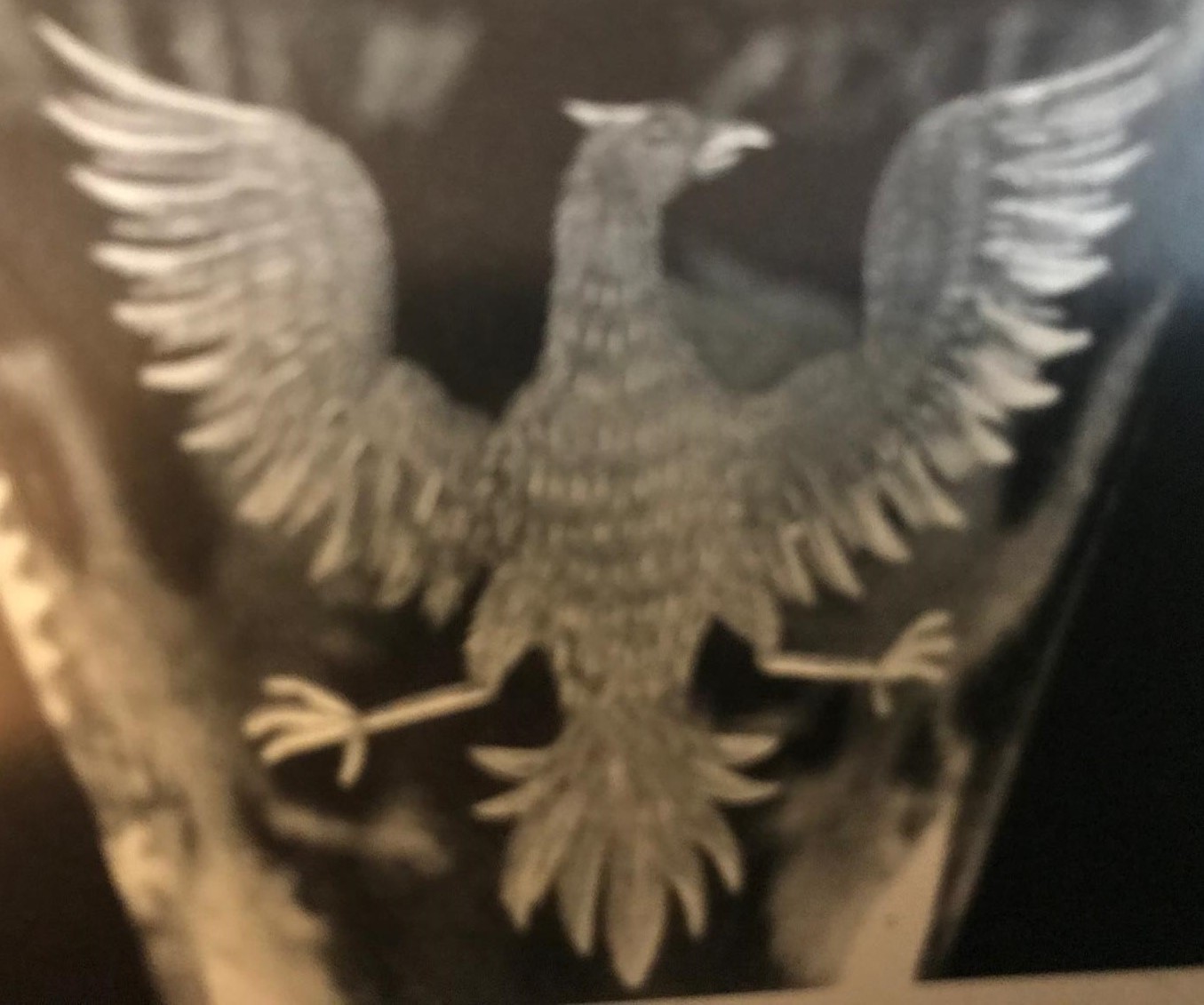
On the outside East Wall of St. Mary le Strand, two eagles perch above the ouroboros and V – both looking South to France…
The White Rose medal also has a love-knot as part of its design….
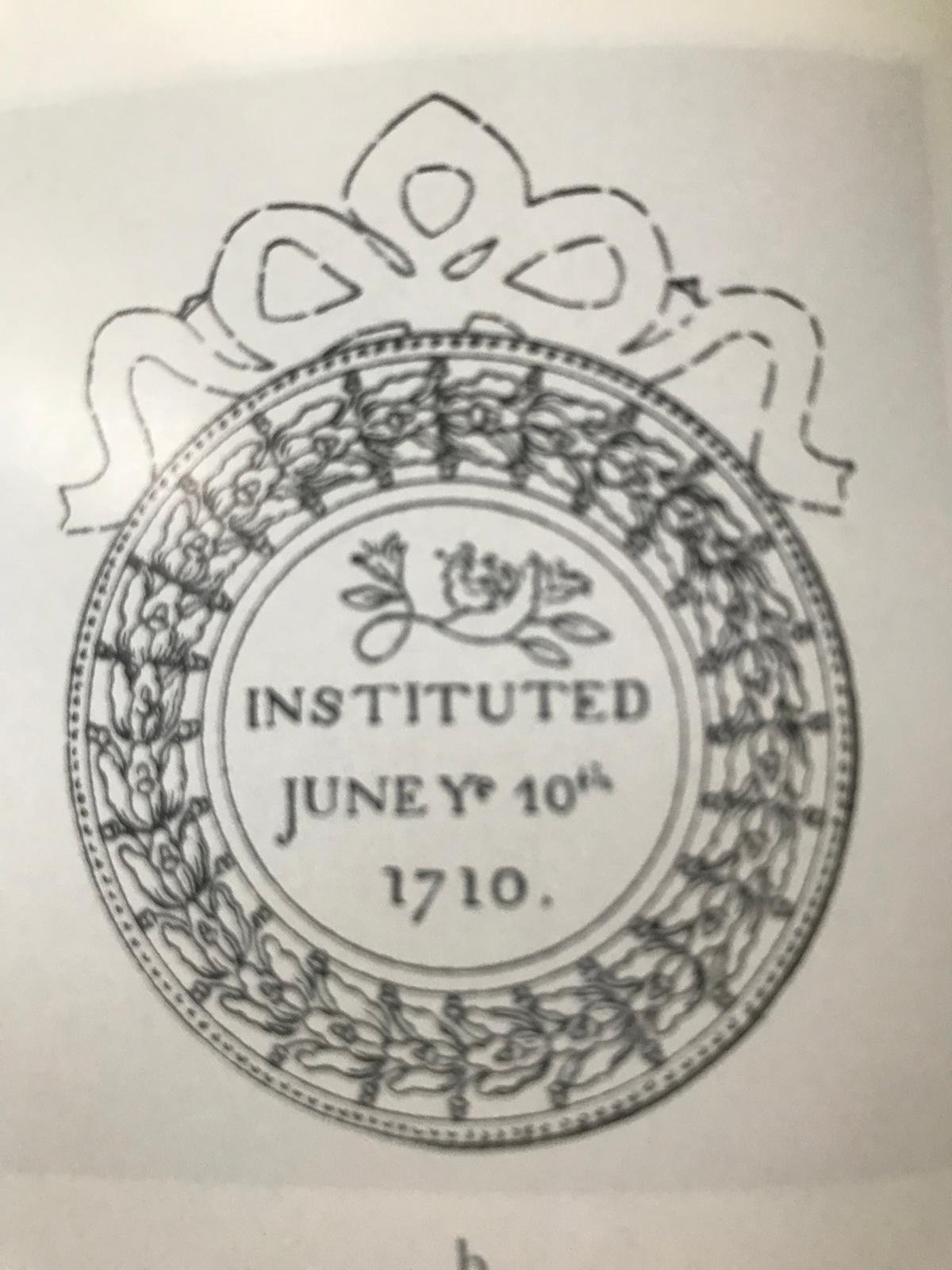
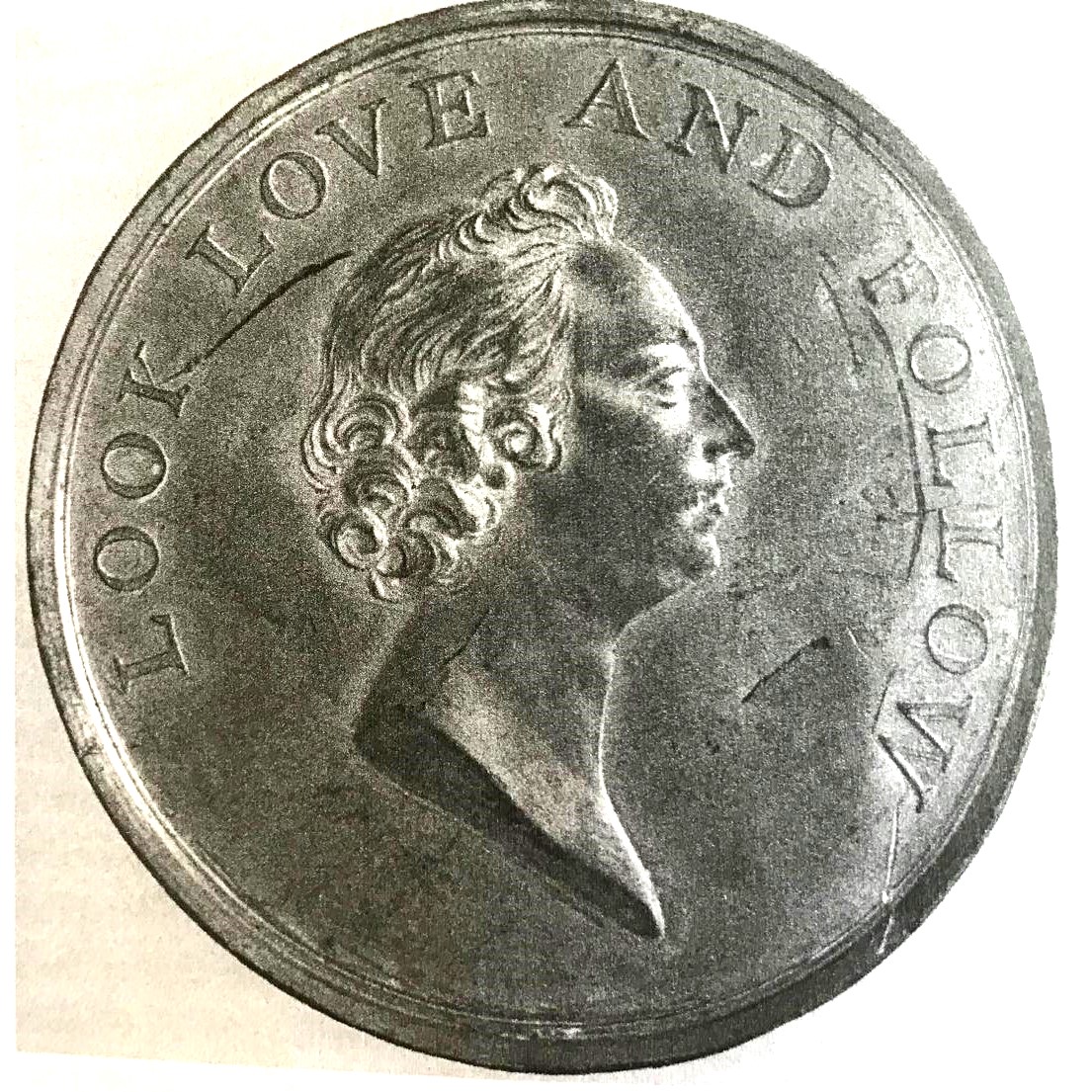
……a reference to the Jacobite rallying cry ‘Look, Love and Follow’……
St. Mary le Strand is covered with love-knot designs…
….even on its oak pulpit…..

…..and there are ‘White Roses’ – the name of Sir Watkin’s Club – on the ceiling.
Sir Watkin Williams-Wynn seems to have left his calling card all over St. Mary le Strand. He could well be the reason that Gibbs was able to design the Church without a fee, why the two front pillars arrived as an anonymous gift in the 1740s and why the whole building looks so opulent and so stunningly beautiful.
But was St. Mary le Strand ‘Masonic’?
At the time the Church was being built, most Masonic meetings in London took place in ‘imaginary’ temples – small rooms in taverns……..

[The Goose and Gridiron, site of ‘The Grand Lodge’ in 1717]
……marked-up with charts and symbols as in this Parisian Lodge….
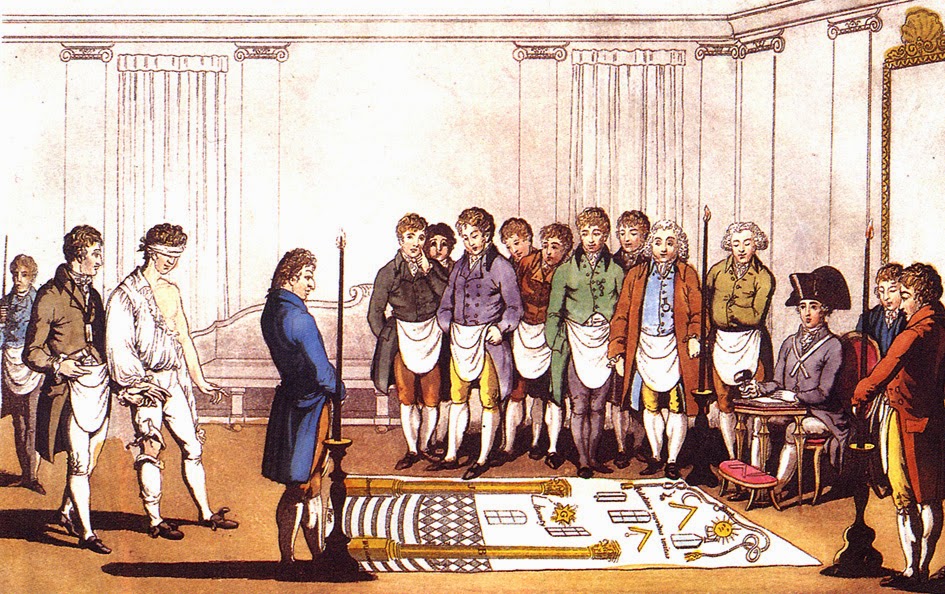
There are still many small rooms in many small taverns along the Strand – and it has been estimated that between 1725 and 1825 – when Freemasonry was at the height of its popularity – over 57 different Lodges held meetings there.

In my home town of Southend-on-Sea – which, like many British seaside towns, has a strong Masonic presence – there are what are called ‘Lodges of Instruction’ – in which Masonic rites are ‘rehearsed’ and there are Temples where they are enacted for ‘real’.
Were these Strand taverns Lodges of Instruction?
We know the first purpose built Grand Lodge in London was erected in 1775. What did Masons do before that?
Did they, by any chance, use St. Mary le Strand Church?
It may come as a surprise to learn that Churches in Britain had been used for this purpose before.
According to Anderson in his ‘Constitutions,’ Scottish Masons – who at one point held their rituals in the open air – would retire into monasteries if the weather became inclement.
Both John Aubrey and John Evelyn tell us that Wren was adopted into the Masonic fraternity at St. Paul’s Church, Covent Garden, on 18th May 1691. According to Anderson, Wren at that time was re-working Inigo Jones’s designs for Hampton Cout for King William – where ‘a bright lodge was held during the building’.
Masonic Meetings, it seems, were held in daylight on building sites – with ‘tylers’ [look-outs] keeping ‘cowans’ [the uninitiated or unqualified masons] at bay.
There is evidence that this happened at St. Mary le Strand.
On 12th September 1717 the Commission for Building 50 Churches noted that the workmen had been ‘guilty of great disorder at Strand church upon finishing of tower, master mason and other master workmen to attend at next meeting’.
On 10th October 1717 the minutes recorded ‘Townsend attending was asked to explain disorders at the finishing of tower of Strand church, and charged to try to prevent such disorders in future’.
This placing of the capstone on the tower was a great Masonic ceremony – followed by heavy drinking. Gibbs was to get involved in a similar ceremony four years later when the foundation stone to St. Martin-in-the-Fields – which Gibbs had designed – was levelled. The Masons then toasted ‘The King and the Craft’ – but this time they went to a tavern.
In 1722 Nathaniel Blackerby – Nicholas Hawksmoor’s son-in-law – became the Treasurer of the Commission for Building 50 Churches. He was a leading Freemason and an advocate for the Craft who wrote Masonic Prologues for Drury Lane.
According to Masonic Sources he was the also the Treasurer for St. Mary le Strand, St Clement Danes and St. Martin-in-the Fields – so might well have encouraged Masonic Rites in the Church when it was being built.
Matthew Birkhead – a singer and actor at Drury Lane and a member of The Lodge of Friendship associated with the theatre. -– was given a full Masonic funeral and burial at next door St. Clement Dane’s Church early in 1723, following a procession by ‘a vast number of Accepted Masons’ walking ‘two by two in their white aprons’.

[Masonic Procession in the Strand – by Somerset House – in 1742.]
Birkhead was the writer of the famous ‘Enter’d Aprentice Song’ which was, in all likelihood, sung by him, Gibbs and all the other Freemasons at the scenes of ‘great disorder’ in the Church in 1717:
‘Then join Hand in Hand
To each other firm stand;
Let’s be merry, and put a bright face on
What mortal can boast
So noble a Toast as a Free and an Accepted Mason!’
But were Masonic meetings held at St. Mary le Strand after it was consecrated?
Secret movements leave few traces behind. Sir Watkin Williams-Wynn’s wife, for instance, burnt all her husband’s papers the night he died.
In recent years, the Masonic movement has become far more open than it was and has given me – a non-Mason – access to its records, many of which are available on line.
This Post will lay out the evidence in the form of ‘notes and queries’ – and leave it to the reader to decide!
- The Design of the Church
St. Mary le Strand is ‘Masonic’ by virtue of its very design! Gibbs re-created the Temple of Solomon as described in the Bible – with a porch, winding staircase, inner sanctum, high windows and a Holy of Holies. All of these feature heavily in Masonic practices.
2. The Porch.
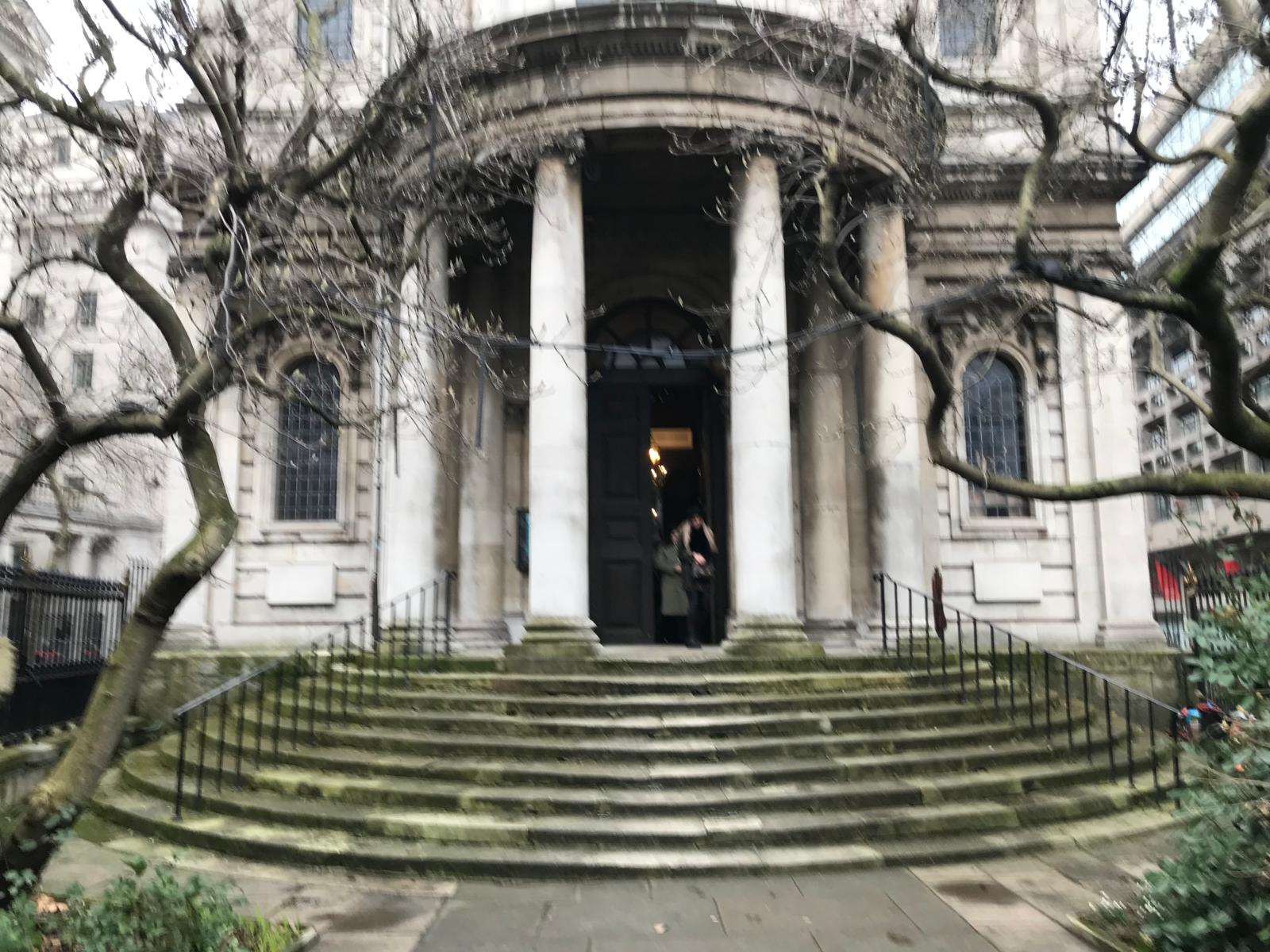
The Porch of the Temple of Solomon was a place of huge importance to Freemasons as the Craft was said to have originated there. Old plans show that a vault was built beneath the porch of St. Mary le Strand which has now been blocked up. Were rites enacted there?
3. The Winding Staircase

The St. Mary le Strand winding stairway is very similar to the one Inigo Jones designed for the Queens’ House in Greenwich – the first self-supporting staircase in Britain. The upper part of Jones’s staircase is divided into fifteen step sections.
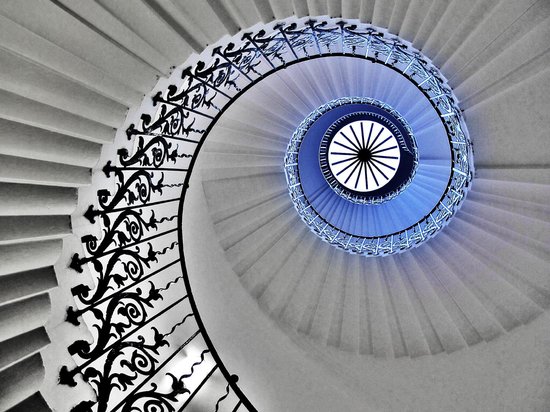
Jones was a Freemason and the Queens’ House – with its starburst, tessallated black and white floor and cube hall – might well have been used as a Lodge.

The winding stairway at Chiswick House has fifteen steps. There are 45 steps in the St. Mary le Strand staircase leading up to the gallery – three units of fifteen. Freemasons further divide the fifteen steps into groups of three, five and seven.
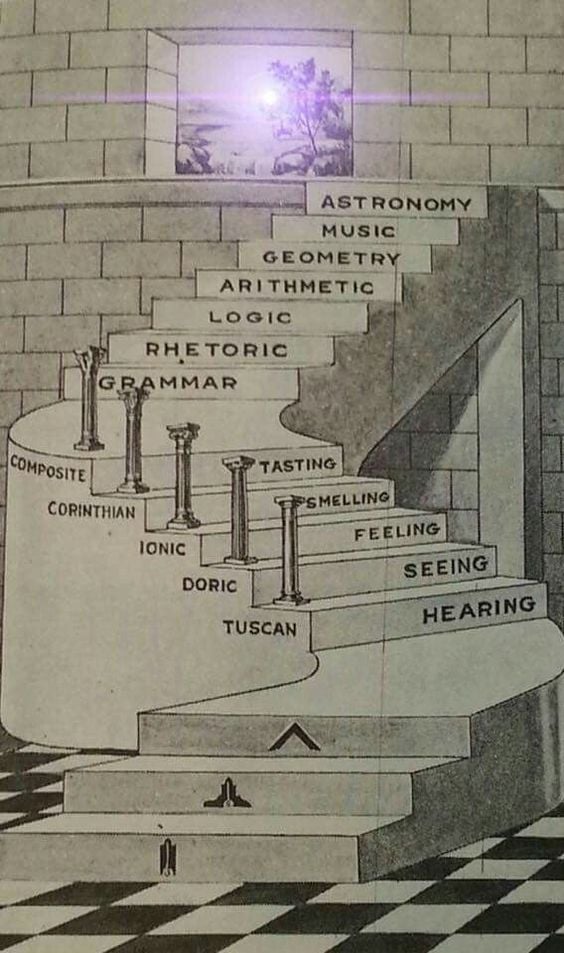
This was a memory system – a way of filing knowledge – for people who could not read.
The St. Mary le Strand stairway was clearly built off-site. It doesn’t quite fit and bits of it have had to be shaved off.

This was in compliance with an order from the Commission on 29th July 1714 that ‘the masons employed to build the new church in the Strand to prepare their stones ready for setting before they build them on site.’
According to Anderson in his ‘Constitutions’, King Solomon built his Temple ‘by divine Direction, without the noise of Work-men’s tools’.
This idea makes up part of the ritual of Third Degree Masonry when the Apprentice is asked why he was divested of all metal when he became a Mason.
He replies: ‘There was neither the sound of axe or hammer or any other metal tool heard at the building of King Solomon’s Temple….All the stones were hewed, squared and numbered in the quarries where they were raised…Every part thereof fitted with an exact nicety, that it had more the resemblance of the handy workmanship of the Supreme Architect of the Universe than of human hands’.
Were the Masons on the Commission (at this date still both Jacobite and Hanoverian) trying to re-create the building of the Temple of Solomon?
It all stopped when Chief Mason Townsend reported to the Commission that it was impracticable to builf off-site.
4. The Graffiti in the Stairwell.
Ritualistically an Apprentice Mason – blindfolded and stripped down – with one slipper off and one on – is led up the stairs by a rope. He wears his white Masonic apron – but with the flap pinned up, the sign that he is an apprentice.

He knocks at the Outer Door of the Inner Chamber, gives the password and grip and is admitted. He then does the same at the Inner Door of the Inner Chamber – he is admitted and his ‘hoodwink’ removed to blinding light and claps and stamps as he is ‘Enlightened’. The flap on his apron is unpinned and lowered now he has been initiated.
Does the graffiti in the stairwell represent the aprons of Apprentice Masons before their initiation?

Did the Muniments Room in the gallery of St. Mary le Strand also double as a Masonic Inner Chamber? It has a lock that can only be opened with three keys……
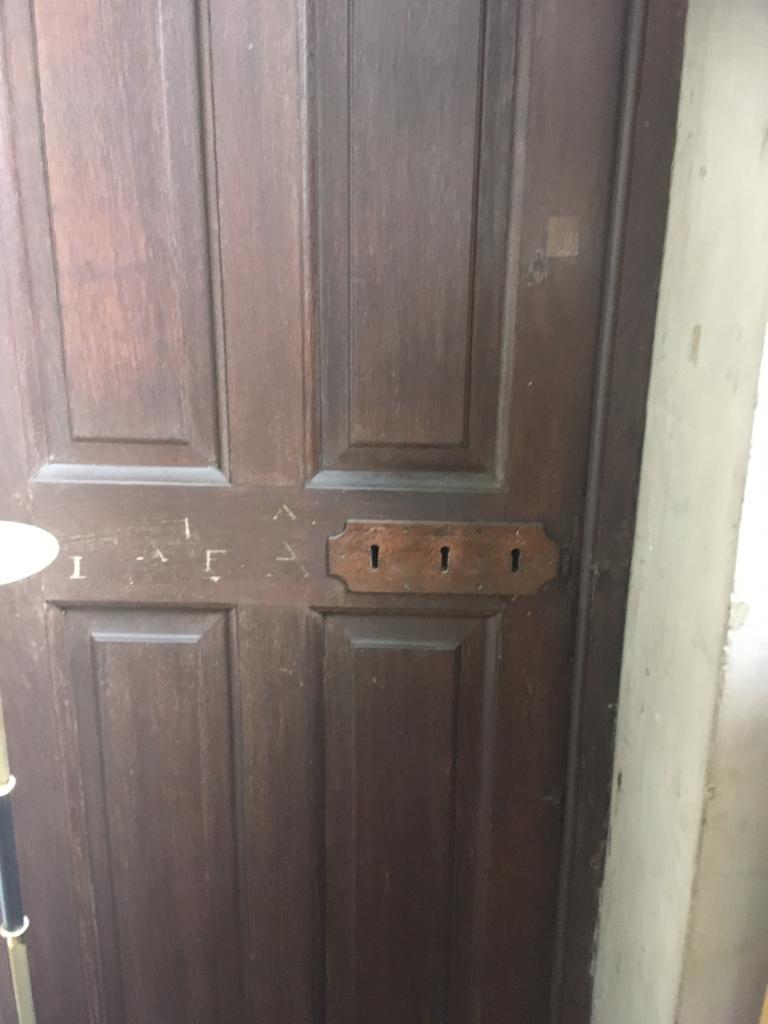
…..which means three different people must be present to open the door.

This is similar to the famous ‘Lokit Kist’ of the Aberdeen Masonic lodge [c. 1700] – a box containing the Lodge’s ‘Mark Book’ (the book with Members’ names) that also has three keys for the same reasons of security and secrecy.
[Note: The St. Mary le Strand lock is clearly later than the 1720s – but it is likely to be a replacement for a similar three-lock design.]
Another piece of graffiti in the stairway features a gallows.
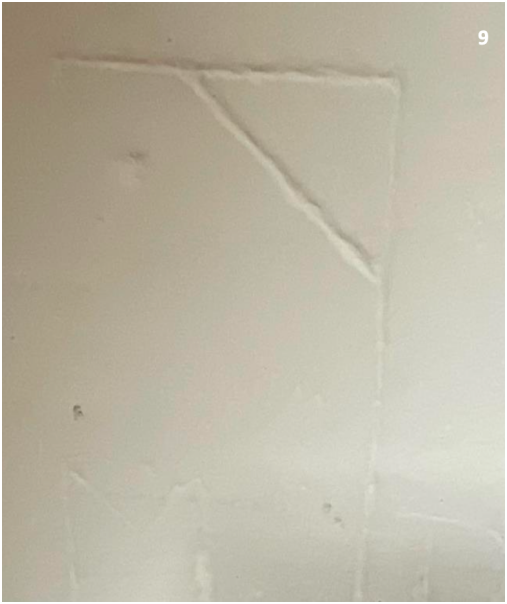
According to Swift’s Grand Mistress of the Freemasons, the gallows was important to Freemasons because it represented letters from the Hebrew language.
‘Cheth……

and Thau……

……are shaped like two standing gallowses, of two legs each’.
‘When two masons accost each other, the one cries Cheth and the other answers Thau; signifying that they would sooner be hanged on the gallows, than divulge the secret.’
Swift might be writing satire here, but the gallows certainly played a large part in Masonic Rituals in London in the 1720s…..
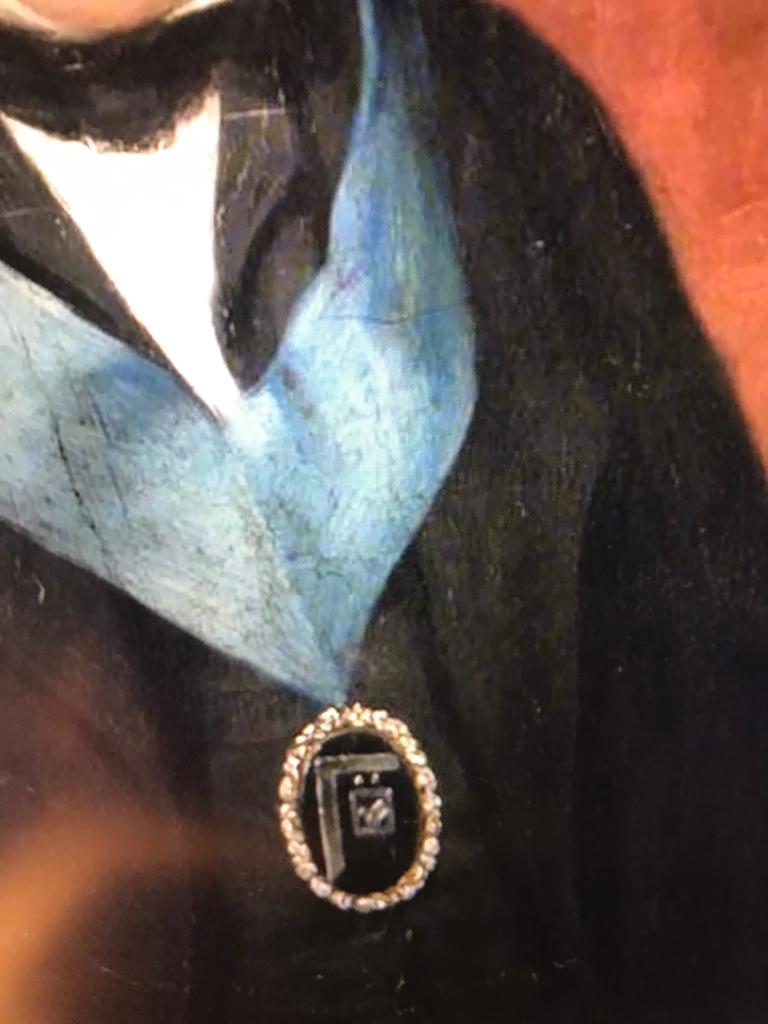
………employing ‘ladders in darkened rooms’…..
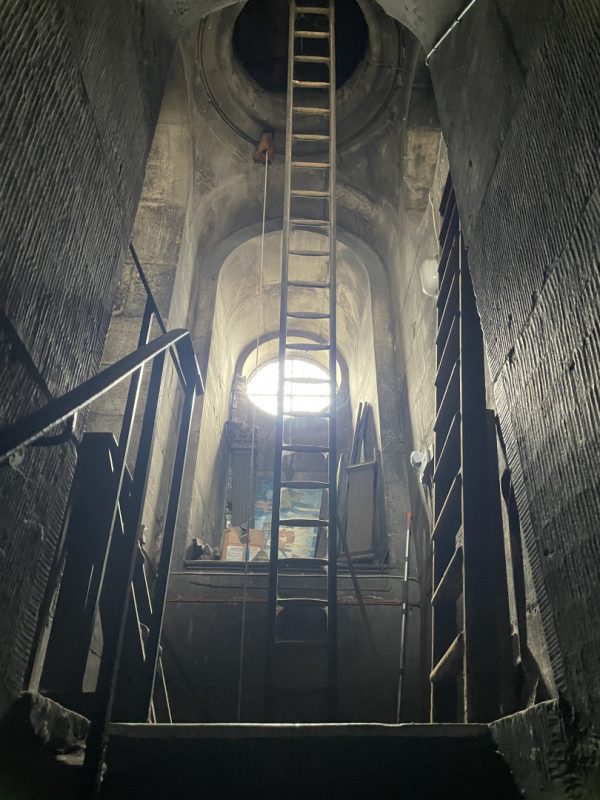
[Upstairs passageway and room beneath the steeple in St. Mary le Strand Church]
And in the Royal Arch Degree, a Knight of the Red Cross swears that if he violates the Laws of the Order he binds himself ‘under no less penalty than having my house torn down, the timbers thereof set up, and I hanged thereon….’
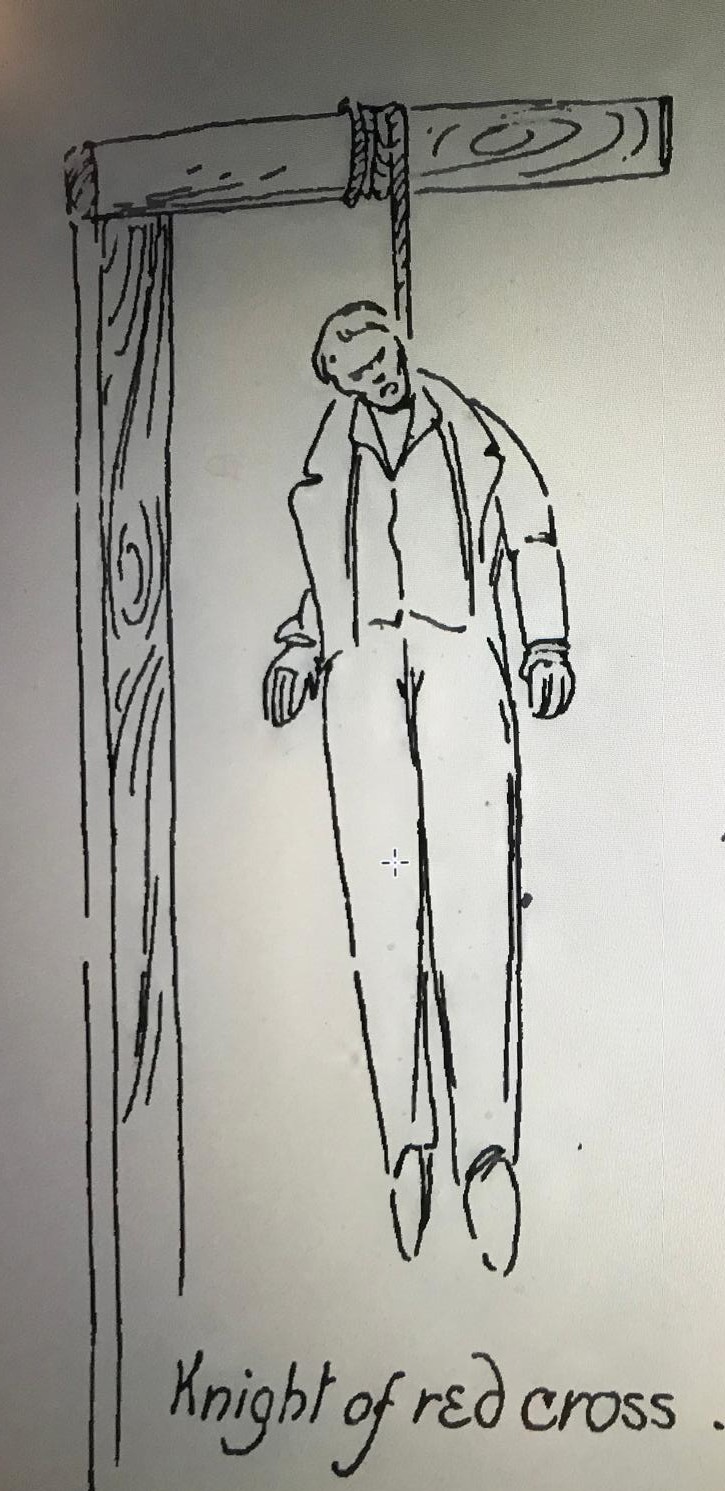
‘
5. The Inner Sanctum
(i) The High Windows in the Church follow a description of the Temple of Solomon in the Bible (1 Kings, 6:4). Gibbs claimed that St. Mary le Strand ‘consists of two orders in the upper of which the lights are placed: the wall in the lower being solid to keep out noises in the street.’

In reality, having the windows in the Church high up makes little difference to the sound penetrating the Church. But it does provide for extraordinary beams of light entering at different angles at different times of day.

Light is an essential symbol to Freemasons, who move from darkness to light in the course of their initiation and training. Also, having windows high up makes it difficult for ‘Cowans’ to see in.
Also the light from the gallery window floods the High Altar mid afternoon…..
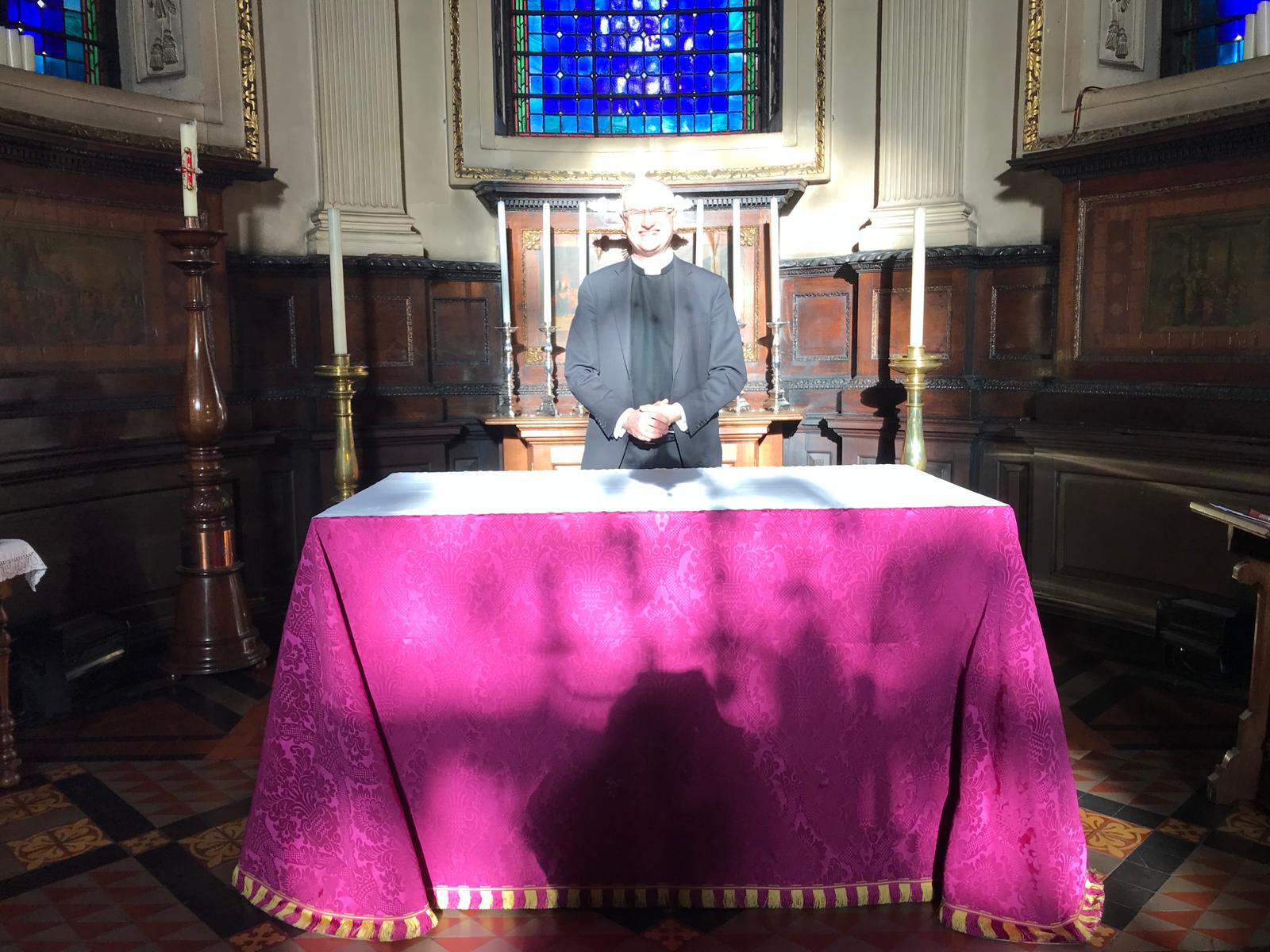
(ii) The current floor to the St. Mary le Strand was laid in Victorian times – but there remain in the north and south aisles the original tessellated flooring, characteristic of Masonic Lodges.

(iii) The ceiling of the Inner Sanctum is curved and was, experts think, originally blue – as it is in Gibbs’s design for Wimpole Hall….

In the words of Royal Arch Masonry, ‘Blue is an emblem of universal friendship and benevolence, and instructs us, that in the mind of a Mason those virtues should be as expansive as the blue arch of Heaven itself.’
Scottish Masons, it will be remembered, originally held their meetings in the open air.
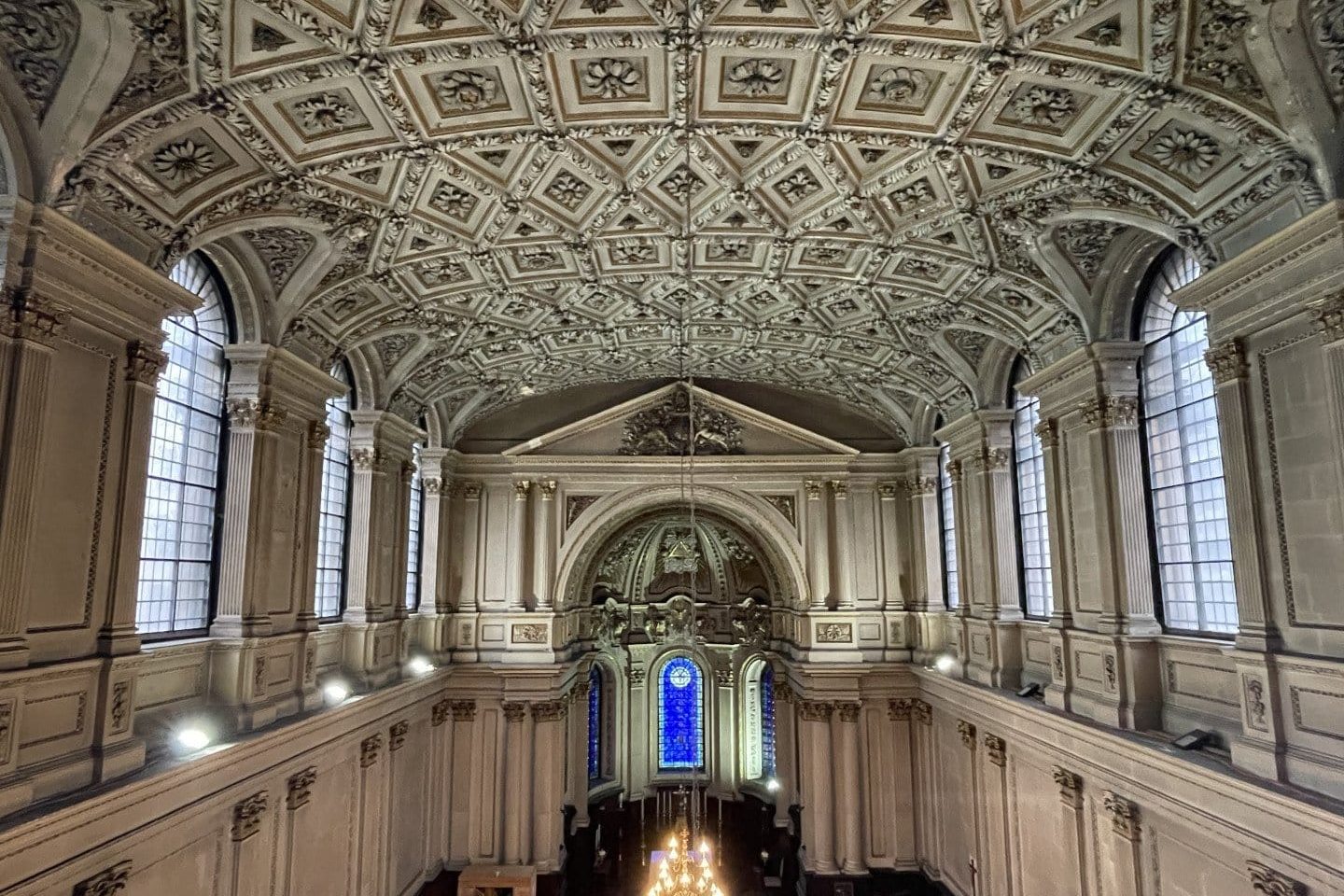
Many Masonic Lodges have curved blue ‘sky’ ceilings. This one is from eighteenth century America….
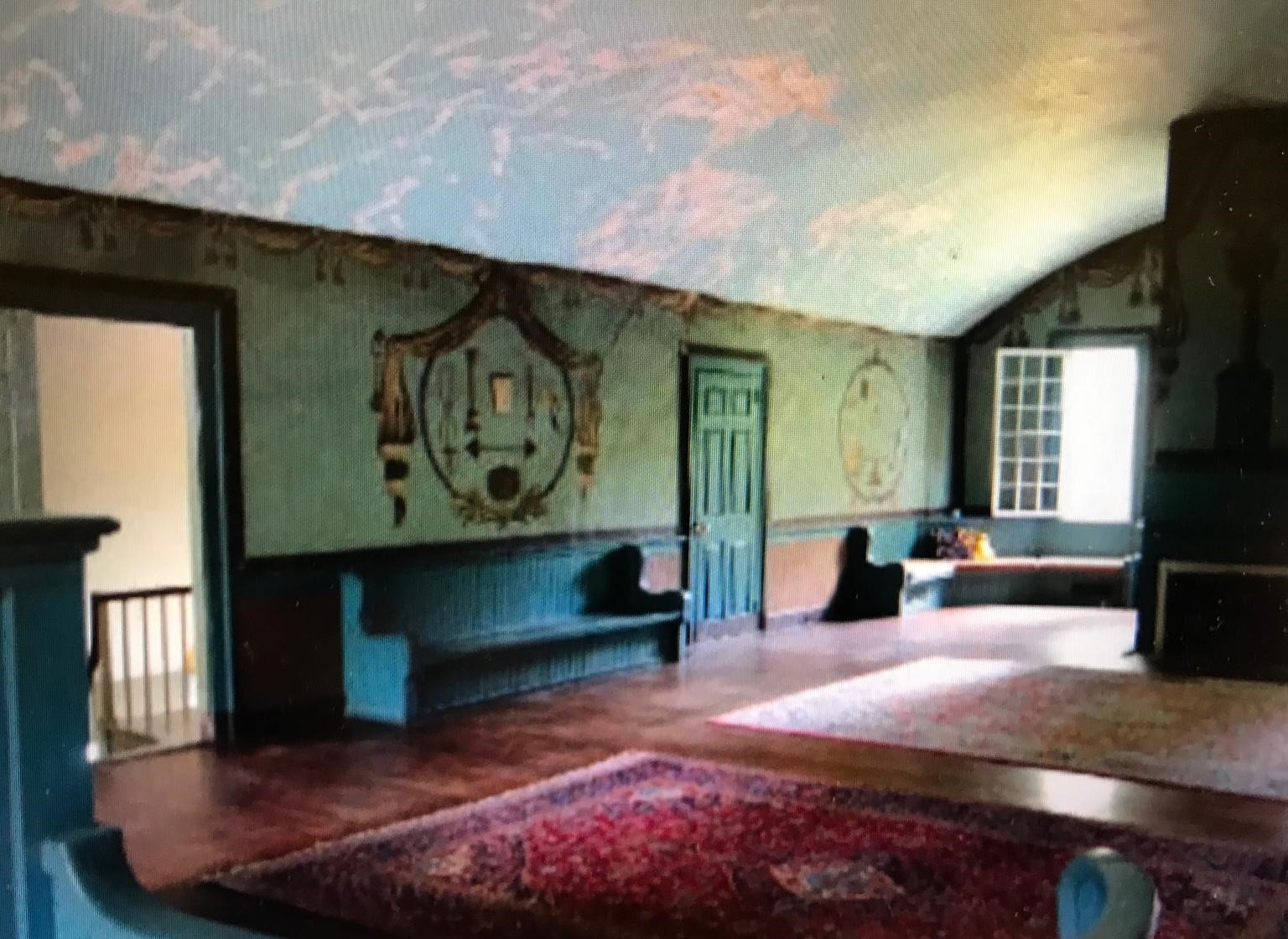
……and this was designed by Sir John Soanes in the late 1820s…..

In Royal Arch Masonry, three groups of three form a ‘Living Arch’ by grasping each others wrists and raising their arms.
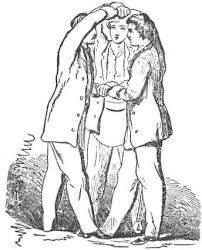
At initiation, ‘Apprentice Knights’ have to crawl on their hands and knees, blindfolded and tethered, beneath the living arch which then collapses on top of them.

To be a Royal Arch Mason you had to be a practising Christian and the Masonic injunction in this ceremony is reminiscent of the Magnificat:
‘Let them enter under a Living Arch, and remember to stoop low, for he that humbleth himself shall be exalted.’
In another rite, the Knights form an ‘Arch of Steel….their swords elevated above their heads, forming a cross, each placing his left hand upon the other’s right shoulder’.
(iv) On the 16th May 1717 the Commission approved Gibbs’s plan ‘for the pewing of the Strand Church, except that the aisle be ten foot wide’. We don’t know if the Commission were increasing or decreasing Gibbs’s original aisle width – but it is far wider than the Victorian pews are now.
There had been the purge of Jacobites from the Commission by this time – but there were still many Hanoverian Masons on the Commission. The wide aisles would be perfect for processions and for the acting out of the central story of Third Degree Masonry – the murder, by three ‘Cowans’, of Harim Abiff – the Architect of the Temple of Solomon – because he refused to divulge the Mason Word to them.
6. The Vaults.
The vaults of St. Mary le Strand are a mystery.
On 22nd April 1714 the Commission for Building 50 Churches suddenly came up with an extraordinary change of plan. Every church – including the ones already half-built like Greenwich – should be ‘vaulted under the pavements’. The surveyors were asked to estimate how much extra this would cost.
The Commission was insistent that no bodies were to be buried in the vaults – so what were the vaults for?
There are three vaults beneath the flooring of St. Mary le Strand which clearly lead into a space beneath the High Altar – but these passages have been bricked up.

Also, to add to the confusion, many skeletons were placed in the vaults in the early nineteenth century. Templar Masons often employed skulls and crossbones in their rites as they brooded, Hamlet-like, on their mortality. In one rite, a Knight drinks wine from the top of a skull – swearing that if he ever divulges the secrets of the Templars he will take on, as well as his own, the sins of the man whose skull he is holding.
This ritual forms the opening sequence in Dan Brown’s novel, ‘The Lost Symbol’….
By a bizarre freak, the top of a human skull has been discovered on a shelf in the vault – probably put there in the nineteenth century – but still worth a D.N.A test!
Excavations are planned. But in the meantime the most obvious question to ask is:
‘Were the vaults used for Masonic Rituals?’
THIRD DEGREE MASONRY
In Third Degree Masonry the ‘body’ of Harim Abiff is buried by the Cowans in a shallow grave. It is discovered when a sprig of acacia is dislodged and then buried with full honour in the vault of the Holy of Holies in the Temple of Solomon.
If excavations under the High Altar find a hollow space, the ‘body’ could have been lowered from the apse down into a vault. Probably Matthew Birkhead’s Masonic Funeral at St. Clement Danes in 1722 followed this rite.
Vaults play an even more crucial role in Royal Arch Masonry.
ROYAL ARCH MASONRY – THE SCOTTISH RITE
No-one knows for certain when or where Royal Arch Masonry began. Jane Clark believes it was created at the time of the Restoration of King Charles II – but there is growing evidence that it goes back, as much of Masonry seems to do, to the reign of James VI. Language and imagery – and even thought – in Royal Arch Masonry is very similar to William Shakespeare’s plays – particularly ‘Macbeth’.
King James built his own Temple of Solomon – together with a vault – at Stirling Castle in 1594 to celebrate the baptism of his son, Prince Henry. Gibbs was Surveyor of the Castle – and the design of the arched entry to the Temple…

….has clearly influenced the design of St. Mary le Strand…..

At Prince Harry’s baptism, King James dressed as a Knight of Malta. He also staged battles between the Templars and the Turks – one of the central motifs of Royal Arch Masonry.
Legend has it that Robert the Bruce gave shelter to the Knights Templar in Scotland when they were persecuted in Europe – and in gratitude they fought with him against the English at Bannockburn.
Legend also has it that Bonnie Dundee revived the Order of the Temple when he was fighting the Government Forces at Killiekrankie. He was said to have been wearing a Templar Cross beneath his breast plate when he was shot.
But what we do know for certain is that the Earl of Mar was made Grand Master of the Order of the Temple by James III in 1722 – and that Bonnie Prince Charlie himself inherited the title in Holyrood House in 1745.
Of this gathering the Duke of Perth wrote to Lord Ogilvy that ‘it is truly a proud thing to see our Prince in the Palace of his fathers with all the best blood in Scotland around him. Our noble Prince looked most gallant in the white robe of the Order and took his profession like a worthy Knight.’
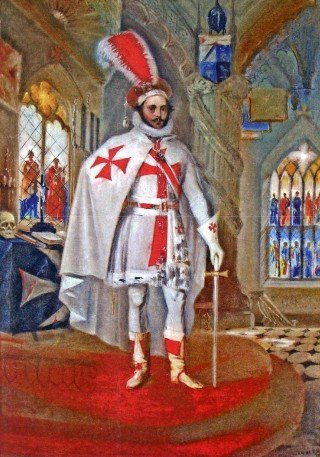
[A Knight of the Order of the Temple]
Legend also has it that the Knights Templar brought fabulous treasures and sacred objects with them from Jerusalem – and how they discovered them forms the basis of the most demanding rite of Royal Arch Masonry.
In one of the rites the ‘Knights’ discover a hollow-sounding rock in the floor of the ruins of the Temple of Solomon. They remove it by means of an attached metal ring and discover a dark, secret vault – filled with rubbish and noxious air.
Lots are cast, a Knight has ropes tied round his waist and is lowered into the vault, either by hand or by a winch. He has a smaller rope in his hand that he can pull on if he is overcome by fumes or exhaustion – and with a spade and pickaxe he searches for treasure. If he is in luck, he pulls on his rope and emerges, triumphant, with the Ark of the Covenant.

The High Altar at St. Mary le Strand was originally in the form of the Ark of the Covenant….perhaps a reference to this rite.

Another rite – enacted by ‘The Knights of the Ninth Arch’ – is set at the time of King Solomon himself. It has the same actions and narrative – but this time the treasure sought is ‘the brilliant triangle’ – ‘the most precious jewel of Masonry’ – ‘a triangular plate of gold, richly adorned’ – the Delta of Enoch….

The Delta, as visitors to St. Mary le Strand will know, features prominently in the Church’s apse….

It had originally been vouchsafed to Enoch – the great grandfather of Noah – who had been transported by angels to a high mountain in the heavens where he saw the Sacred Triangle – carved with strange letters he did not understand. He was then transported through the bowels of the earth down to a secret vault where he saw the Delta again – without the letters – and he was told to carve on it the Hebrew name for God.
At St Mary le Strand the Delta has the first syllable of that name – ‘Jah’ – which is also the first syllable of the tri-syllabic Royal Arch ‘Mason Word’.
Enoch hid the Delta in a Sacred Vault because, with his ‘Second Sight’, he foresaw that the world would be overwhelmed with a flood…
The vaults at St. Mary le Strand would be perfect for this rite – it even has an old spade….

……and rubble……..
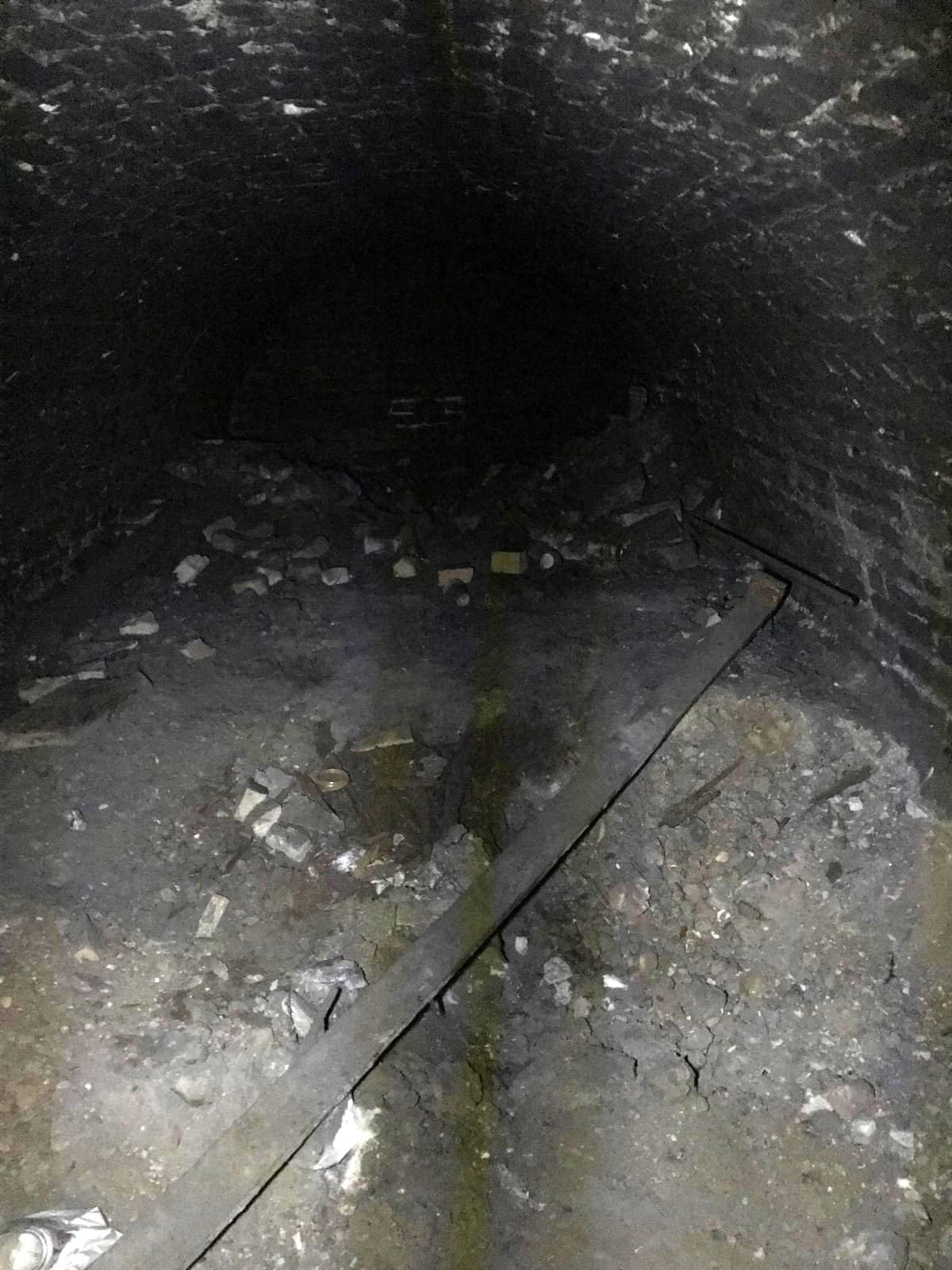
But where would the winch and ropes be placed and how would the vault be entered?
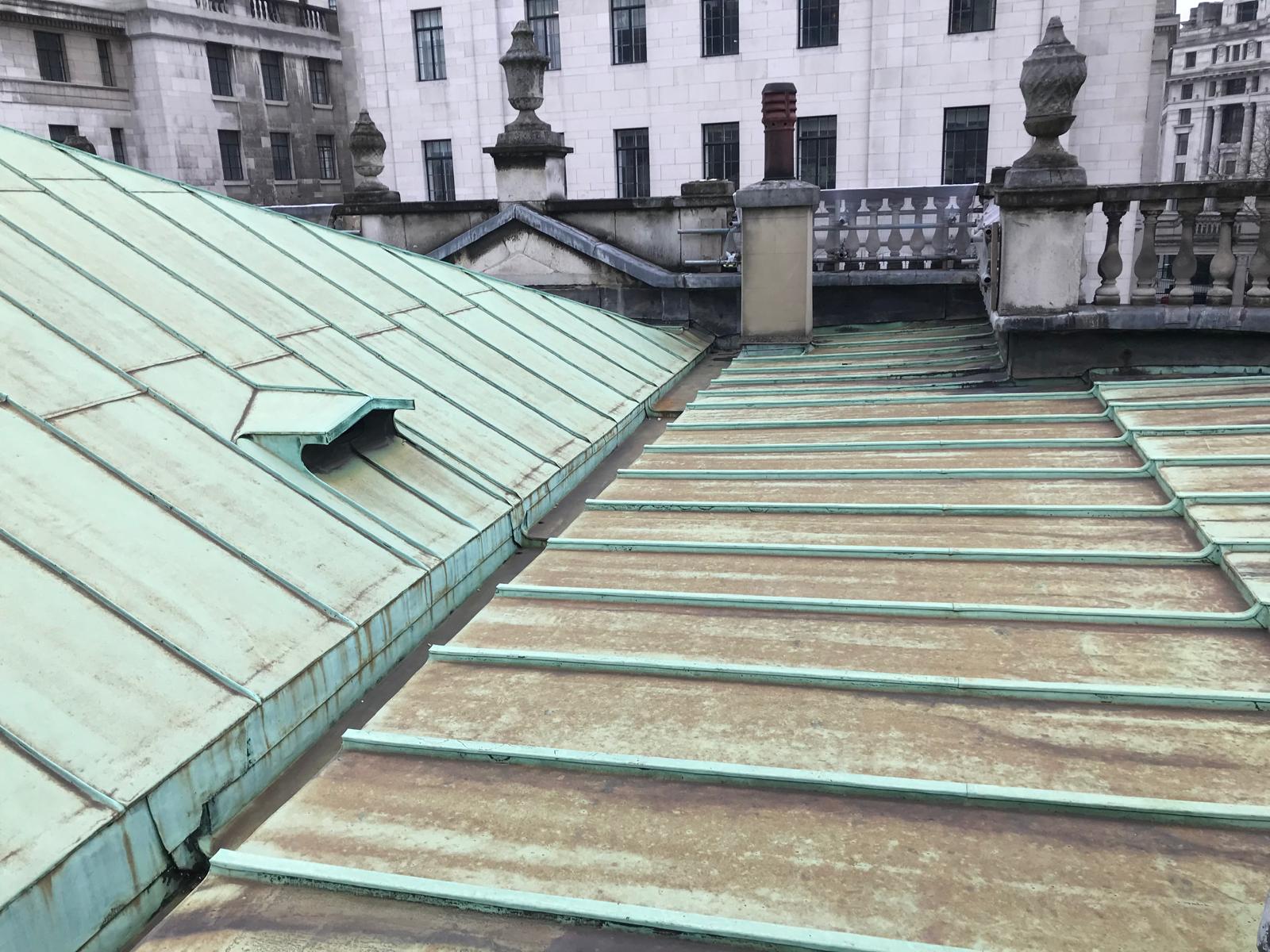
We may have discovered the answer by accident. Last year architects were working on the stone flaming urns on the roof – many of which have fallen with time and rust….
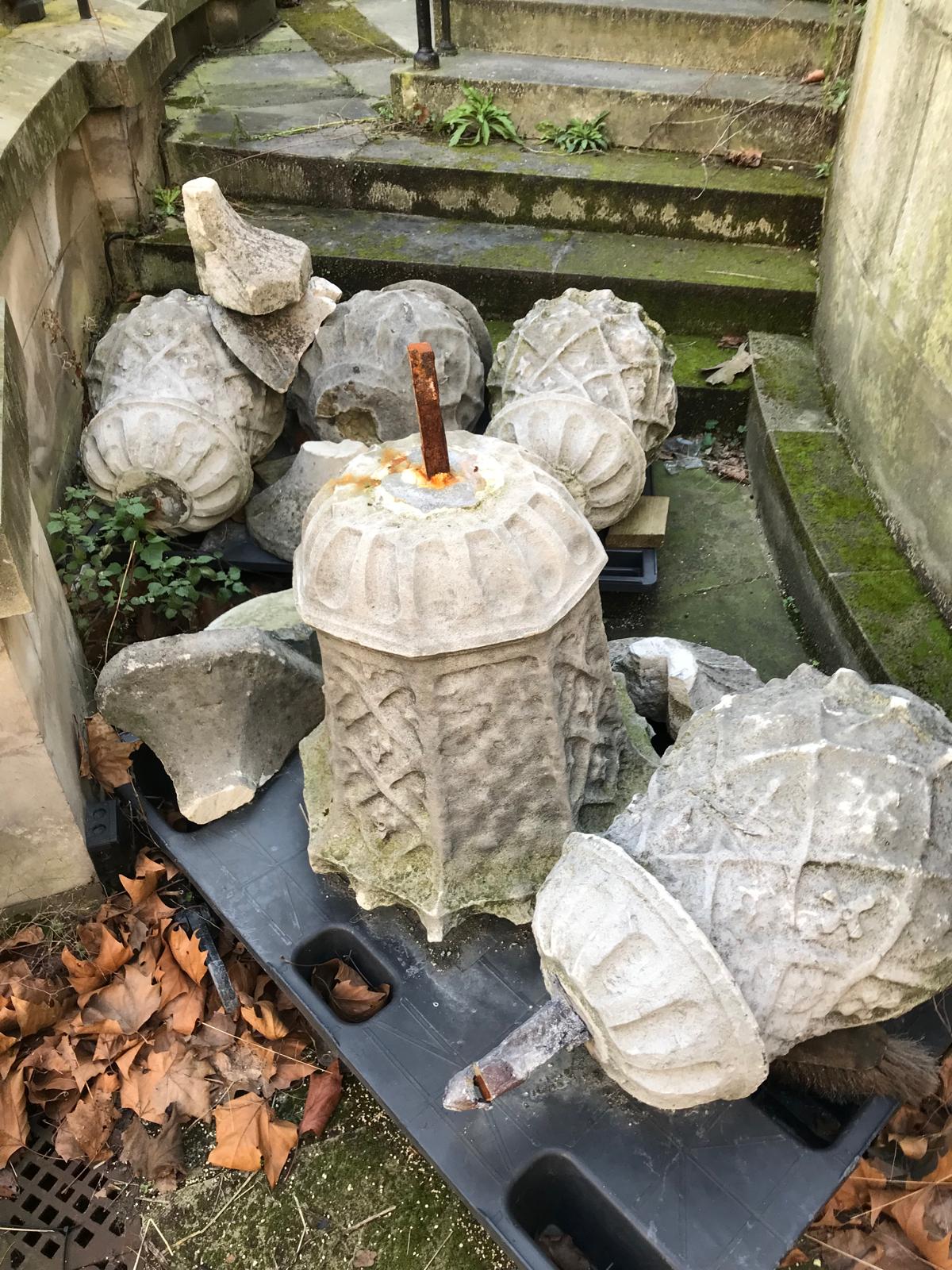
……when, to their amazement, they discovered, by camera, a hidden room above the South Vestry.

It has a wooden structure above the window that could well have been a cradle for a winch – and the vestry below has a central hole through which a rope could be fed.

Excavations will reveal if one of the stone slabs on the floor could be removed for entry to the crypt.
Chiswick House – although it’s not been commented on before – has exactly the same set up. An upstairs door opening onto to a gaping drop…..

………to the cellar below…….

……which could well have doubled as a round chapel for Templar Knight ceremonies.
We are told that there used to be a pulley system there to winch up wine. But that system could have also been used to winch down Knights.…
And what of the secret staircase in St. Mary le Strand?
It appears to lead to a bridge corridor across the apse behind the Hanoverian Crest, then, perhaps, down another stairway, to the North Vestry.
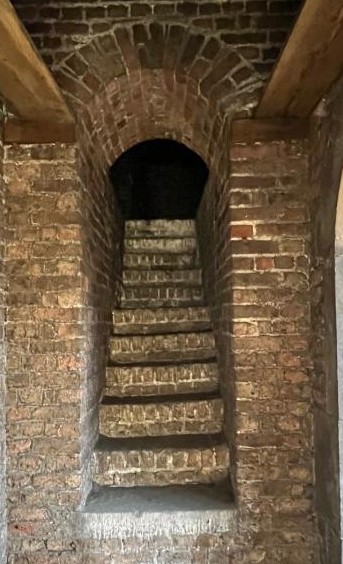
Until we can access the area, we cannot know for certain but, it would seem you had to ‘stoop low’ through the brick arch to make your way across the apse.
You certainly had to ‘duck’ when you entered or left the staircase at the west end of the church….
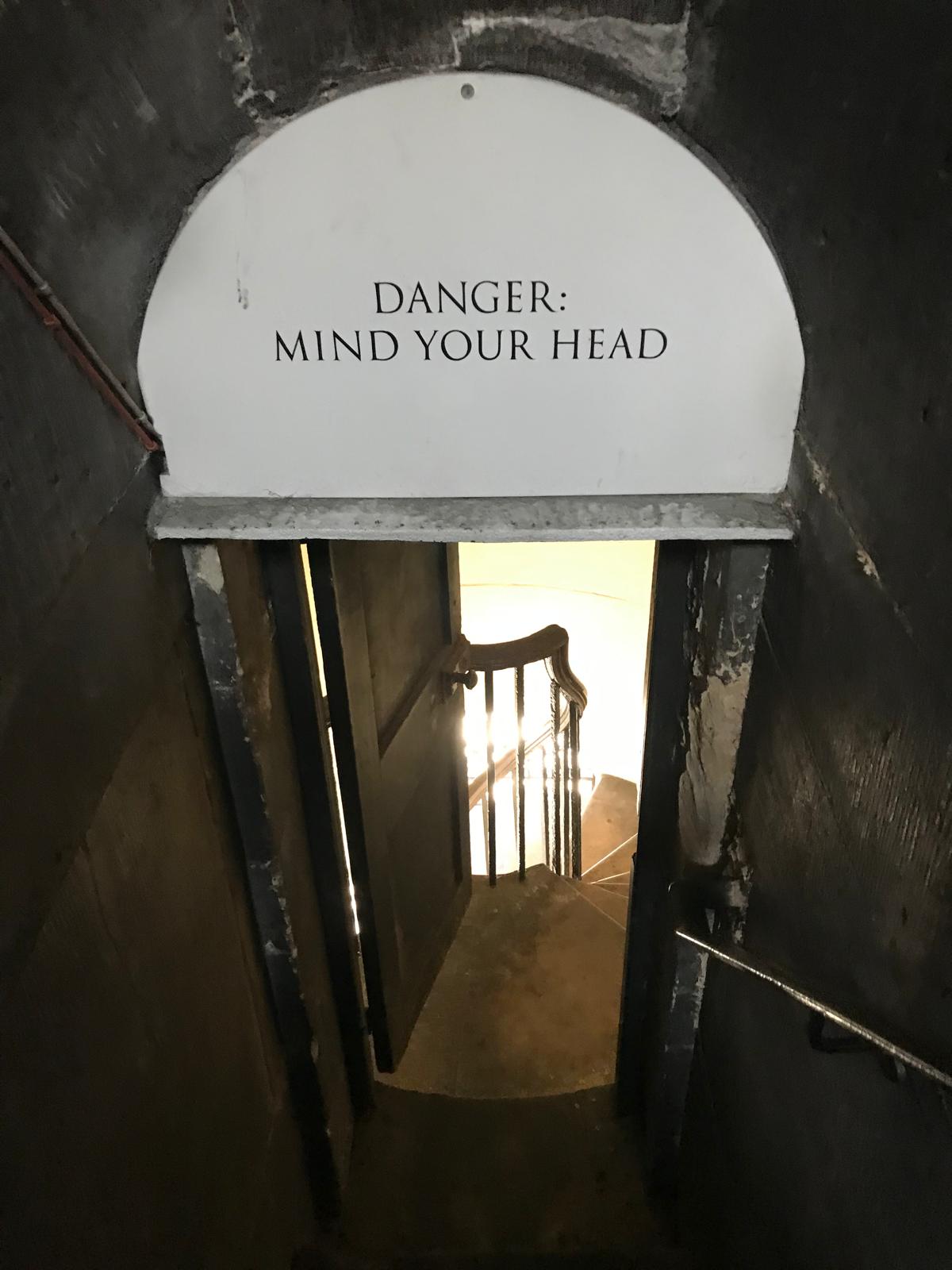
The roof over the east stairway system – shown on the right of this photo – is flat….
This could well be another Royal Arch rite – where you move from light into darkness and back into light again – humbling yourself, blindfolded and tethered, beneath a Brick Arch so you can be ‘exalted’.
And that ‘exaltation’ would have been built into your journey. You might have to ‘stoop low’ and fumble your way across the apse – behind the triangular Hanoverian Crest – but you would also be, like Enoch, up in the Heavens, way above the High Altar and even above the Delta….
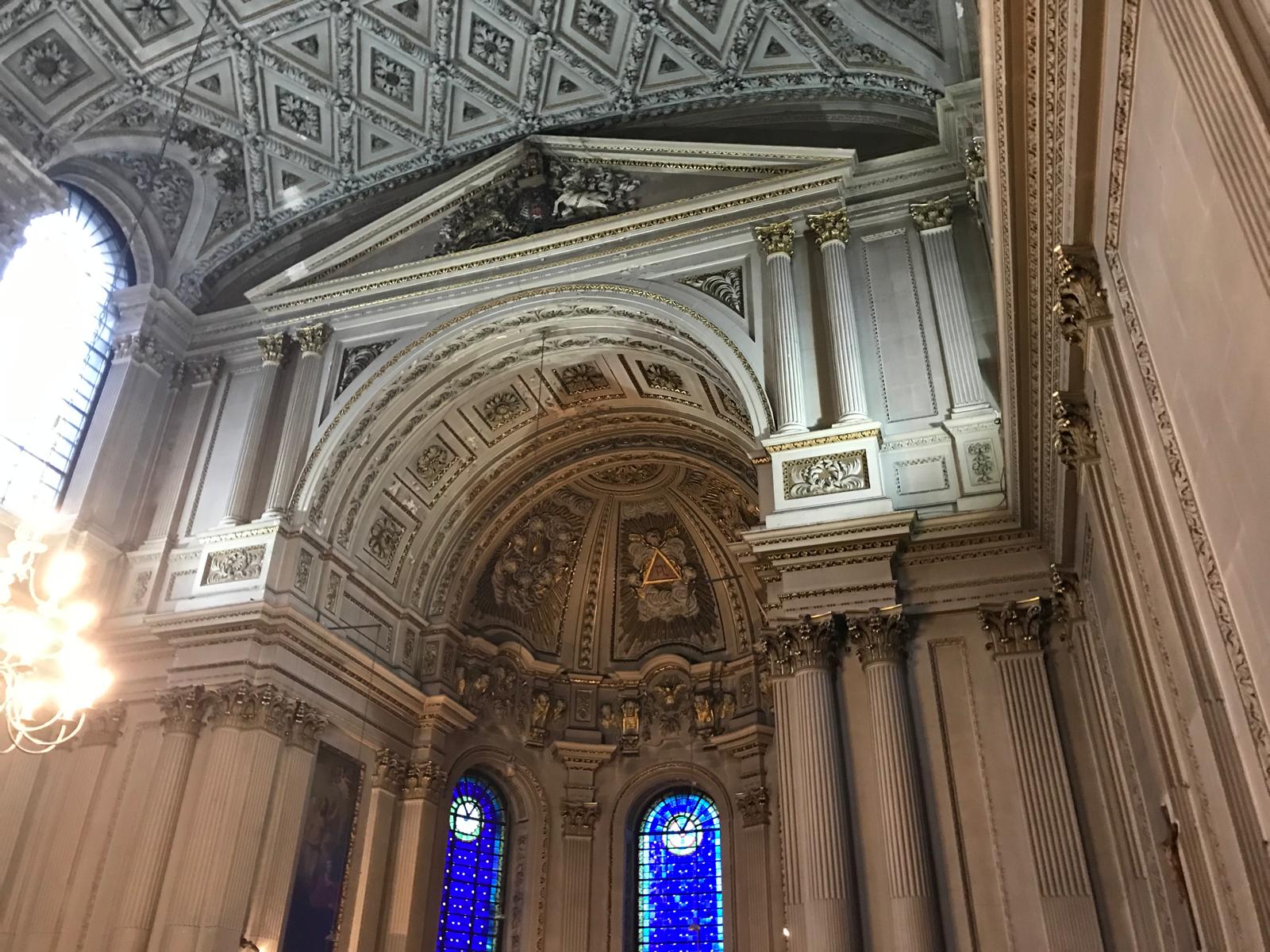
And after these humiliations you would be granted your ‘enlightenment’ – the sight of a burning bush….

……an effect created by an ‘inflamed urn’….
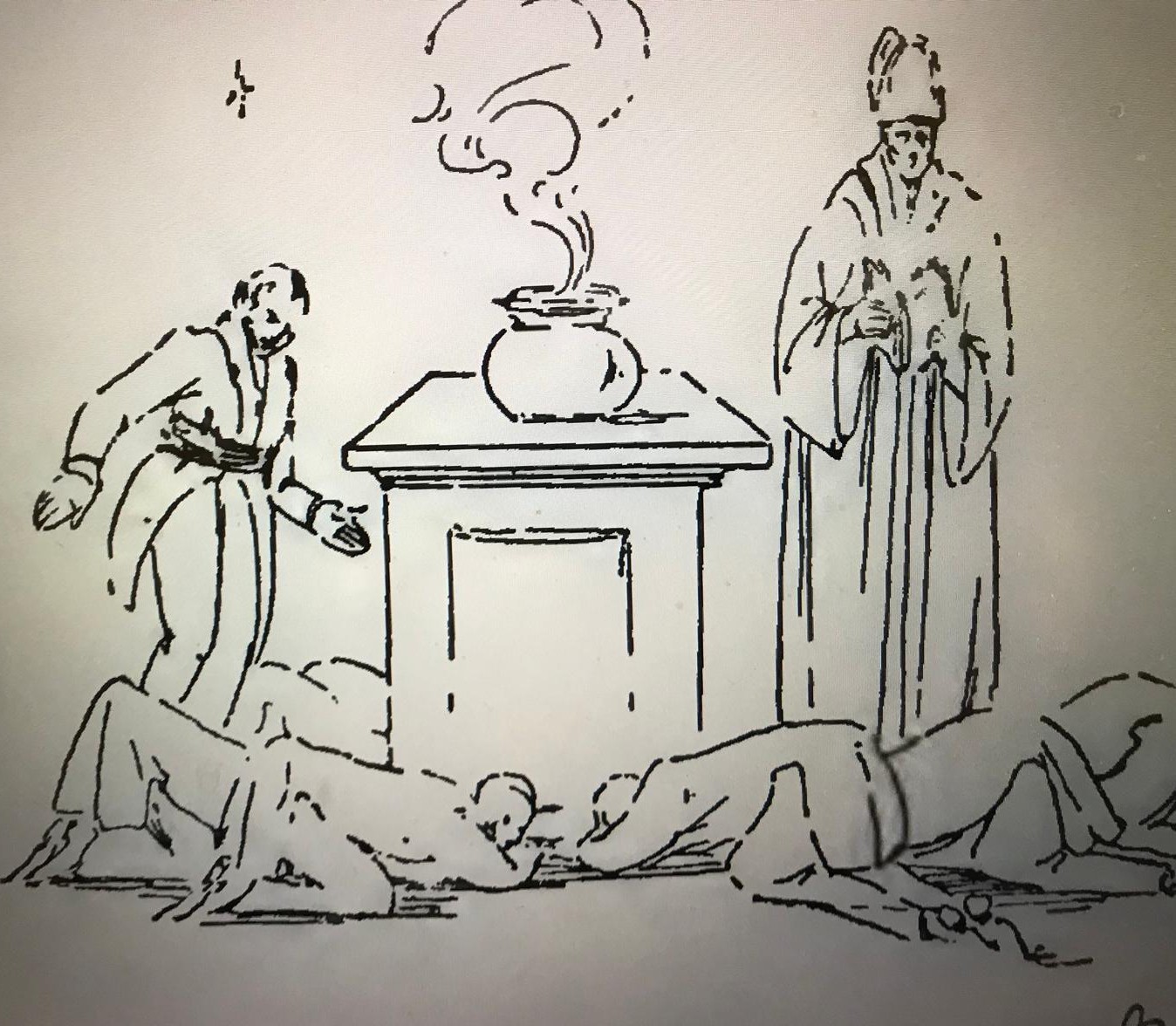
Could this be why there seems to be soot on the walls of the hidden chamber……

…as well as the vaults, in places far away from the Victorian boiler?

And why the church was originally decorated with no fewer than forty flaming urns?

…….including one above the High ‘Ark of the Covenant’ Altar.
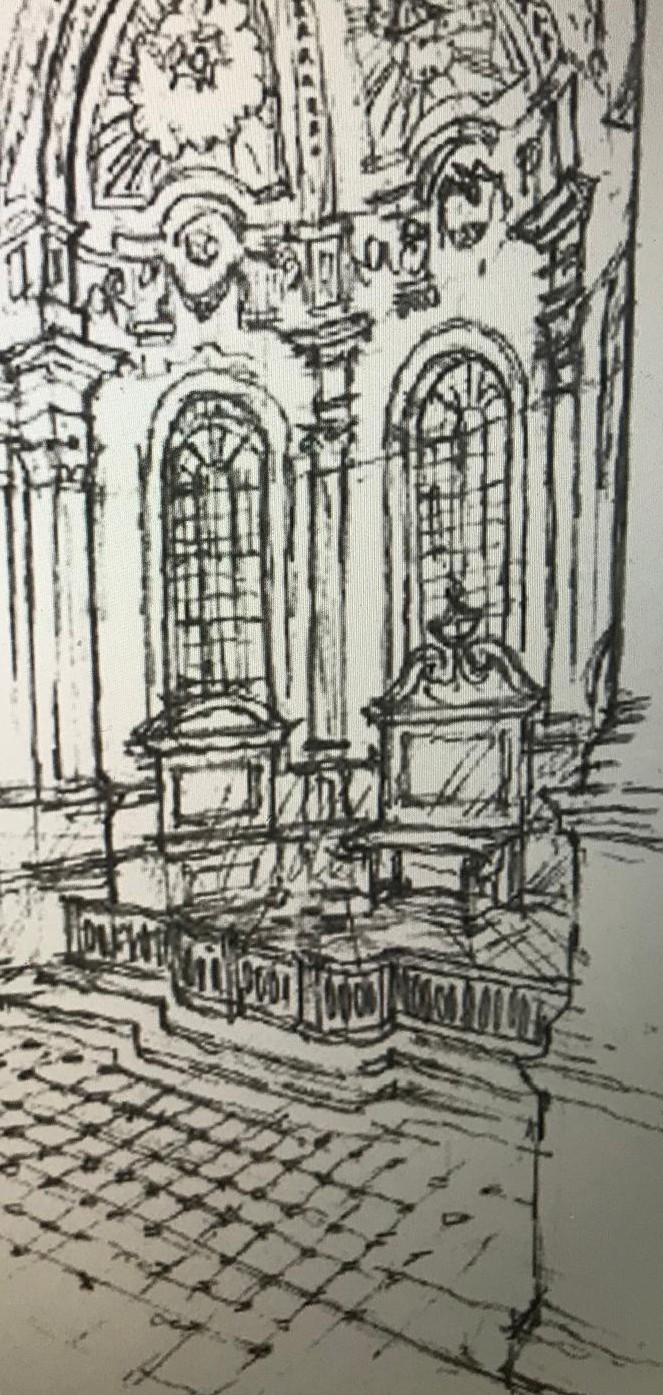
Let’s hope the planned excavations in the Church will give us the answers to at least some of these questions.
POST SCRIPT
David Hume – the Scottish philosopher and historian – claimed in a letter he wrote on 10th February 1773 to Sir John Pringle that Bonnie Prince Charlie had secretly visited London in 1753 and had abjured his Roman Catholicism at the ‘The new church in the Strand’.
Hume didn’t go to live in London till the1760s and he got the date wrong: it was 1750. Prince Charlie was planning another rebellion. Although the Battle of Culloden had been a blood bath from which the Young Pretender had fled, he had done well before that. Many people thought that if he had marched on London – as he wanted to do – he would have won. King George II had packed his bags and was ready to go.
The new plan was to infiltrate London with Jacobite troops – all staying separately at different taverns and boarding houses – and then to storm the Tower of London and murder – or deport – the whole Hanoverian Royal Family.
Hume’s letter to Sir John Pringle was published, after Hume’s death, in the Gentleman’s Magazine of January 1788 – and an anonymous contributer challenged this, claiming that the church where this happened was in Gray’s Inn.
That is probably the case. But we do know that Bonnie Prince Charlie was at Lady Primerose’s house in Essex Street on 16th September – a three to four minute walk from St. Mary le Strand – and that William King visited him.
King, as we have seen, was one of Gibbs’s closest friends – and had just spent ten years working with him on the Radcliffe Library (now ‘Camera’) in Oxford.
To my mind it is inconceivable that King didn’t take Charles Stuart across the road to see his beloved colleague’s masterpiece…..
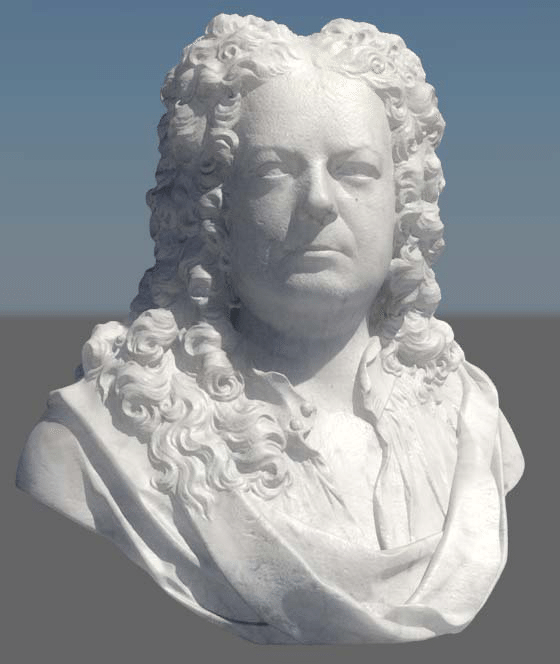
[A Bust of Gibbs which is thought he gifted to Alexander Pope]
© Stewart Trotter February 2025
ACKNOWLEDGMENTS
Thanks, as ever, to the great esoteric scholar, Marsha Keith Schuchard, who encouraged my researches and introduced me to Ricky Pound who shared with me his knowledge of Chiswick House. Also to my ‘Investigative Team’: David Kral who spotted the ouroborus on the outside East Wall and Shaun O’Brien who spotted the Rosa Alba on the ceiling. Sean also discovered a dragonfly which I shall cover in a later postscript….
S.T.
 The Shakespeare Code
Great article Stewart! Thank you for all your extensive research and for presenting it in such an entertaining way. The plethora of images really enriches your work! Please keep up your good work and of course everyone will be agog to hear what future excavations uncover.
Sincere appreciation of your scholarship Stewart ( and for Trixie’s input of course!)
Thanks again
Rosemary 😺
Thank you so much, Rosemary. Your comment means a lot to Trixie and myself.
Hi Stewart
Thought you might like to know we tracked down a second hand copy of Love’s Labours Found in World of Books ( it is out of print now ) and it will be arriving on the 24th March!
I am in Australia so one learns to be patient!
Cheers
Rosemary😺
Sent from my iPad
How good of you to take the trouble. I’ve developed the ideas, of course, particularly in my re-ordering of the Sonnets. I’ve also written a six-part ‘dramatic’ life of Shakespeare! I lived in Australia when I was a boy- Henley Beach in Souyth Australia – then Papua. My first experience of Shakespeare was a recital by Robert Speight in Melbourne when I was 11.