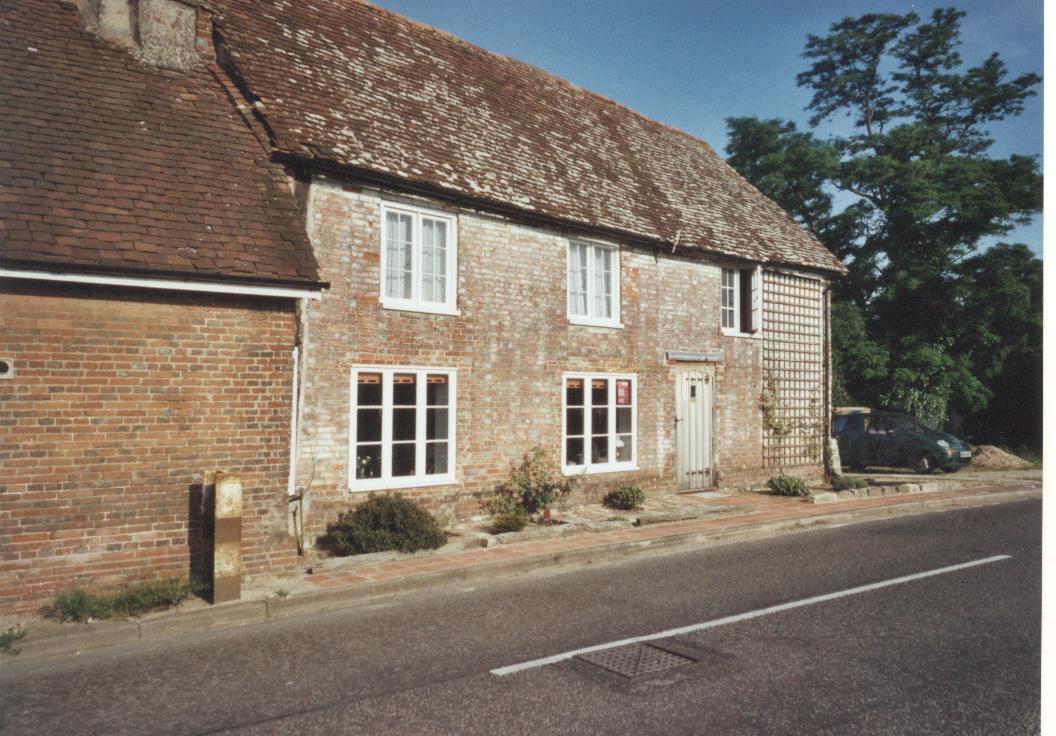
Feeds:
Posts
Comments

Melvyn Bragg, brilliant novelist, philosopher, cultural commentator and Chief Guardian of Intellectual Life in Britain, writes:

What great ideas! Wonderfully interesting! Intriguing! Watch out Stratford-upon-Avon!

Lord Bragg’s name has been included in The Shakespeare Code’s ROLL OF HONOUR.

Shakespeare’s Curious Knotted Garden.

 At the beginning of Shakespeare’s early comedy, Love’s Labour’s Lost, Don Adriano de Armado, a fantastical Spaniard, writes an outraged letter to the King of Navarre. Costard, the swain, and Jacquenetta the country wench have been copulating in the King’s own Park!

The Place where? It standeth north-north-east and by east from the west corner of thy curious knotted garden

Later the Princess of France, visiting the King on state business, asks:

Was that the King that spurr’d his horse so hard

Against the steep-uprising of the hill?

I have directed Love’s Labour’s Lost twice, once in Clare College gardens as an undergraduate and once as Artistic Director of the Northcott Theatre in Devon.

Both times I had the feeling that Shakespeare was writing about a real place.

But where?

Shakespeare dedicated his poems Venus and Adonis and The Rape of Lucrece to Henry Wriothesley (‘Harry Southampton’ as he liked to be known) the young third Earl of Southampton and Baron of Titchfield. The obvious place to start was his country estate, if it was still there. I phoned the Hampshire Tourist Board:

Yes, the ruins of Titchfield Abbey were still standing, but no, there was no garden. The locals burn an effigy of the third Earl each year because he built a sea-wall which cut off the sea. They also believe that Shakespeare wrote Romeo and Juliet at Titchfield – a lot of nonsense of course.

That was enough for me to pack a picnic hamper and persuade my teenage daughter Amy that a Whitsun outing to Titchfield Abbey was worth it.

Amy Trotter as she is now...

Secretly I feared we would find a super-market car-park. On the train down to the South Coast we skimmed the tourist bumph:

In 1232, Henry III granted the estate of Titchfield to the Premonstratensions, a French, white robed order of monks. Because ships at that time could sail right round the Isle of Wight and right up to Titchfield Harbour, it became an important embarkation point for France. Henry V stayed there in 1415 before setting off with his army for Agincourt and Henry VI married Margaret of Anjou in the Abbey Church in 1445. On his break with Rome, Henry VIII dissolved the monastery in 1537 and gave it to Thomas Wriothesley (1505-1550), later first Earl of Southampton, who converted it into a ‘right stately house’ called The Place. The second Earl, his son, a ‘fanatical papist’, was imprisoned in Tower of London for trying to overthrow Queen Elizabeth. The third Earl (1545-1581), his son, also an ardent Catholic in his youth, was patron to several writers, including William Shakespeare. He also was imprisoned for rebelling against the Queen, but freed in the reign of James VI and I. The line died out with the fourth Earl.

The taxi from Fareham swung past the The Mill Pub – built on the remains of an old cornmill – and into the magnificent ruins of the Abbey.

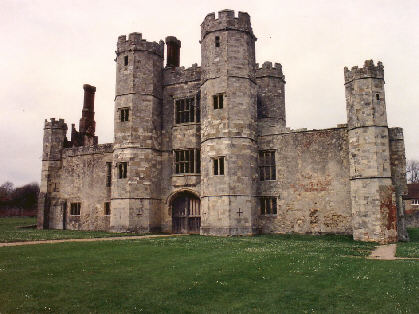
Titchfield Abbey, Hampshire.

True, there was no garden, but I looked down in amazement at an overgrown, sunken patch of ground, grass waist high, that would have once made a perfect knot garden, that geometrical Tudor creation of interwoven flower beds. A beaten path through a garden led to a picnic table that seemed to be waiting for us.

I climbed into a stunted apple tree and, to my daughter’s embarrassment, declaimed some lines from the play:

Like a demi-God, here sit I in the sky,

And wretched fools’ secrets heedfully o’er-eye.

More sacks to the Mill! O heavens I have my wish

Dumaine transformed: four woodcocks in a dish

‘More sacks to the Mill!’

 Could that be the Mill we had just passed in the taxi?

The Mill Pub, Titchfield

I turned to songs of Spring and Winter that end the play. Could all the people mentioned, Tom, who bears logs into the Hall, Dick, the Shepherd who blows his nail, Marian whose nose looks red and raw and Greasy Joan who keels the pot all be people who once lived and worked in this great household?

I noticed a line in the Spring Song: And Maidens bleach their Summer Smocks. The night before  our Titchfield trip, Amy had spilt coffee over her dress. It had spent the night in very non-Tudor bleach. The spirits of the household seemed to be laughing with us.

Not sure if I was in 1590’s or the present, in a garden or a set, in life or in a play, I packed the picnic hamper. As we were leaving, something made me turn round.

There, beyond the garden wall, was the steep up-rising of the hill…

 An extract from Love’s Labour’s Found.

If you are new to this blog,  start with Shakespeare, Love and Religion

 a three part overview of the life and work of Shakespeare, posted earlier.

Alan Samson, the distinguished Editor at Weidenfeld and Nicolson, writes about the article The Strange Case of Mr. Apis Lapis:

I enjoyed your speculation about who Mr. Apis Lapis must have been. The article is (as ever) well-written and concerns the intersection of the actual and the possible. I find it ‘playful’ in the best sense, and, as a literary mystery, esoteric. There is something about it that is very attractive indeed.

And from the desk of the world’s premiere literary journal, the Review of English Studies:

The article is full of interesting and thought-provoking material.

If you are new to the blog, start  with Shakespeare, Love and Religion,  a three part chronological overview of the life and work of Shakespeare.

Mr. Samson’s name has been included in The Shakespeare Code’s ROLL OF HONOUR.

The eminent Shakespeare Scholar, Martin Green, writes to me about The Shakespeare Code:

Everyone who writes about Shakespeare has the need to fill in, in some reasonable way, the great gaps in our knowledge of Shakespeare’s personal and professional life and reasonable surmises filling in the gaps are entitled to consideration so long as they are presented as surmises. But your interpretations of various passages in Shakespeare’s plays and poems struck me as being not surmises but, for the most part, extraordinarily acute insights…..I am very, very impressed. 

(Martin Green is the author of  The Labyrinth of the Sonnets and Wriothesley’s Roses)

Mr. Green’s name has been inscribed in The Shakespeare Code’s ROLL OF HONOUR.

If you are new to this blog, I would recommend starting with Shakespeare, Love and Religion, three talks I gave at the Grosvenor Chapel in Mayfair, London, W.1. They give a chronological overview of the life and work of Shakespeare.

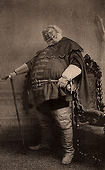
Why Falstaff is Fat.

Why is Falstaff fat? 

Neither the historical Falstaff, nor Oldcastle, as the character was first named, was ever charged with obesity.

The Shakespeare Code’s Chief Agent, Stewart Trotter, has found solid evidence that Shakespeare based the character of the fat knight on a fat Titchfield man.

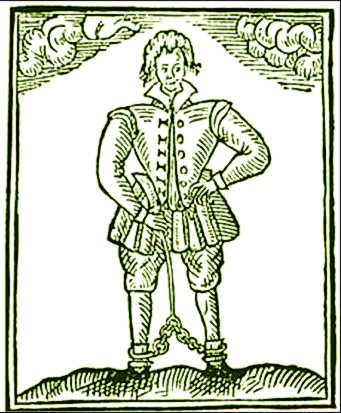
 Thomas Nashe, a pamphleteer and essayist (who was accused of calling William Shakespeare an ‘upstart crow’) dedicated his pamphlet Strange News to a mysterious Master William Apis Lapis…..

Tom Nashe

Scholars have unanimously taken this as a Latin code. Apis is bee, Lapis is stone, so William Apis Lapis is, in reality, William Beeston. We know he was fat, we know he loved sex and we know he loved to eat and drink. But who was he?

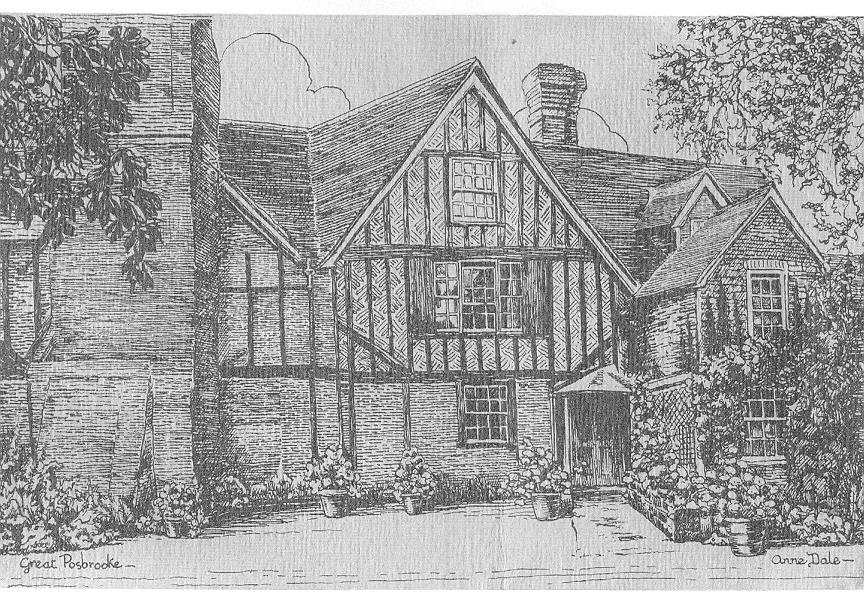
Chief Agent Trotter has found the answer!  William Beeston lived in Titchfield. To be more precise, at Great Posbrook Farm…..

He was an intimate friend of the Southampton family so must have known William Shakespeare.

Beeston, a purveyor of wine and cider, counted among his clients (as well as Nashe) the writers Robert Green and George Peele. At Shakespeare’s request, he hid them away, with maids and alcohol to hand, at Posbrook Farm where they produced ‘Shakespeare’s’ cycle of Henry VI plays.

 No wonder Nashe accused Shakespeare of ‘beautifying’ himself with other bird’s ‘feathers’.

William Beeston had an illegitimate son called Christopher who later became an actor in Shakespeare’s company.

We know that the Titchfield William Beeston was related to Christopher Beeston because of the dates of their wills. Christopher wrote his will on 4th October 1638 (with a codicil on 7th October) and William wrote his on 9th October, 1638.

THERE IS ONLY FIVE DAY’S DIFFERENCE BETWEEN THE WILLS!!!

Christopher, in turn, had a son he called William.  It was this William Beeston who told John Aubrey that Shakespeare had been a schoolmaster in the country.

He meant Titchfield where the school still stands at the gates of Place House.

He also told Aubrey that Shakespeare based his characters on living people. Nashe and Shakepeare between them transformed fat William Beeston of Titchfield, Hampshire, into ‘Plump Jack’ of ‘all the world’.

 And they took Falstaff’s advocacy of wine from the lips of vintner Beeston himself.

Read the whole story in: The Strange Case of Mr. Apis Lapis.

This article is dedicated to Kevin Fraser of the Titchfield Festival Theatre and the members of the Titchfield History Society for their brilliant work on the Titchfield Parish Register.

 Prof. Jonathan Bate writes of The Strange Case of Mr. Apis Lapis :

It’s a terrific article and very persuasive that Beeston [of Posbrook Farm, Titchfield] is Apis Lapis. All very interesting….

The Shakespeare Code would like to thank Prof. Bate for his interest and support. He is a Commander of the British Empire, a Fellow of the British Academy and the Royal Society of Literature, Professor of Shakespeare and Renaissance Studies at the University of Warwick and a Governor and Board Member of the Royal Shakespeare Company.

A synopsis of the argument of this article can be found on: Why Falstaff is Fat.

Before reading it, it would be best to read Shakespeare, Love and Religion – a three part overview of the life and work of Shakespeare posted earlier.

Please click: Here.

The Proposition.

 Thomas Nashe has left us a puzzle. He dedicated his pamphlet Strange Newes of the Intercepting certaine letters, and a convoy of verse, as they were going privilie to victuall the Low Countries (late 1592 or early 1593) to Master William Apis Lapis. Scholars of Nashe interpret this as a Latin code for William Bee (apis) and Stone (lapis); but who this William Beeston(e) was has never been discovered. He cannot be the actor/impresario William Beeston, who gave John Aubrey his information on William Shakespeare, as he was not born till 1610/11. This later William Beeston was the son of another actor/impresario, Christopher Beeston, who, for a time, was a member of the Lord Chamberlain’s Men. Using letters, wills and business documents (some never published before) and, of course, Nashe’s own prose, this article will put forward a candidate for Apis Lapis, show how he was linked to Christopher Beeston and suggest that Shakespeare used him as the inspiration for one of his most popular characters.

 Mr. William Apis Lapis

 What can we learn about Mr. Apis Lapis (William Beeston) from Thomas Nashe himself? He begins his pamphlet Strange Newes by addressing its dedicatee directly:

  To the most copious Carminist of our time, and famous persecutor of Priscian, his very friend Master Apis Lapis: Tho. Nashe wisheth new strings to his old tawny purse and all honourable increase of acquaintance in the cellar.

 We are into problems immediately: the word ‘Carminist’ does not appear in the Oxford English Dictionary. Leaving that difficulty for later, others present themselves. It is clear that Apis Lapis was poor at Latin grammar: the ‘Priscian’, whom he ‘persecutes’, was the author of a sixth century Latin primer still used in Elizabethan ‘grammar’ schools. What, however, does Nashe mean when he wishes ‘new strings’ to Apis Lapis’s ‘old tawny purse’?

 The Oxford Dictionary of National Biography describes Apis Lapis, in two separate articles, as an ‘early benefactor’ and ‘a generous friend’; but this is contradicted later when Nashe claims that Apis Lapis would rather ‘spend jests than money’. Nashe does not even bother to ask Apis Lapis for the usual payment for his dedication: he knows the only spare cash Apis Lapis ever has he will squander on ‘the dirt of wisdom, called alchemy’. Nashe wishes him ‘new strings’ to his purse not because he is ‘generous’ or a ‘benefactor’ but because he is mean. He has worn out his old strings by pulling them tight.

 When Nashe describes Apis Lapis as ‘a famous pottle-pot Patron’ he is using the word ‘patron’ to mean ‘a supporter, upholder or advocate’, the way his old enemy (and main butt of the Strange Newes pamphlet) Dr. Gabriel Harvey used it when he wrote, in 1573, ‘I was a great and continual patron of paradoxis’. Apis Lapis is ‘promoting’ wine, not buying rounds of it: a pottle-pot held an astounding four pints of the liquid.

 Why Apis Lapis should be promoting wine at all is explained by Nashe’s hope for ‘all honourable increase of acquaintance in the cellar’. ‘Drawers’ offered favoured guests, like Prince Hal in The First Part of King Henry IV, ‘the courtesy of the cellar’ to drink in more intimate surroundings. Apis Lapis, this article will argue, is promoting wine because he sells it.

 When Nashe describes Apis Lapis as ‘an infinite Maecenas to learned men’ who ‘have tasted the cool streams of [his] liberality’,  Apis Lapis is a Maecenas in reverse: one who gets paid for providing ‘cool streams’ of wine to his clients, but behaves as though he is doing them a favour. This ‘topsy-turvy’ mindset is made clear in later editions of the pamphlet where Nashe writes, ‘there is not a morsel of meat they [the ‘learned men’] can carve you, [Apis Lapis] but you will eat for their sakes, [my italics] and accept very gratefully’.

 Irony, not to say sarcasm, comes so naturally to Nashe that we must guard against taking him literally. When he describes Apis Lapis as ‘gentle’ and addresses him as ‘your worship’ it does not necessarily mean that Beeston was a gentleman. His family may well have been gentry in the past, but Apis Lapis has fallen on hard times.

 He has, we learn, a strong sex-drive which has brought forth ‘fruits’ (illegitimate children) ‘chronicled in the Archdeacon’s court’. This becomes, in Nashe’s mock encomium, his ‘hospitality’; likewise, his ‘keeping three maids together in [his] house a long time’ becomes ‘a charitable deed’.

 Nashe claims he is not accusing Apis Lapis of ‘any immoderation either in eating or drinking’; but immediately adds that his ‘government and carriage’ is ‘every way Canonical’. ‘Canonical’ could mean ‘appointed by canon [church] law’, which entailed keeping regular times for prayer and fasting; but it could also mean ‘of a cathedral chapter or member of it’. Cathedral Canons have never been noted for their abstinence and given Nashe’s worship of Chaucer (the ‘Homer’ of England) he probably had a particular Canon in mind, the one who turns up late for the pilgrimage in The Canterbury Tales. An alchemist like Apis Lapis, he is ‘sluttish’ and ‘threadbare’, ‘sweats’ like a ‘stillatorie’ [distillery] ‘stinks’ like a ‘goat’ and cons money from the gullible.

 Later in the pamphlet, Nashe, ‘conjuring’ Apis Lapis, by ‘all that his visage holdeth most precious’, names (along with ‘the soul’ of the poet John Davies) ‘The Blue Boar in the Spittle’. Reginald B. McKerrow, the distinguished editor of Nashe, admits: ‘I do not understand this’; but surely Nashe is referring to ‘The Blue Boar’ mentioned by John Stow, a ‘Cook’s house’ (restaurant) in Spittle Lane, conveniently near the Vintner’s Hall and Wharf. So, while ostensibly praising Apis Lapis for his moderation, Nashe is actually accusing him of excess of every kind.

 Nashe, though, is genuinely fond of his ‘very friend’, Apis Lapis, the enemy of ‘small [weak] beer and grammar rules’ with his ‘shreds of Latin’ and his ‘wonted Chaucerism’ a word invented by Nashe to celebrate Apis Lapis’s relish for ‘high’ literature and ‘low’ life (Nashe equates the immortality of Chaucer’s verse with the immortality of brothels in Southwark). He admires Apis Lapis’s ‘pleasant witty humour which no care or cross can make unconversable’ and, signing himself off as ‘thine entirely’, he exhorts him to ‘love poetry’ and ‘hate pedantism.’ It is Apis Lapis’s deep engagement with verse (he could quote Chaucer and Terence by heart  and studied poetry in manuscript) that has prompted scholars to define ‘Carminist’ as ‘poesy-maker’ (from the Latin ‘carmen, carminis’, a poem or song). McKerrow, however, says he is ‘by no means sure this is the sense intended’.

Nashe had a complex, playful habit of mind which Harvey condemns as ‘foolerism’, a ‘fantastical emulation…to presume to forge a misshapen rabblement of absurd and ridiculous words’. Nashe packs multiple  meanings into ‘canonical’ and ‘Chaucerism’: so why not ‘Carminist’ as well?

 The word could also derive from the medieval Latin ‘carminus’, ‘a beautiful red or crimson pigment derived from cochineal’. So ‘Carminist’ might also suggest:

 (1) An alchemist. Reddening, or, as Chaucer terms it (in the Canon’s Yeoman’s Tale) ‘rubifying’, was the final part of the alchemical firing process which aimed to turn silver material into gold. Nashe, drawing on ‘Sol’ and ‘Luna’ imagery from the same Chaucer Tale, describes this activity as ‘ex Luna in Solem’, (‘out of the Moon and into the Sun’). He compares it, disparagingly, to the transformation of silver herrings ‘by foggy smoke’ into red kippers.

 (2) A heavy drinker. Prince Hal, in his conversation with tapsters in the Eastcheap cellar, learns that the cant phrase for ‘drinking deep’ is ‘dyeing scarlet’. So ‘Carminist’ could also be a way of describing how Apis Lapis acquired his ‘pure sanguine complexion’.

At the end of the dedication in Strange Newes, Nashe refers to Apis Lapis’s ‘surpassing carminical art of memory’. Again, the ‘carminus’ root could hold the key to this phrase. One of the prime sources of the Renaissance ‘art of memory’ was Ad Herennium, a treatise on rhetoric, attributed at the time to Cicero. It invites us to set up images in our mind that are ‘disfigured’ by being ‘stained with blood or soiled with mud or smeared with red paint [my italics] so that its form is more striking.’ Nashe argues that the only way to make this system work is to have a good memory in the first place.

 A last possible root of ‘Carminist’ might be the English verb ‘to carminate’ (taken from the Italian ‘carminare’) which means ‘to dissolve ventosities’ (‘wind in the gut’ or ‘flatulence’). We know that Nashe had this bodily function in mind when he wrote Strange Newes: he describes how ‘a doctor [Harvey] and his fart…have kept a foul stinking stir in Paul’s churchyard’. So when Nashe describes Apis Lapis as ‘the most copious Carminist of our time’ the compliment was, to say the least, ambivalent.

The Great God Bacchus

 In Strange Newes Nashe personifies Rhenish wine (sweet, white wine, imported from the Rhineland) as a ‘learned writer’ who has written a ‘comment upon red-noses’ and whose followers are ‘scholars’. Nashe employs the same conceit in an entertainment he wrote just before Strange Newes, Summers Last Will and Testament. Will Summers orders the actors to ‘bring now a black Jack [leather jug] and a rundlet [fifteen gallon cask] of Rhenish wine, disputing of the antiquity of red noses’. Summer’s line anticipates the entrance, on an ass ‘trapped in ivy’, of ‘the God barrel-belly’, Bacchus, who, between songs and ‘shreds of Latin’ (including Terence) delivers a ‘promotion’ of wine worthy of Apis Lapis himself:

 So I tell thee, give a soldier wine before he goes to battle, it grinds out all gaps, it makes him forget all scars and wounds, and fight in the thickest of his enemies, as though he were but at foils amongst his fellows. Give a scholar wine, going to his book, or being about to invent, it sets a new point on his wit, it glazeth it, it scours it, it gives him acumen.

The physical build of Bacchus, ‘like a round church’ with ‘tuns of wine’ in his ‘paunch’, is also similar to the gourmandising Apis Lapis. The odds are that the part of Bacchus, ‘the Baron of double beer’ as Nashe calls him, was written for Apis Lapis and that he played it.

The circumstances of the performance of Summers Last Will and Testament are a mystery. There is a reference in the text to the Thames nearly running dry, which happened early in September 1592, so the entertainment must have been given after that date. There is also mention of ‘this low-built house’ in Croydon  (which most scholars take to be the Archbishop of Canterbury’s summer palace) and a ‘lord’ before whom the piece was played (the Archbishop himself, for whom Nashe had worked as a pamphleteer during the late 1580’s.).

 There are also direct addresses to Queen Elizabeth as a member of the audience. We know that she visited Oxford between the 22 and 28 September, when the ‘comely’ Henry Wriothesley, third Earl of Southampton, ‘a lord of lofty line’, paraded before her. We also know that she returned to Hampton Court on 10October and that Archbishop Whitgift attended Privy Council meetings there on 11 and 12 of October. So the performance must have been given between the end of September and 9 October 1592; but no record of the Queen’s visit to Croydon at this time has ever been found.

 She did, however, visit West Horsley, ten miles away. Lord Montague, the third Earl of Southampton’s maternal grandfather, having suffered a long and lingering illness, was dying there. Queen Elizabeth, who, in William Camden’s words (translated from the Latin), ‘had experience of his fidelity’ and ‘held him most dear (though an earnest Roman Catholic)…visited him…a little before his death’. Lord Montague died on 19 October 1592. The Southampton family would have wanted to entertain the Queen, but it would have been wrong to do so in the house of a dying relative. The Archbishop of Canterbury could well have offered his summer palace for the event instead. Nashe’s interlude has its humorous elements, but the final tone is one of elegiac acceptance of the passing of the summer, completely appropriate for the occasion.

 If Apis Lapis did play Bacchus, he was likely to have been part of the Southampton entourage, an old family friend even, known for his love of Rhenish wine. He might even have supplied it to the Southampton family.

 The Lord of Misrule

 Apis Lapis makes another transmuted appearance in the works of Nashe, this time as the Lord of Misrule in The Unfortunate Traveller, a ‘prototype’ historical novel written a year later (1593). Nashe describes the Lord of Misrule in exactly the same phrase he used for Bacchus, a ‘Baron of double beer’. Like Apis Lapis, the Lord of Misrule is also ‘a miser and snudge’ (skinflint) who sells cheese and cider to Henry VIII’s army. Nashe, in the character of Jack Wilton, states:

 there’s great virtue belongs (I can tell you) to a cup of cider… if it had no other patron but this peer of quart pots [the Lord of Misrule] to authorise it, it were sufficient.

 Nashe uses ‘patron’ here in the same way he used it of Apis Lapis in Strange Newes. He again satirises Apis Lapis’s social ambitions by calling the Lord of Misrule:

 this great lord, this worthy lord, this noble lord’ who ‘thought no scorn…to have his great velvet breeches larded with the droppings of this dainty liquor…an old servitor, a cavalier of an ancient house, as might appear by the arms of his ancestors drawn verily in chalk on the side of his tent door.

Apis Lapis clearly yearned for a coat of arms. The way to acquire one (along with the necessary cash and influence) was to claim, as William Shakespeare’s father did, an illustrious ancestry. The King, though, has no illusions about the Lord of Misrule. He ‘terms’ him (however ‘pleasantly’) a ‘cider-merchant’.

Nashe, as Wilton, in the privacy of a back room (the equivalent of a tavern cellar) expresses the ‘entire affection’ he feels for the Lord of Misrule, not only because of his ‘high lineage’ but because of the ‘tender care and provident respect he had of poor soldiers’ to whom he sells cheese and cider, often in tiny portions, as ‘a rare example of magnificence and honourable courtesy’. Thus the greed of the Lord of Misrule is presented as charity, as Apis Lapis’s was in Strange Newes. 

 Wilton, as the story develops, tricks the Lord into providing free cider for himself and the whole army by saying he had been accused of treachery. The cowardly ‘snudge’ falls on his knees, wrings his hands and weeps ‘out all the cider he had drunk in a week before’. Giving Wilton his ‘greasy purse with that single money that was in it’, he then falls into a terrified ‘trance’ from which Wilton can only revive him by pretending to be a customer who wants to pay his bill….

 Titchfield

The ‘real life’ Apis Lapis, this article will argue, was from the town of Titchfield in Hampshire: so we need to examine Nashe’s own links with the area. Several members of a Nashe family feature in the Titchfield Parish Register  but it is more likely that Nashe’s association with the town was through the third Earl of Southampton, also styled ‘the Baron of Titchfield’, after his favourite country seat.

 Nashe openly dedicated The Unfortunate Traveller to Southampton, but all other possible references to him are in code. He writes a pornographic poem for a ‘Lord S.’ referring to him as ‘the fairest bud the red rose ever bore’. In Pierce Pennilesse (1592) he speaks of ‘Jove’s eagle-born Ganymede, thrice noble Amyntas’. In Strange Newes he describes himself as living in ‘a house of credit as well governed as a college, where there be more rare qualified men and selected good scholars than in any nobleman’s house that I know in England’.

 All this fits the teenage, recklessly generous  and sexually ambiguous  third Earl of Southampton, down to the ‘red rose’, both the emblem of the town of Southampton and a reference to the grandiose way the Wriothesley family seems to have pronounced its name. (It appears variously as Wryosley, Riosely and even Royothizley in the TPR).  The ‘house of credit’ could be Place House at Titchfield where John Florio was compiling his Italian-English dictionary, A Worlde of Wordes (1598), which he dedicated (amongst others) to the third Earl of Southampton, in whose ‘pay and patronage’ he had lived ‘for some years’. 

 This information is too generalised, though, to link Nashe positively with Titchfield; indeed, some scholars have taken ‘Lord S.’ to be Ferdinando Stanley, Lord Strange. However, in his The Terrors of the Night pamphlet (1594) Nashe starts to give more positive clues as to where he is. 

Night Terrors

 He states that in February 1593 he was ‘in the country some threescore mile from London’. (Titchfield, as the crow flies, is about seventy miles from the City). ‘A gentleman’ there ‘of good worship and credit falling sick, the very second day of his lying down he pretended [claimed] to have miraculous waking visions…A wise, grave sensible man he was ever reputed, and so approved himself in all his actions in his lifetime.  This which I deliver, (with many preparative protestations) to a great Man of this Land he [the gentleman] confidently avouched.’

 Nashe refers to the third Earl of Southampton as ‘a great man’ in the introduction to The Unfortunate Traveller. In Pierce Pennilesse he describes how (in 1592) ‘the fear of infection’ is detaining him ‘with my Lord in the country’. The plague was raging even more in London at the beginning of 1593, so the third Earl could well have been in Titchfield when he heard the story from the gentleman and asked Nashe to record it.

Nashe continues:

First, the house where this gentleman dwelt stood in a low marish ground, almost as rotten a climate as the Low Countries; where their misty air is as thick as mould butter, and the dew lies like frothy barme on the ground.

Titchfield, in 1593, was on the ‘marish’ (marshy) shores of a tidal river which linked the sea, three miles away, with the town. Nashe, though, was using the word ‘marish’ with its Latin root also in mind (mare, maris: the sea) as does the anonymous author of Every Woman in her Humour (1609): (‘That moving, marish element that swells and swages as it please the moon’). Thick sea mist still rises in the heart of Titchfield from the canal that replaced the river.

Nashe continues:

It was noted besides to have been an unlucky house to all his predecessors, situate in a quarter not altogether exempted from witches.

 ‘Exempted’ could mean ‘separate’ or ‘cut off’, as in a line of verse written in 1598: ‘In brave love and fortune’s art, /There is not anything less sure /Than such a free exempted heart’. ‘Quarter’ could mean ‘region, district, place, [or] locality’. Nashe seems to be saying that the area he is talking about was subject to occasional attacks of witchcraft from the outside. Henry Chettle, in his pamphlet Kind-Hartes Dreame, written around December 1592, describes one such attack that had recently occurred in Hampshire.

The Witch of Upham.

         A ‘walking mort’ [female or harlot] had been wandering around the county, telling fortunes, healing the sick and claiming that she had inherited her powers from her gipsy mother and her ‘juggler’ [wizard] father. We know, from another pamphlet written in February1595, and official notes made at her trial in London a month earlier, that her name was Judith Philips. She had left her first husband to go travelling round the west of England with ‘divers persons naming themselves Egyptians’ [gipsies].

For ‘a certain space’ [of time] she operated ‘in the village of Upsborne in Hampshire, in distance seven miles or thereabouts from Winchester’. If ‘Upsbourne’, as has been suggested, is the modern ‘Upham’ (which is indeed seven miles from Winchester) then Judith’s ‘lewd pranks’ were enacted only a few miles away from Titchfield itself.Chettle describes how Judith duped a simple farmer and his wife of their money by promising (through her friendship with the Queen of the Fairies) to lead them to buried treasure. Part of the magical process involved hanging up their best sheet linen in a chamber and placing seven gold coins beneath seven candles. Judith put a saddle and bridle on the farmer, rode him seven times round the chamber, then, having made ‘an ass’ of him, she made off with the goods.

Nashe would have known the story well: Chettle mentions him by name in the same pamphlet.

Nashe might even have told him the story.

 Heaven and Hell

 The topography of Titchfield, then a busy port, seems to have influenced the nature of the gentleman’s visions. He saw fishing nets, fish-hooks, treasure chests, drunken sailors and seductive ‘bonarobaes’ (prostitutes), one of whom was about to put her foot into his bed when ‘a messenger from a Knight of great honour thereabouts…sent him a most precious extract quintessence to drink’.

We know that at Christmas in 1593 and ‘a great while after’ Nashe was staying with the Carey family at Carisbrooke Castle on the Isle of Wight, five miles away from Titchfield across the Solent. Nashe wrote the final version of The Terrors of the Night there ‘to satisfy some of my solitary friends’ and dedicated it to Elizabeth Carey, ‘sole daughter and heir to the thrice noble and renowned Sir George Carey, Knight, Marshall, &c.’

 Sir George Carey was fascinated by Paracelsian medicine and supported its practitioners. He even had his own supply of ‘spirit of sack’ (processed sweet white wine) and it could well have been this ‘water’ which he sent to Titchfield. It brought temporary relief to the gentleman but ‘within four hours after, having not fully settled his estate in order, he grew to trifling dotage, and raving died within two days following.’ If we could find the gentleman himself, the Titchfield connection would be established; but we must bear in mind Nashe’s snobbery. Later in the pamphlet he confesses that he has ‘welt and garde’ [embellished] his narrative ‘with allusive exornations [decorations] and comparisons’ because he is ‘loathe to tire’ his readers with a ‘coarse, home-spun tale, that should dull them worse than Holland cheese’.

He has plainly raised the ‘home-spun’ class of the ‘gentleman’ who experienced the visions on the pretext of giving the Truth ‘a leathern patched cloak to keep her from the cold’. What he really means is that people will only believe in the visions if they come from someone ‘upper-class’. We can see the same process of ‘gentrification’ at work in the story of Judith Philips. In Chettle’s 1592 version she dupes ‘an honest simple farmer’. In the 1595 pamphlet the farmer has jumped a class or two to become ‘a wealthy churl’.

Naming names

Thomas Ballard was a ‘husbandman’ of Posbrook, a mile or so outside Titchfield, on the marshy edges of the river, but a husbandman sufficiently well off to have newly fashionable glass in his windows. He also had enough of an estate to bother to leave a will, something only a fifth of Englishmen did at the time. His was witnessed on ‘the last day of February’ in 1593 and he was buried in St. Peter’s churchyard on 1 March. This suggests that his will, unsigned and unmarked, was completed for him posthumously while his grave was being dug.

 Wills followed a strict formula. Ballard’s father’s, for example, written thirteen years before, begins:

 In the name of God, Amen. The twentieth day of January in the 21st year of the reign of our sovereign lady Queen Elizabeth. I, Peter Ballard of Posbrook, husbandman, in the parish of Titchfield, being sick in body but of good and perfect memory do constitute and make this my last will and testament in manner and form following. First, I give and bequeath my soul into the hands of Almighty God and to his son Jesus Christ through whose death and passion I hope to be saved and my body to be buried in the church of Titchfield.

He then gets straight down to the dispersal of his estate. His son Thomas’s will is completely different. There is no sign whatsoever of ‘that usual clause (of perfect mind and memory) so duly observed in every testament’: in fact, after its opening, the will starts to ramble alarmingly:

 In the name of the living God, I Thomas Ballard of Posbrook in the county of Southampton, husbandman, do make and ordain this my last will and testament in form and manner as followeth:  I commit or commend my soul to my most merciful and loving father, through and by the power and virtue of that precious suffering in the soul of my redeemer and Saviour, Jesus Christ. To the earth I commit my body from whence I received it, and I faithfully believe that as my saving health did once suffer and at that time did end and finish all his unspeakable torments in and on his most precious body for my body and all his elect, he being perfect man, did it for my body fully and wholly and be judge, perfect God, equal with the father was, is and ever shall be able to dispatch all things for my salvation; also I unfeignedly believe that by the virtue of his resurrection and ascension, my body shall be raised up and gain immortal [sic] and receive this my soul and at his most glorious and famous second coming I shall hear that joyful voice of heaven and be partake of it: ‘Come ye blessed of my father’ and so forth.

 The ‘so forth’ at the end of the paragraph suggests the witnesses had stopped taking notes. Ballard had lapsed into ‘idle dotage’.

 Apis Lapis Revealed

 In stark contrast is a will by another Posbrook man, of Posbrook Farm, written forty five years later. Written in his own, firm, characterful hand, it is signed by ‘Wm. Beeston’, the William Beeston this article nominates as Apis Lapis. He names two ‘worthy friends’ to oversee the will, Arthur Bromfield and Thomas Risley, both of whom throw extraordinary light on Beeston’s character and identity.

 Arthur Bromfield was Beeston’s father-in-law, but he seems to have been of the same age as Beeston: he disappears from the records after 1641, three years after Beeston’s death in 1638. He was intimately linked with the Southampton family in a bizarre way.

 On 6October 1594 the third Earl held a party at Titchfield to celebrate his coming of age. Two of his guests, Sir Charles and Sir Henry Danvers, arrived a day early for a very good reason: they were fleeing from a murder they had committed in Wiltshire. Sir Henry’s saddle was covered in blood, so the brothers were sheltered for the night at Whitely Lodge, two miles away from Place House. They then crossed Southampton Water to Calshot Castle, but having learnt that the authorities were on their trail, made their way back, after midnight, to Place House itself. One of the third Earl’s loyal ‘gentlemen’ then facilitated their escape, on horse-back, to France.

 That servant was Arthur Bromfield. Six weeks later the third Earl gave him (for £10 a year and four capons) the site and manor of Charke and the farm of Lee Brytton ‘for good and faithful service done’.

 Around this time Beeston (assuming that the Posbrook Beeston was Apis Lapis) was trading in Rhenish wine. Its importation and distribution, however, was an historic monopoly of the Hanseatic traders (‘the merchants of Almaine’ as John Stow calls them) ho controlled the Steelyard, a walled community with its own docks, church and counting house. The Steelyard had a famous winehouse where, Nashe says ‘men when they are idle and know not what to do’ went to drink Rhenish wine.

 When Nashe, in Strange Newes, claims that the ‘gravity’ of Beeston’s famous ‘round cap’ and ‘dudgeon dagger’ will ‘make [him] called upon shortly to be Alderman of the Steelyard’  he is, as usual, being ironic. ‘Alehouse daggers’, worn at the back, go, in Nashe’s mind, with ‘greasy doublets’ and ‘stockings out at heels’ rather than fine silk and fur-trimmed gowns. Nashe, however, does seem to imply that there was an official link between Beeston and the Hanseatic traders.

 When Apis Lapis learns that the law courts are to be moved to Hertfordshire because of the plague, he wonders where the Steelyard will go and falls into another ‘great study’ and ‘deep meditation’ (i.e. drunken stupor). At ‘a tavern in London’ he slips into another of his famous ‘trances’, this time accompanied by snoring. The tavern responds by mourning ‘all in black…because the grandame of good fellowship was like to depart from amongst them.’

 Why was Beeston about to leave?

Monopolies

 In 1589 Queen Elizabeth had given the lucrative ‘farm’ on all imported white wines (other than Rhenish) to her favourite, Robert Devereux, 2nd Earl of Essex, the Earl of Southampton’s intimate friend. She kept, however, a percentage of the tax for herself. The Hanseatic traders, aware of their anomalous position, would want to curry favour with the English establishment. Why not give the charismatic Beeston a licence to supply Rhenish wine, at a favourable rate, to the Essex and Southampton entourages? The wine certainly plays a starring part in the Southampton family entertainment, Summers Last Will and Testament.

 The Southampton city residence was in Holborn, a stone’s throw from Gray’s Inn, an exclusive lawyers’ club of which the third Earl had recently been made a member. Why not extend Beeston’s licence to cover Southampton’s lawyer colleagues as well? Beeston, in term time, could take barrels of Rhenish wine, on donkey-back from the Stillyard, (as we see a man doing on the so-called ‘Ralph Agas’ map of Elizabethan London) to supply the barristers’ taverns in the City. When the lawyers moved to Hertfordshire, Beeston, under the terms of his licence, would have had to move with them. 

 The God of Wine’s ass in Summers Last Will and Testament is described as ‘trapped in ivy’: perhaps this was Beeston’s own trademark. Assuming the role of Bacchus/Silenus he could have ridden his donkeys through the streets of the City, singing to announce his arrival then ‘disputing’, with ‘shreds of Latin’, the merits of Rhenish wine to amuse his legal clientele. The ‘Silenus’ (in Nashe’s 1589 Preface to R. Greene’s ‘Menaphon’) who sells wine while ‘nodding on his ass trapped with ivy’ and who makes ‘the pausing intermedium twixt every nap’ with a ‘moist nose-cloth’  sounds very much like Apis Lapis.

It was not only the civil lawyers, though, whom Beeston entertained: he was ‘amongst grave doctors and men of judgement in both laws [civil and ecclesiastical] every day.’ The most important ecclesiastical court in England was in the City, the Court of Arches at St. Mary-le-Bow. This place holds the key to another ‘Nasheism’.

 Nashe asks Beeston to ‘safe-conduct’ his pamphlet through ‘the enemy’s country’. Harvey at the time was practising law at the Court of Arches. He was ‘the enemy’ and ‘the country’ was St. Mary-le-Bow. ‘Safe-conduct’ is a code: Nashe wants Beeston to sell his pamphlet, with its scurrilous attack on Harvey, to Harvey’s own colleagues.

But he wants to go further than that. He asks Apis Lapis to ‘cherish’ his ‘surpassing carminical art of memory with full cups’, ‘scour’ Chaucer ‘against the day of battle’ and let ‘Terence’ come in ‘with a snuff of a sentence’ so that ‘we’ll strike it as dead as a door nail’. What he means is:

 ‘Let’s get blind drunk, turn up at Mary-le-Bow and shout insults, in Middle English and Latin, at Harvey himself’.

 Death and Transformation

 Queen Elizabeth closed the Steelyard at the beginning of 1598 in retaliation for the Holy Roman Empire’s trade ban on English merchants. The following year, as is well known, she sent the Earl of Essex to fight Tyrone in Ireland. Essex defied her by appointing the Earl of Southampton the General of Horse, then further defied her by returning with him, unbidden, to England.

 In October, 1600, Elizabeth snatched away Essex’s farm on sweet wines, financially destroying him and his followers. Then, when, in early 1601, Essex and Southampton rebelled against her (to seize power from the Cecil faction at Court and ensure the succession of James VI of Scotland) she cut off Essex’s head, attainted Southampton and locked him in the Tower for life.

 On her death in 1603, however, everything turned round. King James released Wriothesley from prison, restored his land and titles and saved him from ruin by granting to him the same farm on ‘sweet wines’ that had been Elizabeth’s gift to Essex. From 1604 to 1611 Bromfield was one of the men entrusted with the vital task of collecting this tax in London and Middlesex. He had clearly stayed loyal to his lord during the rebellion and imprisonment, as, by implication, did his ‘worthy friend’ Beeston. Both men probably took part in the rebellion itself.

 During this period, Bromfield got married and by the end of his tax-collecting period had fathered four children, all baptised at Titchfield. From 1611 he also changed from being described as a ‘gentleman’ in documents to an ‘esquire’, so he must have been earning at least £500 a year, [£250,000] the minimum requirement for a coat of arms. Between 1612 and 1617, Bromfield fathered five more children.

Then, in 1618, perhaps not surprisingly, his wife Lucy died.

 Enter Thomas Risley

 Thomas Risley, the other executor of Beeston’s will, was from the non-aristocratic branch of the Wriothsely family, hence the spelling of his name. (On his death, though, the Titchfield Parish clerk upgraded it to ‘Riosley’). From 1608 he worked for the third Earl of Southampton both in London and Titchfield, often in alliance with Bromfield (whose name appears on nine of the third Earl’s extant documents). From 1624, though, he spent most of his time in Titchfield as the result of a family catastrophe.

 That year the third Earl of Southampton, politically inept but a brave and gallant soldier, had taken his nineteen year old son and heir, James, to Holland to help the Dutch fight the Spanish. James died ‘of the pestilence’ at Roosendaal on 5 November and his grieving father took his body to Bergen-op-Zoom where he fell ill himself. A member of his entourage wrote this deeply moving letter to the third Earl of Essex, also on the campaign:

          I humbly beseech your Lordship that the sad occasion of my writing may excuse my boldness and rudeness therein. Since my Lord of Southampton’s departure from Roosendaal his Lordship both in his own apprehension and opinion of them about him and judgement of the physicians grew much better than he last was when he parted from your lord: till this afternoon at 4 a clock, which immediately upon a glister [enema] given him by Dr. Turner he fell heavy and sleepy and slept some four hours though with much disquiet and troubled passions. After his awaking he fell extremely ill and could not speak to any of us. I presently caused another doctor to be sent for to join with Dr. Turner and upon consultacon [sic: an ‘i’ was later added over the top of the word] held betwixt them, the both are exceeding doubtful of him. As I held it my duty to let your lordship know of it with all the speed I could possibly [sic] so I humbly beseech your Lordship if you will be pleased to come over and see him: my heart breaks to tell your Lordship that if you make not haste I fear you shall never see him alive again. These thoughts silence me, I beseech your Lordship accept my duty and pardon me for I am your lordship’s humble servant ever to be commanded.’

 The letter, lodged in the British Library, is signed ‘W. Beeston’. The third Earl died that night (10 November) and a second letter from Beeston to the third Earl of Essex followed from Bergen a fortnight later:

 Our people returned yesternight from the Hague with a full dispatch of all things, according as we could desire, saving they were so long about it which by their relation was not in their power soever to effect, which I humbly beseech you may be the ground of my so long silence and stay and excuse for the same. I made bold to acquaint your Lordship how our affairs stood and that till we heard from the Hague we could not well remove from thence. Now that they are comed [sic] and all things ready that I can device [sic] necessary according to the instructions I have received for the bringing of the bodies to the ship, I humbly refer the accomplishing of the ceremonies to your Lordship’s own fittest time of coming hither. For now we attend only that and the first opportunity of the wind to set as quite out of the country. I beseech your Lord, accept the humble duty and pardon the boldness of him who in all humility waits your Lordship’s demands, and will live and die

Your honour’s humblest and most devoted servant

W. Beeston.’

 These touching, if ungrammatical, letters are written, to my eyes, in the same hand as the Beeston who wrote his will at Posbrook, the same ‘Apis Lapis’, ‘Bacchus’ and ‘Lord of Misrule’ who loved poetry, wine and life, who possessed a gift for friendship across the board and who was trusted enough by the Southampton family to be the guardian of their dead.

 Beeston the Mentor 

 Thomas Wriothesley, said to be ‘of infirm body’, was only sixteen when he became the fourth Earl of Southampton. His father had left no will, so, on 2 June 1625, power to administer ‘his property and goods’ was granted to his mother (the widowed Countess Elizabeth) and to ‘Arthur Bromfield of Titchfield’ and ‘Thomas Wriothesley of Cheltwood co. Bucks, Armiger’.

 Beeston himself drew closer to the family than ever. The Countess ‘commanded’ him to write, in his idiosyncratic English, to his ‘much honoured friend’, the Master of St. John’s College, Cambridge:

Sir, After so long speech of my Lord of Southampton’s coming to St. John’s, my lady his mother is now resolved to send him to you presently, and to that purpose hath commanded me to send you the enclosed from my Lord Maltravers, [who was offering to give up his college rooms to Thomas] entreating your favour for those lodgings for her son, and according as her Ladyship hears from you, she is minded immediately to send his stuff, and to have them make ready. To no place can he come with more affection, either of her Ladyships, or his own, desiring to succeed his noble father and brother as in other things so in that kind respect they did both bear <unto> [added afterwards] and find again <ever> [added afterwards] from that worthy society. I shall not need  further to trouble you at this present when I have remembered their loves and my very affectionate service unto you, only I beseech you, bestow me as near his Lordship as you may, they will take it for a favour and you shall still increase my obligation ever to remain,

Your worship’s ever to be commanded

W. Beeston.

Horsley,

September.20. 1625

 Beeston signs his letter, still lodged at St. John’s, with an added flourish. Well he might: the Countess, by this ‘command’ had made him the virtual guardian of her son. Beeston, in turn, was prepared to move to Cambridge, even to lodge in the college itself, to be as near as possible to his delicate, young lord.

University, however, was not for the fourth Earl. Within a year he had left St. John’s and left England itself for France, not to return for seven years. In his absence his mother fulfilled one of the wishes of his dead father, to give his library of books to his old college. The Master was particularly grateful for her ‘care that they [the books] should come free to us, without any the least charge’. This, however, is contradicted by a note in the College Expenses in 1626 of a payment of 17/6d [nearly £500] ‘for entertaining the Countess of Southampton’s man, and unloading the books’. At every level, this ‘man’ sounds like Beeston.

 Beeston continued to protect Thomas’s interests while he was abroad. In 1629 alone Beeston’s name appeared on four of the fourth Earl’s documents, along with Risley and Bromfield. (It was to appear on another eight of them before Beeston died).

Around this time Beeston became wealthy enough to marry Bromfield’s first-born child, Elizabeth. She gave him a daughter, named after herself, followed two years later by a son, Henry. A daughter Mary followed in 1632 then Frances in 1633. Beeston’s baby children were generally given the respectful title of ‘Mistress’ or ‘Mr.’ in the Parish Register and in the Wriothesley Papers Beeston is, at this period, always described as a ‘gentleman’. His ‘worthy friends’, however, Risley and Bromley, were ‘esquires’.

 In May 1633, the fourth Earl was recalled from France to attend King Charles on a visit to Scotland. He then fled back to France in March 1634, after losing heavily at the Newmarket Races. He showed his complete trust in Beeston  by authorising him (along with Thomas Risley, ‘esquire’) to sell 21,00 trees out of Titchfield Great Park to pay his debts, ratifying ‘all they shall do in the premises as if he were personally present’. Beeston, though, remained ‘a gentleman’

 Later that year the fourth Earl returned to Titchfield with his French bride who began to bear him children. Lucy was also born to the Beestons in 1635  and, then, in 1636, ‘Mr. William Beeston of Mr. William Beeston’ was baptised.

 In March of that year Beeston had edged closer towards his crest. The fourth Earl, though under huge financial pressure from the King, rented the magnificent Abshot Farm to Beeston for £10, as his father, the third Earl, had rented Chark Farm as a reward to Bromfield. Although the Earl’s document still describes Beeston as ‘a gentleman’, we can see where Beeston’s armorial seal, now missing, might have been fixed.

 By the 7 April 1637, however, Beeston had definitely achieved his wish: a document names him as ‘esquire’ and has three equally spaced seals, bearing the coats of arms of the fourth Earl, Risley and Beeston. What sort of design had been chosen for Beeston’s crest? A ‘bend’ with six bees, playing, as Nashe had done, on his surname.

 His little children, all born in the Stuart reign, would have been so proud. Henry grew up to be Master of Winchester College and Warden of New College, Oxford and William became a rich merchant and a Governor of Jamaica.

What had happened, though, to his older, illegitimate children from the reign of Elizabeth?

Natural Children.

         We know (from Strange Newes) that in 1592 Beeston had at least two children who were ‘of an age to speak for themselves’, perhaps 11 or 12 years old. If he had fathered them as a teenager, as Shakespeare had fathered his first child, he would have been in his sixties when he married Elizabeth Bromfield (who was only 23) and his seventies when he died. If he had fathered them in his twenties, he could have been in his seventies when he married and eighties when he died. Why did he marry so late?

 The first clue lies in the exact date of William Beeston’s will, 9 October 1638. This was five days after the actor/impresario Christopher Beeston had written his. Either this is an astonishing coincidence or there was, as some scholars have suspected, a link between Christopher Beeston and Mr. Apis Lapis. A further clue is that Christopher Beeston had an alias, Hutchinson. This would have helped him in his shadier activities: but it could also suggest that he was illegitimate.

 When Nashe says that Apis Lapis’s children were ‘of an age to speak for themselves’ it could also refer to their becoming boy actors. A ‘Kitt’ who played ‘a soldier’ and ‘a captain’ for a mixture of the Admiral’s and Lord Strange’s Men in Richard Tarleton’s play The Seven Deadly Sins (around 1590-1) has often been named the young Christopher Beeston.

 We know for certain that Christopher became an apprentice actor to Augustine Phillips: Phillips refers to him in his will as his ‘servant’. From what we know of Beeston’s love for English verse, and his own enjoyment of theatricals himself, he would have relished his son Kit’s choice of career; he might even have used his network of friends to get him the job. Christopher later joined the Lord Chamberlain’s Men and acted with Shakespeare in 1598 in Every Man in his Humour. In August 1602, however, he was forced to leave the company and join Worcester’s Men. A pregnant woman was accusing him of rape.

 In a bid for respectability, Christopher married Jane Sands, a Roman Catholic, on 10 September. Christopher himself had probably been brought up by his natural father as a recusant: the Southampton family, at the time, had ardently followed the ‘Old Faith’.

 On 5 November, Christopher was at Bridewell Court accused by Margaret White, the widow of a clothmaker, of ‘forcibly’ having sex with her on Midsummer Night. Christopher, very much the son of his father, had claimed to the woman that he had slept with ‘a hundred wenches’. In court he denied the charge, but eight days later he had to appear before the magistrates again. This time he brought players (probably from his new company) who ‘did very vehemently demean themselves and much abused the place’. No charge was finally brought, though Christopher was ‘greatly suspected’.

 For William Beeston, this must have been a low point in his life. In 1602 his erstwhile ‘Lord’, Henry Wriothesley, was lying penniless and near to death in the Tower of London: now his bastard son was being charged with rape. He would have no more wanted to be associated with him than the Lord Chamberlain’s Men did.

 Christopher’s wife, Jane, then gave birth to a son in 1604. Significantly Christopher did not name the boy after his father, but after Augustine Phillips. Phillips, obligingly, left Christopher thirty shillings in his will when he died the following year.

 Between 1604 and 1610 Christopher and Jane had two more sons, but neither of them was named William. Then, around1610/11, Christopher and Jane had a change of heart. Jane produced another boy, and the couple named him ‘William’. They probably had an eye on Apis Lapis Beeston’s money.

 Christopher was constantly in debt and, by the end of 1617, he had offended King James by running a brothel. His wife had also been tried for recusancy, an embarrassment, now, to Apis Lapis Beeston as the Southampton family had renounced its Catholicism at the accession of King James.

 As he got older, Apis Lapis Beeston must have felt there was a danger, when he died, of Christopher (who probably grew up at Posbrook Farm) making a bid for his estate. What better way of stopping this than by marrying a young bride?  Her father was his close friend, they might produce children and she would be left with a good dowry to marry again (as indeed proved the case). Also, by marrying Bromfield’s oldest daughter, he would enable her five younger sisters to take husbands themselves. 

 In 1638, Christopher fell ill, probably of the plague. He had, according to his will, ‘many great debts’ and was ‘engaged for great sums of money’. He was desperately worried about his son’s financial survival and kept changing his mind about how to provide for him. Knowing he was near death, it is highly likely he begged his father to protect his natural grandson. Apis Lapis Beeston now had his own legitimate family and so refused.

 Christopher responded by writing a will in which he disowned his natural father completely: he signed himself ‘Christopher Hutchinson’ and referred to his son as ‘William Hutchinson’. Apis Lapis Beeston fell sick straight after seeing Christopher, probably infected by him.  He wrote his own will, supplanting all earlier ones, which begins, characteristically, with a ‘shred of Latin’:

 In Dei Nomine Amen. I William Beeston of Titchfield in County of South. [ampton]. Being well in mind but weak in body do make and ordain this my last will and Testament in manner and form following.’

 Then he launches his final assault on English grammar:

 First I bequeath my soul into the hands of my great and glorious Creator trusting to be saved by the alone merits of his only son my blessed Lord and Saviour Jesus Christ.

For ‘alone’ read ‘sole’. He commits his body to St. Peter’s churchyard, then writes: ‘Item: I bequeath to every child that God hath sent me five shillings [£125] a piece for their portions’. Beeston in 1638 seems every bit as mean as he was in 1592.

 But he had a plan: by using the phrase, ‘every child that God hath sent me’ Apis Lapis Beeston includes his illegitimate children. By handing them a legacy, however small, it prevented them from making a bigger claim on his estate. He goes on to will all he possesses to his wife, who was pregnant at the time, and permits her to dispose any part of his legacy ‘upon her children as she shall find them dutiful to her and well-disposed’. He leaves 20 shillings [£500] to the poor and 40 shillings [£1,000] ‘in token of my love and thanks’ to Risley and Bromfield to buy memorial rings, ‘beseeching them to advise and assist my well-beloved wife in all her troubles and affairs’. He then seals his will with his coat of arms.

 Christopher ‘Hutchinson’ Beeston died shortly after dictating his own will and was buried at St. Giles in the Fields, in London, on 15 October 1638. Apis Lapis Beeston died a couple of months later and was buried at St. Peter’s, Titchfield, on the 3 December.

 But not before his baby daughter, Anne, was baptised a week earlier in the same, beautiful church.

 Beeston’s Legacy

 We are lucky enough to have the inventory of all Apis Lapis Beeston’s goods and chattels at Posbrook Farm. As well as the expected livestock and crops of a gentleman farmer, he had a buttery with a press and a brewhouse with vats and barrels. He had a store of cheese in his loft to the value of £2.10 [over £1,000] and two cheese presses. Evidently he was still making cider and cheese at the time of his death.

 Most interesting of all, the farm contained a library with books to the value of £10 [£5,000], a testament to Apis Lapis Beeston’s love of poetry and, perhaps, of alchemy. The fourth Earl of Southampton might also have made him a present of some of the volumes intended for St. John’s: it was a full ten years after the widowed Countess first made the offer that the ‘whole’ of the third Earl’s library finally made it to his alma mater.

 We know that Apis Lapis Beeston possessed a copy of Chaucer: it is also possible that he had a copy of Shakespeare’s First Folio, published in 1623. He would have known Shakespeare well through his patron, the third Earl of Southampton: he might even have served him Rhenish wine in the City. He was, after all, described by Nashe as a ‘pottle-pot patron to old poets’ and, though Shakespeare was not even thirty when Strange Newes was written, he was to be satirised as ‘W.S.’, ‘the old player’ in Willobie his Avisa, two years later. Hard-living men aged quickly under Elizabeth.

 Even if Apis Lapis Beeston had not read Shakespeare’s plays, he would have seen them seen them on the stage. Indeed, when he writes to the third Earl of Essex ‘my heart breaks’ and ‘these thoughts silence me’ his grief evokes the ending of Hamlet.

 Apis Lapis Beeston, of all people, would have attended the wildly popular Falstaff plays. If, in some tavern wordplay game, he had been asked to describe the ‘fat knight’, he might have used the equivalents of words like:

 Affectionate, agreeable, ambitious, anarchic, arrogant, articulate, blissful, boastful, brutal, bullying, cheating, criminal, crooked, corrupt, cowardly, cruel, cynical, dangerous, delusional, devilish, devious, devoted, drunken, enchanting, extraordinary, facetious, familiar, fearful, fertile, free, glorious, gluttonous, greasy, greedy, haughty, hedonistic, heartless, licentious, impudent, imperturbable, impatient, intellectual, intelligent, inventive, irascible, knavish, lazy, lecherous, lewd, literate, lying, loving, loyal, lucky, ludicrous, lustful, lying, malignant, manipulative, maudlin, mean, merry, mirthful, obsequious, opportunistic, petty, playful, poetic, potent, presumptuous, priapic, proud, remorseful, repellent, ruthless, seamy, selfish, self-important, self-satisfied, snobbish, supercilious, thieving, vainglorious, vicious, violent, wicked and witty’.

 Every one of these adjectives could apply to Apis Lapis Beeston himself. He shares with Falstaff a love of food and wine, a hatred of weak beer, a habit of breaking wind, a propensity to snore, a claim to ancestral grandeur and a wild, social ambition. Falstaff yearned to become a High Court judge, an earl or even a duke: Apis Lapis Beeston to possess a coat of arms.

 Above all, both men have the capacity to love younger men. They both possess a huge ‘heart’ that can be ‘killed’ by them in turn: in Falstaff’s case, by the rejection of Prince Hal, in Apis Lapis Beeston’s, by the death of the third Earl of Southampton.

 Falstaff, in The Second Part of King Henry IV asserts directly to the audience that:

 the skill in the weapon is nothing without sack, [white wine] for that sets it a-work, and learning a mere hoard of gold kept by a devil, till sack commences it and sets it in act and use…. If I had a thousand sons, the first human principle I would teach them should be to foreswear thin potations, and to addict themselves to sack’.

 This ‘promotion’ of white wine is identical to Bacchus’s in Summers Last Will and Testament. The great Shakespearean scholar, J. Dover Wilson, tables 26 other similarities between Shakespeare and Nashe in King Henry IV Parts One and Two, describing the phenomenon as ‘an unsolved, perhaps insoluble, puzzle.’

Titchfield, again, might provide an answer

 Why Falstaff is Fat.

Robert Greene, England’s first ‘celebrity’ author, died penniless, in the garret of a cobbler’s house in London, in September 1592. His Groats-worth of witte, ‘found’ among his papers and published posthumously, contains the famous attack on Shakespeare:

 ‘There is an upstart crow, beautified with our feathers, that with his Tiger’s heart wrapped in a Player’s hide, supposes he is as well able to bombast out a blank verse as the best of you: and being an absolute ‘Johnannes factotum’, is in his own conceit the only Shake-scene in a country.’

 Shakespeare, suspecting Nashe was the real author, caused such a fuss that Chettle, the publisher, had to print not only an apology to him, but a eulogy as well:

[Shakespeare’s] no less civil than he excellent in th My self have seen his demeanour e qualities he professes: besides, divers of worship have reported his uprightness of dealing which argues his honesty, and his facetious grace in writing, which approves his art.’

Shakespeare had powerful friends (the ‘divers of worship’) who were probably the Southampton family. After the defeat of the Armada, actors and writers became unfashionable, for a time, because of their unmanliness; some of them, like Thomas Kyd and possibly Christopher Marlowe, sought refuge in the great households as tutors. The zealously Catholic third Earl of Southampton had graduated from Cambridge in 1589 and spent the summer of 1590 at Titchfield. Shakespeare, from a deeply Catholic background himself, might well, as Dover Wilson suggests, have been employed, by Mary, Countess of Southampton, as tutor to her son.

 Later on in Groats-worth of witte, a character called ‘Roberto’ (Greene at this point of the story) is bewailing his lot. A gentleman ‘behind a bush’ hears him and offers to either ‘procure [him] profit or bring [him] pleasure’ because ‘pity it is that men of learning should live in lack’.  He adds, ‘Men of my profession get by scholars their whole living…I am a player’.

 Roberto, startled that a mere actor should be able to wear such expensive clothes, says:

I took you rather for a Gentleman of great living, for if by outward habit men should be censured, I tell you, you would be taken for a substantial man.’

 ‘So am I where I dwell (quoth the player) reputed able at my proper cost to build a Windmill’.

The identity of ‘the Player’ is hinted at: a windmill features heavily in The Fair Em, a play about a beautiful, young aristocratic woman posing as a miller’s daughter. It has an ‘eavesdropping’ scene similar to Love’s Labour’s Lost and Charles II’s librarian catalogued it under ‘Shakespeare, Vol. 1’.

 The actor admits that times, when he was a travelling player, were hard: but now he has ‘playing apparel’ worth £200 [£100,000]. This wealth suggests that the Player was being protected by a rich family. The third Earl was yet to come of age, but Countess Mary was already supporting John Florio.

 Roberto asks how the Player means to use him and the Player replies:

 Why, sir, in making plays…for which ye shall be well paid, if you will take the pains. Roberto, perceiving no remedy, thought best in respect of his present necessity, to try his wit and went with him willingly: who lodged him at the Town’s end in a house of retail

 Might not the town, where the Player lives, be Titchfield and might not ‘the house of retail’ (in contrast to the Earl of Southampton’s ‘house of credit’) be Posbrook Farm?

Beeston, as we know from Strange Newes and the inventory of his goods, had a ‘maids’’ bedroom (as well as ‘lodging garrets’) for ‘the pleasure’ offered to Roberto along with ‘the profit’.

 Although Dover Wilson later retracted many of his ideas, in the 1952 Cambridge University edition of Shakespeare’s plays he went so far as to apportion different sections of the three Henry VI plays to Nashe, Greene and George Peele, a writer down on his luck, who, in Groats-worth of witte, was also warned against ‘the upstart crow’. Hungry for success, Shakespeare could have hidden his scholarly collaborators away at the farm to work on the trilogy. Nashe, after all, declares, in the second edition of Strange Newes, that Apis Lapis kept ‘three decayed students’ ‘attending on’ him ‘for a long time’. It is easy to see, with alcohol and maids on tap, how ‘Roberto’, in ‘bad company’ could fall ‘from one vice to another.’

 He had returned to London and death by 1592, but Nashe probably stayed on at Titchfield, hoping for more work. We know that he collaborated with Marlowe (on The Tragedie of  Dido, Queene of Carthage) and Jonson (on The Ile of Dogges) so why not on further plays with Shakespeare? The two men could have ‘developed’ the character of Falstaff together, based on Apis Lapis Beeston himself and Nashe’s earlier ‘sketches’. True, Apis Lapis would only have been in his late 30’s or early 40’s at the time: but large men, even now, can look much older than their years and, like Falstaff himself, who claims to be in the ‘vaward’ [vanguard] of his ‘youth’, Apis Lapis Beeston could well have been born ‘with a white head and something of a round belly’. Perhaps Nashe and Shakespeare’s ‘promotion of wine’ speeches, in their separate entertainments, are so similar because both were taken verbatim from Beeston’s own donkey-top ‘sales pitch’.

 And was Falstaff fat because Beeston was fat? There seems to be no other reason. Neither the historical Falstaff nor the historical Oldcastle (the character’s original name) was ever charged with obesity.  Beeston’s natural grandson, William ‘Hutchinson’ Beeston, told John Aubrey that ‘Ben Jonson and he [Shakespeare] did gather the humours of men daily wherever they came’. He also told Aubrey that Shakespeare ‘understood Latin pretty well, for he had been in his younger years a schoolmaster in the country’.

To this day a small schoolhouse, dating from the reign of Henry VI, stands opposite the gates of Place House in Titchfield. It is my belief that William Shakespeare taught young Christopher Beeston there, that Christopher told his son, William Beeston, about it.

 And that William Beeston told John Aubrey.

Please note: a version of this article with endnotes attached is available to readers on request. S.T.
[Warning: This article was first written in 2011 – and the The Shakespeare Code has revised its opinion of ‘The Lost Years’ which are more clearly set out in the new ‘The Playwright and the Puritans’ post. We have decided not to delete it as it has, we think, some interesting material.]

By a close reading of the works of Robert Greene, Thomas Nashe, George Peele, John Marston, Thomas Dekker, Ben Jonson, John Aubrey and, of course, ‘Anonymous’, we can establish that Shakespeare, after recklessly libelling Sir Thomas Lucy, as well as poaching his deer, had to flee from Stratford-upon-Avon to London in 1585, leaving behind his older wife, Anne, and his three young children.

 He had worked, as a teenager, as a servant, musician and entertainer for the Catholic Hesketh family at Hoghton Hall in Lancashire. But the only man who could help him was the eccentric highly Protestant Vicar of St. Giles, Cripplegate, Robert Crowley ‘the vicar of St. Fools’ who numbered Lucy amongst his parishioners and whose friend and fellow-preacher at the church, John Foxe the martyrologist, had been Lucy’s tutor.

 Crowley, an ardent Protestant who had refused to wear a surplice when he celebrated communion, wrote and printed religious ballads which profoundly influenced Shakespeare. They advocated plain-speaking, the avoidance of affectation, abandonment of all adornment (including make-up for women) and the voluntary redistribution of wealth.

The tension between this new ‘intellectual’ Protestantism and the old ‘magical’ Catholicism of Shakespeare’s youth was to underlie all of Shakespeare’s work. In Hamlet, for example, the ‘advanced’ Wittenberg students are astonished to find a Purgatorial ghost clunking round the battlements at Elsinore. They are forced to concede that folklore might be true.

 Shakespeare’s father, John, was a notorious figure in the City as well as Stratford-upon-Avon and used his prestige as a Bailiff to broker shady money deals. He bought wool at Westminster, reported on the doings of Parliament to the Stratford Council and was fined £40 [£20,000] in 1580 for not appearing at a London Court to give security he would keep the peace.

Drawing on information in Knack to Know a Knave and Eastward Ho! we can work out that Shakespeare’s father fixed his son an apprenticeship in London: but Shakespeare, who wore flashy clothes, took frequent scented baths and boasted possession of a prostitute girlfriend and a racing gelding, had ‘ideas above his station’. When his father fell ‘seven score pounds’ [£70,000] behind in paying sureties for his son’s apprenticeship, Shakespeare was free to lead a life of drinking, gambling, money lending, ballad writing and fraternising with ‘gallants.’

 Under the guidance of the great communicator Crowley, Shakespeare wrote homespun plays based on ballads, the Bible and mythology –  lost plays with names like Delphrigus, The Prodigal Son, Dives and Lazarus and The King of the Fairies which allowed Shakespeare to ‘thunder terribly’ upon the stage.

 Shakespeare, though, picked up – or was picked up – by a very different mentor, the playwright Thomas Kyd. ‘Sporting Kyd could as well have met Shakespeare as a race-meet as the theatre. He wrote sensational, wildly popular ‘revenge’ plays, like The Spanish Tragedy and Soliman and Perseda, where ghosts regularly cry out for vengeance, people go mad and suicide is presented as a triumph over fate. He was also happy, if paid, to write anti-Catholic pamphlets and turn his hand to patriotic rubbish for the Queen’s Men.

 Kyd, like Shakespeare, was a grammar school boy, and a legal clerk. The two naturally bonded, theatrically starched their beards and lodged together in promiscuous, bisexual chaos.

 The University Wits, fresh from Oxford and Cambridge, like Greene, with his ‘ruffianly hair’and ‘gag-toothed’ Nashe despised these ungowned rivals. They thought culture itself was at risk from men who knew the classics only in translation and who, if catapulted from their class, would prove ruthlessly vindictive.

 In 1586 a group of actors, including Will Kemp, returned from playing at Elsinore, bearing news about Danish drinking customs, the topography of its castle and stories of its ghost. Kyd, with Shakespeare as junior collaborator, set about writing the first version of Hamlet with its personified ‘Fates’, slapstick humour, jokes about false teeth and an Ophelia who, having fallen in love with a courtier called Phantasmo, chases him round the stage.

 Hamlet himself escapes death at the hands of the pirates by ducking: his captors shoot each other instead.

 Queen Elizabeth, at this time, was at the height of her indecision about her cousin Mary, Queen of Scots. Mary had been plotting against her, but did this give Elizabeth the right to execute her? Should she kill a blood relative?

 William Camden, a contemporary historian, describes how ‘in the midst of these doubtful and perplexed thoughts, which so troubled and staggered the Queen’s mind, she gave herself over wholly to solitariness, sat many times melancholic and mute and, frequently sighing, muttered to herself, ‘Aut fer aut feri: either bear with her or smite her. And ne feriare, feri – Strike lest thou be stricken…’’

 This is the questioning, arguing voice of Prince Hamlet. Elizabeth even took to wearing black after Mary’s execution.

 Less satisfying for Shakespeare was the work with Kyd for the Queen’s Men. In their version of King Leir Goneril quotes the parliamentary speeches of Queen Elizabeth, the wicked sisters are Roman Catholics and Leir himself, divinely protected from all harm, represents old England happily restored to Protestantism.

 Shakespeare, with a life-long inability to compromise, had to get out of London. He gathered a company of four or five actors, ex-tradesmen like the players in A Midsummer Night’s Dream, and toured the provinces.  With his rehearsals plagued by well-off ‘ingles’ (homosexuals), the penurious, balding, exhausted, foot-slogging, fardel-bearing Shakespeare was more like a pub-entertainer, singing his ballads and drunkenly improvising bits of doggerelverse. His company, often forced to sleep under canvas in their props and costumes cart, would perform in your bed-chamber if you could pay…

 Shakespeare had wanted to call his men ‘The Politician Players’ but by law he had to have a patron. ‘Sir Oliver Owlet’ (code for Lord Strange, later Earl of Derby) allowed Shakespeare to use his name and his money. With help from Greene, who was not above collaborating with ‘the buckram gentleman’ if he could pay, Shakespeare wrote the The Fair Em, based on a ballad set in Lancashire and Cheshire where Strange was Lord Lieutenant.

 Shakespeare created a sympathetic, aristocratic lead rôle for himself – Valingford, who falls in love with the beautiful miller’s daughter, Em. She pretends to be deaf and blind to test Valingford’s integrity. When he triumphantly proves his worth, she reveals that she is secretly aristocratic as well.

 With Greene, Shakespeare also gave us, in the 1588 Armada year, a ‘shabby little shocker’: The Lamentable and True Tragedy of M. Arden of Feversham in Kent who was most wickedly murdered, by the means of his disloyal and wanton wife, who for the love she bare to one Mosbie, hired two desperate ruffians Blackwill and Shakebag, to kill him. Wherein is shown the great malice and dissimulation of a wicked woman, the unsatiable desire of filthy lust and the shameful end of all murderers.

 ‘Shakebag’ is a coded in-joke: the real life villain was called Loosebag. The other ‘baddie’ in the play is called ‘Greene’. Even in this questionable piece there are ideas that Shakespeare was to develop in his later plays. Ales, the wicked wife, cannot wipe the blood from the floor when she kills her husband (Macbeth) and his corpse bleeds when she comes near it (Julius Caesar).

 Shakebag also daringly refers to Leicester’s murder of Amy Robsart:


                   ‘But whether she would or no, I got me by

                   And as she followed me I spurned her down the stairs

                   And broke her neck’

Ales’s murder of her husband is another coded reference. Leicester, to almost everyone’s relief, had died a few weeks after the Armada. People said his wife, Lettice, in love with a younger man, had poisoned him.

 The nationalistic fervour provoked by the fight with Spain made theatre unfashionable. Actors were viewed as parasites whose playing costumes should be torn off their backs and given to the ‘real men’, the soldiers fighting the Spanish. People were beginning to tire of Shakespeare’s naïve morality plays, written in ‘Old England’s mother words’. On top of that, Strange’s patronage had gone to Shakespeare’s head.

 When Shakespeare’s company toured to Cross Keys in November 1589, the Lord Mayor forbad the actors to perform. Their repertoire consisted of plays about ‘Divinity and State’ which the mayor thought ‘unfit to be suffered’. ‘Caesar’ Shakespeare, ‘the absolute interpreter to the puppets’, ‘parted from him [the Mayor] in a very contemptuous manner’ and his men played that very afternoon. Shakespeare ended up in jail, minus a patron and with state censorship even more firmly in place.

Shakespeare and Kyd were forced into a change of career. They teamed up again and, between forays into City brothels, scraped a living translating stories and brokering shady money deals.

 Kyd, however, cut and ran in 1590. Strange had offered him a job as tutor to his daughters.

 Shakespeare, deeply scarred by poverty and Kyd’s betrayal, knew that to survive he had to make an alliance with the rich.

 He got back in touch with his old Catholic network…

 And got in touch with the extraordinary, dysfunctional Southampton family….

The Shakespeare Code.

 HOW TO READ SHAKESPEARE

William Shakespeare had to write in code.

 Elizabeth I was not the liberal cinema has made her out to be.  She loathed free speech, even from her appointed Parliament, and if you libelled her, or ‘the State’ (which could mean anyone or anything) you could be imprisoned, racked, hanged, drawn and quartered.

 Elizabeth believed that God had freed her from the Tower and placed her on the throne of England for one purpose only: to turn the whole country Protestant. She had no interest in conquering other lands. She wanted to be the shepherdess to her simple island flock. Fearing that diversity of belief would lead to Civil War, she wanted everyone in England to think the same way that she did.

 This would be a challenge to any writer: but it was a particular challenge to Shakespeare, who had inherited from his wheeler-dealer, rogue-trader father a mischievous, anarchic streak. From Shakespeare’s teenage years, any figure of authority was fair game. He began with the powerful persecutor of Catholics, Sir Thomas Lucy, whose sex-life and personal hygiene he lampooned in the famous ‘Lucy is lousy’ ballad. He ended up with Elizabeth herself.

 Fascinated by politics, Shakespeare knew that to stay alive he needed to find new ways of saying the unsayable. He had to develop a series of codes which his audience would understand but which would bamboozle the authorities. If challenged, Shakespeare must be able to throw up his hands and say:

 What on earth are you talking about? It’s all in your mind!

 One of his most powerful weapons was history. The Tudors thought the world was in irreversible decline and likely to end soon. They considered their ancestors to be every bit as clever, and wicked, as they were. History was on a loop, so the past was an inspiration to them. And a caution.

 For Queen Elizabeth it was also a threat. Obsessed with her place in history, she did not want her subjects to judge her by history. So she span it. In 1590 she recalled Holinshed’s recently published historical Chronicles on the grounds they were ‘fondly set out’. She ordered her players, the Queen’s Men, to perform Pro-Tudor historical propaganda instead.

 One of their plays was a risible version of Richard III ….

A horse! A horse! A fresh horse!

It portrays the hunch-backed King, enemy of Elizabeth’s grandfather Henry VII, as a cannibal as well as a child-killer. At the end of the piece a messenger miraculously prophesies the glory of Elizabeth’s reign:

 She is the lamp that keeps fair England light

And through her faith her country lives in peace

And she hath put proud Anti-Christ to flight

And been the means that civil wars did cease.

Then England kneel upon thy hairy knee, [sic]

And thank that God that still provides for thee.’

 The real historical challenge to Elizabeth came from an anonymous book, published in 1584, called Leicester’s Commonwealth. Francis Bacon possessed a manuscript copy and several pages are in Shakespeare’s hand.

 It is a demolition job on Robert Dudley, later the Earl of Leicester, a childhood friend of Elizabeth who had given her money, love and hope during the dark days of her sister Mary’s reign.  When Elizabeth became Queen he became, naturally enough, the most powerful man in England. 

 Two years later his teenage bride, Amy Robsart, was found with her neck broken at the bottom of a short flight of stairs. The way was then open to him to share the throne of England.

 Detested for his greed, his lust, his murders, his adultery, his lies and his hypocrisy, Leicester was given, as a gift from Elizabeth, KenilworthCastle, a dozen miles from Stratford-upon-Avon, around the time that Shakespeare was born. Claiming, preposterously, to lead the Puritan religious cause, Leicester oppressed all Warwickshire Catholics, including Shakespeare’s family.

 Leicester’s Commonwealth  compares Leicester and Elizabeth with all the weak or villainous figures from the past: Richard II, Richard III, Richard of York, Henry VI, Warwick, Queen Margaret, her lover the Earl of Suffolk and even the Ancient Roman rapist, Tarquinus Superbus.

 All of them feature heavily in Shakespeare’s plays and poems.

 Many of Elizabeth’s subjects thought it was perverse for a woman to rule over them – even more perverse for Leicester to submit to one. When Shakespeare writes about feeble kings, boy kings, tyrannical kings, over-bearing mothers and adulterous lovers from history, his audience would know he was really talking about ‘now’.

 Mythical, pre-Christian settings were a way of dealing with taboo subjects like religion. Though born and brought up a Catholic, the worldly, hedonistic, malt-hoarding, tax-avoiding, litigious Shakespeare was never a fanatical follower of the Old Faith. He was a ‘political’ Catholic.

 He had seen his own family members suffer for their belief and a relative executed. Shakespeare actively supported the movement for religious toleration, equating it with freedom of speech.

 In 1605, as the result of a devastating emotional crisis, Shakespeare lost all his faith: but he fought hard to regain it and, mixing Paganism with Christianity in his later plays, he famously ‘died a Papist.’

 Symbols are also a vital part of the Shakespeare Code. Queen Elizabeth, for example, loved to be compared to the moon. Shakespeare has great fun sending up this idea…

 It was well known that Elizabeth was violently jealous of her young Ladies-in-Waiting. She forbad them to flirt with any of her courtiers, put them in the Tower if they married without her consent and forced them to wear black and white dresses to set off the splendid colours of her own. One of these ladies was Elizabeth Vernon, a cousin of the dashing Robert Devereux, 2nd Earl of Essex. She had caught the eye of Henry Wriothesley, (‘Harry Southampton’) 3rd Earl of Southampton, Shakespeare’s patron, friend and lover.

 Essex, knowing that the tentatively heterosexual Harry would need encouragement to pursue the affair, commissioned Shakespeare to write Romeo and Juliet. So when Romeo says:

 But soft! What light through yonder window breaks

It is the East and Juliet is the sun.

Arise fair sun and kill the envious moon

Who is already sick and pale with grief,

That thou her maid are far more fair than she

 Shakespeare really was playing with fire.

 Even more outrageous is the line from the earlier A Midsummer Night’s Dream, performed when Elizabeth was in her sixties:

But O! methinks how slow this old moon wanes…’

 Animals could also be a code for people. Sir Robert Cecil, Burghley’s small, round-shouldered son, became ‘The Ape’, the ruthlessly crafty Sir Walter Raleigh ‘The Fox’, and Leicester, who inherited the Warwick family’s heraldic device of the Bear and Ragged Staff, ‘The Bear’.

 Shakespeare’s most potent code, though, was the English language itself. When he began writing, English was despised, even by the English themselves, as barbarous; by the time of his death it was celebrated as the glory of Europe. Shakespeare and his contemporaries had so refined, developed and enriched the language that a complex ambiguity was the inevitable outcome. Ambiguity breeds code. Shakespeare used that code to protect his life.

 Like many men in Elizabethan England, Shakespeare led what we would now call a ‘bisexual’ love-life. In 1563, the year before his birth, Elizabeth had made what she called ‘buggery’ punishable by death. Her father Henry VIII had introduced these anti-homosexual laws, but her Catholic sister Mary had rescinded them when she came to the throne.  Elizabeth reintroduced them because, she claimed, ‘diverse evil-disposed persons have been more bold to commit the said most horrible and detested vice of buggery, to the high displeasure of almighty God.’

 And, of course, the high displeasure of Elizabeth who insisted on being the heterosexual centre of everyone’s attention. She teased the homosexual men, like Francis Bacon, at her Court; but she exercised control by the existence of the law. It could be enforced at any time.

 This blog will show that for fifteen years, from 1590 to 1605, Harry Southampton was the overwhelming love of Shakespeare’s life.  Shakespeare wanted to express that love in words that would last for ever, but, at the same time, did not want to die. So he developed a code which Harry and his friends would understand but which other people might miss. He was so successful that for over three hundred years scholars did not realise that Shakespeare was bisexual.

 Some do not till this day.

 The code uses the imagery of wounding, hunting, death and blood to represent falling in love, love-play and orgasm. The vocabulary of the face can also represent the genitals: ‘beard’, for example, can mean pubic hair and ‘eye’ the testicle or penis. Money, in all its forms, can symbolise semen, and spending money, ejaculation. Abstract words (‘largesse’ or ‘excellence’) can also be bantering references to the genitals.    

 For example, Sonnet 94 begins:  

 They that have power to hurt, and will do none

 That do not do the thing they most do show,

Who moving others are themselves as stone,

Unmoved cold and to temptation slow.’

 The ‘power to hurt’ has the additional Chaucerian meaning of ‘the power to arouse others sexually’. ‘The thing they most do show’ is a joking reference to a penis in an elaborate cod-piece.

 So the opening lines really mean:

 Those that have the ability to arouse love in others and refrain from doing so; who do not engage in making love, no matter how much their cod-pieces show off their manliness, who, although they excite others, remain stone-like themselves, unroused, cool and reluctant to rise to temptation…

 They rightly do inherit nature’s graces

And husband nature’s riches from expense

They are the lords and owners of their faces,

Others but stewards of their excellence.

 ‘Nature’s riches’ is semen which chaste young men conserve through refraining from sex. ‘Faces’ means ‘genitals’ and implies that these pure men are really the ‘lords and owners’ of their bodies.  Young men who sleep around are merely the stewards, not the possessors, of ‘their excellence’.

 The summer’s flower is to the summer sweet

Though to itself it only live and die,

But if that flower with base infection meet,

The bravest weed outbraves his dignity’.

 The flower here also symbolises the penis and ‘dying’ is code for orgasm. Shakespeare is praising masturbation: it is better to satisfy yourself alone than meet with ‘base infection’ – that is, consort with lower class men who will contaminate you both by their lack of breeding and their venereal disease.

 For sweetest things turn sourest by their deeds

Lilies that fester smell far worse than weeds.’

 This is a graphic description of a penis poisoned with disease and a soul poisoned by association with unworthy companions. The moral and physical collapse of an aristocrat (the lily) is more total than it is for a ‘base fellow’ (the weed) for whom there are no high expectations. ‘Base’ itself was often code for ‘homosexual’.

 Shakespeare employed code to attack other people. Other people used code to attack him.

 Re-naming Shakespeare ‘upstart crow’, ‘ignorant ale-knight’, ‘unlearned sot’, ‘brainless buzzard’, ‘unlearned idiot’, ‘rude rhymer’, ‘idleby’, ‘peaking pageanter’, ‘scoffing fool’, ‘artless idiot’, ‘babble book-monger’, ‘upstart antiquary’, ‘father of interludes’, ‘poet ape’, ‘mimic ape’, ‘base groom’, ‘ragged groom’, ‘hostler’, ‘buckram gentleman’, ‘country author’, ‘Caesar’, ‘johannes fac totum’, ‘absolute interpreter of the puppets’, ‘Old Player’, ‘broking Pander’, ‘unkind gent’,  ‘usurping Sol’, ‘saucy upstart Jack’, ‘old Jack of Paris Garden’, ‘base insinuating slave’, ‘son of parsimony and disdain’, ‘dunghill brat’, ‘trencher slave’, ‘drone’, ‘self-conceiving breast’, ‘Sir Simon two shares and a half’, ‘gloomy Juvenal’, ‘Cuthbert Coney-Catcher’, ‘petulant poet’, ‘malicious papist’, ‘Sir Adam Prickshaft’, ‘Fungoso’ and the not very subtle ‘W.S.’, ‘Shake-bag’, ‘Shake-rag’ and ‘Shake-scene’, jealous writers lambasted Shakespeare’s class, lechery, drunkenness, meanness, ingratitude, boastfulness, plagiarism, ruthlessness, ambition and, obliquely, his brilliant, immortal talent.

 A consistent picture of Shakespeare emerges from these attacks. By cracking the code of his enemies, we can build up a detailed picture of his life….

The ‘Lost Years’ were never lost at all….


(It’s best to read Parts One and Two  first.)

Queen Elizabeth died and everything turned round. Harry Southampton celebrated by throwing his hat over the walls of the Tower. Shakespeare wrote a Sonnet.

Harry, against all expectation, was now a free man, Queen Elizabeth, had suffered her own ‘eclipse’: but all the predictions about a Civil War had proved wrong. King James was about to usher in a time of peace and prosperity that would favour Harry who had risked his head to ensure the Succession.

There was much in it for Shakespeare as well. He was a friend of Harry and a friend of James. His verse, he asserts in Sonnet 107, will make Harry immortal and long outlast the dead tyrant, Queen Elizabeth, and her new brass tomb in Westminster Abbey:

 Not mine own fears, nor the prophetic soul

Of the wide world, dreaming on things to come,

Can yet the lease of my true love control,

Supposed as forfeit to a confined doom.

The mortal moon hath her eclipse endured,

And the sad augurs mock their own presage;

Uncertainties now crown themselves assured,

And peace proclaims olives of endless age.

Now with the drops of this most balmy time

My love looks fresh, and death to me subscribes,

Since spite of him I’ll live in this poor rhyme,

While he insults oe’r dull and speechless tribes;

And thou in this shalt find thy monument,

When tyrant’s crests and tombs of brass are spent.

Shakespeare had returned from Scotland with King James. His acting company became Grooms of the King’s Chamber – entitled to wear scarlet livery and march in the Coronation Procession.

Shakespeare had the honour of holding the canopy over the King: but this meant nothing to him. It was an external glory, like the decorations which lined the route, destined for the scrap heap. The thing that mattered was Shakespeare’s love for Harry. Rock-like, eternal, like the Catholic Church itself, it had weathered every storm of Elizabethan politics.

England now had a King who positively encouraged homosexuality. During the Coronation Service in Westminster Abbey, to the shock of the Venetian Ambassador, a very handsome, and very ambitious, young English Earl kissed King James full on the cheek.

Shakespeare draws an affectionate portrait of King James as the Duke in Measure for Measure, who says of himself:

I never heard the absent Duke much detected for women. He was not inclined that way…’

The only worry for Shakespeare was the survival into the new reign of the Ape, the canny, diminutive Sir Robert Cecil. James, like the Roman Emperor Tiberius, would quit the city to pursue his love of hunting and sex. But whereas Tiberius went to Capri for his orgies, James went to Newmarket.

In Measure for Measure Shakespeare warns James, while he’s away, to keep an eye on the Ape  – a violent anti-Papist who, left alone in control, like Angelo in the play, might revive old Elizabethan sexual statutes – especially the one about ‘buggery’….

Next Shakespeare re-wrote Hamlet – an old play that had been knocking around since the execution of Mary Queen of Scots. Shakespeare’s version plays on the war between the new Protestant way of thinking and the old Catholic one. Hamlet and his student friends from Wittenberg are the new, scientific men who cannot stomach Papist superstition.

However, a Ghost, straight from Purgatory, clunking round the battlements in full armour, appears before their very eyes. The students are forced to admit that there are more things in heaven and earth than are dreamt of in the new, Calvinist philosophy. Marcellus, a guard on watch, says of the Ghost…

It faded on the crowing of the cock.

Some say, that ever ’gainst that season comes

Wherein our saviour’s birth is celebrated,

The bird of dawning singeth all night long:

And then (they say) no spirit can walk abroad,

The nights are wholesome, then no planets strike,

Nor fairy talks, nor witch hath power to charm:

So hallowed and so gracious is the time.

Horatio, an intellectual, linguist and scholar, is forced to concede:

 So have I heard, and do in part believe it.

Despite all that Prince Hamlet has gone through, he still believes that God is minutely active in the universe – down to the fall of a sparrow. ‘There’s a divinity that shapes our ends’, says Hamlet, ‘rough-hew them how we will’.  This faith vanishes in Shakespeare’s next play, King Lear.

          Lear  was a re-write of a tawdry piece of Elizabethan propaganda, originally performed by the sycophantic ‘Queen’s Men’. Lear, in this version, also has three daughters: but the two evil ones are Roman Catholic and the good one, Cordella, a Protestant.

The deposed King, asleep and threatened with death, is awakened by a benevolent clap of thunder then restored triumphantly to his throne.

In Shakespeare’s version, man faces the universe alone. There are no spiritual powers – or, if there are any, they are malevolent and kill us for their sport. The good are crushed by the evil, who then turn on themselves. The King, is not restored to his throne: he dies howling in an agony of grief.

What had happened to Shakespeare?

To find out, we must decode Sonnet 126.

Betrayal.

In Sonnet 4 of the marriage sequence, commissioned by Countess Mary for the teenage Harry, Shakespeare uses the word ‘self’ in a particular way:

 For having traffic with thyself alone

Thou of thy self thy sweet self doth deceive.

What this ‘self’ means is made clearer in Sonnet 10:

Make me another  self for love of me

That beauty may still live in thine and thee.

‘Self’ is a code word for ‘son’. By fathering a son, Harry will create for himself another ‘self’.

Shakespeare introduces another code in Sonnet 11:

In one of th

As fast as thou shalt wane, so fast thou grow’st

In one of thine, from that which thou departests.

And that fresh blood which youngly thou bestow’st

Thou may call thine, when thou from youth convertest.

Shakespeare says that, by having a son, Harry can wane and grow at the same time. As Harry grows older and weaker, his son will grow older and stronger. While Harry wanes, his son will wax.

Shakespeare then goes on to say that a son will also allow Harry a ‘defence’ against ‘time’s scythe’ – death – which Harry can ‘brave’- make mock of – by ‘breeding’.

In the much later Sonnet 126, Shakespeare describes how Harry has seized control of Time and performed the miracle of waning and growing simultaneously:

 O thou my lovely boy, who in thy power

Dost hold time’s fickle glass, his sickle hour,

Who hast by waning grown…

Harry has fathered a son!

A year after King James’s coronation, Harry’s wife, Elizabeth gave birth to baby James. She had previously borne Harry two daughters: but the birth of a boy to carry on the Southampton line was the thing that the couple had yearned for.

When James became King of England, everyone had assumed that Harry would become James’s favourite. But time and prison had taken their toll. James preferred younger, prettier, favourites. Left out in the cold, Harry started to turn homophobic.

Now he had a son, the process was complete. He wanted his son to see only his manly, soldierly qualities. Shakespeare, the player, had to go.

Shakespeare was experiencing Prince Hal’s rejection  of Falstaff:

I know thee not old man. Fall to thy prayers:

How ill white hairs become a fool and jester!

I have long dreamed of such a kind of man,

So surfeit-swell’d, so old and so prophane:

But, being awake, I do despise my dream.

Make less thy body (hence) and more thy grace,

Leave gourmandising: know the grave doth gape

For thee thrice wider than for other men.

Reply not to me with a fool-borne jest.

Presume not that I am the thing I was,

For heaven doth know (so shall the world perceive)

That I have turn’d away my former self,

So will I those that kept me company.

Falstaff dies of a broken heart. Shakespeare was forced to live with his.

In Sonnet 126 Shakespeare goes on talk about ‘Thy lover’s withering while thy sweet self growest’: Shakespeare, the lover, is withering away.

But Shakespeare then turns poisonous. He claims that Dame Nature, by holding Harry back from the natural process of aging, is doing it simply to show her power over time:

 If nature, sovereign mistress over wrack,

As thou goest onwards still will pluck thee back,

She keeps thee to this purpose: that her skill

May time disgrace, and wretched minutes kill.

Shakespeare warns Harry – now insultingly described as a ‘minion’ – to fear this process. Nature can delay death, but not stop it. Time will finally demand that Nature give Harry up to the grave….

Yet fear her, O thou minion of her pleasure:

  She may detain, but not still keep her treasure!

Her audit, though delayed, answered must be,

And her quietus is to render thee…

Shakespeare has told Harry, in Sonnet after Sonnet, that his verse will make him immortal. Now he delights in telling him he must die.

Shakespeare had lost his real son, Hamlet, a decade earlier: now he wants to kill his surrogate son as well.

All this twisted grief wells up to form the harrowing, unendurable, masterpiece, King Lear. It ends with the old King cradling the body of his dead daughter in his arms.

Shakespeare’s grief hardened into revenge. Many of the Sonnets had been Shakespeare’s secret love letters to Harry, known only to ‘private friends’. Now Shakespeare published them, brazenly exposing the most intimate, embarrassing details of his affair with Harry. Harry might have been leaping into the closet, but Shakespeare was bursting out of his.

To accompany the Sonnets he wrote A Lover’s Complaint. Assuming, as he does in All’s Well that Ends Well, the persona of a young maid, Shakespeare attacks the ruthless, psychotic behaviour of Harry, who with his ‘browny locks’ and ‘wat’ry eyes’ caught ‘all passions in his craft of will’ and ‘sexes both enchanted’.

Outwardly Harry might have looked like an angel: inwardly he was the Devil himself.

In a climax of bile, the ‘maid’ names all her lover’s faults…

O, that infected moisture of his eye!

O, that false fire which in his cheek so glowed!

O, that forced thunder from his heart did fly!

O, that sad breath his spongy lungs bestowed!

O, all that borrowed motion seeming owed…

Suddenly there is a glorious change of tack. The maid finally asserts that these very faults –

Would yet again betray the fore-betrayed,

And new pervert a reconcilèd maid.

Shakespeare finally acknowledges the magnificence, the power and the ecstasy of his fifteen year affair with Harry. Despite what has happened, he would willingly go through the whole business again.

Shakespeare is on the way back to life. And it is life itself that will redeem him.

Reconciliation.

Shakespeare calls himself a ‘reconcilèd maid’. Reconciled then, as now, could mean ‘reconciled with Rome’ – a return to Roman Catholicism. The Jesuits were never far away from Shakespeare: Robert Southwell, before his martyrdom, had begged Shakespeare to write religious verses instead of Pagan ones. He even sent Shakespeare a copy of his own poetry to inspire him to do better.

This time the call back to Rome came from nearer home – his first daughter, Sussana, now in her twenties. So committed was her Catholicism she would prefer to pay the equivalent of thousands of pounds in fines rather than attend one Protestant service. Years later, the epitaph on her tombstone states that she was ‘witty above her sex’ and admits that there was ‘something of Shakespeare’ in this: but she herself, like her herbalist husband, was also ‘wise to salvation.’

King Lear holds within itself at least one stupendous, positive, relationship – that of Cordelia with her father.  She has been as stubborn as her father is, and as quick to take offence: but both have the capacity to love.

In the greatest scene in the whole of English drama, possibly of world drama, father and daughter, crushed and battered by those who cannot love, seek blessing from each other:

CORDELIA: How does my royal lord? How fares your majesty?

LEAR: You do me wrong to take me out o’th’grave,

Thou art a soul in bliss, but I am bound

Upon a wheel of fire, that mine own tears

Do scald like molten lead.

CORDELIA: Sir, do you know me?

LEAR: You are a spirit, I know. When did you die?

Where have I been? Where am I? Fair daylight?

I am mightily abused. I should ev’n die with pity

To see another thus. I know not what to say:

I will not swear these are my hands: let’s see.

I feel this pin prick. Would I would assured of my condition.

CORDELIA: O look upon me, sir,

And hold your hand in benediction o’re me.

You must not kneel.

LEAR: Pray do not mock me: I am a very foolish fond old man,

Four score and upward, not an hour more, nor less:

And to deal plainly, I fear I am not in my perfect mind.

Do not laugh at me, for as I am a man, I think this lady

To be my child, Cordelia.

CORDELIA:  And so I am! I am!

LEAR: Be your tears wet? Yes, faith. I pray, weep not.

If you have poison for me, I will drink it:

I know you do not love me, for your sisters

Have, as I do remember, done me wrong.

You have some cause, they have not.

CORDELIA: No cause, no cause. Will’t please your highness walk?

LEAR: You must bear with me:

Pray you now forget, and forgive.

I am old and foolish.

Shakespeare found spiritual regeneration in his love for Sussana. From this point on his plays brim over with fathers and daughters.

Shakespeare, as we have seen, spent his summers in Stratford-upon-Avon – when London stank and all the young Lords were off a-hunting in the country. But now, free from all obligation to Harry, and soon to become a grandfather, Shakespeare began to make long term investments in Stratford. Investments of another kind were coming to a more immediate fruition in Oxford.

John Davenant, a vintner and broker, a ‘grave person’ who imported wine from Bordeaux, who spoke fluent French and was ‘an admirer and lover of plays and play-makers’ had a beautiful and witty wife, Jennet. But they couldn’t have children together.

Just before the death of Queen Elizabeth, the couple moved to Oxford to run a wine-tavern attached to New College. When Shakespeare was in the area, he would, with the full approval of John, sleep with Jennet.

The result for Shakespeare was a whole surrogate family of boys and girls. One of the boys, Robert, later to become a parson, described how Shakespeare would cover his face with a hundred kisses. Another boy, William, named after Shakespeare, his godfather, was later to become a poet and playwright as well.

Shakespeare, happier in himself, started to write ‘romantic tragedies’ – tragedies in which, the protagonists, though they die, completely fulfil themselves in their deaths. The story of Antony and Cleopatra had long been used as a stick to beat the old Queen Elizabeth for her promiscuity. Now Shakespeare uses it to praise relationships which dare to stray beyond the bounds of convention.

Antony and Cleopatra love each other so much they become each other’s destiny. For them, suicide and death simply open the doors to more rapture. Antony, believing Cleopatra has killed herself, says:

I come my Queen

Where souls do couch on flowers, we’ll hand in hand,

And with our sprightly port make the ghosts gaze:

Dido, and her Aeneas, shall want troops,

And all the haunt be ours.

          And Cleopatra herself recalls only the best, most generous side of Antony:

His legs bestrid the ocean, his rear’d arm

Crested the world: his voice was propertied

As all the tunèd spheres, and that to friends:

But when he meant to quail and shake the orb

He was as rattling thunder. For his bounty,

There was no winter in’t. An autumn was

That grew the more by reaping: his delights

Where dolphin-like, they show’d their back above

The element they liv’d in: in his livery

Walked crowns and crownets: realms and islands were

As plates dropped from his pocket.

In the first of these three talks, I quoted Sonnet 146 in which Shakespeare contrasted his rich, outer appearance with his poor inner state. He resolved to starve his worldliness and feed his soul.  Did he succeed?

He certainly had a go in his Late Plays. Earier in his career he had been involved in two versions of King John – one for Protestant audiences and one for a Catholic.  Each play ends with the assertion that England would be safe as long as it was ‘true to itself’.  Catholics would think it meant one thing and Protestants another.

But Shakespeare was now working towards something quite different.

          In Richard II John of Gaunt describes England:

This royal throne of kings, this sceptred isle,

This earth of majesty, this seat of Mars

This other Eden, demi-paradise,

This fortress built by Nature for herself

Against infection, and the hand of war:

This happy breed of men, this little world,

This precious stone, set in the silver sea,

Which serves it in the office of a wall,

Or as a moat defensive to a house,

Against the envy of less happier lands,

This blessèd plot, this earth, this realm, this England.

Shakespeare could only have written this passage after the defeat of the Armada. Englishmen were beginning to acquire pride in their customs, their history and above all their language, which, before Elizabeth came to the throne, they had been ashamed of.

But there was also a growing sense in Shakespeare that England – and especially the English countryside – was inherently divine.

In The Winter’s Tale Shakespeare introduces a rustic sheep-shearing festival – ostensibly a Bohemian one, but as English as can be. Perdita, the old Shepherd’s adopted daughter, dressed as the Goddess of the Feast becomes the Goddess of the Feast as she hands wild flowers to the guests:

Now my fair’st friend

I would I had some flowers of the spring, that might

Become your time of day; and yours, and yours,

That wear upon your virgin-branches yet

Your maidenheads growing: O Proserpina,

For flowers now that (frighted) thou let’st fall

From Dis’s wagon! Daffodils

That come before the swallow dares, and take

The winds of March with beauty; violets, (dim,

But sweeter than the lids of Juno’s eyes

Or Cytherea’s breath); pale primroses,

That die unmarried, ere they can behold

Bright Phoebus in his strength (a malady

Most incident to maids); bold oxslips and

The crown imperial; lilies of all kinds,

(The flower-de-luce being one). O these I lack

To make you garlands of; and my sweet friend,

To strew him o’er and o’er! Come take your flowers:

Methinks I play as I have seen them do

In Whitsun pastorals: sure this robe of mine

Does change my disposition.

The English countryside itself also transfigures Postumus in Cymbeline. He has been banished to Rome by the British King, but then returns as part of an invading Italian army.  He finds himself unable to wound his native land. He swaps his fancy Italianate clothes for the garb of an English peasant, prepared, if need be, to die for Britain

Let me make men know

More valour in me, than my habits show.

Gods, put the strength o’th’Leonati in me:

To shame the guise of the world, I will begin,

The fashion less without, and more within.

‘Less without and more within’ is a paraphrase of the ‘Within be fed, without be rich no more’ of Sonnet 146. Shakespeare, had come to realise, like Postumus, he was an Englishman first, and a Roman second.

Not that Shakespeare wanted to break with the Vatican: we know he ‘died a Papist’. But he was pursuing his own, English brand of Catholicism – as Henry VIII had done and, if the truth be known, his daughter Elizabeth as well.

At the end of Cymbeline the Ancient Britons decide to pay their tribute to Rome. But they pay because they want to pay – not because they have to. King James wanted ecumenical links with the Pope, but on Britain’s own terms. As King Cymbeline says at the end of the play:

Laud we the gods,

And let our crooked smokes climb to their nostrils

From our blest altars. Publish we this peace

To all our subjects. Set we forward: Let

A Roman and a British ensign wave

Friendly together: so through Lud’s town march

And in the Temple of great Jupiter

Our peace we ratify: seal it with feasts.

Set on there: never was a war did cease

(Ere bloody hands were washèd) with such a peace.

In these Last Plays Shakespeare works back towards the idea of a God. But he is a very remote God who only intervenes in human affairs with great reluctance. He much prefers men and women to work things out for themselves.

In The Winter’s Tale Leontes accuses his wife Hermione of adultery: and she appears to die of shock. It is his servant, the old Paulina, who supervises his sixteen year penance – far worse than any priest would ever impose:

But, O thou tyrant!

Do not repent these things, for they are heavier

Than all thy woes can stir: therefore betake thee

To nothing but despair. A thousand knees

Ten thousand years together, naked, fasting,

Upon a barren mountain, and still winter

In storm perpetual could not move the gods

To look that way thou wert.

In the play a great artist sculpts a statue of Hermione so life-like that Leontes longs to kiss it. Paulina, insisting that the King ‘awake his faith’, brings the statue, like a miraculous Madonna, to life.  

But it’s not a Madonna. It’s not even a work of art. It is Leontes’s wife, Hermione, whom Paulina has hidden till the King’s repentance is complete.

The most precious thing we have, Shakespeare is saying, is not art. It is not even religion.  It is life itself.

When Prospero the magician quits the magic island in The Tempest, it represents Shakespeare’s desire to quit the stage. He yearns to give up the corroding powers of the director to enter humbly the day to day life of his boyhood town.

The move was not entirely successful: old theatre egos are hard to crack. Shakespeare’s war with his wife and his feisty second daughter, Judith rumbled into his graceless will which attempts to direct life from beyond the grave. And when nearly every councillor, man, woman and child in Stratford fought for the poor against the enclosures of the common land, Shakespeare sided with the rich.  After all, it was the rich who had created him.

Even ‘sided’ is too strong a word. He really did not take a position: but perhaps standing a little aside from life is the requisite of genius.

He knew he was lacking as man. He knew his art was greater than he would ever be. He knew he must forgive. And, much harder, knew he must be forgiven.

But in the epilogue to The Tempest Shakespeare openly admits all this. And his vulnerability, I believe, makes us love him all the more:

Now my charms are all ore thrown

And what strength I have’s mine own

Which is most faint: now ‘tis true

I must be here confined by you,

Or sent to Naples. Let me not,

Since I have my Dukedom got

And pardon’d the deceiver, dwell,

In this bare island, by your spell,

But release me from my bands

With the help of your good hands:

Gentle breath of yours, my sails

Must fill, or else my project fails

Which was to please. Now I want

Spirits to enforce: art to enchant,

And my ending is despair

Unless I be relieved by prayer

Which pierces so, that it assaults

Mercy itself, and frees all faults.

As you from crimes would pardon’d be,

Let your Indulgence set me free…..

(It’s best to read The Shakespeare Code next.)

(It’s best to read Part One  first)         

          When Harry came of age, his mother, Countess Mary, had to get out of Titchfield.

          Mother and son had never got on since her husband accused her of adultery. She had used the six year old Harry to send a letter to him protesting her innocence. He had sent back the letter but kept his son. Denying her all access to the child, and leaving all he possessed to his manservant, he went to his grave loathing her.

          Countess Mary soon overturned the will, but kept Harry’s hands off the money till he reached his majority. This was probably just as well: as we have seen, as soon as he could, he gave his friend and lover William Shakespeare a gift of £1,000 – half a million in today’s money.

          Harry was now the boss. Countess Mary’s exit strategy was to marry Sir Thomas Heneage of Copped Hall in Essex – and old favourite of Queen Elizabeth’s.

          There was to be a massive celebration at Copped Hall, the Queen, of course, was to be invited – and who better to write the nuptial celebration than cousin Will?

          Shakespeare had two problems. First, the Queen loathed weddings – especially weddings of her old favourites. She seemed to take them as an affront to her virginity.

          Second was the bridegroom. Heneage was a campaigning Protestant who had supervised the execution of the Papist Mary Queen of Scots.

          Countess Mary’s first husband, a fanatical Catholic, had plotted with a number of other Earls to assassinate Queen Elizabeth and the Queen of Scots on the throne of England.

 Half of Countess Mary’s wedding guests would be Catholic and half would be Protestant. Half would hate Queen Elizabeth and half would hate Queen Mary. What could Shakespeare do in these impossible circumstances?

He could have fun.

He could write A Midsummer Night’s Dream.

Subversive Essex Fairies.

The play was performed over several days, between bouts of feasting, dancing and jousting. Aristocrats, then as now, loved dressing up: so Shakespeare cast and costumed Heneage as Theseus and Countess Mary as Hyppolita – taking care, of course, not to upstage the elaborate frocks of the Virgin Queen. Raised and canopied on a throne, hitting a rouged and hollow-cheeked sixty, Elizabeth loved to be compared to the chaste moon…

Heneage strode into the Great Hall with the most audacious opening to a play ever written:

Now fair Hippolyta, our nuptial hour

Draws on apace; four happy days bring in

Another moon: but o methinks how slow

This old moon wanes!

Having mocked the Queen’s age, Shakespeare goes on to mock Countess Mary’s parsimony:

She lingers my desires

Like to a step-dame or a dowager

Long withering out a young man’s revenue.

Shakespeare then forces Heneage to apologise to Countess Mary for his brutality to her fellow Catholics:

Hippolyta I wooed thee with my sword

And won thy love doing thee injuries;

But I will wed thee in another key,

With pomp, with triumph and with revelling.

Theseus later warns Hermia that if she refuses her father’s choice of husband, she must live a life of chastity – not unlike the supposed life-style of the Queen:

For aye to be in shady cloister mew’d

To live a barren sister all your life

Chanting faint hymns to the cold, fruitless moon.

Thrice blessèd they that master so their blood

To undergo such maiden pilgrimage.

But earthlier happy is the rose distill’d

Than that which, withering on the virgin thorn,

Grows lives and dies in single blessèdness.

The pro-Queen Elizabeth faction in the audience would hear the words ‘thrice blessèd’ ‘master so their blood’ ‘maiden pilgrimage’and ‘single-blessedness’. The pro-Queen Mary faction would hear ‘barren’ ‘faint’ ‘cold’ ‘fruitless’ ‘withering’ and ‘dies’.

Later Oberon, the King of the Fairies, in the moonlit grounds of Copped Hall, addresses his attendant spirit:

 My gentle Puck, come hither. Thou rememb’rest

Since once I sat upon a promontory

And heard a mermaid on a dolphin’s back

Uttering such dulcet and harmonious breath

That the rude sea grew civil at her song

And certain stars shot madly from their spheres

To hear the sea-maid’s music…

Catholics in the audience would know that the mermaid was the personal symbol of Mary Queen of Scots. They would interpret ‘the ‘dulcet and harmonious breath’ of the mermaid as Queen Mary’s ambition to unite England and Scotland.

‘The rude sea’ was the historic contention between the Scots and the English which Queen Mary intended to ‘civilise’ with her ‘song’ of national unity. The ‘certain stars’ which ‘shot madly from their spheres’ were the English Lords who rebelled against Elizabeth – including the Countess Mary’s first husband.

Protestants, however, would hear the passage differently. They would take ‘mermaid’ as the Tudor slang for ‘prostitute’ – ‘the dolphin’ that the mermaid sits on as the Dauphine, Queen Mary’s French Catholic husband.

As for the stars that shot ‘madly’ from their spheres, Catholics would interpret ‘madly’ as ‘ecstatically’ and Protestants as ‘insanely’. And both groups would be rightBut Catholicism has the last word in the play. Calvinists insisted there could be no intercourse between the living and the dead, Purgatory was a myth, and all fairies, ghosts and spirits were tricks of Satan to damn us.

As a cradle-Catholic, country boy, Shakespeare would have thought differently. All rural folk have their stories to tell and the Catholic Church in England had been clever enough to incorporate folk-lore, instinct and imagination into its liturgical practices.

Catholics in Shakespeare’s audience would have believed that the soul of Mary’s first husband was in Purgatory. It would be profoundly affected by what happened on Earth.

The toxic row between his wife and himself had to be resolved before the new marriage could go forward. And before the soul of the Earl could enter into heaven.

When Oberon and Titania, King and Queen of the Fairies, fight for possession of ‘a little changeling boy’ they are re-enacting the fight between Countess Mary and her first husband for possession of little Harry.

Shakespeare shows, in the wild disturbance of nature, the cosmic repercussions such a bitter conflict can have: 

The ox hath therefore stretched his yoke in vain,

The ploughman lost his seat, and the green corn

Hath rotted ‘ere his youth attained a beard;

The fold stands empty in the drownèd field

And crows are fatted with the murrion flock

The nine men’s morris is filled up with mud

And the quaint mazes in the wanton green

For lack of tread are undistinguishable.

The human mortals want their winter cheer:

No night is now with hymn or carol blest….

Oberon and Titania, after pain and humiliation, are finally reconciled with a stately dance in the wood. The old Southampton marriage has been symbolically closed and the new one can begin.

Officially at least, Anglican priests could no longer bless bed-chambers and houses the way the old Catholic priests had done: so Shakespeare has fairy folk do the job inste

Now until the break of day

Through the house each fairy stray.

To the best bride-bed will we

Which by us shall blessèd be.

And the issue there create ever shall be fortunate.

So shall all the couples three

Ever true in loving be…

With this field dew-consecrate,

Every fairy take his gait;

And each several chamber bless

Through this palace with sweet peace;

And ever shall in safety rest

And the owner of it blest.’

The blessing worked. The marriage between Countess Mary and Heneage, though short, was very happy. The redoubtable Mary was to get through yet another husband before she died – one half her age. But in her final will she asked to be interred ‘as near as may be to the body of my dearly loved husband, Henry, late Earl of Southampton, in the church at Titchfield.’

Shakespeare had healed an old family wound with poetry.

Courtly Intrigue.

Later in the year, Harry Southampton made his first appearance at Queen Elizabeth’s court. He was handsome and gallant with shoulder length hair – so everyone assumed he would be Elizabeth’s next favourite.

The hated Earl of Leicester, the Queen’s long term companion, had died six years before, poisoned, it was rumoured, by his second wife.  Her son, Robert Devereux, 2nd Earl of Essex, was a dreamy, romantic boy who loved the Welsh countryside: but on step-father Leicester’s death, the Queen had seized all the family money. Essex, for the honour of his family name, had to seek his fortune at court.

Leicester’s death had created a power vacuum there – a situation the Queen was happy to exploit. She loved to surround herself with ambitious young men of high family but low means, who would fight each other, literally, for her attention. She could control them with huge sums of money tax money raised from her long-suffering subjects.

Apart from Essex, the two main contenders for the Queen’s favour were the tall, swart, driven, Devonshire man, Sir Walter Raleigh, nicknamed The Fox, and the short, unprepossessing, round-shouldered, Sir Robert Cecil, nicknamed The Ape.

No-one ever replaced Leicester in the Queen’s affection: but Essex had a good try.  Night after night, for seven long years, he had played cards – ‘or one game or other’ – with the Queen ‘till the birds sang in the morning’.

He much preferred to be away from the court, gaining glory at sea or on the field of battle. The Queen, terrified that he might be killed or, worse, that he might become more popular, made him the Master of the Horse. Her horse.

So Essex was relieved when his close friend Harry arrived at the court: the two men could share between them the exhausting demands of the Queen.

One day, however, Elizabeth publicly refused Harry’s offer of help to mount her horse: Harry fled the court, mortified. His crime? Courting one of the Queen’s ladies-in-waiting…

Elizabeth had excluded all attractive and powerful older women from her court: but, as a supreme test of loyalty to her favourites (and as a masochistic torment to herself) she surrounded herself with a gaggle of nubile young beauties. These she would dress in black and white so she could dazzle all the more in colour.  

Elizabeth would scream at her ladies, strike them and even break their fingers if they so much as looked at one of her admirers. But the ladies got their revenge. The Queen, fearful of time’s inroads, had banned all true looking glasses from the court. When her ladies did her make-up, they would often paint her nose bright red.

The lady who had attracted Harry’s attention was Elizabeth Vernon, an impoverished cousin of the Earl of Essex. Essex encouraged the match as he desperately needed a spy close to the Queen. Countess Mary encouraged the match as she desperately needed a grandson.

So, to encourage Harry’s tentative heterosexuality, Essex and Mary commissioned Shakespeare to write Romeo and Juliet for a private performance at Titchfield. As part of the therapy, Harry played Romeo and Elizabeth Vernon Juliet.

Shakespeare couldn’t resist another ‘moon’ joke. Romeo, seeing Juliet at her balcony window, exclaims:

 But soft, what light through yonder window breaks?

It is the east and Juliet is the sun!

Arise fair sun and kill the envious moon

Who is already pale and sick with grief

That thou her maid are far more fair than she.

Be not her maid since she is envious,

Her vestal livery is but sick and green

And none but fools do wear it. Cast it off!

Shakespeare was ambivalent about Harry’s love affair with Elizabeth Vernon. He knew Harry needed a son to carry on the Southampton line, but he didn’t want to lose Harry, the love of his life. He dramatised this dilemma in the charged, febrile passions of Mercutio – a character that was so close to his heart, he said he had to kill him off at the start of the third act.

In the event, Harry’s stormy affair with Elizabeth Vernon did not preclude a stormy affair with Shakespeare. Or stormy affairs with a lot of other people as well, mostly lower class young men.

Shakespeare, mind you, was no angel himself. In Sonnet 110 he confesses to Harry that he has been unfaithful. It’s all part of the touring actor’s life, he protests: you meet new people and you have to go to bed with them. But these affairs, he argues, made him feel young again and made him realise just how important Harry was:

Alas ‘tis true, I have gone here and there,

And made myself a motley to the view,

Gor’d mine own thoughts, sold cheap what is most dear,

Made old offences of affections new.

Most true it is, that I have look’d on truth

Askance and strangely: but by all above,

These blenches gave my heart an other youth,

And worse essays prov’d thee my best of love.

Now all is done, have what shall have no end.

Mine appetite I never more will grind

On newer proof to try an older friend,

A God in love, to whom I am confin’d.

Then give me welcome, next my heaven the best,

Even to thy pure and most most loving breast.

Rebellion.

It wasn’t just the Catholics who were critical of Elizabeth: many Protestants were as well, especially ambitious young soldiers like Essex, who wanted to go to war with the Spanish in Europe and create an Empire in the New World.

Elizabeth would have none of it. God had put her in charge of an island and that was enough. She wanted to be a Protestant shepherdess to a Protestant flock. Warfare, unless it was used to defend her realm, was a waste of time.

Piracy of Spanish ships was, of course, an entirely different matter.

Every Catholic, though, could unite with every Protestant on one thing: fear of the future. What would happen when Queen Elizabeth, who resolutely refused to name her successor, died? Would England revert to the horrors of civil war?

A plot began to form in the minds of Essex and Southampton.  They would raise an army, eliminate the Fox and the Ape and force Queen Elizabeth to name her successor as James VI of Scotland.  The son of Mary Queen of Scots, he was Protestant, but Catholic friendly. He was bisexual, cultured, peace-loving and tolerant. He wanted, as his mother had done, to unite England and Scotland.

To steel themselves to action, the plotters needed a play. What better story was there than the overthrow of Richard II? And who better to write it than cousin Will?

Shakespeare gives us a Richard II who changes his mind, heaps gold on his favourites, robs sons of their inheritance, surrounds himself with flatterers, murders his relatives, detests success in others and loathes war with its ‘untun’d drums’ and ‘harsh-resounding trumpets’. Not unlike Queen Elizabeth.

It features a debonair rebel, Bollingbroke, who doffs his cap to oyster wenches, bends his knee to draymen, plays the crowd and plots to lead a movement to depose the King. Not unlike the Earl of Essex.

But Shakespeare was incapable of writing pure propaganda. At the end of the play, when Richard, deposed and humiliated, is imprisoned at Pomfret Castle, he receives a surprise visit from his groom.

The groom has seen Bollingbroke, at his coronation as King Henry IV, riding on King Richard’s beloved horse, Roan Barbary. He anticipates how upset the King will be when he learns of this, so seeks him out to share his grief:

Groom: Hail royal prince.

Richard: What art thou? And how com’st thou hither?

Where no man ever comes but that sad dog

That brings me food, to make misfortune live?

Groom: I was a poor groom of thy stable, King,

When thou were’t King, who travelling towards York

With much ado, at length hath gotten leave

To look upon my (sometime royal) master’s face.

Oh how it yearned my heart, when I beheld

In London streets, that coronation day,

When Bollingbrooke rode on Roan Barbary,

That horse that thou so often hast bestrid,

That horse that I so carefully have dressed.

Richard:Rode he on Barbary? Tell me gentle friend

How went he under him?

Groom:So proudly as if he had distained the ground.

Richard: So proud that Bollingbrooke was on his back?

That jade hath eat bread from my royal hand.

This hand hath made him proud with clapping him.

Would he not stumble? Would he not fall down

(Since pride must have a fall) and break the neck

Of that proud man, that did usurp his back?

Forgiveness, horse: why do I rail on thee,

Since thou, created to be awed by man,

Was’t born to bear?  I was not made a horse

And yet I bear a burden like an ass,

Spur-gall’d and tir’d by jaunting Bollingbroke.

Keeper: Fellow give place, here is no longer stay.

Richard:If thou love me ‘tis time thou wert away.

Groom: What my tongue dares not, that my heart shall say.

Forget Catholic and Protestant. Only a Christian could have written this scene and, given the horse involvement, an English Christian at that.

Shakespeare carries on the Bollingbroke story in Henry IV Parts One and Two, and creates one of his most loved characters, the fat knight, Falstaff. Sir John adores the young Prince Hal, but leads him astray in the taverns of Eastcheap. Or perhaps it’s the other way around.

For Hal read Harry, for Falstaff, Shakespeare. Or at least an aspect of him. In the Sonnets Shakespeare warns Harry time and time again against liaisons with lower class men. Somehow he forgets that he is a lower class man himself.

But Shakespeare’s unconscious never forgets. In the play Shakespeare dramatises his deepest fear: Hal rejects Falstaff when he becomes King. Plump Jack withers away…

It was during the Henry IV plays that Shakespeare’s son, Hamnet, died – a boy of only eleven whom Shakespeare, though he spent his summers at Stratford, can hardly have known.

He had wanted a boy so much he continued sexual relations with his hated wife till she provided him with one. Then he stopped. Now it was too late for more.  

Shakespeare stifled his grief – which was to surface overwhelmingly a full decade later – and, like so many men, went clear off the rails the rails instead.

          He became Falstaff. Dressed in flashy Italianate clothes, he bedded down with crooks, lent money, cheated at dice, slept with prostitutes, smoked, swore and ran girls in the notorious Paris Gardens on the South Bank where his company were playing.

He was hauled up before the magistrates for a violent gang attack and bound over to keep the peace.

This public disgrace meant a temporary break with Harry: but no weakening of love on either side. In fact, Harry had become his surrogate son as well as his lover:

As a decrepit father takes delight

To see his active child do deeds of youth,

So I, made lame by Fortune’s dearest spite

Take all my comfort of thy worth and truth.

For whether beauty, birth, or wealth or wit,

Or any of these, or all, or more

Intitled in their parts do crowned sit,

I make my love engraftèd to this store.

Even when Elizabeth Vernon became pregnant and produced a little girl, Shakespeare remained ‘engrafted’ to Harry – and Harry ‘engrafted’ to him.

But the pregnancy meant marriage and marriage meant the fury of the Queen – not only with Southampton but with Essex as well. Both men were banished from the court. The time was coming for their plot – and the chance came in an extraordinary way. Essex was sent to Ireland to quell the rebellion.

This was not the Queen’s idea: she thought Essex far too volatile for the job. But the Fox and the Ape had persuaded her, against her legendary instincts. They wanted to give Essex enough rope to hang himself.

The plot developed: Essex would lead a victorious English army to quell the Irish then return and join with the citizens of London to overthrow Elizabeth. If King James VI would consent to lead the army, so much the better.

Cousin Will was in on the plan. He went to Scotland and staged Macbeth for King James – a play which demonstrated how fate would lead James to rule over a United Kingdom and how right it was to remove bloody minded usurpers from the throne. Like the Macbeths. Like Elizabeth Tudor.

Then Shakespeare returned to England for Henry V – a tub-thumper that Queen Elizabeth would have loathed. A Chorus mentions how all the citizens fled out of London to welcome Henry V at Blackheath  – and predicts the same thing will happen for Essex:

 But now behold

In the quick forge and working – house of Thought,

How London doth pour forth her citizens.

The mayor and all his brethren in best sort,

Like to the senators of th’antique Rome,

With the plebeians swarming at their heels,

Go forth and fetch their conqu’ring Caesar in.

As by a lower but no less loving likelihood

Were now the general of our gracious empress,

As in good time he may, from Ireland coming,

Bringing rebellion broached on his sword,

How many would the peaceful city quit

To welcome him!’

The campaign was a disaster. Harry proved a brave and resolute commander, but the Irish ran circles round poor Essex. The charismatic rebel, Tyrone, surrounded by wild, half-naked boys, all but persuaded Essex to join forces with the Irish instead.

Shakespeare realised the plot was doomed. Half the Essex entourage wanted to go ahead with it, the other half wanted appeasement with the Queen.  Shakespeare favoured appeasement. He wrote Julius Caesar to show how all rebellions fail – and how even the most honest men can be corrupted by events.

Essex rushed back, unbidden, from Ireland. He burst into the Queen’s morning chamber before Elizabeth had time to put on her wig or make-up. He was likened by his enemies to Acteon who had gazed on the naked moon-Goddess, Diana: and like Acteon, he was destined to be torn apart.

Shakespeare appealed to the Queen for clemency: he painted her as Olivia in Twelfth Night – a beautiful young girl, with a heart full of love, unexpectedly running a great household after the death of her father and brother, surrounded by adoring, love-sick suitors, like  Orlando Essex and  Aguecheek Southampton – but threatened all around by false-servant Malvolio Foxes.

Ill and half mad, Essex gathered a group of hot-heads about him, as the Queen stripped him of all honours and finance. The rebels burst onto the streets of the City, hoping to inspire the citizens of London to join them. Fatally for Shakespeare, to hype themselves up, they had first paid for a special performance of Richard II at the Globe.

The citizens of London didn’t want to know. Essex was beheaded and Southampton, sentenced to death, was clapped in the Tower. Shakespeare fled back to Scotland, loathed by the Queen and by many of her subjects.

 A few months later Elizabeth gave an audience to an old scholar, William Lambarde who recorded their conversation verbatim: Elizabeth was as repelled by Shakespeare’s private life as she was his politics:

Elizabeth:  I am Richard II know ye not that?

Lambarde:  Such a wicked imagination was determined and attempted by a most unkind gent. The most adorned creature that ever your Majesty made.

Elizabeth: He that will forget God, will also forget his benefactors; this tragedy was played 40 times in open streets and houses. Now the wit of the fox is everywhere on foot, so as hardly a faithful or virtuous man may be found. Farewell, good and honest Lambard.’

Love Birds.

Shakespeare could now get nothing from Harry, stripped of his titles and his money, disgraced and near death in the Tower: but his love grew in the profoundest way.

In the Sonnets Shakespeare often speaks of sharing one heart with Harry: now, with a physical distance between the two men, he speaks of sharing one soul.

In The Phoenix and the Turtle – Shakespeare’s great mystical poem – Harry is symbolised by the noble Phoenix and Shakespeare bythe work-a-day turtle dove: the two birds have fused in a mutual flame of love – and have moved on, together, to a place of peace.

So they lov’d, as love in twain

Had the essence but in one

Two distincts, division none;

Number there in love was slain.

Hearts remote, yet not asunder;

Distance, and no space was seen

‘Twixt this turtle and his queen;

But in them it were a wonder.

So between them love did shine

That the turtle saw his right

Flaming in the Phoenix sight;

Either was the other’s mine.

Beauty, truth and rarity,

Grace in all simplicity,

Here, enclos’d, in cinders lie.

Death is now the Phoenix nest,

And the turtle’s loyal breast

To eternity doth rest.

Truth may seem but cannot be;

Beauty brag, but ‘tis not she;

Truth and beauty buried be.

To this urn let those repair

That are either true or fair:

For these dead birds sigh a prayer.

Good times, though, were just around the corner…..

(It’s best to read Part Three now.)