On Sunday, 27th October, Stewart Trotter gave the following dramatised talk……
…. to a packed Grosvenor Chapel in Mayfair, London, W.1…..

http://www.grosvenorchapel.org.uk/
The extracts were read by Amanda Walker, Kate Godfrey, Karen Little and Patrick Godfrey.
This ‘entertainment’ is a summary of The Shakespeare Code’s twelve Willobie his Avisa Decoded Posts…..
To read them in full, click: HERE.
Or click on the links at the end of this Post.
•
HOW SHAKESPEARE’S DARK
LADY FOUND GOD
By Stewart Trotter
In 1973, the Oxford historian, A.L. Rowse…..

…..lobbed a hand-grenade into Academe….
He had been reading the notebooks of Simon Forman – an Elizabethan astrologer…….

……and came upon the notes he made about one of his clients – Aemilia Lanyer. He declared her to be the famous Dark Lady of Shakespeare’s Sonnets…
Rowse was right. But he was way before his time. What was called ‘The New Criticism’ still held sway, based on the ideas of the ideas of T. S. Eliot…….

……….and promoted by the Cambridge don, F.R. Leavis……
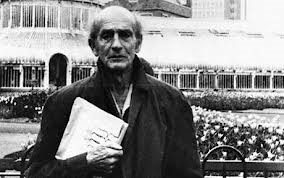
In his 1921 essay in The Sacred Wood, Eliot stated that….
…….the more perfect the artist, the more completely separate in him will be the man who suffers and the mind which creates……
Eliot, great poet that he was, lived a murky personal life – with murky political views (Leavis’s wife, Queenie, couldn’t bear to be in the same room as him) but he didn’t want people to go off his poetry WHEN THEY WENT OFF HIM! So he invented the preposterous notion that a writer’s life had NOTHING to do with his work and Leavis spread the idea around Cambridge on his bicycle…….
……where some DINOSAURS…..BELIEVE IT TO THIS DAY!!!
The great Shakespearean scholar, Prof. Roger Prior, who swam right against this tide, summed up the ‘New Criticism’ succinctly in 1995:
Modern literary criticism is dedicated to removing the author from the text. The authors thoughts and intentions, it is claimed, can never be known, and are in any case quite irrelevant to our understanding of his work. The literary work of art has nothing to do with the world. It is ‘autonomous’ so that it can allow ‘the free play of the imagination’. From this point of view the desire to know the identity of the young man or the Dark lady of the Sonnets is both pointless and vulgar…..
Let me here declare myself both ‘pointless’ and ‘vulgar’…..How could ANYONE have swallowed this tosh? The Sonnets, baffling, sublime, complex, loving, poisonous, sometimes mundane but above all human, are torn from the fabric of life itself…
I believe:
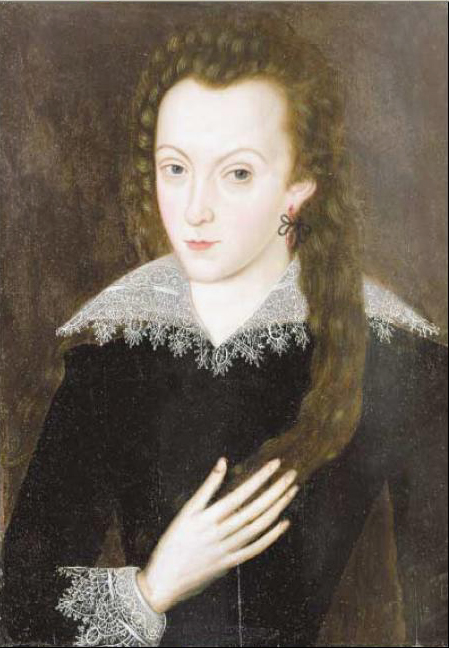
(1) The ‘lovely boy’ of the Sonnets was ‘real’ and he was Henry Wriothesley, Third Earl of Southampton….

(2) The Dark Lady was ‘real’ as well. And that she was Aemelia Lanyer – maiden name Bassano……
If you’ll accept this to be true – for the duration of this talk at least – then an extraordinary story emerges. The evidence for it you can find set out more fully in my blog – ‘The Shakespeare Code’. Simply google ‘Shakespeare’ and ‘Trotter’. And not necessarily in that order….
We’ll be lobbing our own hand grenade into Academe in the course of this talk…but we’ll give you lots of warning…
THE STORY
The story begins in 1539. King Henry VIII is on the prowl – AGAIN!
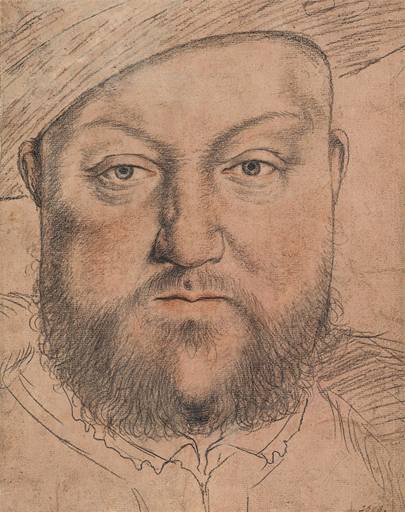
He’s got through three wives and has an heir – but he needs a spare. You could always tell when the King was a-wooing – his character changed completely…as the French Ambassador noted….
The king, who in former years has been solitary and pensive, now gives himself up to amusement, going to play every night upon the Thames, with harps, chanters and kinds of music and past time. He evidently delights now in painting and embroidery, having sent men to France, Flanders, Italy and elsewhere for masters of this art, and also for musicians and other ministers of past time….
Among the musicians he sent for were the Bassano family from Venice. Black, Sephardic Jews, they had started off in Morocco, moved to Calabria because of anti-semitism, moved to Bassano because of anti-semitism, then moved to Venice because of anti-semitism. Finally they moved to England, where, I’m happy to say, they stayed put.
The First Earl of Southampton……..

……..had heard them play and recommended them to the King. Henry was rather partial to Venetian Jews: they had helped him ransack the Old Testament to find precedents for his divorce of Catherine of Aragon…

Henry gave the Bassanos a dissolved monastery in the East End to live in, rent-free……….
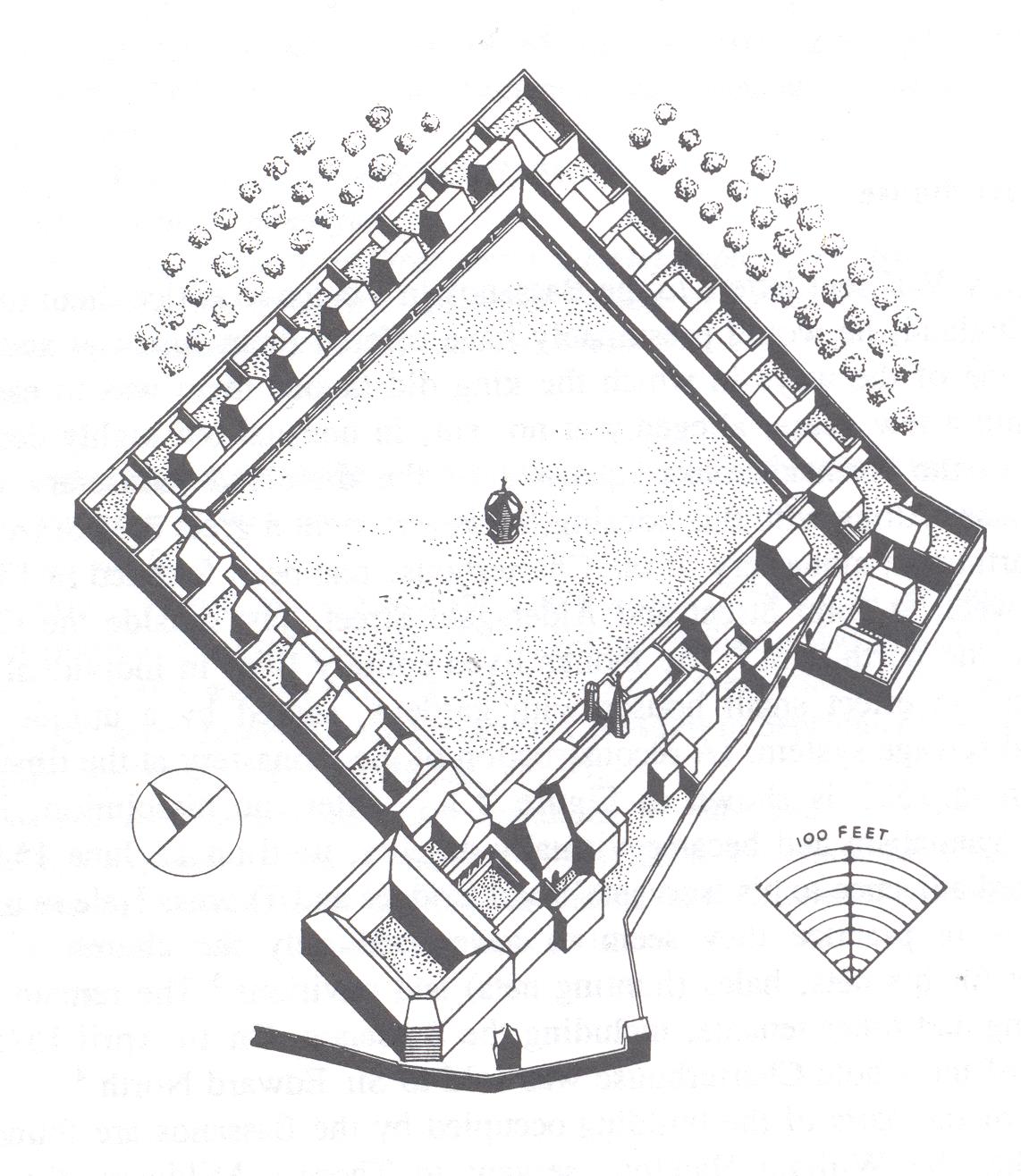
…. the King’s prestigious red livery to wear and handsome salaries….
Immediately the Bassanos began to diversify: they imported Gascon wine and bought property in London.
The youngest of the five brothers, Baptista, acquired a wife – Margaret Johnson – whom he never officially married. Well, not in Church. The odds are there was a Jewish wedding behind closed doors….
Margaret might have been English – but equally might not. Immigrants often adopted English surnames….
The couple had two sons, who died young, and two daughters who survived. The second of these was Aemilia, born in 1569 in the eleventh year of the reign of Queen Elizabeth…..
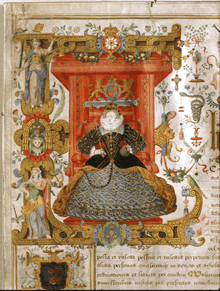
Things had already started to go wrong for Baptista financially. He had many friends – like the fiercely intellectual Calvinist family, the Vaughans: but he had many enemies as well.
There was even a plot to murder him….
He died young anyway – when Aemilia was seven – leaving his wife Margaret destitute. Queen Elizabeth herself stepped in and had Aemilia ‘adopted’ by Susan Bertie, Countess of Kent…….

…….a very young widow whom Elizabeth had recalled to the court.
Elizabeth herself took a great, kindly interest in the beautiful little dark-skinned girl….
Aemilia adored the Queen. She was now the most important rôle-model in her life. And she STAYED the most important rôle model…
When Aemilia joined the Court, the Queen was being wooed by the Duke of Anjou……

– a dashing Frenchman who swept the forty-five year old Queen off her feet.
But the Queen rejected her suitor for the greater good of England…….
……an act of strength and selflessness Aemilia was never to forget…
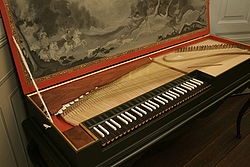
Aemilia was educated along with all the other aristocratic girls at Court – and learnt Latin and Greek. She became a master of the clavichord – and probably played on the Queen’s own keyboard – which is now in the V. and A. Museum.
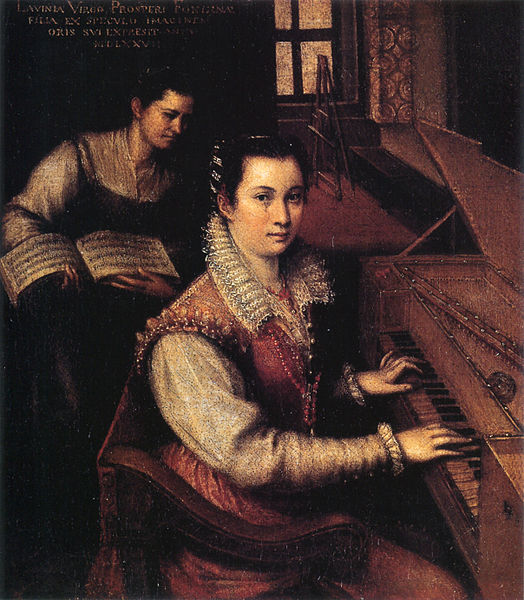
But there is a downside to everything…..
Her guardian, Susan Bertie – who never gave her a penny – ran off with a soldier-adventurer, much to Elizabeth’s fury. This left Aemelia alone and vulnerable at the age of 12….
Her mother and the rest of the Bassano family were no help to her…
..there’s an account of what happened when her uncles were asked by a sheriff to ‘move on’ in the street….
They eftsoons very obstinately refused, saying: this is the Queen’s ground and we will stand here. On being told if they would not depart by fair means they would be sent to prison, one of them, a little black man who was booted, answered in a very despiteful manner, saying: ‘Send us to prison? Thou wert good (be the words with reverence named) kiss our etc.’
Well, they were musicians…..and they did import a lot of Gascony wine….
None of this would have mattered much except for one thing: Henry Carey, Lord Hunsdon – the Queen’s cousin and the Lord Chamberlain….

He was rumoured to be Henry VIII’s illegitimate son by Mary Boleyn – and certainly had all the old King’s appetites. He was married with sixteen children – not to mention his illegitimate ones.
He was forty-five years older than Aemilia – but when, in her own words, her …
……rose scarce appeared without her bud….
…..he began to groom her…
Now it must be remembered that Juliet in Romeo and Juliet was thirteen when she embarked on her affair with Romeo – and that 13 was the age of consent in England up to late Victorian times.
But what makes this business intolerable is that Aemilia had no choice…
As Lord Chamberlain, Hunsdon employed the Bassano family as Court Musicians……..

…….And it seems they all colluded….
But there was something in it for Aemelia as well…..
She was paid a relative fortune by Hunsdon…..
She had jewellery and silk dresses, four servants and four horses…..
He willed all his precious stones to her when he died…….
……and she could do what she liked…….
…..with whoever she liked…….
….. when she wasn’t with him.
He even offered to marry her off to someone who could….
be a chimney for the smoke
…..and it did mean she got even closer to the Queen….
Hunsdon was the Queen’s personal bodyguard during the Armada…….
….so there is a good chance that Aemilia heard the Queen deliver her great, inspirational speech at Tilbury…
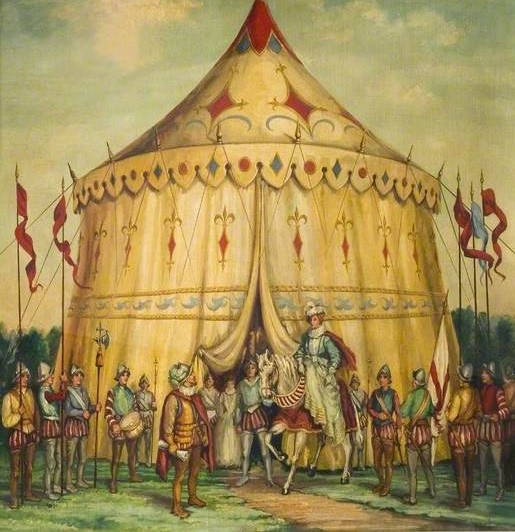
I am come amongst you, as you see, at this time, to live and die amongst you all; to lay down for my God, and for my kingdom, and my people, my honour and my blood, even in the dust. I know I have the body of a weak, feeble woman; but I have the heart and stomach of a king, and of a king of England too…..
Aemilia still played music with the Bassano family and would travel with them when they accompanied the Queen on her Progresses…..
(See: The Progresses of Queen Elizabeth’.)
Elizabeth, and her entourage of two or three hundred courtiers and soldiers, called on the Montague family at Cowdray in Sussex in 1591……..

……….then moved on to their relations, the Southampton family in Titchfield, Hampshire….
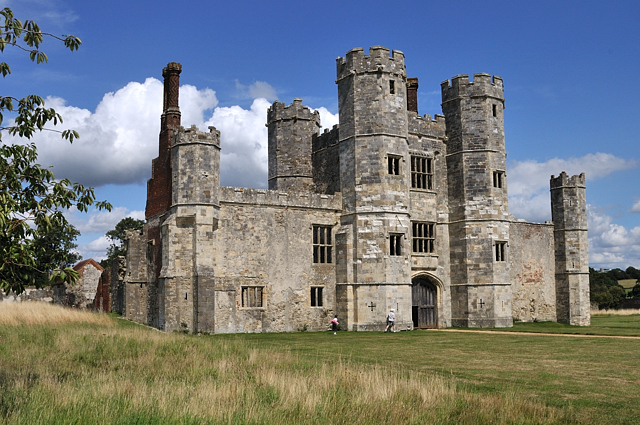
On both stops the Queen slaughtered deer with a cross-bow from a stand…..
…….to the musical accompaniment of the Bassano family…
It was on this Progress, I believe, that Aemilia’s path crossed with William Shakespeare’s….
Like Christopher Marlowe and Thomas Kyd, Shakespeare had taken a job as a tutor in an aristocratic household after the Armada: actors and playwrights were no longer popular with the public.
They were thought of as unpatriotic and effeminate…
Shakespeare had the job of tutoring the teenage Henry Wriothesley, third Earl of Southampton, a spoilt and petulant young man who hated women….

To catalogue the dysfunctions of the Southampton family would take till evensong……
…..but briefly: Henry Wriothesley’s father, the Second Earl……….
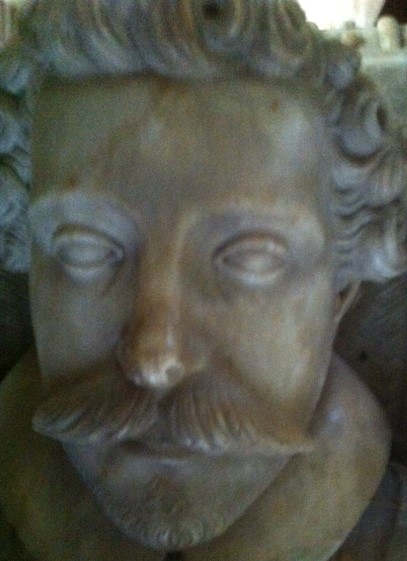
……..had accused his wife, Countess Mary…….

……of an adulterous affair with a…….
common person.
He had snatched the six year old Harry away from his mother – surrounded him with an all-male entourage and, in the words of Countess Mary….
… made his man-servant his wife.
The Second Earl was now dead – but Harry had inherited his father’s misogyny.
Countess Mary had taken a shine to Shakespeare……
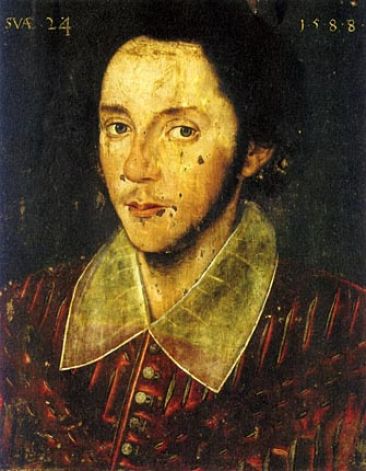
…….another ‘common person’…..
……given him fine clothes to wear….
….. and employed him as a……
generally nice person to have around.
She also commissioned Shakespeare – as a married man – to persuade Harry about the joys of married life in a series of sonnets…
Shakespeare was the wrong man for the job.
Not only had he left his older wife as soon as he possibly could……
…..he had been knocking about with a louche, bisexual crowd in London, led by the outrageous Christopher Marlowe…….

…..who openly declared that….
they be mad that love not tobacco and boys….
Shakespeare, who didn’t want to upset Mother Mary, determined to keep his hands off young Harry…
…..even if Harry himself had other plans.
Like his mother, Harry liked common people as well….
But before anything could happen, Shakespeare fell head over heels in love with Aemilia.
She had this effect on men: they went down like nine-pins.
But most of them found she promised more than she actually delivered….
Aemilia stayed on in Titchfield after the progress as the plague was raging in London…
..and she wanted a crack at gay young Harry.
He was a challenge to her…..
…… and about to come into a fortune…..
Shakespeare wrote Love’s Labour’s Lost……
…..a parody of the Queen’s visit to Hampshire…..
…..to be performed by a mixture of aristocrats and professional actors……
……and wrote a cracking part for Aemilia……
……the dark-skinned, coquettish Rosaline….

BEROWNE: Did not I dance with you in Brabant once?
ROSALIND: Did I not dance with you in Brabant once?
BEROWNE: I know you did.
ROSALIND: How needless was it then to ask the question.!
BEROWNE: You must not be so quick.
ROSALIND: ‘Tis long of you to spur me with such questions.
BEROWNE: Your wit’s too hot, it speeds too fast, ‘twill tire.
ROSALIND: Not till it leave the rider in the mire.
BEROWNE: What time of day?
ROSALIND: The hour that fools should ask.
BEROWNE: Now fair befall your mask.
ROSALIND: Fair fall the face it covers.
BEROWNE: And send you many lovers.
ROSALIND: Amen so you be none.
BEROWNE: Nay then will I be gone.’
Shakespeare, as Berowne, then declared his love for Aemelia in the middle of the play itself….

O! And I forsooth in love!
I that have been love’s whip!
A very beadle to a humorous sigh: a critic,
Nay, a night-watch constable,
A domineering pedant o’er the boy…
What I love? I sue? I seek a wife?
A woman that is like a German clock,
Still a re-pairing, ever out of frame,
And never going aright, being a watch:
But being watch’d that it may still go right.
Nay, to be perjur’d, which is worst of all.
And among the three to love the worst of all,
A whitely wanton with a velvet brow
With two pitch balls stuck in her face for eyes,
Aye, and by heaven, one that will do the deed,
Though Argus were her Eunuch and her guard…
(To find out why a dark-skinned woman should be called a ‘Whitely wanton’, please see: ‘Shakespeare in Titchfield – a summary of the evidence’.)
At the time it wasn’t fashionable to have a dark skin……..
…..(though it must be said none of Aemilia’s lovers seemed to mind)…..
…… so Berowne launches into a great ‘Black is beautiful’ plea….
Black women are more beautiful than white – he claims – because they don’t use make up and don’t use wigs.
How little did he know!
O if in black my lady’s brows be decked,
It mourns that painting and usurping hair
Should ravish doters with a false aspect;
And therefore is she born to make black fair.
Her favour turns the fashion of the days,
For native blood is counted painting now;
And therefore red, that would avoid dispraise,
Paints itself black to imitate her brow….
This is EXACTLY the same language as Sonnet 127….
In the old age black was not counted fair,
Or if it were, it bore not beauty’s name;
But now is black beauty’s successive heir,
And beauty slandered with a bastard shame:
For since each hand hath put on Nature’s power,
Fairing the foul with Art’s false borrowed face,
Sweet beauty hath no name, no holy bower,
But is profaned, if not lives in disgrace.
Rosaline is clearly the Dark Lady – and the Dark Lady is Aemilia….
Aemilia didn’t succumb to Shakespeare
……and Shakespeare registers his sexual frustration in a series of sonnets FAR too explicit for Sunday afternoon at the Grosvenor Chapel…
You can however read them on my blog….
See: Part Eight.
In despair, Shakespeare asks Harry to intercede with Aemilia……
Aemilia takes the opportunity of seducing Harry….
………and Harry takes the opportunity of punishing Shakespeare…
…….. for not being in love with HIM!
Shakespeare goes through agonies of sexual jealousy……..
He now sees Harry as an angel…….
…….and Aemilia as a devil….
…..and he tortures himself with the thought that they are probably making love to each other as he writes his sonnet…..
Two loves I have of comfort and despair,
Which, like two spirits, do suggest me still:
The better angel is a man right fair,
The worser spirit a woman coloured ill.
To win me soon to hell my female evil
Tempteth my better angel from my side,
And would corrupt my saint to be a devil,
Wooing his purity with her foul pride;
And whether that my angel be turned fiend
Suspect I may, yet not directly tell;
But being both from me, both, to each, friend,
I guess one angel in another’s hell.
Shakespeare was forced to admit to himself that he was more in love with Harry than he was with Aemilia….
That thou hast her it is not all my grief,
And yet it may be said I loved her dearly;
That she hath thee, is of my wailing chief,
A loss in love that touches me more nearly.
But something even more dramatic was about to happen.
Aemilia was about to become pregnant!
Up to then she had enjoyed what was, for a courtesan, a charmed life.
Every conception she’d had, of which there had been many, had resulted in a miscarriage.
She had come to believe that she couldn’t have children…
……now she found that she could……
…….and it changed her life…….
First of all she was immediately dropped by Lord Hunsdon.
He provided a ‘minstrel’ husband for her……
….for colour…..
…..a distant cousin of hers called Alfonso Lanyer…..
……but continued his financial support….
Aemilia had a little boy she called Henry……..
……….so that Henry Hunsdon would think it was his…….
……….and so would Henry Wriothesley….
But now, as a woman married to a mere musician…..
Aemilia was barred entré to the charmed circle of the court.
She wanted to get back again…….
And she wanted revenge…
She was, however, to return to the Southampton entourage two years later…
…..this time to play the ‘tawny tartar’, Hermia, in the premiere of A Midsummer Night’s Dream………

………to celebrate the marriage of Countess Mary to Sir Thomas Heneage…

The ménage ignited again…..
……but its flame was fitful……
Shakespeare and Southampton were now an established item…….
……..which even Countess Mary approved of…..
And Aemilia had changed…..
She had been forced to take part in a Christian wedding service at St. Botolph’s, Aldgate when she married Alfonso.
Many of her Jewish relatives had done the same ‘for colour’….
…….but Aemilia started to take Christianity seriously…..
It was, after all, the religion of the Queen….
Even Shakespeare, attacking Aemilia’s promiscuity, refers to her….
bed vow broke and new faith torn….
But she was still a woman scorned who wanted revenge…..
………..and here we are about to lob our promised hand grenade…
(THE CAST HAND OUT PAPERS TO THE AUDIENCE)
Karen and Amanda are going to read this remarkable, contemporary document, which attacks men and praises women…
…..especially women from the past….
KAREN
To all the constant Ladies and Gentlewomen of England that fear God…
AMANDA
Pardon me, (sweet Ladies) if at this point, I deprive you of a just apology in defence of your constant chastities, deserved of many of you and long sithence promised by my self, to some of you: many men in these days (whose tongues are tipped with poison) are too ready and over willing to speak and write to your disgrace….
KAREN
…..evil disposed men , who forgetting they were born of women, nourished of women, and if it were not by the means of women, would be quite extinguished out of the world, and a final end of them all, do like Vipers deface the wombs wherein they were bred, only to give way and utterance to their want of discretion and goodness
They have tempted even the patience of God himself, who gave power to wise and virtuous women, to bring down their pride and arrogancy…
…as was cruel Caesarus by the discreet counsel of noble Deborah, Judge and prophetess of Israel: and resolution of Jaell, wife of Heber the Kenite…..
AMANDA
…Let the four moral virtues be in order set down. Prudence, Fortitude, Temperance, Justice and let the holy scriptures be searched from the beginning to the end and let all the ancient histories, both ecclesiastical and profane be performance of all these virtues, have matched, if not over-matched, men of every age…..
For temperance, how say you to the wife of one Pelgius of Laodicea which being young herself and married to a young and lusty man, was yet notwithstanding contented willingly to forbear carnal pleasure her whole life…
For fortitude and temperance both, I find that in Antioch, there was a noble woman with her two daughters, rather than they would be deflowered, cast themselves all willingly into a great river and so drowned themselves
KAREN
Many other examples I could allege of divers faithful and virtuous women, who have in all ages, not only been Confessors, but also endured most cruel martyrdom for their faith in Jesus Christ. All which is sufficient to enforce all good Christians and honourable minded men to speak reverently of your sex, and especially of all virtuous and good women…..
This is an extraordinary position for a man of this period to take….
…..or any man……
…..of any age……
…..to take…….
…..including our own…..
IN FACT IT IS FAR TOO EXTRAORDINARY!!!
This document, though it reads like one cohesive statement, is taken from two different sources……
The sections Amanda read were from Willobie his Avisa ……..

……a satirical attack on Southampton and Shakespeare by one Henry Willobie…..
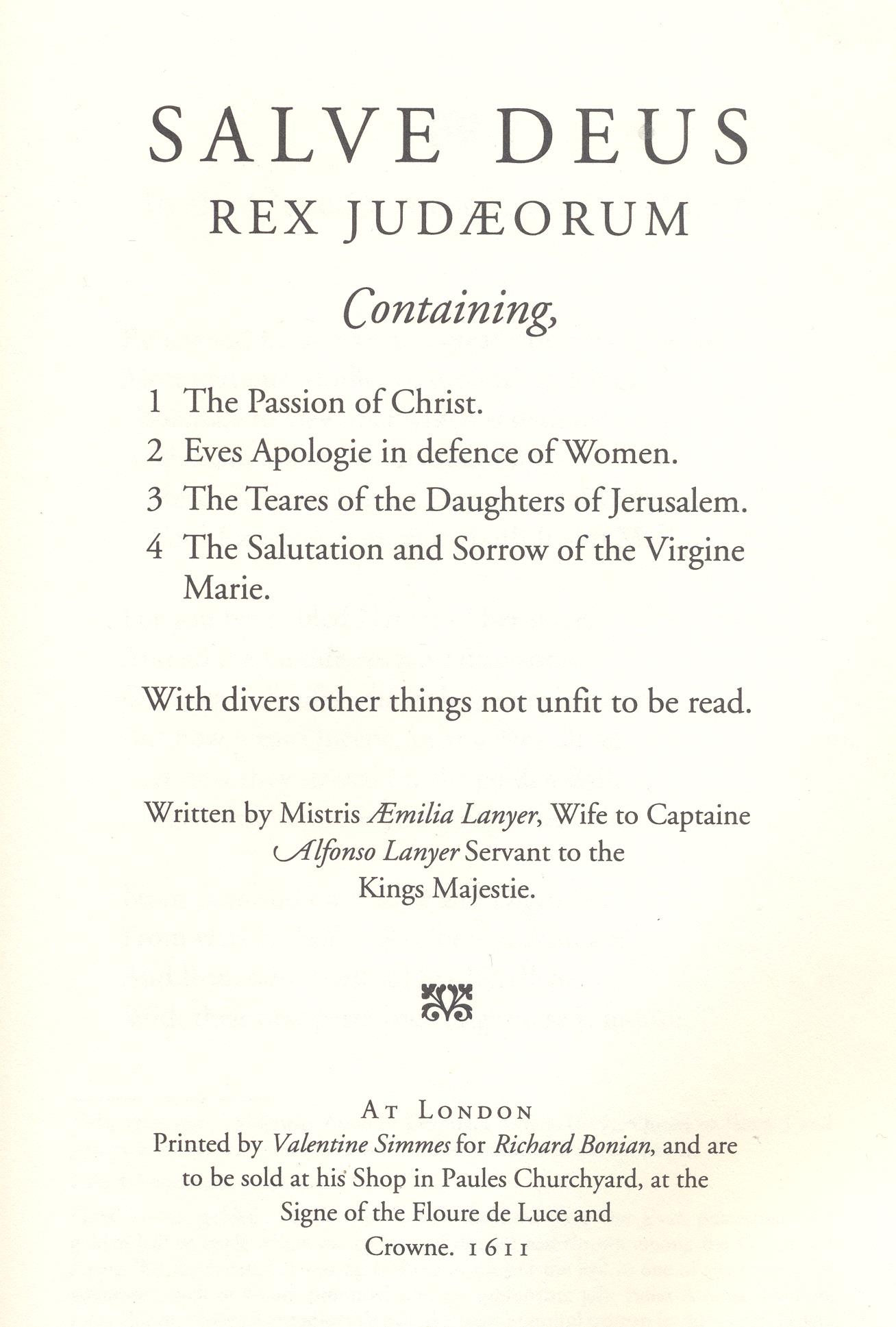
The ones marked ‘B’ are from a collection of religious verse, later published by Aemilia Lanyer, called Salve Deus Rex Judaeorum…Hail God, King of the Jews…

If they sound identical it is because they ARE identical…
……..’Henry Willobie’, I believe, is a pen-name for Aemilia Lanyer…
She wrote both works!
This is what I think happened…
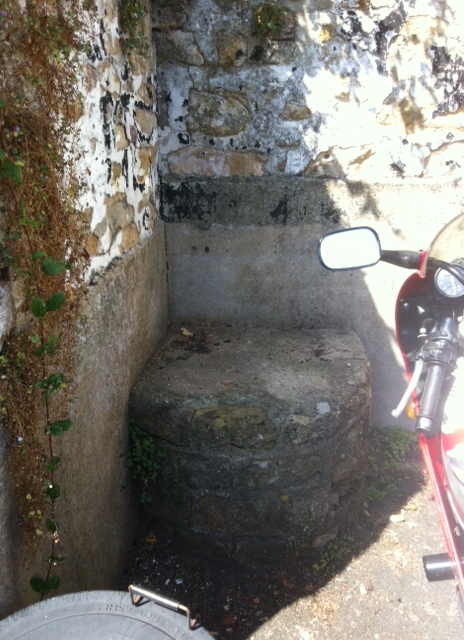
In Willobie his Avisa there are coded references to St.Augustine’s Well in Cerne Abbas in Dorset…..
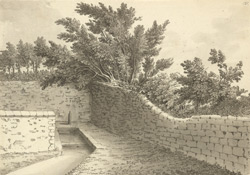
St. Augustine’s Well in 1790
This was a magical well known for its generative powers…
….. and in use to this day…

Aemilia now had one child and wanted another……
………but she had a history of miscarriages……
……..so it would be natural for her to visit and take the waters…..
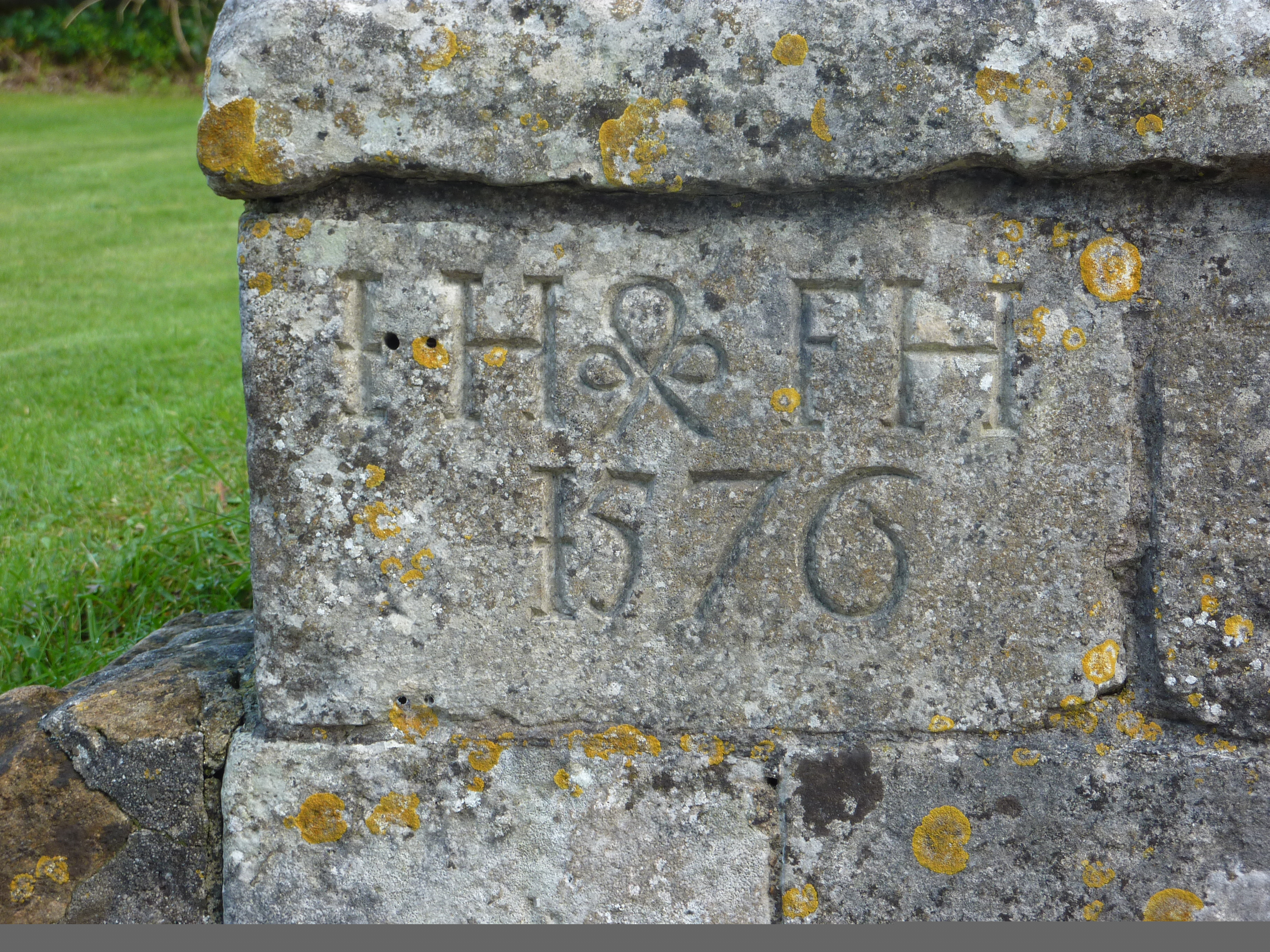
Cerne Abbas was also the home of a famous cobbling family, the Hodges…….

This photograph was kindly sent to The Code by George Mortimer
….where Sir Walter Raleigh…….

……. who had just moved into Sherborne twelve miles away, had his buskins……..

…….his soft leather shoes……made….
Raleigh had been exiled from the court because he had secretly married Bess Throckmorton…..

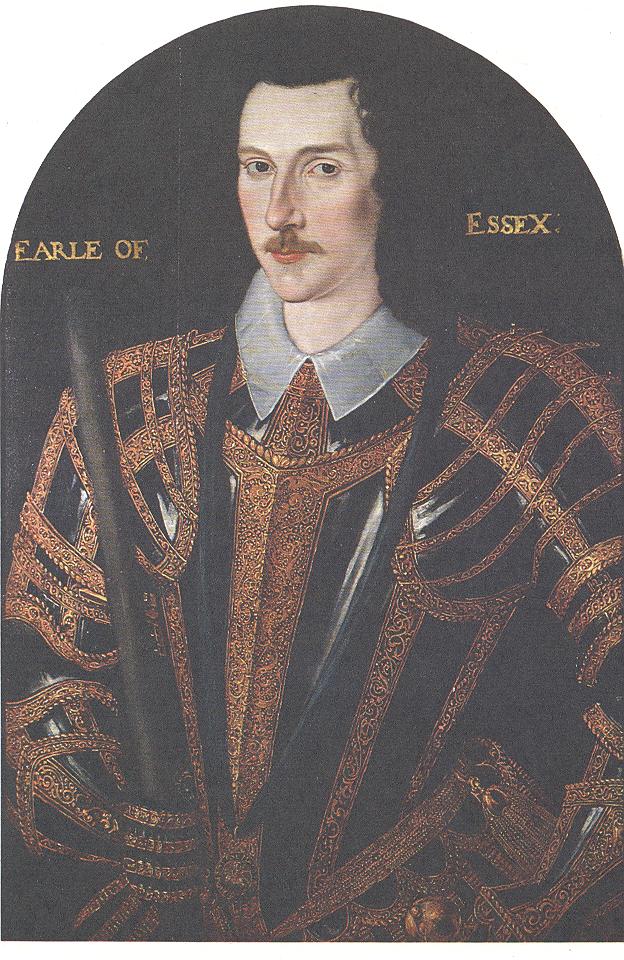
…….. and was the sworn enemy of the Earls of Essex and Southampton……….
………AND of Shakespeare who had lampooned him as the love-sick Don Armado in Love’s Labour’s Lost……

Aemilia engineered a meeting with Raleigh……
….. the whole notion of a satirical attack on their common enemies was devised…….
……Raleigh subsidised the project……
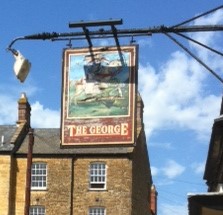
……and put Aemilia up at the George Tavern in Sherborne……..

……which is also still very much in use to this day…
See: http://www.thegeorgesherborne.co.uk/
But Aemilia had another motive for writing the book…..
It deals with a virtuous wife Avisa, who, holding tightly to her Christian beliefs, rejects all of her suitors…
…….just as Queen Elizabeth rejected Anjou.
Avisa even uses Queen Elizabeth’s motto……
Semper Eadem……
Always the same….
It was around this time that Aemilia also had an extraordinary dream which she later recounts in Salve Deus, Rex Judaeorum
Gentle reader, if thou desire to be resolved, why I give this title, Salve Deus Rex Judaeorum, know for certain that it was delivered unto me in sleep many years before I had any intent to write in this manner, and was quite out of my memory, until I had written the Passion of Christ, when immediately it came into my remembrance, what I had dreamed long before; and thinking it a significant token, that I was appointed to perform this work, I gave the very same words I received in sleep as the fittest title I could devise for this book….
At the deepest level of her unconscious, Aemilia was undergoing a conversion.
So Willobie his Avisa is not only a work of satire……
…..it is a work of piety.
Avisa is the good, chaste wife that Aemilia now wants to be.
She re-runs her affairs with Hunsdon and Southampton……..
….only this time she tells her noble suitors to take a jump in the lake….
Ladies and Gentlemen, we are proud to present selections from Willobie his Avisa….
….or…..
The True Picture of a Modest Maid…
Enter the wicked Lord Hunsdon…..

Enter the Chaste – and Chased – Avisa….
NOBLEMAN
Now is the time if thou be wise,
Thou happy maid if thou canst see
Thy happiest time take good advice
Good fortune laughs, be ruled by me:
Be ruled by me and here’s my faith,
No gold shall want thee till thy death.
Though knowest my power, thou seest my might
Thou knowest I can maintain thee well
And help thy friends unto their right;
Thou shalt with me for ever dwell,
My secret friend thou shalt remain
And all shall turn to thy great gain.
AVISA
Your Honour’s place, your riper years
Might better frame some graver talks;
Midst sunny rays this cloud appears
Sweet roses grow on prickly stalks:
If I conceive what you request
Your aim at that I most detest.
I am too base to be your wife
You choose me for your secret friend:
That is to lead a filthy life,
Whereon attends a fearful end;
Though I be poor I tell you plain
To be your whore I flat disdain.
NOBLEMAN
Forgive me wench, I did mistake,
I little thought that you could preach,
All wordly joys you must forsake
For so your great Divines do teach,
And yet beware, be not too bold,
A youngling saint – a devil old.
And yet in truth I cannot see
From whence such great discredit grows
To live in spite of every eye,
And swim in silks and bravest shows,
To take the choice of daintiest meat
And see thy betters stand and wait.
AVISA
My wisdom is the loving lord
That gives me grace which nature wants
That holds my seat from ways abhorred
And in my heart good motion plants:
With him I dare to bide the field,
Strive where you list, I cannot yield.
To swim in silks and brave array
Is that you think which women love
That leads poor maids so oft astray
That are not guarded from above?
But this I know that know not all,
Such wicked pride will have a fall.
NOBLEMAN
Thou beggar’s brat, thou dunghill mate,
Thou clownish spawn, thou country gill
My love is turned to wreakefull hate,
Go hang, and keep thy credit still,
Gad where thou list, aright or wrong,
I hope to see thee beg ere long.
AVISA
You were my friend, you were but dust,
The Lord is he whom I do love,
He hath my heart, in him I trust
And he doth guard me from above,
I weigh not death, I fear not hell,
This is enough and so farewell
(Avisa turns and exits. With a cry of rage, Hunsdon does the same)
Aemilia then turns her attention to Henry Wriothesley – ‘H.W.’…..
…… and William Shakespeare – ‘W.S.’……
H.W. being suddenly infected with the contagion of a fantastical fit at the first sight of Avisa, (Stewart looks at Kate and has a fit and collapses) pyneth a while in secret grief, at length not able any longer to endure the burning heat of so fervent a humour, bewrayeth the secresy of his disease unto his familiar friend, W.S…..
W.S.
Well met, friend Harry, what’s the cause
You look so pale with lented cheeks?
Your wanny face and sharpened nose
Show plain your mind some thing mislikes
If you will tell me what it is,
I’ll help to mend what is amiss….
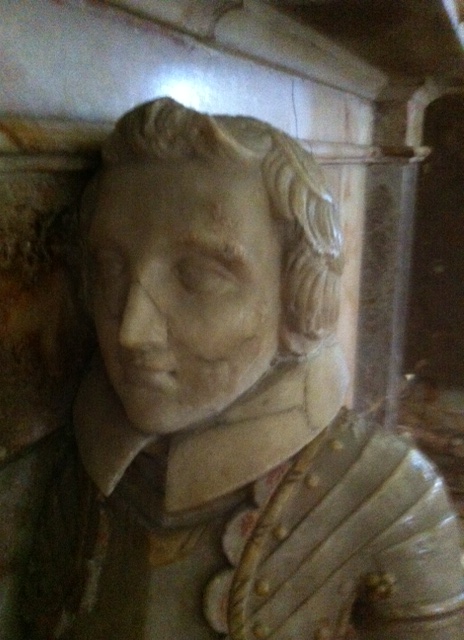
H. W.
See’st yonder house, where hangs the badge
Of England’s saint………
……when captains cry
Victorious land, to conquering rage,
Lo, there my hopeless help doth lye:
And there that friendly foe doth dwell,
That makes my heart thus rage and swell….
W.S.
Well say no more, I know thy grief
And face from whence these flames arise.
It is not hard to find relief
If thou wilt follow good advice:
She is no saint, she is no nun,
I think in time she may be won…
(Exit W.S.)
H.W.
Good fortune helps the ventering wight,
That hard attempts dare undertake:
But they that shun the doleful fight,
As coward drudges, doth forsake:
Come what there will, I mean to try,
Where win or lose I can but die….
(Enter Avisa)
Pardon sweet wench my fancies fault,
If I offend to show my heart,
Your face hath made such fierce assault,
And battered so my senseless heart:
That of my foe, my life to save,
For grace I am constrained to crave.
AVISA
In greenest grass the winding snake
With poisoned sting is soonest found,
A coward’s tongue makes greatest crack
The emptiest cask yields greatest sound,
To hidden hurt, the bird to bring,
The fouler doth most sweetly sing…
H. W.
Your husband is a worthless thing
That no way can content your mind
That no way can that pleasure bring
Your flowering years desire to find:
This will I count my chiefest bliss
If I obtain what others miss.
AVISA
Who so with filthy pleasure burns
His sinful flesh with fiery flakes
Must be consumed; whose soul returns
To endless pain in burning lakes.
You seem by this to wish me well
To teach me tread the path to hell.
(H.W. sobs)
If I do sometimes look awry
As loth to see your blobbered face
And loathe to hear a young man cry
Correct for shame this childish race,
And though you weep and wail to me,
Yet let not all these follies see.
(Avisa frowns and exits)
Avisa, with a frowning countenance turned from him and left him alone….But he, departing home, and not able by reason to rule the raging fume of this fantastical fury, cast himself upon his bed, and refusing both food and comfort for many days together, fell at length into such extremity of passionate affections, that as many as saw him had great doubt of his health, but more of his wits, (H.W. has fit) yet after a long space of absence, having procured some respite from his sorrows, he took up his pen and wrote….
(H.W. quickly mimes mimes writing and gives the letter to Avisa who quickly mimes reading it)
AVISA
Your long epistle I have read,
Great store of words, and little wit,
(For want of wit, these fancies bred)
To answer all I think not fit,
But in a word, you shall perceive,
How kindly I will take my leave.
I wish you well, and well to fare
And therewithal a goodly mind,
Devoid of lust and foolish care,
This if you seek, this shall you find.
But I must say as erst before,
Then cease to wail, and write no more…
Always the same,
Avisa.
(Avisa exits. H.W. wails, exits)
H.W. was now again stricken so dead that he hath not yet any farther assayed, nor I think ever will, and where he be alive or dead I know not and therefore I leave him.
How did Shakespeare react to Aemilia’s attack?
Obliquely!
He used her as a character in a play – ‘Othello’ – and cunningly disguised her identity by naming her…
……Aemilia….
In the First Folio edition of the plays her name is even spelt in this idiosyncratic way…..
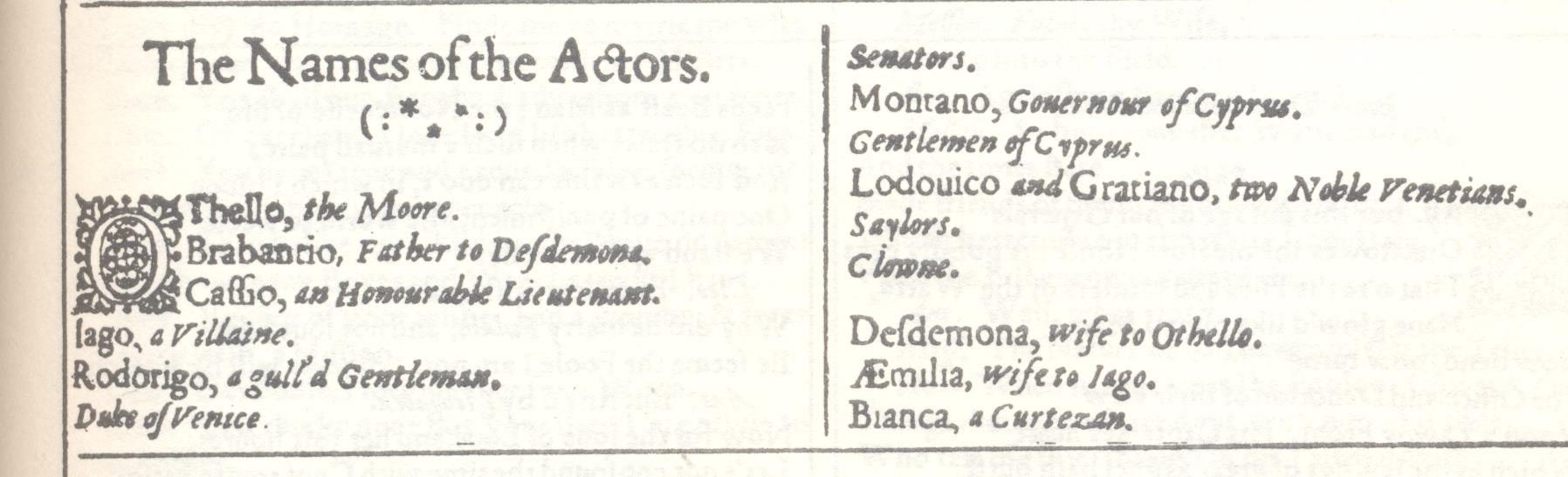
In the course of the play she declares it’s the fault of HUSBANDS if their wives are unfaithful…..
That’s our Aemilia to a T….
But I do think it is their husbands’ faults
If wives do fall: say that they slack their duties,
And pour our treasures into foreign laps,
Or else break out in peevish jealousies,
Throwing restraint upon us; or say they strike us,
Or scant our former having in despite;
Why, we have galls, and though we have some grace,
Yet have we some revenge. Let husbands know
Their wives have sense like them: they see and smell
And have their palates both for sweet and sour,
As husbands have……
Shakespeare was to have his revenge much later…..served cold…..
Aemilia didn’t make much money out of Willobie…….
Indeed, when she visited astrologer Simon Forman a couple of years later, she was thinking of becoming a prostitute again….
Hunsdon had died – and, good as his word – left her jewels worth £4,000 – £200,000 in our money.
She sank all this cash into an unlikely military career for her husband, Alfonso.
The Earl of Essex was preparing for his Azores campaign……

If Alfonso went with him, he might be knighted……
If he were knighted, Aemilia would become a lady….
….and then she could enter the Court again….
On Alfonso’s return from the Azores, Aemilia conceived a daughter, Odillia.
But Odillia died the next year while Alfonso was off on Essex’s Irish campaign…
…..and Aemilia had to bury her alone…
Alfonso was starting to borrow heavily…
…….but then help came in the form of a Protestant angel…….
……the Lady Margaret, Countess of Cumberland……..

In 1604 she invited Aemilia to join her on her brother’s rented estate in Cookham in Berkshire.
She needed help to educate her teenage daughter, Lady Anne….
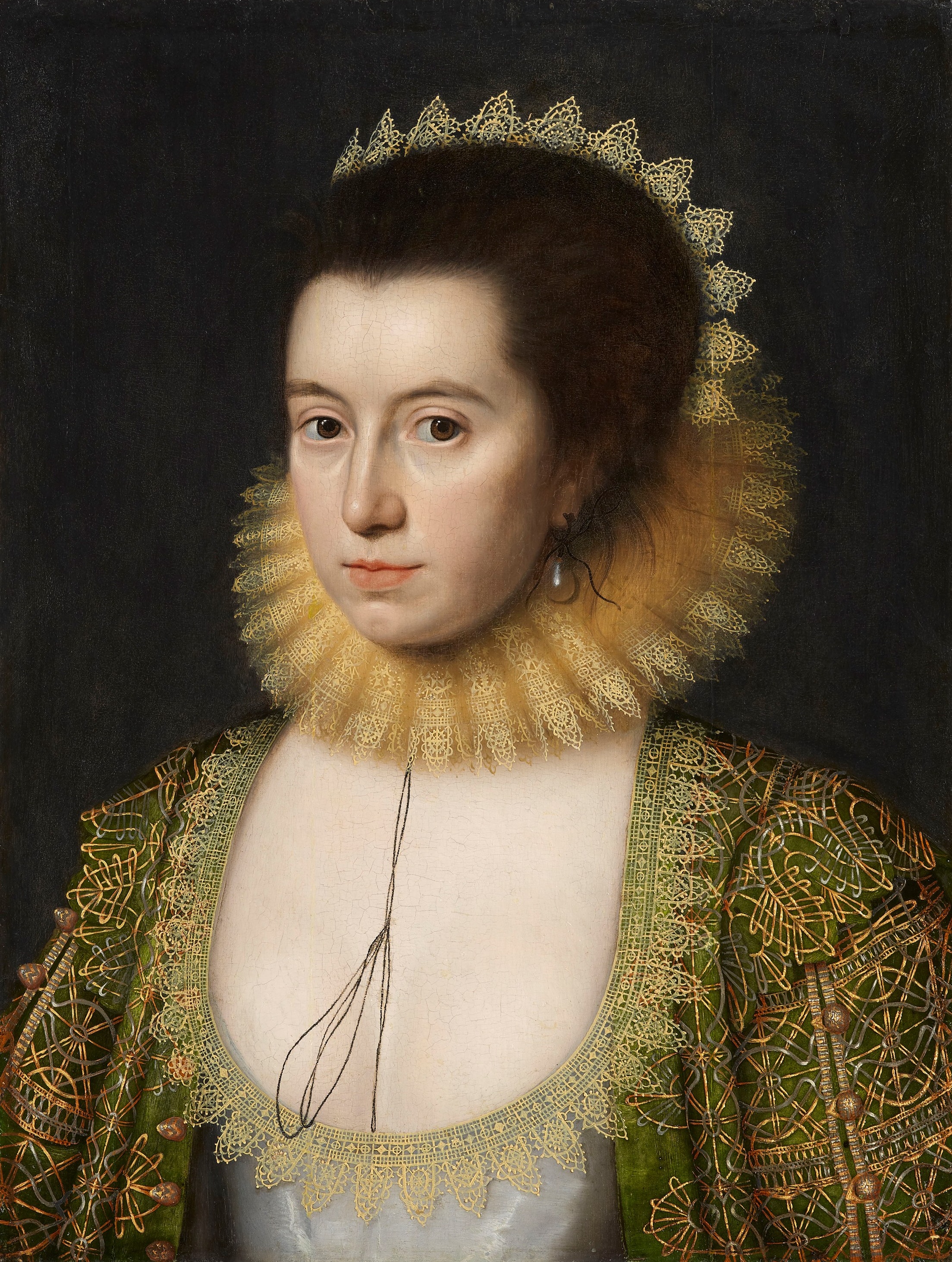
Aemilia was back in society!
And it was the happiest time of her life…..
She performed in entertainments with the women…….
…….studied theology with the women…..
…….enjoyed the beauties of the natural world with the women……
……. and formed bonds of friendship with the women…
It was Countess Margaret who encouraged Aemilia to write……
…… and asked her to compose a poem in praise of Cookham itself….

Cookham – painted by Stanley Spencer who was born there.
But by the autumn of the same year, the idyll was over.
The women had to leave Berkshire….
….and Aemilia later wrote a heart-breaking account of how she and the Countess Margaret visited their favourite oak-tree for the last time….
….and how the Countess kissed it….
To this fair tree, taking me by the hand,
You did repeat the pleasures which had past,
Seeming to grieve they could no longer last.
And with a chaste, yet loving kiss took leave,
Of which sweet kiss I did it soon bereave:
Scorning a senseless creature should possess
So rare a favour, so great happiness.
No other kiss it could receive from me,
For fear to give back what it took of thee…..
Suddenly Aemilia is a lost, little seven year old girl again………
……..craving a kiss from the Countess…
……..but having to steal it from the tree…..
Aemilia was back in the ‘real’ world….but there was good news….
Alfonso had applied for a monopoly of the hay-weighing in London.
His great friend, the music-loving Bishop of London – and later Archbishop of Canterbury – Richard Bancroft…….

…….supported this application……..
………as did Henry Wriothesley, Third Earl of Southampton!
Aemilia’s plan had worked! He clearly believed he was the father of Henry Lanyer….
But the application took years to come through and by 1609, Alfonso and Aemilia had fallen on hard times……
…… and were living in Hackney…….

…….a village outside London.
Alfonso was borrowing money and at one point had to be bound over to keep the peace….
Then Shakespeare lobbed HIS hand-grenade.
He published his sonnets….
 Now EVERYONE could read about his affair with the Earl of Southampton…
…AND with Aemilia…..
THEN a fickle courtesan….
… but NOW a respectable wife and the mother of a teenage son…….
Aemilia had to protect herself – AND revenge herself – AGAIN.
She did this by writing Salve Deus Rex Judaeorum.
…..an extraordinary, idiosyncratic jumble of the sacred and profane….
Let’s start with the profane…
….Aemilia wanted……
1. To try to make money. A dedication could bring in a reward of £2 – the equivalent of £1,000 today..
,,..so Aemilia dedicates her poem to NINE different aristocratic ladies……..
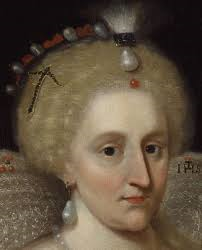
Anne of Denmark

Elizabeth Stuart

Arabella Stuart

Susan Bertie
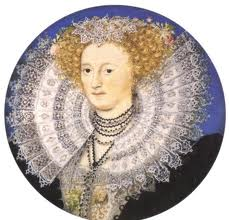
Mary Herbert

Lucy Bedford

Margaret Cliford

Katherine Suffolk

Anne Clifford
.. in the hope that one, at least, will cough up…
2. To attack men….Shakespeare in particular…..Men who attack women – are for Aemilia….
…..Vipers [who] deface the wombs wherein they were bred…..
She plunders the scriptures to show that men from Adam onwards, have been weak-minded villains.
They even crucified Jesus Christ……
……and, if they didn’t do that, they betrayed him instead…
3. To promote herself as the equal of ANY woman in England….
…aristocratic or otherwise…
..crowned or uncrowned!
In her Dedications, Aemilia claims acquaintanceship…
…..or seeks acquaintanceship.
….with women way above her own class…
..like a dementedly ambitious ‘Facebook’ subscriber today…..
But then, by her manipulation of verse…..
…… by her organisation of argument……
…….by her knowledge of scripture and history……
…… by her learning and taste……
…….she PROVES she is as sophisticated as any of her Dedicatees….
…EVEN IF SHE IS STONY BROKE!!!
And what’s wrong with being stony broke?
It brings her nearer to Jesus….
In her Dedication to Lady Margaret’s daughter, Anne, Aemilia questions the whole nature of aristocratic privilege itself…..
What difference was there when the world began,
Was it not virtue that distinguish’d all?
All sprang from one woman and one man,
Then how doth gentry come to rise and fall?
Or who is he that very rightly can
Distinguish of his birth, or tell at all
In what mean state his ancestors have bin,
Before some one of worth did honour win…
To move on to the sacred aspect of Salve Deus…..
Aemilia wanted……
1. To honour women……
For Aemilia, it was ADAM who was at fault, NOT EVE.
…Eve was…..
….simply good…..
….when she gave the apple to Adam…….
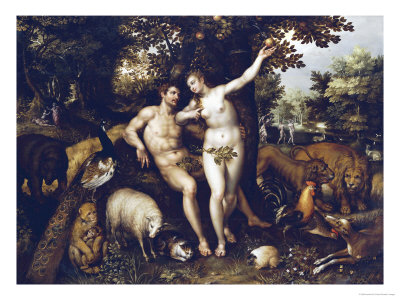
Eve was tempted by Satan himself as Adam never was………
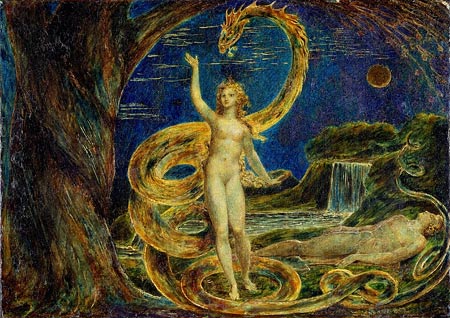
……so her only fault was….
….. too much love….
Women, for Aemilia, also played a crucial ‘loving’ rôle in the life of Jesus Christ. She explains how Christ was…..
begotten of a woman, born of a woman, nourished of a woman, obedient to a woman; and that he healed women, pardoned women, comforted women: yea, even when he was in his greatest agony and bloody sweat, going to be crucified……..
….and also in the last hour of his death, took care to dispose of a woman: after his resurrection, appeared first to a woman, sent a woman to declare his most glorious resurrection to the rest of his disciples….

2. To bring women to spiritual fulfilment….
…which Aemilia does in a truly astonishing way…..
In Willobie his Avisa, Avisa has warned ‘H.W.’ about the wiles of ‘harlots’:
Beware least that your heart be tied
To fond affects by wanton sights :
Their wandering eyes, and wanton looks
Catch fools as fish, with painted hooks.
Their lips with oil and honey flow,
Their tongues are fraught with flattering guile ;
Amidst these joys great sorrows grow……
In Salve Deus this image of a lover’s lips dripping with honey is used in a much more POSITIVE way……
…..IT IS USED OF JESUS CHRIST HIMSELF!!!
His lips like scarlet threads, yet much more sweet
Than is the sweetest honey dropping dew,
Or honey-combs, where all the Bees do meet…..
His lips, like lilies, dropping down pure myhrr
Whose love before all worlds we do prefer…
Aemilia is transmuting profane love into sacred love….
…but retaining all the vivid sensuality of the former.
She urges her Dedicatees….
…..especially those who have been disappointed by their menfolk…
…to….
Put on your wedding garments every one…..
……….and accept Jesus as your Bridegroom with his…..
…..curléd locks so beauteous to behold…
Black as a raven in her blackest hue…
Aemilia even invites her former guardian, Susan Bertie, now a widow, to….
Take this fair Bridegroom in your soul’s pure bed….
This is the sort of dazzling, challenging theology that only a former sinner could write..
….perhaps only a former prostitute..
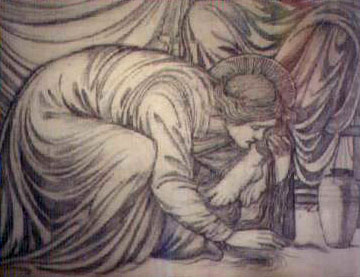
Mary Magdalen washing the feet of Jesus.
3. To inspire women to be inspired BY women…..
…..as Aemilia herself was…
……by Queen Elizabeth…
…… who by then had…..
……ascended to that rest
Of endless joy and true Eternity….
….Where Saints and Angels do attend her throne,
And she gives glory unto God alone….

…..but also by a living example…
…the Lady Margaret, Countess of Cumberland, herself…..
At Cookham she had shown Aemilia that there was life beyond the corrupt court……
….and shown her what Christianity could achieve.
She had founded an almshouse for widows at Skipton and was busy spreading the gospel….
But that didn’t stop her from practising alchemy and investing in the East India Company!
And she taught Aemilia the most important lesson in life…….
……never, ever, ever, give up….
Lady Margaret’s husband, George Clifford…….

….. had proved a gambler and adulterer and the two had separated.
Now he was planning to leave his estates to his brother instead of his wife and daughter….
Aemilia saw how Lady Margaret meticulously accumulated evidence to destroy her husband’s case…..
…….saw how she fought her cause through every court in the land……
…..and saw how she WON!
At the end of the sublime The Description of Cooke-ham…..
…. Aemilia claims that her poem will make the beautiful landscape immortal…….
This last farewell to Cooke-ham here I give,
When I am dead thy name in this may live
But she then makes a solemn vow to Lady Margaret……
Wherein I have perform’d her noble hest,
Whose virtues lodge in my unworthy breast,
And ever shall, so long as life remains,
Tying my heart to her by those rich chains….
The years after Salve Deus would sorely try this vow…
Aemilia would need to call on ALL the strengths of BOTH her heroines if she were to survive……
Alfonso died in 1613.
Financially, Aemilia was alone….
The temptation to become a prostitute again must have been overwhelming…..
….. but Lady Margaret’s virtues DID lodge in her breast…..
She decided to become a schoolteacher……
…..but, being Aemilia, she set up her own school….
In 1617 she rented a farmhouse in the parish of St. Giles-in-the Fields….

…to teach and educate the children of divers persons of worth and understanding….
However, the venture didn’t last long…..
Aemilia was jailed twice for non-payment of rent and finally evicted in 1619….
The following year Aemilia sued her landlord for recovery of money spent – and the legal documents involved describe Aemilia as an……
…..Oratrix……
…….which meant she was pleading her own cause in the Courts of Law…
How proud Lady Margaret would have been of her!
Soon, though, Aemilia’s resiliance would be tested to its limits….
Her son Henry, who was to become a flautist at the Court, married in 1623.
He had a little girl, Mary, and then a little boy, Henry.
But in 1633 he died at the age of forty – at about the age his grandfather, Baptista, had died.
He was buried at St. James’s, Clerkenwell….

Aemilia had experienced what no mother should ever experience…..
……the funeral of BOTH of her children…..
Grand-daughter Mary was ten and Grand-son Henry was three…
Aemilia vowed that what had happened to her would NEVER happen to them.
She determined that the money from the hay-weighing monopoly…
……which Alfonso’s brother Clement had seized……
…….would pass to her grandchildren when she died…
Aemilia sued Clement….
She had no money – but that didn’t stop her for a second….
She sued him…
..in forma pauperis….
….as a pauper…
….which meant she didn’t have to pay any Court costs at all….
And when this case didn’t come to Court, Aemilia had the gall to petition…
..THE PRIVY COUNCIL ITSELF!!!
She asked for £50 a year from Clement’s monopoly..
….the Privy Council agreed on £20 a year for her..
…then £10 a year for her grandchildren after her death…
Aemilia had taken on the system…..
……. and WON.
She died ten years later, aged 76, in 1645 – in the middle of the Civil War.
She was also buried at St. James’s, Clerkenwell..
..which indicates she was living with her daughter-in-law and grandchildren…..
She was described in the Parish register as a ‘pensioner’ which showed she had a steady income..
She had long out-lived her lovers, Shakespeare and Southampton..
..She had also lived longer than either of her heroines….
But by then she had become her own heroine….
Her conversion to Christianity had given her the strength to step back from herself..
….look at herself..
….judge what was right from what was wrong..
…and re-invent herself……
‘Aemilia’
……had become gloriously reborn
…as a real life…
‘Avisa’
© Stewart Trotter 26/10/2013.
To read the full ‘Willobie his Avisa Decoded’ Posts, click:
One, Introduction
Two, Topography
Three, The Crystal Well Discovered
Four, Echoes of Shakespeare
Five, The ‘Willobie’ Author revealed
Six, Aemilia Lanyer is Henrie Willobie
Seven, Avisa = Aemilia?
Eight, Avisa = The Dark Lady of the Sonnets?
Nine, Black is Beautiful
Ten, Enter Sir Walter Raleigh
Eleven, Sacred AND Profane
Twelve, Aemilia’s Heroines
The Shakespeare Code blog itself is based on three background talks Stewart also gave at the Grosvenor Chapel in 2009…..
…… called Shakespeare, Love and Religion…..
To read Part One, 1564 -1594, click: HERE
To read Part Two, 1594 -1603, click: HERE
To read Part Three, 1603 -1616, click: HERE



























 The Shakespeare Code