Feeds:
Posts
Comments

PROVING AN OLD ROMANTIC MYTH TO BE TRUE….

A TRIXIE SPECIAL

Trixie

(It’s best to read Parts One , Two and Three first)

IMPORTANT NOTICE

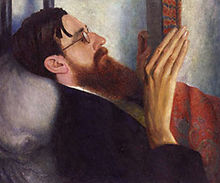
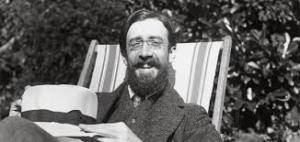
Lytton Strachey

lyttton strachey

…..in his attempt to discredit the story of Queen Elizabeth, the Earl of Essex and the Ring….

……writes, in Elizabeth and Essex, that it…

…….has been rejected by later writers , including the learned and judicious Ranke…

Strachey is referring to the German historian, Leopold von Ranke (1795-1886)……

ranke portrait

……who was awarded his ‘von’ in 1865…..

…… and was considered important enough to appear on a postage stamp…..

ranke, leopold von

He wrote, in his History of England…..

Who has not heard of the ring which Elizabeth is said to have once given to the Earl of Essex with the promise that, if it were presented to her, she would show him mercy, whatever might have occurred: he had, so the tale runs, in his last distresses wished to send it her through the Countess of Nottingham: but she was prevented from giving it by her husband who was an enemy of Essex, and so he had to die without mercy: the Queen, to whom the Countess revealed this on her death bed, fell into despair over it. The ring is still shown, and indeed several rings are shown as the true one……as also the tradition itself is extant in two somewhat varying forms; attempts have been made to get rid of the improbabilities of the first by fresh fictions in the second. They are both so late, and rest so completely on hearsay, that they can no longer stand before historical criticism.

Who has not heard of the ring?

People living in the twenty-first century, Leopold von Ranke……..

…….because you discredited the story in the nineteenth!!!

But what ARE von Ranke’s grounds for dismissing the story?

He says that that…..

…….several rings are shown as the real one….

…..as though that in itself invalidates the story…..

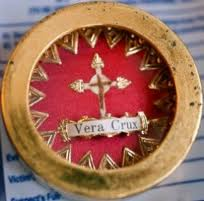
As a devout Christian, von Ranke would have known that there are thousands of pieces of the ‘true cross’ on display….

cross true

….but that doesn’t invalidate the Crucifixion!

crucifixion van dyk


Von Ranke continues…

also the tradition [of the ring story] itself is extant in two somewhat varying forms; attempts have been made to get rid of the improbabilities of the first by fresh fictions in the second. They are both so late, and rest so completely on hearsay, that they can no longer stand before historical criticism.

When von Ranke says……

 They are both so late……

……he clearly has no idea that John Webster mentions the story in 1620…..

(See:Part Two.)

Von Ranke gives himself away completely when he claims that the…..

…..fictions….

….as he likes to call them….

….rest so completely on hearsay they can no longer stand before historical criticism….

Von Ranke was trying to introduce a ‘scientific’ approach to history…..

‘Hearsay’ had no place in it…..

Von Ranke even formulated the mantra:

No documents…no history

We, fortunate enough to live in the ‘television age’,  know that this document-bound approach to history…..

….DIMINISHES THE PAST….

Your Cat has stated in her Last Post that if she wants to know about the Second World War, she reads books…..

…..BUT SHE ALSO WATCHES THE WORLD AT WAR!!!

world at war

No-one dismisses the extraordinary, living testament of the participants in the programme…..

…. as…..

….hearsay….

Documents have been enhanced….

…..even replaced….

…… by film…..

HISTORY IS NOW ANECDOTAL!!!

Von Ranke goes on to write that…..

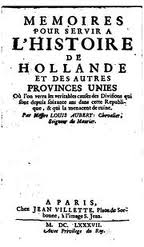
The first [version of the ring story] appears in Aubery’s Mémoires pour servir à l’histoire de Hollande 1687……Aubery asserts that he heard the history of the ring from his father’s mouth, who had heard it from Prince Maurice of Orange, to whom it had been communicated by the English ambassador Carleton……..

Again, von Ranke gives himself away by the use of the word……

 …..asserts……

It implies that Chevalier Louis Aubery de Maurier…..

…..for many years the French Minister in Holland…..

……was lying….

aubery memoirs

……also, that Aubery’s father was lying….

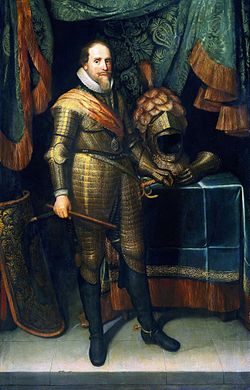
……also, that Maurice of Nassau, Prince of Orange was lying…..

maurice of nassau, prince of orange.

…..and perhaps most important of all…..

…..the English ambassador, Sir Dudley Carelton (1574-1632)…..

…. 1st Viscount Dorchester and later Secretary of State to Charles I……

…..was lying as well!

carleton dudley

Aubery goes out of his way to endorse Carelton as….

….un home d’un trés-grand mérite….bon et juste….

Carelton had travelled on an embassy to Paris in 1598 with the Earl of Nottingham……

DON279020

…..whose wife, the Countess Katherine, was at the centre of the ring story…….

howard cathereine

In 1603, when she made her death-bed confession to the Queen, Carleton was in his late twenties…..

…… and back in contact with the English Court as controller of the household to Henry Percy, ninth Earl of Northumberland…

percy, henry ninth northumberland

In 1604 Carleton became M.P. for St. Mawes and was then appointed the English Ambassador to Venice in 1610…..

In 1616 he became Ambassador to Holland….

…..when he told Prince Maurice the story of the ring….

But perhaps Carleton’s most important contribution to history is his correspondence….

He wrote gossipy, bitchy letters about court affairs….

……often to the writer John Chamberlain…..

……and these letters now provide a guide for historians……

…..sometimes the ONLY guide……

…..to what was going on at the courts of Elizabeth and James.

We learn from them intimate details about the Essex and Southampton families……

…..and the politics (and fun) of the Court Masques in the reign of King James…

masque 2

The conclusion MUST be this…….

If Carleton, instead of SPEAKING about the ring story, had WRITTEN about it in a letter….

VON RANKE WOULD HAVE TREATED THE STORY AS HISTORY…

Von Ranke continues:

According to him [Aubery] the Queen then took to her bed, dressed as she was, sprang from it a hundred times during the night, and starved herself to death. Who does not, in reading this, feel himself in a sphere of wild romance?

Von Ranke believes that the historian’s task is to tell ‘how things actually were’….

……wie es eigentlich gewesen ….

…..and to try to find the ‘essence’ of each age….

Your Cat will PROVE that Queen Elizabeth really DID behave like that…..

……that she LIVED in ‘a sphere of wild romance’…

…..and that the ‘essence’ of the Elizabethan age was its self-conscious theatricality……

THAT’S WHY IT PRODUCED SHAKESPEARE!!!

Chandos portrait

The Lutheran von Ranke wants us to find…..

…..the hand of God…..

….in history…….

…..what he calls…..

…….the holy hieroglyph……

In the blind chance, viciousness, violence and egotism of the ring story……

…..it’s hard to find God’s hand…..

And that’s one of the reasons von Ranke dismisses it……

But, as we shall see, it’s in his handling of ELIZABETH, LADY SPELMAN…..

spelman, lady elizabeth

…..that von Ranke disgraces himself completely……

(Now read: Part 5.)

‘Bye, now…

Paw-Print smallest

PROVING AN OLD ROMANTIC MYTH IS TRUE…

A TRIXIE SPECIAL

Trixie

(It’s best to read Parts One and Two first)

Lytton Strachey….

lyttton strachey

……attempting to show that the story of Queen Elizabeth, the Earl of Essex and the Ring is untrue…….

(For the full story, click: HERE)

…..writes in his Elizabeth and Essex that the story…..

 ……is explicitly contradicted by Clarendon, who, writing in the succeeding generation, was in a position to know the facts……

Edward Hyde, Lord Clarendon…..

Hyde Edward

…….1609 to 1674……

…….was born EIGHT YEARS after the execution of Essex……

…..how did that put him in a……

…..position to know the facts?

Your Cat has to look up HISTORY BOOKS…….

…..or watch  The World at War…..

world at war

……to discover what was going on eight years before she was born…..

Indeed Clarendon himself admits that….

……it may be I have been at my distance too bold an undertaker of these actions [of the Earl of Essex] which were performed so many years before my cradle….

Clarendon wrote his The Difference and Disparity between the Estates and Conditions of George Duke of Buckingham and Robert Earl of Essex

….in his younger days……

It was a reply to Sir Henry Wotton’s essay Of Robert Devereux Earl of Essex and George Villiers Duke of Buckingham Some Observations by way of PARALLEL in the time of their estates of favour…

We don’t know the exact date of Clarendon’s The Difference and Disparity: but it must have been after Buckingham’s murder in 1628.

Wotton died in 1639 and his essay, it seems, was first posthumously published in 1641. 

Scholars think it was shortly after this that the ‘younger’ Clarendon wrote his reply to Wotton.

Clarendon was then in his early thirties…….

……but had already married twice……..

(1) Anne Aycliffe in 1629 (who died the same year)…….

……and……

(2)…..Frances Aylesbury in 1639.

He also enjoyed a…..

……passionate friendship….

…..with his first wife’s cousin, Anne Villiers, Countess of Morton…..

villier anne countess of morton

Clarendon’s marriages and ‘passionate friendship’ brought him into the heart of the Villiers family……

…..so he wrote The Difference and Disparity to vindicate the memory of George Villiers, Duke of Buckingham……

viliers, george, duke of buckingham

Clarendon wanted to show that Buckingham, far from being ‘PARALLEL’ with Essex……

……was SUPERIOR to him.

Not only would this delight the Villiers family……….

……. it would also delight the reigning monarch, King Charles I…….

charles 1

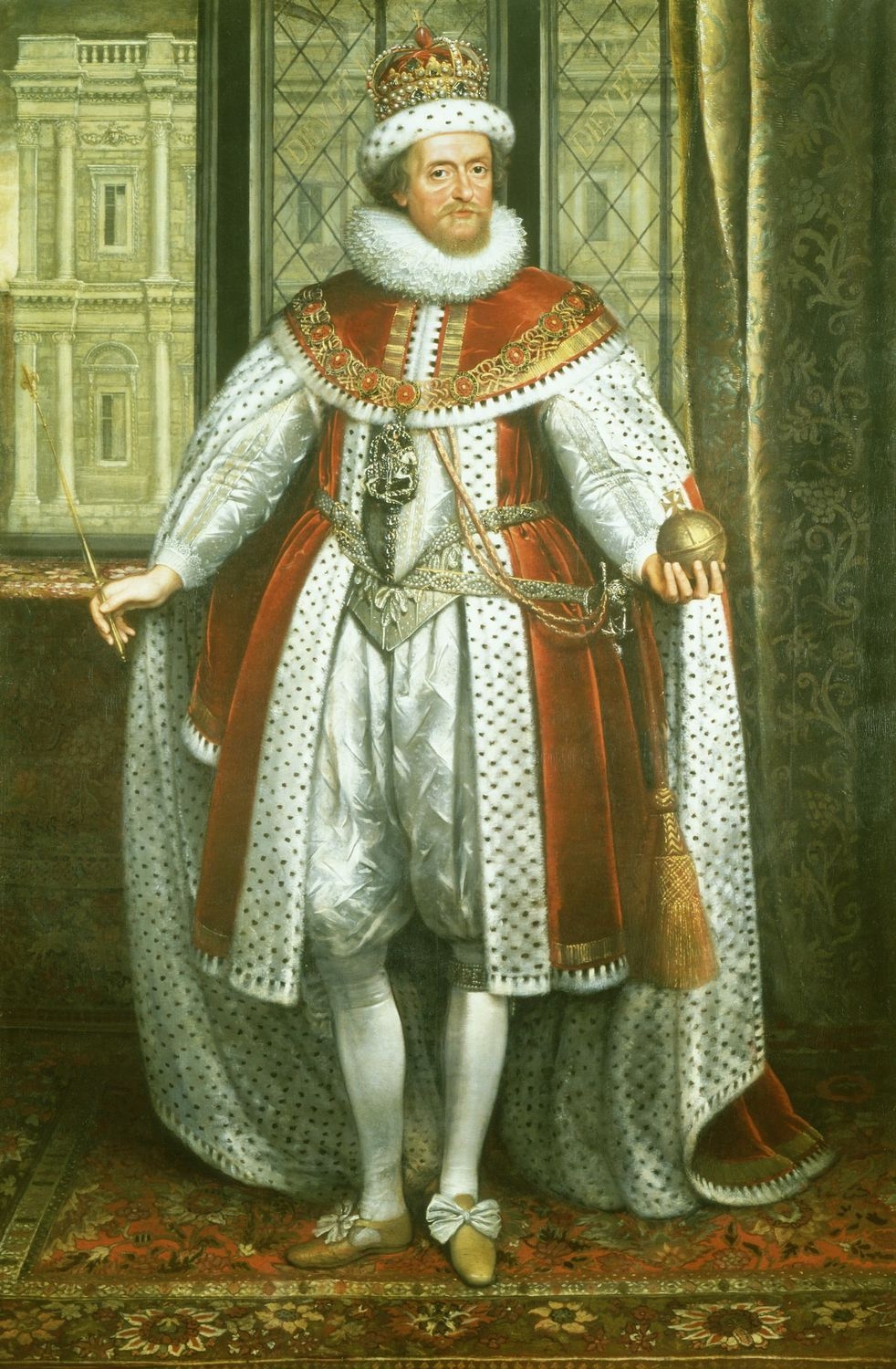
The Duke of Buckingham had been the lover of Charles’s father, King James I……

James with orb and sceptre

…and Charles inherited Buckingham as his OWN lover when King James died….

Indeed, Buckingham and Charles were rumoured to have slept together on Charles’s coronation night….

Adored by James and Charles, Buckingham was hated by everyone else……

Parliament tried to impeach him, mobs howled for his blood……..

…..and then in, 1628, he was stabbed to death in a tavern in Portsmouth……

villiers death

King Charles, in Clarendon’s own words…..

………threw himself upon his bed, lamenting with much passion and with abundance of tears…..

……and refused to leave his bedroom for two days…..

Meanwhile his subjects were celebrating Buckingham’s murder in the streets of London….

So, when Clarendon wrote his hagiography of Buckingham, it was clearly a political act.

By flattering Buckingham, he was also flattering Charles….

Clarendon even ends his essay with heavy hints that Charles should commission him to write the full Life of Buckingham…

He that shall continue this argument further may haply begin his Parallel after their deaths and not unfitly….he may say that both their memories shall have a reverend with all posterity and all nations. He may tell you many more particulars, which I dare not do….

According to Clarendon’s friend, Sir John Bramston, the ploy worked…..

…..Charles asked Clarendon to write Buckingham’s official biography.

The Difference and Disparity, then, is a pitch for a job…..

IT IS NOT A SERIOUS WORK OF HISTORY!!!

To raise up Buckingham, Clarendon HAS to put Essex down…..

To do this he tries to show that the relationship between Charles and Buckingham……

……and between Elizabeth and Essex…

elizabeth and essex

……differed in one vital aspect…..

CHARLES LOVED BUCKINGHAM…..

……BUT ELIZABETH HATED ESSEX!!!

Of the deaths of Buckingham and Essex, Clarendon writes…..

…one [Buckingham’s] had the Royal Sacrifice of his sovereign’s sorrow, which the other [Essex’s] wanted [lacked]….

Clarendon claims that Essex……

….had a spirit all too great for a subject….

….and…..

…..endeavoured rather to master than win…the Queen’s affections….

The Queen, Clarendon writes, suspected that as well as being…..

…..the darling of [her subjects’] eyes…..

…..Essex also wanted to be……

…..the darling of their hearts……

In his final summing up, Clarendon writes:

…..lastly if ever that uncouth speech fell from him to the Queen, which is delivered to us by one  that was much conversant then in the secrets of the court, that she was as crooked in her disposition as her carcase (when haply there was a little unevenness in her shoulders) all my wonder at his destruction is taken from me…..

Clarendon is using this incident to ‘prove’ that Elizabeth hated Essex……

……so he HAS to go on to dismiss the ring story…..

…..and I must needs confess I am nothing satisfied with that loose report  which hath crept into our discourse, that shortly after his miserable end (which indeed deserved compassion from all hearts) I know not upon what unseasonable delivery of a ring or jewel by some lady of the court, the queen expressed much reluctancy for his death…

BUT CLARENDON IS TRYING TO DISCREDIT A STORY WHICH HE DOESN’T EVEN KNOW…

……..OR PRETENDS HE DOESN’T KNOW….

He claims not to know whether it was ‘a ring or jewel’ that Essex sent…..

…..nor the identity of the Countess of Nottingham….

To ‘prove’ his point Clarendon continues…..

I am sure no discovery , no expression, either to his memory, friendship or dependants, can weigh down the indignity of the sermon at Pauls Cross, and set out by command, or that discourse that was so carefully commended abroad of his treasons, which were two of the most pestilent libels against his fame, that any age hath seen published against any malefactor, and could not  with that deliberation have been contrived, and justified by authority, had there not been some sparks of indignation in the Queen that were unquench’d even with his blood.

Essex was executed on 25th February, 1601…..

….Dr. William Barlowe delivered his sermon at St. Pauls Cross on the ‘first Sunday in Lent’, i.e. 1st March, 1601 ……

FOUR DAYS LATER!!!

Of course the Queen was still in a fury!

She didn’t know then that Essex had implored her forgiveness by sending the ring….

She wasn’t to learn that till 1603…..

Your Cat will show that there is NO DOUBT that Elizabeth loved Essex….

…..and in her next post will make short shrift of Strachey’s last Witness for the Prosecution….

……the German historian, Leopold von Ranke…….

ranke, leopold von

(NOW READ: Part Four.)

 ‘Bye, now…

Paw-Print smallest

PROVING AN OLD ROMANTIC MYTH IS TRUE….

A TRIXIE SPECIAL

Trixie

(It’s best to read Part One first)


Simon Adams……..

adams simon

……in his article in the new Oxford Dictionary of National Biography…….

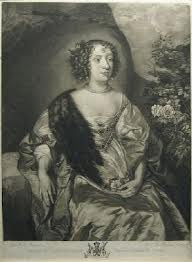
….. on Catherine Howard, Countess of Nottingham….

howard cathereine

…..writes:

the story that on her deathbed she [Countess of Nottingham] revealed to Elizabeth that in 1601 she and her husband had deliberately destroyed the earl of Essex, by secreting a ring he had sent the queen to save his life, is apocryphal, as Lytton Strachey proved…..


STRACHEY HAS DONE NO SUCH THING!!!

Let’s look at what Strachey actually wrote in his 1928 Elizabeth and Essex…

Afterwards [after the execution of Essex] a romantic story was told, which made the final catastrophe the consequence of a dramatic mishap. The tale is well known: how, in happier days, the Queen gave the Earl a ring, with the promise that, whenever he sent it back to her, it would always bring forgiveness; how Essex, leaning from a window in the Tower, entrusted the ring to a boy, bidding him take it to Lady Scrope, and beg her to present it to her Majesty; how the boy, in mistake, gave the ring to Lady Scrope’s sister, Lady Nottingham, the wife of the Earl’s enemy; how Lady Nottingham kept it, and said nothing, until, on her deathbed two years later, she confessed all to the Queen, who, with the exclamation ‘God may forgive you, Madam, but I never can!’ brought down the curtain on the tragedy. Such a narrative is appropriate enough to the place where it was first fully elaborated – a sentimental novelette; but it does not belong to history. The improbability of its details is too glaring, and the testimony against it is overpowering.

Your Cat would like to make the following three points:

1. Just because an event is described in a novel, it doesn’t make it untrue….

 …….ask Hilary Mantel about Wolf Hall…..

mantel hilary

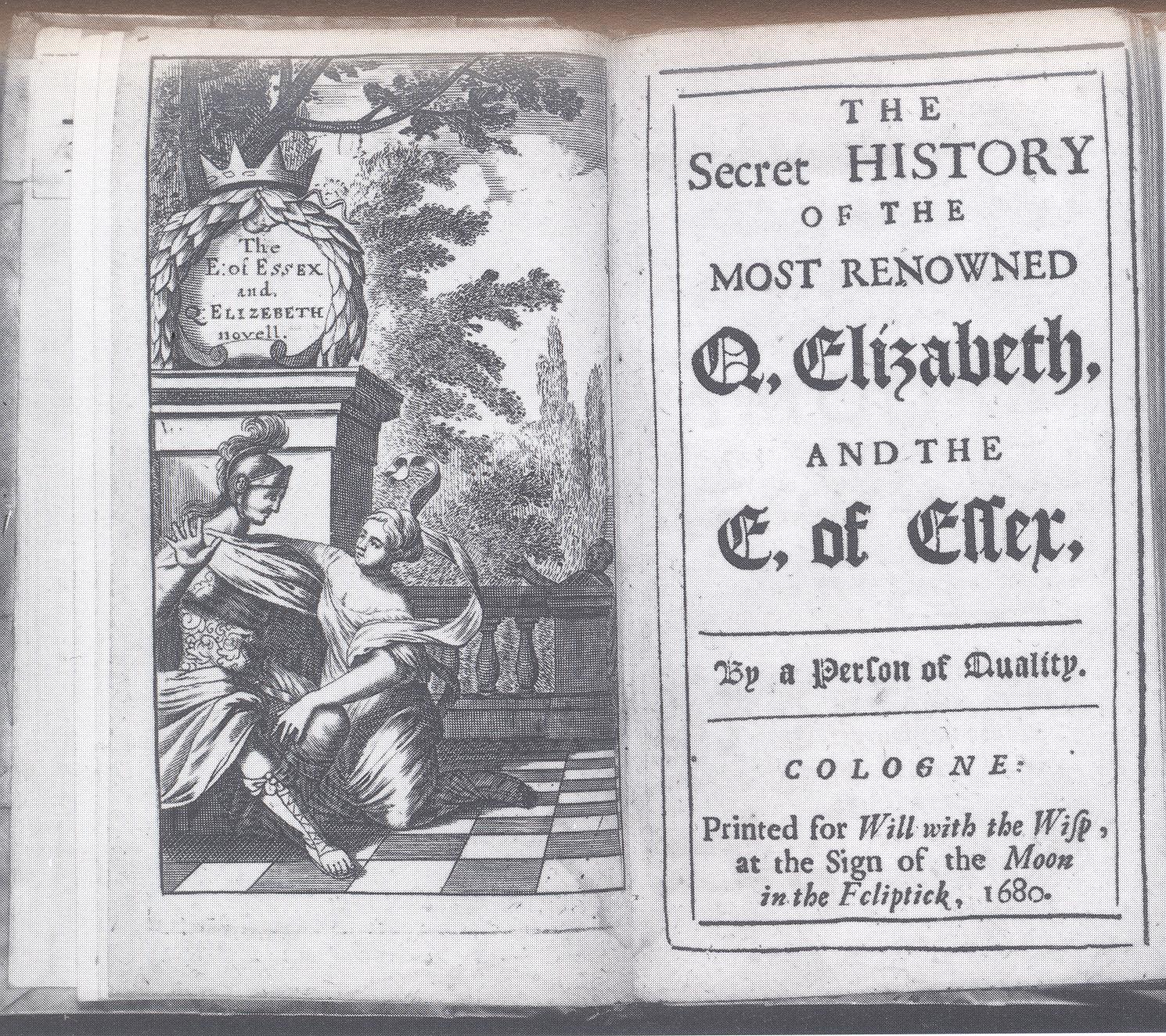
2. In a footnote to this passage, Strachey informs us that the ‘sentimental novelette’ is called The Secret History of the most renowned Queen Elizabeth and the Earl of Essex, by a Person of Quality and……

….. published in 1695.

THIS IS NOT TRUE!

It was a translation of Le Comte d’Essex. Histoire angloise by Claude Barbin – a Parisian publisher who edited the works of Molière, La Fontaine, Charles Perrault and Corneille – and who printed the book in Paris in 1678……

It was first published in English in 1680…….

…. FIFTEEN YEARS EARLIER THAN STRACHEY SAYS!!!

3. Strachey states that it was in the novel that the…..

….. narrative….

…. was…..

…first fully elaborated


THIS IS AGAIN NOT TRUE!

There is NO MENTION of Philadelphia, Lady Scrope in the novel…..

carey, philadelphia lady scrope

…..or of Essex giving the ring to a boy…..

….or the boy mistaking Katherine, Countess of Nottingham, for her sister.

THIS PART OF THE STORY CAME MUCH LATER……

…….FROM AN IMPECCABLE SOURCE…..

…….WHOM YOUR CAT WILL NAME IN SUBSEQUENT POSTS!!!

What Barbin has done in his novel is EMBELLISH the DETAILS of the story…

 …..the way a Hollywood writer would do……

He makes the Countess of Nottingham fall in love with Essex….

……but makes Essex fall in love with a sixteen year old ‘widow’, the Countess of Rutland…..

This motivates the Countess to take her revenge…..

…….and the Queen herself to explode in a paroxysm of jealous, Bette Davis-type rage…

 davis bette elizabeth

But Barbin has the BASICS of the story…..as far as he knows it… correct……

…….Elizabeth gives the ring to Essex……

……..the Countess of Nottingham doesn’t pass it on to Queen….

……..on her deathbed, the Countess confesses all….

……..and the Queen…..

………cries out, with looks full of indignation, ‘Wretch! What remorse hast thou exposed me to? Whether heaven will pardon thy crimes, I know not: sure I am I shall never forget them…..’

Strachey then adds, in the same footnote to Elizabeth and Essex:

A reference to the legend in its rudimentary form occurs in The Devil’s Law Case (circa 1620) Cf. The Works of John Webster, ed. Lucas, ii.343.

Again, by using the word…..

….legend….

……and the phrase….

….rudimentary form….

….Strachey asserts……..

……….WITHOUT EVIDENCE…….

……….that the story is in the process of being INVENTED…..

But if you look at Webster’s The Devil’s Law Case…..

…..first performed, scholars believe, around 1620….

…..the story is not in a ‘rudimentary form’ at all….

IT IS MORE COMPLETE THAN THE NOVEL!!!

In the play, the sixty year old Leonora conceives a passion for a much younger man……

…….her daughter’s suitor, the noble Contarino….

…….just as Queen Elizabeth conceived a passion for the young, noble, Earl of Essex…..

When Contarino asks for her….

….picture…..

….meaning her daughter, Jolenta, as well as her portrait….

Leonora replies…..

My looking glass is a true one, and as yet it does not terrify me….

This would put Webster’s audience in mind of Queen Elizabeth…….

……who famously called for a ‘true glass’ at the end of her reign….

When a false report comes of Contarino’s death, Leonora falls into a mad rage….

…..as Elizabeth also did at the end of her reign…..

…..when many thought she had gone insane….

…o that my care,

And absolute study to preserve his life,

Should be his absolute ruin…..

[Just as Elizabeth’s gift of the ring – which had meant to preserve Essex’s life – had been the cause of his death ……]

O I shall run mad,

For as we love our youngest children best:

So the last fruit of our affection,

Wherever we bestow it is most strong,

Most violent, most unresistable,

Since ’tis indeed our last Harvest-home,

Last merriment for winter; and we widows

As men report of our best picture-makers

We love the piece we are in hand with better

Then all the excellent work we have done before…..

And to point the parallel with Elizabeth even further, Webster has Leonara make direct reference to the Queen and the story of the ring..

…let me die

In the distraction [madness] of that worthy princess, [Queen Elizabeth]

Who loathed food, and sleep, and ceremony,

For thought of losing that brave gentleman,

She would fain have saved, had not a false conveyance

Exprest him stubborn-hearted.

Clearly Webster….

……(who was in his early twenties when Elizabeth died in 1603)….

…..and Webster’s public……..

….knew all about the story of the ring in 1620!!!

And, from the phrase……

….false conveyance….

ALSO KNEW THAT THE RING HAD BEEN DELIVERED TO THE WRONG PERSON!!!

Strachey continues…..

It [the ring story] is implicitly denied by Camden, the weightiest of contemporary historians….

William Camden……

camden, william

…..makes clear in his History of the most renowned and victorious Princess Elizabeth, late Queen of England that he has no intention of covering the private life of the Queen.

For example, Camden refuses to speculate about what happened when, in 1579, the Duc D’Anjou came to Greenwich and saw Elizabeth privately.

He states clearly that….

……the Secrets of Princes are an inextricable labyrinth….

……so he wouldn’t have discussed the ring story ANYWAY…..

…..EVEN IF HE HAD KNOWN IT TO BE TRUE!!!

Strachey goes on to state that the story….

……is explicitly contradicted by Lord Clarendon, who, writing in the succeeding generation, was in a position to know the facts……

Hyde Edward

‘Know the facts’?

Watch Trixie make CATSMEAT of this sycophantic Lord…..

……..in her next….

….. GAME-CHANGING POST….

NOW READ Part Three.

‘Bye now…

Paw-Print smallest


Trixie

 A TRIXIE SPECIAL

Brothers and Sisters of The Shakespeare Code……

Your Cat would like to recount….

 AN  OLD ROMANTIC MYTH THAT DATES FROM THE REIGN OF GOOD QUEEN BESS….

Elizabeth I, it is said……

……gave her much younger lover the Earl of Essex……

essex miniature

…….a ring to wear on his finger…..

……..as he went off to fight the wars……

…….along with the promise that if he sent it back to her…..

……she would protect him……

…..UNCONDITIONALLY!!!

No matter what he had done…….

No matter how badly he had behaved…..

SHE WOULD FORGIVE HIM EVERYTHING!!!

As Brothers and Sisters of The Code well know…..

……..Essex later rebelled against his Queen…..

……and led a group of armed men through the streets of London…..

……intending to settle the problem of succession to the English throne……

……by replacing the childless Elizabeth as monarch…..

….. with James VI of Scotland……

The Scholar King

The Scholar King

Essex, who had earlier abandoned his military post in Ireland…..

…….and had been put under house arrest……

……. was disgraced, penniless, mad and drunk at the time of the rebellion….

……..which had failed hopelessly……

(Elizabeth by then was unpopular…….

…….but not THAT unpopular…..

…….and as William Camden says, the citizens of London were relatively well off so had no intention of rebelling)

Essex was sentenced to death by beheading.

While waiting to be executed in the Tower of London….

devereux_tower

….Essex looked at the ring on his finger……

….and decided now was time to cash in the promise Queen Elizabeth had made to him…..

He knew that if he gave the ring to a guard it would end up in the hands of his enemies…..

…..and never reach Elizabeth….

So he threw it through the window of his cell to a likely-looking lad below…….

…….and told  him to take it to his friend, Philadelphia, Lady Scrope…..

……(pronounced SCROOP)….

……..the daughter of the Queen’s cousin, Henry Carey, First Lord Hunsdon……..

carey, henry, lord hunsdon

Philadelphia was the only person at Court who remained loyal to Essex……

She had worn black ever since he had fallen out of favour…..

But……..

……AS LUCK WOULD HAVE IT……

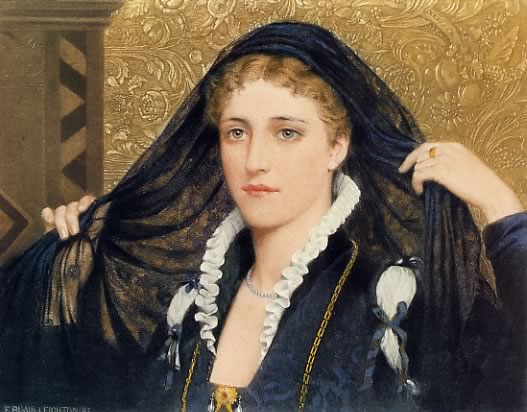
…….the boy, by mistake, took it to her sister, Katherine, the Countess of Nottingham……

catherine carey

She was Elizabeth’s most intimate female friend…..

……but she was married to Essex’s greatest enemy…..DON279020

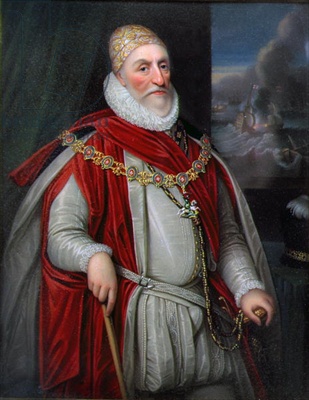
…..Charles Howard, the Lord High Admiral and First Earl of Nottingham…

HE made certain the ring never reached the Queen…..

So, on the eve of his execution……..

………Essex was waiting for a reprieve from Elizabeth…….

……..while Elizabeth was waiting for the ring.

essex execution

Two years later……..

……..when Katherine, Countess of Nottingham, was dying………

……..she asked Elizabeth to visit her……..

She showed Elizabeth the ring……..

….. and confessed what she had done.

Elizabeth struck Katherine……

……even though she was on her death-bed…..

……and cried out in fury…..

God may forgive you but I never can…

The Queen stopped eating and sleeping………

…….and refusing to go to her bed…..

…….once stood, stock still, for fifteen hours…….

She claimed to be in mourning for Katherine…..

But she was really in mourning for Essex…..

When the widowed Lord Admiral remonstrated with Elizabeth, she said….

If you were in the habit of seeing such things in your bed as I do when in mine you would not persuade me to go there.

People began to doubt the Queen’s sanity…..

……..and Elizabeth told Philadelphia, Lady Scrope…..

that she saw one night her own body exceedingly lean and fearful in a light of fire.

Elizabeth wept silently in the dark….

………spoke to few…….

Then died of grief…..

Simon Adams…..

adams simon

……the distinguished Tudor historian and children’s non-fiction editor……

……who has contributed EIGHTEEN chapters to the new Oxford Dictionary of National Biography….

……claims there that Lytton Strachey…..

lyttton strachey

……in his famous 1928 Elizabeth and Essex….

……has….

.….proved….

…..that the ring story is….

…..apocryphal….

 STRACHEY…..

….THE ARCH-CYNIC OF THE BLOOMSBURY GROUP…

…….HAS DONE NO SUCH THING MR. ADAMS!!!

IN HER FOLLOWING POSTS, YOUR CAT WILL….

‘PROVE’

….BEYOND A WHISKER OF A DOUBT….

….THAT THE WHOLE RING STORY IS TRUE…..

SHE WILL EVEN PRODUCE THE RING ITSELF!!!

NOW READ Part Two.


‘Bye, now….

Paw-Print smallest

The Chief Agent…

…..and all the NECESSARILY ANONYMOUS Agents of The Shakespeare Code……

…..are delighted to announce that on the 6th November, 2013…….

The Code received its…..

ONE HUNDRED AND TWENTY-FIVE THOUSANDTH VIEW!!!

(125,000)

In addition to this……

……TWENTY NEW COUNTRIES….

……have elected to join The Code. 

They are….

PALESTINIAN TERRITORY, OCCUPIED

palestinian occcupied

MOZAMBIQUE

mozambique

UNITED REPUBLIC OF TANZANIA

tanzania united rerpublic

LIECHTENSTEIN

liechtenstein

CÔTE D’IVOIRE

cote d'ivoire

BHUTAN

bhutan

FRENCH GUIANA

french guiana

GAMBIA

Gambia

FALKLAND ISLANDS

falkland islands

ANGOLA

angola

GUADELOUPE

guadeloupe

BURUNDI

burundi

SENEGAL

senegal

SWAZILAND

swaziland

ETHIOPIA

ethiopia

GRENADA

grenada

SYRIAN ARAB REPUBLIC

syria

MALI

mali

HAITI

haiti

TONGA

tonga

Queen Salote of Tonga who made a big hit at the Coronation by riding in the rain to greet the people of London.

Queen Salote of Tonga who made a big hit at the Coronation by riding in the rain to greet the people of London.

This brings the number of participating countries to a jaw-dropping…..

ONE HUNDRED AND EIGHTY SIX!!!

AN IMPORTANT STATEMENT FROM TRIXIE THE CAT

Trixie

Brothers and Sisters of The Shakespeare Code…..

These figures show the truly PRETERNATURAL power……

……of the World Wide Web….

……power that, at its best…….

……can have the same effect that ‘Culture’ had for Matthew  Arnold….

Arnold Matthew

It seeks to do away with classes, to make the best that has been thought and known in the world current everywhere and to make all men live in an atmosphere of sweetness and light…….

‘Sweetness and light’ ….

……..are the words that most come to mind when Your Cat thinks of……..

MICHAEL HENTGES

………the brilliant AWARD WINNING Canadian playwright…….

Canada

…….and PROFOUND Shakespearean….

….who has graciously accepted a Code Fellowship……

……and so now has the INALIENABLE RIGHT to affix the letters F. S.C…..

 ……Fellow of The Shakespeare Code….

….to his name….

Michael took the time out of a busy life…..

……( he runs a scenic painting firm as well as writing)…

……to contact The Code when it was in its infancy…..

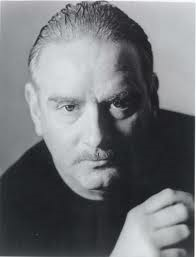
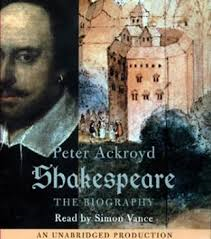
Following a reference made by Peter Ackroyd……

ackroyd looking bright

…….in his biography of Shakespeare….

ackroyd shakespeare

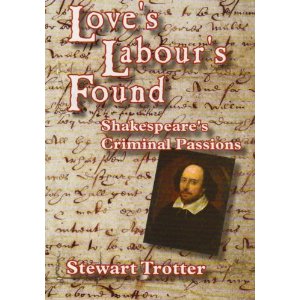
……..to Stewart Trotter’s book, Love’s Labour’s Found….

book cover

……Michael ordered it and read it….

He then wrote to Stewart……

I confess to devouring your book in one single, greedy sitting. Didn’t bother taking notes – I was too driven to keep reading because, essentially, your book arrives at pretty much the same destination that my gut instincts have been guiding me towards for some time now. I’d like to take a moment to simply acknowledge what strikes me as a truly ground-breaking contribution to the “accumulated pile” of Shakespeare-themed biography. I’m by no means in perfect agreement witheverything you propose. Would, in fact, argue select points with some vehemence. But I do believe that Love’s Labour’s Found contains numerous missing “puzzle pieces” towards solving the mystery of Shakespeare’s life in the early 1590s.

Beyond the above, your book simply resonates. In a deep and truthful way. And,cursed as I may be with an artistic sensibility, I’m inclined to trust this kind of resonance implicitly. Furthermore: I appreciate contemplating, for a change, the input of a seasoned theatre professional. So much of the debate regarding W. S. has, historically,been hijacked by scholars and, with all due respect: asking an academic to“reasonably conjecture” vis a vis the daily activities of a consummate theatre artist is akin to trusting a psychiatric nurse to diagnose the life expectancy of a 1959 Austin Healy. I mean, you could, but…wouldn’t the opinion of a certified mechanic be more appropriate? Just saying…

Michael then, at a stroke, created The Shakespeare Code…..

More questions: the Grosvenor Chapel lecture series you refer to in your Shakespeare Code Blog.

Did you ever present parts two and three?

Do you plan on publishing them?

Is your research ongoing?

My current state of excitement is not unlike that of a three month old Labrador Retriever with a really precious stick drooping from its maw.

At this point Stewart had only issued ONE POST several months before Michael’s e-mail……..

…….and there seemed to be no interest in it AT ALL…..

…….from anywhere in the world…..

Michael’s ONE LONE VOICE….

…..his selfless encouragement….

 …..his ability to see what The Code might become…..

…even before The Code ITSELF could see what it might become….

…..BROUGHT THE SHAKESPEARE CODE INTO BEING…..

NO HENTGES – NO CODE!!!

….simple as that….

When Your Cat asked him for photo of Michael, he sent, with typical modesty, an old photo of his handsome, thoughtful son, Julian…..michael 4

When pressed, he said……

I was tired of sitting @ the computer and decided to have a little fun. I rather prefer this…….

michael 5

….over an actual photograph of myself. (How’s that for predictable?)

Predictable, yes…..

BUT SWEETNESS AND LIGHT ITSELF….

The Code is more than happy to honour the wishes of…….

MICHAEL HENTGES, F.S.C….

…whose catchphrase is….

Be the person your dog thinks you are

…and who, as ‘Mr. M.H’, is truly….

THE ONLIE BEGETTER OF THE SHAKESPEARE CODE….

‘Bye now….

Paw-Print smallest

For Brothers and Sisters who want to read the latest Grosvenor Chapel talk….

‘How Shakespeare’s Dark Lady found God’

Please click: HERE!

On Sunday, 27th October, Stewart Trotter gave the following dramatised talk……

…. to a packed Grosvenor Chapel in Mayfair, London, W.1…..

grosvenor chapel

http://www.grosvenorchapel.org.uk/

The extracts were read by Amanda Walker, Kate Godfrey, Karen Little and Patrick Godfrey.

This ‘entertainment’ is a summary of The Shakespeare Code’s twelve Willobie his Avisa Decoded Posts…..

To read them in full, click: HERE.

Or click on the links at the end of this Post.

HOW SHAKESPEARE’S DARK

LADY FOUND GOD

By Stewart Trotter

In 1973, the Oxford historian, A.L. Rowse…..

rowse a.l.

…..lobbed a hand-grenade into Academe….

He had been reading the notebooks of Simon Forman – an Elizabethan astrologer…….

forman simon

……and came upon the notes he made about one of his clients – Aemilia Lanyer. He declared her to be the famous Dark Lady of Shakespeare’s Sonnets…

Rowse was right. But he was way before his time. What was called ‘The New Criticism’ still held sway, based on the ideas of the ideas of T. S. Eliot…….

t.s. eliot

……….and promoted by the Cambridge don, F.R. Leavis……

f. r. leavis

In his 1921 essay in The Sacred Wood, Eliot stated that….

…….the more perfect the artist, the more completely separate in him will be the man who suffers and the mind which creates……

Eliot, great poet that he was, lived a murky personal life – with murky political views (Leavis’s wife, Queenie, couldn’t bear to be in the same room as him) but he didn’t want people to go off his poetry WHEN THEY WENT OFF HIM! So he invented the preposterous notion that a writer’s life had NOTHING to do with his work and Leavis spread the idea around Cambridge on his bicycle…….

……where some DINOSAURS…..BELIEVE IT TO THIS DAY!!!

The great Shakespearean scholar, Prof. Roger Prior, who swam right against this tide, summed up the ‘New Criticism’ succinctly in 1995:

Modern literary criticism is dedicated to removing the author from the text. The authors thoughts and intentions, it is claimed, can never be known, and are in any case quite irrelevant to our understanding of his work. The literary work of art has nothing to do with the world. It is ‘autonomous’ so that it can allow ‘the free play of the imagination’. From this point of view the desire to know the identity of the young man or the Dark lady of the Sonnets is both pointless and vulgar…..

Let me here declare myself both ‘pointless’ and ‘vulgar’…..How could ANYONE have swallowed this tosh? The Sonnets, baffling, sublime, complex, loving, poisonous, sometimes mundane but above all human, are torn from the fabric of life itself…

I believe:

(1) The ‘lovely boy’ of the Sonnets was ‘real’ and he was Henry Wriothesley, Third Earl of Southampton….

southampton hilliard

(2) The Dark Lady was ‘real’ as well. And that she was Aemelia Lanyer – maiden name Bassano……

If you’ll accept this to be true – for the duration of this talk at least – then an extraordinary story emerges. The evidence for it you can find set out more fully in my blog – ‘The Shakespeare Code’. Simply google ‘Shakespeare’ and ‘Trotter’. And not necessarily in that order….

We’ll be lobbing our own hand grenade into Academe in the course of this talk…but we’ll give you lots of warning…

THE STORY

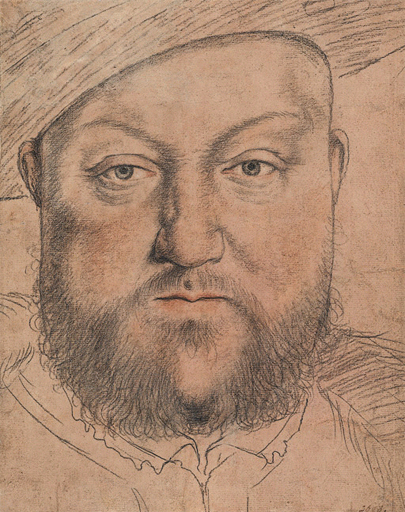
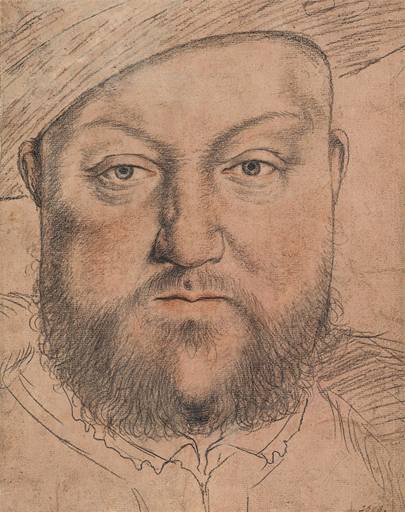
The story begins in 1539. King Henry VIII is on the prowl – AGAIN!

henry viii drawing

He’s got through three wives and has an heir – but he needs a spare. You could always tell when the King was a-wooing – his character changed completely…as the French Ambassador noted….

The king, who in former years has been solitary and pensive, now gives himself up to amusement, going to play every night upon the Thames, with harps, chanters and kinds of music and past time. He evidently delights now in painting and embroidery, having sent men to France, Flanders, Italy and elsewhere for masters of this art, and also for musicians and other ministers of past time….

Among the musicians he sent for were the Bassano family from Venice. Black, Sephardic Jews, they had started off in Morocco, moved to Calabria because of anti-semitism, moved to Bassano because of anti-semitism, then moved to Venice because of anti-semitism. Finally they moved to England, where, I’m happy to say, they stayed put.

The First  Earl of Southampton……..

thomas above clear (2)

……..had heard them play and recommended them to the King. Henry was rather partial to Venetian Jews: they had helped him ransack the Old Testament to find precedents for his divorce of Catherine of Aragon…

catherine of aragon

Henry gave the Bassanos a dissolved monastery in the East End to live in, rent-free……….

monastery east end 001

…. the King’s prestigious red livery to wear and handsome salaries….

Immediately the Bassanos began to diversify: they imported Gascon wine and bought property in London.

The youngest of the five brothers, Baptista, acquired a wife – Margaret Johnson – whom he never officially married. Well, not in Church. The odds are there was a Jewish wedding behind closed doors….

jewish wedding old

Margaret might have been English – but equally might not. Immigrants often adopted English surnames….

The couple had two sons, who died young, and two daughters who survived. The second of these was Aemilia, born in 1569 in the eleventh year of the reign of Queen Elizabeth…..

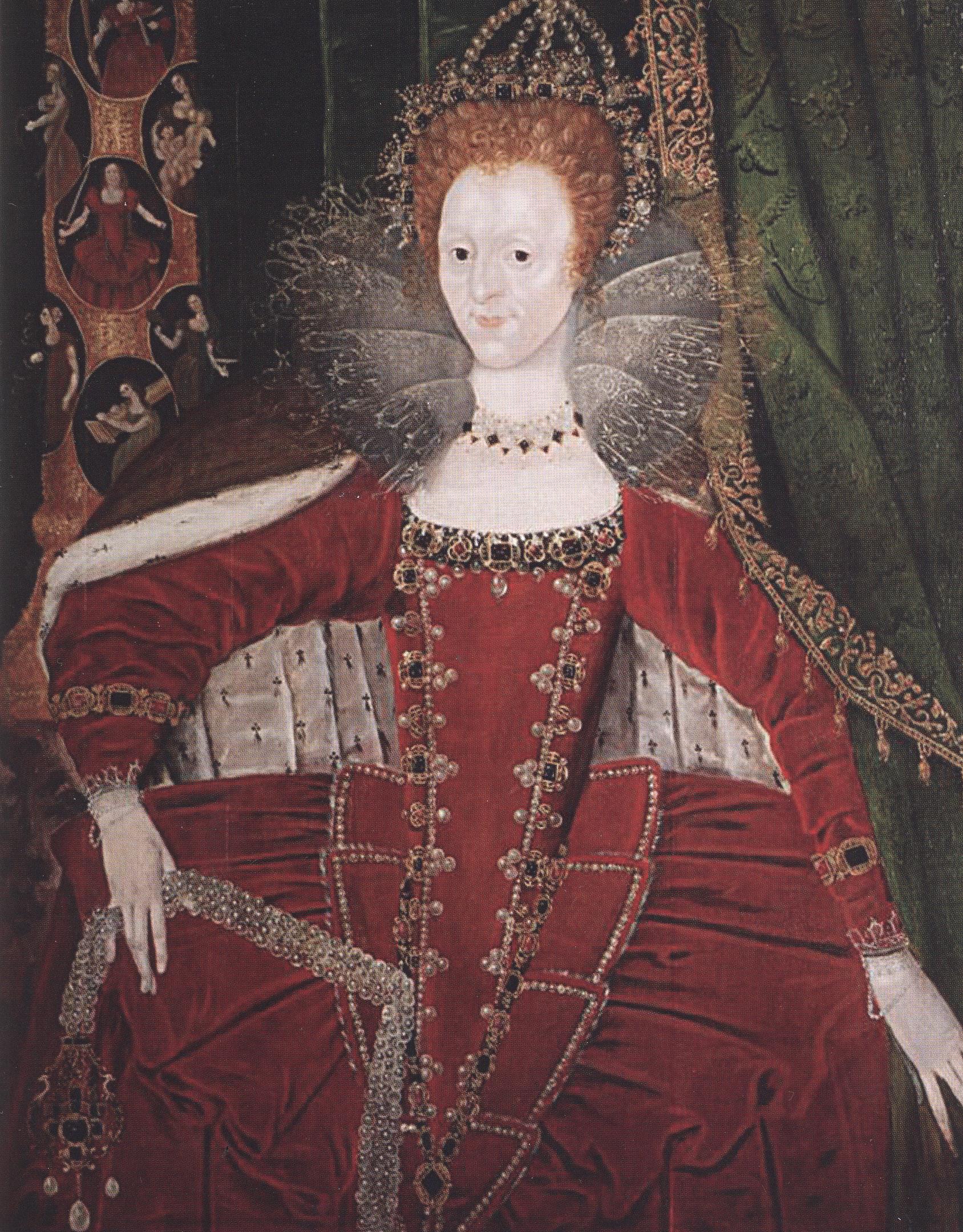
elizabeth I sitting in state

Things had already started to go wrong for Baptista financially. He had many friends – like the fiercely intellectual Calvinist family, the Vaughans: but he had many enemies as well.

There was even a plot to murder him….

He died young anyway – when Aemilia was seven – leaving his wife Margaret destitute. Queen Elizabeth herself stepped in and had Aemilia ‘adopted’ by Susan Bertie, Countess of Kent…….

susan bertie countess of kent

…….a very young widow whom Elizabeth had recalled to the court.

Elizabeth herself took a great, kindly interest in the beautiful little dark-skinned girl….

Aemilia adored the Queen. She was now the most important rôle-model in her life. And she STAYED the most important rôle model…

When Aemilia joined the Court, the Queen was being wooed by the Duke of Anjou……

monsieur

– a dashing Frenchman who swept the forty-five year old Queen off her feet.

But the Queen rejected her suitor for the greater good of England…….

 ……an act of strength and selflessness Aemilia was never to forget…

Aemilia was educated along with all the other aristocratic girls at Court – and learnt Latin and Greek. She became a master of the clavichord – and probably played on the Queen’s own keyboard – which is now in the V. and A. Museum.

clavichord painting

But there is a downside to everything…..

Her guardian, Susan Bertie – who never gave her a penny – ran off with a soldier-adventurer, much to Elizabeth’s fury. This left Aemelia alone and vulnerable at the age of 12….

Her mother and the rest of the Bassano family were no help to her…

..there’s an account of what happened when her uncles were asked by a sheriff to ‘move on’ in the street….

They eftsoons very obstinately refused, saying: this is the Queen’s ground and we will stand here. On being told if they would not depart by fair means they would be sent to prison, one of them, a little black man who was booted, answered in a very despiteful manner, saying: ‘Send us to prison? Thou wert good (be the words with reverence named) kiss our etc.’

Well, they were musicians…..and they did import a lot of Gascony wine….

None of this would have mattered much except for one thing: Henry Carey, Lord Hunsdon – the Queen’s cousin and the Lord Chamberlain….

Hunsdon - painting

He was rumoured to be Henry VIII’s illegitimate son by Mary Boleyn – and certainly had all the old King’s appetites. He was married with sixteen children – not to mention his illegitimate ones.

He was forty-five years older than Aemilia – but when, in her own words, her …

……rose scarce appeared without her bud….

…..he began to groom her…

Now it must be remembered that Juliet in Romeo and Juliet was thirteen when she embarked on her affair with Romeo – and that 13 was the age of consent in England up to late Victorian times.

But what makes this business intolerable is that Aemilia had no choice…

As Lord Chamberlain, Hunsdon employed the Bassano family as Court Musicians……..

Eliz and Leicester dancing

…….And it seems they all colluded….

But there was something in it for Aemelia as well…..

She was paid a relative fortune by Hunsdon…..

She had jewellery and silk dresses, four servants and four horses…..

He willed all his precious stones to her when he died…….

……and she could do what she liked…….

…..with whoever she liked…….

….. when she wasn’t with him.

He even offered to marry her off to someone who could….

be a chimney for the smoke

…..and it did mean she got even closer to the Queen….

Hunsdon was the Queen’s personal bodyguard during the Armada…….

….so there is a good chance that Aemilia heard the Queen deliver her great, inspirational speech at Tilbury…

(c) Thurrock Museum; Supplied by The Public Catalogue Foundation

I am come amongst you, as you see, at this time, to live and die amongst you all; to lay down for my God, and for my kingdom, and my people, my honour and my blood, even in the dust. I know I have the body of a weak, feeble woman; but I have the heart and stomach of a king, and of a king of England too…..

Aemilia still played music with the Bassano family and would travel with them when they accompanied the Queen on her Progresses…..

(See: The Progresses of Queen Elizabeth’.)

Elizabeth, and her entourage of two or three hundred courtiers and soldiers, called on the Montague family at Cowdray in Sussex in 1591……..

Cowdray Castle

……….then moved on to their relations, the Southampton family in Titchfield, Hampshire….

Titch abbey

On both stops the Queen slaughtered deer with a cross-bow from a stand…..

…….to the musical accompaniment of the Bassano family…

It was on this Progress, I believe, that Aemilia’s path crossed with William Shakespeare’s….

Like Christopher Marlowe and Thomas Kyd, Shakespeare had taken a job as a tutor in an aristocratic household after the Armada: actors and playwrights were no longer popular with the public.

They were thought of as unpatriotic and effeminate…

Shakespeare had the job of tutoring the teenage Henry Wriothesley, third Earl of Southampton, a spoilt and petulant young man who hated women….

wriothesley close up

To catalogue the dysfunctions of the Southampton family would take till evensong……

…..but briefly: Henry Wriothesley’s father, the Second Earl……….

full face second earl of southampton (2)

……..had accused his wife, Countess Mary…….

Mary Browne b and w.

 ……of an adulterous affair with a…….

 common person.

He had snatched the six year old Harry away from his mother – surrounded him with an all-male entourage and, in the words of Countess Mary….

… made his man-servant his wife.

The Second Earl was now dead – but Harry had inherited his father’s misogyny.

Countess Mary had taken a shine to Shakespeare……

shakespeare 1588

…….another ‘common person’…..

……given him fine clothes to wear….

….. and employed him as a……

 generally nice person to have around.

She also commissioned Shakespeare – as a married man – to persuade Harry about the joys of married life in a series of sonnets…

Shakespeare was the wrong man for the job.

Not only had he left his older wife as soon as he possibly could……

…..he had been knocking about with a louche, bisexual crowd in London, led by the outrageous Christopher Marlowe…….

Marlowe, Christopher

…..who openly declared that….

they be mad that love not tobacco and boys….

Shakespeare, who didn’t want to upset Mother Mary, determined to keep his hands off young Harry…

…..even if Harry himself had other plans.

Like his mother, Harry liked common people as well….

But before anything could happen, Shakespeare fell head over heels in love with Aemilia.

She had this effect on men: they went down like nine-pins.

But most of them found she promised more than she actually delivered….

Aemilia stayed on in Titchfield after the progress as the plague was raging in London…

..and she wanted a crack at gay young Harry.

He was a challenge to her…..

…… and about to come into a fortune…..

Shakespeare wrote Love’s Labour’s Lost……

…..a parody of the Queen’s visit to Hampshire…..

…..to be performed by a mixture of aristocrats and professional actors……

……and wrote a cracking part for Aemilia……

……the dark-skinned, coquettish Rosaline….

rosaline lll

BEROWNE: Did not I dance with you in Brabant once?

ROSALIND:  Did I not dance with you in Brabant once?

BEROWNE: I know you did.

ROSALIND: How needless was it then to ask the question.!

BEROWNE: You must not be so quick.

ROSALIND: ‘Tis long of you to spur me with such questions.

BEROWNE: Your wit’s too hot, it speeds too fast, ‘twill tire.

ROSALIND: Not till it leave the rider in the mire.

BEROWNE: What time of day?

ROSALIND: The hour that fools should ask.

BEROWNE: Now fair befall your mask.

ROSALIND: Fair fall the face it covers.

BEROWNE: And send you many lovers.

ROSALIND: Amen so you be none.

BEROWNE: Nay then will I be gone.’

Shakespeare, as Berowne, then declared his love for Aemelia in the middle of the play itself….

berowne

O! And I forsooth in love!

I that have been love’s whip!

A very beadle to a humorous sigh: a critic,

Nay, a night-watch constable,

A domineering pedant o’er the boy…

What I love? I sue? I seek a wife?

A woman that is like a German clock,

Still a re-pairing, ever out of frame,

And never going aright, being a watch:

But being watch’d that it may still go right.

Nay, to be perjur’d, which is worst of all.

And among the three to love the worst of all,

A whitely wanton with a velvet brow

With two pitch balls stuck in her face for eyes,

Aye, and by heaven, one that will do the deed,

Though Argus were her Eunuch and her guard…

(To find out why a dark-skinned woman should be called a ‘Whitely wanton’, please see: ‘Shakespeare in Titchfield – a summary of the evidence’.)

At the time it wasn’t fashionable to have a dark skin……..

…..(though it must be said none of Aemilia’s lovers seemed to mind)…..

…… so Berowne launches into a great ‘Black is beautiful’ plea….

Black women are more beautiful than white – he claims – because they don’t use make up and don’t use wigs.

How little did he know!

O if in black my lady’s brows be decked,

It mourns that painting and usurping hair

Should ravish doters with a false aspect;

And therefore is she born to make black fair.

Her favour turns the fashion of the days,

For native blood is counted painting now;

And therefore red, that would avoid dispraise,

Paints itself black to imitate her brow….

This is EXACTLY the same language as Sonnet 127….

In the old age black was not counted fair,

Or if it were, it bore not beauty’s name;

But now is black beauty’s successive heir,

And beauty slandered with a bastard shame:

For since each hand hath put on Nature’s power,

Fairing the foul with Art’s false borrowed face,

Sweet beauty hath no name, no holy bower,

But is profaned, if not lives in disgrace.

Rosaline is clearly the Dark Lady – and the Dark Lady is Aemilia….

Aemilia didn’t succumb to Shakespeare

……and Shakespeare registers his sexual frustration in a series of sonnets FAR too explicit for Sunday afternoon at the Grosvenor Chapel…

You can however read them on my blog….

See: Part Eight.

In despair, Shakespeare asks Harry to intercede with Aemilia……

Aemilia takes the opportunity of seducing Harry….

………and Harry takes the opportunity of punishing Shakespeare…

…….. for not being in love with HIM!

Shakespeare goes through agonies of sexual jealousy……..

He now sees Harry as an angel…….

…….and Aemilia as a devil….

…..and he tortures himself with the thought that they are probably making love to each other as he writes his sonnet…..

Two loves I have of comfort and despair,

Which, like two spirits, do suggest me still:

The better angel is a man right fair,

The worser spirit a woman coloured ill.

To win me soon to hell my female evil

Tempteth my better angel from my side,

And would corrupt my saint to be a devil,

Wooing his purity with her foul pride;

And whether that my angel be turned fiend

Suspect I may, yet not directly tell;

But being both from me, both, to each, friend,

I guess one angel in another’s hell.

Shakespeare was forced to admit to himself that he was more in love with Harry than he was with Aemilia….

That thou hast her it is not all my grief,

And yet it may be said I loved her dearly;

That she hath thee, is of my wailing chief,

A loss in love that touches me more nearly.

But something even more dramatic was about to happen.

Aemilia was about to become pregnant!

Up to then she had enjoyed what was, for a courtesan, a charmed life.

Every conception she’d had, of which there had been many, had resulted in a miscarriage.

She had come to believe that she couldn’t have children…

……now she found that she could……

…….and it changed her life…….

First of all she was immediately dropped by Lord Hunsdon.

He provided a ‘minstrel’ husband for her……

 ….for colour…..

…..a distant cousin of hers called Alfonso Lanyer…..

……but continued his financial support….

Aemilia had a little boy she called Henry……..

……….so that Henry Hunsdon would think it was his…….

……….and so would Henry Wriothesley….

But now, as a woman married to a mere musician…..

Aemilia was barred entré to the charmed circle of the court.

She wanted to get back again…….

And she wanted revenge…

She was, however, to return to the Southampton entourage two years later…

…..this time to play the ‘tawny tartar’, Hermia, in the premiere of A Midsummer Night’s Dream………

hermia black

………to celebrate the marriage of Countess Mary to Sir Thomas Heneage…

heneage, sir thomas portrait

The ménage ignited again…..

……but its flame was fitful……

Shakespeare and Southampton were now an established item…….

……..which even Countess Mary approved of…..

 And Aemilia had changed…..

She had been forced to take part in a Christian wedding service at St. Botolph’s, Aldgate when she married Alfonso.

Many of her Jewish relatives had done the same ‘for colour’….

…….but Aemilia started to take Christianity seriously…..

It was, after all, the religion of the Queen….

Even Shakespeare, attacking Aemilia’s promiscuity, refers to her….

bed vow broke and new faith torn….

But she was still a woman scorned who wanted revenge…..

………..and here we are about to lob our promised hand grenade…

(THE CAST HAND OUT PAPERS TO THE AUDIENCE)

Karen and Amanda are going to read this remarkable, contemporary document, which attacks men and praises women…

…..especially women from the past….

KAREN

To all the constant Ladies and Gentlewomen of England that fear God…

AMANDA

Pardon me, (sweet Ladies) if at this point, I deprive you of a just apology in defence of your constant chastities, deserved of many of you and long sithence promised by my self, to some of you: many men in these days (whose tongues are tipped with poison) are too ready and over willing to speak and write to your disgrace….

KAREN

…..evil disposed men , who forgetting they were born of women, nourished of women, and if it were not by the means of women, would be quite extinguished out of the world, and a final end of them all, do like Vipers deface the wombs wherein they were bred, only to give way and utterance to their want of discretion and goodness

They have tempted even the patience of God himself, who gave power to wise and virtuous women, to bring down their pride and arrogancy…

…as was cruel Caesarus by the discreet counsel of noble Deborah, Judge and prophetess of Israel: and resolution of Jaell, wife of Heber the Kenite…..

AMANDA

…Let the four moral virtues be in order set down. Prudence, Fortitude, Temperance, Justice and let the holy scriptures be searched from the beginning to the end and let all the ancient histories, both ecclesiastical and profane be performance of all these virtues, have matched, if not over-matched, men of every age…..

For temperance, how say you to the wife of one Pelgius of Laodicea which being young herself and married to a young and lusty man, was yet notwithstanding contented willingly to forbear carnal pleasure her whole life…

For fortitude and temperance both, I find that in Antioch, there was a noble woman with her two daughters, rather than they would be deflowered, cast themselves all willingly into a great river and so drowned themselves

KAREN

Many other examples I could allege of divers faithful and virtuous women, who have in all ages, not only been Confessors, but also endured most cruel martyrdom for their faith in Jesus Christ. All which is sufficient to enforce all good Christians and honourable minded men to speak reverently of your sex, and especially of all virtuous and good women…..

This is an extraordinary position for a man of this period to take….

…..or any man……

…..of any age……

…..to take…….

…..including our own…..

IN FACT IT IS FAR TOO EXTRAORDINARY!!!

This document, though it reads like one cohesive statement, is taken from two different sources……

The sections Amanda read were from Willobie his Avisa ……..

Willobie his Avisa frontispiece 001

……a satirical attack on Southampton and Shakespeare by one Henry Willobie…..

The ones marked ‘B’ are from a collection of religious verse, later published by Aemilia Lanyer, called Salve Deus Rex Judaeorum…Hail God, King of the Jews…

salve deus

If they sound identical it is because they ARE identical…

……..’Henry Willobie’, I believe, is a pen-name for Aemilia Lanyer…

She wrote both works!

This is what I think happened…

In Willobie his Avisa there are coded references to St.Augustine’s Well in Cerne Abbas in Dorset…..

St. Augustine's Well in 1790

St. Augustine’s Well in 1790

This was a magical well known for its generative powers…
….. and in use to this day…

flowers in well

Aemilia now had one child and wanted another……

………but she had a history of miscarriages……

……..so it would be natural for her to visit and take the waters…..

Cerne Abbas was also the home of a famous cobbling family, the Hodges…….

This photograph was kindly sent to The Code by George Mortimer

This photograph was kindly sent to The Code by George Mortimer

….where Sir Walter Raleigh…….

raleigh lovely

……. who had just moved into Sherborne twelve miles away, had his buskins……..

buskins

…….his soft leather shoes……made….

Raleigh had been exiled from the court because he had secretly married Bess Throckmorton…..

Bess_Throckmorton

 …….. and was the sworn enemy of the Earls of Essex and Southampton……….

………AND of Shakespeare who had lampooned him as the love-sick Don Armado in Love’s Labour’s Lost……

armado scofield

Aemilia engineered a meeting with Raleigh……

….. the whole notion of a satirical attack on their common enemies was devised…….

……Raleigh subsidised the project……

……and put Aemilia up at the George Tavern in Sherborne……..

george from left

……which is also still very much in use to this day…

See: http://www.thegeorgesherborne.co.uk/

But Aemilia had another motive for writing the book…..

It deals with a virtuous wife Avisa, who, holding tightly to her Christian beliefs, rejects all of her suitors…

…….just as Queen Elizabeth rejected Anjou.

Avisa even uses Queen Elizabeth’s motto……

Semper Eadem……

Always the same….

It was around this time that Aemilia also had an extraordinary dream which she later recounts in Salve Deus, Rex Judaeorum

Gentle reader, if thou desire to be resolved, why I give this title, Salve Deus Rex Judaeorum, know for certain that it was delivered unto me in sleep many years before I had any intent to write in this manner, and was quite out of my memory, until I had written the Passion of Christ, when immediately it came into my remembrance, what I had dreamed long before; and thinking it a significant token, that I was appointed to perform this work, I gave the very same words I received in sleep as the fittest title I could devise for this book….

At the deepest level of her unconscious, Aemilia was undergoing a conversion.

So Willobie his Avisa is not only a work of satire……

 …..it is a work of piety.

Avisa is the good, chaste wife that Aemilia now wants to be.

She re-runs her affairs with Hunsdon and Southampton……..

….only this time she tells her noble suitors to take a jump in the lake….

Ladies and Gentlemen, we are proud to present selections from Willobie his Avisa….

….or…..

The True Picture of a Modest Maid…

Enter the wicked Lord Hunsdon…..

hunsdon raffish

Enter the Chaste – and Chased – Avisa….

NOBLEMAN

Now is the time if thou be wise,

Thou happy maid if thou canst see

Thy happiest time take good advice

Good fortune laughs, be ruled by me:

Be ruled by me and here’s my faith,

No gold shall want thee till thy death.

Though knowest my power, thou seest my might

Thou knowest I can maintain thee well

And help thy friends unto their right;

Thou shalt with me for ever dwell,

My secret friend thou shalt remain

And all shall turn to thy great gain.

AVISA

Your Honour’s place, your riper years

Might better frame some graver talks;

Midst sunny rays this cloud appears

Sweet roses grow on prickly stalks:

If I conceive what you request

Your aim at that I most detest.

I am too base to be your wife

You choose me for your secret friend:

That is to lead a filthy life,

Whereon attends a fearful end;

Though I be poor I tell you plain

To be your whore I flat disdain.

NOBLEMAN

Forgive me wench, I did mistake,

I little thought that you could preach,

All wordly joys you must forsake

For so your great Divines do teach,

And yet beware, be not too bold,

A youngling saint – a devil old.

And yet in truth I cannot see

From whence such great discredit grows

To live in spite of every eye,

And swim in silks and bravest shows,

To take the choice of daintiest meat

And see thy betters stand and wait.

AVISA

My wisdom is the loving lord

That gives me grace which nature wants

That holds my seat from ways abhorred

And in my heart good motion plants:

With him I dare to bide the field,

Strive where you list, I cannot yield.

To swim in silks and brave array

Is that you think which women love

That leads poor maids so oft astray

That are not guarded from above?

But this I know that know not all,

Such wicked pride will have a fall.

NOBLEMAN

Thou beggar’s brat, thou dunghill mate,

Thou clownish spawn, thou country gill

My love is turned to wreakefull hate,

Go hang, and keep thy credit still,

Gad where thou list, aright or wrong,

I hope to see thee beg ere long.

AVISA

You were my friend, you were but dust,

The Lord is he whom I do love,

He hath my heart, in him I trust

And he doth guard me from above,

I weigh not death, I fear not hell,

This is enough and so farewell

(Avisa turns and exits. With a cry of rage, Hunsdon does the same)

Aemilia then turns her attention to Henry Wriothesley – ‘H.W.’…..

…… and William Shakespeare – ‘W.S.’……

H.W. being suddenly infected with the contagion of a fantastical fit at the first sight of Avisa, (Stewart looks at Kate and has a fit and collapses) pyneth a while in secret grief, at length not able any longer to endure the burning heat of so fervent a humour, bewrayeth the secresy of his disease unto his familiar friend, W.S…..

W.S.

Well met, friend Harry, what’s the cause

You look so pale with lented cheeks?

Your wanny face and sharpened nose

Show plain your mind some thing mislikes

lovely boy

If you will tell me what it is,

I’ll help to mend what is amiss….

H. W.

See’st yonder house, where hangs the badge

Of England’s saint………

george sign (2)

……when captains cry

Victorious land, to conquering rage,

Lo, there my hopeless help doth lye:

And there that friendly foe doth dwell,

That makes my heart thus rage and swell….

W.S.

Well say no more, I know thy grief

And face from whence these flames arise.

It is not hard to find relief

If thou wilt follow good advice:

She is no saint, she is no nun,

I think in time she may be won…

(Exit W.S.)

H.W.

Good fortune helps the ventering wight,

That hard attempts dare undertake:

But they that shun the doleful fight,

As coward drudges, doth forsake:

Come what there will, I mean to try,

Where win or lose I can but die….

(Enter Avisa)

Pardon sweet wench my fancies fault,

If I offend to show my heart,

Your face hath made such fierce assault,

And battered so my senseless heart:

That of my foe, my life to save,

For grace I am constrained to crave.

AVISA

In greenest grass the winding snake

With poisoned sting is soonest found,

A coward’s tongue makes greatest crack

The emptiest cask yields greatest sound,

To hidden hurt, the bird to bring,

The fouler doth most sweetly sing…

H. W.

Your husband is a worthless thing

That no way can content your mind

That no way can that pleasure bring

Your flowering years desire to find:

This will I count my chiefest bliss

If I obtain what others miss.

AVISA

Who so with filthy pleasure burns

His sinful flesh with fiery flakes

Must be consumed; whose soul returns

To endless pain in burning lakes.

You seem by this to wish me well

To teach me tread the path to hell.

(H.W. sobs)

If I do sometimes look awry

As loth to see your blobbered face

And loathe to hear a young man cry

Correct for shame this childish race,

And though you weep and wail to me,

Yet let not all these follies see.

(Avisa frowns and exits)

Avisa, with a frowning countenance turned from him and left him alone….But he, departing home, and not able by reason to rule the raging fume of this fantastical fury, cast himself upon his bed, and refusing both food and comfort for many days together, fell at length into such extremity of passionate affections, that as many as saw him had great doubt of his health, but more of his wits, (H.W. has fit) yet after a long space of absence, having procured some respite from his sorrows, he took up his pen and wrote….

(H.W. quickly mimes mimes writing and gives the letter to Avisa who quickly mimes reading it)

AVISA

Your long epistle I have read,

Great store of words, and little wit,

(For want of wit, these fancies bred)

To answer all I think not fit,

But in a word, you shall perceive,

How kindly I will take my leave.

I wish you well, and well to fare

And therewithal a goodly mind,

Devoid of lust and foolish care,

This if you seek, this shall you find.

But I must say as erst before,

Then cease to wail, and write no more…

Always the same,

Avisa.

(Avisa exits. H.W. wails, exits)

H.W. was now again stricken so dead that he hath not yet any farther assayed, nor I think ever will, and where he be alive or dead I know not and therefore I leave him.

How did Shakespeare react to Aemilia’s attack?

Obliquely!

He used her as a character in a play – ‘Othello’ – and cunningly disguised her identity by naming her…

……Aemilia….

In the First Folio edition of the plays her name is even spelt in this idiosyncratic way…..

Aemilia First Folio 001

In the course of the play she declares it’s the fault of HUSBANDS if their wives are unfaithful…..

That’s our Aemilia to a T….

But I do think it is their husbands’ faults

If wives do fall: say that they slack their duties,

And pour our treasures into foreign laps,

Or else break out in peevish jealousies,

Throwing restraint upon us; or say they strike us,

Or scant our former having in despite;

Why, we have galls, and though we have some grace,

Yet have we some revenge. Let husbands know

Their wives have sense like them: they see and smell

And have their palates both for sweet and sour,

As husbands have……

Shakespeare was to have his revenge much later…..served cold…..

Aemilia didn’t make much money out of Willobie…….

Indeed, when she visited astrologer Simon Forman a couple of years later, she was thinking of becoming a prostitute again….

Hunsdon had died – and, good as his word – left her jewels worth £4,000 – £200,000 in our money.

She sank all this cash into an unlikely military career for her husband, Alfonso.

The Earl of Essex was preparing for his Azores campaign……

Essex in gold armour marigold

If Alfonso went with him, he might be knighted…… 

If he were knighted, Aemilia would become a lady….

….and then she could enter the Court again….

On Alfonso’s return from the Azores, Aemilia conceived a daughter, Odillia.

But Odillia died the next year while Alfonso was off on Essex’s Irish campaign…

…..and Aemilia had to bury her alone…

Alfonso was starting to borrow heavily…

…….but then help came in the form of a Protestant angel…….

……the Lady Margaret, Countess of Cumberland……..

margaret countess of cumberland

In 1604 she invited Aemilia to join her on her brother’s rented estate in Cookham in Berkshire.

She needed help to educate her teenage daughter, Lady Anne….

clifford, anne, countess of dorset

Aemilia was back in society!

And it was the happiest time of her life…..

She performed in entertainments with the women…….

…….studied theology with the women…..

…….enjoyed the beauties of the natural world with the women……

……. and formed bonds of friendship with the women…

It was Countess Margaret who encouraged Aemilia to write……

…… and asked her to compose a poem in praise of Cookham itself….

Cookham - painted by Stanley Spencer who was born there.

Cookham – painted by Stanley Spencer who was born there.

But by the autumn of the same year, the idyll was over.

The women had to leave Berkshire….

….and Aemilia later wrote a heart-breaking account of how she and the Countess Margaret visited their favourite oak-tree for the last time….

….and how the Countess kissed it….

To this fair tree, taking me by the hand,

You did repeat the pleasures which had past,

Seeming to grieve they could no longer last.

And with a chaste, yet loving kiss took leave,

Of which sweet kiss I did it soon bereave:

Scorning a senseless creature should possess

So rare a favour, so great happiness.

No other kiss it could receive from me,

For fear to give back what it took of thee…..

Suddenly Aemilia is a lost, little seven year old girl again………

……..craving a kiss from the Countess…

……..but having to steal it from the tree…..

Aemilia was back in the ‘real’ world….but there was good news….

Alfonso had applied for a monopoly of the hay-weighing in London.

His great friend, the music-loving Bishop of London – and later Archbishop of Canterbury – Richard Bancroft…….

Bancfroft Richard

 …….supported this application……..

………as did Henry Wriothesley, Third Earl of Southampton!

Aemilia’s plan had worked! He clearly believed he was the father of Henry Lanyer….

But the application took years to come through and by 1609, Alfonso and Aemilia had fallen on hard times……

…… and were living in Hackney…….

hackney village (2)

…….a village outside London.

Alfonso was borrowing money and at one point had to be bound over to keep the peace….

Then Shakespeare lobbed HIS hand-grenade.

He published his sonnets….

sonnet frontNow EVERYONE could read about his affair with the Earl of Southampton…

…AND with Aemilia…..

THEN a fickle courtesan….

… but NOW a respectable wife and the mother of a teenage son…….

Aemilia had to protect herself – AND revenge herself – AGAIN.

She did this by writing Salve Deus Rex Judaeorum.

…..an extraordinary, idiosyncratic jumble of the sacred and profane….

Let’s start with the profane…

….Aemilia wanted……

1. To try to make money. A dedication could bring in a reward of £2 – the equivalent of £1,000 today..

,,..so Aemilia dedicates her poem to NINE different aristocratic ladies……..

Anne of Denmark

Anne of Denmark

Elizabeth Stuart

Elizabeth Stuart

Arabella Stuart

Arabella Stuart

Susan Bertie

Susan Bertie

Mary Herber

Mary Herbert

Lucy Bedford

Lucy Bedford

Margaret Cliford

Margaret Cliford

Katherine Suffolk

Katherine Suffolk

Anne Clifford

Anne Clifford

.. in the hope that one, at least, will cough up…

2. To attack men….Shakespeare in particular…..Men who attack women – are for Aemilia….

…..Vipers [who] deface the wombs wherein they were bred…..

She plunders the scriptures to show that men from Adam onwards, have been weak-minded villains.

They even crucified Jesus Christ……

 ……and, if they didn’t do that, they betrayed him instead…

3. To promote herself as the equal of ANY woman in England….

…aristocratic or otherwise…

..crowned or uncrowned!

In her Dedications, Aemilia claims acquaintanceship…

…..or seeks acquaintanceship.

….with women way above her own class…

..like a dementedly ambitious ‘Facebook’ subscriber today…..

But then, by her manipulation of verse…..

…… by her organisation of argument……

…….by her knowledge of scripture and history……

…… by her learning and taste……

…….she PROVES she is as sophisticated as any of her Dedicatees….

…EVEN IF SHE IS STONY BROKE!!!

And what’s wrong with being stony broke?

It brings her nearer to Jesus….

In her Dedication to Lady Margaret’s daughter, Anne, Aemilia questions the whole nature of aristocratic privilege itself…..

What difference was there when the world began,

Was it not virtue that distinguish’d all?

All sprang from one woman and one man,

Then how doth gentry come to rise and fall?

Or who is he that very rightly can

Distinguish of his birth, or tell at all

In what mean state his ancestors have bin,

Before some one of worth did honour win…

To move on to the sacred aspect of Salve Deus…..

Aemilia wanted……

1. To honour women……

For Aemilia, it was ADAM who was at fault, NOT EVE.

…Eve was…..

….simply good…..

….when she gave the apple to Adam…….

eve tempting adam

Eve was tempted by Satan himself as Adam never was………

satan tempting eve

……so her only fault was….

….. too much love….

Women, for Aemilia, also played a crucial ‘loving’ rôle in the life of Jesus Christ. She explains how Christ was…..

begotten of a woman, born of a woman, nourished of a woman, obedient to a woman; and that he healed women, pardoned women, comforted women: yea, even when he was in his greatest agony and bloody sweat, going to be crucified……..

daughters of jerusalem 1 (2)

….and also in the last hour of his death, took care to dispose of a woman: after his resurrection, appeared first to a woman, sent a woman to declare his most glorious resurrection to the rest of his disciples….

2. To bring women to spiritual fulfilment….

…which Aemilia does in a truly astonishing way…..

In Willobie his Avisa, Avisa has warned ‘H.W.’ about the wiles of ‘harlots’:

Beware least that your heart be tied

To fond affects by wanton sights :

Their wandering eyes, and wanton looks

Catch fools as fish, with painted hooks.

Their lips with oil and honey flow,

Their tongues are fraught with flattering guile ;

Amidst these joys great sorrows grow……

In Salve Deus this image of a lover’s lips dripping with honey is used in a much more POSITIVE way……

…..IT IS USED OF JESUS CHRIST HIMSELF!!!

His lips like scarlet threads, yet much more sweet

Than is the sweetest honey dropping dew,

Or honey-combs, where all the Bees do meet…..

His lips, like lilies, dropping down pure myhrr

Whose love before all worlds we do prefer…

Aemilia is transmuting profane love into sacred love….

…but retaining all the vivid sensuality of the former.

She urges her Dedicatees….

…..especially those who have been disappointed by their menfolk…

…to….

Put on your wedding garments every one…..

……….and accept Jesus as your Bridegroom with his…..

…..curléd locks so beauteous to behold…

Black as a raven in her blackest hue…

Aemilia even invites her former guardian, Susan Bertie, now a widow, to….

Take this fair Bridegroom in your soul’s pure bed….

This is the sort of dazzling, challenging theology that only a former sinner could write..

….perhaps only a former prostitute..

Mary Magdalen washing the feet of Jesus.

Mary Magdalen washing the feet of Jesus.

3. To inspire women to be inspired BY women…..

…..as Aemilia herself was…

……by Queen Elizabeth…

…… who by then had…..

……ascended to that rest

Of endless joy and true Eternity….

….Where Saints and Angels do attend her throne,

And she gives glory unto God alone….

elizabeth and death

…..but also by a living example…

…the Lady Margaret, Countess of Cumberland, herself…..

At Cookham she had shown Aemilia that there was life beyond the corrupt court……

….and shown her what Christianity could achieve.

She had founded an almshouse for widows at Skipton and was busy spreading the gospel….

But that didn’t stop her from practising alchemy and investing in the East India Company!

And she taught Aemilia the most important lesson in life…….

……never, ever, ever, give up….

churchill painting

Lady Margaret’s husband, George Clifford…….

George_Clifford_3rd_Earl_of_Cumberland_after_Nicholas_Hilliard

….. had proved a gambler and adulterer and the two had separated.

Now he was planning to leave his estates to his brother instead of his wife and daughter….

Aemilia saw how Lady Margaret meticulously accumulated evidence to destroy her husband’s case…..

…….saw how she fought her cause through every court in the land……

…..and saw how she WON!

At the end of the sublime The Description of Cooke-ham…..

…. Aemilia claims that her poem will make the beautiful landscape immortal…….

This last farewell to Cooke-ham here I give,

When I am dead thy name in this may live

But she then makes a solemn vow to Lady Margaret……

Wherein I have perform’d her noble hest,

Whose virtues lodge in my unworthy breast,

And ever shall, so long as life remains,

Tying my heart to her by those rich chains….

The years after Salve Deus would sorely try this vow…

Aemilia would need to call on ALL the strengths of BOTH her heroines if she were to survive……

Alfonso died in 1613.

Financially, Aemilia was alone….

The temptation to become a prostitute again must have been overwhelming…..

….. but Lady Margaret’s virtues DID lodge in her breast…..

She decided to become a schoolteacher……

…..but, being Aemilia, she set up her own school….

In 1617 she rented a farmhouse in the parish of St. Giles-in-the Fields….

st. giles in the fields 001

…to teach and educate the children of divers persons of worth and understanding….

However, the venture didn’t last long…..

Aemilia was jailed twice for non-payment of rent and finally evicted in 1619….

The following year Aemilia sued her landlord for recovery of money spent – and the legal documents involved describe Aemilia as an……

…..Oratrix……

…….which meant she was pleading her own cause in the Courts of Law…

How proud Lady Margaret would have been of her!

Soon, though, Aemilia’s resiliance would be tested to its limits….

Her son Henry, who was to become a flautist at the Court, married in 1623.

He had a little girl, Mary, and then a little boy, Henry.

But in 1633 he died at the age of forty – at about the age his grandfather, Baptista, had died.

He was buried at St. James’s, Clerkenwell….

st. james's, clerkenwell 001

Aemilia had experienced what no mother should ever experience…..

……the funeral of BOTH of her children…..

Grand-daughter Mary was ten and  Grand-son Henry was three…

Aemilia vowed that what had happened to her would NEVER happen to them.

She determined that the money from the hay-weighing monopoly…

 ……which Alfonso’s brother Clement had seized……

…….would pass to her grandchildren when she died…

Aemilia sued Clement….

She had no money – but that didn’t stop her for a second….

She sued him…

..in forma pauperis….

….as a pauper…

….which meant she didn’t have to pay any Court costs at all….

And when this case didn’t come to Court, Aemilia had the gall to petition…

..THE PRIVY COUNCIL ITSELF!!!

She asked for £50 a year from Clement’s monopoly..

….the Privy Council agreed on £20 a year for her..

…then £10 a year for her grandchildren after her death…

Aemilia had taken on the system…..

……. and WON.

She died ten years later, aged 76, in 1645 – in the middle of the Civil War.

She was also buried at St. James’s, Clerkenwell..

..which indicates she was living with her daughter-in-law and grandchildren…..

She was described in the Parish register as a ‘pensioner’ which showed she had a steady income..

She had long out-lived her lovers, Shakespeare and Southampton..

..She had also lived longer than either of her heroines….

But by then she had become her own heroine….

Her conversion to Christianity had given her the strength to step back from herself..

….look at herself..

….judge what was right from what was wrong..

…and re-invent herself……

‘Aemilia’

……had become gloriously reborn

…as a real life…

‘Avisa’

© Stewart Trotter 26/10/2013.

To read the full ‘Willobie his Avisa Decoded’ Posts, click: 

One, Introduction

Two, Topography

Three, The Crystal Well Discovered

Four, Echoes of Shakespeare

Five, The ‘Willobie’ Author revealed

 Six, Aemilia Lanyer is Henrie Willobie

Seven, Avisa = Aemilia?

Eight, Avisa = The Dark Lady of the Sonnets?

 Nine, Black is Beautiful

 Ten, Enter Sir Walter Raleigh

Eleven, Sacred AND Profane

 Twelve, Aemilia’s Heroines

The Shakespeare Code blog itself is based on three background talks Stewart also gave at the Grosvenor Chapel in 2009…..

…… called Shakespeare, Love and Religion…..

To read Part One, 1564 -1594, click: HERE

To read Part Two, 1594 -1603, click: HERE

To read Part Three, 1603 -1616, click: HERE

 (It’s best to read Parts One, Two, Three, Four, Five,  Six, Seven, EightNineTen and Eleven first.)

Salve Deus Rex Judaeorum…

….’Hail God, King of the Jews’…

 begins with praise of ‘Cynthia’……

…..Queen Elizabeth……

elizabeth's funeral

 ….who had died nearly a decade before…..

…….and who…..

…….like the Virgin Mary……..

ascension of mary

……… had …..

……ascended to that rest

Of endless joy and true Eternity….

….Where Saints and Angels do attend her throne,

And she gives glory unto God alone….

So Aemilia places Queen Elizabeth……

ABOVE THE SAINTS AND ANGELS!!!

……and just a little below God…..

Avisa, in Willobie his Avisa, as we have seen, had used Elizabeth’s motto…..

……Semper Eadem…..

….Englished into…..

…Alwaies the same…..

….and now Aemilia draws on the dead Elizabeth’s power……

….as though she were a divinity….

Aemilia writes….

And this great Lady [Elizabeth] whom I love and honour,

And from my very tender years have known,

This holy habit so to take upon her,

Still to remain the same, and still her own:

And what our fortunes do enforce us to,

She of devotion and mere zeal doth do…

Which makes me think our heavy burden light,

When such a one as she will help to bear it….

When Aemilia came to live at the Court at the age of seven, Elizabeth was being wooed by the dashing Duc d’Anjou……

monsieur

…… who swept the forty-five year old Queen off her feet……

But Elizabeth………

………thinking of the good of England……..

………as well as her own…….

………said ‘no’ to all her suitors…..

Exactly what Avisa says to hers in Willobie!!!

(that is why some scholars mistakenly believe that Avisa is a portrait of Elizabeth)

In Armada year, Elizabeth appointed Lord Hunsdon…….

Hunsdon - painting

…… as Lord Chamberlain Lieutenant and Principal Captain and Governor of the army….

…….for the defence and surety of our own Royal Person……

 Aemilia, as Hunsdon’s teenage mistress, would have witnessed Elizabeth’s heroism close up…..

She might even have heard Elizabeth’s great speech to the troops at Tilbury…….

I am come amongst you, as you see, at this time, to live and die amongst you all; to lay down for my God, and for my kingdom, and my people, my honour and my blood, even in the dust. I know I have the body of a weak, feeble woman; but I have the heart and stomach of a king, and of a king of England too…..

ekizabeth at tilbury colour painting

When, as a young woman, Elizabeth was imprisoned in the Tower by her step-sister, Bloody Mary……

Mary Tudor

……she believed she was going to die……

She prayed to God to save her……

So when she was released, she believed that God had saved her…..

…..and that he had chosen her for the task of converting England from Catholicism to Protestantism…..

In the same way, when Aemelia…..

……received in sleep…..

…..the title of her poem, Salve Deus Rex Judaeorum….

…..she believed it was……

….a significant token…..

….that she……

…..was appointed to perform this work……

…..by God…..

…..and convert from Judaism to Protestantism…..

…..the religion of her beloved Queen and friend….

Salve Deus is also addressed to the Lady Margaret, Countess Dowager of Cumberland…..

margaret countess of cumberland

…..the woman who inspired Aemilia to write……

Aemilia praises her for retiring from the court…..

Thou from the Court to the Country art retired,

Leaving the world, before the world leaves thee:

That great enchantress of weak minds admired,

Whose all-bewitching charms so pleasing be

To wordly wantons; and too much desired

Of those that care not for eternity:

But yield themselves as preys to lust and sin

Loosing their hopes of Heav’n, Hell pains to win…

Aemilia knew all about the sins of the court….

…….having practised most of them herself….

But Lady Margaret, a zealous puritan, demonstrated to Aemilia that she could lead a perfectly fulfilled and fulfilling life…..

OUTSIDE THE COURT!!!

Lady Margaret, working under her own steam, had founded an almshouse for widows at Skipton…..

……and, as the Oxford Dictionary of National Biography tells us……

She also had a scientific and entrepreneurial bent. She practised alchemy, distilled medicines, and invested in lead-mining in Craven and in experiments to smelt iron with coal. Emulating her husband, she invested in the East India Company.

Her daughter, Lady Anne, said that she…..

 ……never yielded to ill fortune or opposition…..

Sir William Wentworth described her as…..

……..much experienced and very politic…..

When her husband excluded her and his daughter, Lady Anne, from her inheritance in favour of his brother, Lady Margaret amassed documentary evidence which in 1607 undermined his pleas in the court of wards….

…..and which provided the basis for the family history which her daughter compiled….

Lady Margaret had fought and fought and fought till she got her way….

At the end of ‘The Description of Cooke-ham’, Aemilia claims her poem will make the countryside of Cookham immortal…….

This last farewell to Cooke-ham here I give,

When I am dead thy name in this may live,

And she makes a solemn vow to Lady Margaret……

Wherein I have perform’d her [Margaret’s] noble hest,

Whose virtues lodge in my unworthy breast,

And ever shall, so long as life remains,

Tying my heart to her by those rich chains….

The years after Salve Deus would sorely try this vow…..

Aemilia would need to call on ALL the strengths of BOTH her heroines if she were to survive….

 In May, 1612, Alfonso finally received the monopoly on hay-weighing…….

EIGHT YEARS AFTER HE HAD APPLIED FOR IT!

It was granted him for twenty-one years….. 

…..but he died the following year….

Aemelia’s son, Henry, was a promising flautist, just out of his teens…..

But he hadn’t yet been appointed to the Court…..

So, financially, Aemilia was alone….

Then, on 21st November, 1616, Alfonso’s brother, Innocent, acquired the monopoly….

Aemilia claimed Alfonso had left her this grant…..

….but she had given it to Innocent so he could re-negotiate the fee and give her half the money….

By the time Innocent died, she had only received £8…..

The temptation to become a ‘good-fellow’ again must have been a strong one…..

But Lady Margaret’s ‘virtues’ were still ‘lodged’ in Aemilia’s ‘breast’…..

Just about….

She did what she had done for Lady Margaret at Cookham….

….she taught…..

But, being Aemilia, she set up her own school……

…to teach and educate the children of divers persons of worth and understanding….

In August, 1617, she approached a landlord called Edward Smith to rent his farmhouse in the parish of St. Giles-in-the Fields in an area east of Charing Cross – now known as Seven Dials…..

….but she didn’t want the stables and hay loft that came with it….

However, the venture didn’t last long…..

She was arrested twice for non-payment of rent…..

…..which can’t have pleased the parents of her pupils….

…..and in August, 1619 was evicted…..

The following year Aemilia sued her landlord for recovery of money spent for repairs…..

The landlord counter-sued, claiming she had left without paying the last quarter’s rent, and with the property in bad repair.

Aemilia accused Smith of setting up a lease he could break when he found a better tenant who would also rent the two outbuildings and whom he deemed the more reliable…..

…..she admitted she had been……

…..in the words of the official legal document….

…..content to refer the drawing of the said lease unto the said Edward Smith……because [he] was a counsellor at law and professed much friendship and kindness unto the said Oratrix….

Had Aemilia been up to her old tricks?

……had she exchanged ‘modest’ physical favours in return for a good deal from her landlord…..

……as she’d done with Simon Forman to get free astrological readings?

And had it all gone wrong?

But the official document that records all this describes Aemilia as an  ‘Oratrix’…..

It meant she was bold enough to plead her own cause in a Court of Law…

Both Elizabeth and Lady Margaret would have been proud of her….

But soon she was to have a lot more to fight for…..

Her son Henry married in 1623…….

……..and four years later his baby daughter was baptised in the Parish of St. James’s, Clerkenwell.

On 29th September, 1629, he was appointed to the Court as member of their flute consort…….

……..and a year later his son was baptised, also at St. James’s, Clerkenwell…….

But in 1633, Henry himself died at the age of forty…..

…..around the age his grandfather Baptista Bassano had died….

Mary, his daughter, was ten years old and his son, little Henry, was three.

Aemilia determined that what had happened to her…….

 WOULD NEVER HAPPEN TO HER GRANDCHILDREN!!!

She insisted that the money from the hay-making monopoly would pass to them when she died….

Innocent was dead – so now she sued his brother, Clement…….

She had no money, but that didn’t stop her…..

She sued him…..

in forma pauperis

…..which meant – as a pauper – she didn’t have to pay costs….

And when this case didn’t come to Court, Aemilia petitioned…..

THE PRIVY COUNCIL ITSELF!!!

She asked for £50 a year from Clement’s monopoly……

The Privy Council agreed on £20 a year for her….

Then £10 a year for her grandchildren after her death….

SHE HAD WON!!!

And to add to her triumph, a last edition of Willobie his Avisa appeared the same year, in 1635…..

Aemilia died in 1645, aged 76…..

…..just as Cromwell was forming his New Model Army…..

She was also buried at St. James’s, Clerkenwell…..

…..which indicates she was living with her daughter-in-law and grandchildren…..

She was  described in the Parish Register as a ‘pensioner’…….

…… which showed she still had a steady an income…

…..and she had long out-lived her old lovers, Shakespeare and Southampton….

She had also lived longer than either of her heroines, Queen Elizabeth and Lady Margaret…..

But by then she had become her own heroine….

Her conversion to Christianity had given her the strength to step back from herself……

…….look at herself…….

……judge what was right from what was wrong……

……and re-invent herself……

‘Aemilia’

……had become gloriously born again…..

…….as a real-life….

…..’Avisa’…..

For a summary of all twelve Posts, Brothers and Sisters of The Code might like to read…..

How Shakespeare’s Dark Lady found God

…a dramatized talk Stewart Trotter gave at…

……The Grosvenor Chapel, Mayfair, London, W.1…….

…on Sunday, 27th October, 2013.

If so, please click: HERE.

 (It’s best to read Parts One, Two, Three, Four, Five,  Six, Seven, EightNine and Ten first.)

Aemilia entered the service of Margaret, Countess of Cumberland…..

margaret countess of cumberland

…..at a country estate in Cookham in Berkshire in 1604…..

Cookham - painted by Stanley Spencer who was born there.

Cookham – painted by Stanley Spencer who was born there.

[See Jessica Malay’s brilliant article, ‘Positioning Patronage: Lanyer’s Salve Deus Rex Judæorum and the Countess of Cumberland in Time and Place.’ http://www.tandfonline.com/eprint/XxI3CMdnAWrmK7NEsUJx/full It shows that Aemilia was at Cookham in 1604]

Aemilia’s husband hadn’t been made a knight……

…… but Aemilia was back in cultivated society……

…… helping to educate Lady Margaret’s teenage daughter…..

…….Anne Clifford, Countess of Dorset……

clifford, anne, countess of dorset

Aemilia performed in entertainments with the women…..

……studied theology with them…..

…….enjoyed the beauties of the natural world with them….

……and formed bonds of friendship with them…

It was Countess Margaret who encouraged Aemilia to develop her writing skills…….

……and asked her to write a poem in praise of Cookham….

But by the autumn of the same year, the idyll was over…..

The women had to leave Berkshire….

And Aemilia was later to write a heart-breaking account of how she and the Countess Margaret visited their favourite oak-tree…..

…….and how her mistress spoke…..

To this fair tree, taking me by the hand,

You did repeat the pleasures which had past,

Seeming to grieve they could no longer last.

And with a chaste, yet loving kiss took leave,

Of which sweet kiss I did it soon bereave:

Scorning a senseless creature should possess

So rare a favour, so great happiness.

No other kiss it could receive from me,

For fear to give back what it took of thee…..

Suddenly Aemilia is seven years old again, craving a kiss from the Countess……

……..but having to steal it from the tree instead…..

Aemilia was back in the ‘real’ world…..

Alfonso, her husband, though, wasn’t all bad…

He had fought for the Queen and Essex on the Islands campaign and the Irish campaign……

…….and had stayed loyal to the Queen during the Essex rebellion…..

(Aemilia would have seen to that!)

……  The state had promised to reward him by giving him the land of recusants who had fled the country…..

……..but, as so often happened at this time, the state forgot about it…..

Alfonso was great friends with the music-loving Bishop of London – and later Archbishop of Canterbury – Richard Bancroft………

Bancfroft Richard

……….. who supported Alfonso’s application for a monopoly of hay-weighing in London…….

(This meant he would have a small cut of the money that changed hands every time hay was weighed)

This application was ALSO supported by the Earl of Southampton…..

………….who could well have believed Henry Lanyer was his natural son….

But the application took years to get through……

So by 1609, Alfonso and Aemilia had fallen on hard times and were living in Hackney…

Alfonso was borrowing money……

….and at one point had to be bound over to keep the peace….

Then Shakespeare dropped his bombshell……

He published his sonnets….

sonnets

Now EVERYONE could read about his affair with the Earl of Southampton…..

……AND with Aemilia……

…….THEN a fickle courtesan……..

…… but NOW a respectable wife………

……. and mother of a teenage son…….

Southampton – when he became the father of a baby boy in 1605 –  had broken with Shakespeare……

See: The Grosvenor Chapel Talks – Part Three.

And so Shakespeare took his revenge…….

……not only by publishing his intimate sonnets………

……but by writing A Lover’s Complaint…..

……which satirises Henry Wriothesley every bit as savagely as Aemilia had done in Willobie his Avisa…..

The poem is about the seduction of a young woman…..

…..(Shakespeare in drag)….

shakespeare in drag

….by a psychotic, young aristocrat whose…..

…..browny locks did hang in crooked curls

And every light occasion of the wind

Upon his lips there silken parcels hurls……

henry_wriothesley_3rd_earl_of_southampton

Like ‘H.W.’ in Willobie his Avisa with his…..

…..blobbered face…..

….the seducer in A Lover’s Complaint has….

…….watery eyes……

Whose sights were then were levelled at my face,

Each cheek a river running from a fount,

With brinish current down-ward flow’d apace…..

And like ‘H.W.’ who……

not able by reason to rule the raging fume of this phantastical fury, cast himself upon his bed, and refusing both food and comfort for many days together, fell at length into such extremity of passionate affections, that as many as saw him had great doubt of his health….

………the seducer in A  Lover’s Complaint is likewise made up of…….

burning blushes or of burning water,

Or swounding paleness…..

……and will….

…..blush at speeches rank [and] weep at woes

Or… turn white and swound at tragic shows…

Aemilia responded to all this by writing Salve Deus Rex Judaeorum…..

As we have seen, she begins by dedicating the poem to nine different aristocratic women……

Then moves onto  her four main topics……

‘The Passion of Christ’, ‘Eve’s Apology in Defence of Women’, ‘The Tears of the Daughters of Jerusalem’ and ‘The Salutation and Sorrow of the Virgin Mary’….

The book concludes with ‘The Description of Cooke-ham’……

Aemilia’s motives for writing this work are an extraordinary, idiosyncratic jumble of the sacred and the profane…..

(a) The Profane….

Aemilia wanted……

1. To try to make money…….

……..a dedication could bring in a reward of £2  – the equivalent of £1,000 today….

The more Dedicatees Aemilia had, the greater the chance that one at least might pay up….

…..especially Lady Margaret, Countess Dowager of Cumberland, who had suggested to Aemilia that she write in the first place…

2. To attack men…..

…..Shakespeare in particular…..

Men for Aemilia……..

…..now she has been discarded by them….

….. are…..

…..Vipers [who] deface the wombs wherein they were bred…..

As a courtesan, Aemilia had experienced men at their very worst……

…..and had suffered wounding, racist insults from Shakespeare……

……when she refused to yield to his advances.

These libels, formerly circulated among Shakespeare’s……

…..private friends…..

 ….were now in print for everyone to read…..

Aemilia retaliated…….

In Salve Deus she equates any man who attacks women with the men who attacked Christ…..

….therefore we  [women] are not to regard any imputation that they [men] lay upon us…..

Men from Adam’s time onwards, she claims, have been weak-minded villains.

Even those who didn’t crucify Christ, betrayed him…..

3. To pay back old scores…..

Aemilia reveals that her guardian, Susan Bertie (now Dowager Countess of Kent) never gave her any money…..

…..even though she was in ‘service’ to the young widow from the age of seven…..

And since no former gain hath made me write,

Nor my desertless service could have won,

Only your noble virtues do excite,

My pen they are the ground I write upon;

Nor any future profit is expected,

Then how can these poor lines go unrespected….

i.e……You never paid me before, so why should you start paying me now?

All I can hope for is that your better nature will respond to my poem…

Bertie, to the Queen’s fury, had married Sir John Wingfield in 1581…..

……and had gone abroad with her soldier husband…..

……leaving the 13 year old Aemilia to the attentions of Lord Hunsdon….

4. To promote herself as the equal of ANY woman in England…..

……aristocratic or otherwise…….

……crowned or uncrowned!

In her Dedications, Aemilia…….

…… claims acquaintanceship…..

…….or seeks acquaintanceship…….

…….with women way above her own class….

…….like a dementedly ambitious ‘Facebook’ subscriber…..

But then, by her manipulation of verse……

……..by her organisation of argument…….

……..by her knowledge of scripture and history…….

………by her learning and taste…..

…..she PROVES she is as sophisticated as any of her Dedicatees….

EVEN IF SHE IS STONY BROKE!!!

In her Dedication to Anne Clifford, Countess of Dorset…….

……..Aemilia even questions the nature of aristocratic privilege itself…..

What difference was there when the world began,

Was it not virtue that distinguish’d all?

All sprang from one woman and one man,

Then how doth gentry come to rise and fall?

Or who is he that very rightly can

Distinguish of his birth, or tell at all

In what mean state his ancestors have bin,

Before some one of worth did honour win…

(b) The Sacred.

Aemilia wanted……

1.  To honour women……

By selecting her band of women Dedicatees, Aemilia is forming a sisterhood……

……united in strength and virtue……

….. who will, she hopes, always support one another…..

…..and NEVER criticise each other……..

……as they sometimes did in the past…..

(That task can be left to men…especially Shakespeare!)

For Aemilia, it was ADAM who was at fault, NOT EVE…..

Eve was….

…..simply good….

….when she gave…

….to  Adam what she held most dear…..

…i.e. the apple…

eve tempting adam

Eve was tempted by Satan himself as Adam never was…..

satan tempting eve

…and her….

…..fault was only too much love….

Women, for Aemilia, also played a crucial ‘loving’ rôle in the life of Jesus Christ. 

She explains how Christ was…..

begotten of a woman, born of a woman, nourished of a woman, obedient to a woman; and that he healed women, pardoned women, comforted women: yea, even when he was in his greatest agony and bloody sweat, going to be crucified, and also in the last hour of his death, took care to dispose of a woman: after his resurrection, appeared first to a woman, sent a woman to declare his most glorious resurrection to the rest of his disciples….

2. To empathise with women…..

Aemilia KNOWS the difficulties that her main patron, Lady Margaret, Countess Dowager of Cumberland has been through….

…..and is going through……

Her husband, George Clifford, was a gambler and adulterer……

George_Clifford_3rd_Earl_of_Cumberland_after_Nicholas_Hilliard

………and the two had separated in 1600……

Both of her sons died, causing her untold anguish……..

……..then husband George, for financial reasons, willed his entire estate to his brother……..

……..leaving Margaret and her daughter, Anne,  with a desperate future…..

Aemilia admits that she herself lives

…clos’d up in sorrow’s cell

Since great Eliza’s [Queen Elizabeth’s] favour blest my youth….

……And in the confines of all cares do dwell,

Whose grieved eyes no pleasure ever view’th…..

…..so she is able to empathise with Countess Margaret’s…….

…..sad soul, plunged in waves of woe…..

…..that worldly pleasures seem to thee as toys….

But this very suffering, Aemilia insists, brings women nearer to Christ…..

……….and nearer to her……

3.  To bring women to spiritual fulfilment…….

……which Aemilia does in a truly astonishing way…..

In Willobie his Avisa, Avisa has warned ‘H.W.’ about the wiles of ‘harlots’:

Beware least that your heart be tied

To fond affects by wanton sights :

Their wandering eyes, and wanton looks

Catch fools as fish, with painted hooks.

Their lips with oil and honey flow,

Their tongues are fraught with flattering guile ;

Amidst these joys great sorrows grow……

In Salve Deus this image of a lover’s lips dripping with honey is used in a much more POSITIVE way……

…..IT IS USED OF JESUS CHRIST HIMSELF!!!

His lips like scarlet threads, yet much more sweet

Than is the sweetest honey dropping dew,

Or honey-combs, where all the Bees do meet…..

His lips, like lilies, dropping down pure myhrr

Whose love before all worlds we do prefer…

Aemilia is transmuting profane love into sacred love…….

……….but retaining all the vivid sensuality of the former. 

She urges the women whom she writes to………

…….especially those who have been disappointed by their menfolk…..

………to….

Put on your wedding garments everyone

……….and accept Jesus as your Bridegroom with his…..

…..curled locks so beauteous to behold

Black as a raven in her blackest hue…

Aemilia even invites her former guardian, Susan Bertie, now a widow, to….

Take this fair Bridegroom in your soul’s pure bed….

This is the sort of dazzling, challenging theology that only a former sinner could write….

Perhaps only a former prostitute….

Mary Magdalen washing the feet of Jesus.

Mary Magdalen washing the feet of Jesus.

4. To inspire women to be inspired BY women…..

Aemilia cites example after example of women in the past who have proved superior to men in virtue and courage….

…..and asks women to take them as rôle models……

But what about women in the present?

Did Aemilia find any heroines in her own times?

And did they influence the way she behaved?

TO FIND OUT, READ ON!!!

CLICK: HERE!

….


(It’s best to read Parts One, Two, Three, Four, Five,  Six, Seven, Eight and Nine first.)

It would be natural for Aemilia Lanyer to visit Cerne Abbas in 1594….

She’d had a history of miscarriages……

……but now she had a little boy….

……and wanted a brother or sister for him….

The waters of St. Augustine’s Well were a famous aid to fertility….

flowers in well

Cerne Abbas now has a chalk giant on the hillside…..

….probably a seventeenth century caricature of Oliver Cromwell…..

…..which makes a blatant reference to the generative powers of the well…..

giant cerne abbas

Sir Walter Raleigh was in the habit of visiting Cerne Abbas because of its famous cobbling family, the Hodges…

The Hodges Stone, Cerne Abbas, kindly supplied to The Code by George Mortimer.

The Hodges Stone, Cerne Abbas, kindly supplied to The Code by George Mortimer.

And Aemilia could easily arrange for their visits to overlap…

She was in possession of something Raleigh desperately wanted…..

GOSSIP ABOUT HIS ENEMIES!!!

Raleigh was in disgrace with Queen Elizabeth for secretly marrying Bess Throckmorton……

Bess_Throckmorton

And the Queen had exiled him from the Court……

He would do ANYTHING to discredit his rivals there…….

Especially the dashing young Earl of Essex…..

essex young beardeless

Aemilia had information on the love-life of Southampton……

……the great friend of Essex….

….which, with Raleigh’s help…..

…..i.e money….

…..she could turn into a satire…

That is how Sir Walter became Avisa’s….

…..Sire….

….and why the Four Graces ‘created’ her at St. Augustine’s well…..

….’Avisa’……

….which in the words of the 1596 version of Willobie….. ‘sounds something like’…….

…..’Aemilia’…..

….. was ‘conceived’ at Cerne Abbas….

Sir Walter then invited Aemilia to stay at Sherborne…..

…..where his beloved New Castle was being built….

sherborne castle new

…..and put her up at the George Tavern……

george from left

…..with its famous …..

……crystal well…..

george well

Aemilia took her revenge on her erstwhile lovers by exposing their weakness…….

……their ruthlessness….

…….their ploys to seduce her….

….and their abuse of aristocratic powers……

Aemilia suggests that Hunsdon……

…….as well as being a borderline paedophile…..

……. was also a closet Papist……

She has Avisa refer to…..

Your [Hunsdon’s] high estate, your silver shrines,

Replete with wind and filty stink….

(Hunsdon had been brought up by both Mary and Anne Boleyn……

……then in a Cistercian monastery by monks who employed incense and ritual…..)

‘Henry Willobie’ [Aemilia] then goes on to describe how…..

….where age [Hundson] leaves off, there youths [Wriothesley] begin…..

….and immediately states that…..

Our English soil to Sodom’s sink

Excessive sin transform’d of late,

Of foul deceit the loathsome link

Hath worn all faith clean out of date,

The greatest sins ‘mongst greatest sort

Are counted now but for a sport…

Aemilia also closely implies a gay relationship between Shakespeare and his ‘familiar friend’ Southampton……

 She has ‘H.W. say….

I took a salve that still before

Was won’t to help, I chose me one

With whom I quenched my lust alone…

Shakespeare had used the word ‘salve’ in Sonnet 120 to represent his love making with Southampton…..

O that our night of woe might have remembered

My deepest sense how hard true sorrow hits

And soon to you, as you to me then, tendered

The humble salve which wounded bosom fits…..

BUT, as Avisa, Aemilia re-runs history……

 …..IN HER FAVOUR…

THIS TIME SHE DOESN’T SUCCUMB TO HER SUITORS….

WHY?

The answer is that Aemilia was in the throes of a profound and shattering conversion to Christianity…..

At around this time she had a dream which she recounts at the end of Salve Deus Rex Judaeorum…’Hail God, King of the Jews’

Gentle reader, if thou desire to be resolved, why I give this title, Salve Rex Judaeorum, know for certain that it was delivered unto me in sleep many years before I had any intent to write in this manner, and was quite out of my memory, until I had written the Passion of Christ, when immediately it came into my remembrance, what I had dreamed long before; and thinking it a significant token, that I was appointed to perform this work, I gave the very same words I received in sleep as the fittest title I could devise for this book….

Aemilia was experiencing conversion from the very depths of her being….

She was becoming a new person…..

And Avisa is the woman she wanted to be….

That is why Avisa is conceived by a silver well in Cerne Abbas…..

…..and dwells by a  crystal well in Sherborne….

The creation of Avisa is a baptism….

In Salve Deus she even describes how women can find Christ in the

….pleasant groves

Of sweet Elisium, by the Well of Life

Whose crystal springs do purge from worldly strife.

So ‘Avisa’ both IS….

…. and ISN’T…….

….’ Aemilia’……

That’s why she gives hints that Avisa really exists….

And hints that she doesn’t….

When the book was published, one ‘Peter Colse’……..

………most likely an enemy of the Raleigh entourage……

……. twigged that Avisa was a real woman out for real revenge…..

….and writes:

…a vain-glorious Avisa (seeking by slander of her superiors to eternise her folly) is in the like verse by an unknown author described…..

Aemilia immediately replies with the denial that Avisa ever existed……

….. claims that the author ‘Henri Willobie’ is……

……of late gone to God…..

……i.e. dead…..

…and the events took place thirty-five years ago…..

In a particular swipe at Shakespeare, and his Sonnets to her, she writes:

Such others there be, who, when they have read this book, have blushed to themselves, finding, as they thought, their very words and writings which they had used in the like attempts….

Whatever money she made from Raleigh  and Willobie was soon spent….

By the time she visited Forman in 1597……

…….she was so hard up she was considering becoming a……..

…..good-fellow [prostitute]….

She had financed Alfonso to become a ‘gentleman adventurer’ on the Earl of Essex’s campaigns……..

Essex in gold armour marigold

…….in the pathetic hope that he would become a knight…..

……. so that she could re-enter society as a lady……

Forman, like all the others before him, got hooked by Aemilia’s charms…….

He set down his professional dilemma – Hamlet-like – on 11th September, 1597 in the third person:

Best to do a thing or no…A certain man [Forman] longed to see a gentlewoman [Aemilia] whom he loved and desired to halek with. [make love to] And because he could not tell how to come to her and whether he should be welcome to her or no, moved this question, whether it were best to send to her to know how she did and thereby to try whether she would bid the messenger by his mistress round to him or no. Thinking thereby what he might goodly bolden thereby to see her…..

The party [Forman] sent his servant by who she [Aemilia]  sent word that if his master came he should be welcome and he went and supped with her and stayed all night and she was familiar and friendly to him in all things. But only she would not halek. Yet he told all parts of her body willingly and kissed her often but she would not do in any wise. Whereupon…he departed friends…..

Aemilia was up to her old teasing tricks…..

In December of the following year, 1598, Aemilia had a baby daughter whom she named….

…..Odillia….

….but Odillia died the following year….

….and the year after that she was flirting with Forman again….

…probably to get his astrological services for free…

But she never totally gave in to him….

……so in his mind she became……

….. a whore [who] dealt evil with him after……

Forman was following the pattern Shakespeare set……

…..infatuation, followed by rejection and fury……

But how did Shakespeare himself react to this attack on him and his….

……familiar friend?

As usual, obliquely….

He wrote The Merchant of Venice……..

………. and invented the character of Jessica…….

……. who converts to Christianity from her father Shylock’s Judaism……

……for selfish and commercial reasons rather than spiritual ones….

……and acquires a husband, Lorenzo, who, like Alfonso, gains a fortune when he marries her….

But it is perhaps the character of Aemilia in Othello that is Shakespeare’s most interesting response…..

……..If the woman is unfaithful to the husband, she argues, then the husband is to blame….

But I do think it is their husbands’ faults

If wives do fall: say that they slack their duties,

And pour our treasures into foreign laps,

Or else break out in peevish jealousies,

Throwing restraint upon us; or say they strike us,

Or scant our former having in despite;

Why, we have galls, and though we have some grace,

Yet have we some revenge. Let husbands know

Their wives have sense like them: they see and smell

And have their palates both for sweet and sour,

As husbands have.

This is ‘our’ Aemilia to the life…..

In the First Folio her name is even spelt the same way….

To read on, please click: Here!

….

(It’s best to read Parts One, Two, Three, Four, Five,  Six, Seven and Eight first.)

The one big difference between Aemilia and Avisa is this:

Aemilia was a performer….

…..and Avisa was not….

Aemilia came from a musical family and is certain to have been a musician……

…..and William Shakespeare, in Sonnet 128, describes how…..

……when he sees the Dark Lady playing the clavichord….

clavichord 2

……he envies…..

…those jacks [keys] that nimble leap,

To kiss the tender inward of thy hand….

We know for certain, from The Description of Cooke-ham…….

…..that Aemilia acted in entertainments  with Anne Clifford, Countess of Dorset….

clifford, anne, countess of dorset

……..in 1604 when Anne was in her teens…..

Anne Clifford at 15

Anne Clifford at 15

Aemelia writes to Anne’s mother, Lady Margaret, Dowager Countess of Cumberland……

Remember beauteous Dorset’s former sports,

So far from being touch’d by ill reports;

Wherein my self did always bear a part

While reverend Love presented my true heart.

Anne Clifford – ‘Dorset’ – later went on herself to act herself in Ben Jonson masques at the Court of King James in 1608 and 1609…..

masque costume

………..and Aemilia obliquely refers to this in her 1611 Dedication….

……and you a glorious Actor will appear

Lovely to all, but unto God most dear.

I know right well these are but needless lines

To you that are so perfect in your part…..

We have traced the influence of Shakespeare in the writings of Aemilia Lanyer….

Every single one of Shakespeare’s plays that Aemilia ‘echoes’ –

….. both in Willobie and Salve…..

…….HAS A CRACKING PART FOR A BLACK ACTRESS!!!…..

In As You Like It there is Audrey…….

audrey

…… with her

……inky brows…..black silk hair  [and] bugle eyeballs

……..even if she does have a…..

cheek of cream….

In A Midsummer Night’s Dream, Hermia……..

hermia

……. is described as a….

….raven….Ethiope….and tawny tartar…….

Even Edward III tells his son, the Black Prince that his mother, Queen Philippa…..

…..is but black and thou like her

Dost put it in my mind how foul she is……

And in Edmund Ironside….

…..there is a role for a…..

……black Egyptian

…a phrase Aemilia herself uses in Salve Deus to criticise Cleopatra…..

…….  Yet thou a black Egyptian do’st appear….

(Avisa, it will be remembered, also attacks Cleopatra’s morals in Willobie his Avisa)

But Shakespeare’s most remarkable reference to Aemilia’s dark skin is in Love’s Labour’s Lost…….

Berowne falls in love with Rosaline……

……. a whitely wanton with a velvet brow

With two pitch balls stuck in her face for eyes…..

rosaline - whitely wanton

[For an explanation of why the dark-skinned Rosaline is described as ‘a whitely wanton’ please see: Shakespeare in Titchfield]

The King of Navarre declares to Berowne:

By heaven, thy love is black as ebony…..

And Berowne ripostes:

O if in black my lady’s brows be decked,

It mourns that painting [make up] and usurping hair [wigs]

Should ravish doters with a false aspect;

And therefore is she born to make black fair.

Her favour turns the fashion of the days,

For native blood is counted painting now;

And therefore red, that would avoid dispraise,

Paints itself black to imitate her brow….

This assertion, that black is the new fashion….

……that black is beautiful…….

…… and that black women…….

…….because they do not rely on make-up or wigs…….

…….are superior in beauty to white women……

…….is IDENTICAL to the argument of Sonnet 127:

In the old age black was not counted fair,

Or if it were, it bore not beauty’s name;

But now is black beauty’s successive heir,

And beauty slandered with a bastard shame: [wigs and make-up]

For since each hand hath put on Nature’s power,

Fairing the foul with Art’s false borrowed face,

Sweet beauty hath no name, no holy bower,

But is profaned, if not lives in disgrace.

Therefore my mistress’ eyes are raven black,

Her eyes so suited, and they mourners seem

At such who, not born fair, no beauty lack,

Sland’ring creation with a false esteem:

Yet so they mourn becoming of their woe,

That every tongue says beauty should look so.

There can NO DOUBT that Rosaline in Love’s Labour’s Lost is based on the real-life Dark Lady.

rosaline dark

And as Aemilia IS the Dark Lady……

…….Rosaline is based on Aemilia.

And if Rosaline is based on Aemilia, who better to PLAY her than Aemilia herself……

We know for certain that women – including aristocratic women – acted in private performances in country houses for Queen Elizabeth on her progresses…….

See: The Progresses of Queen Elizabeth.

…….so why shouldn’t Amelia have acted in private, country house performances of Shakespeare’ plays?

In Love’s Labour’s Found (2002)……..

book cover

…….. the Code’s Chief Agent, Stewart Trotter, argues that Love’s Labour’s Lost was originally performed at Titchfield at Whitsun in 1592.

The plague was raging in London, so there would be every reason, for Aemilia to stay out in Titchfield.

It was there, The Code believes, that the famous ménage-a-trois with Aemilia, Shakespeare and Wriothesley started.

Thomas Nashe………

Nashe thomas

…….who The Code believes, was also part of the Titchfield set, wrote in Pierce Pennilesse in 1592:

…….fear of infection detained me with my Lord in the country….I am the plague’s prisoner in the country as yet……

……and in the following year, in his dedication to The Unfortunate Traveller, Nashe described Wriothelsey as…..

………a lover and cherisher…..as well of the lovers of poets [i.e. Aemilia] as of poets themselves [i.e. Shakespeare]……

Shakespeare, like Berowne, fell in love with Aemilia and publicly declared his feelings for her in Love’s Labour’s Lost.

Wriothesley became jealous –

wriothesley close up

HE wanted to be the object of Shakespeare’s attention……

Shakespeare asked Wriothesley to plead his love-case with Aemilia……

And Aemilia took the opportunity of seducing the young lord……

Shakespeare complains to Aemilia about what she has done in Sonnet 134:

So, now I have confess’d that he [Wriothesley] is thine [Aemilia’s]

And I myself am mortgaged to thy will [pudenda]

Myself I’ll forfeit, so that other mine [Wriothesley]

Thou wilt restore, to be my comfort still:

But thou wilt not, nor he will not be free,

For thou art covetous and he is kind;

He learn’d but surety-like to write for me [be my proxy-wooer]

Under that bond that him as fast doth bind.

The statute of thy beauty thou wilt take,

Thou usurer,[money lender = prostitute] that put’st forth all to use [will make love to anybody]

And sue a friend [Wriothesley] came debtor for my sake [to argue my love-suit]

Shakespeare was then forced to admit that he was more in love with the young man than he was with the young woman….

In Sonnet 42 he writes to Wriothesley……

That thou hast her [Aemilia], it is not all my grief,

And yet it may be said I loved her dearly;

That she hath thee,[Wriothesley]is of my wailing chief,

A loss in love that touches me more nearly.

Aemilia herself was the final victim of all this…..

She told Forman in 1597 that she had had many…..

….. false conceptions……

…i.e….miscarriages…..

……which had enabled her to carry on her affair with Lord Hunsdon and other Lords with impunity……

But in the Plague Year of 1592 she finally fell pregnant……..

….and as we know she was married….

…..’for colour’ to the ‘minstrel’ Alfonso Lanyer  on18th October, at St. Botolph’s, Aldgate.

She had a son who was called Henry…….

…..whether after Henry Hunsdon or Henry Wriothesley  we may never know….

Hunsdon continued to support his ex-mistress financially…….

……..but by marrying a mere Court Musician, she was no longer part of the aristocratic establishment.

She performed the rôle of Hermia two years later in 1594…..

….after a long space of absence…..

……as she writes in Willobie his Avisa….

…….and took the opportunity of reviving the old love-triangle…

By then she had married in a Christian church……

……as many in her Jewish family had to do…..

……for ‘colour’…….

But Aemilia started to take the Christian faith seriously…..

And even Shakespeare refers to her….

….bed vow broke….

….i.e. her wedding vow….

….and new faith torn…..

…..i.e. her ‘new’ Christian faith….

But by the end of 1594 she was in a desperate state…

We know from what she later said to Forman that her husband…..

……dealt hardly with her and spent and consumed her goods

….and she’d had to move from a ‘mistress’ lifestyle of four servants and four horses….

…..to a ‘wife and mother’ lifestyle of economy and penury…..

But she supported her husband’s endeavours to become a knight…..

………so that she could become a ‘lady’….

…….and enter ‘society’ again…

She wanted to mother another child….

So she now needed a measure of respectability….

But Shakespeare had been circulating his poisonous sonnets about her….

In Sonnet 147 he had written:

For I have sworn thee fair, and thought thee bright

Who art as black as hell, as dark as night…

In Willobie Aemilia refers to….

My sleepy Muse that wakes but now

Nor now had wak’t if one had slept…

i.e. she was simply retaliating to the attack by Shakespeare.

She needed to muffle him…….

……..she needed money…….

……. and she wanted revenge for being dropped….

……..not only by Hunsdon…..

…..but by the whole Southampton entourage…..

Enter Sir Walter Raleigh……

raleigh with pearls

To find out what happened when Sir Walter entered, click: HERE.