Feeds:
Posts
Comments

  (It’s best to read Parts ONE, TWO and THREE first)

THE HISTORY BOOKS HAVE GOT IT WRONG!!!

Actresses were performing in London much earlier than people realise….

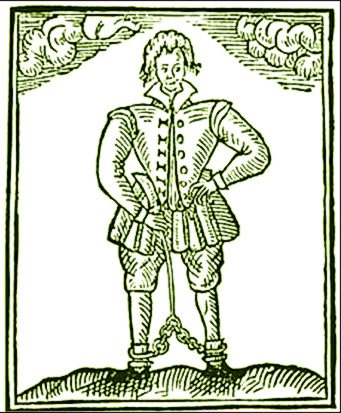
In 1611, Thomas Coryat…..

thomas coryate

…… published his Coryat’s Crudities……

coryat's crudities

……his account of his travels walking through Europe.

His description of Venice is fascinating:

I was at one of their playhouses where I saw a Comedy acted. The house is very beggarly and base in comparison of our stately Playhouses in England: neither can their actors compare with us for apparel, shows and music. Here I observed certain things that I never saw before. For I saw women act, a thing that I never saw before, though I have heard that it hath been sometimes used in London, and they performed it with as good a grace, action, gesture and whatsoever convenient for a player, as ever I saw any masculine Actor.

So – in Shakespeare’s lifetime – actresses could be found in London as well as Europe.

Also, in the reign of King James, the position of women at the Court was very different from the time of Queen Elizabeth…..

Elizabeth could not bear competition from pretty, witty women.

She wanted to be the centre of interest for her courtiers – so banned any rivals.

These banished women…….

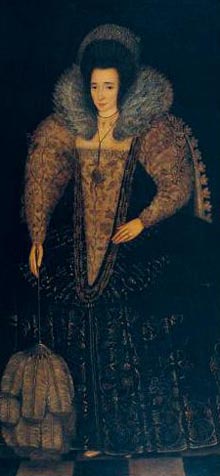
…..like Mary Browne, the Countess of Southampton……

Mary Browne


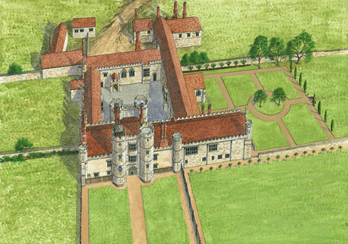
…….at Titchfield…..

How 'Place House' (Titchfield Abbey re-built) looked in Shakespeare's time.

….and Mary Herbert, the Countess of Pembroke….

NPG 5994; Mary Herbert, Countess of Pembroke by Nicholas Hilliard

…..at Wilton…..

wilton house

 ……formed their own rival courts on their country estates……

The Countess of Pembroke was Protestant and the Countess of Southampton Roman Catholic…….

……but they were united in one thing….

 THEIR HATRED OF QUEEN ELIZABETH!!!

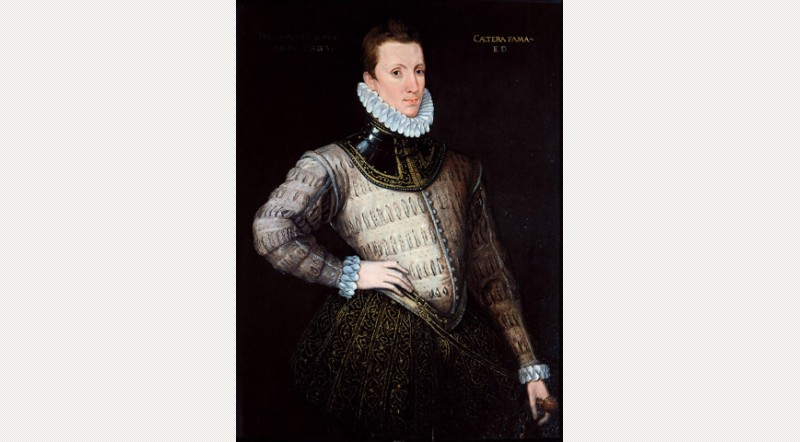
….Mary Herbert because of the Queen’s political castration of her brother, Sir Philip Sidney…

sidney sir philip hand on hip in white

……and her contempt for his Code of Chivalry….

….and Mary Browne because of the Queen’s treatment of her fellow Catholics and friends…

….one of whom, Swithun Wells….

swithin wells


…..now Saint Swithun…..

…..Elizabeth had hanged outside Mary Browne’s London home in December, 1591….

…..only months before Love’s Labour’s Lost was performed.

Wilton was only thirty miles away from Titchfield – and the women shared ‘human resources’….

Poets like William Shakespeare…..
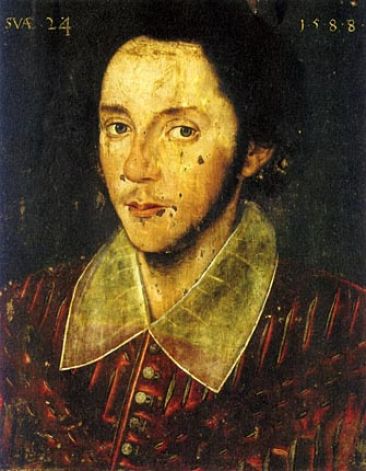
shakespeare 1588


…..and scholars like John Florio….

iflorij001p1

It is The Code’s belief that the two Mary’s mounted productions – both independently and jointly – which could rival the entertainments Queen Elizabeth staged at Court…..

…..entertainments which were often coded satires on Elizabeth’s character, actions and thought.

Mary Browne was a widow and so independent….

…..and though Mary Herbert’s acting company……

Pembroke’s Men

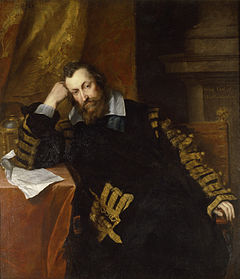
…..functioned under the name of her husband, Henry Herbert, Second Earl of Pembroke….
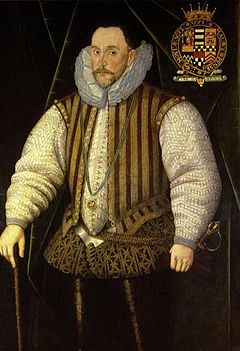
henry herbert second earl of Pembroke

…..Pembroke himself was too ill in the 1590’s to take any active role…

So Mary Herbert was, in practice, independent as well.

We also know from the will of Simon Jewel, an actor, that the Countess of Pembroke acted as a hands-on, financial patron.

On 19th August, 1592, Jewel signed his Last Will and Testament which stated :

…..my share of such money as shall be given by my lady Pembroke or her means I will shall be distributed and paid towards my burial and other charges by Mr. Scott and the said Mr. Smithe.

William Shakespeare dedicated his Venus and Adonis and Lucrece to Henry Wriothesley, Third Earl of Southampton: but when these narrative poems were first published (1593 and 1594) Southampton had not come of age…..

….and his mother, notoriously, kept a tight hold on the family purse-strings…..

So it was Mary Browne who acted as Shakespeare’s financial patron…..

……who commissioned Shakespeare’s first seventeen sonnets…..

(See: The Birthday Sonnets.)

……and, indeed, Love’s Labour’s Lost itself.

But when King James came to the throne…….
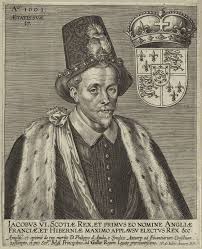
james illustration

…..his wife, Anne of Denmark….

anne of denmark

….wanted to CELEBRATE the talent and beauty of aristocratic women…..

 ….especially, it was rumoured, those who were Roman Catholic….

….or had Papist sympathies. 

So she invited them to act in Court Masques…..

…..and commissioned Ben Jonson…….
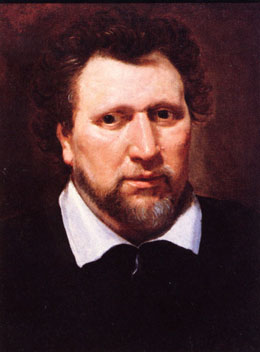
ben jonson colour

…..to produce The Masque of Blackness…….

…..with elaborate designs by Inigo Jones….

inigo jones

 ……in which women……

……the Queen included……

……played and danced the parts of dark-skinned nymphs.

The masque was performed on Twelfth Night in 1605 and the cast included Queen Anne herself, the Countess of Bedford, Lady Herbert, the Countess of Derby, the Countess of Suffolk, Lady Bevill, Lady Effingham, Lady Elizabeth Howard, Lady Susan Vere, Lady Mary Wroth, Lady Walsingham…..

……and, most important for us, the beautiful Lady Penelope Rich……

penelope rich

…… who played the part of Ocyte….

penelope rich masque

[Penelope had almost been converted to Roman Catholicism in 1594 by the Jesuit Priest John Gerard – but had been persuaded not to go over to Rome by her lover, Charles Blount…..
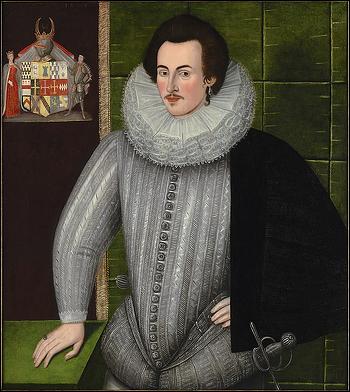
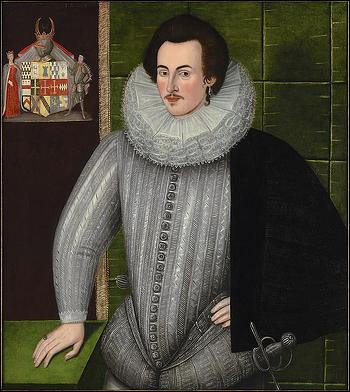
Charles Blount Lord Mountjoyu

….. by then 8th Baron Mountjoy….

……who in youth had himself been ‘addicted to’ the Old Faith]

Even before the reign of James, women acted in private…..

…..and sometimes not so private……

…..entertainments. 

As we have seen, the servant of Thomas Wriothesley, First Earl of Southampton….

thomas above clear (2)

….wrote to his master in 1538……

…..in the reign of King Henry VIII….
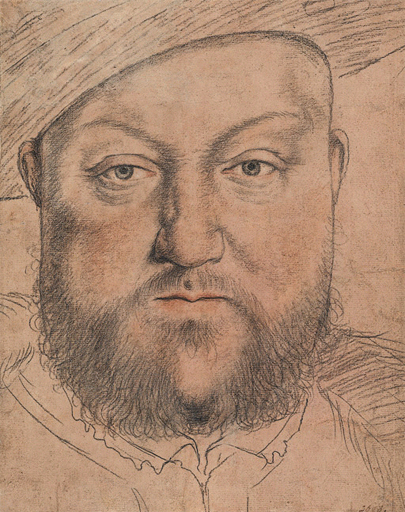
henry viii drawing

…… that Wriothesley’s wife, Countess Jane….
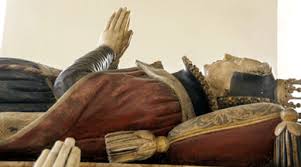
jane w 2

….also handleth the country gentlemen, the farmers and their wives to your great worship and every night is as merry as can be with Christmas plays and masques with Anthony Gedge and other of your servants…

Also, when Queen Elizabeth visited Mary Browne’s father, Anthony Browne, Lord Montague….

Montague, Lord


……at Cowdray in 1591 on one of her progresses, Lady Montague…..

…..as it were weeping in her [Elizabeth’s] bosom…

……exclaimed, in a well-scripted response…….

…Oh happy time! Oh joyful day!

The next day, when Elizabeth was about to shoot rounded-up deer at point blank range, a….

 ….nymph…

…..handed her a crossbow and sang….

….a sweet song…..

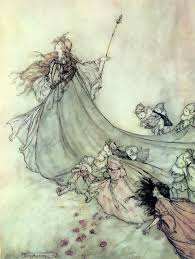
Even more extraordinary was the Elvetham Progress later in the year given by Edward Seymour, First Lord Hertford….
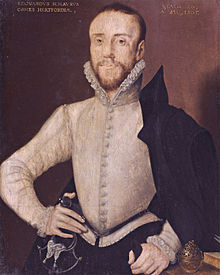
Edward Seymour Lord Hertford

Her Majesty was no sooner ready, and at her gallery window looking into the garden, but there began three cornets to play certain fantastic dances, at the measure whereof the Fairy Queen came into the garden, dancing with her maids about her. She brought with her a garland, made in the form of an imperial crown; [which] within the sight of Her Majesty she fixed upon a silver staff, and, sticking the staff into the ground, spake as followeth:

I that abide in places underground,

Aureola, the Queen of Fairy land,

That every night in rings of painted flowers

Turn round and carol out Elisa’s name:

Hearing that Nereus and the Sylvan Gods

Have lately welcomed your Imperial grace,

Opened the earth with this enchanting wand,

To do my duty to your Majesty,

And humbly to salute you with this chaplet,

Given me by Auberon the Fairy King.

Bright shining Phoebe [Elizabeth] that in human shape

Hid’st heaven’s perfection, vouchsafe t’accept it:

And I Aureola, beloved in heaven,

(For amorous stars fall nightly in my lap)

Will cause the heavens enlarge thy golden days

And cut them short that envy at thy praise….

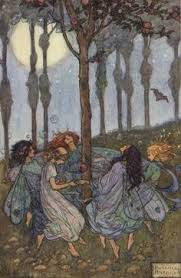
Clearly we are only a breath away from A Midsummer Night’s Dream……

…..indeed, this section of the Progress Entertainment could well have been written by Shakespeare himself.

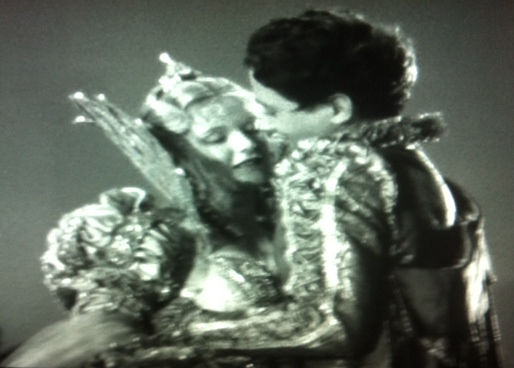
 If Aureola could be played by a woman in private performance, why not Titania?

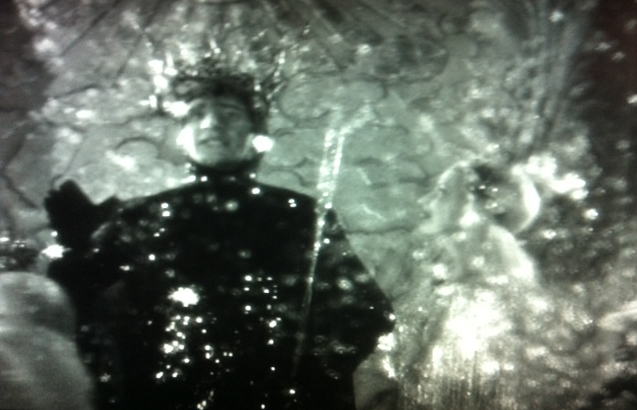
Anita Louise as Titania.

Anita Louise as Titania.

And if Titania, why not the women in Love’s Labour’s Lost?

IT IS THE SHAKESPERARE CODE’S BELIEF THAT….

…..LADY PENELOPE RICH…..

penelope rich lambeth 2

….PLAYED THE PRINCESS OF FRANCE…

…IN THE ORIGINAL PRODUCTION!!!

As we have seen in PART TWO of this series, Shakespeare, like many other writers, played on Penelope’s married name……

…..Rich…..

…in his Sonnets.

The Shakespeare Code is of the belief that……

…..SHAKESPEARE PLAYED ON PENELOPE RICH’S NAME IN LOVE’S LABOUR’S LOST AS WELL!!!

The Princess of France opens the last scene of the play with the statement….

Sweet hearts we shall be rich ere we depart…

….and the reason she shall be rich before she leaves Navarre is…….

 ……BECAUSE SHE IS BEING PLAYED BY LADY PENELOPE!!!

The word ‘Rich’ – in all its forms – is used another SEVEN TIMES in the final scene of the play.

 MOTH

All hail, the richest beauties on the earth!–

BOYET

Beauties no richer than rich taffeta.

(1, 2 and 3)

BEROWNE

We number nothing that we spend for you:

Our duty is so rich, so infinite,

That we may do it still without accompt.

(4)

BEROWNE

……….. your capacity

Is of that nature that to your huge store

Wise things seem foolish and rich things but poor.

ROSALINE

This proves you wise and rich, for in my eye,–

(5 and 6)

PRINCESS

Prepare, I say. I thank you, gracious lords,

For all your fair endeavors; and entreat,

Out of a new-sad soul, that you vouchsafe

In your rich wisdom to excuse or hide

The liberal opposition of our spirits,

If over-boldly we have borne ourselves

(7)

The King of Navarre – played by the Earl of Southampton……

henry_wriothesley_3rd_earl_of_southampton

(See:PART THREE)

– refers to Penelope Rich’s stunning red hair, which looks like the sun in the sky……

And beauty’s crest becomes the heavens well….
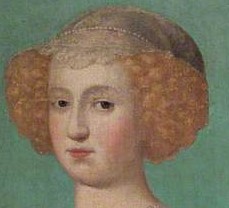
(c) Lambeth Palace; Supplied by The Public Catalogue Foundation

 And Berowne makes a reference to Penelope’s hair when he says that…..

….red, that would avoid dispraise,

Paints itself black, to imitate her [Rosaline’s] brow…..

Queen Elizabeth also had red hair…..

elizabeth red

……and the character of the Princess of France in the play was….

……VERY SIMILAR INDEED….

 …….to the character of Queen Elizabeth…..

PLEASE READ: The Princess of France IS Queen Elizabeth!

 P.S.

Those who wish to read…..

THE MAKING OF A KING

 …..Stewart Trotter’s thrilling adaptation of The Famous Victories of Henry V and Shakespeare and Nashe’s Henry IV Parts One and Two and Henry V…

PLEASE CLICK: HERE!
Trixie

Brothers and Sisters of The Shakespeare  Code

THRILLING NEWS!!!

Kevin Fraser…..

kevin fraser

…..who runs the WORLD FAMOUS Titchfield Festival Theatre…

http://www.titchfieldfestivaltheatre.com/

….commissioned The Code’s Chief Agent,

Stewart Trotter

to write

The Making of a King

…..a play about how the dissolute Prince Harry of history….

…transformed into the heroic Henry V!!!

Stewart has just completed and delivered the script!!!

Kevin had this to say about it…..

I love The Making of a King. It has all the elements we need for a great play. It reads well and I’m sure we can get it cast. In think it’s great…..

And this is what Stewart has to say about it:

The Making of a King is based on four plays – the anonymous Elizabethan play ‘The Famous Victories of Henry V’ and William Shakespeare’s ‘Henry IV Parts One and Two’ and ‘King Henry V’.‘The Famous Victories of Henry V’ was performed by the Queen’s Players – a group set up by Queen Elizabeth I and her spymaster, Francis Walsingham, to disseminate Tudor propaganda. No-one knows who wrote the play but it is clear Shakespeare saw it and may even have worked on it with Thomas Kyd.

When Shakespeare re-wrote old plays, he always enriched their language and deepened their characterisation – but he often destroyed their structure. ‘The Famous Victories of Henry V’ deals with the transformation of dissolute Prince Harry to heroic King Henry V in a single play. By stretching the story over three plays, Shakespeare is in danger of blurring this theme.

So, ‘The Making of the King’ tries to restore the original play’s clarity of structure with the complexity of Shakespeare’s genius. It offers an explanation for Prince Harry’s affection for Sir John Falstaff: Harry believes his father, King Henry IV, loves his younger brother, Prince John, more than he loves him – so he craves a surrogate father.

All the plays show how war can test, deepen or break the bonds between men. But where Shakespeare’s play differs from the Queen’s Men version is its ambivalence towards Kingship. To be a good King, Hal has to become a bad friend – and few will forgive him for his rejection of Falstaff. ‘The Making of a King’ focuses on the strain of leadership – particularly in battle – and the play asks the same question that the King finally asks himself…..

…..‘Is Power worth it?’.

The play will be performed in Titchfield’s Great Barn….

barn interior

….which  was built just a few years before Agincourt….

old barn titchfield

….from 24th June to 4th July, 2015…..

[Note: The Great Barn is also used for Wedding Celebrations……

BARN WEDDINGS

– and is proud to announce it will soon play host to it’s first Gay Wedding.  This is particularly appropriate as it was in Titchfield that William Shakespeare….

shakespeare 1588

…..began his fifteen year love affair with Henry Wriothesley, Third Earl of Southampton and Baron of Titchfield….]

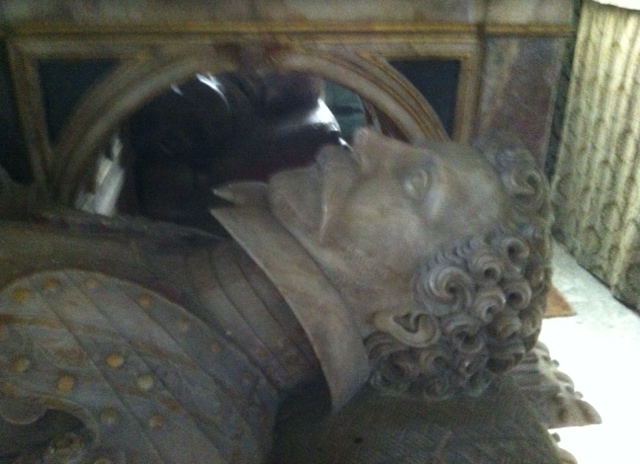
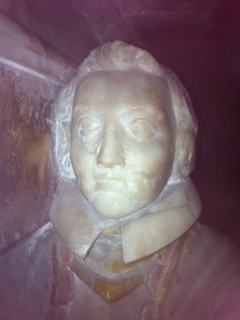
tomb henry wriothesley

See: Just how Gay was the Third Earl of Southampton?

The part of Sir John Falstaff…….

falstaff beaming

…. will be played by Kevin Fraser…..

…..who will also direct the play…..

….and the Chorus will be played by Stewart Trotter…..

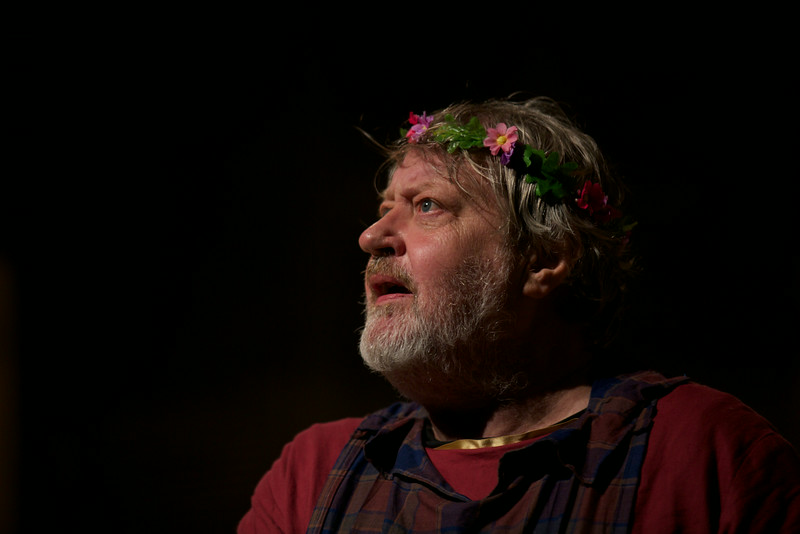
lear flowers large

……seen here as King Lear in last year’s Titchfield Shakespeare Festival production……

But the casting of the mega part……

……Prince Hal/King Henry…..

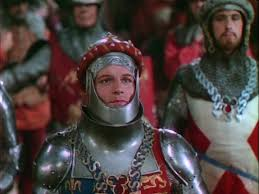
olivier 3

……..described as……

……the best part for a young actor that has ever been written

…..will be announced nearer the date!!!

Meanwhile, for those who would like a sneak preview, the whole play is available on….

…. The Making of  a King Page……

….. on the bar of The Shakespeare Code website…..

…on the Home Page…

…or CLICK:HERE!!!

Let’s all hotpaw it down to Hampshire in June!!!!

Hampshire.

Hampshire.

MORE NEWS AS IT BREAKS!!!

‘Bye, now

Paw-Print smallest

 (It’s best to read Parts ONE  and TWO first)

Background Note

Polonius in Hamlet tells the Prince that when he was at university he played the part of Julius Caesar and……

……was accounted a good actor…..

It was fashionable for young aristocrats to perform at University…..

It taught them how to speak in public and hold themselves well.

The antiquarian John Leland…….

john leland

….. describes how Harry Southampton’s grandfather, Sir Thomas Wriothesley’s……

thomas above clear (2)

……beauty so shone upon [his] brow, [his] head of golden hair so glistened, the light of [his] keen mind was so effulgent, and [his] winning virtue so adorned [him], that, one amongst many, [he was] seen to be a pattern for all…..

[Ung par tout – tout par ung – or une part tout –  One for all, all for one – was the Wriothesley family motto……….

tomb coat of arms

……which Shakespeare also played on in his verse]..

Titchfield itself was home to theatrical activity. An old map shows ‘The Playhouse Room’ at Place House and Jane Southampton……..

jane w 2

– Harry’s grandmother –  was described by one of her servants as….

….merry as can be with Christmas plays and masques….

Nicholas Udall……..

udall nicholas

 ……..the schoolmaster and playwright – stayed at Titchfield in the 1540’s and had a church benefice on the nearby Isle of Wight. He might well have written Ralph Roister Doister – one of the first English comedies – for the Titchfield schoolboys to perform.

So, an aristocratic cast would have been totally at home at Titchfield……

AND A LARGELY ARISTOCRATIC CAST PLAYED IN THE FIRST PRODUCTION OF ‘LOVE’S LABOUR’S LOST!!!

THE SHAKESPEARE CODE IS NOW IN A POSITION TO REVEAL THAT…

(1) SIR CHARLES BLOUNT, LATER 8TH BARON MOUNTJOY……

Charles Blount Lord Mountjoyu

…..PLAYED LONGAVILLE.

When, the Princess asks for a description of Longaville, Maria says….

I know him, madam: at a marriage-feast,

Between Lord Perigort and the beauteous heir

Of Jaques Falconbridge, solemnized

In Normandy, saw I this Longaville:

A man of sovereign parts he is esteem’d;

Well fitted in arts, glorious in arms:

Nothing becomes him ill that he would well.

The only soil of his fair virtue’s gloss,

If virtue’s gloss will stain with any soil,

Is a sharp wit matched with too blunt a will;

Whose edge hath power to cut, whose will still wills

It should none spare that come within his power.

‘Blunt’ is a coded reference to Sir Charles Blount – and the description Maria gives of Longaville tallies exactly with description of Blount by his secretary, Fynes Morrison…..

fynes moryson

His behaviour was courtly, grave and exceeding comely. He loved private retiredness, good fare and some few friends. He delighted in study, in gardens, a house richly furnished, and delectable rooms of retreat; in riding on a pad to take the air; in playing at shovel-board or at cards; in reading play-books for recreation; and especially in fishing and fish-ponds…

And Longaville/Blount, the lover of Penelope Rich, says..

I am resolved; ’tis but a three years’ fast:

The mind shall banquet, though the body pine:

Fat paunches have lean pates, and dainty bits

Make rich the ribs, but bankrupt quite the wits.

When Longaville/Blount dresses up as a Russian – and, because the girls are masked, woos Katharine instead of Maria….

……Kartharine, playing on ‘ville’ and ‘veal’, says……

Veal, quoth the Dutchman. Is not ‘veal’ a calf?

‘Dutchman’ is a coded reference to Blount’s army service service in the Low Countries. He was at Zutphen and the Earl of Leicester knighted him before he returned to England in 1587.

At the end of the play, Longaville/Blount says to Maria…

I’ll stay with patience; but the time is long……

……..and Maria says..

The liker you; few taller are so young.

This is a play on Longaville/Blount’s height: Maria is equating ‘long’ with ‘tall’………

……and Fynes Morison describes Blount himself as……….

of stature tall and of very comely proportion

(2) ROGER MANNERS, FIFTH EARL OF RUTLAND….

Manners, Roger 5th Earl of Rutland

…..PLAYED DUMAINE.

Dumaine, when agreeing to take a vow of study and celibacy with Navarre, identifies himself as Roger Manners, 5th Earl of Rutland…

He says…..

My loving lord, Dumain is mortified:

The grosser manner of these world’s delights

He throws upon the gross world’s baser slaves:

To love, to wealth, to pomp, I pine and die;

With all these living in philosophy.

Roger Manners was only sixteen and still at Cambridge at the time of the play’s first production (Whitsun, 1592) and Katharine’s description of Dumaine fits Manners precisely:

The young Dumain, a well-accomplished youth,

Of all that virtue love for virtue loved:

Most power to do most harm, least knowing ill;

For he hath wit to make an ill shape good,

And shape to win grace though he had no wit.

And later in the play, Katharine makes reference to the fact that Dumaine/Manners has not yet started to shave!

DUMAIN

But what to me, my love? but what to me? A wife?

KATHARINE

A beard, fair health, and honesty;
With three-fold love I wish you all these three.

DUMAIN

O, shall I say, I thank you, gentle wife?

KATHARINE

Not so, my lord; a twelvemonth and a day
I’ll mark no words that smooth-faced wooers say:
Come when the king doth to my lady come;
Then, if I have much love, I’ll give you some.

And the play itself plays obsessively with the word ‘manner’….

COSTARD

The matter is to me, sir, as concerning Jaquenetta. The manner of it is, I was taken with the manner.

BIRON

In what manner?

COSTARD

In manner and form following, sir; all those three: I was seen with her in the manor-house, sitting with her upon the form, and taken following her into the park; which, put together, is in manner and form following. Now, sir, for the manner,–it is the manner of a man to speak to a woman: for the form,– in some form.

(3) HENRY WRIOTHESLEY, THIRD EARL OF SOUTHAMPTON AND BARON OF TITCHFIELD…..

tomb henry wriothesley

……PLAYED KING FERDINAND OF NAVARRE……

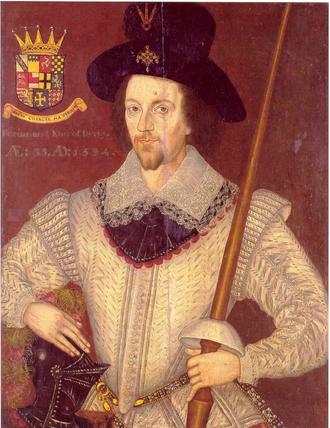
As The Code has shown, this character was a compliment to Mary Southampton’s cousin, Ferdinando, Lord Strange…..

ferdinando, lord strange

……..and to Henri, King of Navarre…..

henri of navarre


…….with whom Southampton’s great friend, Robert Devereux, the  2nd Earl of Essex……

Essex in gold armour marigold

……..had fought at the siege of Rouen.

Harry Southampton, who was deemed too young to fight on this campaign, would have loved to be associated with Navarre….

Southampton in armour

Love’s Labour’s Lost was commissioned by Harry Southampton’s mother, Mary….

Mary Browne

…….as a continuation of the theme of Shakespeare’s first seventeen sonnets……

…..which Mary had also commissioned for her son’s seventeenth birthday…..

(See: Trixie the Cat’s Guide to the Birthday Sonnets.)

……THE CELEBRATION OF HETEROSEXUALITY!!!

Harry Southampton’s Guardian, William Cecil, Lord Burghley……

Burghley with wand of office

……wanted Harry to marry his granddaughter, Elizabeth de Vere…..

 lady elizabeth de vere

…..but Harry, at this stage of his life, was more interested in men….

henry_wriothesley_3rd_earl_of_southampton

……and enjoyed cross-dressing…..

Indeed, the great American Shakespearean scholar, Martin Green, has shown in his Wriothesley’s Roses how the Earl of Essex and many of his entourage were bisexual: Roger Manners, who played Dumaine, seems never to have consummated his marriage to Elizabeth, the daughter of Sir Philip Sidney….

sidney in garden……who himself was certainly gay-friendly and might have been gay himself.

So Mary Southampton asked Shakespeare to write a play in which her son could play a part in which he gives up exclusively male friendship when he falls in love with a women….

Shakespeare also takes the opportunity of praising ‘matchless Navarre’s’ beauty  – as he has praised Harry Southampton’s in the Sonnets……

….and Boyet even gives a coded description of the King’s erection on seeing the Princess of France….

(In Shakespeare, the vocabulary of the face often suggests the genitals as well)

BOYET

Why, all his behaviours did make their retire
To the court of his eye, peeping thorough desire:
His heart, like an agate, with your print impress’d,
Proud with his form, in his eye pride express’d:
His tongue, all impatient to speak and not see,
Did stumble with haste in his eyesight to be;
All senses to that sense did make their repair,
To feel only looking on fairest of fair:
Methought all his senses were lock’d in his eye,
As jewels in crystal for some prince to buy;
Who, tendering their own worth from where they were glass’d,
Did point you to buy them, along as you pass’d:
His face’s own margent did quote such amazes
That all eyes saw his eyes enchanted with gazes.
I’ll give you Aquitaine and all that is his,
An you give him for my sake but one loving kiss.

Both Mary and Shakespeare clearly hoped that some of Navarre’s heterosexuality would rub off on Shakespeare….

But what if a handsome young actor were playing the Princess of France?

We know from the Sonnets that Harry had a taste for lower class young men…..

So wouldn’t it be counterproductive to put him in a play in which he falls in love with a young man in drag?

The answer is ‘No’ – for one simple reason……

THE PARTS OF WOMEN IN THE PLAY WERE PLAYED BY REAL WOMEN!!!

TO READ PART FOUR, CLICK: HERE!


….


(Note: It’s best to read ‘Love’s Labour’s Lost’ Revisited, Part One first)

In the time of Queen Elizabeth I, every Earl would have his entourage…..

They would dress in his livery…….

entourage in garden (2)

……board and eat in his house…..

….. accompany him when he travelled….

entourage on boat (2)

……and identify with his interests….

entourage on steps

This is shown most graphically at the start of Romeo and Juliet when the Montague and Capulet entourages bait each other in the streets of Verona….

thumbs (2)

Shakespeare, The Shakespeare Code argues, was part of the Earl of Southampton’s entourage…..

(as he later became a liveried member of King James’s entourage, as a Groom of the Chamber).

In the 1590’s he worked as a ‘fac totum’ for the Southampton family…..

…..secretary, tutor, schoolmaster, entertainer and…..

….generally nice fellow to have around.

Earls would befriend other Earls…..

…and their entourages would merge….

Harry Southampton had a natural friend in Sir Robert Devereux, 2nd Earl of Essex….

essex young beardeless

Both men had lost their fathers in childhood……

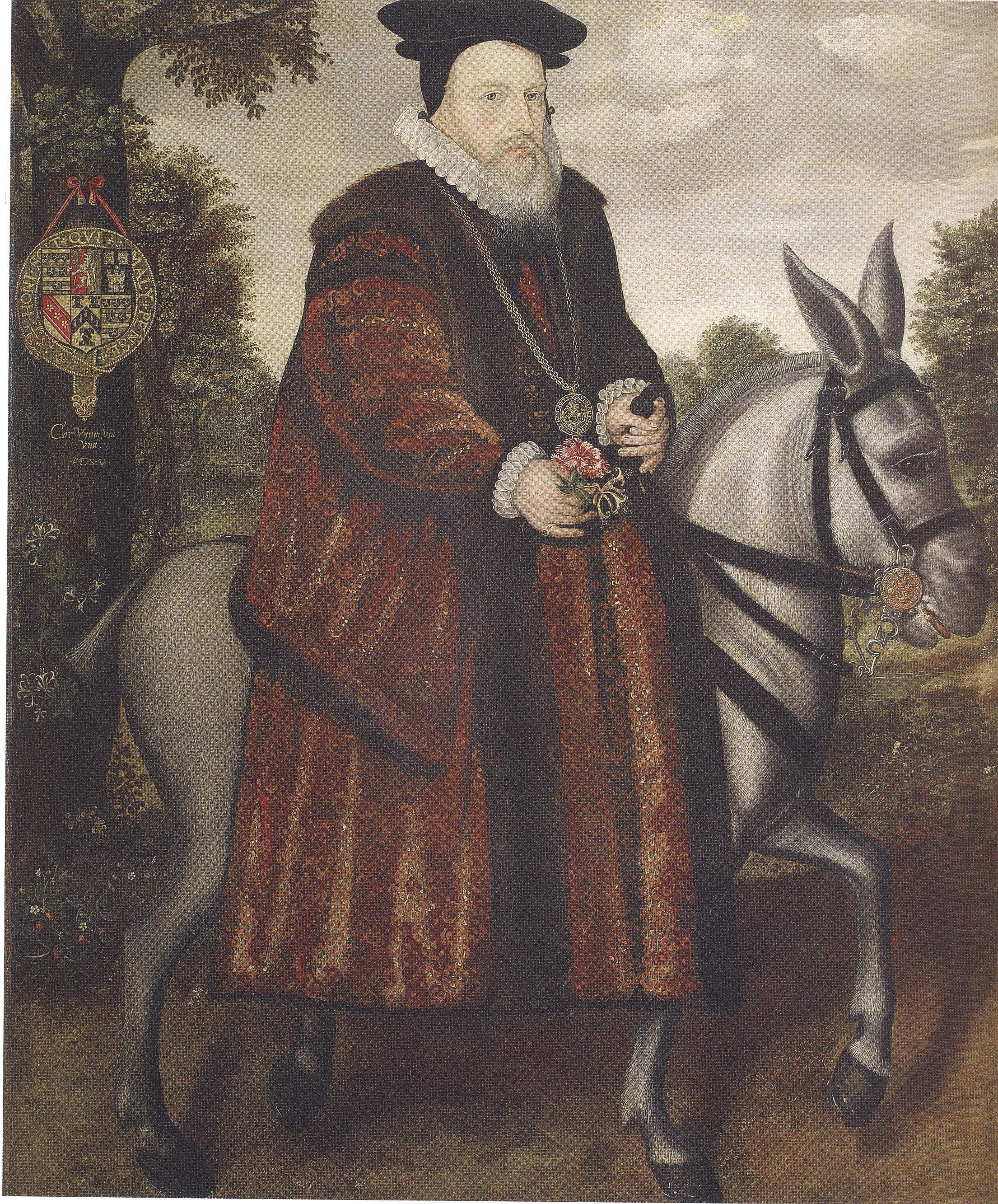
…..and both had been wards of William Cecil, Lord Burghley…….

burghley on donkey 001


Essex had been born in 1565, and so was eight years older than Harry…..

At the first performance of Love’s Labour’s Lost at Titchfield in 1592, Essex would have been 28 years old….

…..and Harry nineteen…

(He had been desperate to follow his hero, Essex, to the Siege of Rouen, but he was deemed too young to fight in a war.)

Another close friend of Southampton and Essex was Roger Manners, 5th Earl of Rutland…..

roger manners fifth earl of rutland

……who was also a ward of Burghley’s…..

He was three years younger than Southampton, so would have been sixteen at the premiere of Love’s Labour’s Lost.

(Harry had gone back to Cambridge University to visit Manners in June, 1591, after he himself had graduated.)

Another nobleman who became a friend of Essex and Southampton was Sir Charles Blount (pronounced ‘Blunt’)

….who later, unexpectedly, became 8th Baron Mountjoy….

Charles Blount Lord Mountjoyu

He was a couple of years older than Essex…….

……and the two men had originally been rivals for the attention of Queen Elizabeth…..

Both wore the Queen’s white….

essex in white

…and both had fought a duel……

(Blount had been given a favour by Elizabeth…..

…an enamelled chess queen)

After this both men became close friends….

…..and formed a political alliance which lasted up to Essex’s execution in 1601.

Essex, Southampton, Blount and Manners were massively influenced as a group by the chivalric philosophy of Sir Philip Sidney….

sidney sir philip hand on hip in white

….who had given up his water to a wounded soldier at Zutphen even though he was dying himself…..

sidney zutphen

…..and who was obsessed with achieving fame….


A motto in the top right hand corner reads 'Caetera Fama'

A motto in the top right hand corner reads ‘Caetera Fama’

He also gave his sword to Essex…..

….indicating that Essex was his spiritual heir.

Essex in turn had secretly married his widow, Frances…..

frances walsingham

……who became bosom friends with Essex’s sister….

……the beautiful Penelope Rich…..

penelope rich

…….an accomplished singer and dancer – famous for her golden hair and black eyes.

Penelope had married, against her will, Robert Rich, 3rd Baron Rich of Lees Hall in Essex….

robert rich 2

– a man who was literally ‘rich’.

Penelope’s father, Sir Walter Devereux, First Earl of Essex……..

walter devereux

……. had wanted her to marry Sir Philip Sidney…….

…….and the bisexual Sidney had been in love with her…..

When he was dying, he reportedly told the preacher George Gifford of …..

…..a vanity in which he had taken much delight of which he must now rid himself, naming Lady Rich……

She had certainly been the muse of Sir Philip: he had written a whole Sonnet sequence about her – and to her – entitled Astrophel and Stella –

 ….or the Lover of the Star and the Star Herself…..

…..which had been published in a pirated edition in 1591 – the year before Love’s Labour’s Lost – with a forward by Thomas Nashe…

This edition was recalled – and it was only in 1598 that the full sonnet sequence was published by Sidney’s sister, the Countess of Pembroke.

It was in this edition that Sonnet 37 was first printed, which openly played on Penelope’s married name of….

…Rich….

 My mouth doth water, and my breast doth swell,

My tongue doth itch, my thoughts in labor be;

Listen then, lordings, with good ear to me,

For of my life I must a riddle tell.

Towards Aurora’s court [Essex – in the East] a nymph doth dwell,

Rich in all beauties which man’s eye can see;

Beauties so far from reach of words, that we

Abase her praise, saying she doth excel;

Rich in the treasure of deserved renown;

Rich in the riches of a royal heart;

Rich in those gifts which give the eternal crown;

Who though most rich in these, and every part

Which make the patents of true worldly bliss,

Hath no misfortune, but that Rich she is.

…..and Sidney attacks Robert Rich even more openly in Sonnet 24…

Rich fools there be whose base and filthy heart

Lies hatching still the goods wherein they flow:

And damning their own selves to Tantal’s smart,

Wealth breeding want, more blest more wretched grow.

Yet to those fools heav’n such wit doth impart

As what their hands do hold, their heads do know,

And knowing love, and loving, lay apart,

As sacred things, far from all danger’s show.

But that rich fool who by blind Fortune’s lot

The richest gem of love and life enjoys,

And can with foul abuse such beauties blot;

Let him, depriv’d of sweet but unfelt joys,

(Exil’d for aye from those high treasures, which

He knows not) grow in only folly rich.

By 1590 Penelope had become the mistress of Charles Blount…

On 17th November of that year (Tournament Day which celebrated Queen Elizabeth’s Accession) Sir Charles Blount wore Penelope Rich’s colours openly.

George Peele, also punning on ‘Rich’ wrote:

Comes Sir Charles Blount…

Rich in his colours, richer in his thoughts,

Rich in his fortune, honour, arms and art.

The Elizabethans loved this word-play on people’s names – and Shakespeare was no exception…..

In his Sonnets – which were originally intended for distribution only among his……

……private friends….

…..Shakespeare also plays on the surnames of this coterie…..

Rich, Manners and Blount…..

Sometimes he uses the names singly…..

…..as in Sonnet 97….

……The teeming autumn big with rich increase…..

……a reference to Penelope Rich’s habit of often falling pregnant….

(She had just given birth to Blount’s daughter in March, 1592…..

…..just a couple of months before the production of Love’s Labour’s Lost…..)

Shakespeare also makes reference to Roger Manners’s hero-worship of Harry Southampton in Sonnet 39…..

O how thy worth with manners may I sing…..

Shakespeare makes a particular point with this code, though, by sometimes coupling TWO coterie names together….

Sonnet 85 begins……

My tongue-tied muse in manners holds her still,

While comments of your praise, richly compiled….

…..and Sonnet 52…..

So am I as the rich, whose blessed key

Can bring him to his sweet up-locked treasure,

The which he will not every hour survey,

For blunting the fine point of seldom pleasure.

In Love’s Labour’s Found Stewart Trotter suggested that the ‘shadowy lords’ in the play were played by Southampton’s friends.

TO FIND OUT WHO THEY WERE, CLICK: HERE!

Trixie

Here it is, Brothers and Sisters of The Shakespeare Code!!!

TITCHFIELD ABBEY

….. in HAMPSHIRE, ENGLAND…

Hampshire.

Hampshire.

AS YOU’VE NEVER SEEN IT BEFORE!!!

…where William Shakespeare….

shakespeare 1588

 …..was employed in 1590 by Mary,  2nd Countess of Southampton…..

Mary Browne

….as fac totum, entertainer, poet, secretary, schoolmaster….

…and tutor and friend to her gay, wayward teenage son,

Henry Wriothesley (pronounced ‘Ryosley’)

Third Earl of Southampton….

…and Baron of Titchfield…

tomb henry wriothesley

……and where Shakespeare fell in love  with Aemilia Bassano….

….AND….

….The Third Earl…

henry_wriothesley_3rd_earl_of_southampton

AT THE SAME TIME!!!

CLICK HERE IF YOU ARE ON FACEBOOK….

IMPORTANT WARNING!!!

BEST VIEWED WITHOUT SOUNDTRACK!!!

Also see:

SHAKESPEARE IN TITCHFIELD

and..

Just How Gay was the Third Earl of Southampton?

Paw-Print smallest‘Bye, now…

Trixie

Brothers and Sisters of the Shakespeare Code……

At a meeting of the august Hampshire Writers’ Society in December last year (2014)….

…the Titchfield Festival Theatre Company performed an extract from Stewart Trotter’s play….

OUR COUSIN WILL….

Here is the HIGHLY LITERATE report from the Society itself….

The evening began with Her Grace Queen Elizabeth 1 (Barbara Large, most elegantly attired) greeting her subjects. Her first assignment was to welcome the Titchfield Festival Theatre Group, under the stewardship of their chairman and artistic director, Kevin Fraser……

…..who were to perform part of a new play ‘Our Cousin Will’ by Stewart Trotter.

Kevin then introduced the troupe, the performances that they carry out, and posited Titchfield as the location where Shakespeare wrote the play ‘Love Labour’s Lost’. Stewart Trotter gave a brief outline as to why it was thought that Shakespeare could have spent a period in Titchfield as a teacher.

Several scenes from the play were performed, and this involved the Lady Mary, the mother of the Earl of Southampton, engaging Will Shakespeare to teach her son Harry the art of writing sonnets, which she hopes will turn his attentions to women; instead of his dressing like one.

Will endeavours to do this, although his efforts with Harry appear futile. Will is then drawn to Aemilia; however, she resists his advances with a curt “Get lost, Baldy!” Will is then involved in an affair with Harry himself, much to Lady Mary’s disquiet. However, Will and she are eventually reconciled; and Harry’s own situation is accepted. The dialogue was witty, lively, and the performances of the actors were highly amusing.

Here then is the twenty minute extract the Titchfield Festival Players performed…..

WILLIAM BEESTON (the narrator)

falstaff beaming

Disaster struck the acting profession. The Spanish Armada attacked England. Actors were despised. The public wanted ‘real men’. Playwrights pulled strings to get teaching jobs. Will, aged by touring and with his hair starting to fall out, pulled Papist strings….

(Enter MARY, COUNTESS OF SOUTHAMPTON, early middle aged and beautiful…..

Mary Browne

She shows the OLDER SHAKESPEARE a painting of the 2nd Earl of Southampton, which is presumed to be out front. SHAKESPEARE, at this stage of his life, is still thin)

MARY

And this, Master Shakespeare, is my late husband, the second Earl of Southampton.

full face second earl of southampton (2)

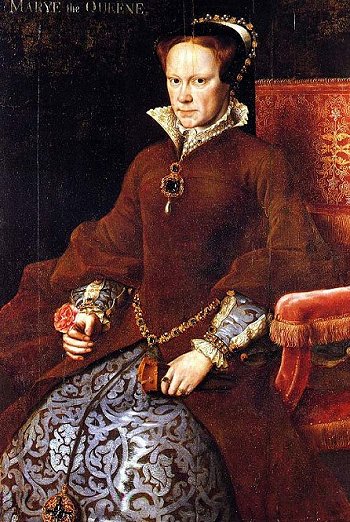
If you are to become tutor to my son, you must be aware of the facts, however painful. The second Earl was a fine Catholic: he fought to bring the Blessed Mary Queen of Scots to the English throne.

NPG 1766,Mary, Queen of Scots,by Unknown artist

(MARY and SHAKESPEARE cross themselves) He was imprisoned in the Tower and nearly lost his head. However, as a husband he was….unappreciative. He accused me, quite insanely, of falling in love with a common person…(Looking SHAKESPEARE, discreetly, up and down)…I can see you’ll be needing some new clothes…….And an allowance…

shakespeare 1588

(Recovering herself – she is clearly taken with SHAKESPEARE) My husband snatched my young son, Harry, away. He turned his manservant into his wife and left him everything. I overturned the will, of course, but could not overturn the damage done to Harry….

(BEESTON holds up a painting of Henry Wriothesley in drag which MARY and SHAKESPEARE look at)

henry_wriothesley_3rd_earl_of_southampton

As you can see, he loves dressing up as a girl. Other than that, has no interest in women whatsoever. This, Master Shakespeare, is where you come in. (SHAKESPEARE looks startled) You are a married man with children. I want you to get Harry excited by the idea of fatherhood. Unless he marries, the Southampton line will die out…Soon it will be Harry’s seventeenth birthday… I want you to write seventeen sonnets to show him the joys of the opposite sex. I want you to ‘turn the vessel round’ as it were….Wait here….(MARY exits)

SHAKESPEARE

(To himself) Sonnets? Aaaagh! (MARY re-enters)

MARY (announcing)

Master Shakespeare, my son, Henry Wriothesley, the third Earl of Southampton and Baron of Titchfield….[‘Wriothesley’ is pronounced ‘Ryosely’]

(SHAKESPEARE kneels as HARRY enters to trumpets and drums. HARRY, a handsome young man with shoulder length hair, offers SHAKESPEARE his ring to kiss. SHAKESPEARE does so, then looks up into HARRY’S face)

tomb henry wriothesley

MARY

(in all innocence) I’m sure you two will get on like a house on fire….

(SHAKESPEARE and HARRY exit…..)

(EXIT)

Harry turned seventeen….And read the seventeen Sonnets Shakespeare had written for him…

(Enter HARRY with SHAKESPEARE following behind, quill and paper in hand)

HARRY

(Brandishing the seventeen pieces of paper)  Master Shakespeare, these Sonnets are an utter failure…(SHAKESPEARE looks crestfallen)  I still don’t like girls!

(SHAKESPEARE rallies: it’s not his writing that is being attacked after all)

SHAKESPEARE

Even though you look like one?

HARRY

Are you being offensive?

SHAKESPEARE

No. It’s the theme of this new sonnet I’m writing about you….

(SHAKESPEARE sits and writes. HARRY hates not being looked at, so he reads aloud from his Birthday Sonnets, gesturing with his hand as he recites)

HARRY

Unthrifty loveliness, why dost thou spend

Upon thyself thy beauty’s legacy….

(HARRY’S hand-gestures turn into a suggestion of masturbation)

Does that mean what I think it means? (SHAKESPEARE continues to write, not looking at him) And what about…..

No love towards other in that bosom sits

That on himself such murderous shame commits…

(Looks down at his codpiece)

Master Shakespeare, are you implying that I am a…(He is about to say ‘wanker’)

SHAKESPEARE

(cutting him off) Sir! I have nothing but the highest respect for you…(hesitates)…love, even….

HARRY (brightening)

You do praise my beauty….

SHAKESPEARE

And continue to do so in this…..

HARRY

Let’s hear it then!  (He lies back, anticipating flattery like a warm bath)

SHAKESPEARE

It’s not finished….

HARRY

(Suggestively) Perhaps I can give you some ideas….

SHAKESPEARE

(Pretending not to pick up the implication, reading from his Sonnet)

A woman’s face with nature’s own hand painted

Hast thou, the master-mistress of my passion….

(HARRY shows interest)

A woman’s gentle heart but not acquainted

With shifting change as is false women’s fashion….

An eye more bright than theirs, less false in rolling….

(HARRY can contain himself no longer)

HARRY

See! You don’t like girls either!

SHAKESPEARE

(Ploughing on)

Gilding the object where-upon it gazeth,

A man in hew, all hews in his controlling

Which steals men’s eyes…

HARRY

(Excited) Ha!

SHAKESPEARE

….and women’s souls amazeth……

(HARRY, disappointed, groans)

And for a woman wast thou first created

Till Nature as she wrought thee, fell a-doting….

(SHAKESPEARE is unconsciously beginning to find HARRY attractive)

HARRY

Go on….

SHAKESPEARE

That’s as far as I’ve got, sir….

 HARRY

Would you like me to finish the Sonnet for you, Master Will….

SHAKESPEARE

The greatness of your words, sir, would utterly eclipse my own…I shall finish the sonnet in my own spare time.

(SHAKESPEARE folds the paper and starts to put it away)

HARRY

(Suddenly imperious) Finish it NOW! HERE! (For a moment we should  think that SHAKESPEARE is about to tell HARRY where to go. But HARRY, sensing this, immediately lightens his tone and starts to flirt) As Master-Mistress of your passion, I command you!

(SHAKESPEARE seems to comply. He scribbles a few lines…then hands them to HARRY)

HARRY

Till Nature as she wrought thee fell-adoting….

And by addition me of thee defeated

By adding one THING to my purpose nothing….

(HARRY looks down at his cod-piece again)

Master Shakespeare, does this also mean what I think it means….?

Your conclusion, please…..

(SHAKESPEARE scribbles again – and hands him the sheet)

HARRY

But since she prick’d thee out for women’s pleasure

Mine by thy love – AND THY LOVE’S USE THEIR TREASURE!!!

Is this a poetic way of telling me to get stuffed?

SHAKESPEARE

No, sir. It’s a poetic way of telling you to stuff women…

(MARY SOUTHAMPTON enters, looking white and shaken and near to fainting. SHAKESPEARE sees her and kneels. Alarmed)

SHAKESPEARE

M’Lady….

(HARRY looks round and bows stiffly)

MARY

I have some dreadful news….(SHAKESPEARE rushes to her and leads her to a chair) The Moon intends to beam over Titchfield….(Blank incomprehension from the men) Queen Elizabeth is coming to stay!

old elizabeth

 (HARRY and SHAKESPEARE look aghast. BEESTON claps. All exit)

 BEESTON

…………And stay she did. With all her court. And with all her soldiers. She had a beautiful musician with her….the dark-skinned Aemelia Bassano…

rosaline nina 1.

(Enter AEMELIA, with  black, wiry hair. She sits and plays a lute)

…mistress to the Queen’s randy old cousin, Lord Hunsdon.

hunsdon raffish

He paid her £40 a year for her services…

(To BEESTON, £40 a year is a fantastic sum…SHAKESPEARE enters and gazes at AEMELIA)

Will wanted to find out if £40 gave Hunsdon exclusive rights.

(BEESTON opens First Folio and reads…)

SHAKESPEARE (approaching AEMELIA, who continues to play)

berowne rosaline 1

Did not I dance with you in London once?

AEMELIA (a cockney girl)

Did I not dance with you in London once?

SHAKESPEARE

I know you did.

AEMELIA

How needless was it then to ask the question.!

SHAKESPEARE

You must not be so quick.

AEMELIA

‘Tis long of you to spur me with such questions.

SHAKESPEARE

Your wit’s too hot, it speeds too fast, ‘twill tire.

AEMELIA

Not till it leave the rider in the mire.

SHAKESPEARE

What time of day?

AEMELIA

The hour that fools should ask.

(She puts down her lute and puts on a mask)

SHAKESPEARE

Now fair befall (sees AEMELIA’S mask) your mask.

AEMELIA

Fair fall the face it covers.

SHAKESPEARE

And send you many lovers.

AEMELIA

Amen, so you be none….

SHAKESPEARE

(After a pause, in which he can’t think of anything to say) Nay then will I be gone.

(SHAKESPEARE exits – then AEMELIA, with another infatuated man to add to her list, exits as well)

BEESTON (looking up from First Folio)

Shakespeare was ’ooked… (Looks back at book)

SHAKESPEARE (re-entering with parchment and pen)

berowne soliloquy

O! And I forsooth in love!

I that have been love’s whip!

A very beadle to a humorous sigh: a critic,

Nay, a night-watch constable,

A domineering pedant o’er the boy…

What I love? I sue? I seek a wife?

A woman that is like a German clock,

Still a re-pairing, ever out of frame,

And never going aright, being a watch:

But being watch’d that it may still go right.

A whitely wanton with a velvet brow

With two pitch balls stuck in her face for eyes,

Aye, and by heaven, one that will do the deed,

Though Argus were her Eunuch and her guard…

(BEESTON closes book with a bang)

BEESTON

The Plague was raging in London, so Aemelia stayed on at Titchfield. Will started writing sonnets to her instead of Harry…

(SHAKESPEARE sits and writes. HARRY approaches him quietly from behind and peers over his shoulder. SHAKESPEARE senses he is there and looks round.  He quickly turns the page over so that HARRY cannot read it)

HARRY(delighted)

It’s another Sonnet, Will.  I saw it. (Sitting) Read it to me. (Anticipating SHAKESPEARE’s excuse) I don’t care if it’s not finished….

SHAKESPEARE

(Reddening, reads) My (hesitates) master’s eyes are….nothing like the sun….

(HARRY looks startled)

Coral is far more red than his lips red,

If snow be white, why then his breasts are dun;

(Trailing off) If hairs be wires, black wires grown on his head…..

HARRY

(In a fury) Breasts? Black wires? (Snatching sonnet from SHAKESPEARE) HER breasts! HER head! (AEMELIA enters) Will, you’re not writing to me – you’re writing to that dreadful….(SHAKESPEARE indicates to HARRY that AEMELIA has entered. HARRY turns to look at her)

AEMELIA

(Curtsying beautifully) Good day, m’Lord….

(HARRY bows stiffly and exits. AEMELIA crosses and gazes rapturously after HARRY, glancing surreptitiously back at SHAKESPEARE to make sure he’s noticing)

BEESTON

Aemelia liked to play hard to get….

SHAKESPEARE

(Turning AEMELIA around) Tell me thou lov’st elsewhere; but in my sight

Dear heart, forbear to glance thy eye aside…

What need’st thou wound with cunning, when thy might

Is more than my o’er pressed defence can hide….

(Looking into AEMELIA’S eyes) Thine eyes I love, and they, as pitying me,

Knowing thy heart torments me with disdain,

Have put on black, and loving mourners be,

Looking with pretty ruth upon my pain…..

 (SHAKESPEARE starts to hug AEMELIA closely.)

Will’t thou, whose will is large and spacious

Not once vouchsafe to hide my will in thine?

(He holds her even closer)

Shall will in others seem right gracious

And in my will no fair acceptance shine…..

(AEMELIA breaks away…SHAKESPEARE pursues her)

He rises at thy name and points out thee

As his triumphant prize, proud of this pride:

He is contented thy poor drudge to be,

To stand in thy affairs, fall by thy side…..

(He pulls AEMELIA to him and tries to make love to her. AEMELIA pushes him away…)

AEMELIA

Get lost, baldy!

(AEMELIA runs off.  SHAKESPEARE, recovering, muses to himself…)

SHAKESPEARE

Then will I swear beauty herself is black

And all they foul that her complexion lack…..

BLACK IS BEAUTIFUL……

(SHAKESPREARE exits)

BEESTON

Will asked Harry to plead his love-suit with Aemelia. Now Harry wanted to hurt Will in any way he could. And, for Aemelia, a rich, handsome, young aristocrat, however gay, was better than an aging playwright. So, to Will’s horror, Harry started an affair with Aemelia….

SHAKESPEARE

(Entering and sitting) Two loves I have of comfort and despair

Which like two spirits do suggest me still:

The better angel is a man right fair…..

(Enter HARRY – stands near to SHAKESPEARE)

The worser spirit, a woman coloured ill.

(Enter AEMELIA, standing some distance away from SHAKESPEARE)

To win me soon to hell my female evil

Tempteth my better angel from my side….

(AEMELIA approaches HARRY and kisses him. She then takes him away from SHAKESPEARE’S side)

And would corrupt my saint to be a devil,

Wooing his purity with her foul pride…

(AEMELIA starts to make violent and graphic love to HARRY…They exit)

And whether that my angel be turned fiend

Suspect I may, yet not directly tell;

But being both from me both to each friend….

I guess one angel in another’s….

(SHAKESPEARE, overcome with sexual jealousy, cannot finish what he was to say. He exits)

 BEESTON

Will left Titchfield and went on tour again. He had to admit that the loss of Harry meant more to him than the loss of Aemelia….

(SHAKESPEARE enters)

SHAKESPEARE (writing)

That thou ha’st her it is not all my grief

And yet it may be said I loved her dearly…

That she hath thee is of my wailing chief

A loss in love that touches me more nearly….

BEESTON

Will, finally, told Harry that he loved him…

SHAKESPEARE

(Writing. Music beneath.) Shall I compare thee to a summer’s day?

(He looks up – and we can see he is thinking ‘No!’)

Thou art more lovely and more temperate.

Rough winds do shake the darling buds of May

And winter’s lease hath all too short a date….

Sometime too hot the eye of heaven shines…

And often is his gold complexion dimm’d,

And every fair, from fair, sometime declines,

By chance, or nature’s changing course untrimm’d….

But thy eternal summer shall not fade,

Nor lose possession of that fair thou owest….

Nor shall death brag thou wander’st in his shade,

When in eternal lines to time thou growest….

So long as men can breathe or eyes can see,

So long lives this, (holding up the Sonnet)

…and this gives life to thee….

BEESTON

Aemelia became pregnant and was married off ‘for colour’. Will returned to Titchfield and Harry….

(Music continues. HARRY enters.  SHAKESPEARE enters and kneels in front of him, but HARRY raises SHAKESPEARE to his feet and embraces him. NASHE enters and sees this. SHAKESPEARE and HARRY walk off)

There was a problem in all this for Will and Harry….(COUNTESS MARY  enters)

Mother Mary! (MARY sits and does needlework) Will wasn’t exactly fulfilling his job description…

(NASHE crosses over to MARY, bows, kneels to her) Nashe felt obliged to tell Mary what he had seen. (NASHE whispers in MARY’s ear. MARY looks horrified. NASHE whispers again) And one or two things that he hadn’t. (MARY looks even more horrified. NASHE exits) Mary summoned Will….

(SHAKESPEARE enters and kneels in front of MARY. BEESTON opens First Folio)

MARY

 Do you love my son?

SHAKESPEARE

Your pardon noble mistress?

 MARY

Love you my son?

SHAKESPEARE

Do you not love him, madam?

MARY

Go not about. My love hath in’t a bond,

Whereof the world takes note. Come, come, disclose

The state of your affection, for your passions

Have to the full appeach’d.

SHAKESPEARE

Then I confess

Here on my knees, before high heaven and you,

That before you, and next unto high heaven,

I love your son. My dearest madam,

Let not your hate encounter with my love,

For loving where you do….

BEESTON

Will then reminded Mary that, when she was younger, she herself had been in love with someone she shouldn’t have been….

SHAKESPEARE

…..but if yourself

Whose aged honour cites a virtuous youth,

Did ever in so true a flame of liking,

Wish chastely and love dearly, that your Diane

Was both herself and love – o then give pity

To him whose state is such that cannot choose….

(A pause. MARY reddens, then raises SHAKESPEARE to his feet and kisses him on the cheek. She is accepting him into the family)

MARY

Our Cousin Will….

 (End of Extract)

TO READ THE REST OF ‘OUR COUSIN WILL’ PLEASE CLICK: HERE!


Trixie

Brothers and Sisters of The Shakespeare Code…..

It is more in sorrow than in anger  that Your Cat reports ANOTHER piece of nonsense from the Guardian……

…..endorsed by Stanley Wells…..

…..an academic…..

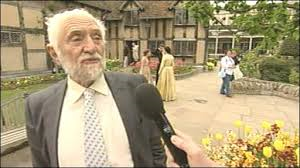
Stanley Wells, being interviewed by the B.B.C.

Stanley Wells, being interviewed by the B.B.C.

…..which argues that the ‘Mr. W. H.’ of the dedication to the  Sonnets……

sonnets frontispiece

…….is NOT Henry Wriothesley, the Third Earl of Southampton….

tomb henry wriothesley

http://www.theguardian.com/culture/2015/jan/31/shakespeare-sonnets-mr-wh-dedication-mystery

Your Cat has shown that Henry Wriothesley is attacked as ‘Mr. H.W.’ in ‘Willobie his Avisa’…….

See:‘Willobie his Avisa Decoded. Aemilia Lanyer is the secret Author.’

 Mr. W. H

…….is INTENDED to be an insult to Southampton as Shakespeare had fallen out with his patron – and lover – see Sonnet 126……

Also see: ‘The Background to King Lear. Part Two’.

We also know from Thomas Heywood that Shakespeare supervised the publication of his Sonnets…..

…….to do himself right……

He also promised…….

 …….eternity……

……..to the subject of the Sonnets in the conclusion to Sonnet 18:

So long as men can breathe or eyes can see

So long lives this, and this gives life to thee.

Shakespeare also wishes…….

All Happiness….

…..to Henry Wriothesley directly in his dedication to ‘Lucrece’.

Why not read Your Cat’s original article?

‘The Dedication to Shakespeare’s Sonnet Decoded’.

 ‘Bye, now….

Paw-Print smallest

DON’T DESPAIR!!!

MORE ON LOVE’S LABOUR’S LOST FOLLOWS SOON!!!

In 2002, Stewart Trotter…….

……The Shakespeare Code’s Chief Agent…

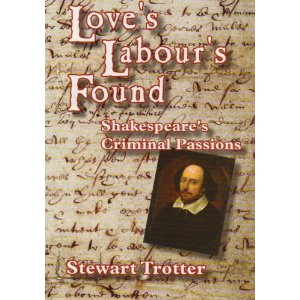
…….published Love’s Labour’s Found…..

book cover

This book has formed the foundation of The Shakespeare Code…..

…..and its ideas have been examined, developed, enhanced……

…..and sometimes changed…

…..in 200 + Posts.

THE SHAKESPEARE CODE BELIEVES….

William Shakespeare’s Love’s Labour’s Lost was first performed, at Whitsun in 1592, in the park and grounds of Place House….

place house 2

…..the stately home of the Southampton family in Titchfield, Hampshire…….

Hampshire.

Hampshire.

…..to whose topography the play makes reference….

A 1610 Map of Titchfield, showing the 'The Place' and 'The Parke' - both mentioned in 'Love's Labour's Lost'.

A 1610 Map of Titchfield, showing the ‘The Place’ and ‘The Parke’ – both mentioned in ‘Love’s Labour’s Lost’.

See: ‘Shakespeare in Titchfield – a Summary of the Evidence’ and ‘Shakespeare was a Schoolmaster in the Country – Titchfield.’

The play had been commissioned by Mary, the widowed Second Countess of Southampton…..

Mary Browne

…..a committed and politically active Roman Catholic…..

….. to honour the return to England of Robert Devereux, the Second Earl of Essex……

essex young beardeless

…..the close friend of her son, Henry Wriothesley, Third Earl of Southampton…….

 tomb henry wriothesley


…..also known as Harry Southampton….

Although Essex wanted freedom of worship for English Catholics, he had been fighting against the Catholic League at the siege of Rouen in France…..

siege rouen

(The siege had been a catastrophic failure – for which Essex had been partly responsible: but it was being spun in England as a triumph.)

Two years before the Countess had also commissioned Shakespeare to produce seventeen sonnets for the seventeenth birthday of her son, Harry….

 ….to try to persuade him to marry Elizabeth de Vere…..

lady elizabeth de vere

…  grand-daughter of William Cecil, Lord Burghley…..

burghley on donkey 001


(See:‘Trixie the Cat’s Guide to the Birthday Sonnets.’)

Burghley was Harry Southampton’s guardian……..

…..(and had been guardian to the Earl of Essex)……

……so he had the legal right to name the woman Harry should marry.

Harry, though, preferred male company……..

henry_wriothesley_3rd_earl_of_southampton

See: ‘Just how Gay was the Third Earl of Southampton?’

If Harry were to refuse Elizabeth’s hand, the Southampton family faced a tremendous £5,000 fine….

So Love’s Labour’s Lost tries to do what the Sonnets tried to do…..

…..TURN HARRY STRAIGHT!!!

……..by praising heterosexual love……

In the play, Fedinand, the King of Navarre, and his young aristocratic friends, Berowne, Longavill and Dumaine……

…..take an oath to cut themselves off from women in order to devote themselves to study…..

oath taking love's

Ferdinand, King of Navarre…

king of navarre

….is Shakespeare’s compliment to two different noblemen….

Henri of Navarre….

henri of navarre

…….under whose command Essex had fought the siege at Rouen.

….and Ferdinando, Lord Strange…..

strange, ferdinando

…..for whose ‘Men’ Shakespeare had acted, written and collaborated before he joined the Southampton household in 1590…..

…..and who was also a cousin of Mary Southampton…..

(Earlier in the year, Shakespeare had obliquely complimented Lord Strange in the figure of the gallant Lord Talbot in what is now Henry VI Part One. One of Talbot’s titles mentioned in the play is ‘Lord Strange of Blackmere’. )

Berowne….

berowne

……is a play on…….

Browne

……the maiden name of Mary, Second Countess of Southampton…..

…….daughter of Sir Anthony Browne, 1st Viscount Montague…..

anthony browne, first viscount montague.

……..one of England’s leading Roman Catholics…..

We know that the character’s name was pronounced like the colour  brown…….

……..with an extra syllable after the ‘B’……

……..because Berowne says to Rosaline:

Studies my lady? mistress, look on me;

Behold the window of my heart, mine eye,

What humble suit attends thy answer there:

Impose some service on me for thy love.

Studies

……here is a reference to…..

Brown studies

……defined by Samuel Johnson as…..

…gloomy meditations

……and was a phrase which was in  use by 1555……

The author of Manifest Detection Diceplay wrote….

Lacke of company wyll son lead a man into a brown study.

(The character is still called ‘Berowne’ in the First Folio edition of Shakespeare’s plays.  But in later editions – when the topical reference had been lost – the name is changed to……

 …….Biron…..

…..a reference to Charles de Gontaut, duc de Biron

biron

…..who was also fighting at the siege of Rouen)

The name……

Longavill

……is a reference to Henri d’Orleans, duc de Longueville…..

henri II de orleans, duc de longueville....

……and…..

Dumaine

…..to Charles, duc de Mayenne……..

charles duc de mayenne

….who ALSO fought at the Siege of Rouen…..

…..but on the other side!!!

In the play the beautiful Princess of France arrives with her entourage,  Rosaline, Katherine and Maria…….

……in a parody of Queen Elizabeth I’s progress to Cowdray and Titchfield the year before (1591)….

……when, like the Princess in the play, Elizabeth shot deer from a specially erected….

stand….


The London 'Globe' production of 'Love's Labour's Lost.' Queen Elizabeth actually used a crossbow.

The London ‘Globe’ production of ‘Love’s Labour’s Lost.’ Queen Elizabeth actually used a crossbow.

 See: ‘The Progresses of Queen Elizabeth.’

 The vows of celibacy the young men take in the play are soon forgotten…..

……….and in a scene identical to the eaves-dropping scene in The Fair Em…….

fair em frontispiece

…….a play Shakespeare collaborated on with Robert Greene for Lord Strange’s Men…..

 …..the Lords catch each other out writing love poetry to their mistresses…..

……and finally give in to the power of love….

As Berowne, echoing the Birthday Sonnets, says in one of the finest passages in the whole of Shakespeare….

But love, first learned in a lady’s eyes,

Lives not alone immured in the brain;

But, with the motion of all elements,

Courses as swift as thought in every power

And gives to every power a double power,

Above their functions and their offices.

It adds a precious seeing to the eye;

A lover’s eyes will gaze an eagle blind;

A lover’s ear will hear the lowest sound,

When the suspicious head of theft is stopp’d:

Love’s feeling is more soft and sensible

Than are the tender horns of cockl’d snails;

Love’s tongue proves dainty Bacchus gross in taste:

For valour, is not Love a Hercules,

Still climbing trees in the Hesperides?

Subtle as Sphinx; as sweet and musical

As bright Apollo’s lute, strung with his hair:

And when Love speaks, the voice of all the gods

Makes heaven drowsy with the harmony.

The Code believes Love’s Labour’s Lost was written by Shakespeare in collaboration with Thomas Nashe……

Nashe thomas

…..who wrote the jokes…..

…..and, being beardless and tiny….

also played the part of the……

…… well-educated infant……

…..Moth….

Shakespeare himself played the  witty and lyrical part of Berowne…..

See: ‘Shakespeare as Berowne and Nashe as Moth’.

The Shakespeare Code believes that many of the characters in Love’s Labour’s Lost were lampoons of the ‘enemies’ of the Southampton and Essex….

…..as well as ‘enemies’ of Shakespeare and Nashe.

 The boastful lover, Don Armado, who is in love with a country wench, Jacquenetta, was a satire on Sir Walter Raleigh…..

raleigh lovely

……who at the time of the first production of the play was in love with Elizabeth (‘Bess’) Throckmorton…..

Bess_Throckmorton

Shakespeare and Nashe even have Costard, the Clown, refer to Bess’s fan….

…….shown in the painting above…..

Armado o’ th’ one side, O, a most dainty man!

To see him walk before a lady and to bear her fan!

…and Nashe, writing by himself in his pamphlet Pierce Pennilesse, had also referred to Raleigh in code as an…

….inamorata poeta…..

…..who would….

…..sonnet a whole quire of paper in praise of Lady Swine-Snout, his yellow-faced Mistress [Bess Throckmorton] and wear a feather of her rain-beaten fan for a favour, like a fore-horse….

Raleigh married Bess without the Queen’s permission….

And so was banished from the Court.

When news came that Elizabeth Throckmorton was pregnant, the plot of the play had to be changed…..

Instead of being rejected by Jacquenetta……..

…..as he is at the beginning of the play….

….by the end of it Armado has managed to impregnate her!!!

Raleigh was a major rival with the Earl of Essex for the Queen’s affections….

And he had angered Nashe by not coming up with the money he had promised him for a commission….

NOTE

The edition of the play that has come down to us is one that had been…

……..presented before her Highness this last Christmas. Newly corrected and augmented by W. Shakespere…

love's Labour's Lost frontispiece. 001

‘Last Christmas’ was probably 1597 – and Raleigh was back at Court and back in favour.

The Code has argued how Shakespeare ‘adapted’ the part of Armado to suggest a attack on Antonio Pérez….

antonio perez


……a conniving gay Spaniard who was part of Essex’s entourage….

….and who was hated by the Queen.

(See:‘Thomas Nashe’s revenge on Sir Walter Raleigh.’)

Boyet….

boyet 1

…..the lisping sycophant fac totum to the Princes, was a satire on the Rival Poet to whom Shakespeare makes coded reference in the Sonnets…..

…..George Chapman….

Chapman, George

See:‘Boyet – Shakespeare’s revenge on George Chapman’. 

Chapman was a practising occultist……..

…..part of ….

…The School of Night…..

…. mentioned in the play….

…..which the Jesuits described as….

….the School of Atheism….

……a group of ‘scientific’ free-thinkers whose numbers included ‘The Wizard Earl’ Henry Percy, Ninth Earl of Northumberland……

Henry_Percy-9th_Earl_of_Northumberland

…….who lived at nearby Petworth….

…..Sir George Carey….

carey george 2nd lord hunsdon

…..a rioter and gourmet who was later to be Shakespeare’s model for Sir Toby Belch….

See: ‘Sir Toby Belch as George Carey, the Lord Hunsdon’

…and who lived across the water from Titchfield on the Isle of Wight….

Titchfield can be seen between Portsmouth and Southampton, near to Fareham.

Titchfield can be seen between Portsmouth and Southampton, near to Fareham.

Ferdinando Strange was associated with the School……

(Sir Nathaniel, the Curate in the play, uses the coded phrase ‘Strange without heresy’)

…..as was Raleigh…..

…and as was Christopher Marlowe.

Marlowe, Christopher

(Marlowe might well have written the séance-obsessed Doctor Faustus for the group, in collaboration with Nashe – who again supplied the jokes…

We know for certain that Nashe collaborated with Marlowe on Dido, Queen of Carthage – a satire on Queen Elizabeth’s infatuation with the Earl of Essex)

dido frontispiece small

 Chapman would regularly summon up the spirit of Homer….

homer

…..and, later on....

……after he had been stabbed in Deptford in 1593……

…. Christopher Marlowe himself…..

(For Chapman’s rôle in the Sonnets, please see:‘Chapman talks to Marlowe’s Ghost.’)

The pedantic schoolmaster in the play, Holofernese, was first identified as a satire on John Florio…..

iflorij001p1

….by William Warburton(1698-1779) The Bishop of Gloucester.

william warburton

Florio was part of the Southampton household at the time of the play, tutoring young Harry in Italian, translating the Essays of Montaigne into English and compiling an Italian/English dictionary…..

Florio defines…

…caelo…

…as…

…the heaven, the sky, the firmament or welkin…..

Holofernes describes the deer that Princess shoots as…

…ripe as the pomewater [a whitish apple] who now hangeth like a jewel in the ear of caelo, the sky, the welkin, the heaven….

Florio employs heavy alliteration….

Proverbs are the pith, the properties, the proofs, the purities of language….

So does Holofernes…..

The preyful Princess pierc’d and prick’d a pretty, pleasing pricket….

Dame Frances Yates……..

frances yates

…… believed Florio was placed in the Catholic household by Lord Burghley as part of his spy network…..

The Code believes he replaced Shakespeare as the local schoolmaster in the Titchfield Grammar School….

old schoolhouse

As Love’s Labour’s Found also argues, Florio could well have written the Progress Entertainment which Mary Southampton’s father, Lord Montague, put on at nearby Cowdray for Queen Elizabeth the previous year….

And which Shakespeare lampoons in the entertainment Holofernes put on for the Princess of France….

See: ‘Shakespeare in Titchfield – a Summary of the Evidence’ and ‘Shakespeare was a Schoolmaster in the Country – Titchfield.’

 Love’s Labour’s Lost was clearly a coterie play…….

…..intended for an aristocratic, coterie audience…..

…..with an aristocratic, coterie cast.

The next Post reveals who these people were…..

PLEASE CLICK: HERE!

Brothers and Sisters of The Shakespeare Code…..

It is with great pride that the Agents of the Code….

….along with Trixie the Cat….

Trixie

…..announce that on…..

Wednesday, 14th January, 2015…

The Shakespeare Code recorded its……

175,000th VIEW!!!

In addition, FIVE more countries joined The Code……

They are:

SAINT MARTIN

sint maarten flag

LESOTHO

lesotho flag

MALI

mali flag

FRENCH POLYNESIA

flag french polynesia

CENTRAL AFRICAN REPUBLIC

central african republic

This brings the number of participating countries to…..

ONE HUNDRED AND NINETY SEVEN!!!

THE SHAKESPEARE CODE HAS CONQUERED THE WORLD!!!

(nearly….)

TO SEE A MARCH-PAST OF ALL THE NATIONS…..

CLICK: HERE!!!

The Code has received congratulations from its

ONLIE BEGETTER…..

Michael Hentges, F. S. C.

It was Michael who responded with enthusiasm to The Code’s very first Post…..

….and encouraged us all to continue with our work.

WITHOUT MICHAEL, THE CODE WOULD NOT EXIST.

(To read more about Michael’s induction as Fellow to The Code, click: HERE.)

The Hentges Crest

The Hentges Crest

Michael has given us permission to quote from his private correspondence with our Chief Agent….

Stewart Trotter.

I actually (for a change) had some quality research time available last winter/spring. I spent said time re-reading the early “Collected Works”, looking primarily for timeline and biographical clues. In the process, I frequently found myself referring back to corresponding earlier posts in the Shakespeare Code. Without going into hard details – what struck me most at the time was the clarity with which you manage to “read between the lines”. So many of your theories do resonate: they’re not just possibly true – they’re probably true. And “probably” (given the absence of verified historical facts) is about as good as it gets…
Thank you, Michael, for your kind observations…..
 Brothers and Sisters of  The Code are invited, if they wish, to post theirs…..
IN VINCULIS INVICTUS.
Trixie 2.

P. S.

To read The Code’s next Post…..

Love’s Labour’s Lost REVISITED…..

Please click: HERE!

loves deer hunt old photo

P.P.S.  If you came here searching for ‘Fairie Lore and Roman Catholicism in A Midsummer Night’s Dream’….

jory

…..click: HERE! 
(It’s best to read Parts ONE, TWO, THREE and FOUR first)

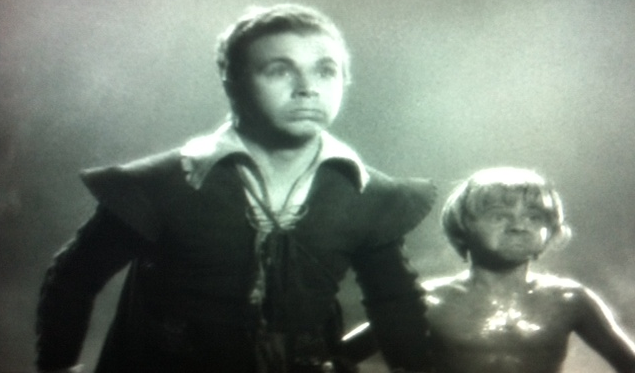
puck lead

 Puck thinks all mortals are fools.

 puck quizzical

He terrifies them…..

puck terrifying

……manipulates them…..

puck manipulates

……imitates them….

puck imitating

……and laughs at them….

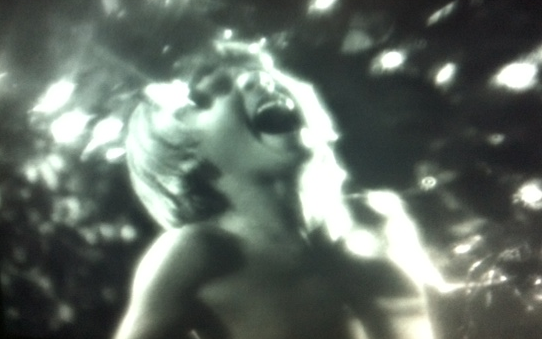
puck roaring

But in the end he blesses them….

puck magic

When thou wakest,

Thou takest

True delight

In the sight

Of thy former lady’s eye:

And the country proverb known,

That every man should take his own,

In your waking shall be shown:

Jack shall have Jill;

Nought shall go ill;

The man shall have his mare again,

And all shall be well.

Shakespeare here gives Puck the same words that God Himself used when he spoke to Mother Julian of Norwich….

mother julian of Norwich

All shall be well, and all shall be well and all manner of things shall be well….

At the end of the play, the iron tongue of midnight tolls twelve.

Theseus and Hippolyta…

theseus leaving feast (2)

…….Lysander and Hermia…….

lysander hermia bed

…….. and Demetrius and Helena……

demetrius helena bed

…….. leave the wedding feast to consummate their love in their bedchambers.

Puck then enters, lit by the dying embers of the fire….

The fireplace at Copped Hall.

The fireplace at Copped Hall.

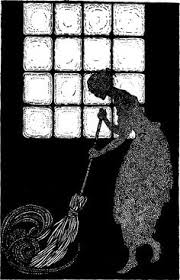
……broom in hand, to cleanse the Hall and prepare it for magic….

Now the hungry lion roars,

And the wolf behowls the moon;

Whilst the heavy ploughman snores,

All with weary task fordone.

Now the wasted brands do glow….

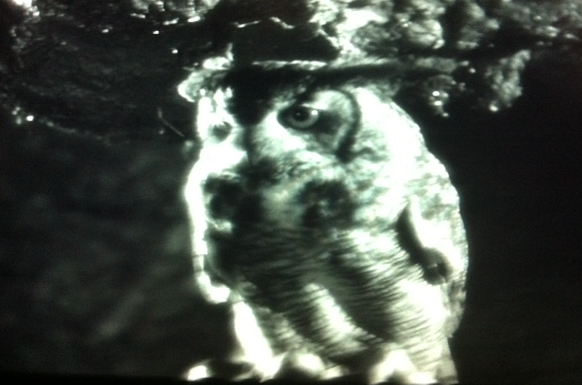
Whilst the screech-owl, screeching loud,

owl

Puts the wretch that lies in woe

In remembrance of a shroud.

Now it is the time of night

That the graves all gaping wide,

Every one lets forth his sprite,

In the church-way paths to glide:

And we fairies, that do run

By the triple Hecate’s team,

From the presence of the sun,

Following darkness like a dream,

following darkness (2)

Now are frolic: not a mouse

Shall disturb this hallow’d house:

I am sent with broom before,

To sweep the dust behind the door.

puck woodcut 1629

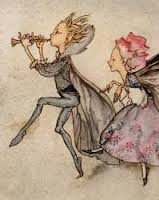
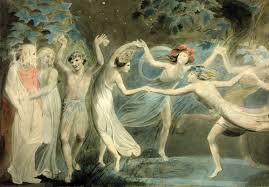
Oberon then enters with Titania followed by the fairy band…..

oberon titania flying in

….with, the original stage directions say…..

……waxen tapers on their heads…..

Queen Elizabeth might have banned candles from her subjects’ altars….

But King Oberon floods Theseus’s palace with living light…..

oberon light end

Through the house give glimmering light

By the dead and drowsy fire

Every elf and every sprite

Hop as light as bird from briar…

We can be sure that when Mary married the Second Earl of Southampton, Catholic priests were in secret attendance…..

(Mary’s father kept them on his payroll, disguised as liveried servants and gardeners)

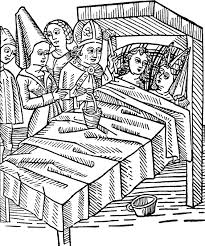
One of them would have said the ‘Benedictio Thalami’…….

…..the traditional blessing on the wedding bed…..

Benedicto domine thalamum hunc….

Bless o Lord this bed. May all who dwell in it remain in Thy peace, abide in Thy will, grow to old age, and be multiplied to the length of days and attain at last to the kingdom of heaven.

Per Christum dominum nostrum. Amen

The priest then sprinkles holy water over the bed……

……and over the bride and groom……

benedictio thalami

……in the form of a cross…

Shakespeare gives Oberon a fairy version of this blessing.…

oberon blessing

To the best bride-bed will we,

Which by us shall blessed be;

And the issue there create

Ever shall be fortunate.

So shall all the couples three

Ever true in loving be;

And the blots of Nature’s hand

Shall not in their issue stand;

Never mole, hare lip, nor scar,

Nor mark prodigious, such as are

Shall upon their children be.

But instead of using holy water for the consecration, Oberon uses dew from the fields….

With this field-dew consecrate,

Every fairy take his gait;

And each several chamber bless….

Through this palace, with sweet peace;

And the owner of it blest

Ever shall in safety rest.

Trip away; make no stay;

Meet me all by break of day…

Puck, left alone, addresses the audience directly……

puck at end (2)

If we shadows have offended,

Think but this, and all is mended,

That you have but slumber’d here

While these visions did appear.

And this weak and idle theme,

No more yielding but a dream…..

But nothing is ever straightforward with Puck…

The rest of his speech is filled, if not with the equivocation of the fiend, then certainly with ambiguity….

Gentles, do not reprehend:

If you pardon, we will mend:

Does he mean ‘If you pardon our failings as actors, we will improve as performers….’?

Or does he mean ‘If you pardon our failing as fairies we will make your lives better for you…..’?

And, as I am an honest Puck…..

…..which clearly he isn’t….

 If we have unearned luck

Now to ‘scape the serpent’s tongue,

We will make amends ere long….

Is ‘the serpent’s tongue’ the hiss of a displeased audience?

Or is it the tongue of Satan himself, tempting figures of light – as he tempted Eve – to become figures of darkness like himself?

And what are these ‘amends’?

Else the Puck a liar call…..

puck liar

So, good night unto you all.

Give me your hands, if we be friends,

And Robin shall restore amends.

What does Puck mean by ‘Give me your hands’?

Does he mean: ‘Applaud’?

Or does he mean: ‘Take your hands in mine’?

And what does he mean by ‘Robin shall restore amends’?

Does he mean he will make amends for what he has done?

Or does he mean he will make amends for what has been done to you?

 Is Puck saying:

Applaud us and we will produce better plays for you in the future….

 Or is he saying:

 Reach out and grasp my hands and I will make up for all you have suffered…..

 I will heal the past….

Puck means both……

………and Shakespeare is directing these last lines at his patron, the Countess Mary…..

Mary Browne

Did she reach out to grasp the hands of Puck?

Did the reconciling magic of the play work ?

We are in the extraordinary position of knowing that it did…

Heneage, sadly, died the year after the play was performed……

….but  Mary went on to marry a third, much younger husband ….

When, however, she finally came to write her will in 1607, she asked to be interred at St. Peter’s, Titchfield…..

….as near as may be unto the body of my honorable and dearly beloved Lord and husband, Henry, late Earl of Southampton…..

second earl close-uo

The Fairies had done their work well…….

FINIS……

……AND FAIRY POSTLUDE…..

When The Shakespeare Code first announced these Posts……

…… the Rev. Canon Tony Dickinson…..

canon tony dickinson

…..Vicar of  Giles Gilbert Scot’s St. Francis of Assisi Church, High Wycombe…

…..contacted The Code’s Chief Agent…..

…Stewart Trotter…

…and asked him if he planned to quote from….

THE FAIRIES’ FAREWELL

This was written by Bishop Robert Corbett (1582-1635)

…..who would have been twelve years old when A Midsummer Night’s Dream was first performed.

Stewart could not believe his eyes when he read the poem!!!

It entirely corroborates The Shakespeare Code’s theory…..

That magic and spirituality fled England in the reign of Elizabeth…..

….and that the Fairy World was equated completely with…..

‘The Old Profession’….

ROMAN CATHOLICISM!!!
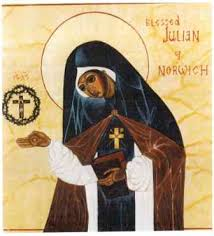
Here is the poem, with thanks again to Rev. Canon Dickinson….

FAREWELL rewards and Fairies!

Good housewives now may say;

For now foul sluts in dairies

Do fare as well as they;

And though they sweep their hearths no less

Than maids were wont to do,

Yet who of late for cleanliness

Finds sixpence in her shoe?

sweeping hearth

Lament, lament old Abbeys,

The fairies lost command;

They did but change priests’ babies,

But some have chang’d your land;

And all your children stol’n from thence

Are now grown Puritans,

Who live as changelings ever since,

For love of your demaines.

puritans 2

At morning and at evening both

You merry were and glad,

So little care of sleep and sloth

These pretty ladies had.

When Tom came home from labour,

Or Ciss to milking rose,

Then merrily went their tabour,

And nimbly went their toes.

fairies dancing


Witness those rings and roundelayes

Of theirs, which yet remain;

roundelay 3

Were footed in Queen Mary’s days

Mary Tudor

On many a grassy plain.


But since of late Elizabeth

old elizabeth

And later James came in;

king james de critz

They never danc’d on any heath,

As when the time hath been


By which we note the fairies

Were of the old profession:

Their songs were Ave Maries,

Their dances were procession.

fairy procession

But now, alas! they all are dead,

Or gone beyond the seas,

Or farther for religion fled,

Or else they take their ease.

fairy asleep

THE END

The Shakespeare Code would also like to acknowledge the work of Richard Simpson, M. A. (1820-76)

….an Oxford Graduate and Anglican Priest who converted to Roman Catholicism in 1844.

He was the first to advance the theory that William Shakespeare was a Catholic…….

….and met with howls of derision from the Victorian Academic Establishment.

They needed their Bard to be  a Protestant…..

…..in the way our own Establishment once needed him to be Straight!!!

shakespeare rainbow


HAPPY NEW YEAR TO ALL BROTHERS AND SISTERS OF THE SHAKESPEARE CODE!!!