Feeds:
Posts
Comments


It’s best to read ‘The Birthday Sonnets’ Part Eight first.

1590-1591

The rest of 1590 and 1591 was taken up with massive activity at Titchfield and Wilton. Queen Elizabeth had withdrawn Raphael Holinshed’s Chronicles – because she didn’t want anyone comparing her reign with others. The Countess of Southampton and the Countess of Pembroke – who both had good reason to dislike the Queen – commissioned Shakespeare to write the Wars of the Roses plays.

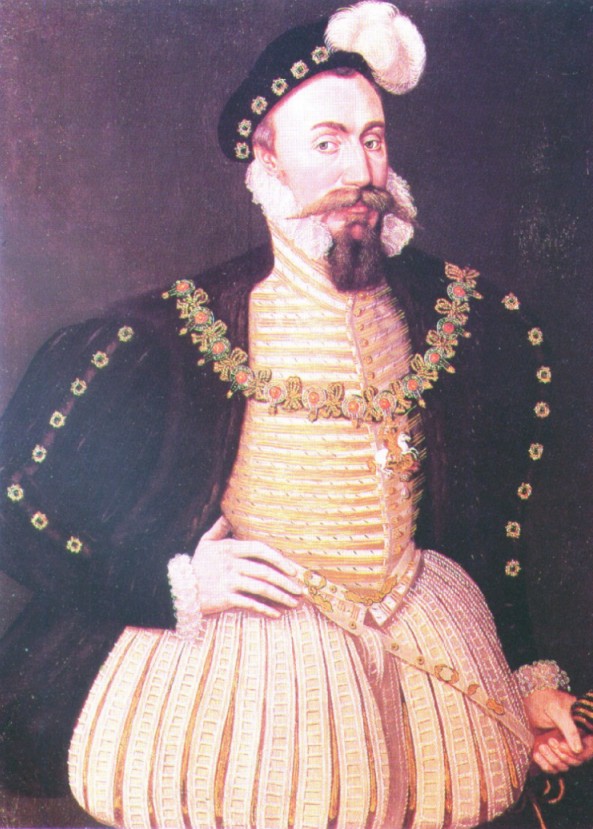
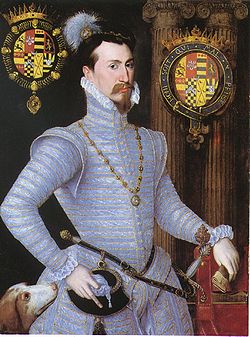
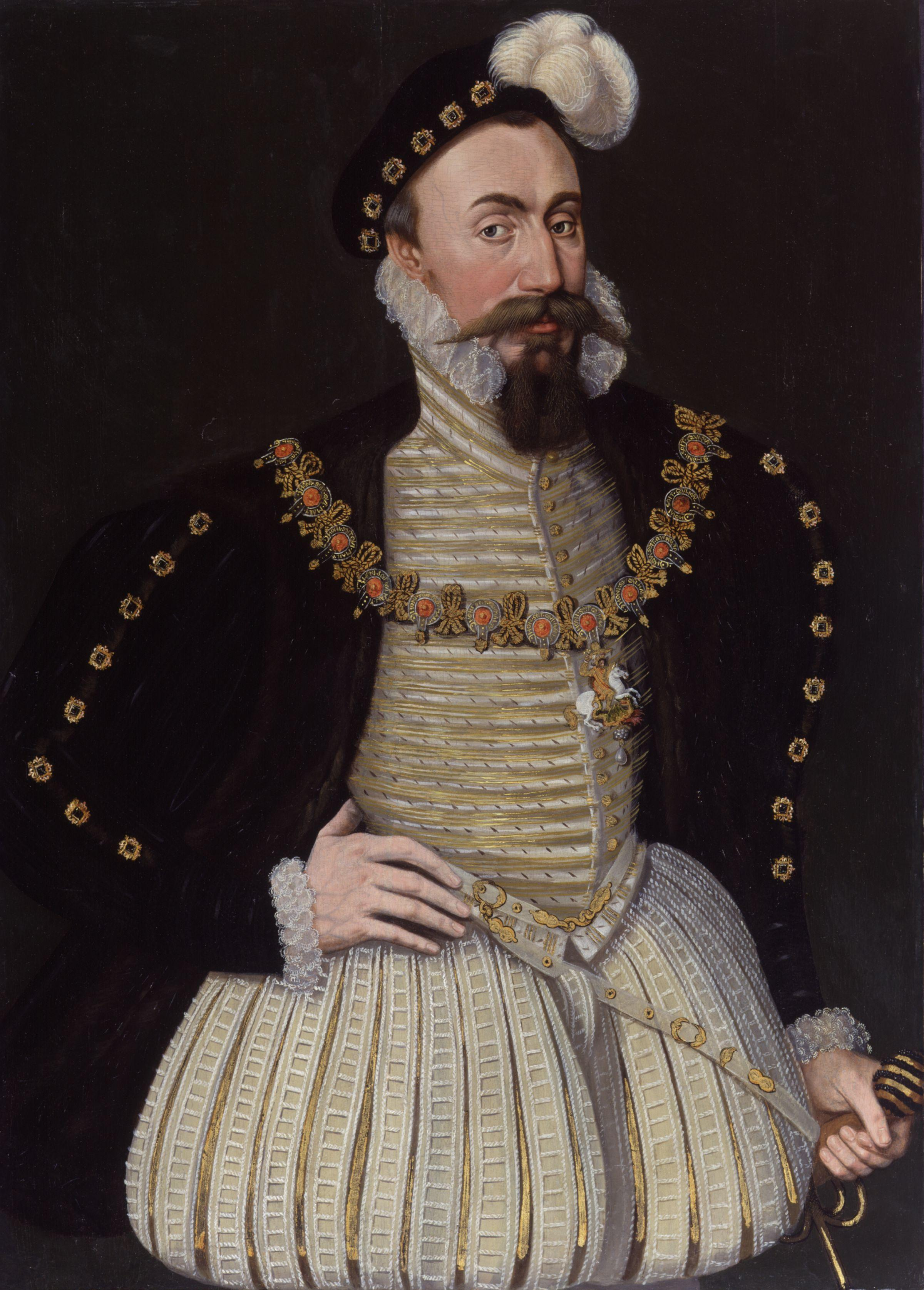
These were largely a satire on Elizabeth and the Tudors – and Elizabeth’s old lover, Robert Dudley the Earl of Leicester…..


…..who was the model for Richard III….

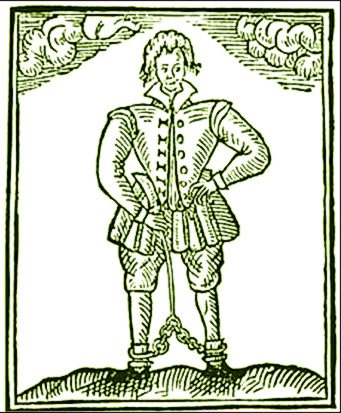
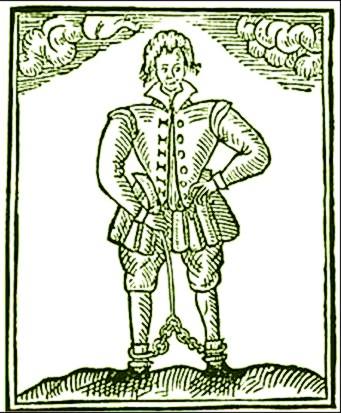
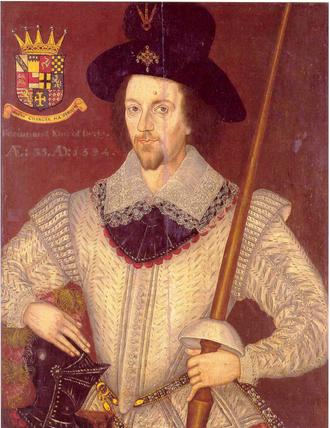
Shakespeare got his old enemies, Robert Greene…..

…..and Thomas Nashe…..

Thomas Nashe

down to Titchfield to help him…..

[1591: Plays written by Shakespeare: The Troublesome Reign of King John, The True Tragedy of Richard Duke of York, First Part of the Contention, Richard III and Henry VI Part One.]

1591: PLATONIC LOVE

Shakespeare’s next sonnet was a private one to Harry – also to be read by his mother, Mary, Second Countess of Southampton.

19. (20)

A Woman’s face with nature’s own hand painted,

Hast thou the Master Mistress of my passion,

A woman’s gentle heart but not acquainted

With shifting change as is false women’s fashion;

Shakespeare says that Harry’s face is like a woman’s – but with this difference: Harry does not use make-up. His features have been painted by Dame Nature herself.

He then describes Harry as being like both a man and a woman – controlling Shakespeare’s passion as both his master and his mistress. Harry has the soft-hearted nature of a woman – but not the fickle nature of a woman who often changes her lovers. Shakespeare uses ‘feminine’ endings for the end of each line of the Sonnet – ending on two syllables rather than one.

An eye more bright then theirs, less false in rolling:

Gilding the object where-upon it gazeth;

Harry’s eyes are brighter than a woman’s and, unlike a woman’s, do not look at every handsome man that passes by.

The beams from Harry’s eyes are like shafts of gold that gild the person he looks at. (At this time, people thought that beams came FROM the eye, rather than to it.)

A man in hew all Hews in his controlling,

Which steals men’s eyes and women’s souls amazeth.

Shakespeare, by spelling hue as ‘hew’ – and then italicising Hews and capitalising the ‘H’ – plays on Harry’s name and title. Hews is an anagram from Henry Wriothesley, Earl [of] Southampton. Every man in the room looks at Harry and he entrances the very souls of women.

And for a woman wert thou first created,

Till nature as she wrought thee fell a-doting,

And by addition me of thee defeated,

By adding one thing to my purpose nothing.

Shakespeare says that Dame Nature originally intended to make Harry a woman – but as she creted the female Harry, she fell in love with him – just as in Ovid – Shakespeare’s hero – Pygmalion, the sculptor, falls in love with the woman he is carving, Galatea…


But since she prickt thee out for women’s pleasure,

Mine be thy love and thy love’s use their treasure.

In order to fulfil her love, Dame Nature gave Harry a penis so he could give pleasure to a woman. Because this was Nature’s intention, Shakespeare wants his love for Harry to be Platonic rather than actively sexual.

Both Shakespeare and Harry were Catholics. The Jesuits actively encouraged homosexual platonic love – especially between young missionary priests. As long as the love was not physical, it was holy.

John Ingram was one of these young missionary priests. On 21st August, 1589, he wrote to his confessor, Father Joseph Cresswell, when he learnt of the death of his ‘intimate friend’ Humphrey Wolsley:

Yet when the news came of his exchange of life with death, I was so overcome and prostrated with grief, that I passed the whole night without sleep. For as often as I tried to fall asleep, so often did I recall to mind Humphrey’s incredible kindness to me and his many good services, so often did I see before me the man to whom I used to turn, in whose company I found peace, in whose sweet intercourse I lay aside all care and trouble. He, he it was who would talk so often and so earnestly about virtue and goodness, about quelling disorderly passions and extirpating vices before they became deeply rooted or further disseminated. From his company, help and advice, I might, had I tried, have gathered richer and more abundant thought. Such, dearest father was our intimacy, such the bonds of our friendship, which, I trust, your paternity heartily approves of, as I am sure that God does.

From this Sonnet it is clear that Harry – who as we learn from later Sonnets – was attracted to men of a class lower than himself – has made a play for Shakespeare. We also learn from Sonnet 104 (Old Order) that Shakespeare was sexually attracted to Harry the very first time he set eyes on him – April, 1590.

However, he had been employed by the Countess of Southampton – who was also attracted to lower class men – to convince her gay son to get married – so a homosexual affair between Shakespeare and Harry would have been counter-productive to say the least. In this Sonnet, which was also intended for Mary Southampton’s eyes, Shakespeare gently rebuffs him.

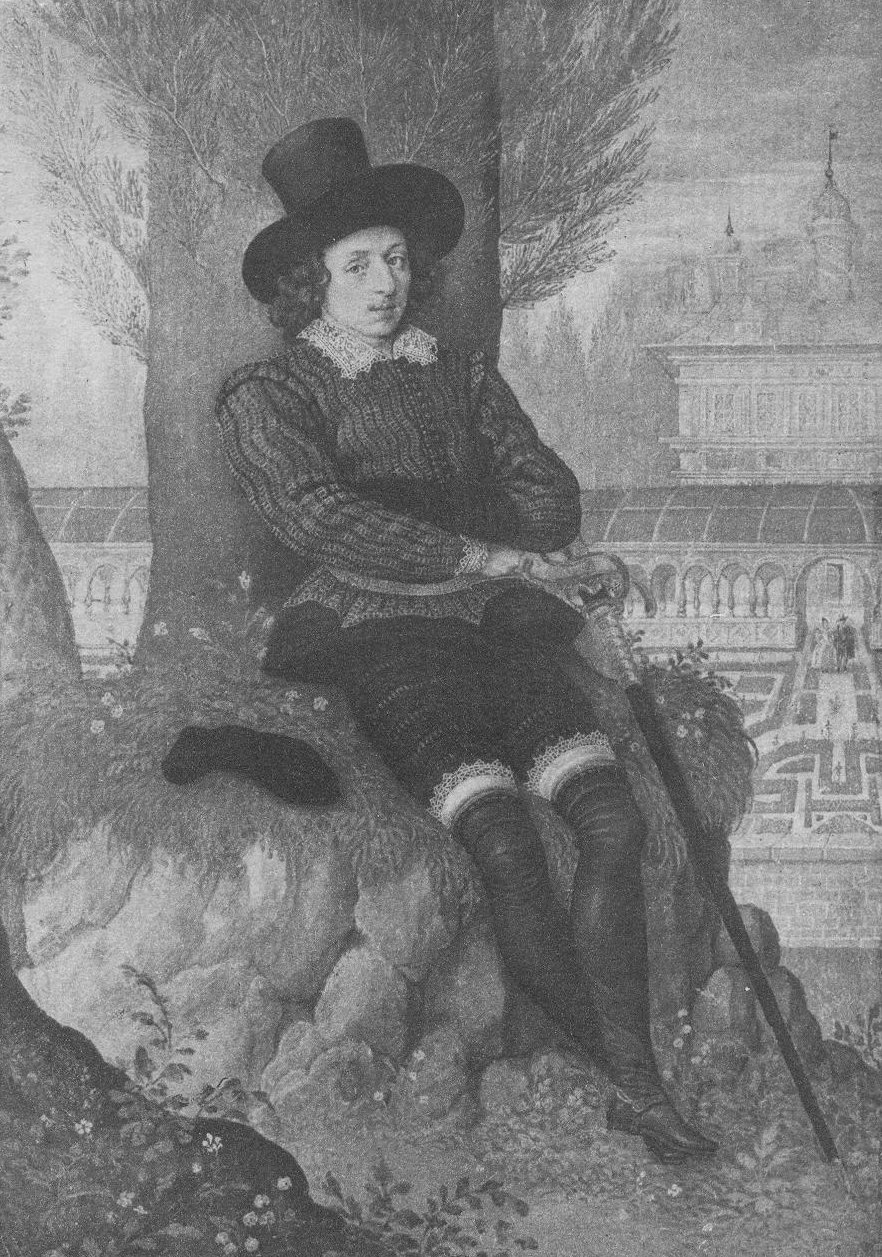
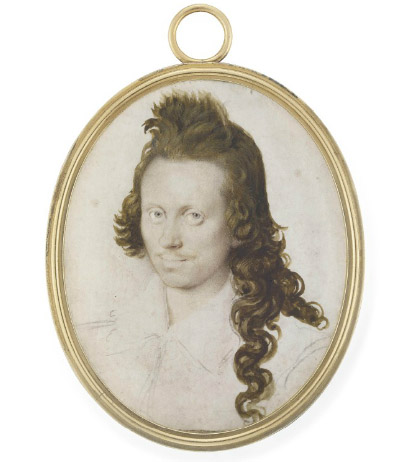
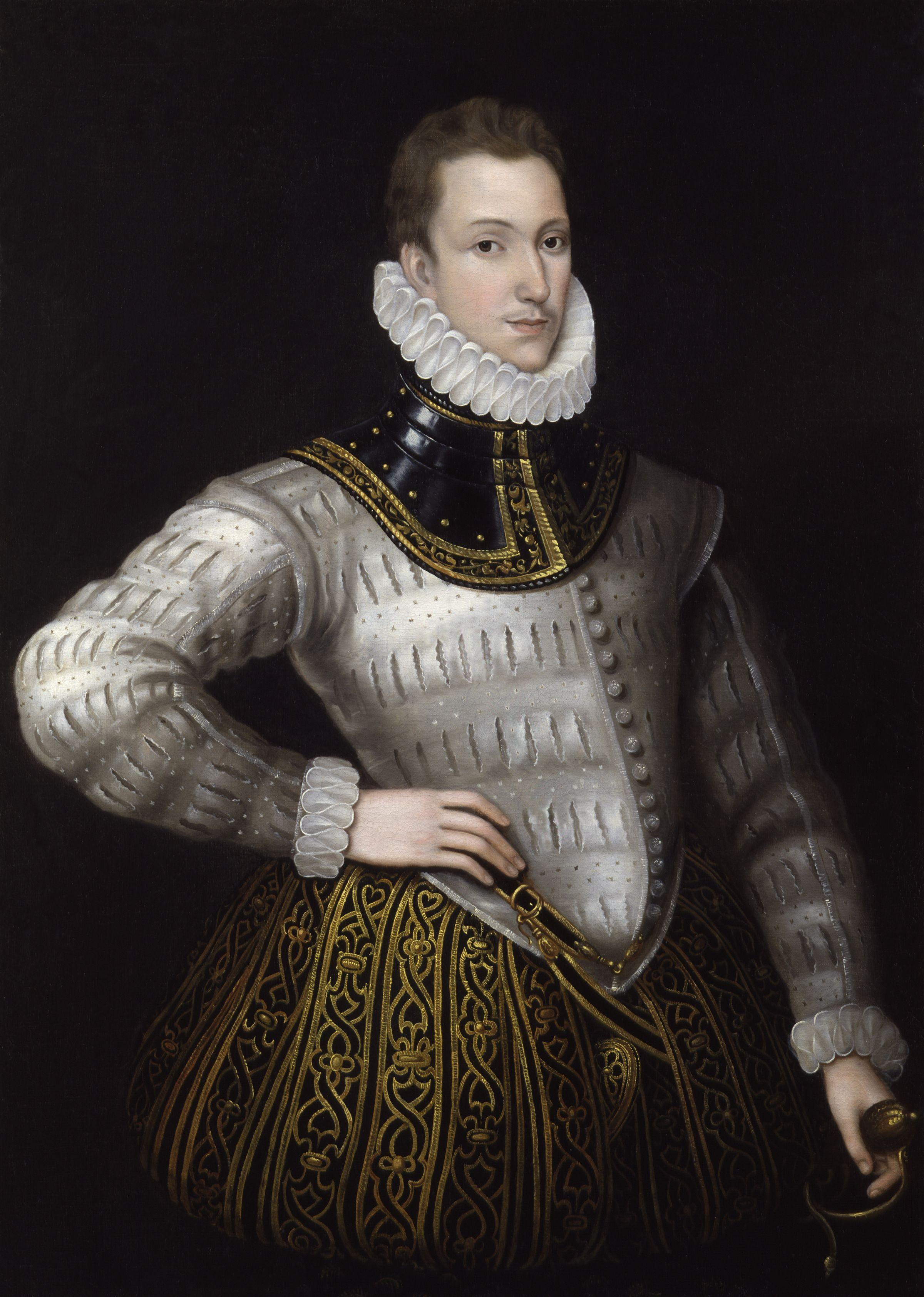
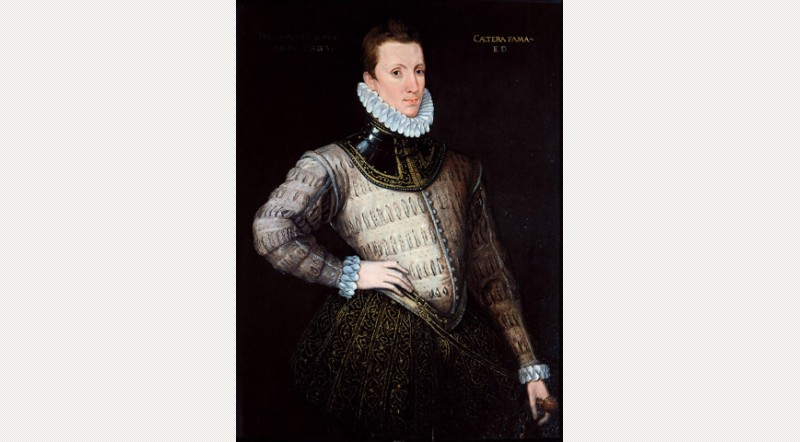
Harry, who we later learn engaged in cross-dressing, was born into a heavily bi-sexual, aristocratic culture. His hero, Sir Philip Sidney, then dead….


……had written the romance Arcadia which features Prince Musidorus with his:

….fair auburn hair (which he ware in great length, and gave at that time a delightful show with being stirred up and down with the breath of a gentle wind…his face now beginning to have some tokens of a beard….’

And Prince Pyrocles who is…

…..of a pure complexion, and of such cheerful favour as might seem either a woman’s face on a boy or an excellent boy’s face on a woman.

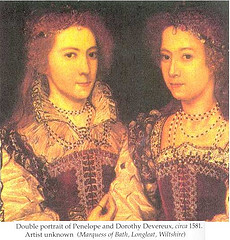
Prince Pyrocles falls in love with Pamela – the daughter of King Basilius – whom John Aubrey tells us – was based on Dorothy Devereux. Her sister in the story – Philoclea – was based on Penelope Rich – who was to become Shakespeare’s leading lady in private performance!

Pyrocles dresses up as a woman – Zelmane – to gain entry into the court .

He looks so beautiful in drag that Prince Musidorus fancies him – and King Basilius falls in love with him!

There is a tradition that the Pembroke family – and Lady Penelope – would act out scenes from Arcadia – and at Wilton there are Arcadian Panels in one of the drawing rooms….

To read ‘The Bath Sonnets’, Part 10, click: HERE

It’s best to read ‘The Birthday Sonnets’ Part Seven first.

15. (14)

Not from the stars do I my judgement pluck,

And yet methinks I have Astronomy,

But not to tell of good, or evil luck,

Of plagues, of dearths, or seasons’ quality.

Shakespeare does not consult the stars to come to decisions – but at the same time he is a Master Astrologer. However he does not use this skill to predict the future for people.

Nor can I fortune to brief minutes tell,

Pointing to each his thunder, rain and wind,

Or say with Princes if it shall go well

By aught predict that I in heaven find.

Nor can he predict from the heavens what is going to be the fate of individuals – or even royalty, who might consult him in the way Queen Elizabeth consulted the Magus John Dee at Mortlake.

But from thine eyes my knowledge I derive,

And constant stars in them I read such art

As truth and beauty shall together thrive

If from thy self, to store thou wouldst convert:

No. Shakespeare claims that his knowledge of the future is derived from Harry’s eyes and this knowledge tells him that if Harry were to have a child, truth and beauty would flourish together.

Or else of thee this I prognosticate,

Thy end is Truth’s and Beauty’s doom and date.

If Harry, however, decides not to have a son truth and beauty will no longer reside together. Shakespeare is claiming that Harry is unique in that he is both beautiful AND truthful in a way that no-one else alive is.

16. (15)

When I consider every thing that grows

Holds in perfection but a little moment,

That this huge stage presenteth nought but shows

Whereon the Stars in secret influence comment.

Everything is changing in life and perfection only lasts a second. The world is like a theatre which presents shows on which the stars secretly comment – like an audience watching a play.

When I perceive that men as plants increase,

Cheered and checkt even by the self-same sky:

Vaunt in their youthful sap, at height decrease,

And wear their brave state out of memory.

Men are subject to the same influences as plants are: like them, they grow vigorously but at the zenith of their growth they start to decline and become merely a memory of their former grandeur.

Then the conceit of this inconstant stay

Sets you most rich in youth before my sight,

Where wasteful time debateth with decay

To change your day of youth to sullied night,

Knowledge of this transience makes you even more valuable to me – knowing that time and the natural process of decay are teaming up to kill you.

And all in war with Time for love of you,

As he takes from you, I ingraft you new.

Shakespeare is in a war with Time. As Time reduces Harry, Shakespeare increases him with his verse. It is like grafting on a new plant to an older one.

Shakespeare is starting a  new theme. That his poetry can make Harry immortal.

17. (16)

But wherefore do not you a mightier way

Make war upon this bloody tyrant time?

And fortify your self in your decay

With means more blessed then my barren rhyme?

Shakespeare invites Harry to make war on Time in a more powerful way than Shakespeare’s verse – which is barren of ideas as a woman can be barren.

Now stand you on the top of happy hours,

And many maiden gardens yet unset,

With virtuous wish would bear your living flowers,

Much liker than your painted counterfeit:

Harry is at a supreme moment of happiness in his life and many women are like gardens waiting to be filled with the flowers of Harry’s children – which would represent you more truthfully than a painting or a poem can do…..

So should the lines of life that life repair

Which this (Time’s pencil or my pupil pen)

Neither in inward worth nor outward fair,

Can make you live your self in eyes of men.

Only life itself can repair the lines that will appear on your face: drawings are still subject to time and I am only beginning to learn my craft as a writer. Neither art nor poetry can capture your outward beauty and inner worth so that men can see it.

To give away your self, keeps your self still,

And you must live drawn by your own sweet skill.

The paradox is that by giving yourself away to a woman, you get to keep yourself. And you can only live by making a drawing of yourself with a son.

The Countess of Pembroke – thirty miles away from Titchfield – was said to keep a ‘school’ for poets.

Mary Southampton – by commissioning this series of seventeen sonnets from Shakespeare for her son’s seventeenth birthday – was also keeping her own school at Place House in Titchfield.

18. (17)

Who will believe my verse in time to come

If it were fill’d with your most high deserts?

Though yet heaven knows it is but as a tomb

Which hides your life, and shows not half your parts:

Even if Shakespeare had the skill as a writer to describe Harry’s qualities no one in the future would believe him. As it is, his verse rather resembles a tomb that hides a body than displays it accurately.

If I could write the beauty of your eyes,

And in fresh numbers number all your graces,

The age to come would say ‘This Poet lies;

Such heavenly touches ne’er toucht earthly faces.’

Even if Shakespeare had the skill to describes the beauty of Harry’s eyes and the beauty of his behaviour, people would say he was lying because such qualities can only be found in heaven – not on earth.

So should my papers (yellowed with their age)

Be scorn’d, like old men of less truth than tongue,

And your true rights be term’d a Poet’s rage,

And stretched metre of an Antique song.

Shakespeare’s poems will turn yellow with age and be mocked as old men, who lie about the past, are mocked. The truth about Harry would be dismissed as a poet’s madness and the exaggeration of some old ballad.

But were some child of yours alive that time,

You should live twice: in it and in my rhyme.

But if Harry were to have a son he would live twice over: once in his son, and once in Shakespeare’s verse.

Shakespeare, in the Birthday Sequence, holds out the idea that his verse will make Harry immortal, withdraws the idea as presumptuous, then  re-inforces it in the very last couplet.

This dynamic in the relationship between Shakespeare and Harry is of vital importance. Harry has the wealth and the looks: Shakespeare has the talent.

To read ‘The Attempted Seduction’ Part Nine, click: HERE

It’s best to read ‘The Birthday Sonnets’ Part Six first.

11. (10)

For shame deny that thou bear’st love to an

Who for thy self art so unprovident

Grant if thou wilt, thou art belov’d of many,

But that thou none lovest is most evident:

For thou art so possest with murdrous hate,

That gainst thy self thou stickst not to conspire,

Seeking that beauteous roof to ruinate

Which to repair should be thy chief desire:

Shakespeare continues the argument of the previous Sonnet – that though Harry is beloved of many, he loves no-one in return because he is hell-bent on his own destruction. His duty is to repair his house, i.e., himself – by having a son – not destroy it.

O change thy thought, that I may change my mind,

Shall hate be fairer lodg’d than gentle love?

Be as thy presence is, gracious and kind,

Or to thy self at least kind hearted prove.

Shakespeare asks Harry to change his mind about having a son. It is wrong that self-hatred should exist in someone who looks so beautiful. Other, less attractive people are filled with love – including Shakespeare himself, who loves Harry. Harry should be kind to other people  – as his nature suggest he is – or at least he should be kind to himself.

Make thee an other self for love of me,

That beauty still may live in thine or thee.

‘An other self’ is code for a baby boy, that Shakespeare picks up later in the Sonnets. Shakespeare now talks openly of his love for Harry – and this love supplies a reason for Harry to have a son – so that his beauty will live on in himself and his child to please Shakespeare.

12. (11)


As fast as thou shalt wane so fast thou grow’st

In one of thine, from that which thou departest,

And that fresh blood which youngly thou bestow’st,

Thou mayst call thine, when thou from youth convertest.

Shakespeare argues that by having a son Harry will wax just as quickly as he wanes – that as he grows older and weaker, his son will grow older and stronger – ands a part of Harry will live on in his son. And by having a son when he is a young man he can claim this young man as himself as he grows older.

Herein lives wisdom, beauty, and increase,

Without this folly, age, and cold decay:

If all were minded so, the times should cease

And threescore year would make the world away:

Shakespeare here makes an oblique attack on Queen Elizabeth – who was nearing 60 in 1590 – ‘three score years’ and by staying, technically, at least, a virgin was facing a future filled with ‘folly, age and cold decay’. If everyone behaved like her, there would be no human race left in sixty years.

Let those whom nature hath not made for store,

Harsh, featureless, and rude, barrenly perish,

Look whom she best endow’d, she gave the more;

Which bounteous gift thou shouldst in bounty cherish.

Shakespeare argues that unattractive people like the Queen shouldn’t procreate – but because Nature has given so much to Harry, it is his duty to reproduce.

She carv’d thee for her seal, and meant thereby,

Thou shouldst print more, not let that copy die.

Shakespeare claims that Nature created Harry to be her seal =- with which she signed letters – her sign and motto, as Harry is the finest creature she has made. But a seal is there to produce copies – as Harry should do.

13. (12)

When I do count the clock that tells the time,

And see the brave day sunk in hideous night;

When I behold the violet past prime,

And sable curls all silver’d ore with white:

When lofty trees I see barren of leaves,

Which erst from heat did canopy the herd,

And Summer’s green all girded up in sheaves

Borne on the bier with white and bristly beard:

The ticking of a clock, the transformation of day into night, a fading violet, trees bereft of leaves that once gave shade to cattle and the green corn transformed into sheathes with white beards like old men…..

Then of thy beauty do I question make

That thou among the wastes of time must go,

Since sweets and beauties do them-selves forsake,

And die as fast as they see others grow,

…..all these make Shakespeare question the very nature of Harry’s beauty as it will be subject to time and decay. All beautiful things depart from their original natures and fade as quickly as they see other beautiful things come into being.

And nothing gainst Time’s scythe can make defence

Save breed to brave him, when he takes thee hence.

Shakespeare concludes that there is nothing we can do defeat time and death except have a son which allows us to mock time and death as we die.

14. (13)

O that you were your self, but love you are

No longer yours, then you your self here live.

Against this coming end you should prepare,

And your sweet semblance to some other give.

Shakespeare wishes that Harry’s identity could be complete and permanent – but he knows that his existence is dependent on his being alive on earth. Harry should prepare for this coming extinction and give his beauty to someone else.

So should that beauty which you hold in lease

Find no determination, then you were

Your self again, after your self’s decease,

When your sweet issue your sweet form should bear.

In that case Harry’s beauty – which is leased to him could transform into a lease that has no end date. Because when he dies his son would look like him and so be him.

Who lets so fair a house fall to decay,

Which husbandry in honour might uphold,

Against the stormy gusts of winter’s day

And barren rage of death’s eternal cold?

Who owns a beautiful house and lets it fall into decay without preserving it against winter and decay?

O none but unthrifts, dear my love you know,

You had a Father, let your Son say so.

Only spendthrifts – but you, who are my loved one, know this already. You also know that you had a father, Henry, 2nd Earl of Southampton, who died when you were eight years old. Have a son, so he can boast of the same thing.

To read ‘The Birthday Sonnets Part Eight, click: HERE

It’s best to read ‘The Birthday Sonnets’  Part Five first.

Sonnet 9 continues the sequence of seventeen sonnets for Henry Wriothesley, the Third Earl of Southampton’s seventeenth birthday.

9. (8)

Music to hear, why hear’st thou music sadly,

Sweets with sweets war not, joy delights in joy:

Why lov’st thou that which thou receiv’st not gladly,

Or else receiv’st with pleasure thine annoy?

Shakespeare confronts a paradox. Harry has a beautiful, singing voice – but listening to music itself irritates him. How can he love singing and yet hate music itself?

If the true concord of well tuned sounds,

By unions married do offend thine ear,

They do but sweetly chide thee, who confounds

In singleness the parts that thou should’st bear:

Shakespeare believes he has the answer why Harry is unable to listen to music with pleasure. A beautifully tuned instrument resembles marriage – and this disturbs Harry. He wants to live singly in the same way he sings by himself and not with others.

Mark how one string sweet husband to another,

Strikes each in each by mutual ordering;

Resembling sire, and child, and happy mother,

Who all in one, one pleasing note do sing:

Whose speechless song being many, seeming one,

Sings this to thee: ‘Thou single wilt prove none.’

For Shakespeare a well-tuned instrument – with its resonating strings – resembles husband, wife and son singing and living together in harmony. He draws on the Southampton family motto – Ung par tout – All for One or A|l in One – to make his point. Although they all sing separately, the make up one rich sound. Harry will never be able to know this harmony in life if he insists on remaining unmarried.

10. (9)

Is it for fear to wet a widow’s eye,

That thou consum’st thy self in single life?

Ah; if thou issueless shalt hap to die,

The world will wail thee like a makeless wife,

Shakespeare speculates it might be fear of creating a sorrowing widow that stops Harry from marrying. But if Harry doesn’t have children then the whole world will become his mourning widow. Also there is a sexual play on ‘eye’ which can mean the pudenda – and wetting it is a coded reference to ejaculation. Is Harry frightened of sex with women?

The world will be thy widow and still weep,

That thou no form of thee hast left behind,

When every private widow well may keep,

By children’s eyes, her husband’s shape in mind:

The whole world will be upset because Harry will have left no image of himself when he dies. Shakespeare brings the comparison home to the Southampton family itself when he talks about ‘private widows’ remembering their dead husbands through their children. Mary, 2nd Countess of Southampton, is a widow whose husband is dead. Harry enables her to recall her husband’s shape.

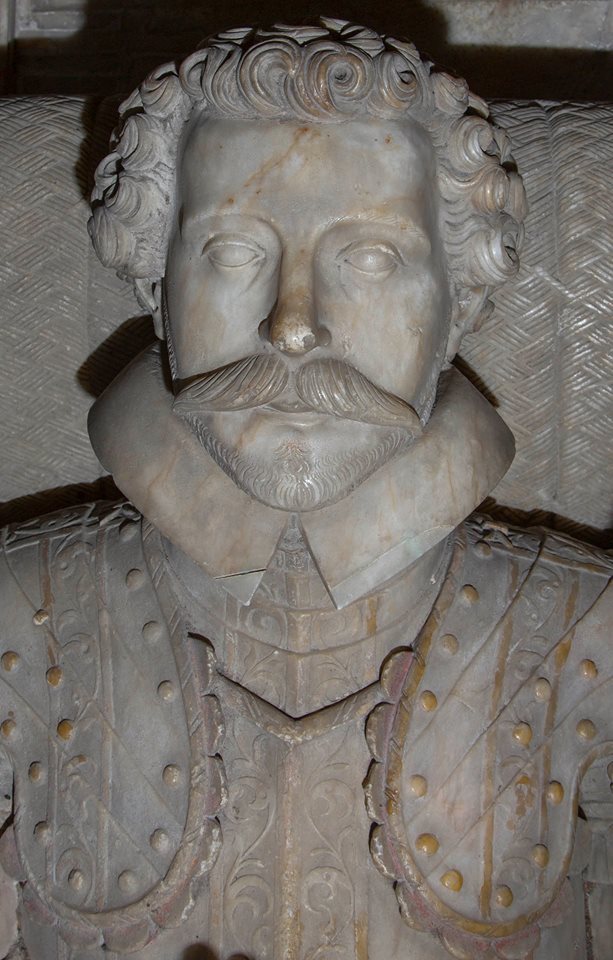
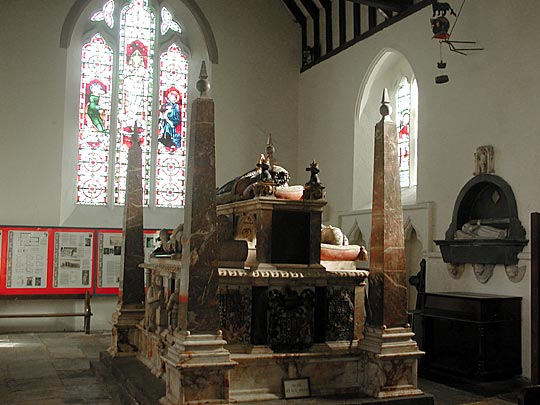
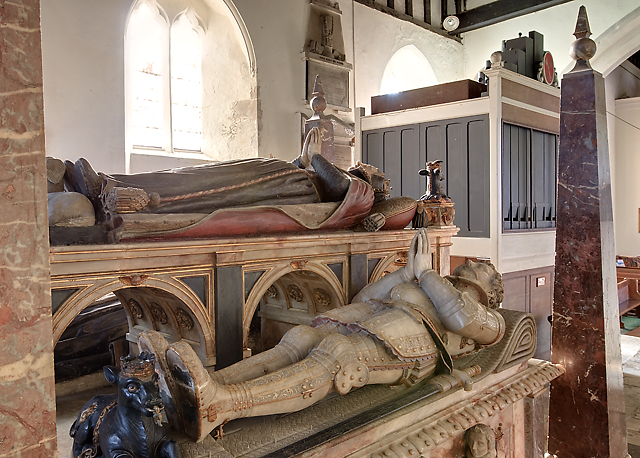
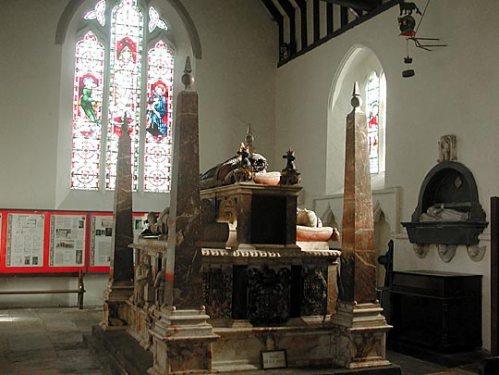
The 2nd Earl and the Countess did not get on because he thought she had been unfaithful to him. But we know from the effigy of him on the Southampton Tomb in St. Peter’s, Titchfield, that he was a very handsome man.

Photo of Second Earl of Southampton by Ross Underwood.

Shakespeare by using ‘eyes’ and ‘shape’ also suggests that Mary can recall the penis of her dead husband through her son.

Look what an unthrift in the world doth spend

Shifts but his place, for still the world injoys it,

But beauty’s waste hath in the world an end,

And kept unus’d the user so destroys it:

No love toward others in that bosom sits

That on himself such murdrous shame commits.

Shakespeare makes the contrast between a spendthrift and a beautiful young man who masturbates.  The wealth of the spendthrift is simply re-distributed – but semen once spent is lost for ever. And even if there is no ejaculation, the semen is destroyed by NOT being used. Shakespeare accuses Harry of not loving other people because of his insistence on solitary masturbation – which Shakespeare terms ‘murderous shame.’

To read ‘The Birthday Sonnets’, Part Seven, click: HERE


It’s best to read ‘The Birthday Sonnets’ – Part Four – first.

8. (7)

Lo in the Orient when the gracious light,

Lifts up his burning head, each under eye

Doth homage to his new appearing sight,

Serving with looks his sacred majesty,

In this Sonnet, Shakespeare compares the rising and setting sun to the life of a man who has no children. At the beginning of his life – when he is handsome and strong – people gaze at him. But when he gets older, people no longer want to look at him.

But there is another, coded message. The ‘burning head’ also represents the erect penis in the act of masturbation and ‘each under eye’ the testicles that are drawn up when the penis is erect – as though they are attendants on a king. The facial area in Shakespeare could also represent the genital area.

And having climb’d the steep up heavenly hill,

Resembling strong youth in his middle age,

Yet mortal looks adore his beauty still,

Attending on his golden pilgrimage:

Here the ‘heavenly hill’ is the literal ‘hill of heaven’ – but it also suggest the ‘mons veneris’ – the ‘mound of Venus’ – the pubic bone above the penis. The ‘mortal looks’ which attend the Sun’s ‘golden pilgrimage’ – the golden journey the golden Sun makes – are literally the eyes of the onlookers – but they also represent the testicles, still elevated by the risen penis.

But when from high-most pitch with weary car,

Like feeble age he reeleth from the day,

The eyes (fore duteous) now converted are

From his low tract and look an other way:

The ‘weary car’ means ‘weary carriage’. In Greek classical mythology, the Sun rode in a chariot, pulled by fiery steeds.

So Shakespeare is saying that when the Sun has reached its zenith and starts to set, people are no longer interested. They are no longer interested in a man who is growing old and feeble.

But it also suggest the testicles which are no longer drawn up by the penis when the penis, having ejected semen, is no longer erect.

So thou, thy self out-going in thy noon:

Unlook’d on, diest unless thou get a son.

Literally, this means that a man who is completing his cycle of life will die unregarded unless he has produced a son who will inherit his strength and good-looks. But as Katharine Duncan Jones points out in the Arden edition of The Sonnets, ‘noon’ also symbolised erection for the Elizabethans, when both hands on the dial of a clock were pointing upwards.

‘Diest’ could also mean for Shakespeare – as it meant for the Metaphysical Poets – ‘to achieve orgasm’. So ‘unlook’d on’ can also suggest the act of solitary masturbation where a partner is not looking at the activity.

Stewart Trotter – the Code’s Chief Agent – submitted this interpretation of the Sonnet for his Cambridge Finals in 1971.

Stewart’s Cambridge College.


His Director of Studies – no names, no pack-drill – was so shocked he told him not to submit his essay.  But he did – and this is now the standard interpretation of the Sonnet.

To read ‘The Birthday Sonnets’, Part 6, click HERE


It’s best to read Part Three  before Part Four.

5. (4)

Unthrifty loveliness, why dost thou spend,

Upon thy self thy beauty’s legacy?

Nature’s bequest gives nothing but doth lend,

And being frank she lends to those are free:

Beauty is presented to Harry as a legacy he is obliged to pass on not spend on himself. But again, money for the Elizabethans had a sexual connation as well. ‘Spending upon thy self’ also suggests seminal emission in masturbation. Nature only lends things to us – she never gives them to us. And because she has an open, generous nature gives things to those who are generous and free as well.

Then beauteous niggard, why dost thou abuse,

The bounteous largess given thee to give?

Profitless usurer, why dost thou use

So great a sum of sums yet can’st not live?

‘Beauteous niggard’ = ‘handsome miser’. The ‘bounteous largesse given thee to give’ is the generous gift that Nature has given to Harry. But it is also a compliment on the size of his penis.  Shakespeare claims Harry is ‘usurer’ is (a money lender – like Shakespeare’s father was). But Harry is a money-lender who doesn’t make any money. The reason is that he is expending masses amounts of semen in masturbation – but doesn’t produce any life with it.

For having traffic with thy self alone,

Thou of thy self thy sweet self dost deceive,

Then how when nature calls thee to be gone,

What acceptable Audit can’st thou leave?

‘The traffic with thyself alone’ is a euphemism for solitary masturbation. The ‘sweet self’ means the sweet baby boy that Harry could produce and which Harry is cheating himself of. When Nature decrees that Harry must die – what ‘audit’ will he have left behind that would be acceptable to Nature? The first syllable of ‘acceptable should be emphasized.

Thy unus’d beauty must be tomb’d with thee,

Which used lives th’ executor to be.

Harry’s beauty will die with him – unless he has a son who can act as the executor of his will and the executor of his beauty.

‘Used’ needs to be two syllables to fill the line.

6. (5)

Those hours that with gentle work did frame

The lovely gaze where every eye doth dwell,

Will play the tyrants to the very same,

And that unfair which fairly doth excel:

Time has produced Harry’s lovely eyes which everyone gazes at. But that same time will wreck havoc with those same eyes like a tyrant and make unbeautiful which is so excellingly beautiful now.

For never resting time leads Summer on

To hideous winter and confounds him there,

Sap checkt with frost, and lusty leaves quite gone,

Beauty ore-snow’d and bareness every where.

Time will do exactly the same thing to Harry as it does to Nature itself. It leads summer on to winter and destroys him. It stops the flow of sap (Harry’s sexual energies) and makes the leaves fall from the trees (Hair fall from the head). ll the beautiful plants will be covered with snow (white heads and beards) and gardens will be bare of plants (heads will become bald.)

Then were not summer’s distillation left

A liquid prisoner pent in walls of glass,

Beauty’s effect with beauty were bereft,

Nor it nor no remembrance what it was.

If the beautiful blooms of summer were not distilled into perfume and captured in glass bottles, the result of beauty would be lost along with beauty itself – and no-one would remember it.

But flowers distill’d, though they with winter meet,

Leese but their show, their substance still lives sweet.

‘Leese’ = ‘lose’. But flowers turned into perfume, though they meet with Winter, lose simply their outward show.  Their inner essence lives on.

So, if Harry impregnates a woman, his own essence would live on after he has died.

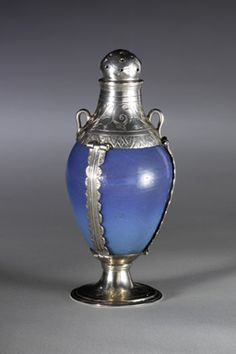
Elizabethan dichroic glass bottle for ‘casting’ perfume.


7. (6)

Then let not winter’s ragged hand deface

In thee thy summer, ere thou be distill’d:

Make sweet some vial; treasure thou some place

With beauty’s treasure ere it be self kill’d.

Winter makes things ragged:  this is called a ‘transferred epithet.’ Shakespeare warns Harry not to fall into the hands of death before he has impregnated a woman. He should make ‘sweet some vial’ – a woman’s womb – and should honour this womb with his semen before he wastes and kills his sperm through masturbation.

That use is not forbidden usury

Which happies those that pay the willing loan:

That’s for thy self to breed an other thee,

Or ten times happier be it ten for one,

The usury laws in 1590 had not settled down.  Money lending had been officially illegal – but Elizabeth was forced to allow them so business could continue – but insisted that a lender did not charge more than 10% of the money for the loan. (Shakespeare’s father charged much more!)

So this ‘use’ of money/semen is not illegal: he lends his money/semen to a woman as he gets another self back in the form of a baby boy – or ten babies boys.

Ten times thy self were happier then thou art,

If ten of thine ten times refigur’d thee,

Then what could death do if thou should’st depart,

Leaving thee living in posterity?

If he were to breed ten boys and they in turn bred ten sons each he would have a hundred sons. This is a way to confound death because there would be a hundred images of himself still living.

Be not self-will’d for thou art much too fair,

To be death’s conquest and make worms thine heir.

Shakespeare tells Shakespeare not to be self-will’d’ because ‘will’ was also used for the genitals male AND female. Shakespeare saying that Harry is far too beautiful to waste it on masturbation. Death would then be able to destroy him and make him the air to worms.

It also means ‘make worms thy hair’ – another reference to Harry’s flocking locks….


To read Part Five, click HERE!

It’s best, first, to read ‘Stratford, Touring, London and Titchfield Part One. 

Here are the opening three poems of the seventeen poems written by William Shakespeare to celebrate the seventeen birthday of Henry Wriothesely, Third Earl of Southampton and Baron of Titchfield on 6th October, 1590

The first number attached to each sonnet shows the Sonnet’s position in the new ordering and the second number its original numbering by Shakespeare and his publisher.

2. (1)

From fairest creatures we desire increase,

That thereby beauty’s Rose might never die,

But as the riper should by time decease,

His tender heir might bear his memory:

The Elizabethans were happy for a word to be stressed in any number of ways in poetry. ‘Increase’ in this context should have the second syllable emphasised – as marked.

The seventeen year old Harry Southampton is being addressed directly in the Sonnet. He is ‘the fair creature’ and we want beautiful people to reproduce – that way they will become immortal.

The italics and capitalisation on Rose are Shakespeare’s own. He is stating that Harry is a rose. The rose symbol represents the town of Southampton – and Harry was Third Earl of Southampton.

His family name was Wriothesley.  It hard started off as Writh – but as the family became more grandiose it had grown to Wriothesley.

Then when part of the family became aristocratic, different ways of pronouncing the name came into play. The lower down branches pronounced the word ‘Risley’ – and the name is signed that way by some of the family.

For the aristocrats it was ‘Ryosely’ – to sound like a rose.  This is how it is recorded in the Titchfield Parish Register.

Shakespeare is saying that the ‘riper’ rose – the older one, will with time cease to be: but his softer, younger heir will remind people of the older father.

Shakespeare has a beautiful internal rhyme with ‘heir’ and ‘bear’.

‘Tender heir’ also suggests ‘tender hair’. Harry was proud of his locks of hair which hung down his shoulders.

But thou contracted to thine own bright eyes,

Feed’st thy light’s flame with self substantial fuel,

Making a famine where abundance lies,

Thy self thy foe, to thy sweet self too cruel:

‘Bright eyes’ is a literal reference to Harry’s eyes: but for Shakespeare and the Elizabethans, the vocabulary of the face could also suggest the genital area. So the ‘eyes’ could also represent the ‘testicles’.

In this sequence of seventeen poems, Shakespeare suggests time and time again that Harry is too addicted to teenage masturbation.

The ‘self-substantial fuel’ with which Harry feed his ‘light’s flame’ – his passion is the semen he ejects.

By not sharing his sexual energies with a woman, Harry is starving the world – and being cruel to himself. He is engaging too energetically in self-abuse and denying himself a son.

Thou that art now the world’s fresh ornament,

And only herald to the gaudy spring,

Within thine own bud buriest thy content,

And tender churl mak’st waste in niggarding:

Harry is ‘the world’s fresh ornament’ because he is so attractive and by proclaiming him the ‘only herald to the gaudy [rejoicing] spring’ Shakespeare is complimenting Harry’s ancestors who were heralds and ensigns.

‘The bud’ where Harry ‘buries’ his content’ is the tip of the penis which gives him so much pleasure when he masturbates. So, paradoxically, he is wasteful and niggardly at the same time. He wastes his semen by not sharing it with others.

Pity the world, or else this glutton be,

To eat the world’s due, by the grave and thee.

Shakespeare asks Harry to take pity on the rest of the world by fathering a son – or he, along with his death, will be greedy and rob the world of what it is entitled to.

Remember: Lord Burghley wanted Harry to marry his grand-daughter, Elizabeth Vere and was threatening the Southampton family with an enormous £5,000 fine.

3. (2)

When forty Winters shall besiege thy brow,

And dig deep trenches in thy beauty’s field,

Thy youth’s proud livery so gaz’d on now,

Will be a tatter’d weed of small worth held:

Harry Southampton was seventeen when Shakespeare wrote these words to him. He is talking about a time when he is forty years older – 57. This was the age of Queen Elizabeth in 1590 – so it an oblique attack on her.  She was hated by the Southampton family for her persecution of Catholics.

Shakespeare has stopped writing about Spring and is writing about Winter. He compares the lines that will appear on Harry’s face to the deep trenches in a field. His youthful body he compares to the bright livery a Lord and his attendants would wear – and says it will turn into an old, tattered coat [weed].

Then being askt, where all thy beauty lies,

Where all the treasure of thy lusty days;

To say within thine own deep sunken eyes,

Were an all-eating shame, and thriftless praise.

By using the word ‘treasure’ Shakespeare introduces another sexual theme.  Money and semen are often equated in the Sonnet sequence – and the ‘deep-sunken eyes’ has be literally eyes – but it can also suggest shrivelled testicles.

How much more praise deserv’d thy beauty’s use,

If thou couldst answer ‘This fair child of mine

Shall sum my count, and make my old excuse’,

Proving his beauty by succession thine.

Shakespeare is saying that if, in old age, when asked where all his beauty has gone, Harry could point to a son, all would be explained. He would show Harry’s true worth – and excuse his old age.

This were to be new made when thou art old,

And see thy blood warm when thou feel’st it cold.

It would miraculously endow Harry with another youth. Although his sexual ardour would be diminished by old age he would experience it vicariously through his son.

4. (3)

Look in thy glass and tell the face thou viewest,

Now is the time that face should form an other,

Whose fresh repair if now thou not renewest,

Thou do’st beguile the world, unbless some mother.

The glass here means ‘looking glass’. Shakespeare is inviting Harry to look at his ‘face’ in the mirror. The face here can be literally his face – but it can also mean the genital area – that’s why Harry’s face has the ability to form ‘an other’. ‘Fresh repair’ means getting on with the job while Harry is still young – to make himself stay young. The consequence of not doing so is to cheat the world and take a blessing away from a woman which is rightly here’s.

Shakespeare uses ‘face’ sexually also in ‘King Lear’: ‘Behold yon simpering dame/Whose face between her forks presageth snow.’ Forks=legs.

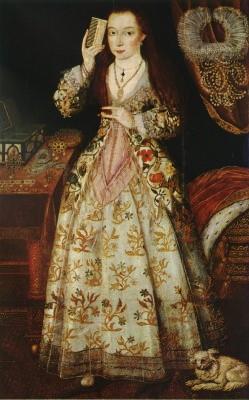
[This reference to a looking glass is also an oblique attack on Queen Elizabeth as well. She was said to have no ‘true’ looking glasses around her as she did not want to be aware of her own aging. Her Ladies-in-Waiting were said to take advantage of this by painting her nose red.]

For where is she so fair whose un-ear’d womb

Disdains the tillage of thy husbandry?

Or who is he so fond will be the tomb

Of his self love to stop posterity?

Shakespeare compares sexual intercourse here with ploughing a field – so an ‘unear’d womb’ is one without ears of corn i.e. one that is virgin. There is no woman so beautiful who would not relish young Harry as her lover – and who would be so stupid as to be the reason his family line stops with his death.

Thou art thy mother’s glass and she in thee

Calls back the lovely April of her prime,

So thou through windows of thine age shalt see,

Despite of wrinkles this thy golden time.

This a compliment to the beautiful Mary Countess Mary Southampton who in 1590 was still in her thirties.

Shakespeare is saying that Mary can see her younger self – ‘the lovely April of her prime’ – reflected in the mirror of her son. If Harry were to have a child, he could so the same. The ‘windows of age’ that Shakespeare refers to represent that added vision and knowledge that maturity will bring – even though it brings wrinkles as well.

But if thou live remembred not to be,

Die single and thine Image dies with thee.

But if you live wishing NOT to be remembered and die a bachelor then your beauty and how you look will die with you.

‘Die single’ also has a sexual meaning. ‘To die’ in Shakespeare – as in the metaphysical poets like John Donne – can mean ‘to experience an orgasm. So to ‘die single’ is also an image of solitary masturbation.

To read ‘The Birthday Sonnets’ Part Four, click: HERE!


It’s best, first, to read ‘The Beginnings and Teenage Seduction Sonnet:  Part One.

STRATFORD 1583-4

Will’s attempted seduction of Anne Hathaway went all too well.  She became pregnant and Will was forced to marry her.  The result was a baby girl – Susanna.

The harassment of Catholics was really intensifying.  Sir Thomas Lucy raided the home of Edward Arden – the High Sheriff of Warwickshire and relative of Mary Arden, Will’s mother. Edward had criticised Leicester – known as ‘The Bear for his viciousness – for his adultery and murders of his mistress’s husbands.  He refused point blank to wear Leicester’s livery or to attend an entertainment for Queen Elizabeth that Leicester had staged at Kennilworth.

Lucy discovered that Edward had a Roman Catholic Priest on his payroll posing as a Gardener – and Lucy claimed that Edward intended to assassinate the queen. Edward was hanged, drawn and quartered just before Christmas in 1583.

In revenge, Will poached deer from Lucy’s grounds – a common Catholic reprisal against Protestants – but he was discovered and Lucy whipped him savagely. In a further revenge, William hung a lewd ballad about Lucy on his gates – then fled to London.

Will teamed up with another grammar school boy – Thomas Kyd – and the two of them collaborated on pamphlets and plays. The produced plays for the Queen’s Men – a propaganda company set up by the Spymaster, Francis Walsingham…….

…..and they wrote early versions of ‘Hamlet’, ‘King Lear’ and ‘Richard III’. According to the buck-toothed Thomas Nashe…..

…. and the red-bearded Robert Greene –

…….who, as university men, were outraged that mere ‘grammarian’ (grammar school boys) were daring to write – Tom and Will would starch their beards different colours and go on pub crawls – after their daytime job as Lawyer’s Clerks and their night-time job as writers. Nashe even implies that they visited French brothels as well.

Will also ran into Kit Marlowe…..

…. in London and there is evidence from the Sonnets that Will had a brief affair with him – even though Kit was an atheist and said blasphemous things about Jesus and St. John’s relationship.

We also know from Nashe and Greene that Will consulted the poet and priest, Robert Crowley, the Rector of St. Giles’, Cripplegate…..

….. where Sir Thomas Lucy worshipped when he was in London.

Crowley believed in the voluntary redistribution of wealth – so much so that he gave much of his stipend to the poor of the Parish. He also hated all artifice in language and make-up in women – and so had a profound effect on Will’s thinking in the Sonnets. He persuaded Will to popularise Christianity with his plays as he had done with his poetry.

TOURING IN THE MIDLANDS 1586-9

So, under Lord Frederico Strange’s name…….

‘Strange’ pronounced ‘Strang’.

…..Will toured the Midlands with a group of drunken, failed tradesmen – satirised in the play ‘Histriomastrix’ which is anonymous but probably by Nashe. However the public did not want homely morality plays – and when the Armada came along actors face the wrath of the public.  Whey weren’t they off fighting the Spanish? The public seized the costumes to give to the soldiers and sailors – the ‘real’ men.

LONDON, 1589

Will, in desperation, took his company to London – but found that plays had been banned there. He had an altercation with the Lord Mayor – and found himself in jail…But the Catholic network got working once again and Will found himself at Titchfield in Hampshire.

TITCHFIELD 1590

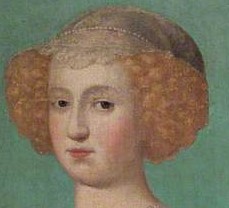
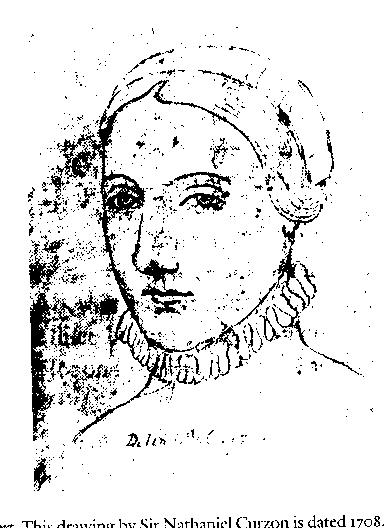
The widowed Mary, Second Countess of Southampton…….

……who was distantly related to Shakespeare’s mother, needed a tutor for her wayward, teenage son – the young third Earl, Henry Wriothesley – ‘Harry Southampton’.

She also needed a schoolmaster for the Titchfield grammar school, a secretary, a fac totum, an entertainer and generally ‘nice-person-to-have around’. Shakespeare, with experience at Hoghton Tower, fitted the bill exactly

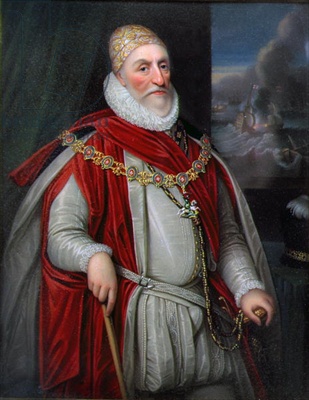
Harry Southampton was the ward of Lord Burghley…..

…..and Burghley wanted him to marry his grand-daughter, Elizabeth de Vere.

He was threatening a massive £5,000 fine if Harry refused. But the sixteen year old Harry had no interest whatsoever in marriage – and no interest whatsoever in girls…

Mary commissioned Shakespeare to write seventeen sonnets for Harry’s seventeenth birthday on 6th October, 1590. Sonnets were all the rage in the south of England. The late Sir Philip Sidney……

…… had produced his Astrophil and Stella sequence (in praise of Penelope Rich)…….

and Samuel Daniel his Delia sequence, in praise of Sidney’s sister, Mary Herbert, Countess of Pembroke…….

…..at Wilton House, thirty miles from Titchfield.

Will used the example of these Sonnets to write his own. The Shakespearean Sonnet was in fact invented by Sir Philip.

It consists of fourteen line with an ab,ab,cd,cd,ef,ef,gg structure.

Mary Southampton wanted Shakespeare – as a married man himself and a father – to convince her son of the joys of marriage and fatherhood . She would also have the written evidence to show Burghley (and Queen Elizabeth who favoured the match) that she, and her father, the leading English Catholic, Anthony Browne, Viscount Montague……..

……were on their side.

TO READ ‘The Birthday Sonnets’ PART 3 CLICK HERE!


When William Shakespeare published his Sonnets in 1609 he did not present them in chronological order – rather there were in two heaps – poems for ‘him’ and poems for ‘her’ – with the poems for ‘him’ being the much larger pile.Each Sonnet will be accompanied by two numbers: the first will be their numbers in the new order, and the second their original number in the first publication.

STRATFORD-UPON-AVON 1564-78

William Shakespeare was born into a prosperous and successful family. His father John was a glover, wool-merchant and money dealer – and was made Bailiff of Stratford-upon-Avon. But the family were Roman Catholics – and the same year Shakespeare was born, Queen Elizabeth’s lover, Robert Dudley, later Earl of Earl of Leicester…….


…..was given a present by the queen of Kennilworth Castle…….

…..only twelve miles away from Shakespeare’s home.

Dudley used the castle as a love-nest for his many mistresses and a centre from which to harass Roman Catholics. He lived a dissipated and violent life – but he posed as a Puritan so he could claim Church lands. His agent was the sadistic Sir Thomas Lucy……

 …..who was to be given powers to enter and search the homes of Catholics.

LANCASHIRE 1578-82

John Shakespeare’s fortunes began to fail. He was forbidden to deal in wool and his money lending was curtailed. He had once lent money to Stratford but now he couldn’t even pay his own rates. He had to take William – a high-spirited boy who would make a great speech when he killed a calf – away from the Grammar School to help in the shop.

However, the underground Catholic network swung into action. The new schoolmaster – also a recusant Catholic – was a great friend of the old Hoghton family in Lancashire – so William was employed in the household to entertain the children and play games and music with them.

Hoghton Hall

BACK TO STRATFORD 1582-3

The Hoghton family itself – and their friends – came under the scrutiny of Elizabeth’s agents and arrests were made. William, now eighteen, was forced back to Stratford where he fell madly in love with a beautiful woman – and old family friend, Anne Hathaway.

She was eight years older than William, but that didn’t stop William for a second. Disparity in lovers’ ages was common in Elizabethan England.

But Anne didn’t want to know – so William wrote a ballad to seduce her. In this he casts himself as the hapless, love-sick swain. Anne to begin with has a positive antipathy to William: but she has a king nature and she takes pity on William.

So this, the first Sonnet in chronological sequence, isn’t a Sonnet at all. It was a ballad, and probably set to music for Will to sing to Anne.

  1. (145)

Those lips that Love’s own hand did make,

Breath’d forth the sound that said ‘I hate’,

To me that languisht for her sake:

The ‘lips’ referred to are Anne Hathaway’s own – and Shakespeare is suggesting that they have been created by the hands of love itself. But although Shakespeare is languishing with love for Anne – she actually tells him she hates him.

But when she saw my woeful state,

Straight in her heart did mercy come,

Chiding that tongue that ever sweet,

Was us’d in giving gentle doom:

But because Shakespeare is in such a state of pain, when Anne looks at him, Mercy enters her heart. Mercy tells Anne’s tongue off for saying ‘I hate’. Her tongue is used to giving gentle judgements on things and people (‘doom’ is like ‘The Day of Doom.’)

And taught it thus anew to greet:

‘I hate’ she alter’d with an end,

That follow’d it as gentle day,

Doth follow night who like a fiend

From heaven to hell is flown away.

Mercy takes over the education of Anne’s tongue and forces it to give a new ending to the sentence that begins with ‘I hate’. This is like a gentle dawn that follows a hellish night – that flees from light as a demon flies from heaven and back to hell.

I hate’, from hate away she threw,

And sav’d my life saying ‘Not you’.

With a clever bit of wordplay, Shakespeare plays on Anne’s family ‘Hathaway’. ‘I hate from hate away she threw’ = ‘I hate from Hathaway she threw….So in the end Anne, through the power of Mercy, completely changes what she was about to say from ‘I hate you’ to ‘I hate NOT you.’ 


Click here for ‘Stratford and London and Touring and Titchfield. Part Two.


  1. SHAKESPEARE AND TITCHFIELD

© Stewart Trotter, 3rd February, 2018.

A Talk given by Stewart Trotter and Karen Little at St. Peter’s Church, Titchfield on Saturday, 3rd February, 2018 at 7.30 p.m. The event was sponsored by the Friends of St. Peter’s.
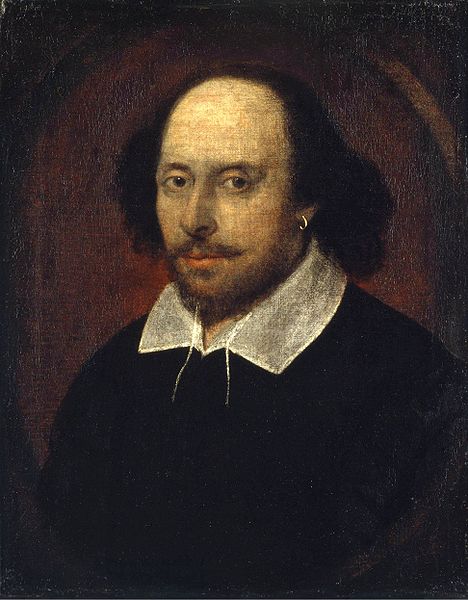
 

It is often said that we know nothing about the life of William Shakespeare. The fact is, we know more about him than any person who has ever lived. He wrote 154 Sonnets – not counting the Sonnets which feature in his plays – in which, William Wordsworth said, he….

unlock’d his heart

So why don’t we hear more about them? Well for a start they are densely written and complicated. John Dover Wilson – the great, intuitive Shakespeare scholar, said they required more than one life-time to understand.
Well, I’ve been working on them since I was nineteen!

Also, Shakespeare did not publish them in chronological order. There are simply two disordered piles – sonnets for him and sonnets for her – and the ‘for him’ is by far the larger.

But, more particularly, people shy away from the Sonnets because of what they reveal. We have been brought up with the idea of Shakespeare that has its origins in the nineteenth century. Up to then Shakespeare was taken for granted and amazingly popular with the public. But people then had no illusions: they knew the plays were imperfect – and so they re-wrote them – sometimes, as in case of ‘King Lear’ – giving them happy endings when they had tragic ones. People firmly believed, for example, that if you performed ‘The Tempest’ in the way Shakespeare wrote it, it would be a disaster. So, in the Restoration version, Miranda acquires a sister.

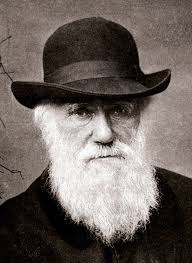
But in the nineteenth century there was a crisis of religious faith. People had believed the literal truth of the Bible – that God had created the world in seven days. Now Charles Darwin, along with others, was putting forward the case for evolution.

Christ, in many minds, was no longer Divine. A new divinity was needed – and Shakespeare fitted the bill. Matthew Arnold describes him as a mighty mountain, unknowable, like a God, way above the humans below….

Others abide our question. Thou art free.

We ask and ask—Thou smilest and art still,

Out-topping knowledge. For the loftiest hill,

Who to the stars uncrowns his majesty,


Planting his steadfast footsteps in the sea,

Making the heaven of heavens his dwelling-place,

Spares but the cloudy border of his base

To the foil’d searching of mortality….


The Sonnets, when they are read, reveal a far more human Shakespeare, one all too ready to fall in love then out of love again, one who starts off idolizing people then grows to hate them, a jealous man, an insecure man, a man who wants revenge, a depressive, self-dramatising, suicidal man but one who, on his day, experiences peaks of sublime, rapturous joy. A man who has gone through every emotion the characters in his plays go through – who is no more in control of life, or distanced from it, than they are. Romeo, Mercutio, Lear, Prospero, Hamlet – they are all Shakespeare.


For this talk I have arranged the Sonnets in the order in which I believe they were written. Some Sonnets we know for certain were written at a particular time – the sonnets, for example, celebrating the Succession of King James.


Some we have to guess at. But I believe an extraordinary story emerges. I shall sketch out this story in the first half of the talk – quoting not only from the Sonnets but also from people who knew him.

William Shakespeare was born in 1564 to John and Mary Shakespeare of Stratford-upon-Avon. John was a glover, wool-dealer, butcher and money lender, who was so well-off he lent his own cash to the Stratford Council. Queen Elizabeth had been on the throne for six years, but was only just starting her serious persecution of Roman Catholics. In a stroke of ill luck, Elizabeth’s lover, Robert Dudley – later the Earl of Leicester…….
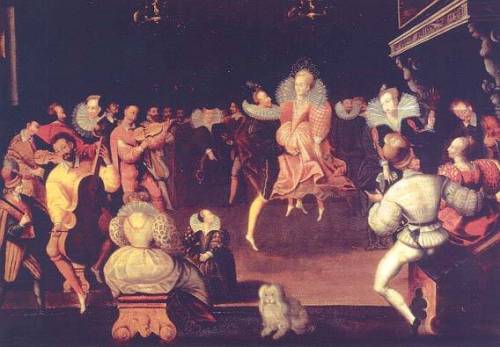
 

…….was gifted Kennilworth Castle by her – only eleven miles away from Stratford.


Dudley used the Castle to entertain his many mistresses – and used agents like the sadistic, cold-hearted Sir Thomas Lucy……

….. to harass and torment local Catholics – like the Shakespeares in Stratford and the Ardens – Shakespeare’s mother’s family – in Warwick. John Shakespeare went from being the Mayor of Stratford to a bankrupt in a matter of months. He was so hard up that he had to take away his son from the Grammar School. Will was an outspoken, extrovert boy – who, according to the antiquarian John Aubrey…..
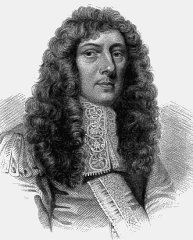


….when he killed a calf would do it in high style and make a speech.

It was only a matter of time before Will would clash with Lucy. A new Catholic schoolmaster – John Cottam – came to Stratford and secured a place for Will in the household of the Hoghton family in Lancashire.
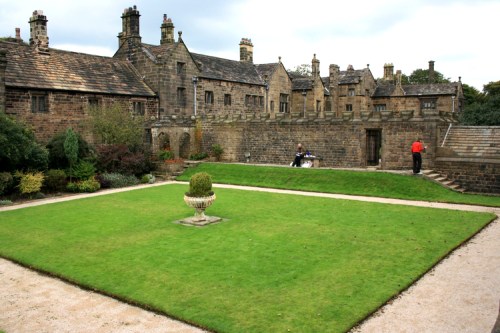
 

Here Will worked as a children’s entertainer, actor and singer. But Hoghton himself was arrested for recusancy, so Will had to return to Stratford at eighteen – hungry for experience. And indeed, hungry for Anne Hathaway – a beautiful, well off woman eight years his senior.
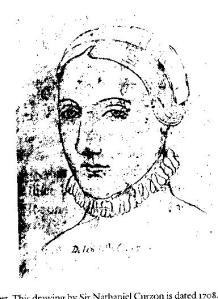
It was Will who did the chasing – and included in Shakespeare’s Sonnets – though it’s not technically a sonnet – is a ballad he used to woo her which plays on her family name. In it he casts himself in the role of what he actually was – a desperate, love-sick young man trying to seduce an older woman – who doesn’t want to know….

Those lips that Love’s own hand did make,

Breath’d forth the sound that said ‘I hate’


To me that languisht for her sake:

But when she saw my woeful state

Straight in her heart did mercy come,

Chiding that tongue that ever sweet,

Was us’d in giving gentle doom:

And taught it thus anew to greet

‘I hate’ she alter’d with an end

That follow’d it as gentle day,

Doth follow night who like a fiend

From heaven to hell is flown away

‘I hate’ from hate away she threw,

And sav’d my life saying ‘Not you’.

‘Hate away = ‘Hathaway.


The seduction ploy was all too successful. Ann became pregnant and in a hastily arranged marriage, she and Will became man and wife. Their daughter, Susanna, was born in 1583. Two years later they had twins, Judith and Hamnet.

It was at this time that the Earl of Leicester’s persecution of the Arden family reached its peak. Edward Arden was High Sheriff of the County – but refused to wear Leicester’s livery and was disgusted by the immorality and licence of Kenilworth Castle. Leicester – whose crest was a bear chained to a ragged staff …..
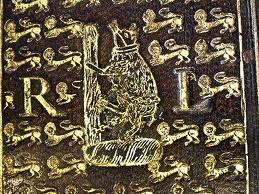
– was known as the Bear for his viciousness.
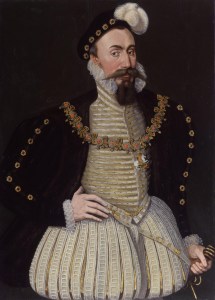
 

He raised the rents of his tenants ten times over and seized back private property on the authority of an old document he claimed he had found in the castle wall. He discovered that Arden had a Catholic priest pretending to be a gardener on his payroll and accused Arden of plotting to assassinate Queen Elizabeth. Arden was hanged, drawn and quartered.

Shakespeare took what revenge he could: he poached rabbits and deer from Lucy’s property. Lucy had him whipped and he was only saved from jail by friends who pleaded his cause with The Bear. Shakespeare, however, could not contain himself. He got drunk and wrote a scurrilous attack on Lucy which he pinned on his gates.

A parliament member, a justice of peace,

At home a poor scarecrow, at London an ass,

If lousy is Lucy, as some volke miscall it,

Then Lucy is lousy whatever befall it.

He thinks himself great, yet an ass in his state

We allow by his ears but with asses to mate.

If Lucy is lousy as some volke miscall it

Sing lousy Lucy whatever befall it.

Will had to get out of town – and London was the obvious place. It was smelly, noisy and infected – but it was the best place to lose yourself in. He teamed up with Thomas Kyd – another grammar school boy slightly older than he was – and the two men shared a lodging, scratching a living from translations and working on plays. It was at this time they collaborated on early versions of ‘King Lear’, ‘Hamlet’ ‘Taming of the Shrew’ and ‘Henry IV and V’ and Kyd wrote the wildly popular blood and thunder revenge play – ‘The Spanish Tragedy’.

Kyd and Shakespeare had a wild night-life according to the pamphleteer Thomas Nashe……

– starching their beards, going on pub crawls and ending up in French brothels. Christopher Marlowe…..

– an out, campaigning, gay man – who famously said….

They be mad that love not tobacco and boys

…..also befriended Shakespeare and later shared lodgings with Kyd. Marlowe liberated Shakespeare’s gay side and the two men had a brief, but loving, affair which Shakespeare was later to recall, with affection, in the sonnets.

Marlowe, in ‘Hero and Leander’ wrote:

Who ever loved who loved not at first sight.

This became Shakespeare’s own creed, both in his life and his work. To protect himself from Lucy, Shakespeare befriended Robert Crowley – the Rector of St. Giles, Cripplegate ……

…….surplices and thought all wealth should be voluntarily re-distributed. He liked plainness in all things – including language and make-up. He was a publisher as well as a priest – and wanted to popularise Christianity through ballads. He wrote:

Let thine apparel be honest;

Be not decked past thy degree

Neither let thou thine head be dressed

Otherwise than beseemeth thee.

Let thine hair bear the same colour

That nature gave it to endure;

Lay it not out as doeth a whore

That would men’s fanatasies allure.

Paint not thy face in any wise

But make thy manners for to shine

And thou shalt please all such men’s eyes

As do to Godliness incline.

These Protestant ideas – so much at war with Catholic ones – were to stay in Shakespeare’s mind all his life.

Inspired by Crowley’s populism, Shakespeare set up a touring company – with Lord Ferdinando Strange as its nominal patron……
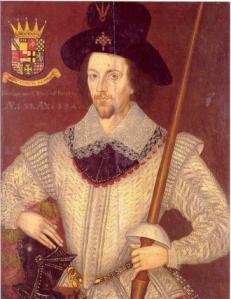
– to tour Biblical, Morality and Fairy Story plays round the Midlands. It was back-breaking work: the actors, according to a satirical play Histriomastix, mostly out of work alcoholic tradesmen supported by rich, gay lovers, had to push a cart up and down hills, laden with props and costumes. Sometimes they even had to sleep in the cart itself. They made a pittance as the public wasn’t interested in Morality Plays. They wanted Kyd’s horror shows. Also, the Armada made actors unpopular.
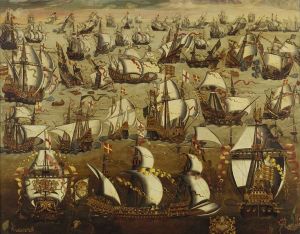
The public wanted manly men – not effeminate actors – and tore the costumes off the players backs to give to soldiers and sailors.

Everything came to a head in 1589. Lord Burghley – the Secretary of State for Elizabeth…..
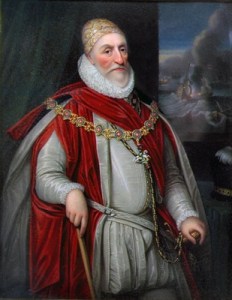
……..banned the playing of all plays in London. And when the Lord Mayor tried to enforce this ruling, Shakespeare….

parted from him in a very contemptuous manner….

……and played at Cross Keys that very afternoon. The Lord Mayor had Shakespeare arrested and imprisoned. His touring days were over. For the moment at least.

But the Catholic network came to his rescue again. And this is where Titchfield comes in.
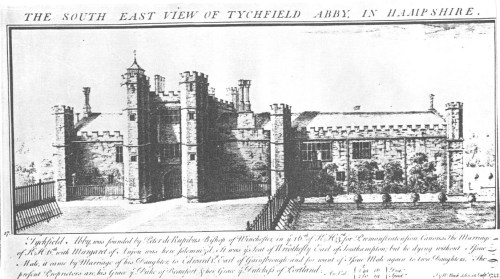
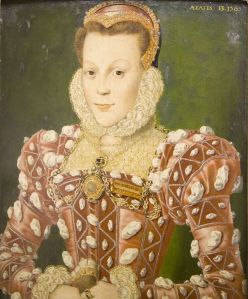
The widowed Mary Countess of Southampton….
……..commissioned the magnificent tomb you see in the Church……..


…….needed a tutor for her teenage son, Henry, the Third Earl of Southampton…….

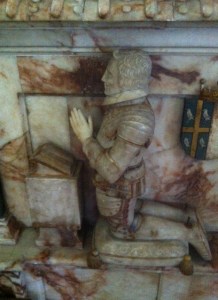
……who would soon be leaving Cambridge. (You can see him kneeling in prayer on the left side of the tomb).
She also needed a schoolmaster for the Titchfield Grammar School………


……..a secretary, an entertainer, a factotum and a generally nice person to have around – a perfect job for Shakespeare, who Aubrey says was….

A handsome, well-shaped man – very good company and of a very ready and pleasant smooth wit.

Shakespeare’s first job for Mary Southampton was to write seventeen sonnets for Henry’s seventeenth birthday to persuade him to get married. Henry – or Harry as he liked to be called – was Lord Burghley’s ward and Burghley wanted him to marry his grand-daughter. If he refused, the Southampton family would have to pay a colossal £5,000 fine – five million pounds in today’s money.

But there was a problem. Like his father, the Second Earl, lying in armour to the left of the tomb……


Harry didn’t care for women. The Second Earl, also a Henry, believed his wife, Mary, had been unfaithful to him with….

….a common person……

He had thrown her out of the house, denied her access to Harry and, in Mary’s words….

Made his manservant his wife.

Mary didn’t want history to repeat itself. So she gave Shakespeare the task of flattering and threatening Harry into heterosexuality….

……This was like putting an alcoholic in charge of a brewery.

Shakespeare starts off his sonnet sequence by describing Harry as ‘beauty’s Rose’ – a reference both to the Southampton rose (which decorates the arch of the tomb)
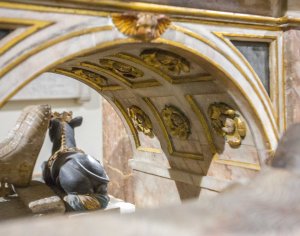
Photo by Ross Underwood

……and the preposterous way the family pronounced their name – ‘Ryosely’. The less posh branch of the family pronounced it ‘Risley’.

Shakespeare’s argument is that if Harry has a son (no-one is interested in whether he has a daughter) he will be able to recall his youthful beauty the way his mother does now:

Thou art thy mother’s glass and she in thee

Calls back the lovely April of her prime.

Harry has been born beautiful – so it is his duty to pass on his good looks to his son. Shakespeare asks Harry to…

Make thee an other self ….

…..that is a baby boy….

for love of me,

That beauty still may live in thine or thee.

After all, that’s what his father had done……
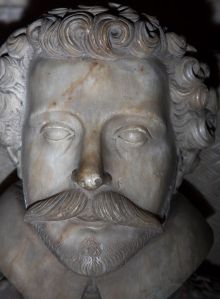
Photo by Ross Underwood.

Harry with a child would be like a miraculous moon that can wax and wane at the same time. He warns Harry that if he doesn’t do this, he will end up ugly, neglected and childless – just like Queen Elizabeth – who was hitting a hollow-cheeked sixty….
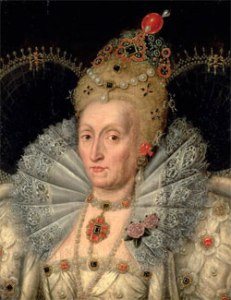
Let those whom nature hath not made for store,

Harsh, featureless, and rude, barrenly perish,

Look whom she best endow’d, she gave the more;

Which bounteous gift thou shouldst in bounty cherish.

It is also Harry’s moral duty to have a son. He is exceptional because he is both beautiful AND truthful – qualities that rarely go together…Harry is obliged to hand them on…

In the fifteenth sonnet of the series, Shakespeare suddenly veers wildly off-message. Harry doesn’t need to father a son to become immortal…. Shakespeare will do it with his verse!

But he rapidly withdraws this cheeky idea – and suggests it might be safer to have a son as well…

But were some child of yours alive at that time,

You should live twice: in it and in my rhyme.

All well and good. But in writing the sequence Shakespeare betrays his own pre-occupations. He makes detailed, coded reference to Harry’s masturbation in eight out of the seventeen poems…

Harry went back to Cambridge, completely unconverted, and Shakespeare set to work on his next piece of propaganda….

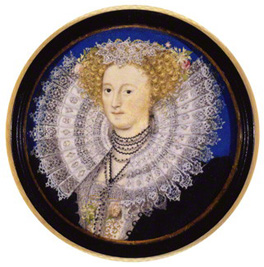
The Countess of Southampton had teamed up with the Countess of Pembroke…..
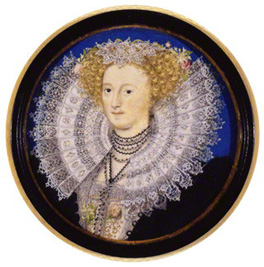
……..at nearby Wilton.
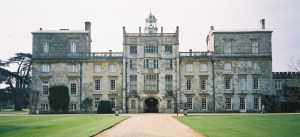
 

Mary Southampton was an ardent Catholic – she ran a network of Catholic priests – and Mary Pembroke was a staunch Protestant – she had supported her late brother, Sir Philip Sidney’s plans for a Protestant Empire of Europe.


But the two Mary’s were united on one thing: hatred for Queen Elizabeth. Elizabeth had executed Mary Southampton’s friend, a Catholic teacher, Swithin Wells, at Christmas, 1590, just outside her London house……Elizabeth had also destroyed the career of Mary Pembroke’s brother, Sir Philip, by banning him from the Court. The Mary’s retaliated by setting up their own rival courts. Their menfolk much preferred to be in the country because they could hunt: but how did the women spend their time

Amateur theatricals!

Women were not allowed to act on the public stages – but they could do what they liked in their own homes and grounds. The reason why Shakespeare wrote such great parts for women in his early plays was that real women would act in them – intelligent, highly sophisticated and often aristocratic women at that.

The two Marys conceived of an epic project. To stage the Wars of the Roses in their own grounds. They had the horses, the men and the armour. Now they had a promising young playwright as well.

But why the Wars of the Roses? For a start, Queen Elizabeth hated people reading history. It meant they might compare historical reigns with her own. In 1590 she even recalled Raphael Holinshed’s Chronicles on the ludicrous grounds that they were…

…..fondly set out….

So the two Marys staged history itself. And they chose the Wars of the Roses as a dreadful warning. Elizabeth refused to name her successor on the understandable grounds that she would be assassinated. So everyone feared a return of Civil War when she died.

Shakespeare knew he needed help from University Men for this project – and installed Thomas Nashe and Robert Greene as a writing team at Posbrook Farm – which also doubled as a brothel.

The Wars of the Roses series of plays is less history than political satire. With its boy kings, ferocious women and sycophantic favourites, it is a parody of the Tudor Reign itself. Indeed Tom Nashe – who collaborated with Shakespeare on many plays (he did the jokes) – went on later in the year to write ‘Richard III’ with him.

Far from being a piece of Tudor propaganda, it is in fact is a satire on the Earl of Leicester who had died in Armada year. Like the hunchback king, Leicester had murdered husbands to seduce their wives, poisoned people and masked his villainy under a cloak of Puritan piety. In an early printing of the play the compositor even makes an unconscious slip. He sets up ‘The Bear’ when he should have set up ‘The Boar’.

Harry was soon down from Cambridge: and set his cap at the brilliant new playwright. Shakespeare had prematurely aged from touring in the Midlands. He writes about himself:

That time of year thou mayst in me behold

When yellow leaves or none or few do hang

Upon those boughs which shake against the cold,

Bare-ruined choirs where late the sweet birds sang…..

Shakespeare’s hair was falling out……

But that didn’t put Harry off at all. He had been brought up to worship Sir Philip Sidney – who was both a gallant soldier and a gender-bender. Because he was banned from politics, Sidney had become a poet instead – and invented Arcadia – a mythical land where beautiful young men cross-dressed and the King and the Queen could fall in love with the same person. The long-haired Harry……….
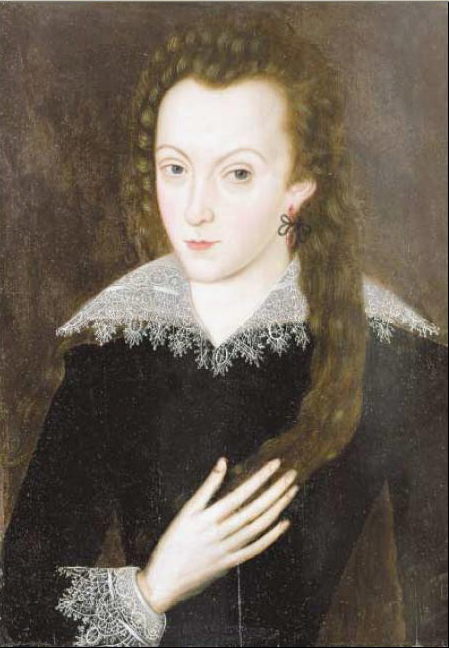
….. based his whole identity on Arcadia’s two Princes, Musidorus with his…

….fair auburn hair, which he wore in great length…….

And Prince Pyrocles who is…

……of a pure complexion, and of such cheerful favour as might seem either a woman’s face on a boy or an excellent boy’s face on a woman….

Shakespeare realised an affair with Harry would NOT be a good idea – so he thought of a way out. He wrote a sonnet that starts by praising Harry’s Arcadian nature:

A Woman’s face with nature’s own hand painted,

Hast thou the Master Mistress of my passion,

A woman’s gentle heart but not acquainted

With shifting change as is false women’s fashion;

An eye more bright then theirs, less false in rolling:

Gilding the object where-upon it gazeth;

A man in hew all Hews in his controlling,

Which steals men’s eyes and women’s souls amazeth.

Shakespeare excuses himself from an affair with Harry by arguing that, although Harry looks like a woman, he is in fact a man….with all that that implies…

And for a woman wert thou first created,

Till nature as she wrought thee fell a-doting,

And by addition me of thee defeated,

By adding one thing to my purpose nothing.

But since she prickt thee out for women’s pleasure,

Mine be thy love and thy love’s use their treasure.

Shakespeare is offering a Jesuit compromise. When the young Catholics of England were groomed to be missionaries, they were actively encouraged to form passionate friendships – as long as sex was not involved. This is the chaste romance which Shakespeare offers to Harry – and which Harry is forced to accept.

The rest of 1591 was taken up with plans for the visit of the Queen to Cowdray and Titchfield. These Progresses were terrifying affairs. The Queen brought hundreds of courtiers and soldiers with her – all of whom had to be lodged and fed – and she forced her hosts to vacate their homes so she could stay in them with her Privy Council. Houses would be ransacked for priest holes and signs of massing – especially in Hampshire, notorious for its recusancy and conversions to Catholicism.

Elizabeth visited Cowdray first – the home of Mary Southampton’s father, Lord Montague…..

……one of the country’s leading Catholics. The Privy Council strongly suspected he kept Catholic priests on his payroll. What they didn’t know was that one of his footmen was called Guy Fawkes.

At Cowdray and later at Titchfield, Elizabeth engaged in her own perverse form of hunting. Deer were captured and run at point-blank range in front of her as she shot them with a cross-bow from a standing. Shakespeare was to satirise – and examine – this dark event in ‘Love’s Labour’s Lost’ the following year.
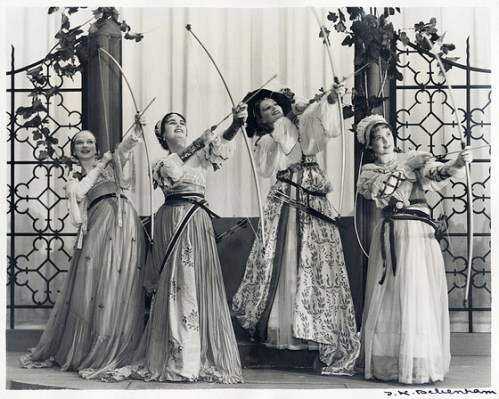
But most important for Shakespeare were the Queen’s musicians who accompanied this slaughter: the Basanno Family, a group of black, Sephardic Jews from Venice. Amongst them was the beautiful, young Amelia – a mixed race singer and keyboard player.

Shakespeare loved her at first sight.

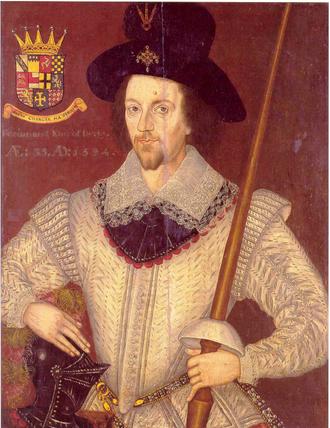
But there was a problem: she was the mistress of old Lord Hunsdon, the Queen’s Cousin…….
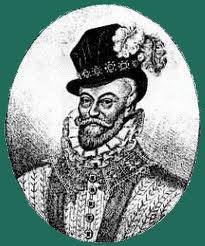
…..who payed her £40 a year for her services. And Lord Hunsdon was in attendance as a member of the Privy Council.

But there was a Plague raging in London, so Amelia stayed on at Titchfield as an entertainer and companion for Mary Southampton – a role she had performed for many aristocratic women, including the Queen.

Shakespeare leapt into action – praising her beauty in the way he had praised Harry’s. In the old day’s a black skin was thought of as ugly – but now ‘Black is Beautiful!’

In the old age black was not counted fair,

Or if it were it bore not beauty’s name:

But now is black beauty’s successive heir,

And Beauty slander’d with a bastard shame….

The ‘bastard shame’ is the make-up and wigs white women use to enhance their beauty. Rector Crowley would have approved…..

For since each hand hath put on Nature’s power,

Fairing the foul with Art’s false borrow’d face,

Sweet beauty hath no name, no holy bower

But is profan’d, if not lives in disgrace…

Shakespeare also follows Crowley’s insistence that language should be plain as well. He writes a love poem to Amelia, seeming to criticise her, but in reality criticising love poets who use extravagant and unnatural metaphors.

My Mistress’ eyes are nothing like the Sun;

Coral is far more red, then her lips red.

If snow be white, why then her breasts are dun:

If hairs be wires, black wires grow on her head.

I have seen Roses damaskt, red and white,

But no such Roses see I in her cheeks,

And in some perfumes is there more delight,

Than in the breath that from my Mistress reeks.

I love to hear her speak, yet well I know

That Music hath a far more pleasing sound:

I grant I never saw a goddess go;

My Mistress when she walks treads on the ground.

And yet by heaven I think my love as rare,

As any she beli’d with false compare.

Shakespeare wrote the part of the dark-skinned Rosaline for Amelia in ‘Love’s Labour’s Lost’ – and cast himself as her wooer, Berowne – a compliment to Mary Southampton’s family name, ‘Browne’.
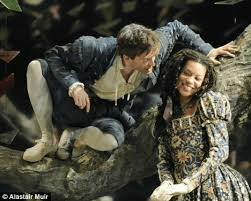
But though Amelia was prepared to make love to everyone else, she drew the line at Shakespeare…

In desperation Shakespeare wrote:

Wilt thou whose will is large and spacious,

Not once vouchsafe to hide my will in thine?

Shall will in others seem right gracious,

And in my will no fair acceptance shine….

Amelia completely dis-orientates Shakespeare. He knows she is morally worthless and that his own wife is a far better woman. But he just cannot stop himself from falling in love with her despite her faults…..

……perhaps BECAUSE of them…

Oh from what power hast thou this powerful might,

With insufficiency my heart to sway,

To make me give the lie to my true sight,

And swear that brightness doth not grace the day?

Amelia’s habit – which many prostitutes have – is not to look the clients directly in the eye……

Tell me thou lov’st else-where; but in my sight,

Dear heart, forbear to glance thine eye aside:

What need’st thou wound with cunning when thy might

Is more than my ore-prest defence can bide?

Shakespeare knows that Amelia wants to bed young Harry. Better a rich, handsome young aristocrat, however gay, then a balding, penniless playwright.

Shakespeare in one sonnet likens Amelia to a housewife chasing after a chicken – Harry with his feathers and plumes – who puts down a baby – Shakespeare. Amelia is chasing after Harry who has no interest in her. And Shakespeare is chasing after Amelia who has no interest in him….

Shakespeare then makes the mistake of his life: he asks Harry to plead his love-suit with Amelia – just as in the plot of ‘Twelfth Night’.  And just as in the plot of ‘Twelfth Night’ the lady makes a play for the messenger….only this time it succeeds.

Harry goes to bed with Amelia simply to spite Shakespeare….

Shakespeare chides Harry for stealing his mistress. He understands that it is natural for a young handsome man to have sex – but not with the mistress of his friend…

Aye me, but yet thou mightst my seat forbear,

And chide thy beauty, and thy straying youth,

Who lead thee in their riot even there

Where thou art forst to break a two-fold truth:

Hers by thy beauty tempting her to thee,

Thine by thy beauty being false to me.

But Shakespeare can only go so far in criticising Harry. The Southampton family, after all, is Shakespeare’s meal-ticket. Amelia, on the other hand, is not….

For I have sworn thee fair, and thought thee bright,

Who art as black as hell, as dark as night.

Clearly black is no longer beautiful. In an agony of jealousy, Shakespeare goes on the road again. He thinks of Harry and Amelia as two spirits – one good and the other bad…..

To win me soon to hell my female evil

Tempteth my better angel from my side,

And would corrupt my saint to be a devil,

Wooing his purity with her foul pride

Shakespeare is far away from both of them on tour – so he has no idea if they are making love to each other. But in his imagination they are….

And whether that my angel be turn’d fiend,

Suspect I may, yet not directly tell,

But being both from me, both to each friend,

I guess one angel in an other’s hell.

Yet this shall I ne’er know but live in doubt,

Till my bad angel fire my good one out.

The only way he will know for certain is if Harry contracts venereal disease…..

Tossing and turning at night, exhausted by his travelling and exhausted by his dreams, Shakespeare makes a break-through revelation. He writes to Harry:

That thou hast her it is not all my grief,

And yet it may be said I lov’d her dearly….

That she hath thee is of my wailing chief,

A loss in love that touches me more nearly.

Shakespeare realises he is more in love with the boy than the girl. At this point Dame Nature steps in to resolve things: Amelia becomes pregnant and is married ‘for colour’ to a ‘minstrel’ called Lanier. She calls her son ‘Henry’ – whether after Harry or after her provider, Lord Henry Hunsdson, we may never know.

Amelia might not have known herself….

Shakespeare is free to declare his love for Harry. Other poets describe their lovers as being like a summer’s day. But this isn’t enough for Shakespeare. Harry is more perfect….

Shall I compare thee to a Summer’s day?

Thou art more lovely and more temperate:

Rough winds do shake the darling buds of May,

And Summer’s lease hath all too short a date:

Sometime too hot the eye of heaven shines,

And often is his gold complexion dimm’d,

And every fair from fair some-time declines,

By chance, or nature’s changing course untrimm’d:

But thy eternal Summer shall not fade,

Nor lose possession of that fair thou ow’st,

Nor shall death brag thou wandr’st in his shade,

When in eternal lines to time thou grow’st:

So long as men can breathe or eyes can see,

So long lives this, and this gives life to thee.

Shakespeare goes back triumphantly to the idea so tentatively put forward in the Birthday Sonnets – that he can make Harry immortal with his verse. Harry may have the cash, but Shakespeare has the talent.

There was a problem, of course, in all this. Mother Mary. Shakespeare wasn’t exactly filling his job description. Someone told the Countess and she summoned Shakespeare:

COUNTESS:

Do you love my son?

SHAKESPEARE

Your pardon noble mistress?

COUNTESS

Love you my son?

SHAKESPEARE

Do you not love him, madam?

COUNTESS

Go not about. My love hath in’t a bond,

Whereof the world takes note. Come, come, disclose

The state of your affection, for your passions

Have to the full appeach’d.

SHAKESPEARE

Then I confess

Here on my knees, before high heaven and you,

That before you, and next unto high heaven,

I love your son. My dearest madam,

Let not your hate encounter with my love,

For loving where you do…but if yourself

Whose aged honour cites a virtuous youth,

Did ever in so true a flame of liking,

Wish chastely and love dearly, that your Diane

Was both herself and love – o then give pity

To him whose state is such that cannot choose….

COUNTESS:

You have my leave and love….


This is a slightly edited scene from ‘All’s Well that Ends Well’ which I believe Shakespeare wrote after ‘Love’s Labour’s Lost’ and was originally called ‘Love’s Labour’s Won’. It celebrates the Countess’s acceptance of the love between the lower class Helena and her noble son Bertram – code for Mary Southampton’s acceptance of the love between Shakespeare and Harry.

To celebrate, Harry and Shakespeare went on a whistle-stop tour of Europe. They called on Philip II…….

……..a great friend of the Countess’s family – her father, had been his Master of Horse when he was King of England – and he showed them Titian’s masterpieces – ‘Venus and Adonis’……..
and ‘The Rape of Lucrece’…….


Shakespeare later turned them into narrative poems, using the same colours in his poems as Titian had used in his paintings.

They also visited Italy – Venice, Florence and Rome – where they saw the famous obelisk of red marble which Sextus V had re-erected in front of St. Peter’s.
It was reputed to be the last thing St. Paul had seen before he was crucified by Nero in the Circus Maximus. It was incorporated into the design of the Southampton tomb which Mary Southampton was about to commission..

They travelled round Italy by canal – you really could travel by ship from Verona to Milan in those days as Valentine does in ‘The Two Gentlemen of Verona’……..
……..and returned to England for Easter in 1593

Shakespeare then wrote a sonnet to Harry, admitting that he had been in love with him from the moment they met three years ago…..

When first your eye I eyed….

Marlowe again!

But tragedy was about to strike. Atheistical papers were found in Marlowe and Kyd’s lodgings. Under torture, Kyd claimed they were Marlowe’s not his – and Marlowe himself died in a gay brawl at Deptford. Shakespeare would never forgive Kyd for his treachery to his friend.

By now Shakespeare was obsessed with Southampton: even when he was with his family each summer at Stratford, he could think of nothing but him…..

My eye no form delivers to the heart

Of bird, of flow’r, or shape which it doth latch;

Of his quick objects hath the mind no part,

Nor his own vision holds what it doth catch:

For if it see the rud’st or gentlest sight,

The most sweet-favour or deformed’st creature,

The mountain, or the sea, the day, or night,

The Crow, or Dove, it shapes them to your feature.

When people talk about Adonis, Shakespeare thinks of Harry. Even when people talk about Helen of Troy, he thinks about Harry in drag. But this obsession, however unfair to Shakespeare’s family, helped Shakespeare cope with the death of Marlowe. He believed the soul of Marlowe had entered the body of Harry – along with all his other past lovers.

Shakespeare idealised Harry – so it came as a terrible shock to him to discover that Harry had been unfaithful. Like his mother, Harry had a taste for lower class men.

Why didst thou promise such a beauteous day

And make me travail forth without my cloak

To let base clouds oe’rtake me in my way

Hiding thy bravery in their rotten smoke?

Harry was about to enter the snakepit of Elizabeth’s court – and Shakespeare warns him that his promiscuity could be the finish of him politically….

They look into the beauty of thy mind,

And that, in guess, they measure by thy deeds;

Then churls their thoughts (although their eyes were kind)

To thy fair flower add the rank smell of weeds.

But why thy odour matcheth not thy show

The soil is this, that thou dost common grow.

But Shakespeare was now pre-occupied with writing ‘Lucrece’ – and stopped sending sonnets to Harry. His rival, the poet and medium George Chapman……….


…..who claimed to be in nightly contact with the spirits of Homer and Marlowe – and whom Shakespeare had satirised as the lisping, fawning flatterer, Boyet, in ‘Love’s Labour’s Lost’……..
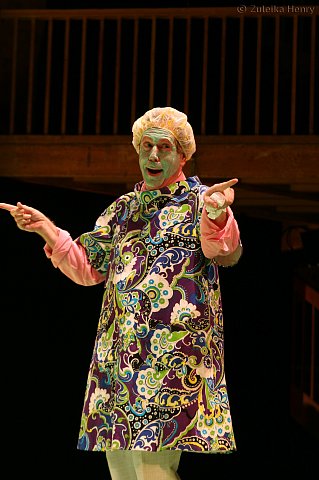
……saw his chance and made a bid for Harry’s patronage. He nearly succeeded….Harry, after all, was very….

Fond on praise…..

Shakespeare attacked Chapman for his elaborate and ornate use of language – and said that Chapman did not need Harry’s help as he was an established writer anyway. Shakespeare, on he other hand, would be nothing without Harry – both as his inspiration and his source of cash….

Yet be most proud of that which I compile,

Whose influence is thine and born of thee;

In others’ works thou dost but mend the style,

And Arts with thy sweet graces graced be:

But thou art all my art, and dost advance

As high as learning my rude ignorance

But Shakespeare was to secure his position in the Southampton household not by his flattery but by his genius. To another commission from Mary Southampton, he wrote the blinding, soaring masterpiece ‘A Midsummer Night’s Dream’ which hurled him to the top of the tree. This entertainment was to celebrate Mary’s marriage to Thomas Heneage – and the play was performed at Copt Hall.

Harry was about to come of age and Mary had to get out of Titchfield. Mother and son loathed each other.

Mary had requested the return of her favourite Amelia – now Amelia Lanyer – a married mother and convert to Christianity – to play the dark-skinned Hermia………

……The love triangle started up all over again. But Amelia – with her …..

Bed-vow broke and new faith torn….

…was rather more accommodating to Shakespeare this time round. Shakespeare describes how his body…..

…….rising at thy name, doth point out thee,

As his triumphant prize, proud of this pride;

He is contented thy poor drudge to be

To stand in thy affairs, fall by thy side.

No want of conscience hold it that I call,

Her love, for whose dear love I rise and fall.

Shakespeare was on a roll. Harry, now in control of his own finances, gave Shakespeare the gift of £1,000 – a million pounds in today’s money – and Shakespeare went on to create his most popular creation – Falstaff.
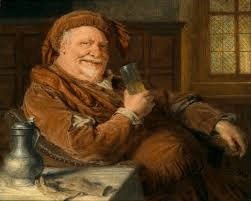
But at the height of all this success, tragedy struck. Hamnet his son died at the age of eleven.

But instead of grieving properly, Shakespeare turns Harry into a surrogate son –

As a decrepit father takes delight

To see his active child do deeds of youth,

So I, made lame by Fortune’s dearest spite,

Take all my comfort of thy worth and truth.

There were to be consequences in this denial. Later in the year Shakespeare, along with others, threatened murder to a man called Wayte. He was arrested and bound over to keep the peace. Harry dropped him for a bit, feeding Shakespeare’s fear that Harry would one day drop him for good…

The relationship was starting to go wrong anyway: Shakespeare and Harry began to tire of each other sexually and, on tour, Shakespeare was unfaithful to Harry in the way Harry had been unfaithful to him.

Shakespeare makes all the usual excuses – that it made him love Harry all the more – but Shakespeare was starting to resent the cavalier way he was treated by Harry – having to wait hours for him, if he bothered to turn up at all.

The big test came when Harry finally fell in love with a woman – Elizabeth Vernon.

Shakespeare was ambivalent. He wanted Harry to have children – indeed he had written seventeen sonnets urging him to do so. But he didn’t want to lose Harry’s love. He dramatized his dilemma in the character of Mercutio.
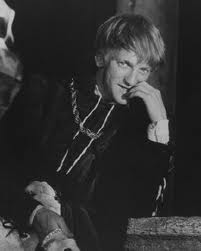
Indeed, John Dryden said that Shakespeare had to kill Mercutio or Mercutio would have killed him.

But in the end Shakespeare realised that he and Harry had a ‘marriage of true minds’ – a spiritual union now rather than a physical one – which would last until the end of time.

Let me not to the marriage of true minds

Admit impediments: love is not love

Which alters when it alteration finds,

Or bends with the remover to remove.

O no, it is an ever fixed mark

That looks on tempests and is never shaken;

It is the star to every wand’ring bark,

Whose worth’s unknown, although his higth be taken.

Love’s not Time’s fool, though rosy lips and cheeks

Within his bending sickle’s compass come;

Love alters not with his brief hours and weeks,

But bears it out even to the edge of doom:

If this be error and upon me prov’d,

I never writ, nor no man ever lov’d.

Politics now took over and there was no time for Sonnets. Harry joined with his great friend the Earl of Essex……
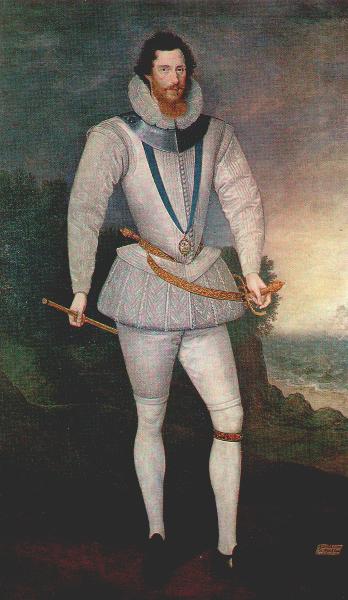
…… to overthrow Queen Elizabeth and replace her with King James. Shakespeare went along with this at first – and wrote ‘Macbeth’ to try to persuade James to invade England.
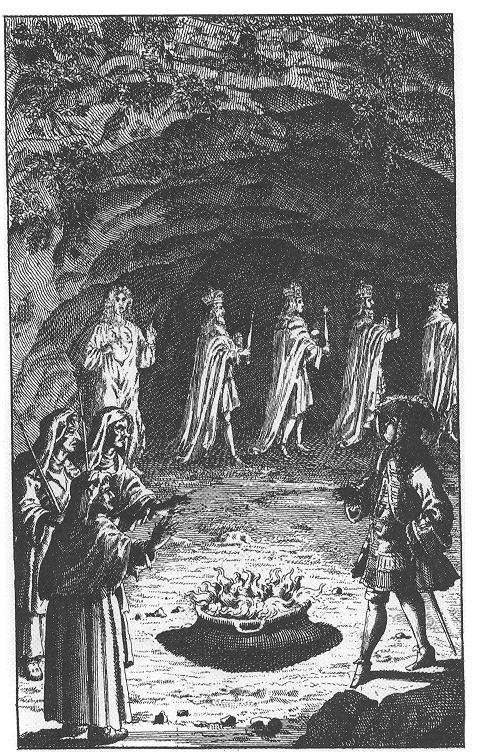
He was to lead an army that Essex would bring over to England after he had crushed the Irish.

But Ireland was a disaster: the Irish crushed him. Shakespeare now changed his mind. Harry and Essex should seek appeasement with the Queen. He wrote ‘Julius Caesar’ to demonstrate the horrors that would ensue if the rebellion went ahead.
But it did.

Essex was executed and Harry – under sentence of death – imprisoned in the Tower. Shakespeare went through bleak despair – and like Hamlet – considered suicide.

Hamlet
1948
rŽal : Laurence Olivier
Laurence Olivier
Collection Christophel

He fled to Scotland and became part of King James’s gay-friendly court. But Dame Nature stepped in again. Queen Elizabeth died and it was all change. Harry was now a hero. He firmly expected to become King James’s new lover.

But James preferred younger men – and Harry had lost his looks in the Tower. He was marginalised by the gay group at the centre of power – and started to become bitterly homophobic.


Events came to a head when in 1605 Harry had a son. He’d had daughters and that hadn’t affected his relationship with Shakespeare. But a son was different. He gave him all his attention – and dropped Shakespeare. He wanted to deny all his past gay experience.

The effect on Shakespeare was shattering. He wrote a sonnet to Harry which again wasn’t a sonnet. It was a twelve line poison pen letter. Before he had used his verse to promise Harry immortality: now he used it to promise him death. However ‘lovely’ Harry has been, Dame Nature will make sure that he rots in a grave.

Shakespeare had a complete nervous breakdown. He re-wrote ‘Lear’ – taking away its original happy ending and having it culminate in the death of Lear’s child.

Nearly a decade later, he was finally facing the death of his son.

He decided on revenge – and his revenge was to publish all his love sonnets to Harry. He wanted the whole world to know Harry’s true nature.

He also included a satire on Harry in ‘A Lover’s Complaint’. Here he paints the picture of a psychopath that everyone would recognise as Harry:

His browny locks did hang in crooked curls,
And every light occasion of the wind
Upon his lips their silken parcels hurls,
What’s sweet to do, to do will aptly find….

Shakespeare casts himself, again, as a woman – seduced and abandoned by her artful, Satanic young lover….

That not a heart which in his level came
Could ‘scape the hail of his all hurting aim,
Showing fair Nature is both kind and tame:
And veil’d in them did win whom he would maim,
Against the thing he sought, he would exclaim,
When he most burnt in heart-wisht luxury,
He preacht pure maid, and prais’d cold chastity.

So Shakespeare ends up publicly exposing and attacking the man with whom he was once so deeply in love.

But there is light at the end of the tunnel….

The maid is asked what she would have done if she had known what they know now? She replies:

O that infected moisture of his eye,
O that false fire which in his cheek so glow’d:
O that forc’d thunder from his heart did fly,
O that sad breath his spongy lungs bestow’d,
O all that borrow’d motion seeming owed,
Would yet again betray the fore-betray’d,
And new pervert a reconciled Maid.

Shakespeare would have done it all over again!

At this point Shakespeare put down his pen…….

……and never wrote directly about himself again.

© Stewart Trotter 3rd Feb 2018