Feeds:
Posts
Comments

Archive for the ‘Uncategorized’ Category

(It is best to read Part One first.)

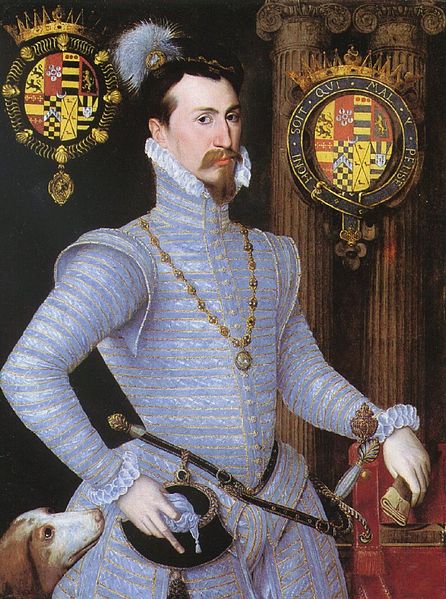
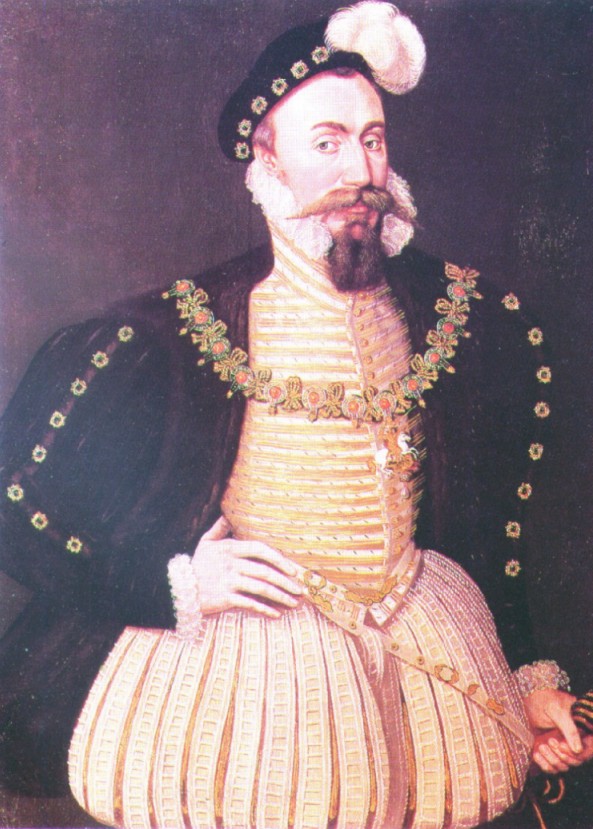
Robert Dudley, the Earl of Leicester , was the love of Queen Elizabeth’s life. He had protected (and financed) her during the reign of her step-sister, Bloody Mary Tudor, when few thought she would survive, let alone become Queen of England. 

Leicester (lying, as usual) claimed to be exactly the same age as Elizabeth, so contemporaries explained their intimacy in terms of planetary alignments. Elizabeth and Robert had even been imprisoned in the Tower at the same time.

Robert Dudley

Elizabeth, abused as a child and a teenager, only trusted those who had been kind to her before she ascended the throne, so Leicester was in a unique position. He contrtolled all access to the Queen and so made a fortune from those seeking her attention.

Realising, also, that he was above the law, he poisoned any man who got in his way (including, it was said, Sir Walter Devereux, the first Earl of Essex) and slept with any woman who took his fancy. He was rumoured to pay £300 a night (£150, 000) for the favours of Elizabeth’s beautiful ladies-in-waiting. 

At one point he had a chamber next to the Queen, so many people assumed he was her lover. Some even thought he had fathered an illegitimate child with her. But what was certain was that during the Queen’s bouts of illness, which were frequent, he would sit all night by her bedside.

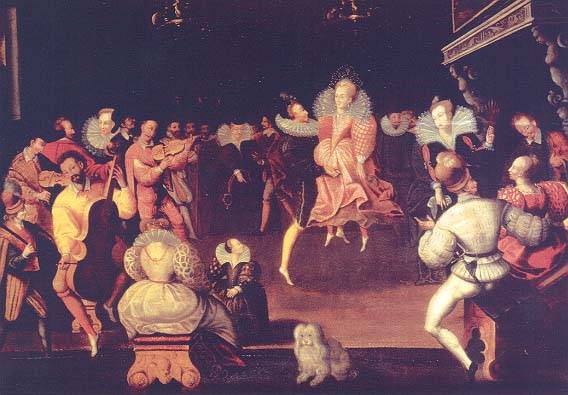
And he would often dance with her….

The Roman Catholics hated Leicester for encouraging the Duke of Norfolk to marry Mary Queen of Scots, a plot designed to destroy them both. The Papists also claimed that Leicester had acted as an agent –provocateur  at  Place House in Titchfield, where the disastrous Rebellion of the Catholic Northern Earls was planned. (Mary Queen of Scots was to be sprung from prison at Tutbury and taken to Arundel Castle, twenty miles from Titchfield).

As a consequence of the failed  rebellion, the second Earl of Southampton was imprisoned in the Tower where Henry Wriothesley, the third Earl, William Shakespeare’s patron and lover, was conceived.

Shakespeare’s own family also suffered under Leicester (whose fabulously decadent Kenilworth Castle was only a dozen miles away from Stratford-upon-Avon). Leicester’s agent, Sir Thomas Lucy, had raided the home of Edward Arden, a devout Catholic on Shakespeare’s mother’s side, who had denounced Leicester as a serial adulterer. Arden was charged with ‘treason’ and hanged, drawn and quartered. The sadistic Lucy had also whipped the young Shakespeare for poaching on his land. (Poaching was a recognised ‘revenge’ tactic on the enemies of Catholicism which the Vatican positively encouraged).

Then, in 1584, the Jesuits dropped a bombshell.

They printed vast quantities of a green-backed book in Flanders and smuggled it into England. It was called Leicester’s Commonwealth and the public leapt on it. Francis Bacon had a manuscript copy and the American handwriting expert, Charles Hamilton, believes that some of the pages are in Shakespeare’s hand.

The book claimed that Leicester had set out to destroy all the claimants to the English throne except Queen Elizabeth, whom he would then proceed to assassinate. Next he would back the Yorkist claim of his brother-in-law, Huntingdon, but only as a step towards seizing completely power for himself.

The great Regency historian Lucy Aikin writes:

The success of this book [Leicester’s Commonwealth] was prodigious; it was read universally and with the utmost avidity. All who envied Leicester’s power and grandeur, all who had smarted under his insolence, or felt the gripe of his rapacity, all who had been scandalised, or wounded in family honour, by his unbridled licentiousness, all who still cherished in their hearts the image of the unfortunate Duke of Norfolk, whom he was believed to have entangled in a deadly snare, all who knew him for the foe and suspected him for the murder of the gallant and lamented Earl of Essex – finally, all, and they were nearly the whole of the nation, who looked upon him as a base and treacherous miscreant, shielded by the affection of his sovereign and wrapped in an impenetrable cloud of hypocrisy and artifice, who aimed in the dark his impenetrable weapons against the bosom of innocence exulted in the exposure of his secret crimes, and eagerly received and propagated for truth even the grossest of the exaggerations and falsehoods with which the narrative was intermixed.’

Aikin goes on to describe how Elizabeth ordered everyone in authority to suppress the books and punish anyone who circulated them. In what became known as ‘The Whitewash Manifesto’ Elizabeth:

testified in her conscience before God, that she knew in assured certainty the books and libels against the Earl to be most malicious, false and scandalous, and such as known but an incarnate devil could dream to be true.

Elizabeth also stated that she regarded the publication of the books as an attempt to discredit her own government…

as though she should have failed in good judgement and discretion in the choice of so principal a councillor about her; or to be without taste or care of all justice or conscience, in suffering such heinous and monstrous crimes, as by the said books and libels be famously imputed, to pass unpunished, or finally, at the least, to want either good will, ability or courage , if she knew these enormities were true, to call any subject of her’s whatsoever to render sharp account of them, according to the force of her laws.  

Elizabeth’s Privy Councillors, naturally enough, supported their monarch by declaring:

to do his lordship but right, of their sincere consciences must needs affirm these strange and abominable crimes to be raised of a wicked and venomous malice against the said Earl, of whose good service, sincerity of religion, and all other faithful dealings with her majesty, they had long and true experience.

Leicester was powerful enough to survive this attack and even a disastrous military campaign in the Lowlands. Elizabeth still trusted him enough to put him in charge of the defence of England in Armada year. But when, after the victory over the Spanish, Elizabeth planned to make Leicester Lieutenant-General of England, enough was enough. He died, mysteriously, on his way to Kennilworth Castle.

The rumours were his wife Lettice had poisoned him so she could take a young lover; but he was so unpopular the entire English (and Welsh) population could have been murder suspects. Even William Camden, the contemporary historian wrote:

Nor was the public joy [at the Armada victory] anything abated by Leicester’s death (though the Queen took it much to heart).

But his death left the field wide open – and safe – for the satirists, of whom Thomas Nashe was one and William Shakespeare another….

Leicester in middle age...

 (It is best to read Part Three next.)

Read Full Post »

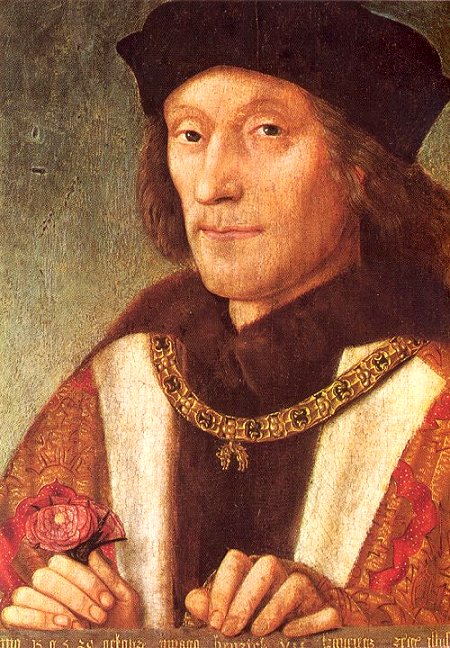
Queen Elizabeth’s grandfather, Henry VII, became King of England by defeating Richard III at the Battle of Bosworth Field. Apart from that, Henry’s claim to the throne was tenuous.

Henry VII, Queen Elizabeth's grandfather.

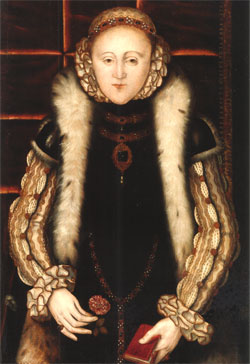
This made Elizabeth’s own claim tenuous as well.

Princess Elizabeth, Henry VII's grand-daughter.

Many Roman Catholics also thought that Elizabeth’s father, Henry VIII, had not been properly married to Anne Boleyn, so Elizabeth was a bastard.

The Jesuits even claimed that Anne Boleyn was Henry VIII’s own illegitimate daughter. So Elizabeth was also an incestuous bastard.

Elizabeth’s cunning spymaster, Sir Francis Walsingham and her lover, Robert Dudley, Earl of Leicester, formed a company of star actors in 1583 called the Queen’s Men. Liveried in red, and paid more than any other performers, their job was constantly tour England to shore up the position of the Queen.

To justify Henry VII’s defeat of Richard III, they turned Richard into a devil-worshipping monster. In their version of The True Tragedy of Richard III  he’s not only a serial murderer, he’s Hannibal Lector as well:

I hope with this lame hand of mine to rake out that hateful heart of Richmond, [Henry VII] and when I have it, to eat it panting hot with salt, and drink his blood luke warm though I be sure will poison me…

By defeating Richard, the play argues, Henry VII was carrying out the will of God and the whole universe:

‘The sun by day shines hotly for revenge

The moon by night eclipseth for revenge

The stars are turned to comets for revenge

The planets change their courses for revenge

The silly lambs sit bleating for revenge

The  screeking raven sits croaking for revenge

Whole heads of beasts come bellowing for revenge

And all, yea all the world I think

Cries for revenge, and nothing but revenge…’

In a preposterous act of prophesy, a character in the play even foresees the dazzling reign of Henry VII’s grand-daughter, Queen Elizabeth:

‘She is the lamp that keeps fair England light

And through her faith her country lives in peace

And she hath put proud Anti-Christ to flight

And been the means that civil wars did cease.

Then England kneel upon thy hairy knee,

And thank that God that still provides for thee…

For if her Grace’s days be brought to end

Your hope is gone, on whom did peace depend.

Did Shakespeare’s version of Richard III serve the same political

purpose as that of the Queen’s Men?

The Shakespeare Code argues emphatically ‘NO

(It’s best to read Part Two now.)

Read Full Post »

Karen Gledhill, in her highly perceptive letter, mentions Twelfth Night at the Northcott Theatre (in which she played a striking Viola) .

Northcott Theatre, Exeter

The Shakespeare Code believes readers might be interested in how this production came about.

It came from a dream.

In 1985, following a mystical experience in 1984, Stewart Trotter kept a dream journal.  On 28 April he wrote:

Twelfth Night: winter and snow, and matter for a May morning. Fires to attract back the sun: cakes, ale and ginger hot in the mouth. The banishing of winter and the routing of the Puritan. But the final triumph of death and mortality.

On 29 April, the following day, he recorded how he could not ‘catch’ the dream of the night before (he equated ‘dreamwork’ with fishing):

The fish got away! A gleam of its tail and away!

But he then reflected further on the dream the night before:

But Twelfth Night set on a frozen river, a setting winter sunTwelfth Night on Ice!

He followed his dream through: and on 23 October, 1985, the late B.A.Young, doyen of critics (who really could ‘paint the scene in words’) wrote in The Financial Times:

The glittering production of Twelfth Night, with which Stewart Trotter concludes his five years at the Northcott Theatre in Exeter, stands on a frozen pond that occupies not only all the stage, but also the extended forestage, reaching to the front row of the stalls.

Onto the ice are slid three trucks full of scenery that, to the designs of John McMurray, and under the guide of Feste on skates, become a small fit-up stage with a loose back-drop. Strips of carpet surround it on the ice, and, farther out, braziers and lanterns glow around the banks to indicate actors waiting for their entrances.

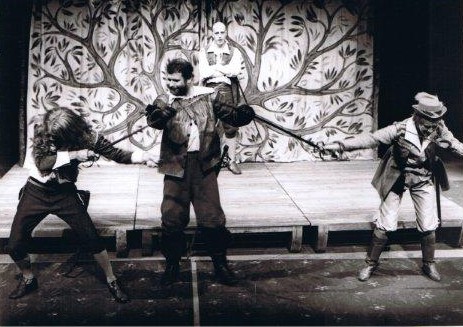
Most of the acting takes place on the little stage, as if by an Elizabethan touring company. Now and then it overflows. The sea-coast of Illyria is on the carpet, and so are Sir Andrew’s hilarious duels with the twins. Sometimes an actor comes right downstage for a confidence, and then the dim figures from the outskirts creep forward to light him or her with their lanterns. A joke clock representing the whirligig of time – a great propeller with the sun and moon at opposite ends – is occasionally wheeled forward to indicate some specific hour. Malvolio’s dark room is just a little box-like cage with just enough room for him to lie down. It is all enchantingly picturesque.

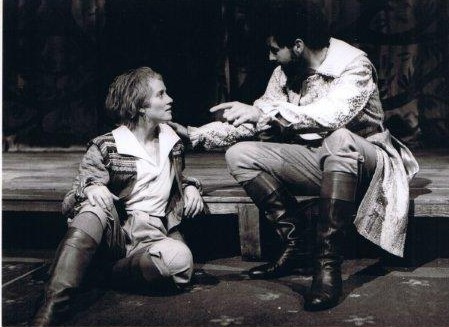
'Rocky Sharpe' as Feste and Karen Gledhill as Viola.

This is not an occasion for great performances; it is particularly a director’s work of art. Lines are spoken with no more awareness of poetry than if they were chat between the Illyrian Sloane Rangers. This does not deprive them of poetry (and anyway, most of the play is in prose). Exceptional care is taken to ensure that the precise sense of every phrase is expressed, so that when poetry is implicit, it emerges naturally, and the jokes sound funnier and more plentiful than ever before in my experience.

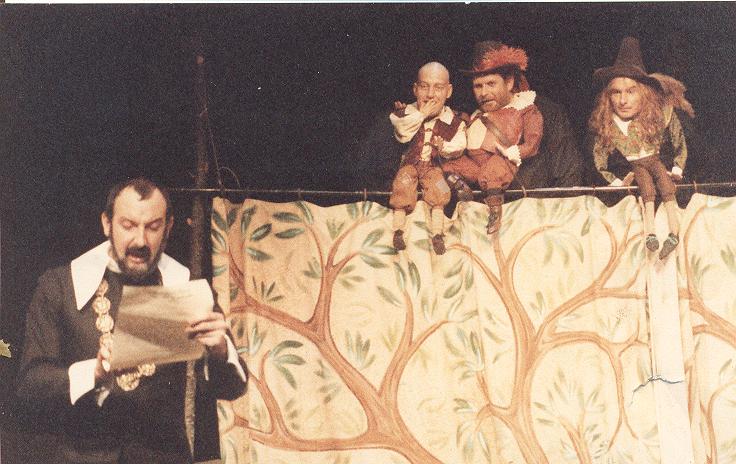
Mr. Trotter throws in some jokes of his own. Sir Toby, Sir Andrew and Fabian, unable to see enough of Malvolio reading his fake letter by peeping over the back-cloth, improvise instant seats on the curtain-rail, dangling puppet legs in front of them. During the interval, mulled wine is sold from the stage.

Karen Gledhill’s Viola really looks at first entrance as if she has just been dragged out of the sea and having become Cesario, she is naturally boyish and funny.

Karen Gledhiil as Viola and Terence Beasley as Orsino.

Mike Burnside is Sir Toby, well-bred and never excessively drunk, and Patrick Romer is Sir Andrew, never excessively foolish, except at fencing. Malvolio, wearing a trim courtier’s beard, is a handsome figure as Edmund Kente presents him, so all the more pitiful in his subsequent break-down.

Mike Burnside as Sir Toby with Patrick Romer as Aguecheek and Karen Gledhill as 'Caesario'.

I have a way of recommending people to make this considerable trip to Exeter to see productions at the Northcott, and I make no secret of my special admiration for Mr. Trotter’s work. I must now repeat it. This Twelfth Night is worth any journey. It still has three weeks to go, and there is not likely to be anything more colourful, comic or affecting this side of Christmas, or indeed months after.

Edmund Kente (Malvolio) Steve Bennet (Fabian) Mike Burnside (Belch) and Patrick Romer (Aguecheek)

Read Full Post »

I first met Stewart in 1985 and was fortunate enough to be in his production of ‘Twelfth Night’ at the Northcott Theatre in Exeter.  To this day I feel that it is a privilege to have been part of this amazing production and to have worked with someone whose understanding of and instinct for Shakespeare is, in my opinion, unmatched in our profession.

Over the last 25 years I have been party to and fascinated by Stewart’s unravelling of Shakespeare through rigorous analysis of his texts and other historic documents.  Each discovery he makes is a source of excitement and seems to provide another piece of the complex puzzle of Shakespeare’s life.  My own perception of Shakespeare has changed during this time as a result of my discussions with Stewart.  My school girl’s unquestioning reverence for him has been replaced by admiration for his ability to stay alive during such dangerous times, especially as a catholic, and for his brave and sometimes outrageous political reflections in his plays.  I have learnt that his plays are highly derivative and lacking in originality, but that there are two qualities that make him unique and to be highly valued.  First his unquestionable gift of poetry, and secondly his extraordinary understanding of the human condition.  It is this second insight that makes his plays so timeless and so applicable even in today’s world.  I was delighted to see a short rendition of ‘Twelfth Night’ in an episode of the TV series ‘Skins’ (and you can’t get much more contemporary than that) the other evening, in which the love triangle on stage was playing out a similar triangle in the lives of the teenagers who were acting in it.

Stewart is relentless in his research and determination to paint a fuller picture of Shakespeare’s life and the context in which he wrote his poetry and plays.  There is no conjecture in his work – everything is supported by Shakespeare’s own texts or other documents from the period.  His conclusions may not tally with the conventional academic line on Shakespeare, (which frankly is a bit woolly and full of ‘we don’t know much about his life…..) but they are a lot more interesting – and he has shown that actually if we look hard enough we do know quite a lot about his life.  I think his version of ‘Shakespeare in Love’ would be well worth watching, should he choose to go down that route!

The Shakespeare Code thanks Karen Gledhill (who has brilliantly adaptated Shakespeare’s plays for performance, with songs, by children in schools) for her kind comments.

MISS GLEDHILL, AS WELL AS BEING A CAMBRIDGE CLASSICIST, HAS THE DISTINCTION OF HAVING PLAYED THE ROLE OF A SCIENTIST  IN THE CLASSIC ‘DR. WHO’ EPISODE WHEN THE DALEKS FIRST LEARNT TO WALK UP STAIRS!

Miss Gledhill’s name has been inscribed in The Shakespeare Code’s ROLL OF HONOUR.

On the 16th July, 2011, she was created the second Fellow of the Shakespeare Code.

IN VINCULIS INVICTUS!

Read Full Post »

(Note: It is best to read ‘Irregular Passions’: The Countess of Pembroke   before this post)

Between bouts of drinking and debauchery at Titchfield, Thomas Nashe, Robert Greene and George Peele (co-ordinated by William Shakespeare) managed to produce The true Tragedy of Richard Duke of York and the death of good King Henry VI with the Whole Contention between the Two Houses, Lancaster and York .

 This was to end up as Henry VI Parts Two and Three. (Part One was written later.)

The plays are a warning of what would happen to England again if Queen Elizabeth did not nominate a successor: bloody Civil War.

They were commissioned by the Countess of Pembroke and the Countess of Southampton, both anxious to safeguard their dynastic line. (By 1590 it was thought that Queen Elizabeth, who had always suffered from ‘secret’ ill-health, would soon be dead).

In the play Queen Margaret (with her ‘tiger’s heart wrapped in a woman’s hide’  who has ‘stolen the breech from Lancaster’) orders her husband, King Henry VI, to leave the field of battle because she can conduct the war more successfully without him.

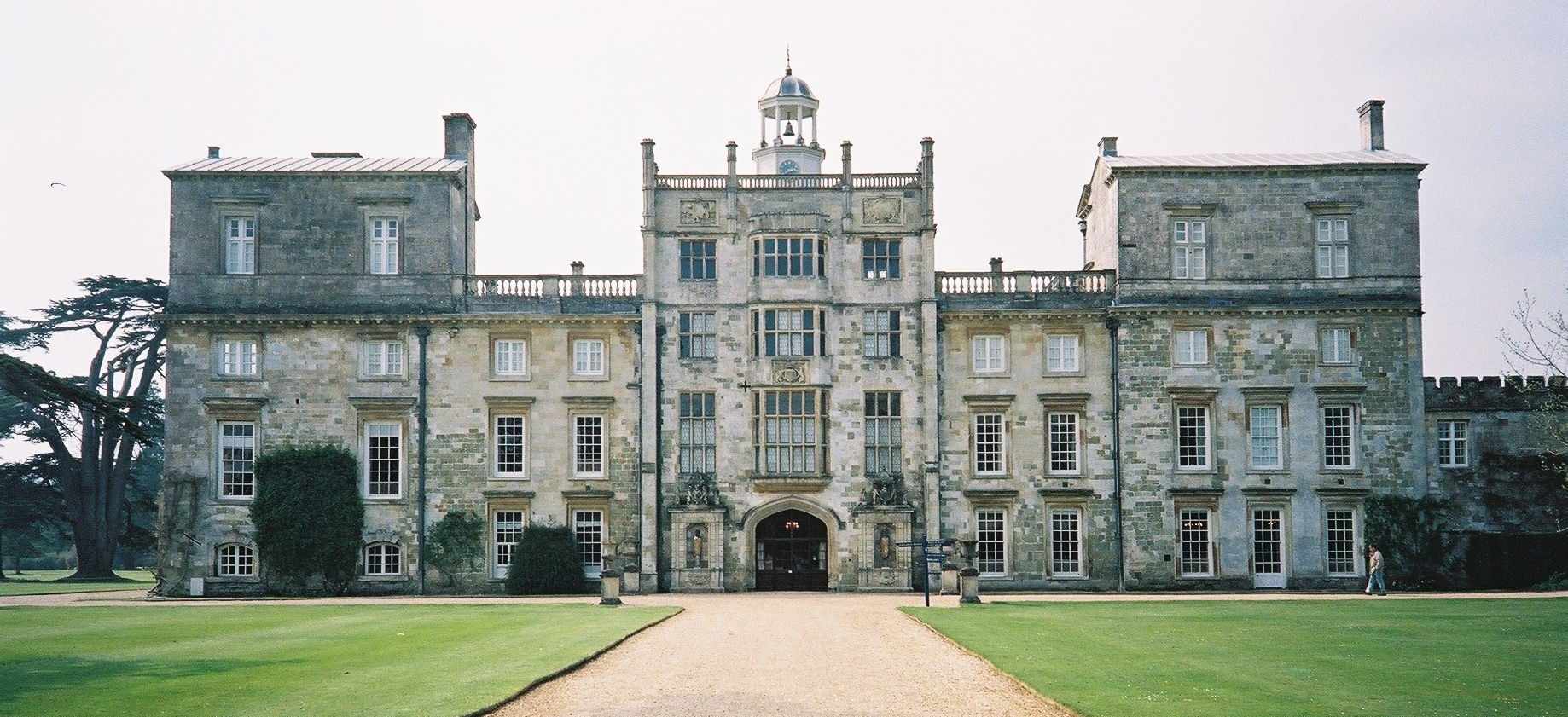
This was  a history lesson. The Countess of Pembroke saw herself as a schoolmistress and Wilton House a ‘school’…

Wilton House

It is also is a coded attack on Queen Elizabeth. She had tried to seize command of the Armada campaign from her generals, but skimping on gunpowder and ammunition, had nearly ruined it. In the play Richard, the Duke of York says:

A woman’s general, what should you fear?

Queen Margaret, in the play, dips her handkerchief in the blood of the son of Richard the Duke of York, presents it to the Duke, then places a paper crown on his head. York exclaims:

How ill-beseeming is it in thy sex

To triumph like an Amazonian trull

Upon his woes whom fortune captivates.’   

Margaret’s sadism is a coded critique of Queen Elizabeth’s sadism.

Elizabeth was rumoured to enjoy an erotic relationship with her chief inquisitor, Richard Topcliffe, who, between kissing her breasts and fondling her stomach, claimed to have given her detailed descriptions of how he tortured his victims.

In return Elizabeth gave him a pair of silk drawers.

The Duke of York also attacks Queen Margaret’s legitimacy by saying:

I would assay, proud Queen to make thee blush;

To tell thee of whence thou art, from whom derived,

’Twere shame enough to shame thee…’

This is also an attack upon Elizabeth. Many of her subjects, especially the Roman Catholics, thought Elizabeth was a bastard because her father, Henry VIII was never properly divorced from Catherine of Aragon….

Catherine of Aragon

The Jesuits, however made it worse. They put it about that Anne Boleyn was King Henry VIII’s illegitimate daughter!

This incestuous union had initiated the rule of Satan in England. All of Henry’s children would die young, or, if they survived, have no children themselves.

Shakespeare was to touch on this idea again in Pericles in which a king’s incestuous relationship with his daughter brings ruin on his country.

Dame Eleanor, who in The True Tragedy of Richard Duke of York tries to upstage Queen Margaret, is a satire on Lettice Knollys, the Queen’s pushy, red-headed ‘cousin’, mother of the second Earl of Essex and second wife to Robert Dudley, the Earl of Leicester.

In the play, Queen Margaret drops her fan, Dame Eleanor goes to pick it up and the Queen strikes her – an exact re-enactment of what Elizabeth had done to Lettice.

When Queen Elizabeth found out that Lettice had married her lover, the Earl of Leicester, she banished her, in perpetuity, from the court. Lettice took her revenge by parading round London with her entire entourage, posing as the Queen. She even plotted to set up a rival court with her husband, Leicester, across the Channel in the Lowlands.

The ruthless Warwick in the play, ‘The rampant bear chained to the ragged staff’ (who even refers to himself as ‘the bear’) is Leicester himself, then safely dead. ‘The Bear and Ragged Staff’, as every member of the audience would have known, had been part of his coat of arms.

To this day The Bear and Staff  is the name of a pub in Leicester Square in London.

Greene soon tired of playing second fiddle to Shakespeare the ‘grammarian’ (grammar school boy) and left Titchfield for London. After a ‘banquet’ of Rhenish wine and pickled herrings with Nashe and Beeston, Greene fell sick and died, a few months later, in utter penury.

 This gave Nashe the opportunity of attacking Shakespeare under Greene’s name. He called Shakespeare an ‘upstart crow beautified with our feathers’ i.e. a plagiarist. Mis-quoting from The True Tragedy of Richard Duke of York he also described Shakespeare as having ‘a tiger’s heart, wrapped in a player’s hide’.

For this attack to hit home – which it did – the original line (‘O tiger’s heart wrapped in a woman’s hide’) cannot have been written by Shakespeare.

From then on, Nashe continued to hint at his own hand in Shakespeare’s plays by dropping phrases from them into his own work.

The Shakespeare Code will catalogue many of these phrases.

Peele left Titchfield as well, though poverty forced him to return two years later to work on Titus Andronicus – a plot idea that Shakespeare was to bring back from Rome in 1593. (See: Shakespeare in Italy)

Nashe, however, stayed in Titchfield and was to collaborate with Shakespeare (as he had done with Christopher Marlowe and was to do with Ben Jonson) off and on till his death in 1601.

Nashe wanted to replace Shakespeare in the affection (and pay) of the Southampton family. He took every opportunity to attack Shakespeare (in code, of course) for his class, creepiness, treachery and wild, ruthless ambition.

The Shakespeare Code believes The True Tragedy and other early Shakespeare plays were first performed in the halls and grounds of Titchfield andWilton because:

1. With their courts, processions and armies, they would benefit from huge casts. Servants and workers on the estates could be co-opted as extras. (Indeed, in real life, they had been drafted as real soldiers for the Armada campaign).

2. They all have wonderful parts for women. Aristocratic women were directly on hand, bored with country life and eager to perform.

3. Battle scenes need to be enacted. Both estates had stables full of horses and armouries full of weapons.  Place House at Titchfield was also fortified, so wall-scaling, and the exploding of maroons, was perfectly in order. (As Kevin Fraser demonstrated brilliantly when The Titchfield Festival Theatre performed at the Abbey).

But, most important:

4. Both estates teemed with frustrated young, male aristocrats, eager to win their spurs in battle. Queen Elizabeth, hating warfare, had forbidden them to fight in Europe: so they fought, in play, in Hampshire and Wiltshire instead. They had acted, as undergraduates, at their colleges at Oxford and Cambridge: now they acted at home.

The performances of plays about ‘good King Henry VI’ would have been particularly poignant at Titchfield. The King had married Margaret at Titchfield Abbey and spent his honeymoon there.  He had endowed the town with a Corpus Christi Fair and a grammar school, where, The Shakespeare Code believes, Shakespeare worked as ‘a schoolmaster in the country’. (See:The Strange Case of Mr. Apis Lapis. )

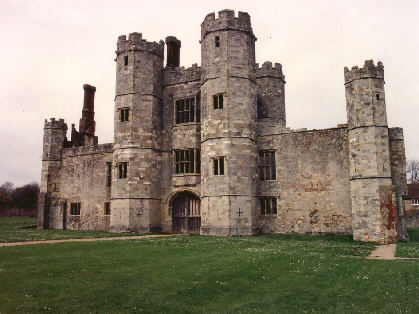
Titchfield Abbey

After the initial performances of the plays, the professional players involved would adapt the plays to try to make them ‘commercial’ (many touring companies ‘broke’ i.e. went bust) put talented boys in the women’s parts and hit the road as ‘The Earl of Pembroke’s Men’…


Read Full Post »


Just scanning the site, and the material about Shakespeare and Italy, it may be relevant to the line you want to run that Shakespeare must have read Italian to a fairly high level. We can say this with some certainty because the prime source for ‘Othello’, Cinthio, had not been translated into English when Shakespeare wrote the play.

The Shakespeare Code would like to thank Prof. Womersley, who is also a Fellow of the British Academy, for his interest.

Read Full Post »

Used copies of Love’s Labour’s Found the book on which The Shakespeare Code is partly based – are being offered on the Internet at exorbitant prices ($70 dollars, in one case, PLUS p. and p.).

Love’s Labour’s Found is out of print, but please note:

1. The book is available at all copyright libraries.

2. All the relevant ideas in the book will appear, in time, in The Shakespeare Code.

3. Actual extracts from the book will also be posted.

4. Many of the ideas in The Shakespeare Code have evolved since the book was published in 2002.

So, please keep reading The Shakespeare Code – AND SAVE YOUR MONEY!

Read Full Post »

1,000 views!

Today The Shakespesare Code is happy to announce it has recorded ONE THOUSAND VIEWS!

Read Full Post »

Mary Sidney, the Countess of Pembroke lived at Wilton in Wiltshire, thirty miles away from the Countess of Southampton at Titchfield.

Like all beautiful talented women, she had been banned from Queen Elizabeth’s court. So she set up her own rival version, in friendly competition with the Countess of Southampton.

With musicians, poets and actors (often shared with Titchfield) on the payroll, she staged tournaments and entertainments to honour the memory of her dead soldier-brother, Sir Philip Sidney.

And to annoy the Queen.

Elizabeth had opposed Sidney’s imperialistic, expansionist foreign policy and despised his cult of chivalry. In an act of bravado, he had thrown off his leg armour at the Battle of Zutphen (1586) because the much older Marshall of the Camp was only lightly armed. Sidney was immediately shot in the thigh.

According to John Aubrey, he later died on the campaign while making love to his wife.

Elizabeth had kept Sidney under virtual house arrest at Wilton where he ‘followed the arts’ because he had nothing else to do. He was in love with the sister of the Earl of Essex, the beautiful Penelope Rich, a married woman who was, in private performance, to play many of Shakespeare’s heroines. By her life, and her all-consuming love for Lord Mountjoy, she was also to inspire Shakespeare to create the part of Cleopatra in his great, ‘romantic tragedy’ Antony and Cleopatra. 

Sidney wrote the sonnet sequence Astrophil and Stella about her: Stella is the ‘star’ and he is Astrophil the  ‘lover of the star’.  Sidney plays plays on her married name ‘rich’: in Canto 37 he writes:

‘Though most rich in these and every part

Hast no misfortune but that Rich she is.’

Shakespeare does the same thing in Love’s Labour’s Lost when he has the Princess, originally played by Penelope,  say in the last scene of the play:

Sweet hearts, we shall be rich ere we depart… 

Shakespeare plays on the word ‘rich’ five times more before the play ends.

With the help of his sister, Sidney wrote his Arcadia, in which a handsome young knight dresses up as a woman to gain access to a guarded princess. The knight’s male friend falls madly in love with him, followed by the Princess’s own father!

Scenes from the poem were acted out by Sidney and the Countess at Wilton and the young, impressionable, Henry Wriothseley, third Earl of Southampton, was clearly present. He cultivated his long hair so that he could look as beautiful as Sir Philip in drag. Shakespeare at one point even addresses the third Earl as ‘the master-mistress’ of his ‘passion’. 

The Third Earl of Southampton in drag?


The Countess of Pembroke had challenged Elizabeth by emerging from mourning for her brother at the Armada celebrations with a power parade of forty gentlemen on horseback, two coaches full of women, a litter for her children,  four ladies on horseback and a retinue of fifty liveried servants.

A couple of years later the Countess, who numbered The Ape (Robert Cecil) and The Fox (Walter Raleigh) and even, according to  Aubrey, her brother Philip, amongst her lovers, went into full, hypocritical attack.

She translated Robert Garnier’s play Antonius which showed how Cleopatra’s (i.e. Elizabeth’s)  ‘irregular passions in forsaking Empire to follow sensuality’  had brought ruin and civil war to the State.

This was a case of the pot calling the kettle: according to Aubrey the Countess watched, through a ‘vidette’ in the wall of her house, stallions mounting mares in the mating season.  The episode in Venus and Adonis when a ‘breeding jennet, lusty, young and proud’  is mounted by Adonis’s steed with his ‘melting buttock’ was written to catch her eye.

She commissioned Fulke Greville, her brother’s old friend and lover, to follow up her attack on Elizabeth with an Antony and Cleopatra. Greville  tore up his manuscript, terrified it would be ‘construed or strained to a personating of vices in the present governors and government.’ 

When, in 1590, Elizabeth withdrew Holinshed’s history Chronicles, on the grounds that they were ‘fondly set out’ (she wanted no-one to judge her reign by comparing it to others) the Countess of Pembroke commissioned Samuel Daniel (a poet in her employ) to write a verse version of ‘The Civil Wars’,  now known as ‘The Wars of the Roses’.  She turned to her neighbour, ‘the man Shakespeare’ as she was later to call him, to provide a theatrical version of the same events.

She wanted to warn people of the chaos that would ensue if Elizabeth did not name a successor. She formed a company of actors to disseminate these ideas, employing her estranged husband’s name and money. (The Earl of Pembroke’s Men)

This was a huge undertaking. Grammar-schoolboy Shakespeare needed help.  He paid University Men, Robert Greene, Thomas Nashe and George Peele, all desperate for the cash, to come down to Titchfield to help him. And to lodge with Mr. Apis Lapis, and his three maids, at Posbrook Farm. (See The Strange Case of Mr. Apis Lapis. )

The Countess of Pembroke would have approved of Mr. Apis Lapis. Both were addicted, amongst other things, to alchemy.

(It’s best now to read Queen Elizabeth, incest and sadism. )

Read Full Post »

Before 1593 Shakespeare had not set a single play in Italy. By the time of the First Folio (1623) ten plays – over a quarter of the canon – had been set in Italy or have scenes in Italy. There are around 800 references to Italy and 400 to Rome alone.

Shakespeare’s work deepened dramatically after 1593.  He was no linguist, but we know from the Sonnets he was fascinated by painting. ‘Mine eye hath played the painter’, he writes in Sonnet 24, ‘and hath steeled thy beauty’s form in table of my heart.

He became aware of psychological complexity from the Old Masters in Europe – and brought it to England to transform the Drama.

Two years ago Prof. Roger Prior, using entirely different criteria, concluded that Shakespeare had visited Italy.

His date?  1593!

Read Full Post »

« Newer Posts - Older Posts »