Archive for the ‘Uncategorized’ Category
The Shakespeare Code has joined ‘Twitter’!
Posted in Uncategorized on July 11, 2011| Leave a Comment »
Twelfth Night Decoded: Part Five. Orsino as the Earl of Essex.
Posted in Uncategorized on July 9, 2011| Leave a Comment »
(It’s best to read The Introduction and Parts One, Two Three and Four first.)
LOVE-SICKNESS…
When William Shakespeare and Thomas Nashe re-wrote the old play What You Will and turned it into Twelfth Night, they changed the leading character’s name to Orsino.
This was to flatter Queen Elizabeth’s Twelfth Night guest, Don Virginio Orsino, Duke of Bracciano.
But who did Orsino really represent?
At the start of the play he lies ‘love-sick’ for the Countess Olivia…

He hopes that by listening to excessive amounts of music ( ‘the food of love’) his appetite for it…
may sicken and so die….
When a servant suggests he goes hunting, he compares ‘the hart’ he would chase to the ‘heart’ of Olivia…
O when mine eyes did see Olivia first,
Methought she purg’d the air of pestilence;
That instant was I turned into a hart,
And my desires, like fell and cruel hounds,
E’er since pursue me…
When the Court audience heard these words, they would have known immediately who Orsino was…
Orsino is comparing himself to Acteon, a hunter who stumbled upon the naked Goddess Diana when she was bathing with her nymphs….

Titian's depiction of Acteon and Diana
In a fury the Goddess transformed Acteon into a stag and he was torn to pieces by his own hounds…

Titian again
The same story was told by Ben Jonson in his Cynthia’s Revels, an entertainment performed at the Court by the Children of the Chapel…
On exactly the same day as Twelfth Night!!!
Jonson has the nymph Echo say
Here young Acteon fell, pursued and torn
By Cynthia’s wrath (more eager, than his hounds)
And Cynthia/Diana herself says..
For so Acteon, by presuming far
Did (to our grief) incur a fatal doom…
Seems it no crime to enter sacred bowers,
And hallowed places, with impure aspect,
Most lewdly to pollute? Seems it no crime,
To brave a deity? Lewd mortals learn
To make religion of offending heaven;
And not at all to censure powers divine.
To men, this argument should stand for firm,
‘A Goddess did it, therefore it was good:
We are not cruel, nor delight in blood…
The ‘sacred bowers’ Jonson refers to are Queen Elizabeth’s private chambers at Nonesuch Palace and the ‘impure aspect’ belonged to Robert Devereux, the second Earl of Essex, when he burst into them before the Queen had time to put on her wig and make-up.
Or, as contemporary Rowland White put it…
she not being ready, and he so full of dirt and mire that his very face was full of it…..
After the initial shock, the Queen was glad to see the man she loved. He’d returned, unannounced, from his Irish campaign to counter the rumours that were circulating about him at the Court.
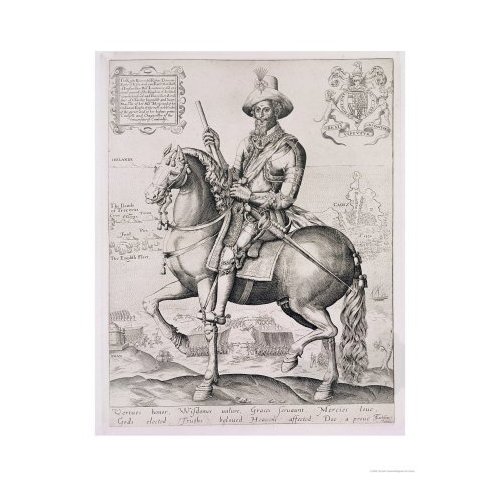
Sir Robert Devereux, second Earl of Essex
But it was too good an opportunity for his enemies to miss. Sir Robert Cecil and Sir Water Raleigh poisoned the Queen’s mind against Essex. He was banished from her sight and kept for a long time under house arrest………..
….despite his illness (he had the ‘Irish flux’) and
….despite his protestations of love (for the Queen)…
He was suffering, in fact, from a very literal form of ‘love-sickness,’ very similar to Count Orsino’s….
Shakespeare, by giving Orsino great verse to speak…
O it [the music] came o’er my ear like the sweet sound
That breathes upon a bank of violets,
Stealing and giving odour…
…is inviting the Queen to empathise with the character of Orsino and so pity the sufferings of Essex.
Jonson, on the other hand, is stating that the Queen was right to punish Essex. He knew that if Essex was destroyed, Shakespeare his rival might be destroyed along with him.
●
On Twelfth Night there was a third ‘Essex’ play performed at Court, Phaeton by Thomas Dekker. This lost piece was based on the ‘Sun-Chariot’ myth. Phaeton insists, in his arrogance, on driving his father’s sun-chariot. In the process, he nearly destroys the world….

Phaeton struck by Jove's thunderbolt.
He certainly destroys himself. An indignant Jove dispatches him with a thunderbolt.
This play was put on byThe Admiral’s Men. The Admiral concerned was Charles Lord Howard (later Earl of Nottingham) Essex’s bitter enemy.
The punishment Jove gives Phaeton (death) is, Lord Howard suggests, the one Elizabeth should give to Essex.
Nottingham’s hatred for Essex, as The Shakespeare Code will reveal in a later post, led not only to the death of Essex, but to to the deaths of his own wife and of the Queen herself…
●
Essex had finally been freed from house arrest in London to live on his country estates; but when, in 1600, he declared to the Queen…
That he kissed her royal hand and that rod which had corrected him, not ruined him: but he could never be possessed of his wonted joy till he beheld again those benign looks of hers which had been his Star to direct and guide him….
The Queen drily observed…
All is not gold that glistereth….
She was well aware that Essex’s farm on sweet wines – his main source of income – was due for renewal.
She refused to do this. So Essex was ruined.
His relationship with the Queen had always been a sado-masochistic one. He was half her age – and the game was one of who would dominate whom, Essex with his youth or Elizabeth with her power…
In 1594, Essex had written an extraordinary letter to her:
If my horse could run as fast as my thoughts do fly, I would as often make mine eyes rich in beholding the treasures of my love , as my desires do triumph when I seem to myself in a strong imagination to conquer your resisting will…
Now he was grovelling on the ground before her, doing a good impersonation of Sir Walter Raleigh’s cloak…
‘Consumed by silence, solitariness and sighs’, Essex even wrote a poem to Elizabeth in which he yearned to…
…..finish forth his fate
In some enchanted desert, most obscure
From all society, from love, from hate
Of worldly folk, then would he sleep secure
Then wake again and yield God ever praise
Content with hips and haws and bamble berries,
In contemplation passing still his days,
And change of holy thoughts to make him merry;
And when he dies, his tomb may be a bush
Where harmless robin dwells with gentle thrush…
‘Harmless Robin’ here sounds just like Orsino who is…
Best when least in company….
But he sounds even more like Timon of Athens who, when he ran out of money and was deserted by his ‘friends’, retreated ‘to the woods’ and lived, without husbandry, on the spontaneous produce of nature. As Timon says to a group of Banditti…
….Behold the earth hath roots;
Within this mile break forth a hundred springs;
The oak bears mast, the briar scarlet hips;
And bounteous housewife nature on each bush
Lays her full mess before you…
The Shakespeare Code believes that Shakespeare wrote Timon to try to convince Essex to take up a Stoical position to his fate. (It also believes that Shakespeare himself wrote ‘Essex’s’ poem to the Queen).
Shakespeare wanted Essex to cut all ties with London and the Court and to live in isolation in the countryside like Timon, indifferent to the world and its ways….
This was a real possibility. Essex, a dreamy, romantic country boy, loved the Welsh landscape and might never have come to the Court if his family had been wealthy.
He would certainly never have become Elizabeth’s toy-boy…
Many thought Essex, who surrounded himself with many ‘kindle-coals and make-bites’ , was, by this stage, completely mad. The Queen’s godson, Sir John Harington (who claimed to have invented the water-closet) wrote:

'Ajax' Harington
he [Essex] shifteth from sorrow and repentance to rage and rebellion so suddenly, as well proveth him devoid of good reason as of right mind. In my last discourse he uttered strange words, bordering on such strange designs, that made me hasten forth and leave his presence…His speeches of the Queen become no man who hath mens sana in corpore sano[a healthy mind in a healthy body]. The Queen well knoweth how to humble the haughty spirit; the haughty spirit knoweth not how to yield, and the man’s soul seemeth tossed to and fro like the waves of a troubled sea…
But Theseus in A Midsummer Night’s Dream declares that
The lunatic, the lover and the poet
Are of imagination all compact..
Shakespeare in Twelfth Night is trying to take a similar attitude to Essex’s ‘madness’. He is suggesting that Essex’s ravings, like Orsino’s in the play, are the expression of a thwarted love for a beautiful woman…i.e. Elizabeth.
Shakespeare also hoped there would be a ‘wisdom’ in Essex’s ‘madness’ as there is in Timon’s. Timon develops a coherent, philosophical indifference to the world and its ways, a true ‘contemptus mundi’.
Shakespeare also hoped that the ‘troubled sea’ of Essex’s spirit might find the same sort of resolution as Timon’s, who hopes to make…
…..his ever-lasting mansion
Upon the beached verge of the salt flood,
Who once a day with his embossed froth
The turbulent surge shall cover…
But Shakespeare was certain of one thing:
the Earl of Essex was in no mental state to take any kind of political action himself.
We also know, from the great Regency historian Lucy Aikin, that Essex was drinking heavily…
Unfortunately there were others in the Essex entourage who were urging rebellion…
●
Shakespeare was in basic support of Essex’s ideals. But there was one area in which the two men differed – sex.
Shakespeare had never been happy that Essex’s political influence resided in his liaison with the ageing, capricious Queen. In Sonnet 25 he had written:
Great Princes’ favourites, their fair leaves spread
But as the marigold at the sun’s eye,
And in themselves their pride lies buried,
For at a frown they in their glory die…
The image of the marigold evokes the image of Essex in his orange-coloured Devereux armour….
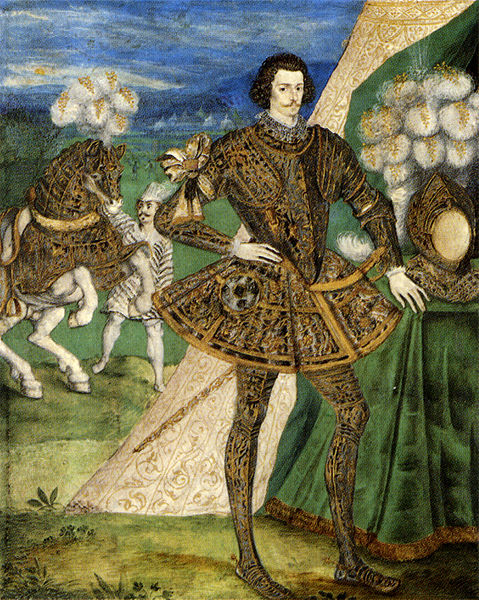
But after the Rebellion, when Essex had betrayed all his followers, Shakespeare reveals his open contempt for him in Sonnet 25:
Have I not seen dwellers on form and favour
Lose all, [Essex’s money] and more, [Essex’s head] by paying too much rent [semen]
For compound sweet, [farm on sweet wines] forgoing simple savour,
Pitiful thrivers in their gazing spent…[Essex’s ‘gazing’ on the ‘naked’ Queen]
But there was another aspect of Essex that Shakespeare despised:
he was secretive about his homosexuality.
Shakespeare, good Catholic boy that he was, was not always happy about his own bi-sexual orientation. He talks about his ‘outcast state’ in Sonnet 29 and presents the two gay Antonios in his plays (The Merchant of Venice and Twelfth Night) as sad, old losers.
But he was as open as possible as he could be about his overwhelming love for Southampton – even defiant about it in Sonnet 121 where, parodying God in The Book of Job, he writes:
For why should others false, adulterate eyes
Give salutation to my sportive blood?
Or on my frailties why are frailer spies
Which in their wills [penises] think bad which I think good?
No, I am that I am, and they that level
At my abuses reckon up their own,
I may be straight though they themselves be bevel
By their rank thoughts my deeds must not be shown…
Queen Elizabeth was well aware of Shakepeare’s sexual inclinations: she described him to the scholar William Lambarde as a man who had ‘forgotten God’.
She would have been appalled if she had known that her lover, Essex, had ‘forgotten God’ as well….
●
The Shakespeare Code is indebted to Roll of Honour Inductee and great Shakespearean scholar, Martin Green, for his work in this area, included in his ground-breaking book Wriothesley’s Roses [Clevedon, 1993].
An endorsement from Mr. Green of The Shakespeare Code can be read in the ‘About The Shakespeare Code’ Section (click button above). He is currently putting his finishing touches to a new book on Willobie his Avisa.
Mr. Green has discovered that the moment the Earl of Essex was admitted into the Inner Temple (a month before his twenty-first birthday in 1588) he constructed a hexagonal bath in the Strand (from an overflow from a Roman Bath) for fellow ‘Templars’.
This alone, of course, doesn’t prove that Essex was gay: but we know from John Aubrey that the homosexually-inclined Sir Francis Bacon used his Bath House at Gorhambury as a ‘stuffe’ [brothel].

Sir Francis Bacon
Bath House Devotee
Also at the time of the Essex Rebellion Trial, one William Reynolds wrote anonymously to Sir Robert Cecil, saying:
I do marvel also what became of Pearse Edmones, called Captain Pearse or Captain Edmones, the Earl of Essex’s man, born in Strand near me, one which has had many rewards and preferments by the Earl of Essex. His villainy I have often complained of. He dwells in London. He was Corporal General of the Horse in Ireland under the Earl of Southampton. He ate and drank at his table and lay in his tent. The Earl of Southampton gave him a horse, which Edmondes refused a 100 marks for him. The Earl of Southampton would cole and huge [embrace and hug] him in his arms and play wantonly with him.
Delving through Essex’s papers, Mr. Green has found…
a great number of receipts in 1599 and 1600 of sums of money paid by the Earl of Essex to various persons, including ‘Captain. P. Edmonde’ who was ‘so favoured as he often rode in a coach with him [Essex], and was wholly of his charges maintained, being a man of base birth in St. Clement’s Parish..’.
Men riding together in coaches was thought highly suspect. Mrs. Bacon wrote to her son Francis:
Though I pity your brother [Anthony, also gay] yet as long as he pities not himself but keepeth that bloody Perez [Antonio Perez, a Spanish homosexual], yea, as a coach-companion and a bed-companion, a proud, profane costly fellow, whose being about him I verily fear the Lord God doth mislike, and doth less bless your brother [Francis] in credit, and otherwise in his health, surely I am utterly discouraged…

- Antonio Perez who loved to ride in coaches with Anthony Bacon.

Perez, who was part of Essex’s spy-ring, reported to Essex a conversation he’d had at Windsor with Dom Antonio de Crato, the exiled half-Jewish claimant to the throne of Portugal and Rodrigo (Ruy) Lopez, the Jewish chief physician to the Queen.
According to Geoffrey Goodman (who heard the story from Sir Henry Savile) Lopez had been ‘making merry’ [i.e. getting drunk] with Crato and Perez then…
began bitterly to inveigh against the Earl of Essex, telling some secrecies, how he had cured him and of what diseases, with some other things that did disparage his honour. But as soon as Lopez was gone, they went instantly to the Earl of Essex, and, to ingratiate themselves in his favour, did acquaint him with all the several passages. Here the Earl was so much incensed, that he resolved to be revenged on him and now he began to possess the Queen that Lopez was a very villain…and did intend to poison the Queen..
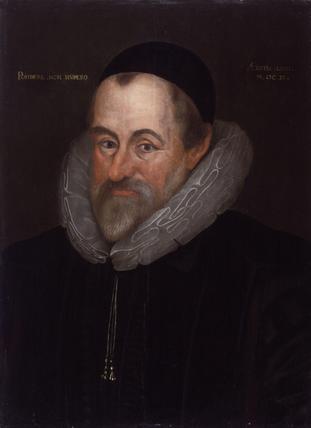
- Rodrigo Lopez

Lopez, who pleaded his innocence to the end, was hanged drawn and quartered so that Essex could stay ‘in the closet’.
Even the official history of Elizabeth’s reign mentions one Essex’s young boyfriends, Henry Tracey. Essex picked him up in Dublin, made him his page and employed him as post-boy between himself and Queen Elizabeth. Killed during the Rebellion, Tracey was afterwards described by the historian William Camden as…
…a young gentleman whom Essex dearly loved…
Shakespeare ‘outs’ Essex in the course of Twelfth Night, but in the gentlest of ways.
Orsino gradually falls in love with his own beautiful page and post-boy, Caesario…
But all’s well…
As Brothers and Sisters of The Code well know, Caesario is really a girl…
(It’s best to read Part Six now.)
Twelfth Night Decoded: Part Four. Malvolio as Sir Walter Raleigh.
Posted in Uncategorized on June 26, 2011| Leave a Comment »
(It is best to read The Introduction and Parts One, Two and Three first)
GREATNESS THRUST UPON THEM…
As Brothers and Sisters of The Code well know, Malvolio is the Countess Olivia’s steward..

Sir Henry Irving as Malvolio.
In a big household like Olivia’s – more like a small town than a house – the steward’s job was of tremendous importance, even more so as Olivia’s brother has unexpectedly died.
William Shakespeare would have seen, at first hand, the pressures on a single woman running a big household at Titchfield. …
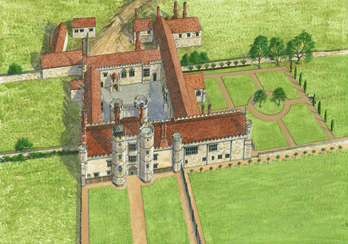
'Reconstruction' of Place House, Titchfield
The Countess of Southampton’s husband had died in 1581, so when Shakespeare was ‘adopted’ by her (in 1590) Countess Mary would have been in charge there for nearly a decade…
A single woman, with power and money, is always a target for an unscrupulous man…
Malvolio is one of these. He has come from ‘nowhere’, his ambition is endless and he’s ‘in it’ for himself alone….
He wants control over the whole household, to destroy Sir Toby and Feste and marry the beautiful Countess Olivia.
Like the other ‘Puritan’ in Shakespeare, Angelo (in Measure for Measure) Malvolio has a massive, repressed sex-drive. It is, we learn in the play, his fantasy to share a ‘day-bed’ with Olivia where he could leave her sleeping after day-time sex….
Then, whilst waiting to reprimand his ‘cousin Toby’ he could…
frown the while, and perchance wind up my watch , or play with my – some rich jewel….
(‘Jewel’, as Brothers and Sisters of The Code well know, could also have the same phallic association that the phrase ‘Crown Jewels’ has today)
The brilliant Maria sums Malvolio up as…
a time-pleaser, an affectioned ass, that cons state without book, and utters it by great swarths: the best persuaded of himself so crammed (as he thinks) with excellencies, that it is his grounds of faith that all that look on him love him…
●
The parallels between Olivia’s rule of her household and Queen Elizabeth’s of England are, The Shakespeare Code believes, obvious. It was the unexpected deaths of her half-brother (King Edward) and half-sister (Queen [‘Bloody’] Mary) that brought Elizabeth to the throne.
After the death of Robert Dudley, the Earl of Leicester in Armada year (1588) there was a power vacuum at the court.
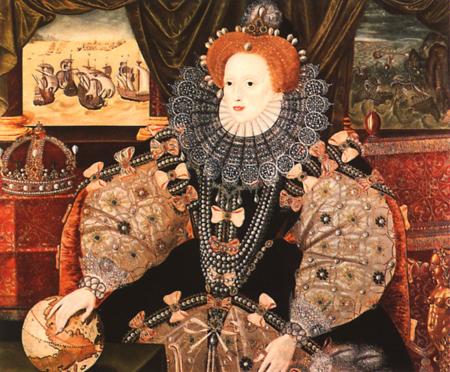
Queen Elizabeth's Armada Portrait (1588)
Men who wanted that power had to woo Elizabeth. Mostly they came from established families, but they all had one thing in common….
No wealth of their own.
Even Robert Devereux, the second Earl of Essex (Leicester’s stepson) was penniless after the Queen had called back her loans to Leicester from Essex’s mother, the hated Lettice.
Elizabeth adopted, as so many ‘tyrants’ have done, a policy of ‘divide and rule’. Whoever, for example, was first with news at the Court had the upper hand – so all the ambitious coutiers developed spy networks throughout Europe. At their own expence, of course….
Elizabeth got a thrill from seeing young men fighting – often literally – for her favour. They might form temporary alliances with one another – but their basic desire was to eliminate rivals to gain her attention. And if money and wealth meant sleeping with the ageing Queen – who by then had no fear of conceiving a child – they were prepared to pay the price.
By 1601 (the year of Twelfth Night) Essex had lost out in the struggle. Sir Robert Cecil and Sir Walter Raleigh (in an unholy alliance) had set him up to fail.
They persuaded a reluctant Queen Elizabeth to send him to Ireland to fight the ‘rebel’ leader, Tyrone, a job for which he was completely unsuited. He was gallant and brave on short campaigns, but a piece of sustained warfare was beyond his volatile, romantic nature.

Essex preparing to joust.
Essex, to crush the negative whispers against him at the Court, had left Ireland without the Queen’s permission. He had rushed, unannounced, into her morning chamber.
Before she’d had time to put on her wig or make-up…
Cecil and Raleigh made sure he was never to be forgiven.
Essex and Southampton wanted to kill these two ‘caterpillars’: but many of Essex’s followers, including Shakespeare, favoured appeasement.
When Sir Toby learns that Malvolio wants to sleep with his niece, Countess Olivia, his first thought is violence. But Maria convinces him that to make Malvolio a laughing-stock is a far more powerful option.
This idea was in the minds of Shakespeare and Nashe when they re-wrote What you Will. Let the Court audience laugh at ‘the caterpillars’ and their influence over the Queen will cease…
Sir Robert Cecil was small and round-shouldered….
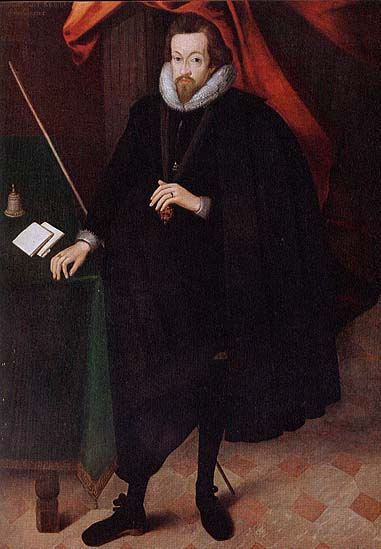
Sir Robert Cecil
….. but had his share of sexual triumphs, including the Countess of Pembroke…
A contemporary lampoon went…
Robert Cecil, Robert Cecil
All back and all pistle….
…..Queen Elizabeth, though, was not one of Sir Robert’s triumphs.
The man in the sites of Shakespeare and Nashe, when they created Malvolio, was…….
Sir Walter Raleigh
(pronounced ‘Rawley’)

The Code believes Raleigh is the model for Malvolio because:
1. Raleigh claimed, in private conversation, he was the lover of the Queen…
Francis Osborn, who was 10 years old when Elizabeth died, heard Sir Walter Raleigh say….
That minions were not so happy as vulgar judgements thought them, being frequently commanded to uncomely and sometimes unnatural imployments.
Osborn indicates that the Queen’s ‘amorous caresses’, by ‘age and a unversal distribution’ had become ‘tedious if not loathsome…‘
Sir Walter, rather like Malvolio, seems to have had ‘greatness thrust upon him’ by the Queen.
2. Raleigh had a massive sex-drive. According to John Aubrey, he had ‘vertical’ sex against a tree with one of Elizabeth’s ladies-in-waiting…
who seemed at first boarding to be somewhat fearful of her honour, and modest, she cried ‘Sir Walter, what do you ask me? Will you undo me? Nay sweet, Sir Walter! Sweet Sir Walter! Sir Walter!’ At last as the danger and the pleasure at the same time grew higher, she cried in the ecstasy ‘Swisser Swatter Swisser Swatter…
As Captain of the Guard, Raleigh even had a key to the dormitory of the young ladies-in-waiting….
3. Raleigh was, according to Aubrey, ‘damnable proud’. (Olivia describes Malvolio as ‘sick of self-love’).
4. Raleigh was a personal enemy of the Earls of Essex and Southampton. So he was consequently the enemy of William Shakespeare.
He was also the enemy of Thomas Nashe who (with Shakespeare) had lampooned him as the figure of the penniless ‘Braggart’ in the 1592 version of Love’s Labour’s Lost.
Raleigh had promised Nashe money for a book he was writing, but in the end gave him nothing. Nashe launched a coded attack on ‘the upstart’, Raleigh in his pamphlet Pierce Pennilesse, by asking…
what reason have I to bestow any of my wit upon him that will bestow none of his wealth upon me? Alas it is easy for a goodly tall fellow [Raleigh was six feet] that shineth in his silks [Raleigh dressed to the nines] to come and outface a poor simple pedant in a threadbare cloak and tell him his book is pretty but at this time he is not provided for him…
- Nashe used Twelfth Night to dramatise his own clash with Raleigh in the confrontations between Feste and Malvolio. Also, by suggesting he was the ‘spirit’ of the Queen’s favourite jester, Tarleton…..

…..Nashe was obliquely referring to a famous incident earlier in Queen Elizabeth’s reign….
Edmund Bohun (1645-1699) writes:
Tarleton, who was then the best comedian in England had made a pleasant play – and when it was acted before the Queen, he pointed at Sir Walter Raleigh and said ‘See the Knave commands the Queen’. For which he was corrected by a frown from the Queen; yet he had all the confidence to add that he was of too much and too intolerable a power….
Nashe, playing Feste, is saying exactly the same thing about Raleigh to exactly the same person!
5. Raleigh wore flashy outfits to catch the eye of Queen Elizabeth.
Raleigh came from an old, but impoverished family (his father rented the family house); but from the beginning Raleigh wore expensive outfits to try to look rich. As Nashe points out..
the weaver’s looms first framed the web of his honour…
And Raleigh was prepared to sacrifice this ‘honour’ to gain more ‘honour’. As Thomas Fuller (1608-1661) reported in his Worthies….
Captain Raleigh found the Queen walking, till meeting with a plashy place, she seemed to scruple going thereon. Presently Raleigh, though his clothes were then a considerable part of his esate, cast and spread his new cloak on the ground; whereon the Queen trod gently, rewarding him afterwards with many suits…

Raliegh lays down his honour...
An essential part of Raleigh’s ensemble was a tall hat with a pearl band and a large, black-jewelled feather….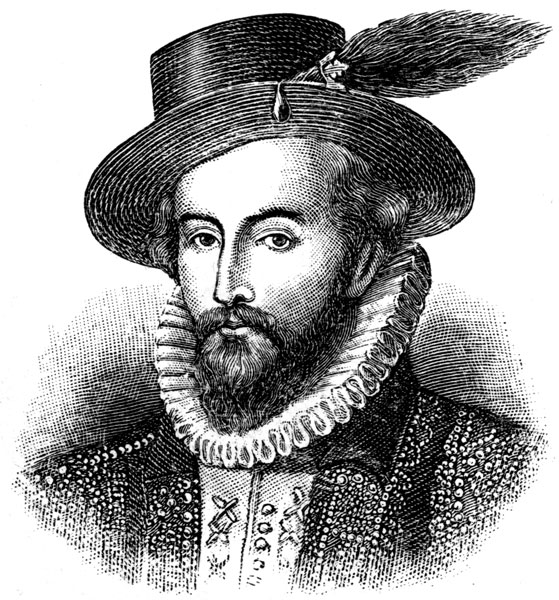
- Sir Walter Raleigh
Nashe tells us that Raleigh would…
sonnet a whole quire of paper in praise of Lady Swine-Snout, his yellow-faced Mistress, and wear a feather of her rain-beaten fan for a favour, like a fore-horse…
In older productions of Twelfth Night, Malvolio often wore ‘a tall hat with a large feather’ in the famous ‘letter-scene’ to make sense of Fabian’s line…
O peace, Contemplation makes a rare turkey-cock of him: how he jets under his advanced plumes….
6. Raleigh wore white ribbons in his shoes….
It’s difficult to tell who is more absurd, Malovolio with his yellow stockings and cross-gartering….

rSir or Sir Walter with his shoes studded with gems and white ribbons…
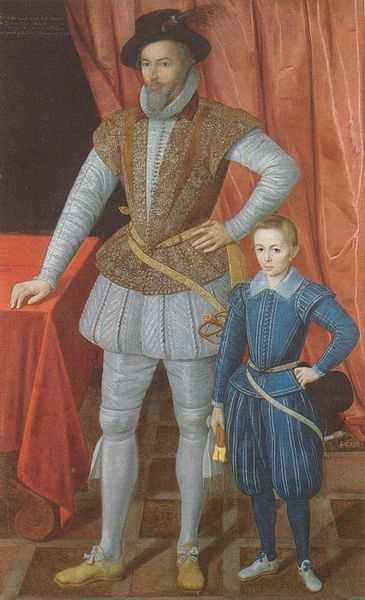
- Raleigh and Son…

Sir Walter Raleigh
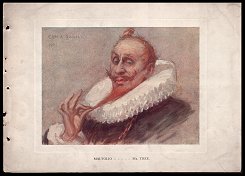
Beerbohm Tree as Malvolio
●

Philip II's flag
borne along on a sumptuous chariot formed like a throne, with four pillars supporting a canopy, and drawn by white horses. The streets through which she passed were hung with blue cloth, in honour doubtless of the navy, and the colours taken from the enemy were borne in triumph…
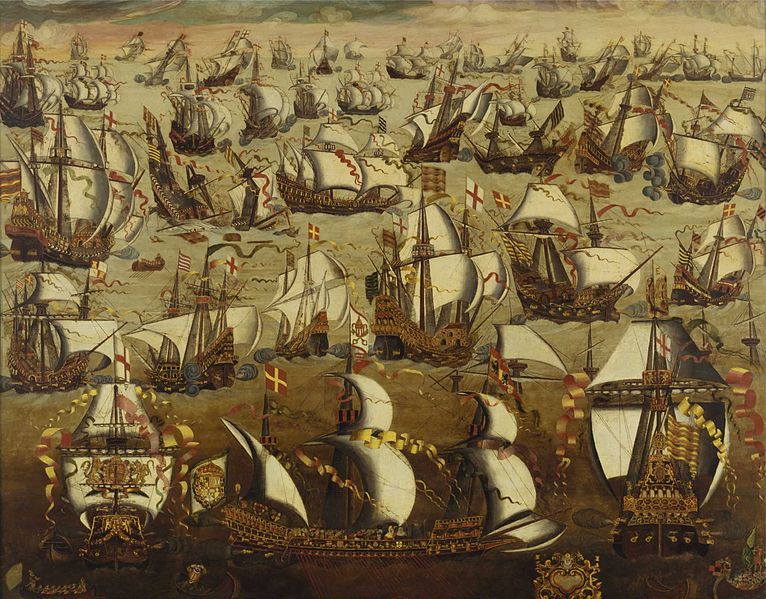
The Armada off Gravelines. Note the yellow streamers from the Spanish ships.
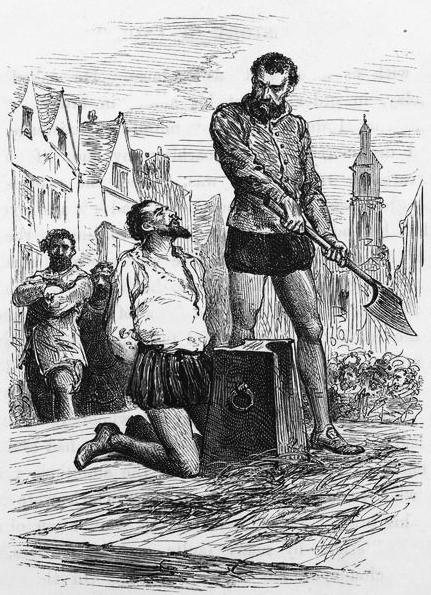
Thou [Raleigh]art the greatest Lucifer that ever lived. Nay I will prove all. Thou art a monster. Thou hast an English face but a Spanish heart.
I’ll be revenged on the whole pack of you
Twelfth Night Decoded: Part Three. Sir Toby Belch as George, Lord Hunsdon.
Posted in Uncategorized on June 18, 2011| 2 Comments »
(Note: It is best to read The Introduction and Parts One and Two first)
CAKES AND ALE…

Lionel Brough as Sir Toby in Tree's 1901 Production of 'Twelfth Night'.
Twelfth Night , in a version similar to the one that has come down to us, was first performed before Queen Elizabeth, and her guest, Don Virginio Orsino, Duke of Bracciano, at The Royal Palace of Whitehall, on 6th January, 1601.
On 10th May that year, the Privy Council reported that:
Certain players at the Curtain in Moorfields do represent in their interlude the persons of some gentlemen of good desert and quality that are yet alive, under obscure manner but yet in such sort that all the hearers may take notice both of the matter and the persons that are meant thereby. All are to be examined….
If the Privy Council had ‘examined’ (i.e tortured) The Lord Chamberlain’s Men to find out whom they were satirising in Twelfth Night, what would they have said?
What ‘matter and person’ did hey have in mind with, say….
Sir Toby Belch…

Richard James Lane as Sir Toby Belch
Sir Toby, as Brothers and Sister of The Code will well know, is the Countess Olivia’s drunken, raucous, but very loving uncle.
Like Feste, he thinks it’s wrong for Olivia to persist in her mourning for her brother. He believes life is to be celebrated – and does so every night of the week.
And sometimes during the day as well.
This drives his young niece, the Countess Olivia, to distraction….
His main enemy, though, is the Puritan steward, Malvolio…
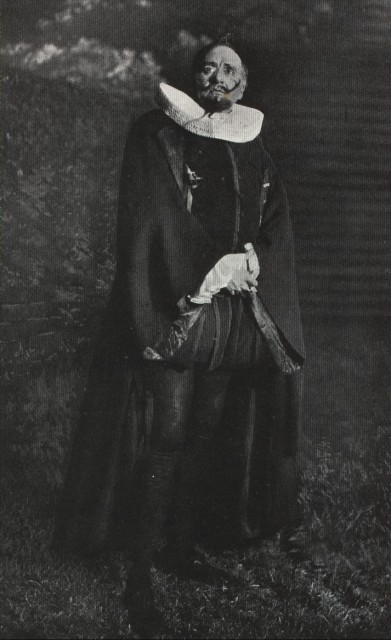
Beerbohm Tree as Malvolio
….who hates all fun and laughter, wants complete control of the household and lusts after Belch’s niece, Olivia.
Matters come to a head with a drunken sing-song in the middle of the night with Toby, Feste and the ‘foolish knight’ Sir Andrew Aguecheek.
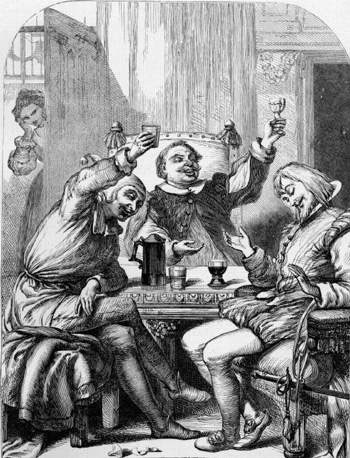
Watch out, lads! Malvolio's on his way....
Malvolio arrives with the message from Countess Olivia that, unless Sir Toby mends his ways he must leave the household…
Sir Toby’s instinct is to challenge Malvolio to a duel (or rather to get Sir Andrew to challenge him). But Olivia’s witty waiting-gentlewoman, Maria, convinces Sir Toby to play a joke on him instead…

William Evans Burton and his wife as Sir Toby and Maria
He is prepared to risk his position in Olivia’s household to expose the truth about Malvolio and does not hesitate to draw his sword on Sebastian, a much younger man.
But, most important, he so relishes the genius of Maria that during the course of the play he falls deeply in love with her and finally marries her…
●
If The Shakespeare Code is right and we take Countess Olivia to represent Queen Elizabeth, then…
IT TAKES NO ‘SHERLOCK HOLMES’ TO DE-CODE SIR TOBY BELCH…
Queen Elizabeth’s only remaining family were the Careys – descended from her mother Anne Boleyn’s sister, Mary, now famously known as:
the Other Boleyn Girl.
But rumour had it that Mary’s son, Henry Carey, was the bastard son of Queen Elizabeth’s father, King Henry VIII. This would explain a lot…

- Henry Carey, first Lord Hunsdon, bastard son of Henry VIII?
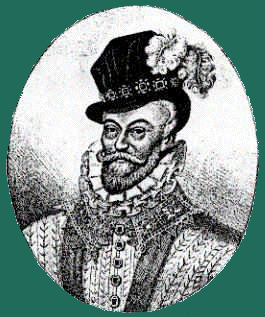
Henry also supported his own company of players, ‘Lord Hundson’s Men’. Later, when he was appointed Lord Chamberlain, these actors became known as the ‘The Lord Chamberlain’s Men’, one of whom was Shakespeare…
Thomas Nashe wrote that the actors felt ‘settled’ under Henry’s patronage. He gave them freedom to be critical of the government and even allowed them to stage Richard II – a play he knew the Queen would interpret as an attack on herself.
He even went to so far as to write…
I was never one of Richard II’s men…’
… meaning, of course, Elizabeth.
For, though he was ‘family’ he wasn’t close to her. He was a ‘sword and buckler man’, a plain-speaking, no-nonsense soldier who earned the affection of his troops and who took more pleasure in hanging ‘Scotch thieves’ than he did in hunting or hawking.
However, during the Rebellion of the Roman Catholic Northern Lords, he was prepared to risk his life to protect his kinswoman, the Queen.
The great Regency historian, Lucy Aikin, records how, even on his death-bed, Henry was prepared to tell Elizabeth where to get off. Hearing of his illness, she…
finally resolved to grant him the title of Earl of Wiltshire[and making] him a gracious visit, caused the patent and robes of an Earl to be brought and laid upon his bed; but the old man, preserving to the last the blunt honesty of his character, declared, that if her majesty had accounted him unworthy of that honour while living he accounted himself unworthy of it now he was dying, and with this refusal he expired…
But the FIRST Lord Hunsdon was not the direct model for Sir Toby. It was his son, the SECOND Lord Hunsdon, Sir George Carey, a true chip off the old block…

- The second Lord Hunsdon, George Carey

Sir George, like his father, was a gallant soldier who had been knighted, by the Earl of Sussex, on the field of battle.
In 1583 he was given the stewardship of Carisbrooke Castle on the Isle of Wight, a few miles from Titchfield.
It was here that Sir George began to morph into Sir Toby…
He quarrelled so badly with a local gentleman that it reached the ears of the Privy Council and, as Sir John Oglander noted:
any attorney coming to settle in the island was, by his [Sir George’s]command with a pound of candles hanging at his breech lighted, with bells about his legs, hunted out of the island…
Sir George entertained sumptuously with, as Oglander again noted:
the best hospitality at the castle as ever was or will be.
He protected and supported Thomas Nashe when he was in trouble with the Privy Council and (as The Shakespeare Code has discovered) even sent some of his ‘precious’ Paracelsean medicine to a simple husbandmen in Titchfield who was ill. (See ‘The Strange Case of Mr. Apis Lapis’).
In 1593 a ‘storm of discord’ broke out between Sir George and Sir Robert Cecil – one of the most powerful of Elizabeth’s courtiers and an ally of Sir Walter Raleigh.
In 1596, when his father died, Sir George became the second Lord Hunsdon, but did not immediately become the Lord Chamberlain. This position fell to William Brooke, 10th Lord Cobham.
This was disaster for the first Lord Hunsdon’s actors. Through Shakespeare they were closely associated with the Earl of Southampton and through him with the Earl of Essex.
Essex and the Brooke family were mortal enemies!
Essex called William Brooke’s son, Henry, The Sycophant because he despised the way he crept around Queen Elizabeth.

William Brooke, 10th Lord Cobham, with his family.
Sir George leapt to the defence of the endangered actors. He revived the title ‘Lord Hunsdon’s Men’ and supported them in a tour of Kent. But ‘The Lord Chamberlain’s Men’ were still appearing at the Court, heavily overseen by Brooke…
So what did Shakespeare do?
With the full support of Sir George, he wrote the Falstaff plays!

As Brothers and Sisters of The Code will know, the fat knight was first named ‘Sir John Oldcastle’,
This was one of Brooke’s most honoured ancestors. He had been a Lollard – a heretic in the days of King Henry V but now, in Protestant Elizabeth’s reign, a hero and martyr. Shakespeare had turned him into a liar, coward and thief…
The furious Brooke family immediately demanded that the character be re-named – and commisioned their own hagiographic Oldcastle play.
In March, 1597, William Brooke died. The position of Lord Chamberlain passed back to theCarey family…
So Sir George was now in control of Court entertainment.
He immediately commissioned his men to write and perform The Merry Wives of Windsor….
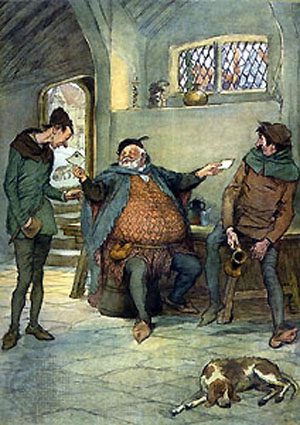
The first performance, like Twelfth Night, was given, (amidst much feasting) at Sir George’s expense, in the Royal Palace in Whitehall to celebrate his investiture as a Knight of the Garter.
Shakespeare still wouldn’t let go. He took the opportunity to satirise a living Cobham instead of a dead one!
In the play, Ford, in disguise, describes how:
I have long loved her and, I protest to you, bestowed much on her; followed her with a doting observance; engrossed opportunities to meet her; fee’d everyslight occasion that could but niggardly give me sight of her; not only bought many presents to give her, but have given largely to many to know what she would be given: briefly, I have pursued her as love hath pursued me; which hath been on the wing of all occasions…
This sycophantic behaviour would have reminded everyone in the audience of The Sycophant himself, Henry Brooke, who would lavishly entertain the Queen at his Blackfriars’ House.
But for anyone in the audience who was a bit slow on the uptake, Ford calls himself ‘Brook’.
(Again, Shakespeare was asked to change the name….)
The play not only pleased Sir George, it pleased ‘cousin’ Elizabeth as well. According to Nicholas Rowe, The Queen had wanted to see the fat knight fall in love….
But two years later, Sir George (like Sir Toby and his niece Olivia) was to have a major bust up with the Queen…
Lord Semple of Beltreis,the Scottish Ambassador in London, wrote to to James VI of Scotland:
At her Majesty’s [Elizabeth’s] returning from Hampton Court, the day being passing foul, she would (as her custom is) go on horseback, although she is scarce able to sit upright, and my Lord Hunsdon [Sir George Carey] said, ‘It was not meet for one of her Majesty’s years to ride in such a storm.’ She answered, in great anger, ‘My years! Maids, to your horses quickly’; and so she rode all the way, not vouchsafing any gracious countenance to him for two days.
Lord Semple is too discreet to mention how much the second Lord Hunsdon had to drink that day…
The same year, though, Sir George leapt to the protection of Elizabeth. He warned the Privy Council that the Earl of Essex, with an army in Ireland, was a threat to the Queen’s safety. Sir George was right: Essex was having secret talks with the rebel Tyrone who was tempting him to sieze the English Crown…
So, two years later, when Sir George asked his company to prepare another production for the Royal Palace at Whitehall he had no intention of provoking another quarrel with Elizabeth.
He requested that the entertainment be…
of a subject that may be most pleasing to her Majesty
What he’s really saying is:
Flatter the old boot…
He needed to appease Elizabeth as much as Shakespeare and Nashe did.
By 1601, Sir George’s life of excess was taking its toll. Sir George had often taken the waters at Bath, where he had entertained the Queen, but now his sister was secretly buying him mercury cures for his venereal disease…
If the King of Scotland knew all about Sir George’s quarrel with the Queen, we can be sure the coterie, first night audience to Twelfth Night would have known about it as well. They would also have been primed by a scurrilous ditty going round the court about Sir George’s palsey, fornication, syphilis, mercury posioning, hair loss and stupidity…
Chamberlain, chamberlain,
He’s of her grace’s kin [Queen Elizabeth’s]
Fool hath he ever been
With his Joan silverpin (prostitute)
She makes his cockscombe thin
And quake in every limb
Quicksilver is in his head
But his wit’s dull as lead..
In Twelfth Night, Sir Toby gets into all the same drunken scrapes and anarchic practical jokes that Sir George got into – and both men hate pompous authority. When, after getting into a fight with her lover ‘Caesario’ (a real boy this time!) the Countess Olivia finally screams at Belch:
……Ungracious wretch
Fit for the mountains and the barb’rous caves
Where manner ne’er were preach’d! Out of my sight!
The audience would have been reminded of Elizabeth’s huge row with her cousin Sir George.
They might even have been reminded of the ‘barb’rous caves’ of the Isle of Wight…

The Countess Olivia forgives Sir Toby because he is ‘family‘
Also, because he has a big heart…
Throughout the play, Sir Toby, for all his faults, is redeemed by his love for his ‘metal of India’, his ‘excellent devil of wit’, Maria, whom he finally marries.
Sir George was lucky enough to have his own ‘witty piece of Eve’s flesh’, his wife Elizabeth nee Spencer of Althorp (the same family as the late Princess Diana).
Elizabeth was a great patron of the arts, translated Petrach, and appears to have been an author in her own right. Edmund Spenser writes coded praise of her as Phyllis in Colin Clout comes Home:
Phyllis the flower of rare perfection
Fair spreading forth her leaves [her compositions] with fresh delight
That with their beauty’s amorous reflexion
Bereave of sense each rash beholder’s sight..
She seems to have loved the old reprobate, Sir George, and he seems to have worshipped her as much as Sir Toby ever did Maria…
When, a couple of years after Twelfth Night, Sir George finally died, he had described his wife in his will as..
‘the sweetest companion that ever man hath found in this life….’
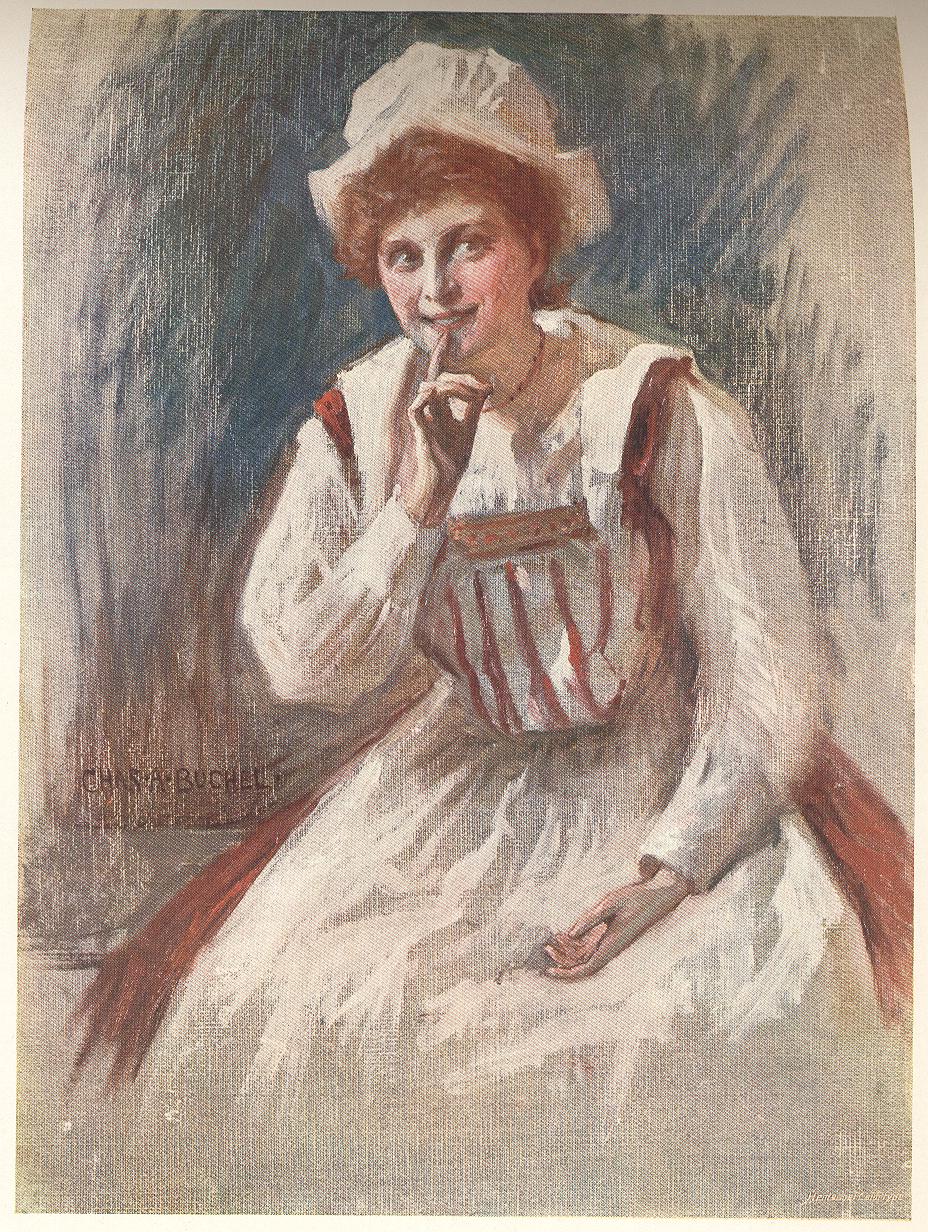
Zeffie Tilbury in Tree's 1901 Production of 'Twelfth Night'.
(It’s best to read Part Four now.)
Twelfth Night Decoded: Introduction.
Posted in Uncategorized on June 15, 2011| Leave a Comment »
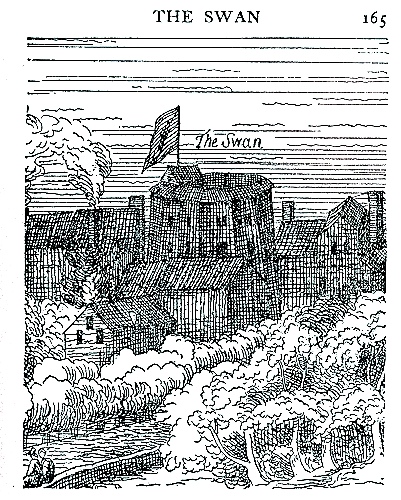
The Swan Theatre in Paris Gardens
In 1596 a Dutch tourist, Johannes de Witt, travelled to London and wrote a Latin account, now lost, of his journey.
One of the things de Witt saw was the splendid new Swan Theatre in the Paris Gardens. He made his own sketch of it, and, though the original (like the book) was lost, Arendt van Buchell had made a copy of it.
It depicts the best theatre in London, one that held 3,000 spectators and boasted columns so beautifully painted one would swear they were made of marble, just like the Theatre at Rome…
De Witt also drew a scene from one of the productions. It is clearly the moment in Twelfth Night when Malvolio shows off his cross-gartering to the Countess Olivia and her waiting-woman, Maria….
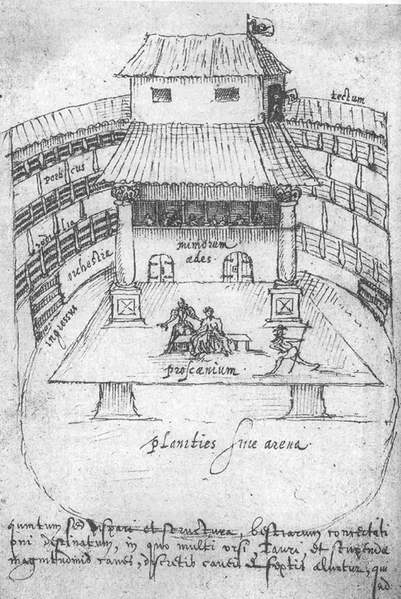
Swan Theatre
Except it cannot be Twelfth Night.
Shakespeare hadn’t written it in 1596.
Or had he…?
The Shakespeare Code believes it has solved this puzzle.
The Twelfth Night that has come down to us from the 1623 First Folio is not the original version played by William Shakespeare’s company.
The original was the play at the Swan which de Witt sketched.
It was called What You Will – the sub-title to Twelfth Night. The only sub-title in the whole of Shakespeare…
How the play ended up at the Paris Gardens is a story in itself….
●
What You Will started life as an Italian play called Gl’Ingannati (The Deceived Ones) written and presented in Siena in 1531 by the Academy of the Intronati.
In 1543, one C. Estienne translated the work into French as Le Sacrifice.
In 1546/7, The Fellows and Scholars of Queen’s College, Cambridge translated the play into Latin and performed it at the College as Laelia Modenas. (Laelia is the original name of Viola).
On 1st March, 1595, two Fellows of Queens’ (George Meriton and George Mountaine) produced a new version of the play, probably in English, for the visit to the College of Robert Devereux, second Earl of Essex . He stayed at the President’s Lodge, one of the most beautiful buildings in the world…
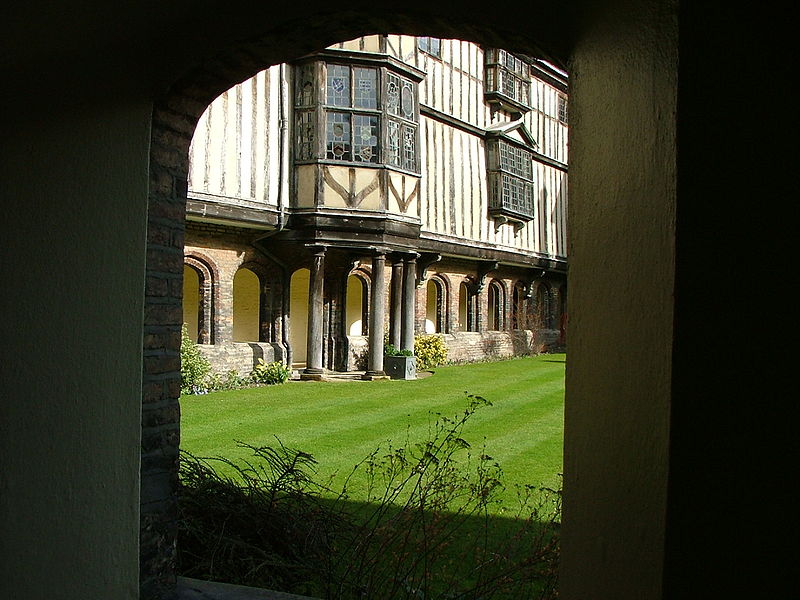
Essex stayed here in 1595
Laelia was performed ‘after dinner’ [i.e. our ‘lunch’] ‘the day being turned into night..’ [i.e. a dark, wet, March, fenlands afternoon…]
John Weever, a Queens’ man (and one of Shakespeare’s first champions) wrote in his book of Epigrams that:
‘far-famed’ Laelia [had made Queens’] the ‘Queen of Colleges’…
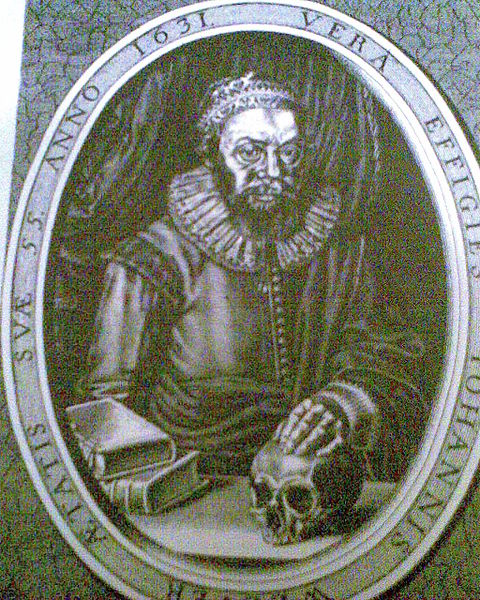
John Weever, Shakespeare fan, with hand on skull...
The Shakespeare Code believes that Shakespeare would have seen this College production for the following reasons:
1. He was part of the Essex/Southampton entourage, acting sometimes as amanuensis and secretary to both Earls.
2. He was starting, especially through his narrative poetry, to be famous in the two Universities.
3. Just two Epigrams after his Epigram on Laelia, Weever writes a Sonnet in praise of ‘Honey-tongued Shakespeare’ (iv.22).
4. The book of Epigrams itself was dedicated to ‘the Right Worshipful and worthy honoured gentleman, Richard Houghton of Houghton Tower’ – the same Roman Catholic Houghton family that had sheltered Papist Shakespeare in Lancashire when he was a teenager.
Weever clearly knew Shakespeare both as a writer and a man. So Shakespeare (through Weever) had his own strong links with Queens’ College.
Thomas Nashe would also have been at the performance because:
a. He was a Cambridge man.
b. He was Shakespeare’s collaborator.
c. He would go anywhere for a free lunch.
The Shakespeare Code believes that Shakespeare and Nashe re-wrote the Laelia play, named it What You Will and took it to the new Swan Theatre in London.
The reasons for this belief are as follows:
a. The Weever Epigram placed directly after the Sonnet in praise of Shakespeare mentions the new ‘Thames’s Swan’ [theatre] which Weever claims has eclipsed the Theatre at Rome.
b. Shakespeare’s habit (and that of his company) was to ‘utilise’ the work of university scholars.
See…
i. ‘Robert Greene’s’ Groats-worth of Wit ‘upstart crow’ pamphlet [penned, in reality, by Thomas Nashe] which accuses Shakespeare of plagiarising the writings of University Scholars i.e. Nashe himself.
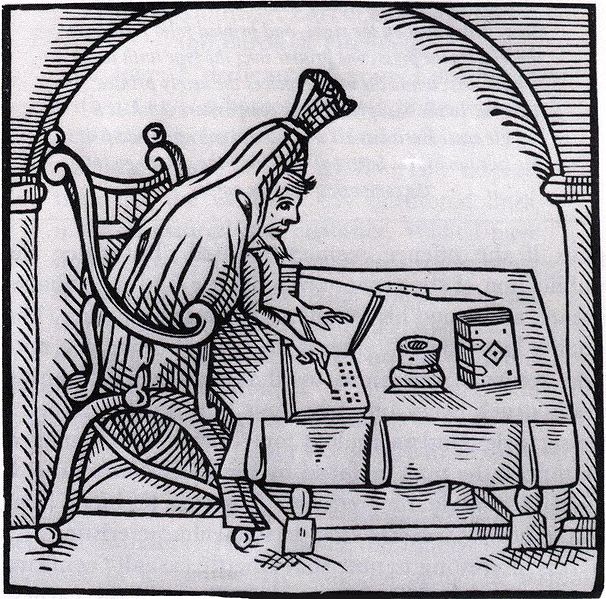
'Robert Greene' i.e. Thomas Nashe, penning his attack on Shakespeare's plagiarism in his shroud...
ii. The Parnassus Plays, performed at St. John’s College, Cambridge Christmas/New Year, 1601/2 which have a scene showing Burbage and Kemp plotting to employ Cambridge students as writers ‘at a low rate’.
c. Shakespeare’s company was, at the time, playing at the Swan Theatre in the Paris Gardens.
The Code believes this because:
(i) Shakespeare’s name, in 1596, was closely and indeed criminally attached to that of the crook Francis Langley, who built the Swan Theatre and owned the Paris Gradens.
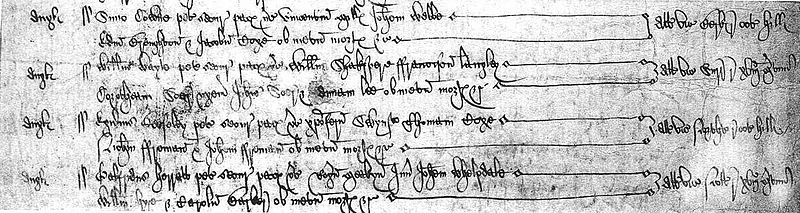
1596 restraining order issued to Shakespeare and Langley to 'keep the peace'.
(ii) Thomas Lodge, in 1596, in Wit’s Miserie writes about..
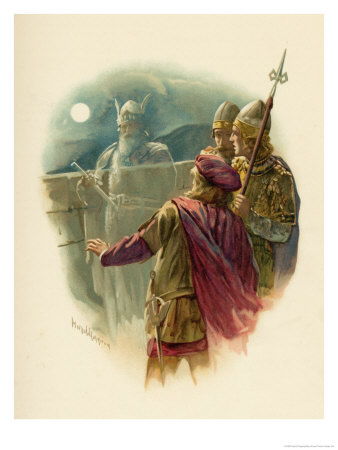
the visard of the ghost which cried so miserably at the Theatre like an oyster-wife, Hamlet, Revenge..
(iii) In 1601/2, Thomas Dekker (in Satiro-Mastix ) has the character Tucca say:
My name’s ‘Hamlet, revenge’. Thou hast been at Paris Garden, hast thou not?
The Ghost of Hamlet's father.
(iv) In 1596, Henry Carey, the first Lord Hunsdon (and Lord Chamberlain) died. William Brooke, 10th Lord Cobham became the Lord Chamberlain in his place.
The Lord Chamberlain was automatically in charge of The Lord Chamberlain’s Men of which Shakespeare was a member. And the Lord Chamberlain was also automatically in charge of the entertainment at Court.
Brooke was the mortal enemy of the Earl of Essex – and consequently a mortal enemy of the Earl of Southampton and Shakespeare.
Sir George Carey, the first Lord Hunsdon’s son, leapt in to protect the group, as his father had done.
He’d had a furious row with Sir Robert Cecil in 1593 and hated the ‘Cecil faction’ at the Court of which Brooke was a leading member.
As ‘Lord Hunsdon’s Men’ (the name they had used before the first Lord Hunsdon, Sir George’s father, had become Lord Chamberlain) they toured Kent.
They also played a season at the Swan to assert their independence of Brooke and the Court. They even provoked Brooke’s enmity by staging the ‘Falstaff’ plays.
The fat knight was originally called Sir John Oldcastle, one of Brooke’s revered ancestors…
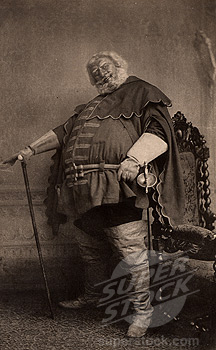
Sir John - Falstaff or Oldcastle?
Luckily for Shakespeare – and for British drama – Brooke died the following year (1597) and Sir George Carey, second Lord Hunsdon, became the Lord Chamberlain…
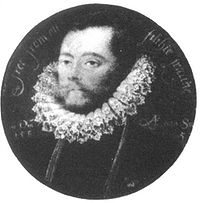
Sir George Carey, second Lord Hunsdon and bon viveur.
●
On Christmas Day, 1600, the Court learnt that Don Virginio Orsino, Duke of Bracciano was going to visit England. He would be at the Court for the Twelfth Night celebrations on 6 Janaury, 1601.
Sir George Carey realised there was no time to produce a completely new play for the occasion, so he asked his acting company to make, from their existing repertoire…
a choice of play that shall be furnished with rich apparel, have great variety and change of music and dances, and of a subject that may be most pleasing to Her Majesty…
So, as usual, William Shakespeare and his team (i.e. Thomas Nashe) tarted up an old play….
But, in the same way that Hamlet puts a political spin on The Mousetrap, so did Shakespeare and Nashe when they turned What you Will into Twelfth Night…
(It’s best to read Part One now.)
Twelfth Night Decoded: Part One. Olivia as Queen Elizabeth.
Posted in Uncategorized on June 15, 2011| Leave a Comment »
(It is best to read The Introduction first)
The French Connection.
The Earl of Essex was certainly not invited to the new vesion of What You Will ( Twelfth Night) played before Queen Elizabeth on Twelfth Night in 1601. Her former lover was sick, impoverished and in disgrace…
He had returned from leading the Irish Campaign without the Queen’s permission, and had burst into her morning chamber before she had time to put on her make-up and wig…
Essex’s many enemies at Court, especially Sir Walter Raleigh (‘The Fox’) and Sir Robert Cecil (‘The Ape’) had used this incident to poison the Queen’s mind against her favourite. She took away his ‘farm’ on sweet wines, his main source of income, and refused to see him.
Essex’s entourage was split as to what to do next.
Half favoured rebellion:
Stir up the citizens of London, march on Whitehall, kill Cecil and Raleigh and force the Queen to name King James VI of Scotland as her successor!!!
Half favoured appeaesment:
Fall on your knees, lads, and beg Elizabeth’s forgiveness…
William Shakespeare favoured appeasement. He knew his life was in danger. His play, The Life and Death of King Richard II – a coded attack on Elizabeth’s waywardness and favouritism – was being played as a piece of ‘agit-prop’ in the streets and houses of London.
If Essex, as an aristocrat, were to have his head cut off, there was a good chance Shakespeare, as a commoner, would be hanged, drawn and quartered.
With the re-hashing of What You Will (more frocks! more dancing!) came the chance for flattery…
Her Majesty’s guest, Don Virginio Orsino, Duke of Bracciano, was ‘honoured’ by having the leading character, Orsino (sexy, handsome, powerful) named after him.
The Shakespeare Code believes that Elizabeth was also ‘honoured’ by having the character Olivia, (sexy, beautiful, powerful) embody all of the Queen’s very best aspects…

Olivia 'unveiling'
When Viola says to Olivia…
I bring no overture of war, no taxation of homage; I hold the olive in my hand: my words are full of peace as matter…
….it is Shakespeare addressing Elizabeth herself .
When Shakespeare re-creates Olivia, he paints a portrait of her bravery, self-control, femininity, vulnerability and sense of fun.
Twenty years previously, Catherine de’ Medici had suggested a marriage between her son, the Duc d’Alencon and the much older Queen Elizabeth. The dashing Jean de Simier….

- Simier – ‘The Monkey’
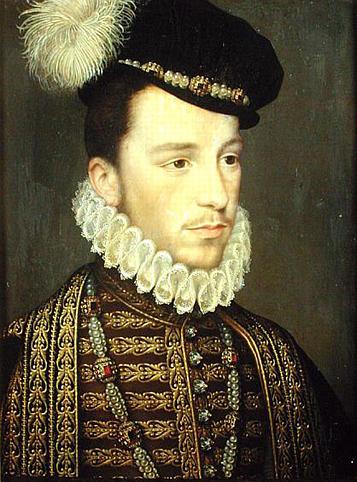
a choice courtier, a man thoroughly versed in love-fancies, pleasant conceits and court dalliances…
….was sent to plead Alencon’s love-cause, and Elizabeth had fallen head over heels in love with him. As Edmund Bohun wrote…
The Queen danced often then, and omitted no sort of recreation, pleasant conversation, or variety of delights for his [Simier’s] satisfaction: at the same time the plenty of good dishes, pleasant wines, fragrant ointments and perfumes, dances and masques, and variety of rich attires, were all taken up, and used, to show him how much he was honoured..
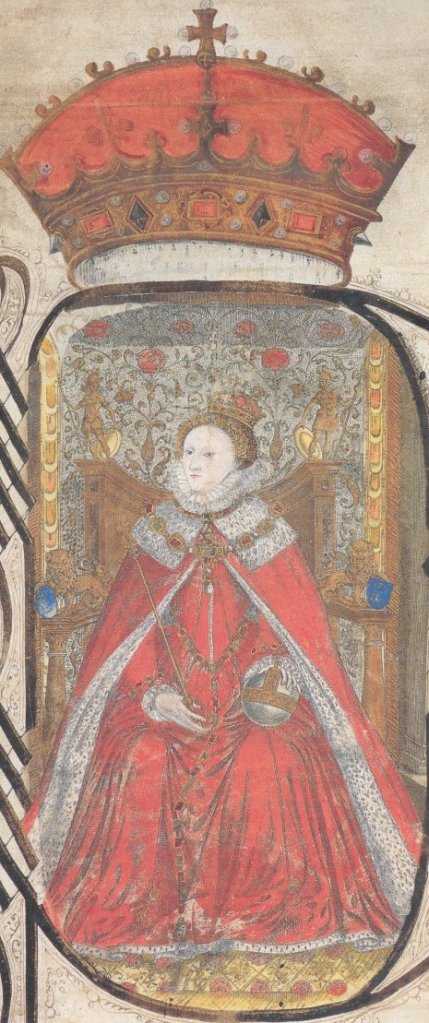
- Elizabeth, (45 years) painted at the time of the French marriage proposal.
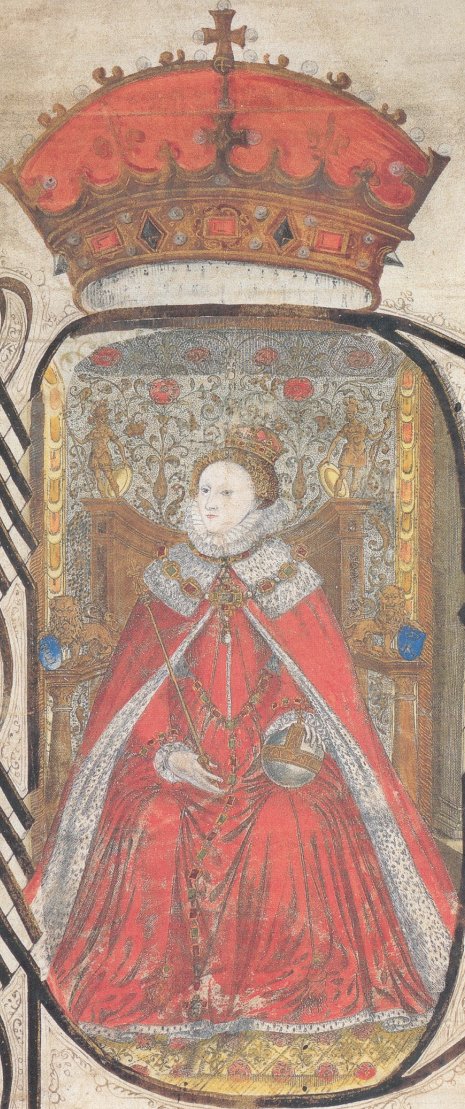
Elizabeth was even rumoured to be secretly sleeping with her ‘Monkey’ in the bedroom of one of her Ladies-in-Waiting….
‘The Bear’ (Robert Dudley, the Earl of Leicester, Elizabeth’s old lover) became so jealous of Simier he claimed the Frenchman was using magic and love-potions on the forty-five year old Queen. He even tried to assassinate him..
When Alencon himself arrived things got even worse….or better!
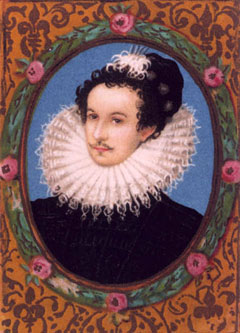
- Alencon – ‘The Frog’
One day the Queen greeted her five-foot high, pock-marked, but very sexy ‘Frog’, at the door of her own bedchamber, dressed only in a nightgown…
A three-hour ‘private audience’ ensued.
After which she gave the Frog a ring….
In Twelfth Night, the love-sick Orsino sends his page, ‘Caesario’ (Viola dressed as a boy) t0 plead his love-cause to Olivia, just as the Monkey had pleaded for the Frog to Queen Elizabeth…
And Olivia gives ‘Caesario’ a ring as a love token, just as Elizabeth gave one to the Frog…
But, again just like Olivia in the play, Elizabeth did not want to ‘match above her degree’.
So, like ‘Caesario’s’ supposed ‘dead sister’ in the play, Queen Elizabeth…
never told her love,
But let concealment like a worm i’ th’ bud
Feed on her damask cheek; she pin’d in thought,
And with a green and yellow melancholy
She sat like Patience on a monumnet,
Smiling at grief….
After Alencon’s departure in 1582, the Queen expressed identical feelings in an identical way in a beautiful poem she wrote…
I grieve and do not show my discontent;
I love, and yet am forced to seem to hate;
I do, yet dare not say I ever meant;
I seem stark mute, but inwardly do prate.
I am and not; I freeze and yet am burned,
Since from myself, another self I turned.
My care is like my shadow in the Sun –
Follows me flying, flies when I pursue it,
Stands, and lies by me, doth what I have done;
His too familiar care doth make me rue it.
No means I find to rid him from my breast,
Till by the end of things it be suppressed.
Some gentler passion slide into my mind,
For I am soft and made of melting snow;
Or be more cruel love, and so be kind.
Let me or float or sink, be high or low;
Or let me live with some more sweet content,
Or die, and so forget what love e’er meant
When, two years later, Elizabeth learnt that Alencon had died, she dressed in black and wept openly for three weeks. Each year she commemorated the day of his death.
Twelfth Night celebrates this ‘gentle’ quality in the Queen….

- Elizabeth with olive branch…

As ‘Caesario’ says of Olivia (and herself):
How easy is it for the proper false
In women’s waxen forms to set their hearts!
Alas, our frailty is the cause, not we,
For such as we are made of, such we be…
This version of the play empathises completely with the pressures on Olivia. She was not born to Stewardship and has to take over the running of the household after the deaths of her dearly beloved father and brother.
Similarly, Elizabeth was not born to be Queen. She only took over the running of England after the deaths of her own dearly beloved father and brother, Kings Henry VIII and Edward VI. (And Bloody Mary, of course. But she’s the monarch nobody mentioned….)
Olivia, one of Orsino’s servants tells us…
will veiled walk
And water once a day her chamber round
With eye-offending brine…
just as Elizabeth did after the death of Alencon….
ACKNOWLEDGEMENT
The Shakespeare Code has discovered that the great Canadian researcher, scholar, Quaker and First World War pacifist (though he fought in the Second) Dr. Leslie Hotson, takes exactly this view of Olivia in his ground-breaking, 1954 book, The First Night of Twelfth Night.
He even quotes the same poem by Queen Elizabeth…
The Code is always delighted to acknowledge pre-emption.
Especially from a Cambridge man.
(Hotson was a Fellow of King’s College from 1954-60).
It’s best to read Part Two now.
And: Viola’s ‘Willow Cabin’ speech Decoded.
Twelfth Night Decoded: Part Two. Feste the Clown as Thomas Nashe.
Posted in Uncategorized on June 11, 2011| 1 Comment »
It’s best to read The Introduction and Part One first.
SEND IN THE CLOWNS…..
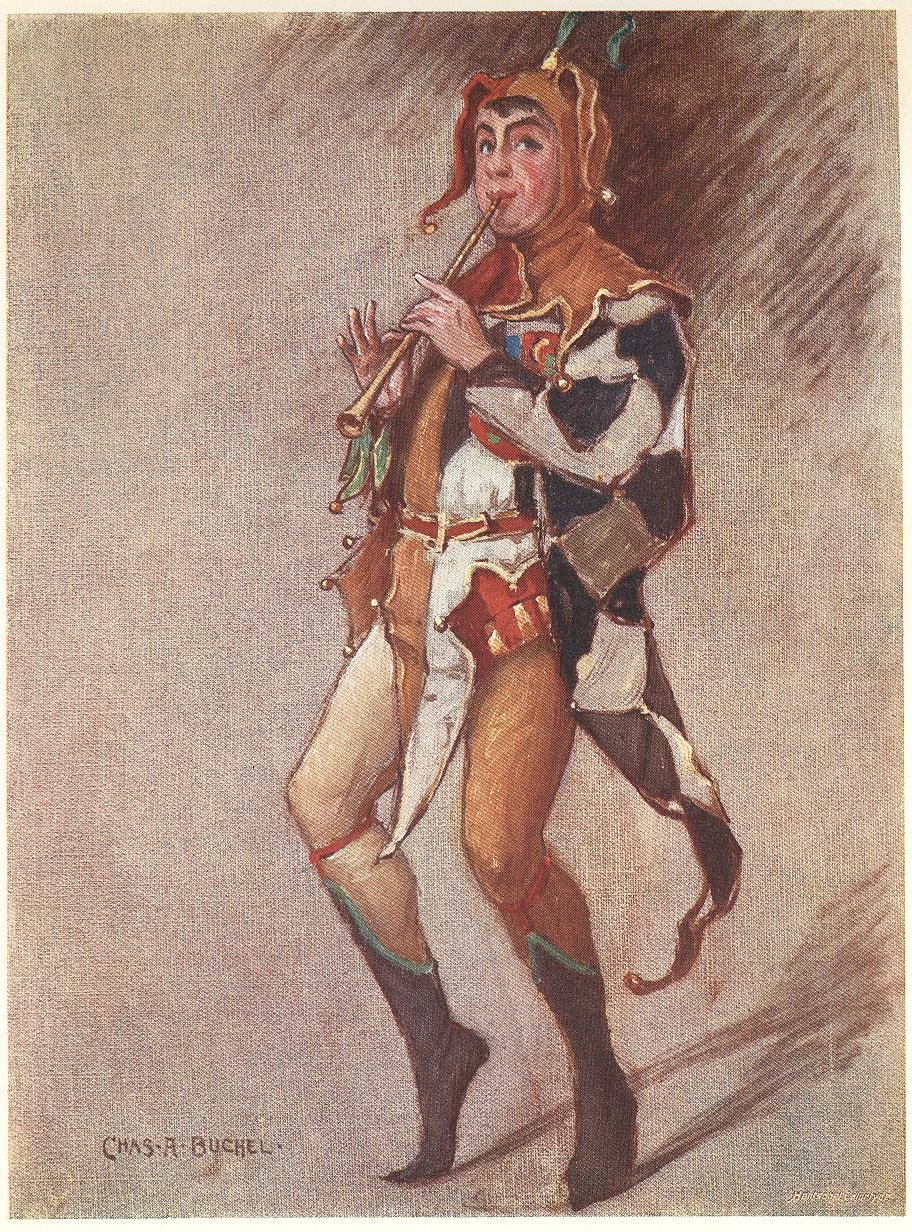
Courtice Pounds as Feste in Tree’s 1901 Production of ‘Twelfth Night’.
At the beginning of Twelfth Night we learn that the jester, Feste, has been long absent from Olivia’s household. The reason for this is clear.
Countess Olivia intends to grieve for the death of her brother for the next seven years. A household in mourning is a difficult place for a clown…

A Case of Jester Stress…
Also Olivia’s steward, the Puritan Malvolio, hates Feste and wants to get rid of him….
Olivia is furious with Feste when he does return, but gradually warms to his wit. Feste is trying to ‘heal’ his mistress’s melancholy, persuade her to abandon her mourning and embrace the joys of life again.
●
Queen Elizabeth had a jester whom she adored, and who died (like her lover, Robert Dudley, the Earl of Leicester) in Armada year (1588). His name was Richard Tarleton….

Thomas Fuller wrote of him:
When Queen Elizabeth was out of good humour, he could un-dumpish her at his pleasure. Her highest favourites would, in some cases, go to Tarleton before they would go to the Queen, and he was their usher to prepare their advantageous access unto her. In a word, he told the Queen more of her faults than most of her chaplains, and cured her melancholy better than all of her physicians…
Sometimes Tarleton made Elizabeth laugh so much she begged him to stop…
Elizabeth’s father, Henry VIII, had a favourite jester as well…
When, in the play, Orsino’s servant, Curio describes Feste as:
a fool that the lady Olivia’s father took much delight it…
– the whole audience would have thought of King Henry’s jester, Will Sommers. He was the only man who could make the King smile when he was in agony from a chronic ulcer on his leg…
(Even if he did once describe the little Princess Elizabeth as a ‘bastard‘)

Will Sommers
Thomas Nashe, writer and pamphleteer, had played the part of Will Sommers in his entertainment, Summer’s Last Will and Testament, performed before the Queen in 1592 at the Archbishop of Canterbury’s summer palace at Croydon.
It is The Shakespeare Code’s belief that Nashe went on to play the part of another jester, that of Feste, in the Twelfth Night entertainment for Elizabeth in 1601.

- Nashe, Sommers, Feste..
Will Sommers and Feste have many similarities. Both are ‘stand-up’ comics whose prime purpose is to make the audience laugh: but both have a melancholy side and sing sad songs about death…
Will Sommers, to his own lute accampaniment, performs the beautiful…
Adieu, farewell earth’s bliss
The world uncertain is
Fond are life’s lustful joys
Death proves them all but toys,
None from his darts can fly:
I am sick, I must die,
Lord have mercy on us…
And Feste sings (to Count Orsino) the equally beautiful:
Come away, come away death,
And in sad cypress let me be laid.
Fie away, fie away breath,
I am slain by a fair cruel maid….
Ever economical, Nashe converts a sublime lyric he wrote for Sommers….
Beauty is but a flower
Which wrinkles will devour…
…into a crude joke for Feste…
As there is no true cuckold but calamity, so beauty’s a flower.
Feste even makes a coded reference to Henry VIII’s jester. When, asked by Maria what he will do if Olivia throws him out, he replies:
for turning away, let summer bear it out…
[Malvolio employs a similar ‘ jester- joke’ when he claims to have seen Feste…
put down by an ordinary [i.e.tavern] fool that has no more brain than a stone…
‘Stone’ was the name of another famous Elizabethan jester mentioned by Ben Jonson in Volpone]
But there is an even greater similarity than the one between Feste and Sommers.
It is the similarity between Feste and Nashe himself!
Both love to invent extravagant words, phrases and names.
Gabriel Harvey, Nashe’s sworn enemy….

Ajax = a jakes…
condemned this habit in Nashe as ‘foolerism’.
He described it as a…
fantastical emulation…to presume to forge a misshapen rabblement of absurd and ridiculous words…
Feste is certainly guilty of ‘foolerism’ when he speaks to the ‘foolish knight’ Sir Andrew Aguecheek about…
Pigrogromitus, of the Vapians passing the equinoctial of Quebus…
And the Twelfth Night text is littered with Nashe’s favourite words, ‘sheep biter’ ,’whirligig’ ‘Myrmidon’ and ‘herring’…
…Nashe wrote a whole play in praise of the red herring!!!
ACKNOWLEDGEMENT
The Shakespeare Code would like to thank writer, musician, actress (and Roll of Honour Inductee) Karen Gledhill….

….for pointing out the similarities between the dense and complex language of Nashe’s pamphlets and the similarly dense and complex language of Feste. Miss Gledhill has direct knowledge of Twelfth Night as she played a spirited Viola in the Northcott Theatre version of the play, set on a frozen river…
And the songs themselves, wonderful as they are, do not advance the action….
Why was Nashe so anxious to create and play the part?
Like William Shakespeare, he needed to appease the Queen…
In 1597 he had written (in collaboration with Ben Jonson) The Isle of Dogs, an attack on Queen Elizabeth’s Privy Council. It had been commissioned by the Queen’s old enemy, the Countess of Pembroke, and played by her men at the Swan Theatre in the notorious Paris Garden.
The Privy Council had ordered Nashe’s rooms to be searched and would have arrested him (as they arrested Jonson) if Nashe hadn’t fled from London.
The Privy Council then exiled him.
But Nashe took Francis Mere’s words of 1598…
Comfort thyself, sweet Tom, with Cicero’s glorious return to Rome.
……as a piece of literal advice.
On Twelfth Night, 1601, he attempted a ‘glorious return’ to London.
He sudddenly appeared on the Whitehall stage before Her Majesty…
Nashe hoped he could make the Queen laugh, as Tarleton had made her laugh all those years ago..
She would then forgive him, as Olivia forgives Feste…
And, like Feste, he would be welcomed back into the ‘household’…
●
It was not to be.
Before the end of the year ‘sweet Tom’ lay dead…
Shakespeare was to write no more great comedies…
Ben Jonson, who was with him at the end, said his ‘dear friend’ Nashe had died…
A Christian, faithful, penitent
With happy thoughts and confident…
But he prophesied that, with the passing of Nashe’s ‘great spirit’, there would be…
a general dearth of wit throughout this land..
Three years later oneT.M. (clearly an enemy of Shakespeare) wrote more pointedly in Father Hubbard’s Tales:
Else hadst thou [Nashe] left as thou indeed has left
Sufficient test thou now in others chests
T’improve the baseness of that humorous theft
Which seems to flow from self-conceiving breasts:
Thy name they bury, having buried thee,
Drones eat thy honey, thou wert the true bee..
But perhaps the truest epitaph on Nashe was deliveredfrom the fit-up stage of his Alma Mater, St. John’s College, Cambridge….
Let all his faults sleep within his mournful chest,
And there forever with his ashes rest.
His style was witty, though it had some gall,
Some things he might have mended, so may all.
Yet this I say, that for a mother wit,
Few men have ever seen the like of it…
●
(It’s best to read Part Three now.)
‘Browning Version’ a triumph for Martin Jarvis and his brilliant team…
Posted in Uncategorized on June 11, 2011| Leave a Comment »
The Shakespeare Code cries:
BRAVI!!!
to Martin Jarvis and his brilliant team who brought us a STUPENDOUS version of Sir Terence Rattigan’s greatest play, The Browning Version, on B.B.C.’s Radio 4 on Saturday 11th June, 2011.
Agents of The Code assembled at a secret rendez-vous for Lunch, passed on sensitive information, then listened to the Broadcast.
Many of them, albeit of gem-like intellect, were moved to tears…
Roll of Honour inductee, Martin Jarvis, at the end of the transmission, gave a penetrating account of the play’s history.
This included the vital role played in the revival of the play’s fortunes by The Shakespeare Code’s Chief Reporter.
When the Agents have recovered themselves, a full report will be passed on to Brothers and Sisters of The Code.
Meanwhile,Trixie the Cat has retired to her basket, too moved to speak….
THREE THOUSAND VIEWS AND THE APPOINTMENT OF JANET ST. JOHN-AUSTEN, F. S. C.
Posted in Uncategorized on June 11, 2011| Leave a Comment »
Between Midnight on Friday, 10th June (British Summer Time) and dawn on 11th, 2011, The Shakespeare Code received its 3,000th View!!!
The Code hopes this was from the Americas….
The entire Code Team (including Trixie the Cat) would like to thank the INTELLECTUALLY CURIOUS ands OPEN-MINDED Brothers and Sisters of the Code, from all over the world, who have made this possible.
The Code is also delighted to have received the following message from the dashing scholar and actor (and Roll of Honour Inductee) Simon Callow….
Bravo! Stuardo!!
APPOINTMENT OF THE FIRST ‘FELLOW OF THE CODE’
As Brothers and Sisters of The Code will know, it has always been the sworn intention of The Code to create, on its 3,000th view, the first:
FELLOW OF THE CODE
A Luminary was approached by an Agent of the Code in conditions of the utmost secrecy.
The Fellowship was offered.
The Fellowship was accepted.
And The Fellow is…

Janet St. John-Austen.
(It is an entirely happy coincidence that The Code is bestowing its Honour on the same day Her Majesty the Queen is bestowing hers…)
Miss St. John-Austen is now entitled to use the designated letters F.S.C. after her name (Fellow of the Shakespeare Code).
Note: A secret ‘Fellows’ Handshake’ will be inaugurated as soon as another Fellow is appointed. That will be when the next thousandth milestone has been reached.
Miss St. John-Austen’s reaction to being offered the Fellowship was:
It’s awesome! I’m speechless! My mind goes immediately to appropriate headgear for such an honour…
Here is an account, in her own words, of Miss St. John-Austen’s life…
Her earliest memories are of air raid shelters: sleeping in a Morrison and hiding in an Anderson.
Childhood influences were Bach, the Church of England, The Goon Show and H-H-Hancock’s Half Hour.
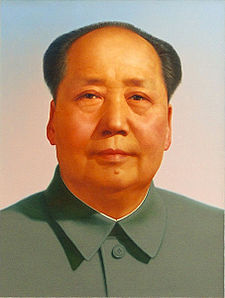
The rest of her life has been far from sheltered. During and after the Great Proletarian Cultural Revolution she visited China many times and became something of a bore by batting on about catties per mou.
Chairman Mao
At the same time, she began to bore excessively on the Middle East & North Africa (fromIraq in the East to Mauritania in the west, she’s been there). Sadly for friends and acquaintances her knowledge is extensive.
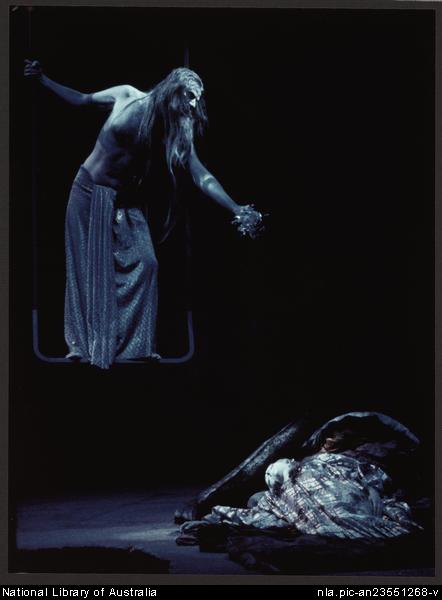
Her passion in life is the utterly sublime and divinely exquisite voice of the counter-tenor James Bowman, whom she first saw suffused in a gold-lamé leotard, bare chest bedecked with a garland and a ruby glinting from his navel. Her life has never been the same since.
James Bowman as Oberon in Benjamin Britten's masterly 'A Midsummer Night's Dream'.
In her dotage, she has become addicted to The Shakespeare Code, the wit and wisdom of which saves her from going totally bonkers. Well, that and the odd glass or two of fizz administered at frequent intervals.
Born indolent and devoid of ambition, her greatest success is to have achieved absolutely nothing.
Rarely seen without a hat, she is severely domestically challenged.
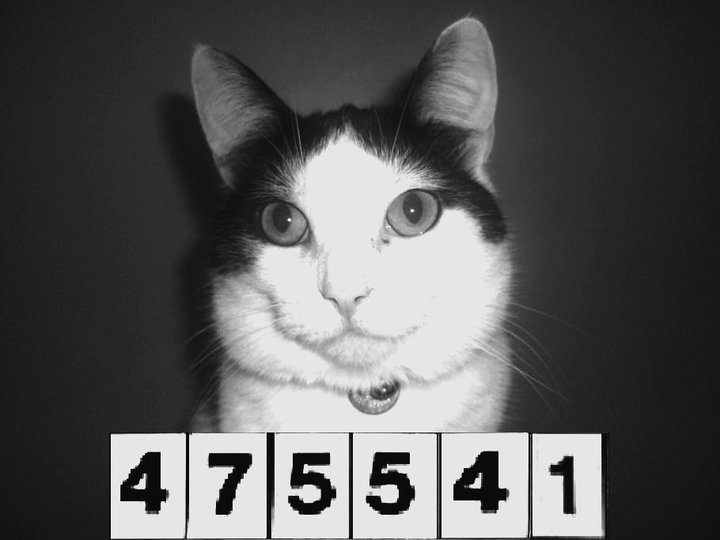
Trixie the Cat says….
Well done Janet! Everyone at The Code thinks you really deserve your Fellowship. You gave us your full support when The Code was a mere handful of people – when all we had was our dreams…
Your intellectual vigour is exactly what the world needs – but most of all, it needs your bravery, honesty, fun and sense of the absurd.
Janet, we all love you at The Code….
A Fellow of The Shakespeare Code has his or her name automatically inscribed into
The Roll of Honour.
To celebrate the happy occasion of the appointment of its first Fellow, The Shakespeare Code will now unfurl its….
ROLL OF HONOUR
Janet St.John-Austen, F.S.C.
Michael Hentges
Martin Green
Alan Samson
Lord Bragg of Wigton
Sir Nicholas Hytner
Jane Howell
Greg Doran
Maggie Ollerenshaw
Simon Callow
Prof. David Womersely (Thomas Wharton Professor of English at Oxford University)
Karen Gledhill
Prof. Jonathan Bate (Professor of Shakespeare and Renaissance Studies at Warwick University)
Dr. James Kelly (Senior Tutor at Queen’s College, Cambridge)
China Miéville
Martin Jarvis
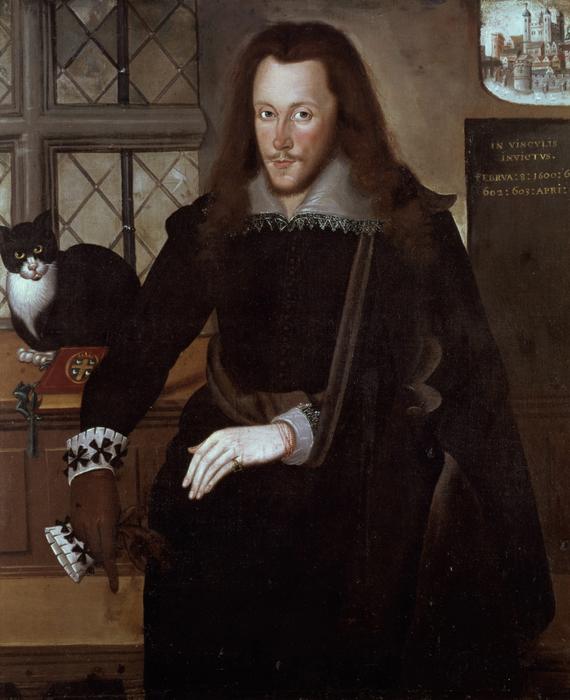
At Trixie’s inspired suggestion, The Shakespeare Code has decided to adopt the motto which sustained both the Earl of Southampton and Trixie during their two year incarceration in the Tower of London….
‘IN VINCULIS, INVICTUS’
(The Shakespeare Code is considering a Crest…)
The Earl of Southampton and Trixie the Cat. Part Four.
Posted in Uncategorized on May 28, 2011| 1 Comment »
(It’s best to read Parts One, Two and Three first…)
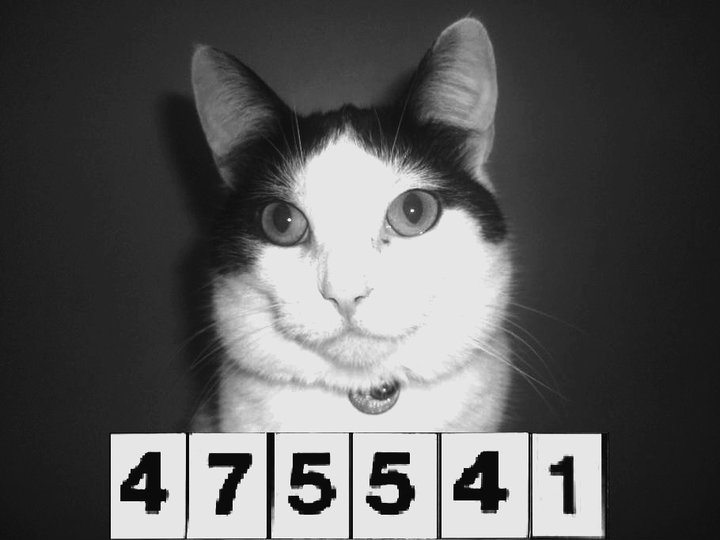
TRIXIE REPRIEVED!!!
The Shakespeare Code had intended to eliminate Trixie the Cat at midnight on 28 May, 2011.
However, at an emergency meeting of the Elders of the Code, a reprieve was granted.
Reviewing the evidence (in the Three Parts of ‘The Earl of Southampton and Trixie the Cat’) the Elders decided that The Code itself might benefit from its own:
TRIXIE MOMENT!!!
●
The great explorer, Nile navigator and literary scholar, C.C. Stopes, suggested that the Third Earl of Southampton’s wife, Countess Elizabeth, brought Trixie the Cat with her on a visit to her husband in the Tower of London, on 11 October, 1602 …
to help to comfort, and to help calm the excitement of meeting again after such a long and anxious separation.
Much as it admires Stopes, The Code utterly refutes her suggestion.
The Cat, though it might well have been a real ‘mouser’ in the Tower, plays a symbolic rôle in the Tower Portrait of Southampton – that of:
Passion Tamed!
(Southampton hated cats!)
Queen Elizabeth I displays the same pre-occupation in her famous ‘Rainbow Painting’ (c. 1600)
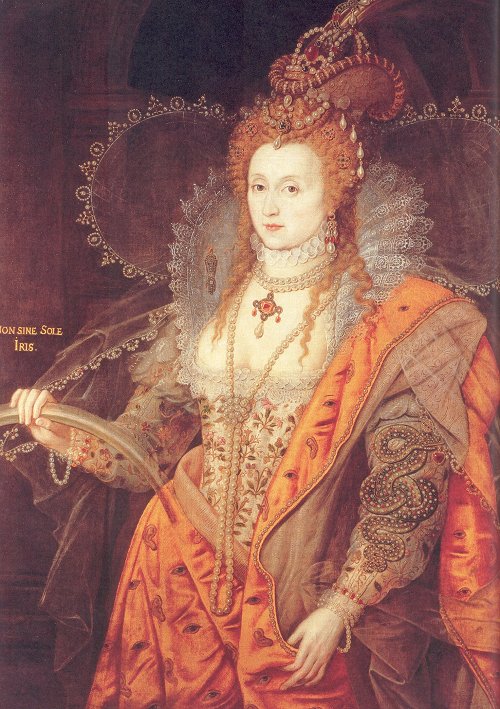
The Rainbow Painting of Queen Elizabeth
Her left sleeve has an embroidered serpent (‘Wisdom’) about to devour a ruby (‘Passion’)…
Passion (about to be) Tamed!
or Swallowed, rather…
●
Southampton’s mother, Countess Mary, had also been allowed to visit her ailing son in the Tower at the end of August, 1602, a few weeks before his wife was let in….
THE TRIXIE MOMENT UNVEILED…
The Shakespeare Code would like to suggest that Mary Southampton brought with her..
Not Trixie the Cat, but…
A Sonnet from William Shakespeare!!!
The Code has already demonstrated that Countess Mary approved of Shakespeare’s love for her son – as the Countess in All’s Well That Ends Well approves of Helena’s love for Bertram.
A decade before, Mary Southampton had commissioned Shakespeare to write seventeen sonnets for her gay son’s seventeenth birthday, outlining the joys of marriage. She needed to ‘heterosexualise’ Harry because:
1. The Southampton family line otherwise would die out, and…
2. Lord Burghley, Harry’s ‘guardian’, was about to impose a £5,000 [£2.5 million] fine if the Papist, flaxen-headed lad did not agree to marry his Protestant grandaughter.
The Sonnets, along with the erotically charged Romeo and Juliet (in which Shakespeare’s ambivalence about his commission finds voice in the ‘disturbed’ Mercutio) had half done the job.
Harry had finally married the volatile, weepy Elizabeth Vernon. He had even fathered a daughter with her…
But he still loved Shakespeare, and Shakespeare (with nothing at all to gain from the bankrupt, attainted, imprisoned and desperately ill, Earl of Southampton) loved him right back…
Loved him, in fact, more than he had ever loved him before….
Mary Southampton would have been a more than willing postman for a Sonnet from Cousin Will to her son.
(Shakespeare, like Helena in the play, had been ‘adopted’ by the Southampton family. His own mother, Mary Arden, was even distantly related to Mary Southampton).
In Sonnet 66, Shakespeare shows that, like Southampton, he is sick. But his sickness is a spiritual one.
Like Hamlet, he yearns for death…
Tired with all these for restful death I cry:
Shakespeare is suffering from melancholia, an aspect of life utterly accepted by the Tudors. It had to be lived with and lived through…
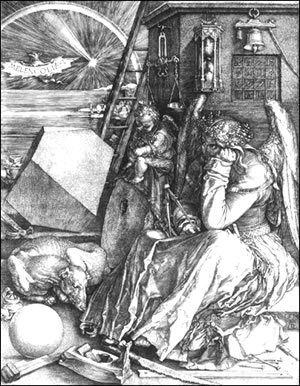
'Melancholy' by Durer
Queen Elizabeth would fight melancholy by retiring to her chamber to play the lute….
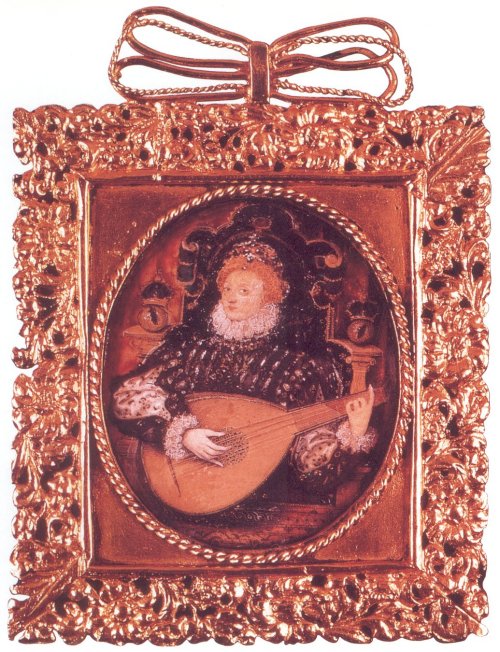
Queen Elizabeth, playing the blues....
We think of The Elizabethan Age as a Golden one: but to the Elizabethans themselves, it was an appalling time. They thought the end of the world must be imminent because…
Things couldn’t get any worse…
As Elizabeth had said to William Lambarde, the antiquarian scholar, on 4 August, 1601:
now the wit of the fox is everywhere on foot, so as hardly a faithful or virtuous man may be found’.
●
In his famous soliloquy ‘To be or not to be’, Hamlet itemises all the things that make him want to kill himself.
Shakespeare does the same thing in Sonnet 66.
Like his old mentor, Robert Crowley (the radical vicar of St. Giles-without-Cripplegate in London) Shakespeare views with horror the disparity in wealth between a beggar and an aristocrat:
As to behold desert a beggar born,
And needy nothing trimmed in jollity
By the wonderful phrase ‘needy nothing’ Shakespeare suggests:
- A rich man who ‘needs for nothing’ and,
- A rich man who is a spiritual ‘zero’.
‘Trimmed in jollity’ also evokes the elaborate, frivolous, ornate ‘costumes’ of the aristocracy. (People in Elizabeth’s time were actually ‘colour-coded’ to indicate their wealth and status).
Shakespeare continues:
And purest faith unhappily forsworn,
The ‘purest faith’ for Shakespeare and Southampton was Roman Catholicism – which many Papists had been forced to ‘foreswear’ to save their lives.
And gilded honour shamefully misplaced,
The ‘honourable’ Earl of Southampton wore golden armour when he performed his many deeds of heroism on the battlefield….
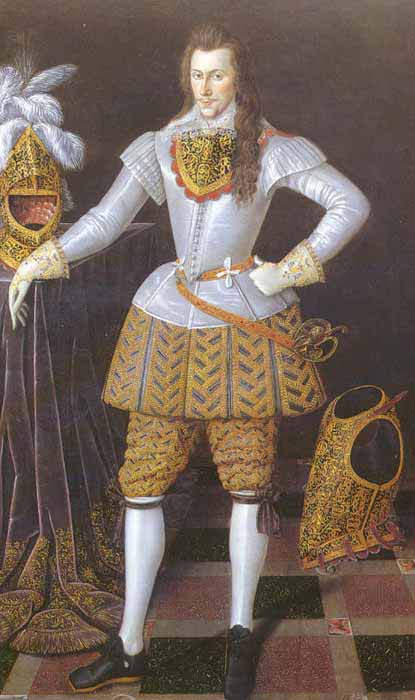
- ‘The bravest knight in England…’
Now, imprisoned in the Tower, he is reduced to the level of a common criminal….
Shakespeare continues:
And maiden virtue rudely strumpeted
Queen Elizabeth claimed to be ‘The Virgin Queen’, but Catholics believed she had used her wealth and power to co-erce upper class ‘ toy-boys’ into her bed. Sir Philip Sidney, in vain hopes of her favour, had even bought her a jewel-handled whip…
Shakespeare continues:
And right perfection wrongfully disgraced,
Another reference to the ‘perfect’ Southampton in the Tower…..
And strength by limping sway disabled,
By 1602, Queen Elizabeth walked with a stick, as did Sir Walter Raleigh, as did Sir Robert Cecil…
And art made tongue-tied by authority,
Shakespeare, as The Code asserts, could never (under Elizabeth, at least) say directly what he wanted to say…
And folly, doctor-like, controlling skill,
Elizabeth had appointed idiots to positions of power, who issued unchallengeable ‘doctors’ orders’ to everyone else…
And simple truth miscalled simplicity,
Like Elizabeth, Shakespeare thought that ‘the fox’ was ‘everywhere on foot’. Sincerity in a man or woman was now misinterpreted as stupidity.
And captive good attending captain ill:
Southampton (‘the good’) is made to submit, like a princely prisoner of war, to the Tower’s venal and corrupt ‘Captains of the Guard’.
Tired with all these from these would I be gone,
Save that to die I leave my love alone.
Hamlet, in the ‘To be or not to be’ soliloquy, decides against suicide.
He is frightened of what will happen to his soul after death.
Shakespeare, in Sonnet 66, also decides against suicide.
He is frightened of leaving Southampton ‘alone’.
But how, by dying, would Shakespeare leave Southampton ‘alone’?
He is not imprisoned with him the Tower….
●
Shakespeare would argue that he was.
In Sonnet 22 he declares that his own ‘heart’ is in Southampton’s ‘breast’, and Southampton’s ‘heart’ is in his.
In Sonnet 36 he also states that, though he and Southampton must live apart for a time …
Our undivided loves are one…
Shakespeare’s love for Southampton transcends space.
He is with him, even while he is away from him.
As he puts it, sublimely, in The Phoenix and the Turtle, he and Southampton are:
One Soul in Two Bodies….
So they loved as love in twain
Had the essence but in one:
Two distincts, division;
Number there in love was slain.
Hearts remote, yet not asunder,
Distance, and no space was seen
‘Twixt this Turtle and his Queen:
But in them it were a wonder.
So between them love did shine
That the Turtle saw his right
Flaming in the Phoenix sight;
Either was the other’s mine….
●
LONG LIVE TRIXIE THE CAT!!!
 The Shakespeare Code