Feeds:
Posts
Comments

Archive for the ‘Uncategorized’ Category

The Shakespeare Code is thrilled to announce that, on its six thousandth view, a Fellowship has been accepted by the greatest comic actress in the land….

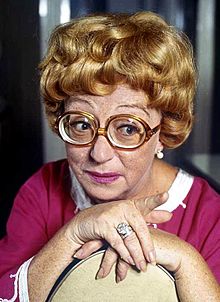
MAGGIE OLLERENSHAW

As Brothers and Sisters of The Code well know, Maggie has triumphed on television, stage and screen…

On television she played Florence Ranby (who terrorised the workshop girls) in The House of Elliot and has guest starred in every T.V. series of note…

She has appeared in theatres the length and breadth of Britain, scoring particular hits as Martha in Who’s Afraid of Virginia Woolf, Blanche du Bois in A Streetcar Named Desire and Mrs Pearce in Pygmalion for the garlanded Peter Hall Company.
Her films include Britannia Hospital, A Private Function, Steven Spielberg’s War Horse and Pierrepoint – a film about England’s most accomplished hangman – for which she received a BAFTA nomination as best supporting actress….
Her tribute to War-time Warbler, Dame Vera Lynn, Sincerely Yours, has played throughout the civilised world…

But she is happy to concede that the rôle for which she is most fêted is….

…..Wavy Mavis in Open All Hours…
Des Lynam (on a BBC programme called It’s My Pleasure) once  interviewed late, great Dame Thora Hird…
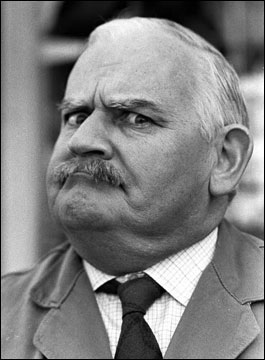
He asked Dame Thora about her career and what were her favourite bits of T. V. She chose an excerpt from an episode of Open All Hours in which Mavis dithers about which type of soup to buy from Ronnie Barker’s shop owner, Arkwright….
After watching the episode, Dame Thora said:
That Maggie Ollerenshaw! I honestly think she is one of the best comedians we have in this country. Her timing is so good. She makes me fall about and I’ve never seen her in anything when she wasn’t superb. I really raise my hat to her…
THE TRIXIE INTERVIEW
‘An accolade from Dame Thora! You can’t get better than that…’ I thought as I waited for Maggie at The Code’s Head Ofice.
But then I thought…..’Perhaps you can….
YOU CAN GET A FELLOWSHIP FROM THE CODE!!!
Dead on time, Maggie breezed in, fresh from the set of Endeavour – an ITV series about the young Inspector Morse.
As we sat sipping coffee and milk on The Code’s famous sofa, I asked Maggie what her reaction was to being appointed a Fellow.
She coloured slightly, then looked me directly in the eye…
I’m honoured and excited, Trixie….The Code makes Shakespeare accessible and I’m particularly keen on that. I tried to do the same when I worked for Barrie Rutter and the Northern Broadsides Company in Merry Wives and King John….

Barrie Rutter as Falstaff

Barrie has a missionary belief in the dramatic sound and vitality of the Northern voice which brings energy and immmediacy to Shakespeare’s words. It dispels a precious approach…’
I found Maggie’s loyalty to ‘Broadside Barrie’ truly touching…
But I wanted to know about MAGGIE!
Where, for instance, was she born…..?
I’m a very proud Mancunian. I’ve been a supporter of Manchester City Football club since I was a girl and went to matches with my dad at the old ground, Maine Road….
I’m not used to the club being rich and winning matches – it feels very odd….
Maggie hesitated…
Your Cat felt instinctively that there was much more behind her fascination with Mancunian football….
Trixie knows when the human heart is involved…
After a little, gentle, sisterly, probing, Maggie blurted it out….
I once went on a date with Dennis Law!
More than that Maggie would not say….
Besides, she is now blissfully married to actor-hunk  Geoff Leesley…
 In 2007 they tied the knot in City Hall in New York City – a place Maggie LOVES and where, in 1998, she actually LIVED! (She had a coveted Green Card).
Maggie and Geoff had a fabulous pre-honeymoon road trip in California….
Highway 101 has got to be one of the most amazing roads in the universe…

Highway 101

Maggie holidays in Turkey so often she’s practically a CITIZEN of  Kalkan….
….and as ‘a fish-eating veggie’, the Turkish cuisine is exactly to her taste…
The Turks  can do fifty things with an aubergine….
At this point a Daimler screeched to a halt outside Head Office and a Driver dashed up tbe stairs…
Maggie was urgently needed on set….
Completely unhurried, Maggie stood up from the sofa and reached into a bag.
Here’s a photo of me, Trixie. You might find it interesting…
Then she was gone…
The photo showed Maggie outside Grauman’s Theatre in Los Angeles. She was putting her hands into a cast of Bettie Davies’s handprints….
 The fit was exact….

© Trixie the Cat September, 2011

FOR THE AVOIDANCE OF ERROR….
The Shakespeare Code wishes it to be known that Maggie Ollerenshaw now has the inalienable right to place the designated letters, F. S. C. after her name, as in…
Maggie Ollerenshaw,  F. S. C.
She has elected to take reponsibility for all matters concerning Twelfth Night.
IN VINCULIS, INVICTUS
Please note that whilst still an Inductee on The Code’s ‘Roll of Honour’, Maggie Ollerenshaw, F. S. C., was kind enough to endorse Chief Agent Trotter’s Biography.
If you would like to read about Maggie’s reprise of ‘Wavy Mavis’ at Christmas, 2013, please click:HERE!

Read Full Post »

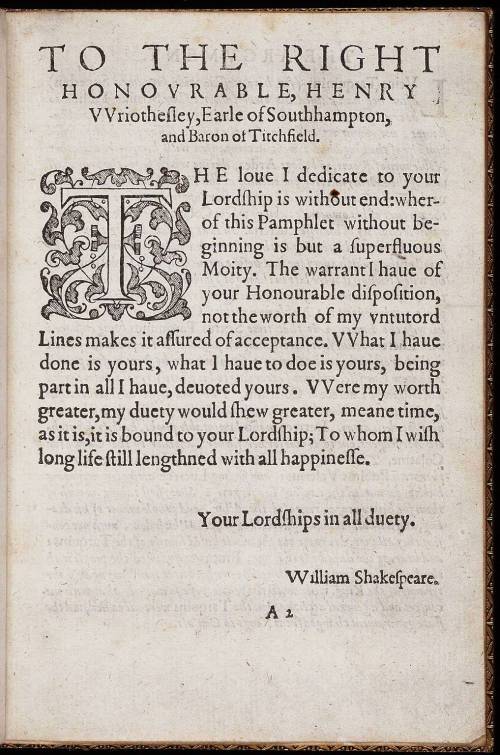
William Shakespeare wrote only two dedications in his life.

Both were attached to long narrative poems –Venus and Adonis (1593) and Lucrece (1594).

And both were addressed to the same man…

The Right Honourable Henry Wriothesley, Earl of Southampton and Baron of Titchfield

Dedication to ‘Lucrece’.

Titchfield was the favourite country seat of the Southampton family. 

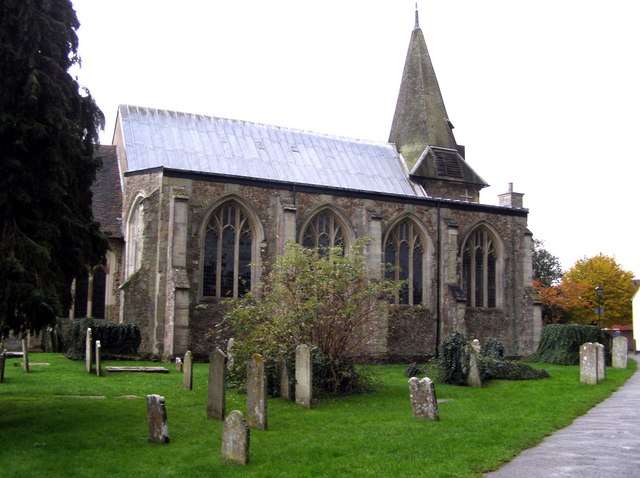
All of its members are buried in the crypt of St. Peter’s Church, Titchfield….

It was customary, at the time, for a writer to lodge in the household of his patron as part of his ‘patronage’ .

And it was customary for the Southampton family to stage entertainments at Titchfield.

Thomas Wriothesley, the First Earl of Southampton, was a keen amateur actor and his highly cultured wife , Jane, was described by a servant as being…

as merry as can be with Christmas plays and masques…’ 

But in his dedication to Venus and Adonis  Shakespeare describes his ‘unpolished lines’  as being written during his ‘idle hours’ .

This suggests that his main occupation at the time was not soley as a writer…

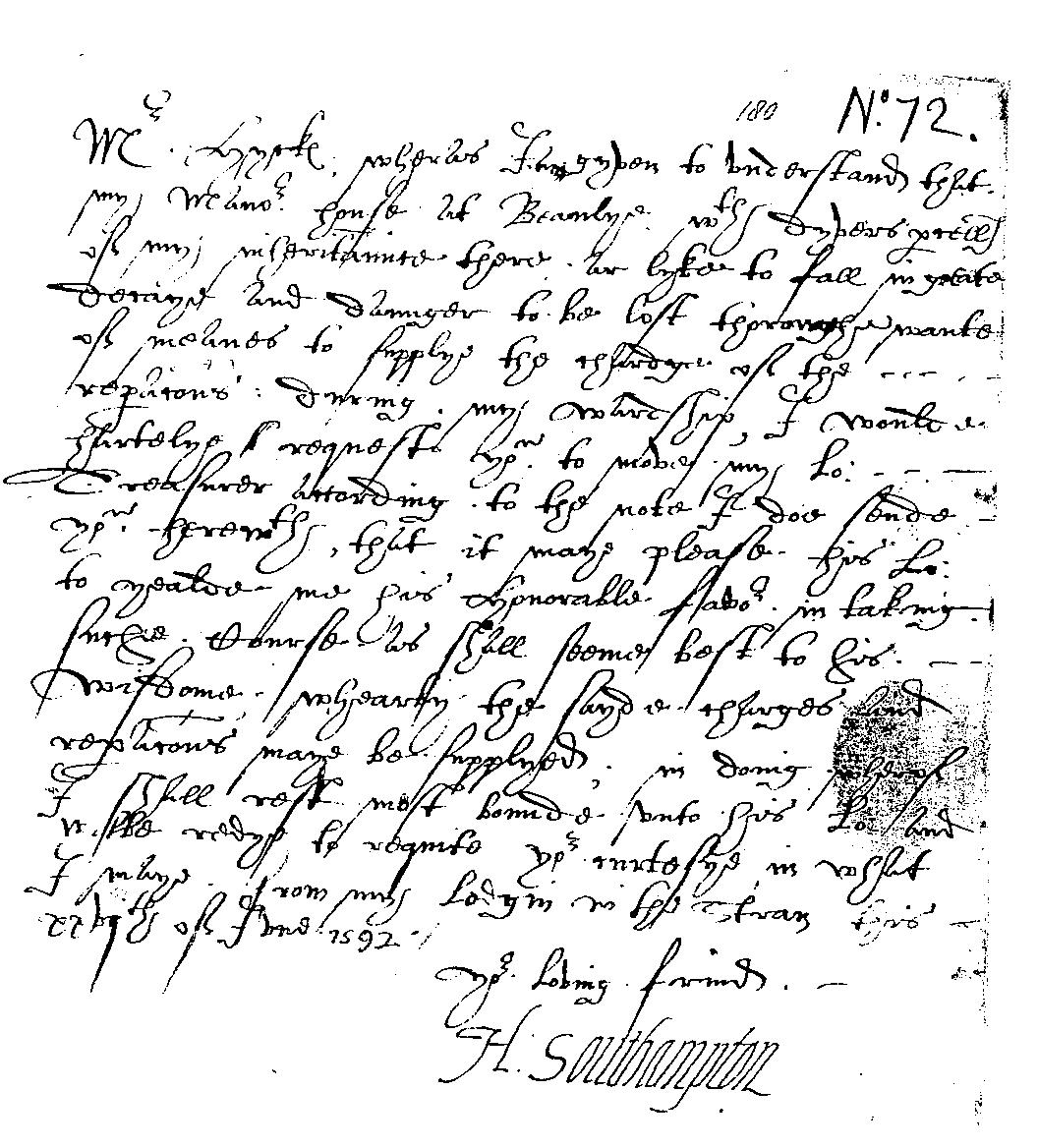
The British Library holds a letter from the Third Earl of Southampton, written in 1592, which is signed by him but penned by another hand…

According to the American hand-writing expert, Charles Hamilton (whose attention was drawn to this letter by the Shakespearean scholar, the late Eric Sams) this hand is identical to a portion of the manuscript of The Play of Sir Thomas More….
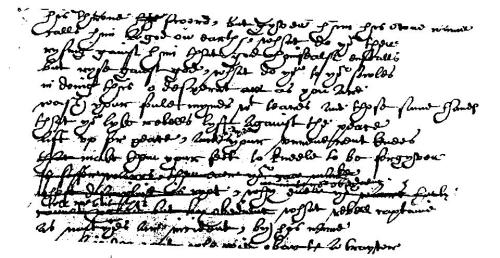
……and is the hand of William Shakespeare.

Shakespeare was clearly working for the Third Earl of Southampton as his secretary….

This fits exactly with Robert Greene’s (in reality Thomas Nashe’s) posthumous attack on Shakespeare in A Groatsworth of Wit  (1592).

He calls him a…

‘johannes fac totum’ [jack of all trades]…. 

 Nashe also describes Shakespeare as…

the only Shake-scene in a country’.

During the threat of the Armada invasion  in 1588, actors and playwrights became unpopular because of their perceived  ‘unpatriotic’ effeminacy.  

Shakespeare had done what his contemporaries Thomas Kyd and Christopher Marlowe had done…

He had joined an aristocratic household…

The Southampton family would have been an ideal choice for Shakespeare because….

1. The beautiful, widowed Mary Browne, Second Countess of Southampton….
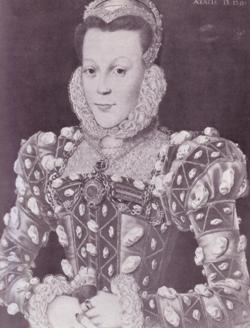
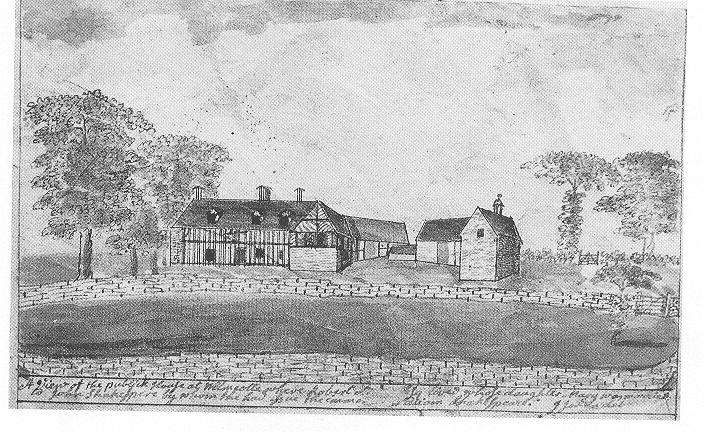
….was distantly related to Shakespeare’s mother, Mary Arden.
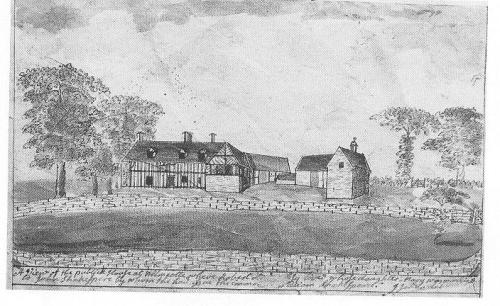
Mary Arden’s house at Wilmcote

2. The Arden family and the Southampton family remained deeply Catholic, even though Queen Elizabeth had imposed Protestantism on the country.

3. Mary, Second Countess of Southampton, had a teenage son, Henry Wriothesley, a ward of Lord Burghley,who had graduated from Cambridge in 1589.  .

He would need a tutor and companion.
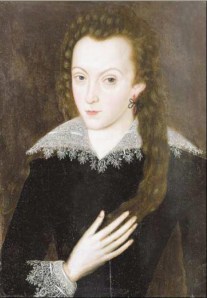
In 1590 Henry was 17 and in residence, for the summer, at Titchfield. Burghley wanted him to marry his grand-daughter, the daughter of the Earl of Oxford – but Henry showed no interest in girls. As Burghley was Henry’s ward, Henry’s family faced a tremendous £5,000 [£2.5 million] fine.

Shakespeare wrote a sequence of 17 sonnets advising the young man to marry. He called him his  ‘rose’, playing both on the Wriothsely family name (which was pronounced ‘Riosely’) and the emblem of the town of Southampton….

 Shakespeare also obliquely flatters Henry’s mother, Mary, who commissioned the sonnet sequence…

Thou art thy mother’s glass and she in thee

Recalls the lovely April of her prime..

On her  1591 Progress to the South East of England,  Queen Elizabeth visited Cowdray (the estate of Henry Wriothesley’s maternal grandfather, Lord Montague) and Titchfield itself. She shot deer with a cross-bow from stands at both estates.

At Cowdray the men and women of the household staged an entertainment for her in the grounds.

These events are satirised by Shakespeare in Love’s Labour’s Lost.

The Princess of France (often referred to in the stage directions as ‘The Queen’) arrives with her ladies at the all-male Court of Navarre. She shoots deer from a stand, then endures an entertainment the local schoolmaster has written in her honour….

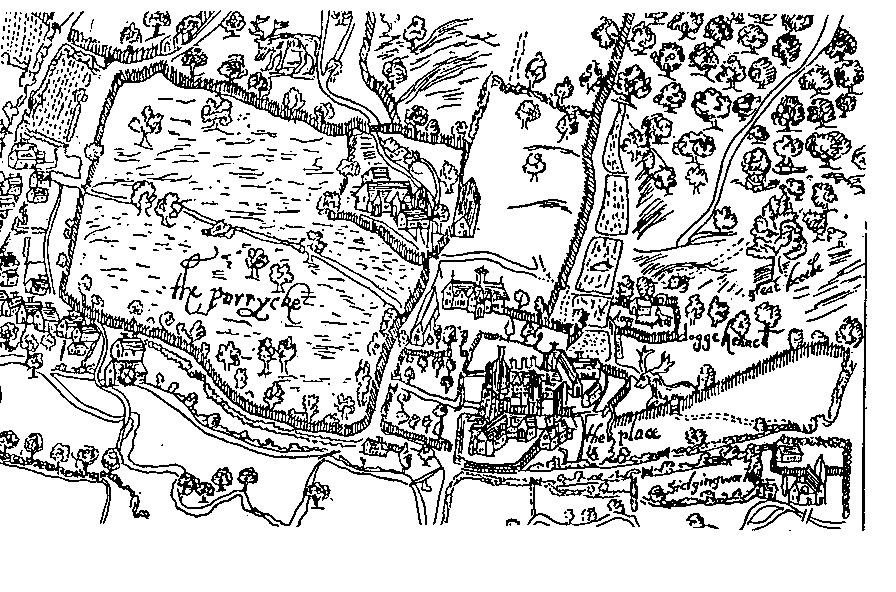
Reference is also made in the play to ‘The Parke’ and ‘The Place’ – both of which are indicated  in a contemporary (1610) map of Titchfield.

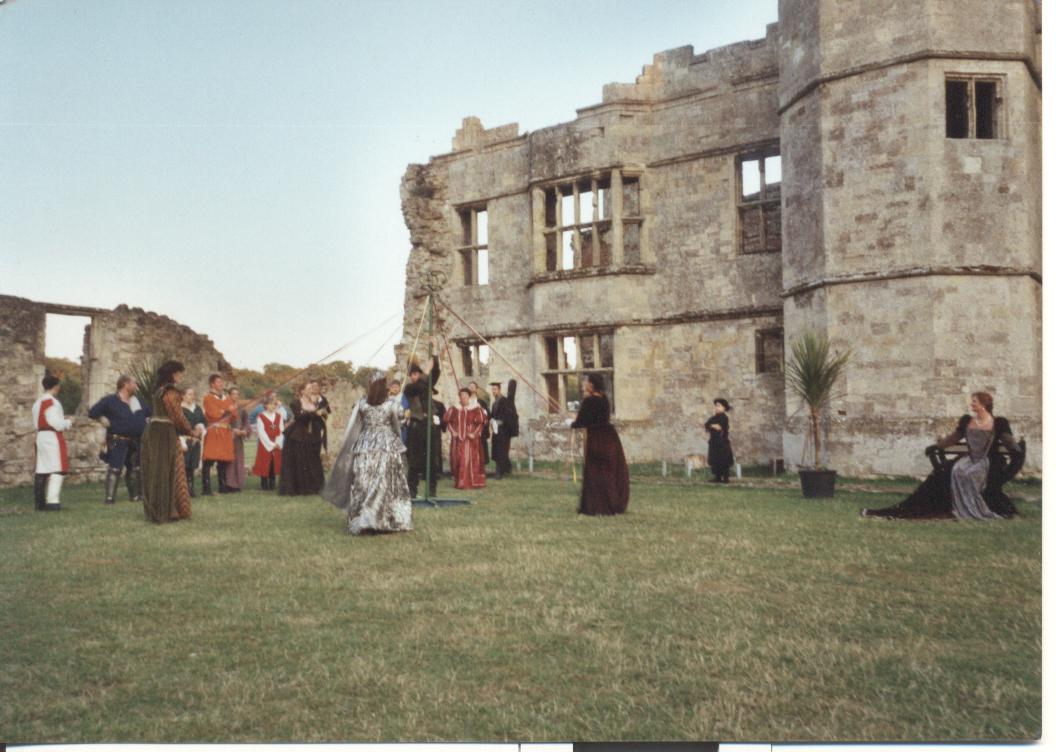
This indicates that the play was performed in the grounds of Place House at the time of the famous Whitsun (originally ‘Corpus Christi’) Fair, granted to Titchfield by King Henry VI when he was married at the Abbey.  

The word ‘fair’ is mentioned 48 times in the play…
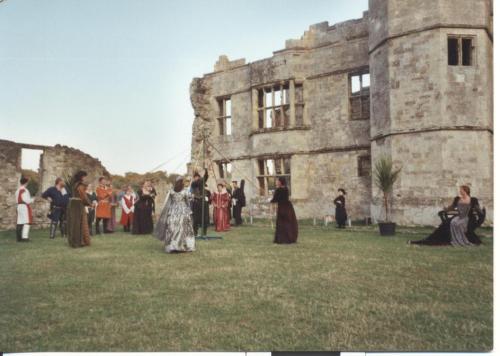
‘Love’s Labour’s Lost’ performed in the grounds of Place House (Titchfield Abbey)

There is also mention in the text of  the steep hill opposite the gates of Place House and a ‘curious knotted garden’ – the remains of which survive to this day.

Titchfield also solves the  linguistic conundrums in the play which have puzzled scholars for centuries…

Conundrum 1:

The King of Navarre describes Rosaline as being….

 black as ebony….
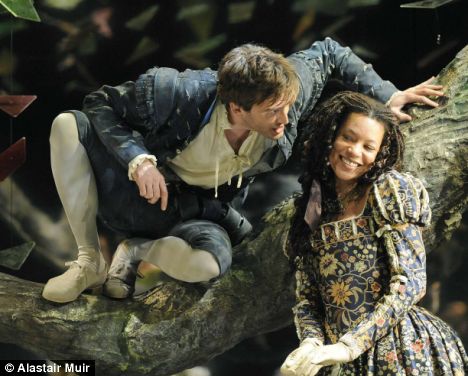
 So why does Berowne describe her as…

a whitely wanton with a velvet brow…?

How can a dark-skinned woman be described as ‘whitely’?

‘Whitely’ is not a reference to Rosaline’s skin, but to ‘Whitely Lodge’ – a property owned by the Southamptons a mile or so away from Place House. It was here that the shadier activities of the Southampton family took place – and where the third Earl was to shelter his gay friends, the Danvers brothers, after they had committed a murder.

To describe Roasaline as a ‘whitely’ wanton is to re-inforce the idea of her promiscuity….

Conundrum 2:

Why does the ‘hero’ of the play, Berowne, spell his name in such an odd way…?
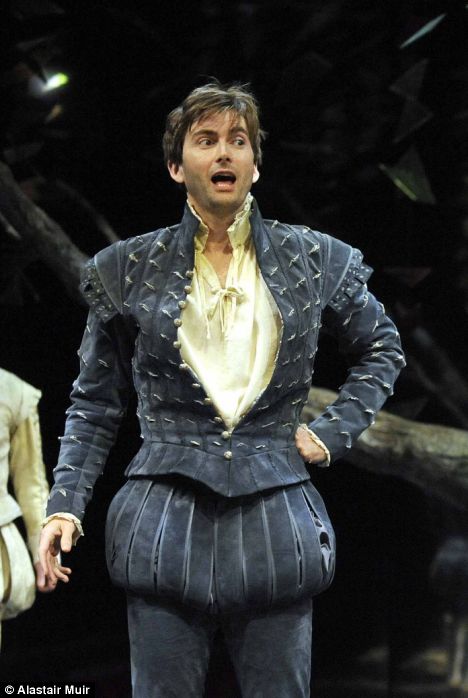
‘Berowne’ is a coded reference to Shakespeare’s patron, Mary Browne, Second Countess of Southampton. Shakespeare probably played the part in the first performance at Titchfield, so is consolidating his link with the Southampton family.

Conundrum  3:

Holofernes, the schoolmaster, is said to ‘educate youth at the charge house on the top of the mountaine’.

What is meant by this phrase?

From Bishop Warburton in the eighteenth century onwards, Shakespeare scholars have associated the character of Holofernes with John Florio….
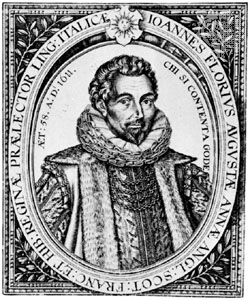
Holoferenes even quotes verbatim from Florio’s language manuals…

We know for certain that Florio was in residence at Titchfield – ostensibly as a tutor and schoolmaster, but in reality as a Protestant spy in the pay of Lord Burghley.

He was also engaged in compiling an Italian/English dictionary and translating the Essays of Montaigne.

‘On the top of the mountaine’ is a joke about Montaigne…

But what is the ‘charge-house’ where Holofernes ‘educates youth’?

There has been a School House at the gates of Place House since the reign of Henry VI. It was standing, as a Tudor two-storey conversion when John Leland visited Titchfield in 1542.  It was standing in 1610 when it was mapped…
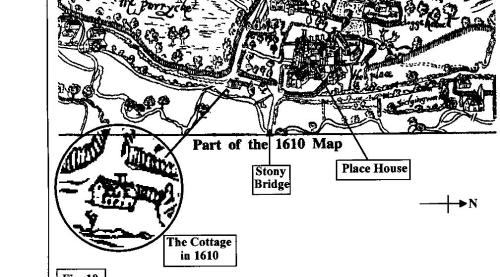
 

And it is standing to this day….
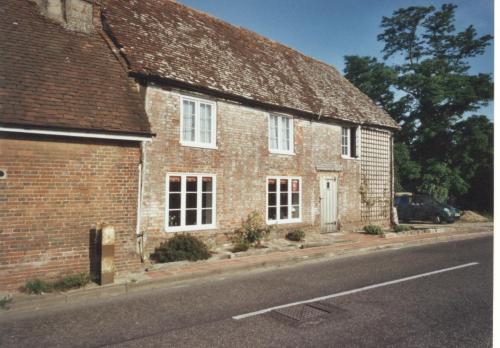
The Old School House.

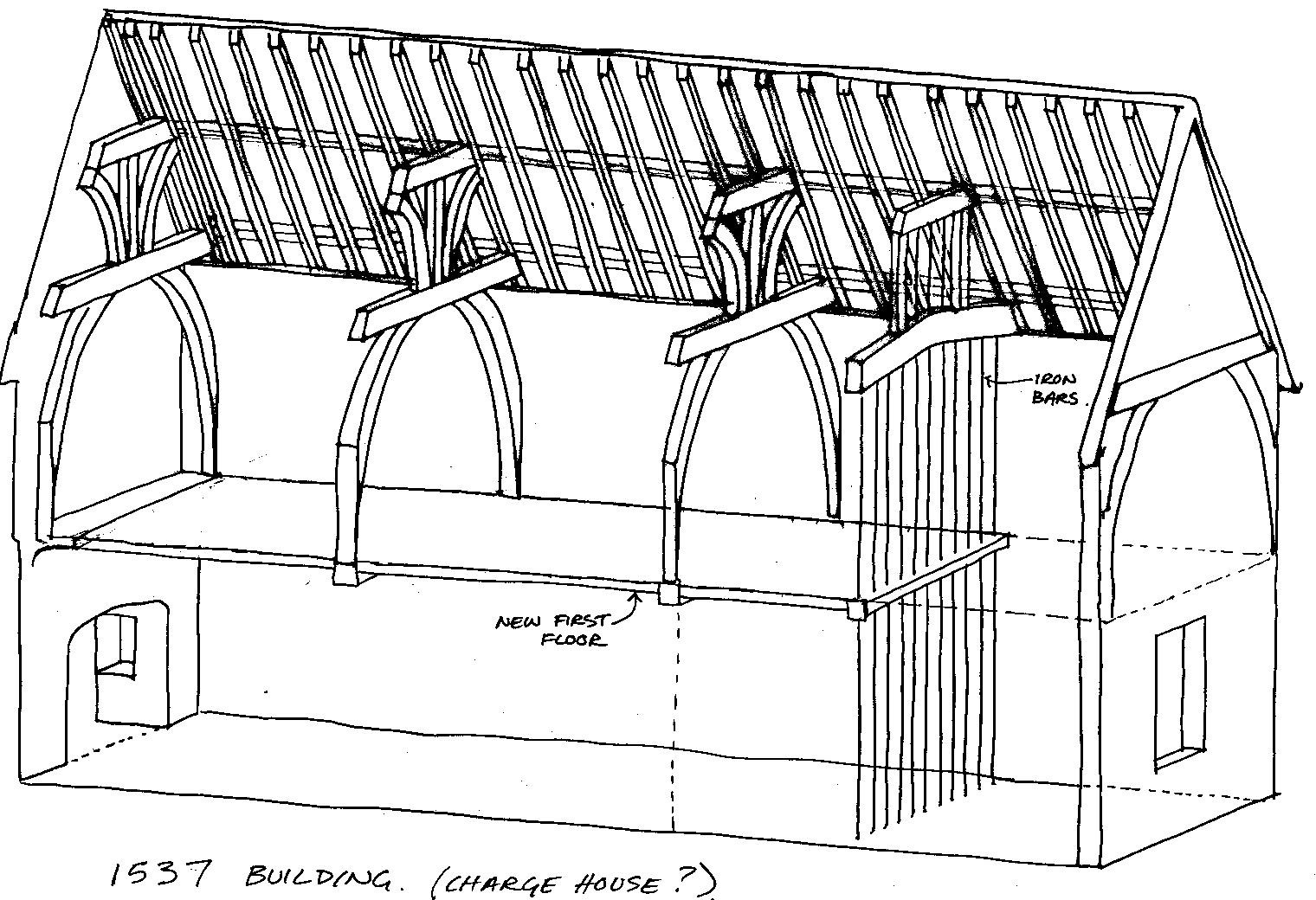
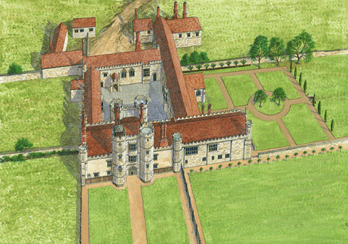
A feature of the house is the remains of a ‘secure room’ on the first floor. There are holes in the ceiling and the floor where iron bars would have been fixed….

(Drawing by John Lyall Associates)

Schools in Shakespeare’s time often doubled as toll houses. Traffic crossing the Stony Bridge (shown in the 1610 map) would have passed the School House when travelling to and from Titchfield village.

Toll houses often had a ‘secure-room’ to lock up money or criminals…

There were many schoolmasters at the School House before Florio. One of them was the playwright (and flagellating paedophile) Nicholas Udall who wrote the first English comedy, Ralph Roister Doister.

The other, The Shakespeare Code believes,  was the young William Shakespeare….
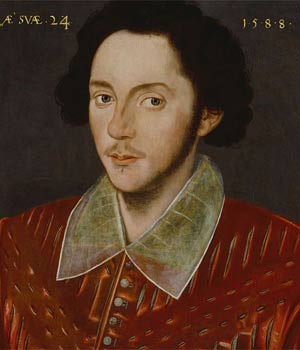
William Beeston, an actor and impressario born around 1610, told the antiquarian and gossip-monger John Aubrey…
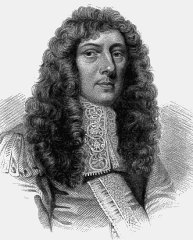
 …that in his ‘younger years’ Shakespeare had been ‘a schoolmaster in the country’.

For a long time, scholars have thought that there might be a link between this William Beeston, and a mysterious ‘Master William Apis Lapis’ mentioned by Shakespeare’s contemporary, Thomas Nashe, in 1592.

‘Apis Lapis’ is a Latin Code for ‘Bee’ and ‘Stone’ – so this man was also called William Bee-Stone or Beeston.

Now The Code’s Chief Agent has found the link between the two Williams….

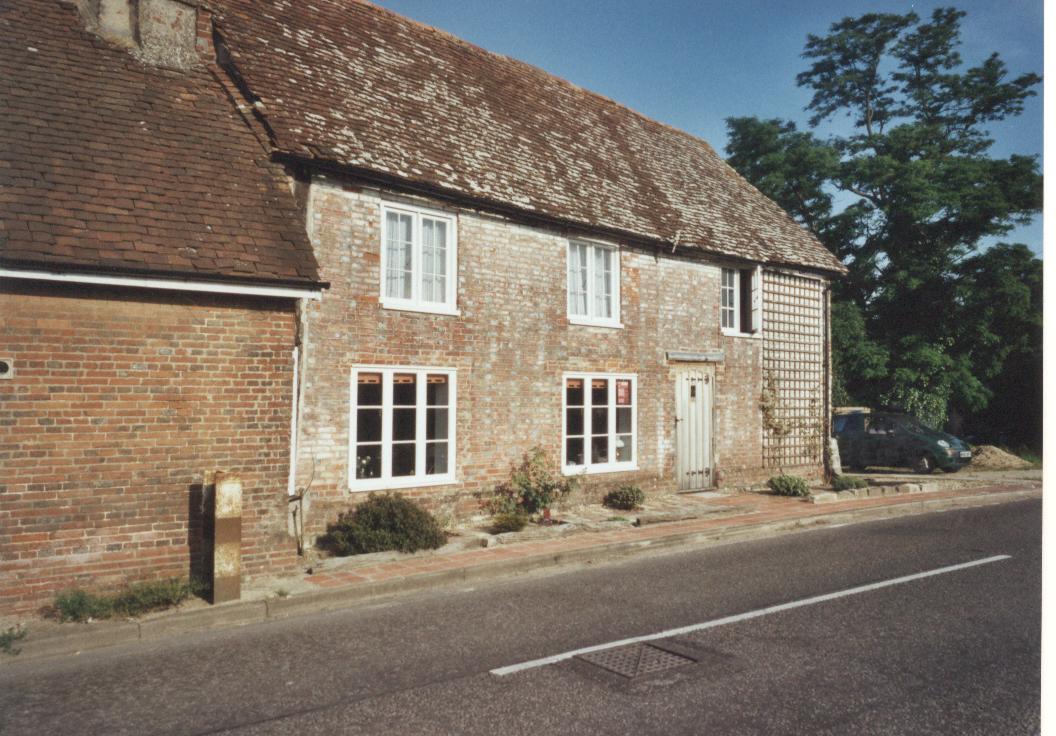
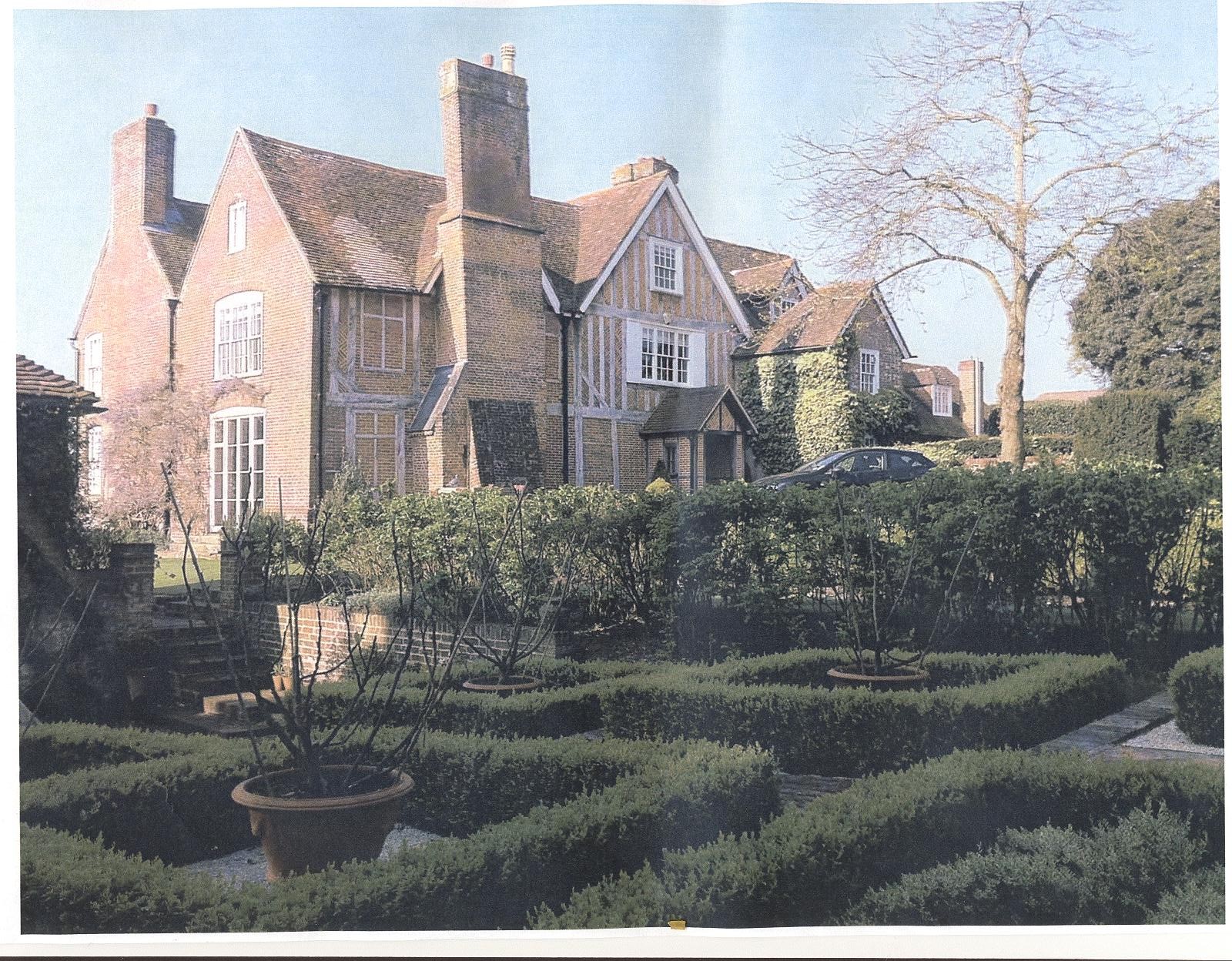
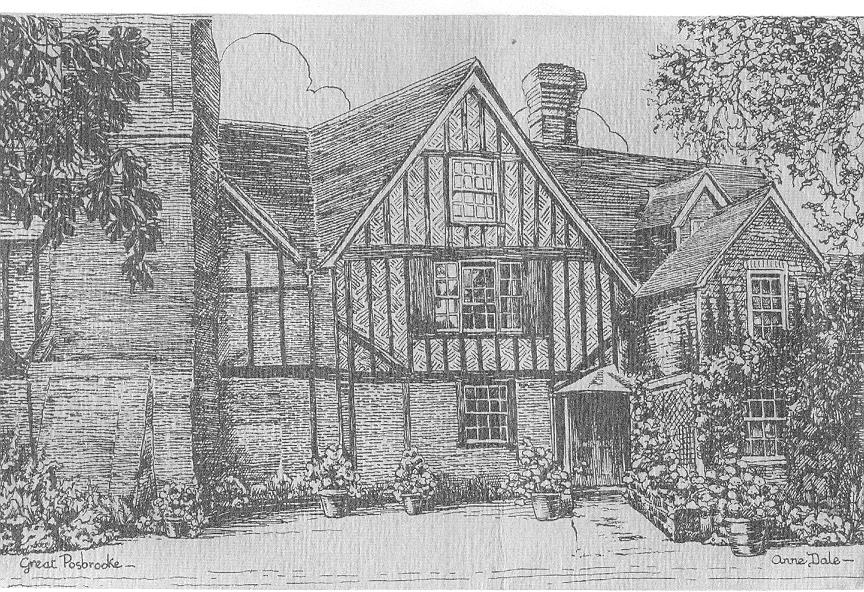
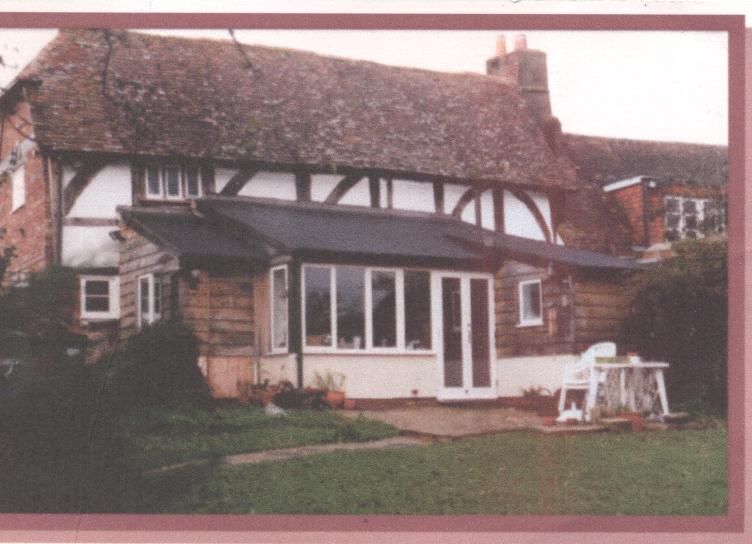
There was a William Beeston who lived at Posbrook Farm, which stands to this day…
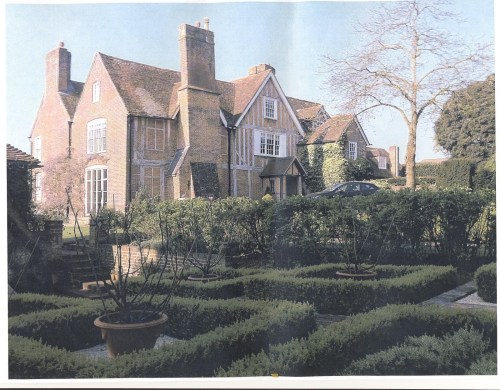
This Beeston fits the ‘Apis Lapis’ profile exactly – a lecherous lover of alcohol, food and literature…

The ‘Aubrey’ William Beeston had a father called Christopher, also an actor and impressario.

Stewart Trotter has discovered that ‘Apis Lapis’ Beeston wrote his will TWO DAYS after Christopher wrote his…

We know that ‘Apis Lapis’ Beeston had illegitimate children – and we know that Christopher Beeston and his son often used an alias – Hutchinson…

The implication is that Christopher was Apis Lapis’s bastard son – and that he told his own son, William, about Shakespeare at the Titchfield School House…

And William Beeston told Aubrey.

(To read a more detailed account of the Beestons and Shakespeare, please read: Shakespeare was a Schoolmaster in the Country. )

NICHOLAS ROWE (1674-1668)

Nicholas Rowe, the poet and playwright, writing in 1709 (less than a hundred years after Shakespeare’s death) states:

He [Shakespeare] had the honour to meet with many great and uncommon marks of favour and friendship from the Earl of Southampton, famous in the histories of that time for his friendship to the unfortunate Earl of Essex.

It was to that noble lord that he dedicated his Venus and Adonis, the only piece of his poetry he ever published himself, though many of his plays were surreptitiously and lamely printed in his lifetime.

There is one instance so singular in the magnificence of this patron of Shakespeare’s, that if I had not been assured that the story was handed down by Sir William D’Avenant, who was probably very well acquainted with his affairs, I should not have ventured to have inserted, that my Lord Southampton, at one time, gave him a thousand pounds [£500,000 in today’s money] to enable him to go through with a purchase which he heard he had a mind to. A bounty very great and very rare at any time, and almost equal to that profuse generosity the present age has shown to French dancers and Italian eunuchs…’

John Aubrey writes that Davenant (1606-1668)  told his ‘intimate friends’ that he was Shakespeare’s illegitimate son – a claim for which there is good evidence.
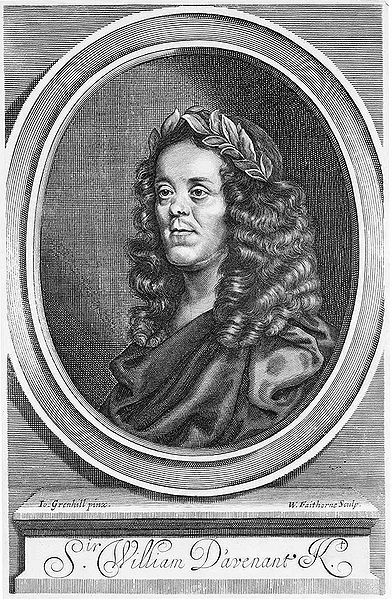
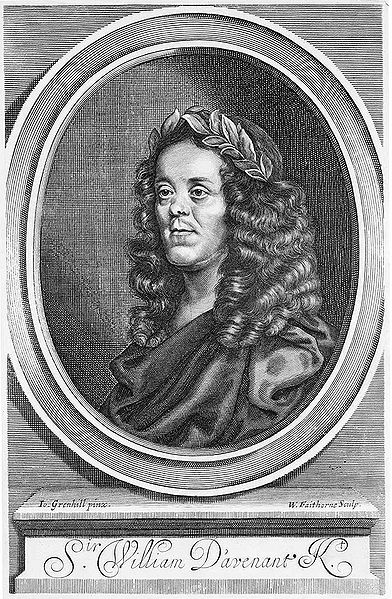
William Davenant, illegitimate son of Shakespeare…

Davenant died six years before Rowe was born – but Thomas Betterton (c. 1635-1710), a veteran actor who played the lead in one of Rowe’s plays, advised Rowe on Shakespeare’s life.
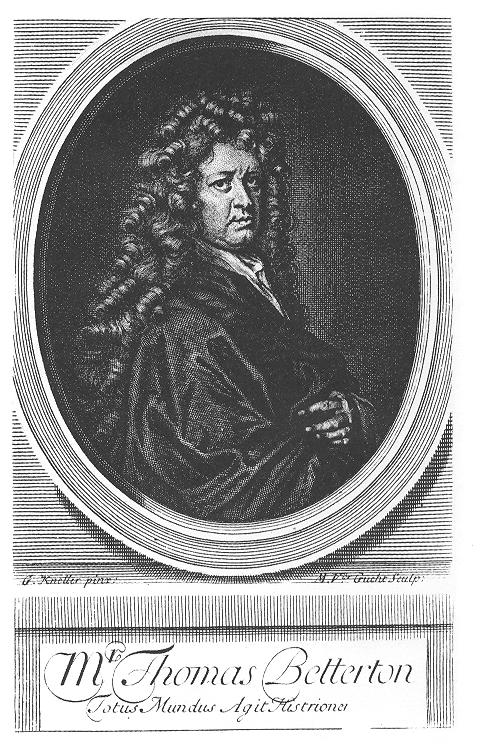
Betterton had actually travelled to Stratford-upon-Avon to collect evidence about Shakespeare from the Parish register.

When Betterton had played Henry VIII (in Shakespeare and Fletcher’s play) he recieved instruction on how to play the part from Davenant. Davenant, in turn, had received instruction on how to play the part from John Lowen, a Paris Gardens actor, who had received instruction from Shakespeare himself.

SO, ROWE HAD A DIRECT LINE OF INFORMATION STRETCHING BACK TO SHAKESPEARE!

Also Nashe, writing under Greene’s name in  A Groatsworth of Wit, attacks a plagiarising actor called ‘Roberto’ who is loaded with money (not gained from the theatre) and flashily dressed.

The Shakespeare Code believes that ‘Roberto’ is a coded attack by Nashe on Shakespeare and his relationship to the Southampton family…

(For a fuller discussion of this idea, please read The Strange Case of Mr. Apis Lapis. )

 THE SHAKESPEARE FAMILY CREST

In Shakespeare’s day, apart from a title, the highest status symbol you could have was your own family coat of arms.

To acquire one from the College of Heralds you needed two things:

1. Money (you had to earn the equivalent of our £250,000 a year).

2. Influence. You needed a member of the aristocracy to vouch for your personal honour and the veracity of your ancient family history…

If all went well, the College of Arms would consult you – then design your own, unique, crest. You were then allowed to put ‘Esquire’ after your name and you were second in rank to a Knight.

John Shakespeare, William’s wheeler-dealer father, had applied for a crest in the 1560’s – but did not have the clout to attain one.

In 1596 he applied again – and was granted one. Indeed, the American hand-writing expert Charles Hamilton believes the application was written in his son’s own hand.

By 1596, of course, Shakespeare had acquired an aristocratic patron (and lover) the Third Earl of Southampton. By association, Shakespeare’s father was then deemed wealthy and respectable enough to be granted a crest – which would also belong to his son.

We have the sketch which the Shakespeare family submitted….
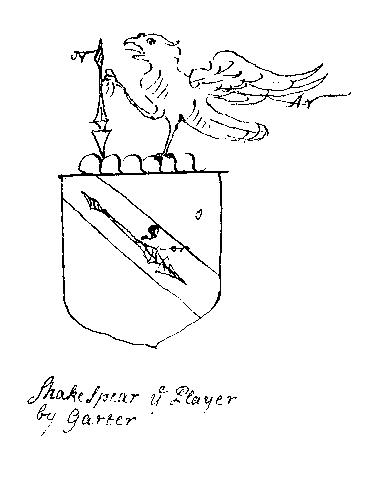
It was described (in modern English) as:

a falcon, his wings displayed argent, standing on a wreath of his colours, supporting a spear gold….’

The ‘spear’ is readily explained as a play on the family name.

But where does the ‘falcon argent’ [silver] come from?

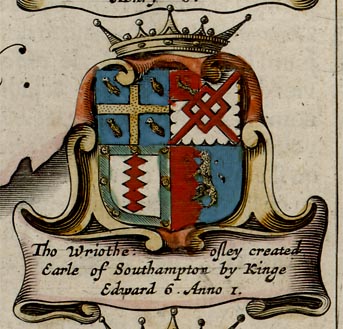
The answer is the Crest of the Southampton family….
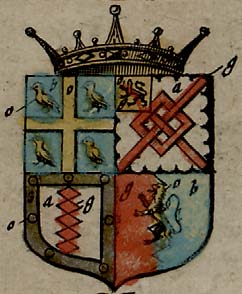
….with its four silver falcons in the top left-hand quarter.

 By ‘quoting’ from the Southampton Crest, Shakespeare is parading, for all to see, his intimacy with the Earl of Southampton….

(If you found this interesting, you might like: Shakespeare was a schoolmaster in the country: TITCHFIELD! )

Also you might like to read: Shakespeare in Titchfield: Startling new evidence from Edmund Spenser.

Read Full Post »

(It’s best to read Shakespeare in Titchfield first)

John Aubrey (1626-97), the collector of gossip and tittle-tattle about the rich and the famous…

John Aubrey


…..records that William Shakespeare ‘in his younger years’ was ‘a schoolmaster in the country.’

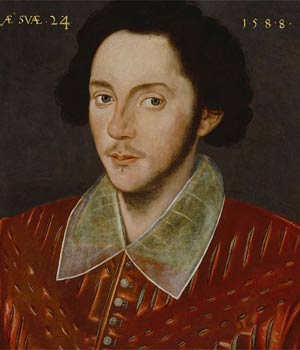
William Shakespeare? The Grafton Portrait.

He gleaned this information from William Beeston (c. 1610/11-82) who was an actor and impressario whom John Dryden called ‘the chronicle of the stage’.

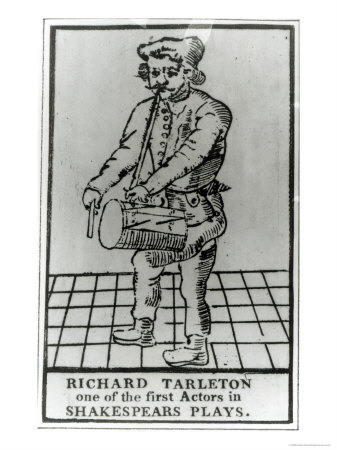
He was the son of Christopher Beeston (c. 1582-38) who was an actor and impresario himself. Christopher Beeston is thought to have been the boy actor ‘Kit’ mentioned in the ‘plott’ (treatment) of the play The Seven Deadly Sins written by Queen Elizabeth’s favourite jester, Richard Tarl(e)ton…

….and presented in a revival by Lord Strange’s troupe in 1591/2

Ferdinando Lord Strange

In 1598 Christopher acted with Shakespeare himself (in a production by the Lord Chamberlain’s Men) of  Ben Jonson’s play, Every Man in his Humour…


Thomas Nashe (1567-1601) the diminutive, buck-toothed, pamphleteer, poet, novelist and playwright…. 

Thomas Nashe

….wrote a pamphlet in 1592 called Strange Newes….

He  dedicated it to a mysterious ‘William Apis Lapis’…

Nashe was using a Latin code. ‘Apis’ means ‘bee’ and ‘Lapis’ means ‘stone’ – so William’s real name was William Bee-stone, or Beeston.

[Note: This cannot be the same William Beeston who told Aubrey that Shakespeare had been ‘a schoolmaster in the country’. The ‘Aubrey’  William Beeston was not born till around 1610/11, nearly twenty years after Nashe’s 1592 Strange Newes pamphlet.]

By further decoding the complex language of Nashe’s pamphlet, we learn that this ‘Apis Lapis’ Beeston…

1.  Was mean.

2. Was bad at grammar, both English and Latin.

3. Was a bit of a crook.

4. Loved alcohol, which he sold to lawyers.

5. Loved food.

6. Loved poetry, especially Chaucer in English and Terence in Latin.

7. Had a massive sex drive.

8.  Had illegitimate children.

9. Was great company and formed strong and loyal friendships.

Although the ‘Apis Lapis’ William Beeston and the ‘Aubrey’ William Beeston cannot be the same man, scholars have often suggested that there might be a link between the two.

But what link?

Titchfield in Hampshire (and The Shakespeare Code) provide the answer!

The Code has discovered that there was a William Beeston living in Titchfield in Hampshire who matches the  ‘Apis Lapis’ profile exactly.

At the end of his life (1638) he was living at Posbrook Farm, a magnificent building (now called Great Posbrook Farm) which is still standing….


By then he had become an intimate friend of the Southampton family, which had included the third Earl, Henry Wriothseley, Shakespeare’s patron and lover….

In 1624 it had been Beeston’s melancholy duty to bring back the bodies of both the third Earl and his son from the Low Countries where they had died on campaign. 

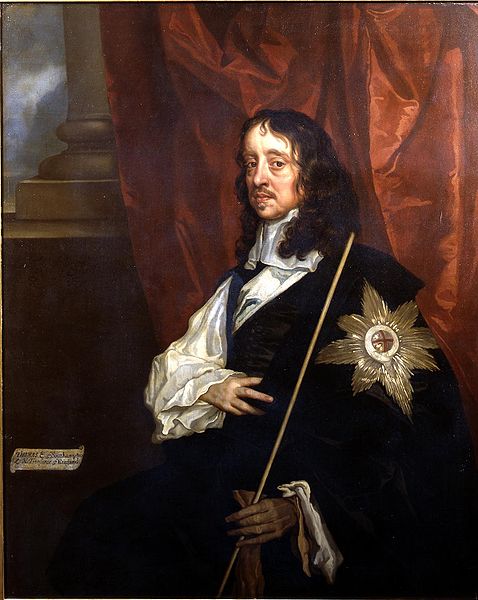
Beeeston then became the mentor of the teenage fourth Earl of Southampton, Thomas…

Thomas later in life...

Beeston even lodged near the Earl in St. John’s College when the young lord went up to Cambridge to study.

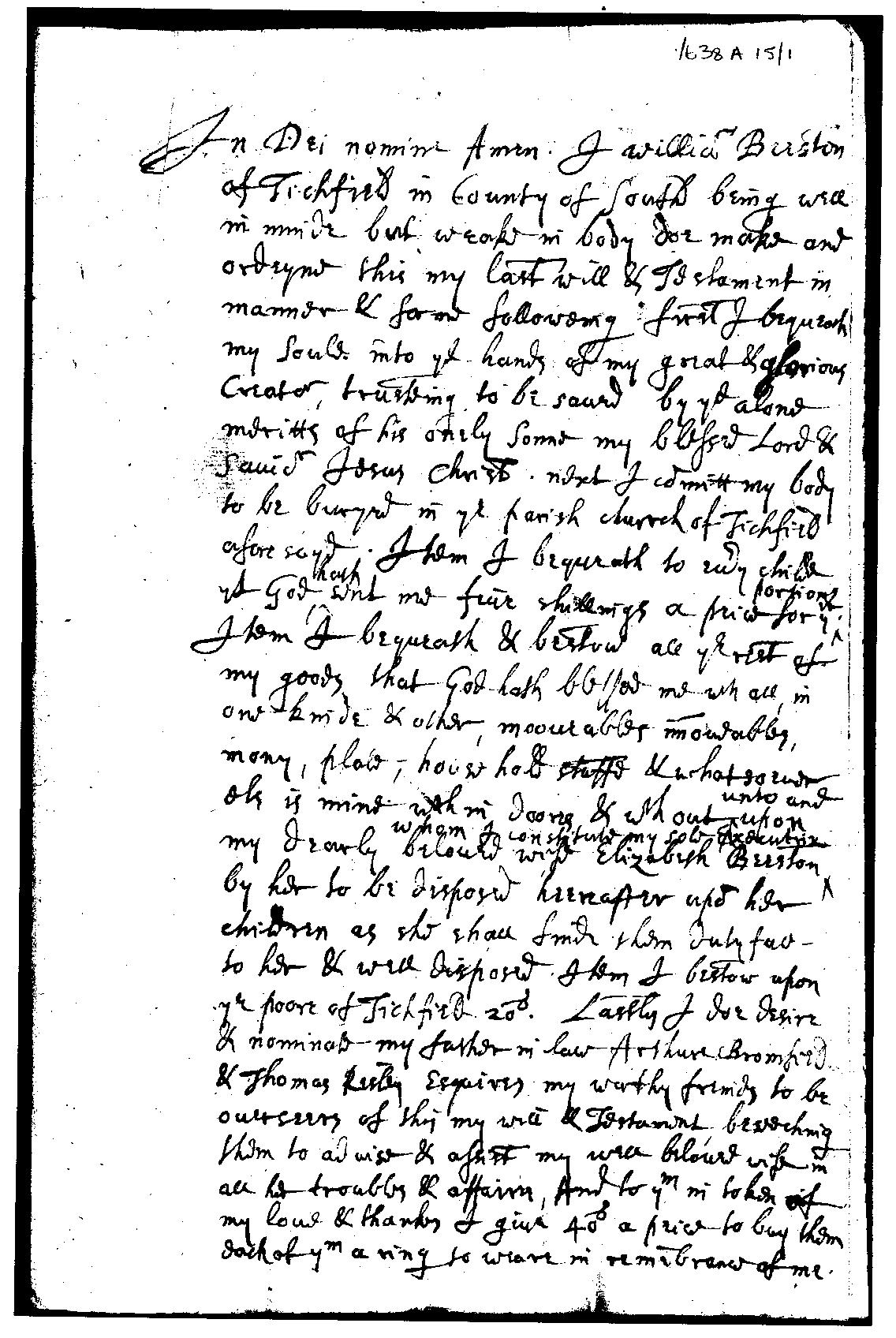
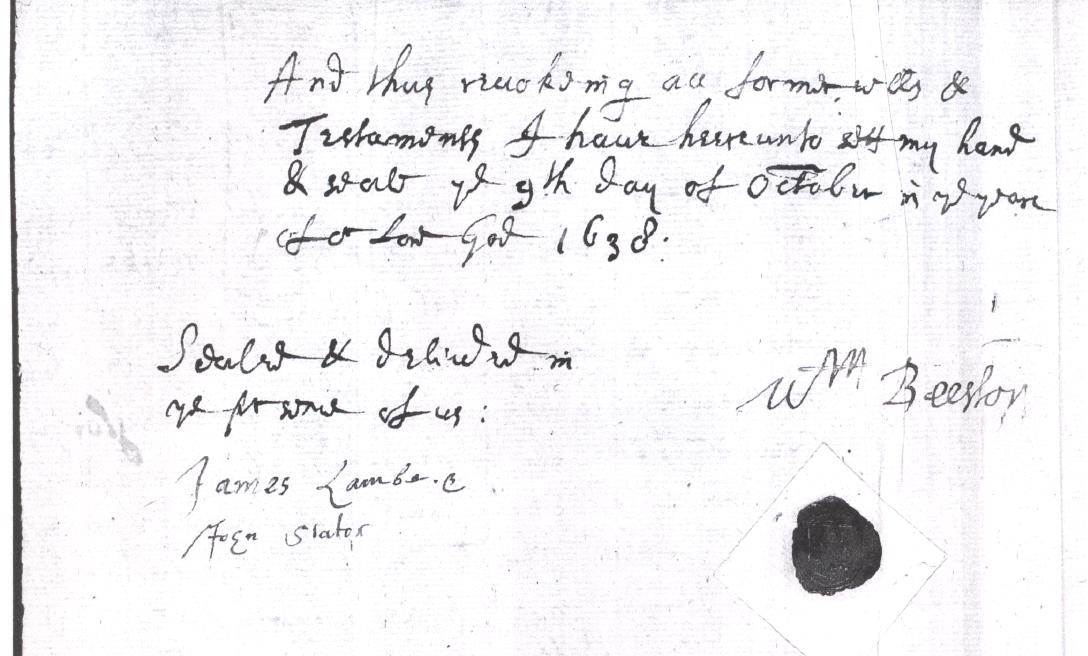
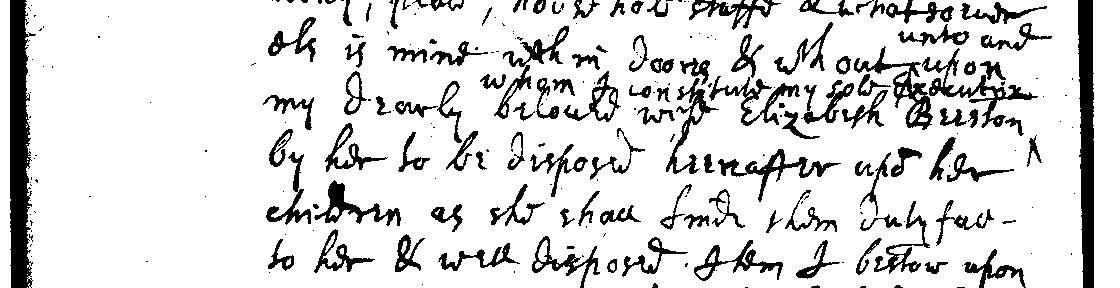
Beeston’s will survives at the Hampshire Record Offices, written, signed and sealed in his own, bold  hand….

Like Apis Lapis, Titchfield Beeston uses bad grammar.  He writes about ‘the alone merits’ of Jesus Christ….

 ….when he means ‘the sole merits.’

Like Apis Lapis, he loved food and wine. We learn, from the inventory taken after his death, that he had over £2.10.0 worth of cheese in his loft  – over £1,000 in today’s money…

He also possessed his own brewhouse and a buttery with presses, vats, barrels and flaggons and a loft crammed with hops.

Like Apis Lapis, he also loved literature. In his study he had a library of books worth £10 – £5,000 in today’s money…

Also, like Apis Lapis, he was mean.

In his will he leaves a paltry five shillings (£125) to every child ‘that God hath sent me’….

(As we can see, Beeston originally wrote ‘every child that God sent me’ but changed it later to the more gramatically elegant ‘that God hath sent me’).

Beeston had married Elizabeth, the much younger daughter of his business partner, Arthur Bromfield, and by 1638 had fathered a family of two boys and four girls.

Why doesn’t he refer to them by name in his will?

For the answer we have to go back to the 1592 Strange Newes pamphlet.

Here Nashe describes how Apis Lapis’s ‘hospitality’ (code for ‘lust’) has brought forth ‘fruits’ (code for ‘illegitimate children’)  ‘who are of age to speak for themselves’.

Christopher Beeston was a child actor by 1592 and certainly able to speak for himself.

But even more intersesting, he sometimes used an alias, Christopher Hutchinson.

This might suggest he was one of Apis Lapis Beeston’s illegitimate children….

By using the catch-all phrase ‘every child that God hath sent me’ ‘Apis Lapis’ Beeston could be including his illegitimate children in his five shilling gift…

But the strongest evidence of a link between ‘Apis Lapis’ Beeston and Christopher is the date of their respective wills…

Christopher wrote his will on 4 October, 1638 – then added a codicil on 7 October.

‘APIS LAPIS’  BEESTON WROTE HIS WILL ON 9 OCTOBER – TWO DAYS LATER!

Either this is a coincidence of monumental proportions or there was a link between the two men.

And the obvious link is father and natural son.

Christopher, as a boy, would have attended the grammar school at Titchfield, which still stands at the gates of the Southampton family’s Place House…


He would  have been taught by Shakespeare…

Shakespeare would have recommended his talented young pupil to Lord Strange’s Company…

Christopher would have told his own son, Wiliam, about all this… 

And William would have told Aubrey…

CODA

The Shakespeare Code believes that…

‘Apis Lapis’ Beeston was, ‘in younger years’, a bit of a rogue. Wearing a greasy cap, with a huge dagger at his back,  he hung round taverns with low-life criminals.

But as he became more and more closely involved with the Southampton family, he became more respectable.

His actor son, Christopher, pursuing the life of an actor, did not….

In fact in 1602 Christopher was up on a rape charge…

Even for actors, this was too much. He was forced to leave the Lord Chamberlain’s Men and join the less repectable Worcester’s Men.

It was also too much for his natural father, ‘Apis Lapis’ Beeston, who cut off all communication.

But there was always the possibility that when ‘Apis Lapis’ Beeston died, Christopher would make a claim on his natural father’s property.

(‘Apis Lapis’ Beeston was on the way to becoming wealthy enough, and respectable enough, to become an ‘esquire’ with his own coat of arms…)

To prevent this, ‘Apis Lapis’ Beeston married the young daughter of his business partner, Bromfield, around 1628.

(Bromfield was also close to the Southampton family: he had helped cover up a murder by the third Earl’s friends, the Danvers brothers, and had been rewarded with property and a coat of arms…)

Christopher, by this time, had his own son, whom he pointedly named William after his natural father. ‘Apis Lapis’ Beeston, with equal point, named his second son William as well. 

For him, his natural grandson did not exist…

When Christopher was dying, he asked to see his natural father. He was desperately worried about his ‘many great debts’ and begged ‘Apis Lapis’ Beeston to provide for his natural grandson – who in turn would provide for his wife and family.

It was worry about the finances of his son that motivated a codicil to Christopher’s original will.

‘Apis Lapis’ Beeston refused and immediately wrote a will that left everything to his wife. The  ‘five shilling’ gift to each of the children that God had ‘sent him’ made it clear to Christopher that he could expect nothing more from his natural father.

It also blocked any further claims on his estate, rather like Shakespeare’s infamous gift of his ‘second-best bed’  to his wife.

‘Apis Lapis’ Beeston’s legitimate children could expect to inherit from his ‘dearly beloved’ wife ‘as she shall find them dutiful to her and well-disposed’…

Christopher Beeston was buried on 15 October, 1638, less than a fortnight after he had written his will.

‘Apis Lapis’ Beeston must have caught his son’s disease. He was buried in the graveyard of St. Peter’s, Titchfield on 3 December.

The week after his own baby daughter, Anne, was baptised in the same beautiful church…

‘Apis Lapis’ Beeston had retained his massive sex drive to the end…

CELEBRITY ENDORSEMENT


Prof. Jonathan Bate, Professor of Shakespeare and Renaissance Studies at the University of Warwick and a Board Member of the Royal Shakespeare Company writes of The Strange Case of Mr. Apis Lapis (upon which this article is based)…

It’s a terrific article and very persuasive that Beeston [of Posbrook Farm, Titchfield] is Apis Lapis. All very interesting….

(To read a full account of The Code’s theory, please click: The Strange Case of Mr. Apis Lapis. )


Read Full Post »

Brothers and Sisters of The Shakespeare Code…

On 15th August, 2011, The Code received its 5,000th View!

The Agents of The Code would like to thank you for your continued interest from all over the world and present to you the customary bouquet of Southampton roses…

We know (from information passed on to us from Google) that there are at least TWENTY-TWO participating nations.

SINGAPORE…

…..joined The Shakespeare Code on 16th August, 2011.

See: ‘The Shakespeare Code’ salutes the Nations’. If the flag of your nation is not amongst those listed, please let us know…

WE WOULD BE PROUD TO FLY IT FOR YOU!

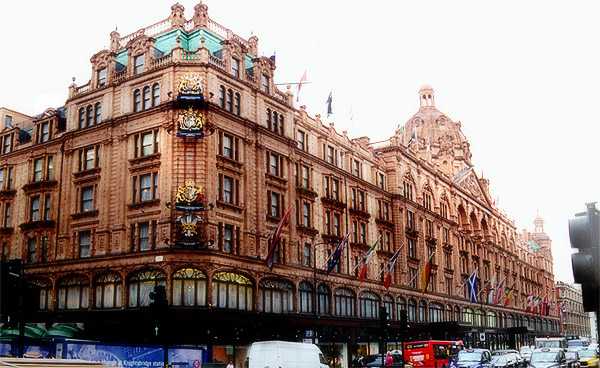
The Shakespeare Code now has more flags than the exterior of Harrods!

To celebrate this event, a great poet and editor, EDDIE LINDEN, has been gracious enough to accept a Fellowship – the highest accolade The Code can offer.

Here is the photograph of Mr. Linden which hangs in the National Portrait Gallery in London:

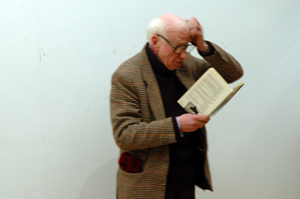
And here is a less formal photograph of Mr. Linden extracted from The Code’s confidential files:

Mr. Linden now has the inalienable right to use the designated letters F. S. C. (Fellow of the Shakespeare Code) after his name.

As a Fellow, his name will also be automatically inscribed in The Code’s coveted ‘Roll of Honour’.

He is also responsible for covering the Sonnets and Poems of Shakespeare.

On accepting his Fellowship he said:

I’m overwhelmed. I come from the working classes, so I am very proud to be given this honour by Stewart.  He’s been a great friend and influence on me for many years now – and comes from the same sort of background as myself…I’m really looking forward to the Fellowship Dinners….

On being asked which of his poems he would like The Code to print in honour of his Fellowship, Eddie unhesitatingly chose a poem first published in the celebrated British newspaper, The Guardian on Saturday, in 2009.

It was inspired by a mining disaster that happened in 1950 in the Scottish village where Eddie grew up…

THE NEST

The echo of the burn as it runs yellow 

And the dark blue slag on the pit surface

Reminded him of his past.

The wheel of life sounded its

Message of time.

The blast of death

Rang its bells in the hearts of the homes.

The grim face in the mirror

Faded with time into the slag heaps

From where he came.

The moon revealed its ugly village casa.

A dog howled its death-like sound,

A baby cried from the cold of the night,

A father knelt in

the bowels of the earth, waiting for light

In the darkest hell, where he never saw.

Only winter remained.

And nothing returned to the nest

In the tree, but the snow that covered

The world of his past

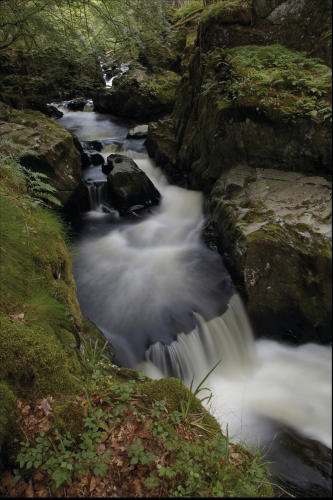
‘Deil’s Cauldron’ in Comrie, Scotland. Hard to see here, but Scottish ‘burns’ do literally ‘run yellow’.

But perhaps Eddie’s most celebrated achievement is his uncompromising poem about Glasgow, anthologised the world over and translated into French, German and Spanish…

CITY OF RAZORS. 

Cobbled streets, littered with broken milk bottles,
 
Reeking chimneys and dirty tenement buildings,
 
Walls scrawled with FUCK THE POPE and blue-lettered
 
 words GOD BLESS THE RANGERS.
 
Old woman at the corner, arms folded, babe in pram,

a drunk man’s voice from the other pavement,

 And out come the Catholics from evening confessional;
 
A woman roars from an upper window
 
‘They’re at it again, Maggie!
 
Five stitches in our Tommie’s face, Lizzie!

Eddie’s in The Royal wi’ a sword in his stomach

 and the razor’s floating in the River Clyde.’
 
There is roaring in Hope Street,
 
They’re killing in the Carlton,
 
There’s an ambulance in Bridgeton,

And a laddie in the Royal.


The old ‘Gorbals’ in Glasgow, where ‘City of Razors’ is set.


THE TRIXIE INTERVIEW

Brothers and Sisters, I can tell you I was all ‘claws and paws’ waiting to interview Eddie. Not only is he the greatest poet in the world, but everyone tells me he is:

‘THE WILDEST MAN IN THE WORLD’!

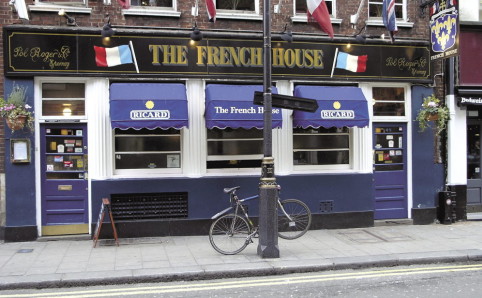
Eddie has been barred every pub in London’s Soho – even the notorious French House who will take ANYBODY’S MONEY!

The French House in Soho.


Our Chief Agent, Stewart, first met Eddie forty years ago at a poetry reading at the Edinburgh Festival. Eddie was in the audience and shouted out that the poetry was ‘f……g crap’. He was hurled down a staircase and Stewart immediately ran to his aid – not out of compassion but out of literary discrimination.

The poetry WAS  ‘f…..g crap’.

The two became great friends as a result and often ‘banged about’ about with the the late, great,  D. A. N. Jones, who, like Stewart, worked for the B.B.C. magazine, The Listener.

There are certain things, though, a man will not tell his  friends…

But he’ll sometimes tell a cat…

The moment Eddie stepped into Head Office, I knew all would be well.

GONE was the old wildness – now there was only sweetness and light. The strongest thing Eddie now drinks is coffee – and even that was too strong for him.

I had to give him some more milk from my saucer.

He opened up to me COMPLETELY as he sipped his coffee and I sat purring in his wise old lap…

It was all to do with his childhood. He’d been born a bastard in Ireland and smuggled, as a package of shame, into Scotland. He was adopted by a foster mother who died when he was ten and his second foster mother wanted nothing to do with him. So he was sent away to an orphanage..

in a big black car….

So no wonder Eddie drank! Denied ‘the milk of human kindness’, he sought it, as anyone would, in the bottle…

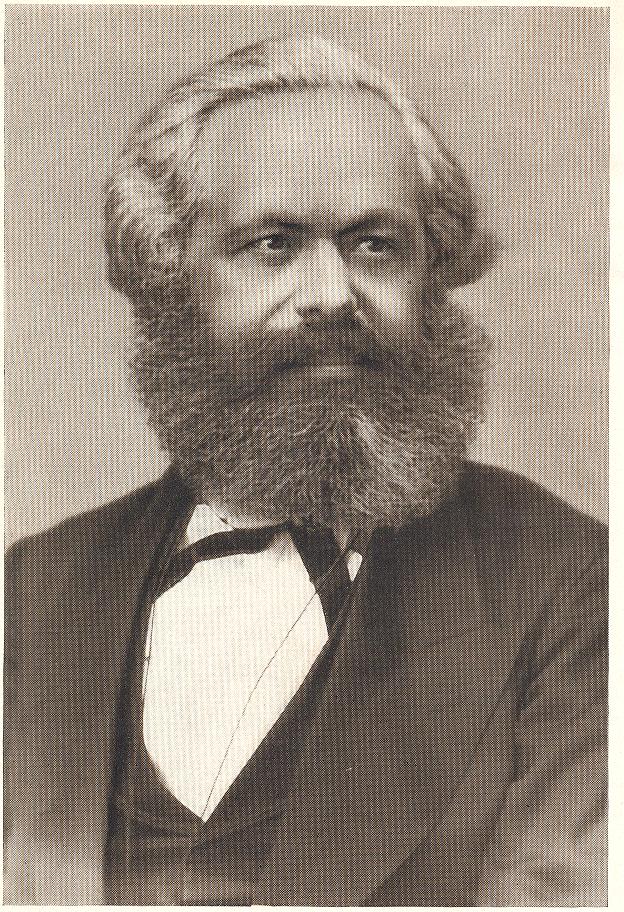
But two things saved him: Karl Marx….


…..and Literature


A. J. Cronin – a Scottish novelist so popular he made it onto ‘fag’ cards…

 Eddie, like Stewart, discovered the work of the passionate Scottish socialist, A. J. Cronin, when he was a teenager. Cronin, like Eddie, was illegitimate and grew up in Greenock, a ship-building town on the Clyde.

This was the town where Stewart’s father was  born and brought up…

Scottish Communists took Eddie’s education in hand – and this led to a violent, spiritual struggle for Eddie’s soul. Eddie was a cradle Catholic and priests wielded over-whelmingly power in working class Scotland.

They even sent him to a Catholic Working Men’s College in Oxford – but he escaped from everyone’s hands (and jobs in steelmills) when he moved to London…

There he discovered even more literature and even more life….

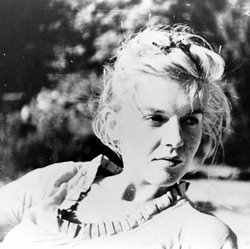
He was taken up by the great poet, and ravishing beauty, Elizabeth (‘By Grand Central Staion I sat down and wept‘) Smart…

Elizabeth Smart

 …and started to give poetry readings with the blind, retro-Augustan poet, John Heath Stubbs….

John Heath-Stubbs

 ….at John Dryden’s old hostelry, The Lamb and Flag

The Lamb and Flag – Dryden’s old stamping ground…
These readings were so popular, the landlady feared the floor in the upstairs room would cave in!
 
But – and this is the point that your Cat feels is important to make –
 
THE READINGS WERE NOT OF HIS OWN POETRY!
 
All through the interview, Eddie would mention the work of everyone else – and never his own. He has a passion for poetry PER SE, because, he said, (as he stroked my ears)…
 
It saved my life….
 
It gave Eddie a reason to get up each day….
 
He managed to save £70 and,  with a gift of £100 from his friend the playwright and poet Harold Pinter….

Harold Pinter, patron of Eddie.

 ….he  started the famous poetry magazine AQUARIUS.
 
Over the years, Eddie has published (amongst countless others) Brian Patten, Seamus Heaney and Hugh McDiarmuid. He  has even devoted whole issues to Canadian, Scottish and Australian writing.
 
And, apart from the first issue….
 
EDDIE HAS NEVER USED THE MAGAZINE TO PUBLISH HIS OWN WORK!
 
This was left to other people and in 1980 a collection of his poems appeared under the title of his masterpiece, City of Razors. Around that time his biography (Who is Eddie Linden by Sebastian Barker) was also published by Jay Landesman.
 
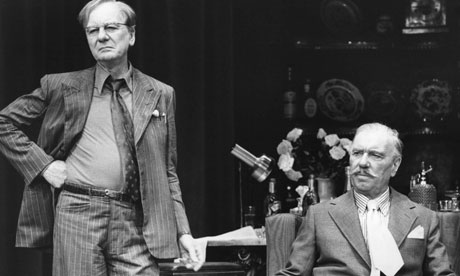
One of the reviewers asserted that in Pinter’s play, No Man’s Land, the down at heel poet and editor, Spooner, whom the drunken grandee, Hirst, ‘picks up in a pub in Hampstead’….
 
Spooner (Gielgud) and Hirst (Richardson)
 ….was none other than Eddie himself…
 
I was about to ask Eddie if this was true, but he suddenly started to shift in his chair…
 
I jumped off his lap.
 
He had divined, in his Bardic way, that I was about to touch on his private life….
 
He looked at the office clock, smiled at me, then darted off to ‘another meeting’…
 
Trailing his mystery, and his genius,  behind him….
 
© Trixie the Cat, August 2011.
 

The Shakespeare Code welcomes Eddie Linden, F. S. C. to the hallowed ranks of the Fellows….

 Janet St. John-Austen, F. S. C.
 
 
Karen Gledhill, F. S. C.
 
Sister Janet, F. S. C., has invented an enitirely new verse form, The Trixameter, with which she welcomes Brother Eddie, F.S.C., to the Fraternity…
 
Ode to Linden

Hail the Code

Poet Fellows

Ed and Will

 
And on the auspicious occassion of the 5,000th view, The Code itself would like to take the opportunity of unfurling its….
 
 ROLL OF HONOUR

Eddie Linden, F. S. C.

Karen Gledhill, F. S. C.

Janet St. John-Austen, F. S. C.

Michael Hentges

Martin Green

Alan Samson

Lord Bragg of Wigton

Sir Nicholas Hytner

Jane Howell

Greg Doran

Maggie Ollerenshaw

Simon Callow

Prof. David Womersely (Thomas Wharton Professor of English at Oxford University)

Prof. Jonathan Bate (Professor of Shakespeare and Renaissance Studies at Warwick University)

Dr. James Kelly (Senior Tutor at Queen’s College, Cambridge)

China Miéville

Martin Jarvis


‘IN VINCULIS, INVICTUS’


Read Full Post »

(It’s good to have read the ‘Twelfth Night Decoded’ series first: The Introduction, Part One, Two, Three, Four, Five, Six and Seven. )

As Brothers and Sisters of The Code well know, Countess Olivia in Twelfth Night….


…asks ‘Caesario’ (Viola in drag)…..


….what ‘he’ would do if ‘he’ were in love with her….

Viola, thinking of her own love for Orsino,  answers in one of William Shakespeare’s most beautiful speeches….

Make me a willow cabin at your gate,

And call upon my soul within the house;

Write loyal cantons of contemned love,

And sing them loud even in the dead of night;

Halloo your name to the reverberate hills,

And make the babbling gossip of the air

Cry out ‘Olivia!’ O, you should not rest

Between the elements of air and earth,

But you should pity me…

But what is a ‘willow cabin’? 

According to the current proprietors of ‘Anne Hathaway’s Cottage’ in Shottery (a mile from Stratford-upon-Avon) it looks like this:

They have constructed a ‘willow cabin’ out of living willows. Tourists can sit inside it, push a button and listen to a recording of a famous actor reading a Shakespeare Sonnet…

Of course, if Viola in Twelfth Night had constructed her ‘willow cabin’ out of living willows, it would have been some time before she could have taken up residence.

Even her passion might have waned a  little…

But what did the Elizabethans mean by a  ‘willow cabin’ ?

The late D. A. N. Jones, the literary journalist and novelist…


….argued (privately, to The Code’s Chief Agent) that it would have the same linguistic associations that it has for us. He reported that Viola’s speech always made him ‘weep’ because the word ‘willow’ triggered the word ‘weeping’ as in ‘weeping willow’.

Willows often grow by water that looks like the 'tears' they have 'wept'.

The Shakespeare Code believes that the meaning for the Elizabethans of  ‘willow cabin’ is not to be found in  linguistics.

It is to be found in politics.

The Shakespeare Code has already argued that the character of Olivia is based on Queen Elizabeth  (at her very best). 

(See ‘Twelfth Night Decoded: Part One.)

Viola, dressed as the page-boy, Caesario, pleading her master’s love, would have evoked memories (in the courtly, first-night audience) of  Simier, the Duc d’Anjou’s envoy, with whom Elizabeth had fallen in love.

In the end, Elizabeth broke free, both from Simier (‘the monkey’) and his master, Anjou (‘the frog’). She put the needs of England before the needs of her heart.

The Shakespeare Code believes that the image of ‘a willow cabin’ evokes a further memory of the Queen’s selflessness.

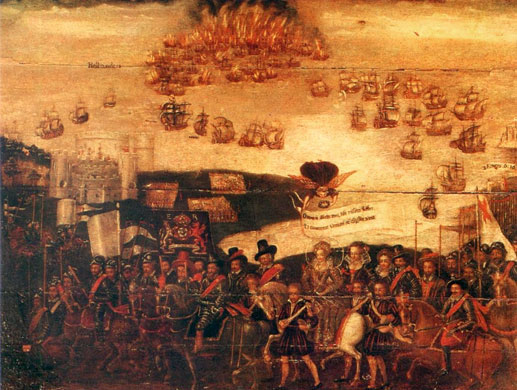
The memory of the Armada….

In 1588, England  ‘stood alone’ against its enemy Spain.

Lucy Aikin, the great Regency/Victorian historian, points out that not a single Continental power came to Elizabeth‘s aid.

Elizabeth relied entirely upon the people of England – and the people rose magnificently. 

Aikin describes how…

…the Corporation of the City of London asked the Queen’s Councillors what was required of them: they replied ‘fifteen ships and five thousand men’. Two days later the city  ‘humbly intreated the council, in sign of their perfect love and loyalty to prince and country, to accept ten thousand men and thirty ships amply furnished’. And, adds the chronicler, ‘even as London, London like, gave precedent, the whole kingdom kept true rank and equipage’.

Even the English Roman Catholics, who the Jesuits confidently predicted would join with Spain to overthrow ‘the incestuous bastard’ Elizabeth, found, in the event, that they loved England rather more than they loved Spain.

Some even found that they loved Elizabeth more than they loved the Bishop of Rome….

Anthony Browne, 1st Viscount Monatague, the third Earl of Southampton‘s maternal grandfather….

 ….and one of the leading Catholics in England was… 

the first that showed his bands to the Queen (though he was very sickly and in age) with a full resolution to live and die in defence of the Queen and of his country, against all invaders, whether it were Pope, King or potentate whatsoever…

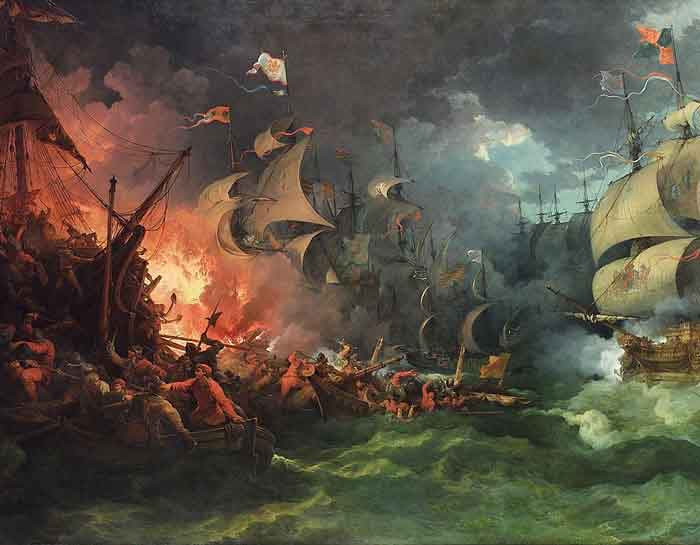
Thanks to the brilliant seamanship of Sir Francis Drake…

….the unleashing of the English fire-ships at Calais against the Spanish….

….and ‘The Winds of God’ that blew the Spanish ships northwards…..

……the enemy was routed at sea.

But everyone thought the Spanish would re-group, return and invade England.  If that happened, the English army was finished.

Yet everyone wanted to be part of that army. In fact, so many many men rushed to join the Earl of Leicester at Tilbury (on the  Thame’s estuary) that people were begged to stay in their own Shires!

Modern map of Tilbury.

A regiment from Dorset was so keen to face the enemy on the coast that it paid £500 [£250,000] for the privilege of doing so.

A man from Essex not only provided 500 men at his own cost; he seized a musket and insisted on fighting with them himself.

It was all a pre-figurement of Henry V’s ‘Crispin Crispianus’ battle-cry that…

Gentlemen in England now a-bed

Shall think themselves accursed they were not here…

And why, apart from a love of England, did everyone want to be at Tilbury? 

Certainly not to be with the hated Leicester…

It was to be with the Queen.

She had made it known she would lead her troops from the front and die fighting with them.

But the Earl of Leicester finally said ‘No’ to the fifty-five year old Elizabeth. He was the only man in England brave enough to do so.

As Elizabeth’s Lieutenant-General he wrote, lovingly but firmly, to the Queen on 27  July, 1588:

Now, for your person, being the most dainty and sacred thing we have in this world to care for, much more for advice to be given in the direction of it, a man must tremble when he thinks of it, specially finding your majesty to have that princely courage to transport yourself to our utmost confines of your realm to meet your enemies and to defend your subjects.

I cannot, most dear queen, consent to that, for upon your well doing consists all and some, for your whole kingdom; and, therefore, preserve that above all.

Yet will I not that (in some sort) so princely and so rare a magnanimity should not appear to your people and the world as it is…..In the meantime, your majesty, to comfort this army and people, of both these counties, may, if it please you, spend two or three days to see both the camp and forts…

To rest you at the camp, I trust you will be pleased with your poor lieutenant’s cabin; and within a mile there is a gentleman’s house, where your majesty also may lie. Thus shall you comfort, not only these thousands, but many more that shall hear of it; and so far, but no farther, can I consent to adventure your person…

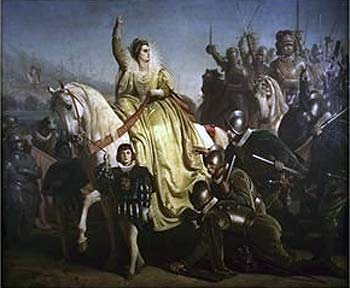
On 8 August Elizabeth visited Tilbury…

She was  ‘mounted’ Akin says….

…on a noble charger, with a general’s truncheon in her hand, a corselet of polished steel laced over her magnificent apparel, and a page in attendance bearing her white-plumed helmet. She rode bare-headed from rank to rank with a courageous deportment and smiling countenance..’

William Camden, the contemporary historian, describes how…

the Queen with a masculine spirit came and took a view of her army and camp at Tilbury, and riding about through the ranks of armed men drawn up on both sides her, with a Leader’s truncheon in her hand, sometimes with a martial pace, another while gently like a woman, incredible it is how much she encouraged the hearts of her captains and soldiers by her presence and speech to them…

Dr. Lionel Sharp, attached to Leicester’s forces, also gave an eye-witness account of how…

 The Queen… rode through all the squadrons of her army as armed Pallas attended by noble footmen, Leicester, Essex and Norris, then Lord Marshall, and divers other great lords. Where she made an excellent oration to her army, which the next day after I was commanded to redeliver all the army together, to keep a public fast…

Here is Elizabeth’s famous speech, as fine as anything penned by Shakespeare himself….

My loving people, we have been persuaded by some that are careful of our safety, to take heed how we commit ourselves to armed multitudes, for fear of treachery, but assure you, I do not desire to live to distrust my faithful and loving people.

Let tyrants fear: I have always so behaved myself that, under God, I have placed my chiefest strength and safeguard in the loyal hearts and good-will of my subjects. And therefore I am come amongst you at this time, not as for my recreation or sport, but being resolved in the midst and heat of battle, to live or die amongst you all; to lay down for my God, and for my kingdom, and for my people, my honour and my blood, even in the dust.

I know I have the body of a weak and feeble woman, but I have the heart of a king and of a king of England too, and think foul scorn that Paramor Spain, or any prince ofEurope, should dare to invade the borders of my realms. To which, rather than any dishonour should grow by me, I myself will take up arms, I myself will be your general, judge and rewarder of every one of your virtues in the field.

And here is a verse version of the same speech which James Aske, another eye-witness, reconstructs in his poem Elizabetha Triumphans published in Armada year…

We will them know that now by proof we see

Their loyal hearts to us their lawful Queen.

For sure we are that none beneath the heavens

Have readier subjects to defend their right:

Which happiness we count to us as chief.

And though of love their duties crave no less

Yet say to them that we in like regard

And estimate of this their dearest zeal

(In time of need shall ever call them forth

To dare in field their fierce and cruel foes)

Will be ourself their noted General

Ne dear at all to us shall be our life,

Ne palaces or Castles huge of stone

Shall hold as then our presence from their view:

But in the midst and very heart of them

Bellona-like we mean as then to march;

On common lot of gain or loss to both

They well shall see we recke shall then betide.

And as for honour with most large rewards,

Let them not care they common there shall be:

The meanest man who shall deserve a might,

A mountain shall for his desart receive.

And this our speech and this our solemn vow

In fervent love to those our subjects dear,

Say, seargeant-major, tell them from our self,

On kingly faith we will perform it there…

 But what, Brothers and Sisters might well ask, has all this to do with ‘the willow cabin’?

EVERYTHING!

Aske,  in the same poem quoted above, describes the fields round Tilbury which, being on the Thames estuary, would have been filled with willow trees…

Now might you see the field late pasture green

Wherein the beasts did take their food and rest,

Become a place for brave and worthy men.

Here noble men, who stately houses have,

Do leave them void, to live within their tents.

Here worthy Esquires who lay on beds of down

Do cabin now upon a couch of straw:

Instead of houses strong, with timber built

They cabins make of poles, and thin green boughs….

So when ‘Caesario’ talks of constructing a willow cabin to express his ‘loyal’ love for Olivia, it would evoke the time when the gentry of England constructed their own willow cabins at Tilbury to express their own ‘loyal’ love for their great Queen…


        Shakespeare is reminding Elizabeth – and her audience – of a time when love filled the land of England.

It was only days to go before the rebellion of the Earl of Essex…

(See, if you haven’t already, Twelfth Night Decoded Part Five:Orsino as the Earl of Essex. )

Read Full Post »

(It is important to have read Part Six before reading this Post – and good to have read The Introduction and Parts One, Two, Three, Four and Five as well.)

As Brothers and Sisters well know, The Shakespeare Code believes that Thomas Nashe collaborated with Shakespeare in the writing of Twelfth Night. Shakespeare wrote the ‘lyrical’ sections, while Nashe wrote the ‘comical ones’.

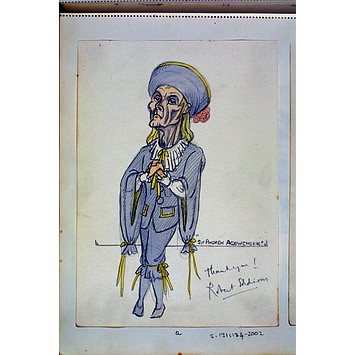
That is why, The Code believes, that Henry Wriothesley, the third Earl of  Southampton is ‘lampooned’ in the play in the figure of the foolish knight, Sir Andrew Aguecheek.

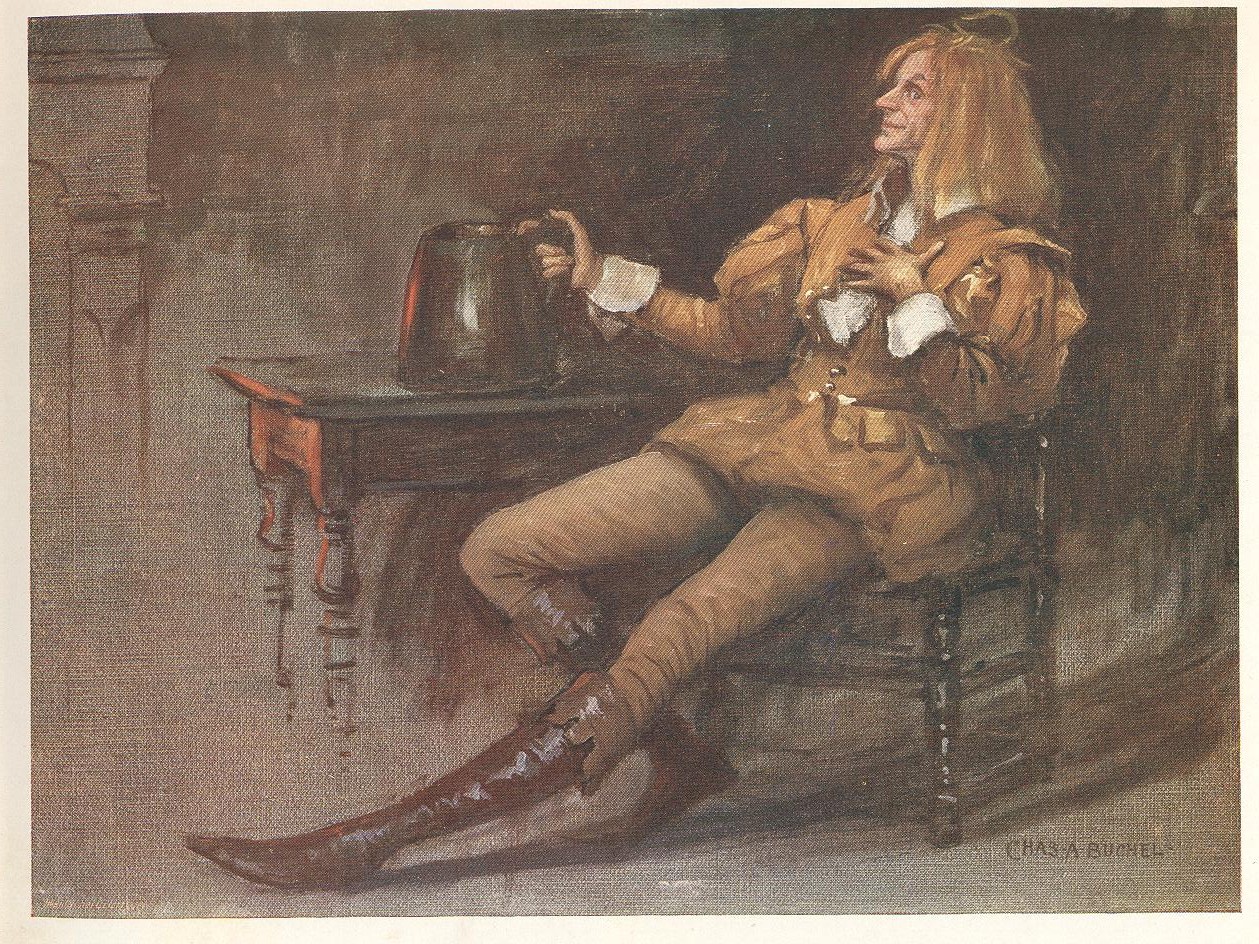
Sir Andrew, designed by Lila di Nobili

Nashe, as The Shakespeare Code has demonstrated, lived and worked for a time at Titchfield.

(See ‘The Strange Case of Mister Apis Lapis.’  )

But he failed to secure, as Shakespeare did, the Earl of Southampton’s long-term patronage. No longer obliged to flatter Southampton to get his money, he is free to satirise a man he despised…

He also does this in The Parnassus Plays where Southampton is mocked in the character of foppish, foolish Gullio.

The Shakespeare Code has suggested a dozen adjectives to describe the characters of Agueceek and Gullio: it will now demonstrate that these same adjectives apply to the Earl of Southampton himself.

1. Foolish.

In 1594, Lady Bridget Manners,the Earl of Rutland’s sister, declined to marry Southampton (or the Earl of Bedford).

 
Lady Bridget Manners in old age


The reason she gave was that…

they be so young and fantastical and would be so carried away…

(i.e. they were raving homosexuals….)

In 1599 Queen Elizabeth described Southampton to Essex (after he had appointed him his General of Horse in Ireland) as:

one whose counsel can be of so little and experience of less use.

 
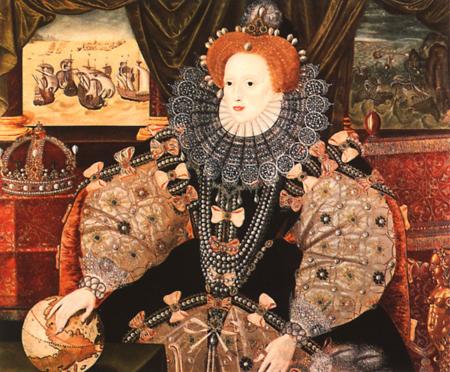
Queen Elizabeth in 1599

She goes on to imply that Essex had only given Southampton the position because he had married Essex’s cousin, Elizabeth Vernon.

Elizabeth Vernon as the Third Countess of Southampton.

Otherwise Essex….

would have used many of [his] old lively arguments against him [Southampton] for any such ability or commandment.

Southampton was also one of the main supporters of Essex’s very foolish rebellion against the Queen.

2. Rich.

Southampton was so rich that Lord Burghley felt justified in imposing a £5,000 fine on him in 1594 when, although he was Burghley’s ward, he refused to marry his grandaughter, the daughter of the Earl of Oxford.

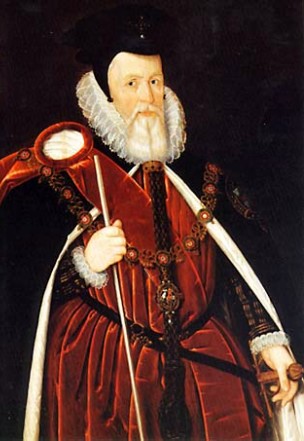
Lord Burghley, guardian to the Earl of Soputhampton.

A £5,000 fine is the equivalent of two and a half million pounds in today’s money.

3. Prodigal.

There is a story (well-authenticated through Sir William Davenport and Nicholas Rowe) that Southampton gave Shakespeare a gift of £1,000 (half a million pounds) to ‘make a purchase.’

 
Sir William D’Avenant, Shakespeare’s illegitimate son and a syphilitic (hence nose).

4. ‘Musical’.

 In Sonnet 8,  Shakespeare writes of Southampton:

Music to hear, why hear’st thou music sadly?

On 15 July 1598, Sir Thomas Edmondes, the English agent in Paris, sent on to Sir Robert Sidney:

certain songs which were delivered by my Lord Southampton to convey to your Lordship from Cavelas.

5.  Polyglottal.

John Florio, in his introduction to his 1598 edition of The World of Words (his Italian/English Dictionary) implies that Southampton is so fluent in Italian he doesn’t need a tutor.

John Florio

 Southampton could certainly write in Latin and Greek as well and is decribed in Willobie his Avisa as ‘Italo-Hispalensis’ which suggests he spoke Spanish as well.

His maternal grandfather, Lord Montague, was Master of Horse to King Philip II of Spain when he was King of England in ‘Bloody’  Mary’s reign.

King Philip of England

6. Vain.

In Sonnet 84, Shakespeare writes of Southampton:

You to your beauteous blessings add a curse

Being fond on praise which makes your praises worse…

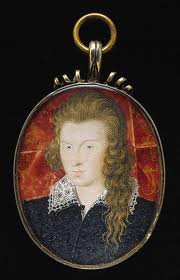
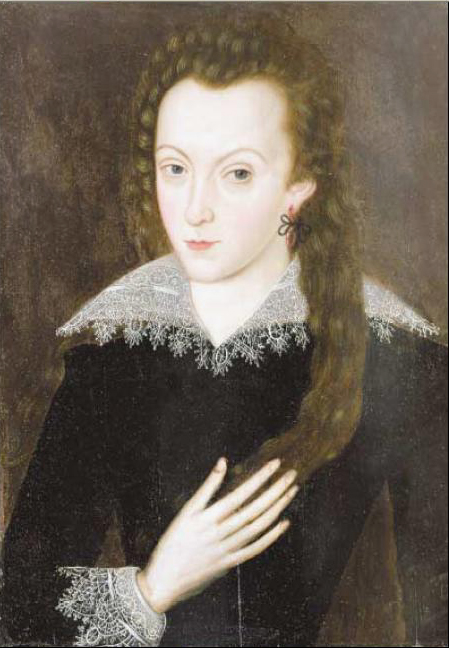
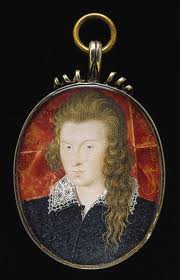
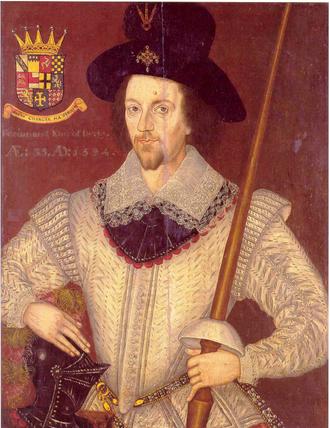
Southampton had  himself painted in a series of portraits to show off…

A. His feminine beauty….

B. His long elegant hair…

C. His long elegant legs…..

D. His long elegant hands……….

Compare these with a photograph of the great Arthur (‘Ello, ‘Ello) Bostrom playing Sir Andrew Aguecheek…

……Long, elegant everything!

Shakespeare, in his Sonnets, encourages this vanity.

In Sonnet 20 he describes Southampton as the ‘master-mistress of [his] passion’ and claims that Dame Nature originally intended Southampton to be a woman – but falling in love with her – turned her into a man instead…

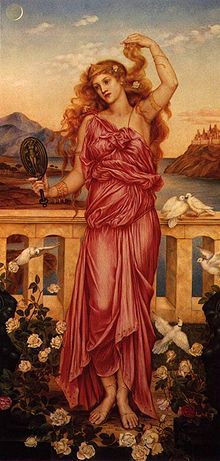
In Sonnet 53 Shakespeare even speculates how beautiful Southampton would look dressed in drag like Helen of Troy!

Helen of Troy

7. Quarrelsome.

Early in  1597 Southampton quarrelled violently with Henry Percy, 9th Earl of Northumberland (‘The Wizard Earl’), Essex’s brother-in-law.

The Wizard Earl

Northumberland was Southampton’s ‘neighbour-from-Hell’ at Petworth, a day’s ride from Titchfield. He and Sir Walter Raleigh were part of a group of Scientists and Occultists attacked by the Jesuits as The School of Atheism and by Shakespeare as The School of Night in Love’s Labour’s Lost.

Southampton sent his rapier to Northumberland, but they never fought a duel.

Early the following year (1598) Southampton got into an argument with Ambrose Willoughby after a playing at cards with him and the Queen. He struck Willoughby near a tennis court and Willoughby snatched a piece of Southampton’s hair. The Queen took Willoughby’s side and banished Southampton, temporarily, from the court.

On 24 January, 1600, Gilbert  Whyte reported  that Thomas Lord Gray had challenged Southampton to a duel – but that Southampton had replied he had the choice of the place and the weapon. He did not want this to be in England as he could expect …

little grace and mercy…

He offered to meet Gray in Ireland or France to fight.

[Note: We now spell Gray’s family name as Grey – but in Elizabethan documents, it is spelt Gray or Graye.]

In May Southampton travelled to Ireland – and Gray to the Low Countries; but their quarrel continued. In July Southampton travelled to Flanders – but by then news of the quarrel had reached the ears of the Privy Council. They stated that it was ‘publicly known’ that there was ‘unkindness and heartburn’  between the two men and wrote to them to forbid the duel.

Southampton ignored the Council, sent his sword to Gray and a duel was fought. Southampton came off the better.

But on 9th January, 1601, Lord Gray, with a party of attendants, made a ‘revenge’ attack on Southampton when he was riding along the Strand with only a boy to hold his horse.

Southampton defended himself till help came, but the boy lost his hand in defending his master. The Queen sent Gray to Fleet Prison.

It is this incident, The Shakespeare Code believes, that Nashe is satirising in The Parnassus Plays when Gullio says:

Since my arrival in England [from Ireland] (which is now six months I take sithens) I have been the death of one of our puling Liteltonians for passing by me in the Moor fields unsaluted, but that there was no historiographer by to have recorded it…

 The ‘puling Liteltonians’ refers to the students of law who still studied the Tenures of Sir Thomas Littleton (1422-1481) at Gray’s Inn Court, the original home of the Grays of Wilton of which Thomas Lord Gray, Southampton’s enemy, was a member.

Gray’s Inn Court, 1881

Even in Twelfth Night, Sir Andrew, terrified of fighting, offers ‘Caesario’  his:

horse, Gray capilet…

This is a dig at Lord Gray, who (as we know from Leslie Hotson’s brilliant researches) was sitting next to Queen Elizabeth at the first night of Twelfth Night.   Both were trying to translate the play into Latin for the sake of a visiting Bavarian Count, Wolfgang Wilhelm.

Wilhelm had already visited the Court on 14th December – where he had dined, lavishly, The Code imagines – in the private chambers of the Lord Chamberlain (George, Lord Hunsdon) the original of Sir Toby Belch. See Part Three.

 8. Cowardly.

Though it was generally agreed that Southampton was a gallant soldier, he was terrified of Queen Elizabeth.  He sneaked back to England from Europe, incognito, to marry Elizabeth Vernon in hopes that the Queen wouldn’t find out…

Also, at his trial for treason it was thought (understandably perhaps)  that…

 he was somewhat too low and submiss, and seemed too loath to die before a proud enemy…

9. Maladroit with women

Southampton’s father, the second Earl of Southampton, who believed his wife, Mary Browne, second Countess of Southampton,  had been unfaithful to him, taught his son Harry to hate women. He brought him up in a predominantly male world in which (according to Mary Browne) he had made his ‘servant his wife’.

Mary Browne, second Countess of Southampton.

Harry consequently had a stormy relationship with his mother – and as a teenager showed so little interest in girls that on his seventeenth birthday the Countess commissioned Shakespeare to write seventeen Sonnets to turn him ‘straight’.

So it was invevitable that when he did fall in love (with Shakespeare’s mixed-race mistress Amelia Bassano) the relationship was also stormy. It is cruelly satirised in Willobie his Avisa where H.W. [Henry Wriothesley] has…

a fantastical fit at the first sight of A’ [Avisa=Amelia].

The Shakespeare Code believes that Harry Southampton stole Amelia away from Shakespeare to make himself the centre of Shakespeare’s attention. The anonymous author of Willobie his Avisa (which The Code believes was Amelia herself) attributes dark motives to Shakespeare .

It claims that because Shakespeare was hurt in love by ‘Avisa’ he wants his young friend Harry to be hurt as well. In the end Avisa despises Harry’s tears and hysterics and ‘blobbered face’ and leaves him dying of love-sickness…

Even his coutship of Elizabeth Vernon, Essex’s cousin and Queen Elizabeth’s Lady-in-Waiting, was an hysterical process.

Elizabeth Vernon

Rowland Whyte, a Court gossip, wrote in 1595:

My Lord of Southampton do with too much familiarity court the fair Mistress Vernon…

Whyte  followed this up three years later with:

I hear my Lord Southampton goes with Mr. Secretary [Cecil] to France and so onward in his travels; which course of his  doth extremely grieve his mistress that passes her time in weeping and lamenting…

Whyte adds (a week later):

I heard of some unkindness should be between 3000 [Code for the Earl of Southampton] and his mistress occasioned by some report of Mr. Ambrose Willoughby.  3000 called him to account for it, but the matter was made known to the Earl of Essex and my Lord Chamberlain, who had them under examination; what the cause is I could not learn for it was but new; but I see 3000 is full of discontentments…His fair mistress doth wash her fairest face with many tears…

On 12th February he added:

My Lord of Southampton is gone [to France] and left behind him a very desolate Gentlewoman that almost wept out her fairest eyes. He was at Essex house with 1000 [C ode for Essex] and there had been much private talk with him for two hours in the court below…

In the event, The Shakespeare Code is pleased to report that Southampton’s marriage to Elizabeth Vernon  proved a happy one.

10. Plagiaristic.

In Twelfth Night Sir Andrew Aguecheek copies down phrases that  ‘Caeasrio’ uses to praise Olivia in a commonplace book. His intention is to pass them off as his own later.

A Commonplace Book

We know for certain that Southampton had a commonplace book because Shakespeare gave him one! In Sonnet 77 he talks of the present of a book whose:

vacant leaves the mind’s imprint will bear…

And advises Southampton that whatever his memory cannot ‘contain’ [ he should…

Commit to these waste blanks, and thou shalt find

Those childrern nursed, delivered from thy brain…

Whether the book was filled, like Gullio’s mind is, with

nothing but pure Shakespeare, and shreds of poetry that he [Gullio] hath gathered at the theatres….

we shall never know. We learn, in Sonnet 122, that Southampton filled up his commonplace book and gave it back to Shakespeare.

Shakespeare promptly lost it.

11.  Deluded.

Southampton genuinely believed he could become the lover of Queen Elizabeth – just as Sir Andrew believes he is in with a chance with the Countess Olivia.

It is true that when he first came to the Court in 1595, the Queen showed some interst in Southampton.  She was growing tired of Essex and so was, according to Fulke Greville…

almost superinduced into favour the Earl of Southampton.

But a full-on, Essex-like affair was never on the cards. In November of the same year the Queen refused to allow Southampton to help her mount her horse. Southampton flounced out of the Court.

The truth is, Elizabeth could have eaten the Earl of Southampton for breakfast…

Also, Southampton was deluded enough to believe that the citizens of London (made prosperous under Elizabeth) would rise up under Essex and overthrow the Queen.

12. Manipulable.

Shakespeare had a profound influence over the Earl of Southampton. With his first seventeen Sonnets he tried to persuade him that heterosexual love might be a pleasant distraction from his determined homosexuality: with Romeo and Juliet – which local legend claims was first performed at Titchfield – he succeeded. The Parnassus Plays suggest that Shakespeare even wrote Southampton’s love poetry for him – rather like Cyrano de Bergerac…

Depardieu as Cyrano in the movie 'sobbie'

But Southampton fell under the sway of a far more powerful (and malign) influence. Henry Cuffe was a humble Grammar School boy who rose to become Regius Professor of Greek for seven years at Oxford University.

Cuffe  joined the Essex/Southampton entourage and was described as ‘a great philosopher’ who could…

suit the wise observations of ancient authors to the transactions of modern times.

Cuffe brainswashed the Earl of Essex into rebellion through his interpretation of Aristotle’s Poetics – and in 1598 Essex sent him to Paris to brainwash the Earl of Southampton as well…

Which, as Brothers andSisters of The Code will by now have realised…..

WAS NO HARD TASK!

Trixie the Cat says….

The Shakespeare Code will reveal in later Posts how the appalling Henry Cuffe was the model for the appalling Iago…

And one or two other ‘philosopher villains’ as well….

Othello manipulated by Iago.

 So stay tuned to THE SHAKESPEARE CODE…

 Your STATION OF THE STARS!

Bye, now.

Read Full Post »
‘More flags than the exterior of Harrods…’

Apart from the UNITED KINGDOM of course (where our Head Office is currently located) The Code has been contacted by Brothers and Sisters in….

ONE HUNDRED AND NINETY EIGHT COUNTRIES

CURAÇAO

curacao map

SAINT MARTIN

sint maarten flag

LESOTHO

lesotho flag

MALI

mali flag

FRENCH POLYNESIA

flag french polynesia

CENTRAL AFRICAN REPUBLIC

central african republic

BENIN

benin

UZBEKISTAN

uzbekistan

LIBERIA

liberia

MADAGASCAR

madagascar

COTE D’IVOIRE

cote d'ivoire


SAINT VINCENT AND THE GRENADINES

saint vincent and the grenadines

PALESTINIAN TERRITORY, OCCUPIED

palestinian occcupied

MOZAMBIQUE

mozambique

UNITED REPUBLIC OF TANZANIA

tanzania united rerpublic

LIECHTENSTEIN

liechtenstein

CÔTE D’IVOIRE

cote d'ivoire

BHUTAN

bhutan

FRENCH GUIANA

french guiana

GAMBIA

Gambia

FALKLAND ISLANDS

falkland islands

ANGOLA

angola

GUADELOUPE

guadeloupe

BURUNDI

burundi

SENEGAL

senegal

SWAZILAND

swaziland

ETHIOPIA

ethiopia

GRENADA

grenada

SYRIAN ARAB REPUBLIC

syria

MALI

mali

HAITI

haiti

TONGA

tonga

KAZAKHSTAN

kazakhstan flag

NORTHERN MARIANA ISLANDS

north marianas islands flag

CAPE VERDE ISLANDS

cape verde flag

REUNION

reunion flag

 TURKS AND CAICOS ISLANDS

turks and caicos islands

ALGERIA

algeria flag

BOTSWANA

botswana flag

YEMEN

yemen flag

ARUBA

aruba flag

SAINT KITTS AND NEVIS

saint kitts and nevis

GUAM

guam flag

ALBANIA

albania flag

FAROE ISLANDS

faroes islands flag

BRITISH VIRGIN ISLANDS

british virgin islands

BARBADOS

MONACO

 SEYCHELLES

BAILIWICK OF JERSEY

AFGHANISTAN

MOROCCO….

MALAWI

SAINT LUCIA

CAYMAN ISLANDS

THE FORMER YUGOSLAVIA

UGANDA

BOLIVIA

OMAN

THE CO-OPERATIVE REPUBLIC OF GUYANA

ISLE OF MAN

MARTINIQUE

ANTIGUA AND BARBUDA

CHINA

GIBRALTAR

LIBYAN ARAB JAMHIRYA

ZIMBABWE

VIRGIN ISLANDS (U.S.A.)

BAHAMAS

THE BAILIWICK  (‘Ballywick’) OF GUERNSEY

MACAO

NAMIBIA

DOMINICAN REPUBLIC

GHANA

PAPUA NEW GUINEA

SAUDI ARABIA

MYANMAR

NEPAL

 FIJI

KYRGYZSTAN

CYPRUS

SURINAME

HONDURAS

MONGOLIA

SUDAN

BAHRAIN

LAOS

AALAND ISLANDS

NEW CALEDONIA

IRAN

ESTONIA

MONTENEGRO


BRUNEI DARUSSALAM

BERMUDA

NIGERIA

MOLDOVA

PANAMA

TANZANIA

MACEDONIA

CAMEROON

PARAGUAY

LUXEMBOURG

DOMINICA

KAZAKHSTAN

AZERBAIJAN

MALDIVES

BELARUS


BANGLADESH

TUNISIA

IRAQ

GUINEA-BISSAU

JORDAN

GUATEMALA

KUWAIT

URUGUAY

NORTH MARIANAS ISLANDS

AMERICAN SAMOA

TRINIDAD AND TOBAGO

KENYA

GEORGIA

RWANDA

MAURITIUS

ECUADOR

TAIWAN

 COSTA RICA

ARMENIA

PUERTO RICO

QATAR

BELIZE

CAMBODIA

LITHUANIA

JAMAICA

LATVIA

PERU

PAKISTAN

EL SALVADOR

SERBIA

LEBANON

ST.  VINCENT AND THE GRENADINES

BOSNIA AND HERZEGOVINA

VENEZUELA

EGYPT

FINLAND

ICELAND

JAPAN

KOREA

ROMANIA

UKRAINE

ISRAEL

ARGENTINA

SRI LANKA

NICARAGUA

VIET NAM

IRELAND

SLOVAKIA

SLOVENIA

THE REPUBLIC OF BULGARIA

THE REPUBLIC OF LEBANON

THE KINGDOM OF THAILAND

COLOMBIA

THE KINGDOM OF NORWAY

THE REPUBLIC OF CHILE

THE UNITED ARAB EMIRATES

THE PALESTINIAN TERRITORIES

THE NETHERLANDS

DENMARK

CZECH REPUBLIC

ITALY

MALTA

BELGIUM

INDONESIA

SWEDEN

 SWITZERLAND

PORTUGAL

GERMANY

AUSTRALIA

POLAND

 THE PHILLIPINES

SOUTH AFRICA

RUSSIA

 BRAZIL

HUNGARY

CROATIA

THE UNITED STATES OF AMERICA

CANADA

SPAIN

MEXICO

INDIA

GREECE

ZAMBIA

NEW ZEALAND

AUSTRIA

TURKEY

HONG KONG

MALAYSIA

SINGAPORE

FRANCE

More flags than the exterior of Harrods!

If you are a participating Brother or Sister from a country which has not been mentioned, please contact us (anonymously if need be) and we will add your homeland to this list…

WITH PRIDE!

Read Full Post »
(It is best to read The Introduction and Parts One, Two, Three, Four and Five first)

I WAS ADORED ONCE,TOO…

Norman Forbes as Aguecheek in Tree's 1901 Production of 'Twelfth Night'.

What dozen adjectives would you use to describe Sir Andrew Aguecheek?
 
The Shakespeare Code would like to offer the following:
 
 1. Foolish

Maria calls him ‘a foolish knight’ and Sir Toby ‘a gull’. He is barely aware of what is going on and joins in with jokes without understanding why they are funny.

2. Rich.

Sir Toby says Sir Andrew has ‘three thousand ducats a year’. (A ducat was a third of a pound, a pound was worth a modern £500: so Aguecheek’s annual income was £500,000).

3. Prodigal.

We see Sir Andrew tip Feste when  Sir Toby has already tipped him and when he’s aleady sent Feste a sixpence the night before.

Sir Toby claims to have made ‘two thousand strong’ from him. If  ‘strong’ = ‘stirling’ then Sir Toby has pocketed a cool £1 million from Sir Andrew.

In the course of the play, Sir Toby tells Sir Andrew to:

 Send for money, knight…

4. ‘Musical’.

Sir Toby says that Sir Andrew plays the viola di gamba and Sir Andrew himself says: ‘

I am dog at a catch…

5. Polyglottal.

Sir Toby claims Sir Andrew speaks ‘three or four languages, word for word, without book’. (But when it comes down to it, Sir Andrew cannot even translate ‘pourquoi’).

6. Vain

Sir Andrew says of his hair:

It becomes me well enough, does’t not…

And of his leg:

It does indifferent well in a dam’d coloured stock….

7. Quarrelsome.

Maria says of Sir Andrew:

 he’s a great quarreller…. 

and Sir Andrew certainly works himself up into a lather when he challenges ‘Caesario’.

8. Cowardly.

Maria says Sir Andrew has…

the gift of a coward to allay the gust he hath in quarrelling…

And Sir Toby says:

 if Sir Andrew were opened and you find so much blood in his liver as will clog the foot of a flea, I’ll eat the rest of th’anatomy…

9. Maladroit with women.

Sir Andrew wants to win the Countess Olivia, but he doesn’t even know how to chat up her serving-woman, Maria.

10. Plagiaristic.

Sir Andrew writes down in his commonplace book words from ‘Caesario’s’ address to the Countess Olivia.

11. Deluded.

Sir Andrew believes he is in with a chance with Countess Olivia.

He also believes that he:

 was adored once, too…

(It is possible, The Code admits, that his mother loved him…)

12. Manipulable.

Aguecheek succumbs immediately to flattery and does exactly what everyone tells him to do.

Robert Eddison as Sir Andrew

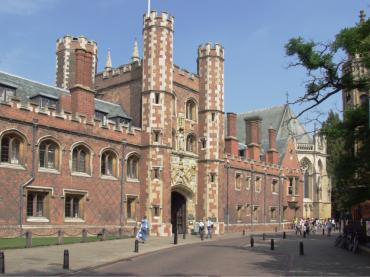
At Christmas, 1601, the students of St. John’s College, Cambridge, put on a three part, satirical ‘revue’ – The Pilgrimage to Parnassus and The Return from Parnassus. It had been delayed from Christmas 1600  because of the tense  political situation at the Court.

St. John's, founded by Queen Elizabeth's father

One of the characters in the play is called Ingenioso.

He makes his money from writing pamphlets, complains about the meanness of patrons and the inevitable poverty of scholars. 

The character is clearly based on Thomas Nashe – and, The Shakespeare Code believes – was written by him.

It would also have been played by him had he not died in the course of 1601.

Thomas Nashe

Another of the characters in the entertainment is called Gullio, who, The Shakespeare Code believes, is also based on a real person. 

Gullio can be described with exactly the same dozen adjectives as Sir Andrew Aguecheek!

1. Foolish.

Ingenioso introduces Gullio with:

Now gentleman you may laugh if you will, for here comes a gull…

2. Rich.

Gullio says to Ingenioso:

 I have restored thy dylaniated [torn to pieces] back and ruinous estate to those pretty clothes whererin thou now walkest…

He also claims to maintain other ‘poetical spirits’ that live upon [his] ‘trenchers’.

3. Prodigal

I am never seen at the court twice in one suit of apparrel: that’s base. As for boots, I never wore one pair above two hours…

4. ‘Musical’

How often of yore  have I sung my sonnets under her window to a consorte of music, I myself playing upon my ivory lute most enchantingly.

5. Polyglottal

My Latin was pure Latin, and such as they speak at Rheims and Padua.

And:

 It is  my custom in my common talk to make use of my reading  in the Greek, Latin, French, Italian, Spanish poets…

6. Vain

I had in my days not unfitly been likened to Sir Phillip Sidney, only with this difference, that I had the better leg, and more amiable face….

He adds:

 I stood stroking up my hair, which became me very admirably….

7.  Quarrelsome

Since my arrival in England (which is now six months I take sithens) I have been the death of one of our puling Liteltonians for passing by me in the Moor fields unsaluted, but that there was no historiographer by to have recorded it…..

8. Cowardly.

Ingenioso says of Gullio:

He never heardest the report of a gun without trembling –

9. Maladroit with women.

 He steals articles of women’s clothing (the ‘humble retainer to [a] busk’ and a ‘shoe-string’) to satisfy his ‘luxuriousness’.

He also demonstrates how he makes love to women by making love to Ingenioso!

10. Plagiaristic.

Ingenioso says Gullio

never spok’st witty thing but out of a play…[his] body is nothing a but a fair inn of fairer guests that dwell therein…

He has used William Shakespeare’s verse to seduce his Lesbia and says to Ingenioso that he…

will bestow on them [the ladies of the court] the precious stones of my wit, a diamond of invention that shall be above all value and esteem. Therefore, sithens I am  I am employed in some weighty affairs of the court, I will have thee, Ingeniosos to mke them, and, when thou hast done, I will peruse, polish and corrrect them.

11. Deluded.

He claims that ‘many dainty cout nymphs’ have ‘with petitioning looks’ ‘sued ‘ for his love’ and he has had  a great affair with a ‘Lady Lesbia’ of the court.

12. Manipulable.

Ingenioso, by flattering Gullio and promising to make him immortal, gains a commission from him.

OTHER SIMILARITIES….

In Twelfth Night Sir Andrew accepts the fact that other people describe him as a ‘fool’.

Malvolio says (quoting the letter): Besides you waste the treasure of your time with a foolish knight.

Sir Andrew: That’s me, I warrant you.

Malvolio: One Sir Andrew…

Sir Andrew: ‘I knew ’twas I , for many do call me fool’

Like Sir Andrew Aguecheek, Gullio also accepts the fact that other people describe him as a ‘fool’.

Igenioso, quoting Lesbia, says: ‘What? Gullio, that known fool?’ said she.

Gullio: Why that’s very true, my fame is spread far and near.

Brothers and Sisters of The Code will realise that….

THESE JOKES ARE EXACTLY THE SAME BECAUSE THEY ARE WRITTEN BY THE SAME PERSON:

THOMAS NASHE.

SIMILARLY….

In Twelfth Night Sir Andrew, asking about his hair, says:

It becomes me well enough, does’t not?

Sir Toby replies with:

Excellent, it hangs like flax on a distaff; and I hope to see a housewife take thee between her legs, and spin it off…

In The Return to Parnassus, Gullio says:

 I stood stroking up my hair, which became me very admirably….

 And a character called Sir Roderick says:

 Her viol de gamba is her best content

For twixt her legs she holds her instrument….

Gullio, we also learn, claims to be well-travelled and worships the work of William Shakespeare.

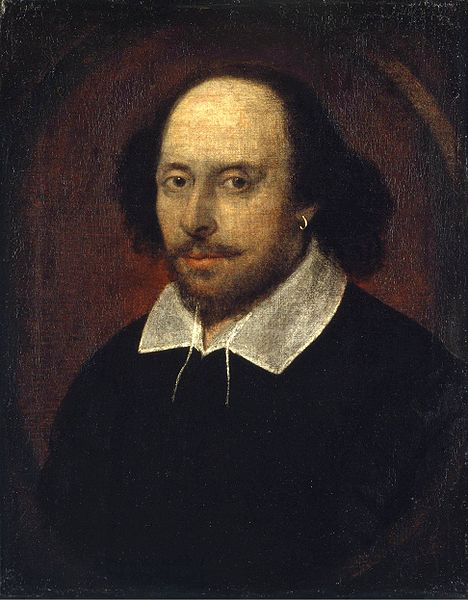
Let this duncified world esteem of Spencer and Chaucer, I’ll worship sweet Mr. Shakespeare, and to honour him will lay his Venus and Adonis under my pillow…I’ll have his picture at my study in the court…

The Chandos Portrait of William Shakespeare

In the course of the play, Ingenioso offers himself to Gullio as the poet who can make him immortal:

You have gotten a suppliant poet that will teach mossy posterity to know how that this earth in such a reign was blest with a young Jupiter.

But left alone, Igenioso’s true feelings about Gullio come out. He lambasts himself that, in his need for money, he’s had to creep around Gullio, listen to his lies, applaud his boasts and feed his lust by writing pornography for him:

He starts  with the line:

Farewell base carle clothed in a satin suit,

This is a parody of  Robert Greene’s death-bed attack on Shakespeare (which, as Brothers and Sisters of The Code well know, was really written by Nashe)

A tiger’s heart wrapped in a player’s hide

 This, in turn, is a parody of Queen Margaret in the Henry VI plays:

A tigers’ heart wrapped in a woman’s hide..

Ingenioso continues:

Farewell guilty ass, base broker’s post. 

Too oft have I rubbed o’er thy mule’s dead head,

Fed like a fly on thy corruption:

Now had I rather live in poverty

Than be tormented with the tedious tales

Of Gullio’s wench and of his luxuries,

To hear a thousand lies in one short day

Of his false wars at Portingale or Calls.

My freer spirit did lie in tedious woe

Whiles it applauded bragging Gullio

Applied my vein to sottish Gullio

Made wanton lines to please lewd Gullio.

Attend henceforth on Gulls for me who list,

For Gullio’s sake I’ll prove a Satirist.

So, if Ingenisos is Thomas Nashe, who is Gullio?

 Here are two more clues:

Clue A:  Thomas Nashe wrote a pornographic poem, The Choice of Valentines, which he dedicated to:

The Right Honourable, the Lord S.

It begins:

Pardon, sweet flower of matchless Poetry,

And fairest bud the red rose ever bare…

Clue B:  There was an English Earl whose crest contained four silver falcons: but many people mistook them for sea-gulls as his favourite estate was near to the coast.

 In 1618 one ‘ H.G.’ wrote in The Mirrour of Majestie:

 No storm of troubles, or cold frosts of friends,

Which on free greatnesss too too oft attends

Can, (by presumption), threaten your free state;

For these presaging sea-birds do amate

 Presumption’s greatness; moving the best minds

By their approach, to fear the future win

Of all calamity, no less than they

Portend to sea-mean a tempestuous day;

 Which you forseeing, may beforehand cross

 As they do them, and so prevent the loss….

ANSWERS.

Clue A:  The Shakespeare Code believes that the right Honourable the Lord S. is Henry Wriothesley, the third Earl of Southampton.

Henry Wriothesley, third Earl of Southampton

Charles Nicholl has shown that Nashe must have written his Valentines  poem by April 1593. This is because Gabriel Harvey, in an attack on Nashe, threatened to:

 decipher thy [Nashe’s] unprinted packet of bawdy and filthy rhymes’ and denounce the ‘ruffianism of thy brother muse’. 

Southampton in 1593 was nineteen years old. His mother, Mary, the second Countess of Southampton, had commissioned Shakespeare to write seventeen poems for his seventeenth birthday to try to get him interested in girls.

Venus and Adonis and The Rape of Lucrece both border on the pornographic and both were dedicated to Southampton.

Nashe was simply carrying on a family tradition…

‘The fairest bud the red rose ever bore’ also refers to Southampton.

In his Sonnets, Shakespeare refers to him as ‘my rose’ – an allusion to the family name Wriothesley (which we know from the Titchfield Parish Register was pronounced ‘Riosely’ ) and the emblem of the town of Southampton.

Southampton Town Crest

The only other contender for the ‘Lord S.’ title would be Ferdiando Stanley, Lord Strange.

Ferdinando Stanley, Lord Strange

But by 1593 he was in his mid-thirties and with three daughters – scarcely in need, The Code would have thought, of  ‘wanton lines’ from Nashe

Clue B: The crest with ‘gulls’ that ‘H.G.’ is describing belonged to the Southampton family.

Falcons or Sea-gulls in upper left-hand corner?

So Gullio, The Shakespeare Code firmly believes, is:

 Henry Wriothesley, third Earl of Southampton.

 ACKNOWLEDGEMENT

The Code has learnt that the great German scholar, Dr. Gregor Sarrazin (1854-1915) was also of the opinion that Gullio was the third Earl of Southampton, and wrote so in:

Shakespeare Jahrbuch, XXXI, 217 ff.

If Gullio is the Earl of Southampton, then by implication, Sir Andrew Agueecheek is the Earl of Southampton as  well…..

(It’s best to read Part Seven now).


Read Full Post »
Recently the Chief Agent of ‘The Shakespeare Code’, with Trixie the Cat on his arm, attended a performance of Being Shakespeare at the Trafalgar Studios in London.

The script is by Jonathan Bate….

 and it is performed by Simon Callow….

The Agent and the Cat were so moved by the show that they told Simon afterwards over a glass of wine (and a saucer of milk) that his SUBLIME performance was even better than Robert Speight’s!!!

(For the significance of Speight, please click on the ‘Biography’ button at the top of the page).

What made the evening particularly thrilling was that the first half closes with an evocation of Shakespeare’s life with the Earl of Southampton in Titchfield!!!

THE CODE’S THEORIES ARE STARTING TO PERMEATE MAINSTREAM THOUGHT!

How 'Place House' (Titchfield Abbey re-built) looked in Shakespeare's time.

 To quote Prof. Bate’s script…

The Earl of Southampton’s household was at Titchfield Abbey in rural Hampshire. Here, the brilliant twenty-year-old, with his deep dark eyes, his tumbling locks, his earrings and his slashed doublet and hose, liked to hold court, entertaining poets, painters and philosophers in high style. It must have seemed a million miles away from plague-infested London: a huge formal garden in which to walk and think; limitless supplies of food and drink; servants; witty banter; access to a great library. One of Southampton’s guests was his language tutor, the formidable John Florio, who at that time was translating the work of the most modern thinker in Europe, Michel de Montaigne, who in his essays questioned everything, placing man, not God, at the centre of the universe. “What a piece of work is a man!”, Montaigne might have cried, had he been an English dramatist of genius, “How noble in reason! How infinite in faculty! In form and moving how express and admirable! In action how like an angel! In apprehension how like a god! The beauty of the world! The  paragon of animals!”

Hamlet was still only a glint in Shakespeare’s eye, of course, but already, almost overnight, his writing has changed. The plays are filled with new voices: courtship and courtiership, intellectual banter and philosophical speculation. Sonnets and love songs are woven into the their very texture. He’s already mastered barnstorming tragedy and knockabout comedy, sword fights and bawdy jokes for the gaping groundlings; but now he mixes it all together. Now he learns how to put the whole world on the stage. This is the moment, if there is a moment, at which Shakespeare becomes Shakespeare…

(At this point in the evening Trixie passed out in pleasure).

The Code thanks Simon and Jonathan, Roll of Honour Inductees.

Both gentlemen were kind enough to read  Love’s Labour’s Found  – the basis of The Shakespeare Code – when it was published in 2002.

To read Prof. Bate’s endorsement of The Code’s ‘Apis Lapis’ Theory, click here.

To read Simon Callow’s endorsement of the The Code’s ‘Titchfield’ and ‘Apis Lapis’ Theories, click here.


Read Full Post »
A STATEMENT FROM THE HEAD OFFICE OF THE SHAKESPEARE CODE

Thank you, Brothers and Sisters, from all over the world, for your continued – and rapidly growing – support.

We would like to present you with a bouquet of Southampton Roses…

Thank you, Brothers and Sisters of The Code


 It is our sworn intention to appoint a new Fellow every thousand views – and Brothers and Sisters will be delighted to learn that the Honour has fallen to the actress, singer and musician….

KAREN GLEDHILL

She now has the inalienable right to use the designated letters F.S.C. (Fellow of The Shakespeare Code) after her name and is already an Inductee of the coveted Roll of Honour.

On being told of her appointment, so great was Karen’s joy she burst into verse…..

A fellowship, you say, bestow’d on me?

Delightful, and such unexpected news!

This honour I accept most graciously,

It would be quit ill-mannered to refuse.

My humble contribution has been small,

‘Tis Trotter who has all the revelations,

An insight here or there as I recall

During some of our extensive conversations.

I must confess to finding it quite hard

To deal with all this public recognition,

The credit surely lies with our dear Bard

Without whom none of this would have been written.

In gratitude I dedicate this Ode

To Stewart, Trixie and The Shakespeare Code!

The Shakespeare Code has decided to limit the number of Fellows to 35 – the number of Shakespeare plays listed in the First Folio. Each Fellow will ‘adopt’ a Shakespeare play as his or her area of special interest.

Our first Fellow (Janet St. John-Austen, F.S.C.) has chosen Hamlet as she believes it to be the Shakespeare play that follows most closely the contours of her own complex mind.

 Karen Gledhill, F.S.C., has chosen A Midsummer Night’s Dream for an equally special reason which Trixie the Cat will now reveal…

Trixie writes:

Blonde, smiling, cooly intellectual but warmly human, the lovely Karen knew she was going to be an actress at the age of five!  A  parent came in’ to do drama’ at her North London primary school.

Karen was HOOKED!

Most of her childhood and teen age years, however, were spent playing music and singing in a variety of music schools and at the highly prestigious, highly competitive, Camden School for Girls.

But she went on to study Classics at the even more prestigious (and even more competitve) Newnham College, Cambridge, where she  embarked on what she calls….

the alternative theatre training offered there…

Newnham College, Cambridge, a closet Academy of Drama.

Her first job was as an actress/musician with a children’s company in which she played a kidney, a tooth-rot gangster, a rain cloud, and a cowgirl with a six foot high banana puppet called Rocky! This was in the days when you had to earn your equity card…

There followed a few years of repertory and touring, including six months at the Northcott Theatre in Exeter,  then run by The Code’s own Stewart Trotter.

It was here that she played a spirited and touching Viola in  Twelfth Night, set on a frozen river. She made a spectacular  first entrance, drenched  in sea-water and walking barefoot on the ice…

Karen as Viola and Caesario.

To read the late, great B. A. Young’s review of the production in The Financial Times, click here (We’ve added new photographs to this Post).

Some peachy T.V. roles followed her Exeter season,  including Poirot and the English nation’s favourite T.V. show, Dr. Who.

Karen has the distinction of being in the famous episode when the Daleks learned to walk up stairs!  Children all over England ran  to the ‘safety’ of their bedrooms, but TO NO AVAIL! 

Dalek climbing stairs.

 In 1990 life changed with the birth of her first daughter, and she has been acting as chauffeur, cook, psycho therapist, teacher nanny – in other words ‘mother’  for the last 21 years…

But, interspersed with other jobs (breast-feeding counsellor, school governor, swimming club secretary, etc. etc.) she has sustained a spordic acting career and was recently spotted in Wallander

In 2008 Karen suddenly got the idea of adapting A Midsummer Night’s Dream for the Hanover Primary School in North London, where her daughter was in her final year.

Karen turned it into a musical with choral narrative and commentary.  All the spoken parts are original Shakespeare, but much of the play is sung to modern lyrics – all written and composed by Karen.

The Headmistress of the school, Amanda Reese, writes:

The show was a resounding success on many levels. Children gained a real understanding of the story and were quite un-phased by the Shakespearian language. They performed with fantastic confidence and great skill both in their delivery of the lines and in their singing.

 Karen’s musical adaptation appealed to all with its catchy melodies and great humour. The children in the production clearly enjoyed every moment and spoke with tremendous enthusiasm about their experience.


Parents of children at the school were equally enthusiastic. One wrote to Karen:

Just to say again how touching, witty, stylish and altogether stunningly enjoyable I found today’s production.   I think the lyrics and music quite exceptional and think you are truly gifted as a lyric and song-writer.   Shakespeare would have burst into tears with delight.   I am quite sure this version of ‘MND’ will be done over and over again…

The parent was quite right: the adaptation has been performed in 4 other schools and many more are lining up to perform it…

..It even received a rave review from Rosie Millard in The Sunday Times who reported that Professor Jonathan Bate (another Roll of Honour Inductee) thoroughly approved.

(To read Professor Bate’s endorsement of The Code’s ‘The Strange Case of Mr. Apis Lapis’ click here.)

IF YOU ARE INTERESTED IN PRODUCING THIS GREAT SHOW,  CONTACT US AT THE CODE AND WE”LL PASS ON YOUR DETAILS TO KAREN!!!

Karen’s link and interest in The Shakespeare Code is through a long friendship with The Code’s Chief Agent, Stewart Trotter. 

He is is also her Acupuncturist…

HE  COULD BE YOURS IF YOU LIVE IN LONDON!!!

(He practises in South Kensingtgon and Kilburn)

See: www.stewarttrotter.com

Bye, now….

THE SHAKESPEARE CODE EXTENDS ITS WARMEST CONGRATULATIONS TO KAREN GLEDHILL, F. S. C., A FINE ACTRESS AND A STAUNCH AND LOYAL FRIEND.

To read Karen’s own endorsement of The Shakespeare Code, click here.

To read about The Code’s appointment of its first Fellow (Sister Janet St.John-Austen, F. S. C. )

click here.


Read Full Post »
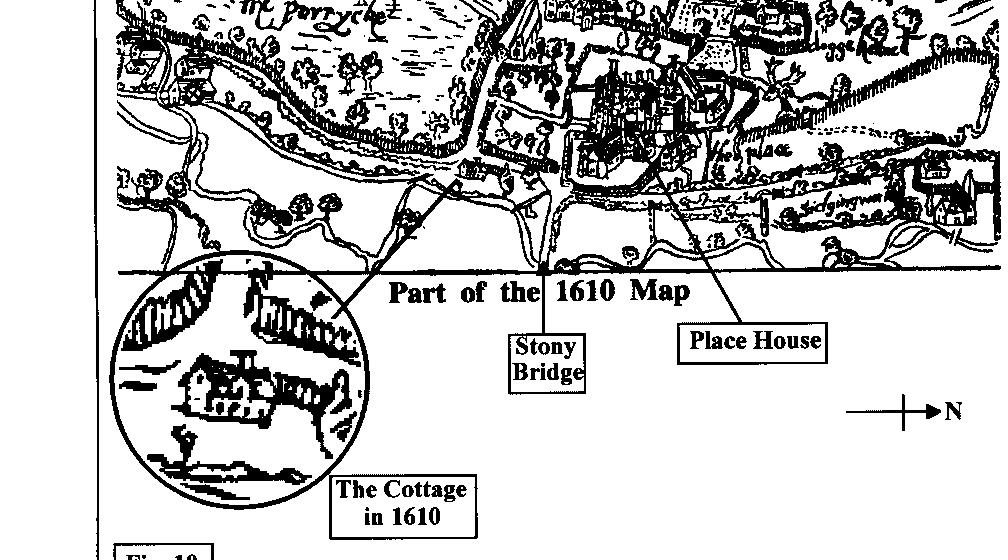
« Newer Posts - Older Posts »