Feeds:
Posts
Comments

Archive for the ‘Uncategorized’ Category

(It’s best to read ‘Macbeth’ Decoded. Parts One, Two  and, especially, Three first).
THE TRIXIE LECTURES (II)

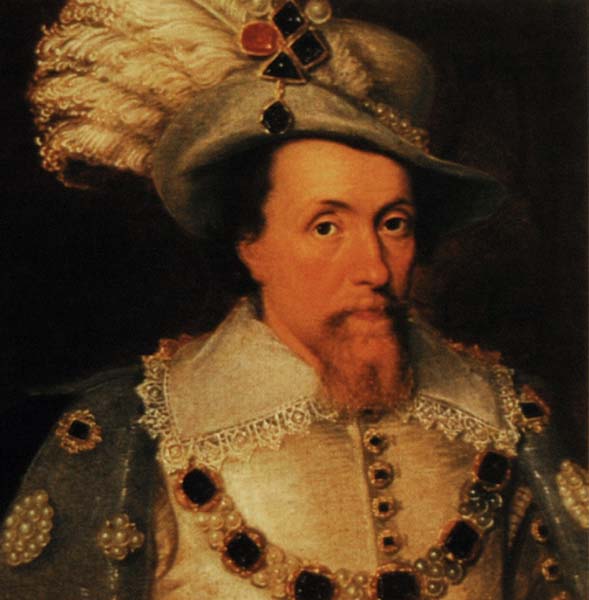
People often condemn King James VI and I for having an obsessive, prurient and superstitious interest in  witchcraft…

But when he returned to Scotland with his new Danish wife, Anne, he had to investigate it.

Otherwise he might have died….

Francis Stewart, 5th Earl of Bothwell, had paid witches to assassinate him, not only with magic (which might or might not have worked) but with poison as well (which certainly would!)

The riotous, drunken, Hallowe’en Sabbat at North Berwick (see Part Three) had been reported to the authorities and the usual suspects were rounded up to appear before James at Holyrood House.

Led, of course, by the oldest witch in the business, Agnes Sampson…
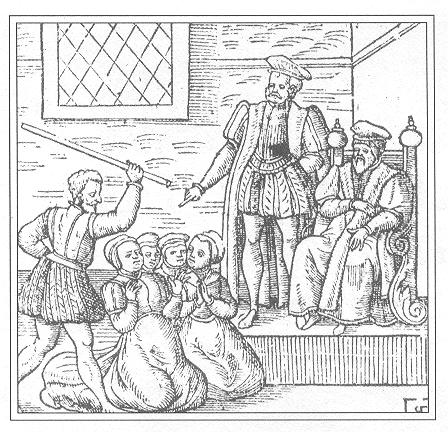
She denied everything, till she was stripped, shaved and tortured…

After that she would agree with anything anyone said….

At one point her confession became so ‘miraculous and strange’ that James refused to believe it, but….

….taking his Majesty a little aside, she declared unto him the very words which passed between the King’s Majesty and  his Queen at Upslo [Oslo] in Norway the first night of their marriage, with their answer each to other; whereat the the King’s Majesty wondered greatly , and swore by the living God that he believed all the Devils in Hell could not have discovered the same, acknowledging her words to be most true…

The very fact that Agnes could take the King of Scotland ‘a little aside’ shows the power she had over the young man…

Later she went on to butter him up by saying that he….

..had never come safely from the sea, if his faith had not prevailed above their intentions’…

….and that she had…

…..resolved never to confess, were [it] not [for] his Majesty’s speeches which had moved her, whereof she praised God that had wrought a repentance in her and a sense and feeling for her sins…’

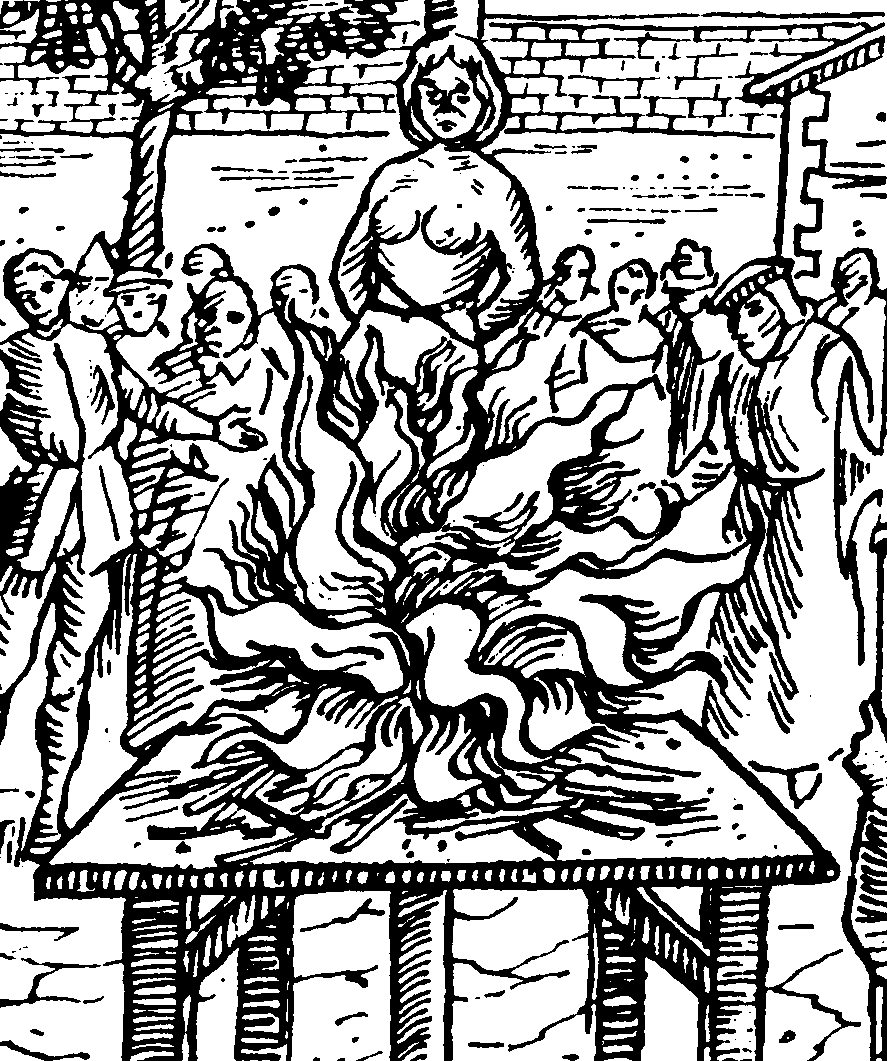
Agnes played the repentance card too late. She was strangled and burned on the Castle Hill of Edinburgh on 28th January, 1591.

She knew far too much about the King’s private life to be allowed to live…

But the King ‘took a great delight to be present’ at the examination of Agnes. He even asked the witches to perform the reel they had danced at the Sabbat.

The main reason for becoming a witch, as we have seen, was the economic benefit. But there was a fun, anti-establishment side to ‘the craft’ as well – not to be sniffed at in dour, Calvinistical Scotland…

James became fascinated by witchcraft and even wrote a pamphlet about it…


Published in 1597, but probably written before then, it shows how witches are slaves to Satan, who, being a spirit…

….easily spies our affections, and so conforms himself thereto, to deceive us to our wrack.

James supported the witch hunts in Scotland – indeed, Demonlogie states quite clearly that witches should be burnt…
However, in 1597, the year of the publication of Demonologie, everything changed…

In April James stopped the trial of two suspected witches in Aberdeen and in August disbanded all commissions set up to try witchcraft….

What had happened?

Margaret Aitken, ‘the great witch of Balwery’, claimed to be able to spot another witch, simply by looking in her eyes. The authorities took this turncoat ‘witchfinder’ at her word and she was…

….carried from town to town to make discoveries in that kind…’

She caused the deaths of many women in Glasgow – but here she was exposed as a fraud. She was presented with the same woman on two successive days and declared her guilty on one day and innocent the next…

James, to his credit, immediately closed the entire ‘witch industry’ down. He spent the rest of his reign trying to expose the human trickery associated with witchcraft.

 But his belief in the prophetic potency of witches never left him….

When William Shakespeare arrived in Edinburgh in October, 1599 (see Part One. What really happened in 1599. ) he had three sources to draw on to create the witches in Macbeth.

(1) A 1592 pamphlet, News from Scotland, which gave a detailed account of the North Berwick sabbat.

(2.) King James’s own book, Demonologie, published two years before.

(3.) Oral history. (Agnes had been executed in the town only eight years before).

As a consequence, all the witches in Macbeth behave as though they were Agnes Sampson.

1. They sing and dance.

2.They use ‘familiars’ (cats and the like!) to create spells.

3. They are poor.

(One witch looks on enviously at a sailor’s wife who ‘mounch’d, and mounch’d and mounch’d’ chestnuts in her lap).

4. They sail in sieves.

5. They create storms at sea…

 

6. They use bits of human and animal remains for their spells.

But the Macbeth witches do some things that Agnes never did…

1.  They own their own winds which they buy and sell… 

(Agnes had to create storms by – shudder! – drowning cats).

2. They pervert the meaning of language…..’Fair is foul’ to them and ‘foul is fair’….

(Agnes, to give her her due, was completely direct in her statements).

3. They vanish ‘into the air’ and melt ‘as breath into the wind’.  

(Poor old Agnes couldn’t do that. If she could, she would have avoided execution…)

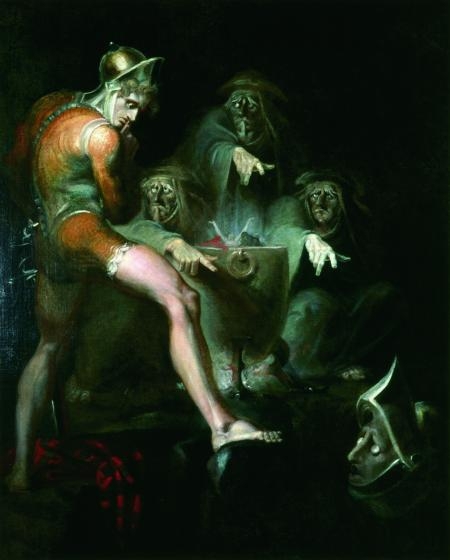
What – or who – is this fourth source for the witches in Macbeth?

Step forward Thomas Nashe….
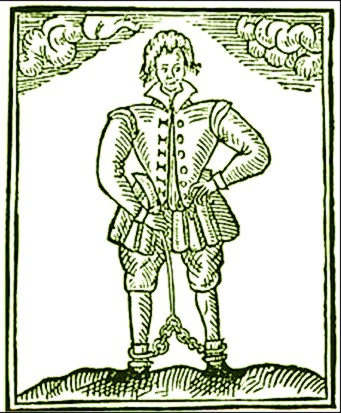
As Brothers and Sisters of The Code well know, Nashe collaborated with Christopher Marlowe on Dido Queen of Carthage and with Ben Jonson on the lost Isle of Dogges…

The Code is of the firm opinion that Nashe also collaborated with Shakespeare on Macbeth especially on the witch scenes because…

HE HAD EXPERIENCED (AND WRITTEN ABOUT) WITCHES BEFORE!

The Code believes that while staying with the Earl of Southampton’s family in Hampshire, Nashe had encountered the famous ‘Witch of Upham’ who conned money out of men and humiliated them by riding on their backs..

Nashe had also encountered the case of a local Titchfield farmer who had experienced visions of demons and succubi in his bedroom….

(For a more detailed account of both examples, please see The Strange Case of Mr. Apis Lapis )

Nashe believed (as much as he believed anything!) that….

1. Witches for gold will sell a man a wind

Which in the corner of a napkin wrapt

Shall blow him safe unto what coast he will…’

Summer’s Last Will and Testament, 1592.

2. Everything [a witch says] must be interpreted backwards as witches say their Pater Noster [Lord’s Prayer] good being the character of bad, and bad good…’

Terrors of the Night 1593.

3.  [Witches could be]…spirits of the air, which have no other bodies or forms, but such as by the unconstant glimmering of our eyes is begotten; they are, in truth all show and no substance, deluders of our imagination and nought else….to make it fair or foul when they list….to stir up tempests round about and replenish heaven with prodigies and wonders…’

From Terrors of the Night…

It is The Code’s belief that Nashe’s view of witches – that they are insubstantial spirits of the air who can delude but not control us – has profoundly influenced the portrayal of witchcraft in Macbeth.

Nashe, as we have seen, even writes that witches….

make it fair or foul when they list….

But, as we have also seen, the ‘North Berwick’ witches, the ‘Nashe’ witches and the ‘Macbeth’ witches all have one thing in common – they can predict, with complete accuracy, what is going to happen..

James firmly believed that witches had this power.

Shakespeare (with Nashe) expolited the King’s belief for political ends…

How they did this,  the  Agents of The Code will explain in their next post…


'You can always rely on Delia...'

‘Bye now….

(It’s best to read ‘Macbeth’ Decoded . Part Five now.)


Read Full Post »

The great actor, writer, literary critic, biographer, raconteur and wit…..

SIMON CALLOW…

….has once again endorsed The Shakespeare Code’s theory that William Shakespeare lived and worked in Titchfield, Hampshire.

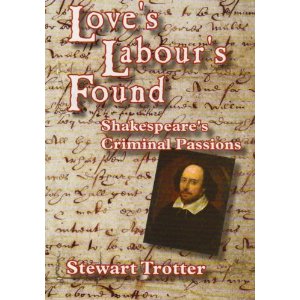
This theory was first proposed by The Code’s Chief Agent,  Stewart Trotter, in his ground-breaking book, Love’s Labour’s Found (2002)…..

….which Simon was kind enough to read and praise when it was published.

In ‘Guestlist’ in The Sunday Telegraph’s  Seven Magazine (9 October, 2011), under the heading Shakespearean Sightseeing Simon writes….

TITCHFIELD ABBEY, Hampshire. The Abbey’s owner, the Earl of Southampton, was a patron of Shakespeare, who is thought to have spent time here, mingling with the magnificent court of painters, philosophers and musicians and enjoying the fabulous gardens and stupendous library. The experience influenced Shakespeare’s writing, which soon became full of courtiers and sophisticated intellectual banter, and the Abbey’s ruins still give a strong sense of the glamorous new world he had entered…

Thank you, Simon, once again….

(Simon is an Inductee into The Shakespeare Code’s coveted ‘Roll of Honour’. You can read his earlier endorsements by clicking here, and here.)

Simon tours the country in Dr. Marigold and Mr. Chops until early December.

Read Full Post »

(It’s best to read ‘Macbeth’ Decoded. Parts One and Two‘ first).

In January, 1607, nearly four years after he had become King of England (as well as Scotland) James granted an audience to Sir John Harington – famous for having invented the water closet and hence known by the name of Ajax (a jakes…)

The scholar King first questioned Harington about classical writers in a way that put Harington in mind of his old tutor at Cambridge…

But then the King, suddenly changing the subject…

….did much press for my opinion touching the power of Satan in matters of witchcraft; and asked me, with much gravity,  – ‘If I did truly understand, why the devil did work more with ancient women than others?

I did not refrain from a scurvy jest……

[‘Scurvy jest’ deleted]

More serious discourse did next ensue, wherein I wanted room to continue, and sometime room to escape; for the Queen his mother was not forgotten, nor Davison, neither.

[William Davison was Queen Elizabeth’s secretary who got the blame from Elizabeth for Mary Queen of Scot’s beheading]

His Highness told me her death was visible in Scotland before it did really happen, being, as he said, ‘spoken of in secret by those whose power of sight presented to them a bloody head dancing in the air’.

He then did remark much on this gift, and said he had sought out of certain books a sure way to attain knowledge of future chances…

This extract from Nugae Antiquae shows:

1. Even in 1607, when James had put an end to the wholesale persecution of witches, he still believed that Satan ‘worked with’ women, especially older women.

2. The execution of his mother, Mary Queen of Scots, was still an issue with him.

3. He believed that some poeple had a ‘gift’ of ‘power of sight’ [second sight] and clearly had been consulting with them before 1587 when his mother was beheaded.

James was trying to draw a distinction between witches who were ‘slaves of Satan’ and those men and women who had powers of prophesy. 

Unfortunately for James – but fortunately for Macbeth – those distinctions were often blurred….

Particularly in the case of Agnes Sampson, one of Scotland’s most talented midwives, who would heal through the power of Christian prayer….

At other times she would summon up ‘the Devil’…

To explain this conundrum, the Agents now call upon the expertise of  Trixie the Cat…

THE TRIXIE LECTURES (I)

First, Brothers and Sisters, a disclaimer . It’s true I’ve not led a blameless life. It’s true I’ve even done a stretch inside….


But I have never been a cat to a witch.  For one simple reason….

NO WITCH HAS EVER ASKED ME!

However, being a cat gives you ‘second sight’.  You can see into things….

The reason so many Scottish healers in Shakespeare’s time were ‘witches’ was mainly economic….

There had been famine in Scotland between 1585-7 and the currency had been completely mishandled by the King.

People were starving, not least the celebrated wise woman of Haddington, Agnes Sampson. She was in essence a ‘hired gun’ who would work both for the peasants and the nobility.

Often her clients wanted her to use her skills to do good.

But just as often they wanted her to do evil – especially her aristocratic clients who were in a power struggle with King James….

Agnes’s husband died, leaving her with children to support. It was then she made her pact with ‘the Devil…’

‘The Devil’, who could take the shape of a man, or even a black dog, ALWAYS approached a potential witch when he or she was alone. So, conveniently, there were never any witnesses…

‘The Devil’ ALWAYS offered financial secrity to his followers – and that was his great power….

If you let it be known to your clients that you had ‘the Devil’ on your side, your fees would go up.

But it was a dangerous game as your enemies could have you burnt to death….

Whether ‘the Devil’ really appeared to Agnes, whether she projected her own powers onto a man (or a dog) or whether she was conning everybody rotten, probably even Agnes, by the end, did not know…

She certainly threw a cat into the sea (how could she?) and a storm followed.  But whether the second event was dependent on the first was a question that was to intrigue James all his life…

But, as we shall see, James knew for certain Agnes had ‘second-sight’…

And it was this ‘second sight’ that has made her the secret star of Macbeth….

As King James approached his majority….

….people started to worry.

Young men were continually pouring from his bedchamber, but the King showed no interest in women.

Courtiers pointed out to him that without a wife, he couldn’t have children. And without children his position on the throne would become untenable.

So James agreed, reluctantly, to marry the teenage Anne of Denmark….

This was bad news for James’s cousin, the Catholic, 5th Earl of Boswell, Francis Stewart, who wanted to be King of Scotland.

He commissioned Agnes Sampson to create storms at sea so that James and Anne could not meet…

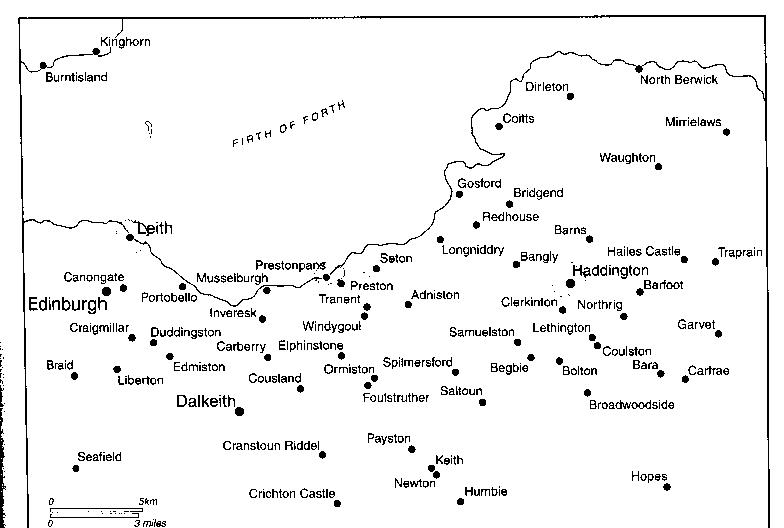
James moved to Seton, on the estuary of the Forth, where he could have a clear view of Anne’s arrival by sea. He stayed there a fortnight with his friend Robert, 6th Lord Seton, at Seton House…

But news came that storms had forced Anne to land in Norway and, having tried to sail once more, she had given up the journey.

At this point the timid, gay, bashful, stuttering James did an extraordinary thing….

He sailed through the storms to Norway to collect his bride himself…

Like a hero of romance…..

Why?

Six miles from Seton was the village of Haddington, where Agnes Sampson lived….

We know, from her later trial, that at the time the King was at Seton, Agnes was told by ‘the Sprite’ (‘The Devil’)…

that the Queen’s majesty would never come in this country except the king fetched her…

We also know that, although it was illegal, James had consulted a witch near Aberdeen in 1589…..

He’d certainly consulted in ‘secret’ with those with ‘the power of sight’ before his mother’s beheading…

So, Your Cat believes that James undertook the hazardous sea-journey because he was bolsted up by Agnes’s prophesy…

Agnes seems to have been playing the King and Bothwell off against each other…

To make more money…

James and Anne arrived back in Scotland in May, 1590.

On Lammas Eve (31 July) that year (at a Witches Sabbat at Acheson Haven) Agnes proposed the destruction of the King.  It was Bothwell’s idea and ‘The Devil’ suggested toad’s poison for the job…

A Witch's 'Toad' - contemporary woodcut.

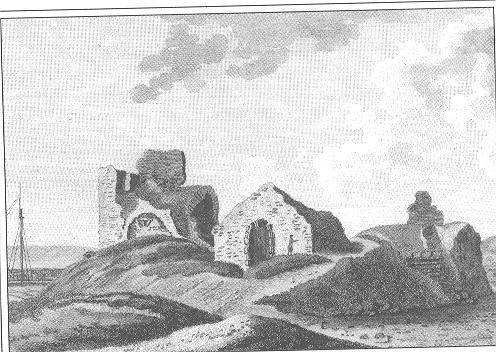
Then, at All Hallows’ E’en (31 October), 140 witches, led by Agnes sailed, in sieves, to the Kirk at North Berwick….

They danced drunkenly in the graveyard and dug up bodies – bits of which they kept.

‘The Devil’ – ‘like a mickle black man’ – appeared in the pulpit and promised them a waxen image of King James which they could use to destroy him…


Then ‘The Devil’ stretched himself over the altar and forced each witch to kiss his bare posterior…

What really happened that night is anybody’s guess: the witches had consumed ‘flagons of wine’ and the ‘wise women’ knew all there was to know about local herbs…

 Perhaps the trip across the estuary of the Forth in sieves really was a ‘trip’…

As for ‘The Devil’ who appeared at the Sabbats and…

did greatly inveigh against the King….

The witches asked him at North Berwick…

Why he did bear such hatred to the King?….

….to which he replied…..

By reason that the King is the greatest enemy (I have) in the world…

Your Cat firmly believes that ‘The Devil’ was no other than the 5th Earl of Bothwell in disguise…

A conclusion (she discovered with delight) that was made in the 1920’s by the great (if now wildly unfashionable) anthroplogist, Margaret Murray….


And she should know.

She claimed she could turn herself into a cat…

‘Bye now…

(It’s best to read ‘Macbeth’ Decoded. Part Four now).

Read Full Post »

We, the Agents, are delighted to announce that on Tuesday,  4 October, 2011, The Shakespeare Code received its……

8,000th View!!!!

And on the day before….

3 October, 2011….

THE FEDERAL REPUBLIC OF GERMANY JOINED THE SHAKEPEARE CODE!!!

It is with the greatest of pleasure that we add the flag of Germany to our list of….

24 PARTICIPATING NATIONS!!!

 If your own country is not yet featured by The Code…

(See: ‘The Shakespeare Code Salutes the Nations! )

….please let Trixie the Cat know and she will…

FLY YOUR FLAG FOR YOU!

I certainly will, Brüderlein und Schwesterlein!

Auf wiedersehen….pet.

Read Full Post »

(It is best to read ‘Macbeth’ Decoded. Part One first).

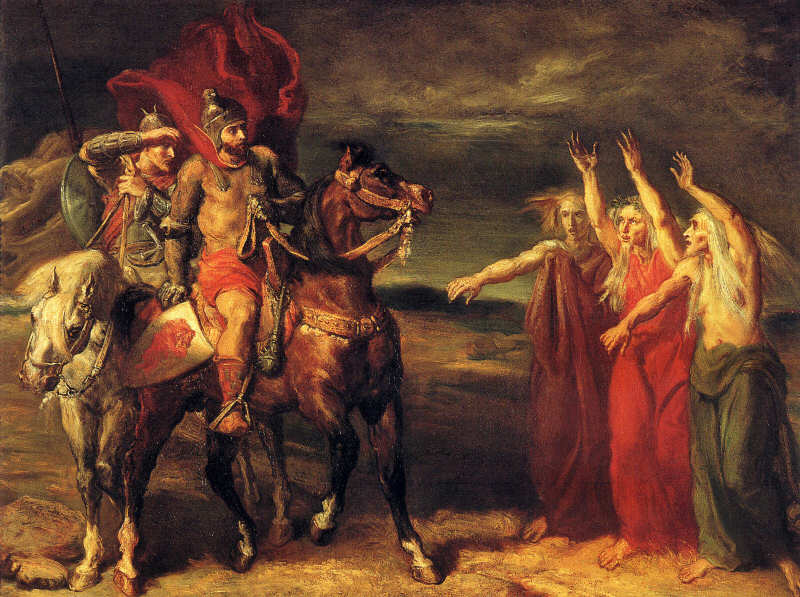
Macbeth and the Weird Sisters

The Shakespeare Code is of the firm opinion that William Shakespeare (in collaboration with Thomas Nashe) wrote The Tragedy of Macbeth in Edinburgh in 1599.

His intention was to persuade King James VI of Scotland….

 ….to invade England and seize the throne from Queen Elizabeth…..

Shakespeare had been commissioned by ‘The Gang of Four’ – the Earls of Southampton and Essex, Penelope Rich and her lover Lord Mountjoy.

All of them had been terrified by the house-arrest of Essex on his return from Ireland..

And all of them had been communicating with James, in code, for a year or so…

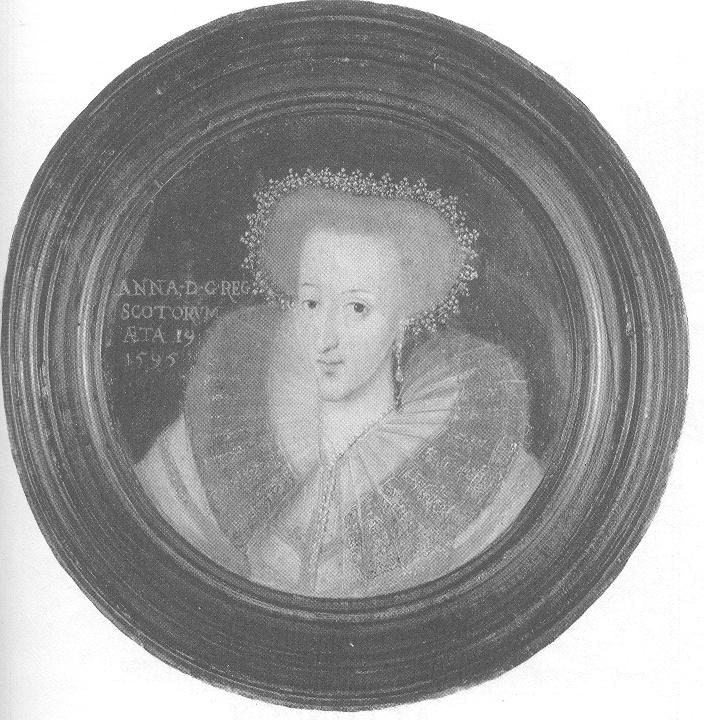
Penelope (codename ‘Rialta’) had even sent him a miniature of herself…


James’s code name was ‘Victor’…

Victor over Elizabeth….

Shakespeare and Nashe would have received a warm welcome from King James. He loved English actors and had asked Elizabeth to send a troupe to Scotland in 1590 to celebrate his return with his teenage, Danish bride, Anne….

He requested actors again in 1594 to celebrate the baptism of his son, Prince Henry. He had envisaged a Court masque in which a lion appeared, pulling a chariot. He had to abandon the plan because it was thought the lion might frighten the ladies of the Court…

Shakespeare, of course, sends all this up in A Midsummer Night’s Dream. Snug the joiner tells the women in the audience not to be afraid of the lion in the Pyramus and Thisbe play: it’s only him in a costume…

James had a favourite English actor called Laurence Fletcher who probably played Macbeth. When it was falsely reported Fletcher had been hanged in England, James threatened to hang Elizabeth’s agent in Scotland in retaliation.

Also, James, unlike Elizabeth, was gay-friendly…

He had suffered an appalling childhood. He was parted from his mother, Mary Queen of Scots, as a toddler….

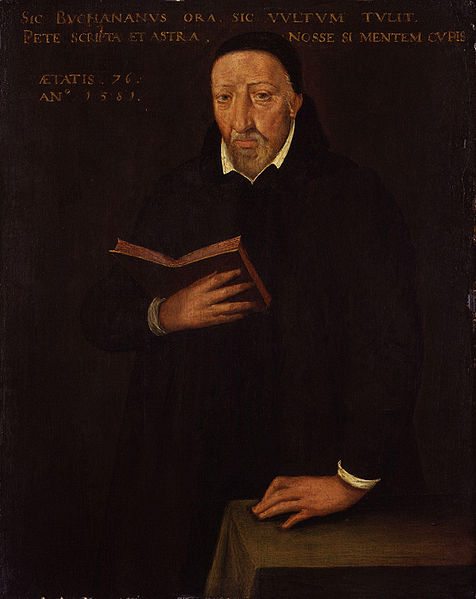
 …..then fed milk mixed with alcohol by his drunken nurse and whipped black and blue by his sadistic, Calvinist tutor, George Buchanan…

James didn’t learn to walk till the age of five because, as King of Scotland, he was carried everywhere by flunkies.

But, as a teenager….

……he found love.

The 37 year old Catholic French aristocrat, Esmé Stuart, handsome and cultivated….

…… whisked the lonely, young King off his feet.

James created him Earl, then Duke, of Lennox and would openly kiss and embrace him.

In defiance of his tutor, Buchanan (who thought that bad Kings should be kicked out) James adopted Lennox’s French belief that the monarch’s power was absolute.

Lennox also introduced James to Catholics and Jesuits in France and Spain. This led many to suspect that James, who claimed to be a Protestant, was in reality a closet Papist. He had, after all, been baptized a Catholic by his mother….  

She had, however, forbidden the old unhygienic practice of the priest’s spitting down the baby’s thoat…

The Protestants, fearing the power of Lennox over the King, put James under house arrest at Ruthven Castle. Lennox was forced to flee from Scotland and died, the following year, back in his native France.

His embalmed heart was sent back to James who, still incarcerated, wrote the poem Ane Metaphorical Invention of a Tragedy called Phoenix about his love for the French aristocrat…  

James in the poem  compares Lennox to a lovely bird that has winged its way from Arabia to Scotland to be tamed and loved by the King. Unfortunately the other birds become jealous of the Phoenix and attack it. James defends it until he drips with blood and eventually the Phoenix flies away, to die in a foreign land…

This poem was later to inspire Shakespeare’s poem The Phoenix and the Turtle about Shakespeare’s love for another, exotic aristocrat, the Earl of Southampton

Lennox was the first of many male lovers of James. An English envoy observed in 1588…

[James] gives to everyone that asks, even to vain youths and proud fools, the very lands of his crown or whatever falls, leaving himself nought to maintain his small, unkingly household…’

And in 1589 described James as…

 too much carried by young men that lie in his chamber and are his minions’.

James also surrounded himself with artists and musicians, known as the Castalian Band….

No wonder gay poet Christopher Marlowe wanted to emigrate to Scotland!

But James did enjoy the occasional heterosexual fling…

And he did father three surviving children….

The arrival of Shakespeare and the actors in 1599 helped James in his power  struggle with the Presbyterian church.

As William Guthrie of Brechin wrote in 1767…

[Shakespeare’s] drama, which finds access at this day, to the most insensible hearts, had no charms in the eyes of the Presbyterian clergy. They threatened excommunication and church censures to all who attended the playhouse [so] many forbore to attend the theatrical exhibitions.  James considered the insolent interposition of the clergy as a fresh attack upon his prerogative, and ordered those who had been most active in it to retract their menaces; which they unwillingly did: and we are told that the playhouse was then greatly crowded.’

James would have been delighted with his victory and would have paid close attention to Shakespeare’s new play, Macbeth….

He would have known it was another coded message from The Gang of Four…

The Gang thought there was a good chance James would go along with their invasion plan because….

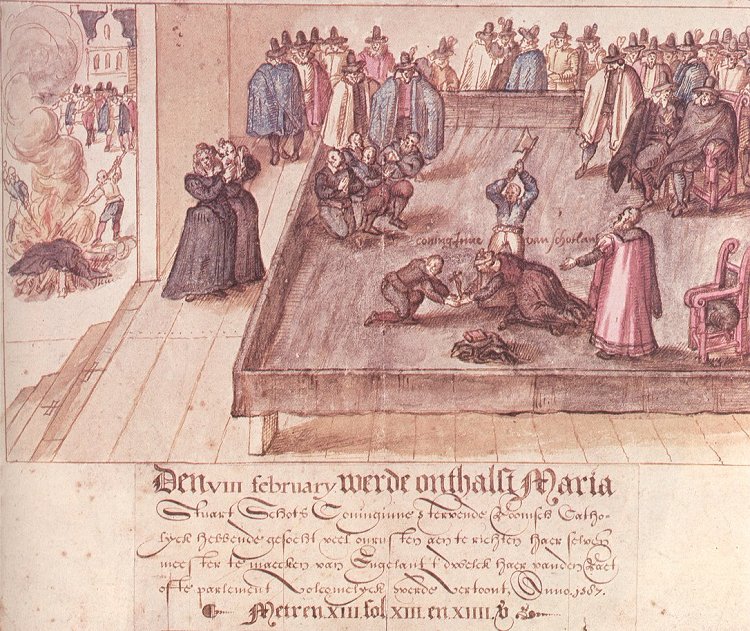
1.  It would be an official ‘revenge’ for Queen Elizabeth’s execution of his mother, Mary Queen of Scots, in 1587. At the time the Scottish Parliament had dropped to its collective knees to beg James to avenge the English ‘Jezebel’s’ insult to the Scottish nation…

(James had been secretly delighted by the beheading of his mother. She would always have been a threat to his kingship and had planned to have her son kidnapped and sent to Rome).

2. An invasion would fulfil Queen Mary’s hopes that her son would be the first person to unite England and Scotland. At the time of the Armada victory, James had started to write about ‘The Isle’ rather than England and Scotland.

Queen Mary had also hoped James would bring a united Britain back to Rome.

3. An invasion would allow James to escape the dour Calvinism of John Knox’s Scotland and make ‘Merrie’ (and sexually lax) England his home.

4. An invasion would stop Isabella of Spain becoming Queen of England when Elizabeth died. France and Spain had made a sinister peace in 1598…

5. An invasion would also allow James to assassinate Elizabeth – something he was rumoured to have attempted twice before, once in the previous year.

But The Gang also feared James might reject the plan because…

1. He was a coward. He would faint if anyone drew a sword from its sheath and advised his son to wear light armour in battle so he could run away.

This fear may have originated in the womb. Three months before his birth,  his mother Mary, with a gun pointed at her chest, had witnessed the frenzied stabbing (fifty-three times) of her Italian ‘secretary’, David Rizzio….

2. James believed, as a result of his affair with Lennox, in the Divine Right of Kings. Even a ‘tyrant’ like Elizabeth might be fulfilling some plan of God….

3. James had blood-ties, through King Henry VII, with Queen Elizabeth which made killing her a problem. She was ‘family’.

4. James believed that the English despised the Scots and despised him in particular. In 1596 his agent wrote a letter to Queen Elizabeth complaining that actors were mocking James – and the Scottish people – on the London stage.

The English and the Scots had been enemies for centuries.

Some think they still are…

So Shakespeare (and The  Gang’s) aim was to demonstrate to James that it was GOD’S PLAN that he should:

1. Reign over both England and Scotland.

2. Unite the Protestant Church with the Catholic Church.

3. Replace Queen Elizabeth.

4. Kill her, if necessary, and…

5. Turn Scotland and England into allies.

James believed, along with many of his contemporaries, that time was cyclical.

As he wrote to his son, Prince Henry, in Basilkion Doron, in 1597….

By reading of authentic histories and chronicles, you shall learn experience by theoric, applying the by-past things to the present estate, quia nihil nunc dici aut fieri, quod non dictum and factum fit prius: [since nothing is spoken or done which has not been spoken or done before] such is the continued volubility of things earthly, according to the roundness of the world, and volubility of the heavenly circles, which is expressed in the wheels in Ezekiel’s vision, and counterfeited by the poets in rota fortunae [the wheel of fortune]…’

The Vision of Ezekiel by William Blake

So, by writing about the past, Shakespeare was commenting directly on the present.

Also, by writing about Banquo , Shakespeare was commenting directly on James.

Banquo, though never a King himself, had fathered the Stuart line….

As we shall see when we examine Macbeth itself…

 (It’s best to read ‘Macbeth’ Decoded. Part Three now.)

 

Read Full Post »

Brothers and Sisters of The Shakespeare Code…

Last month (August, 2011) we were delighted to announce that The Code had broken the 1,000 views a month barrier.

This month (September, 2011) we are even more delighted to announce that we have….

DOUBLED OUR FIGURES!

This morning (29 September, 2011) our views for the month stand at 2009…

Our best ever day was two days ago (27 September) when The Code received 120 Views….

It is wonderful to know that there are so many intellectually curious men and women stretched across the globe….

For this relief, much thanks…..

IN VINCULIS, INVICTUS!

Read Full Post »

On 23rd September, 2011, The Shakespeare Code received its 7,000th View!

Thank you, Brothers and Sisters of The Code….

Southampton Roses

The Code has also learnt, through a personal communication, that it has an ESTABLISHED FRENCH READERSHIP!

This means there are now 23 PARTICIPATING NATIONS….

AT LEAST!!!

For a week or so in the Summer, Google informed The Code from which country inquiries were coming. Now, for some reason, this data is no longer passed on to us…

So, if the flag of your country does not appear on our list (see The Shakespeare Code Salutes the Nations ) let us know….

AND WE WILL FLY IT FOR YOU!

In the meantime………..

VIVE LA BELLE FRANCE!!!

Le jour de gloire est arrivé…..

Read Full Post »

William Guthrie of Brechin, the eighteenth century Scottish historian, wrote:

The King [James VI of Scotland], to prove how thoroughly he was now emancipated from the tutelage of his clergy, desired [Queen] Elizabeth to send him this year [1599] a company of English comedians. She complied, and James gave them a licence to act in his capital, and in his court.  I have great reason to think that the immortal Shakespeare was of the number….

The Shakespeare Code concurs….

It believes that William Shakespeare was in Edinburgh in the autumn and winter of 1599…

THE GANG OF FOUR  (plus Shakespeare)

As Brothers and Sisters of the Code well know, Shakespeare was deeply involved in the affairs of his patron and lover, Henry Wriothesley, the third Earl of Southampton…

….who in turn was deeply involved in the affairs of his best friend, Robert Devereux, the second Earl of Essex….

…..whose sister, the lovely Penelope Rich….

…..was deeply involved in the affairs of her lover Charles Blount, the eighth Lord Mountjoy…

….who, as a former lover of Queen Elizabeth, was deeply involved in the affairs of all the others….

Apart from friendship, another emotion bound the Gang of Four together…

FEAR!

Queen Elizabeth refused to name her successor, and the Gang worried that when she died either…

  1. Civil War would break out again or, worse…
  2. A Foreigner would lay claim to the throne.

Either way, the Gang of Four would be politically vulnerable, so they wanted King James VI of Scotland (not too Foreign) to become King of England as well….

As the son of the Roman Catholic Mary Queen of Scots, James was ‘Catholic-friendly’. This suited Southampton (who was a recusant) and the rest of the Gang (who wanted religious tolerance).

In 1598, Essex and his sister Penelope started to write secretly, in code, to King James.

Queen Elizabeth became ‘Venus’ and Essex ‘the Weary Knight’ – weary of trying to satisfy the massive sexual desires of the aging queen….

To complicate matters, Essex’s arch-enemies, Sir Walter Raleigh, ‘The Fox’….

…and the round-backed Sir Robert Cecil, ‘The Ape’…

…were trying to destroy Essex’s influence over the Queen.

They encouraged Elizabeth, against her instincts, to appoint Essex as Lord Deputy of Ireland.

She wanted to keep her current lover, Essex, at Court and send her old toy-boy, Mountjoy, across the Irish Sea instead.

‘The Fox’ and ‘The Ape’ hoped that…

  1. Essex would fail, as everyone else had done, to crush the ‘rebels’ in Ireland, and..
  2. While he was away they could bad-mouth him at the English Court.

Essex in Ireland didn’t do himself any favours….

He appointed Southampton as his General of Horse – against Elizabeth’s express wishes – and held treasonous meetings with his Irish enemy, the charismatically devious Hugh O’Neil, the second (or some say third) Earl of Tyrone…

To crown it all, Essex abandoned his post in Ireland and rushed, unannounced and covered in mud, into the Queen’s morning bedchamber….

Essex was put under house arrest in September 1599 and the Queen appointed Lord Mountjoy as the new Lord Deputy of Ireland.

It looked as though ‘The Fox’ and ‘The Ape’ had triumphed.

The Gang of Four conceived a daring plan…

King James would march, at the head of an army, to the Borders of Scotland…

There he would publish an open letter to the English government of his right to the Succession…

If his demand was refused, he would invade….

Mountjoy would bring over from Ireland one half of the Queen’s army to support James’s troops…

To persuade James to take part in this audacious scheme, the Gang of Four sent William Shakespeare and Thomas Nashe to Edinburgh in October 1599 – along with the troupe of actors that James had so conveniently requested…

The two men wrote a Court entertainment for the Scottish king….

It was called The Tragedy of Macbeth….

Now read: ‘Macbeth’ Decoded. Part Two. The Background to ‘Macbeth’.

TRIXIE THE CAT SAYS….

If you liked this post, then why not read Shakespeare in Titchfield, or Shakespeare in Italy, or even Shakespeare, The Movie I.

But don’t forget to read Your Cat’s review of Eddie Linden, (F. S. C.‘s) fantastic new collection of verse ‘A Thorn in the Flesh’ and order it (a snip at £7.50) from its delightful publishers, Emily and Susan Johns, at Hearing Eye – books@hearingeye.org

Don’t forget to say that Trixie sent you!

Bye, now…


Read Full Post »

by

Trixie the Cat

THE TRIXIE REVIEW

For Eddie Linden the world is like Humpty Dumpty.

It’s had a great fall.

The task of his poetry is to try to put it together again – just like his hero-uncle, James Glackin, in An Irish Birthright, who…

Faced with hunger, want and poverty ….’

…..went on….

putting together

the broken pieces, building anew around

the family shell…’

Sometimes the pieces of the shell are too rotten to handle. Eddie hates in particular…

people with well-fed faces

drinking red wine

being very Intellectual

And Nice…

…the hangers-on and name-droppers of the literary world with their ‘hidden faces’ and with ‘a smile too difficult/To make out’ who  will…. 

strip him [a poet] down

mentally, and

leave him naked to the world’.

In Hampstead by Night, Eddie finds Hampstead, where…

 Queers and heteros nest at night’

… and where….

Middle class ladies [hope] for parties and men with big pricks’ 

….as selfishly disfunctional, in its way, as the old Gorbals in City of Razors where, on a Saturday night, you could end up in the Royal Hospital….

wi’ a sword’ in your stomach…

Eddie, the editor of the poetry magazine Aquarius for the last forty years, even hates poets at times…

Cunts that think

They’re geniuses…

In Editor Eddie warns any aspiring poet that…

There’s nae money in this

Game, but literary parties

Where every cunt cuts each

Other up…

He advises that…

This is not the trade

For you, Jimmy, if a wis you

I’d go back to the pit. Why?

Because you meet real people….

These ‘real people’ are the bits of Humpty’s shell that Eddie truly values and they are not just the working-class people Eddie left behind in Scotland.

They are people with hearts and imaginations, like Eddie’s mentor, the poet Elizabeth Smart, without whom…

there could be nothing. Gone

is the love that overwhelmed

the presence of everything.

The books that covered the house,

and your spirit, and your warmth,

radiated everything…

Eddie, however, is able to ‘summon up’ the dead Smart by focusing on the stone bear that she kept in her garden…

The Bear that saw it all…’

In the same way, in A Table of Fruit,  Eddie ‘summons up’ the saintly Catholic priest,  Father Michael Hollings, by focusing on his preparation for the Mass:

Your table contains everything.

You and everyone share Christ.

Faith and prayer are part of the day…’

But the two parts of the shell that Eddie finds impossible to join are his Chrisitian faith as a child and his doubts as a man….

He detests  the kitsch of Catholic ‘art’ with its ‘plastic ornaments’ and its ‘halo of electric bulbs’. He wants to trample the ‘Madonna of clay’ to make her as ‘real’ as she was when he was young, when she radiated….

…with the warmth of the sun,

Its rays penetrating

With a spiritual tranquility

That imprisoned me in affection.

And the birds were whistling in the distance

As we sipped our tea

And said: Ave Maria

Ave Maria…’

In Landscape Eddie describes how he is….

searching for a cord to link

The present with the past…

….but he fails more often than he succeeds.

He doubts if a meeting with his lover of twenty years ago, Philippe Jamet, would be successful because….

So much water has flowed

Down the Seine

That would have washed away

So much of the youth

You had in London …

And though Eddie succeeds in ‘summoning up’ a vision of a beautiful ‘Mary Magdalen’ he once saw in Cambridge (with a ‘thin body and small waist’ which was all he ‘wanted to possess’) contact is not made now because contact was not made then

…..a shadow hovering in our midst

Prevented a possible communion’.

Sometimes, though, Eddie is able to find that ‘cord’, as in the poem The Little Flower which begins the collection.

It describes how a very young boy feels the need to touch and feel a flower that ‘moves and bends with the wind’.

It is just one of ‘all the lovely things around him’ but he is so young that this is a ‘strange discovery’ which he cannot understand…

But the boy registers the moment in his unconscious.

Eddie prophesies that years later…

He will remember

And these will be his thoughts

When dreams return

In manhood

Then he will find

The little flower

And know…’

This link, through dreams, of the present with the past, of the unconscious with the conscious, is a beautiful description of how poetry is made…

It is also a great poem in itself.

© Trixie the Cat. September, 2011.

Eddie

To contact the publisher, Hearing Eye, to purchase the volume, see immediately below..

To learn more about Eddie Linden, click here.

Read Full Post »

The Shakespeare Code is delighted to announce the publication today – by Hearing Eye  – of a stunning new collection of poems by Eddie Linden, Fellow of The Shakespeare Code.

Distinguished Gaelic poet Seán Hutton writes…..

A Thorn in the Flesh (ISBN: 978-1-905082-63-6) (with a Foreward by James Campbell) can be ordered (at £7.50) from books@hearingeye.org and the Publisher’s website is www.hearingeye.org.

The Agents of The Shakespeare Code offer their warmest congratulations to Brother Eddie, F. S. C…..

BRAVO BROTHER EDDIE!

IN VINCULIS, INVICTUS!

Click here to learn more about Eddie Linden. F. S. C.

Read Full Post »

« Newer Posts - Older Posts »