Brothers and Sisters of The Shakespeare Code…
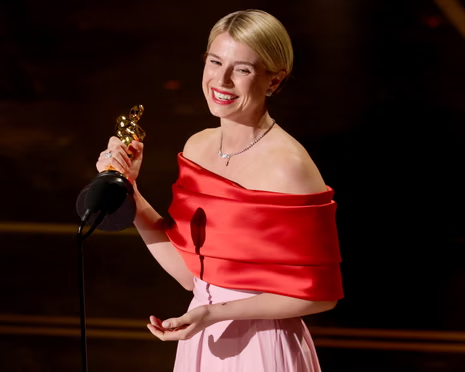
First can Your Cat congratulate Jessie Buckley for winning an Oscar?

Her performance as Agnis Hathaway carried force and sincerity.
(Please, though, let’s call her ‘Anne’ rather than ‘Agnis’!)
To be honest, Your Cat saw the film twice – and found Miss Buckley less convincing the second time.
In fact a touch irritating.
The moral? Don’t watch the film a second time!
And certainly don’t listen to her Oscar speeches!
As The Code has said before, the film’s heart is in the right place: but it flies in face of the facts.
‘What facts?’ Your Cat hears you cry. ‘We know nothing of the life of William Shakespeare!’
The fact is we know more about William Shakespeare than any man who ever lived.
And how? Through his Sonnets.
The author and director of the film know about the Sonnets. They even have Shakespeare’s daughter, Susanna, reading one.
(Sonnet 12 – Sonnet 13 in the Order Stewart Trotter puts them in in his New Book – Shakespeare’s Sonnets Decoded )
But Susanna does not read the poem’s conclusion – where it is clear that the poem is addressed to a man….
Henry Wriothesley, in fact, the ‘lovely boy’ who became Will’s long term lover…
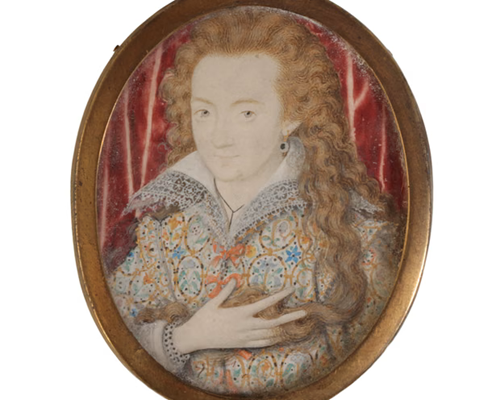
But Anne Hathaway was Will’s first love and Sonnet 145 (Sonnet 1 in the New Order) tells us exactly how Will courted her.
Yes – he courted her – by singing to a lute!
But that’s not how Hamnet presents it! Here, for ‘objectivity’, is an AI account: of how Will met Anne in the movie:
‘It’s crafted not as a conventional courtship but as a meeting of two unusual sensibilities—one restless, thwarted, and hungry for escape; the other preternaturally attuned, solitary, and grounded in the natural world. The film reframes their relationship so that the future playwright is not the gravitational centre; Anne is. Their wooing becomes a study in perception, intuition, and the quiet recognition of possibility.
The essence is that Anne chooses him first, and Will responds with a mixture of awe, longing, and the relief of being truly seen.
Their relationship begins not with Will as the pursuer but with Anne as the one who perceives him—his restlessness, his imaginative hunger, his need for escape from his father’s violence. Will’s wooing is therefore less an act of conquest and more an act of surrender to someone who understands him before he can articulate himself.’
Let’s start with ‘his father’s violence’. This is entirely invented. When Will was a boy, John Shakespeare was the Bailiff of Stratford-upon-Avon – so rich he even lent money to the Council. He was a great friend of Anne Hathaway’s father – and even paid off his debts.
The entire Shakespeare family was close to the Hathaways. That’s how Will knew Anne.
John only became impoverished when the Earl of Leicester moved into the district.
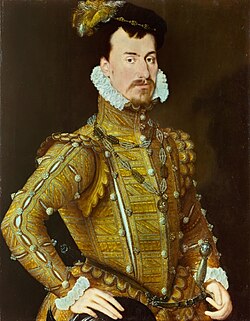
He was the Leader of the Puritans, and the Shakespeares were Roman Catholic. Leicester ruined John Shakespeare financially – and Will had to leave school. But a Roman Catholic network came into play – and Will was hired by the Hoghton Family at Hoghton Hall in Lancashire to keep their children entertained.

However the Puritans went after the Hoghtons as well – and as a teenager Will had to return to Stratfortd.
That’s when he met Anne Hathaway. Yes, as a teenager.
With the best will in the world Paul Mescal doesn’t look eighteen…

Anne Hathaway herself was around 26 – eight years older than Will.
But it was Will who did all the chasing!
How do we know? From Sonnet 135 – Sonnet 1 in the New Order.
Anne was around eight years older than Will, but that didn’t stop him.
Anne, however, wasn’t interested – so Will wrote a ballad to seduce her:
Those lips that Love’s own hand did make,
Breath’d forth the sound that said ‘I hate’,
To me that languisht for her sake.
The ‘lips’ referred to are Anne’s, and Will is suggesting that they have
been created by the hands of love itself. But although Will is languishing
for Anne, she tells him she hates him.
But when she saw my woeful state,
Straight in her heart did mercy come,
Chiding that tongue that ever sweet,
Was us’d in giving gentle doom:
[Doom is like the Day of Doom – Day of Judgement.]
But because Will is in such pain, when Anne looks at him, mercy enters
her heart. Mercy rebukes Anne’s tongue for saying ‘I hate’. Her tongue
usually gives gentle judgements on things and people.
And taught it thus anew to greet:
‘I hate’ she alter’d with an end,
That follow’d it as gentle day,
Doth follow night who like a fiend
From heaven to hell is flown away.
Mercy takes over the education of Anne’s tongue and forces it to give
a new ending to the sentence. It’s like a gentle dawn that follows a hellish
night, one that flees from light as a demon flies from heaven and back to
hell.
‘I hate’, from hate away she threw,
And sav’d my life saying ‘Not you’.
Will plays on Anne’s family name. ‘I hate from hate away she threw’ =
‘I hate from Hathaway she threw’. So in the end Anne, through the power
of mercy, changes what she was about to say to Will from ‘I hate you’ to ‘I
hate not you.’
The ‘real’ Anne Hathaway coulddn’t be further away from witchy, Earth-mother Jessie Buckleyt if she tried!
Will’s seduction succeeded all too well. Anne became pregnant
and Will had to marry her…..
Read all about it in Stewart’s new book!
Just for the record, Your Cat thought that the real star of the film was Hamnet himself – Jacobi Jupe…..
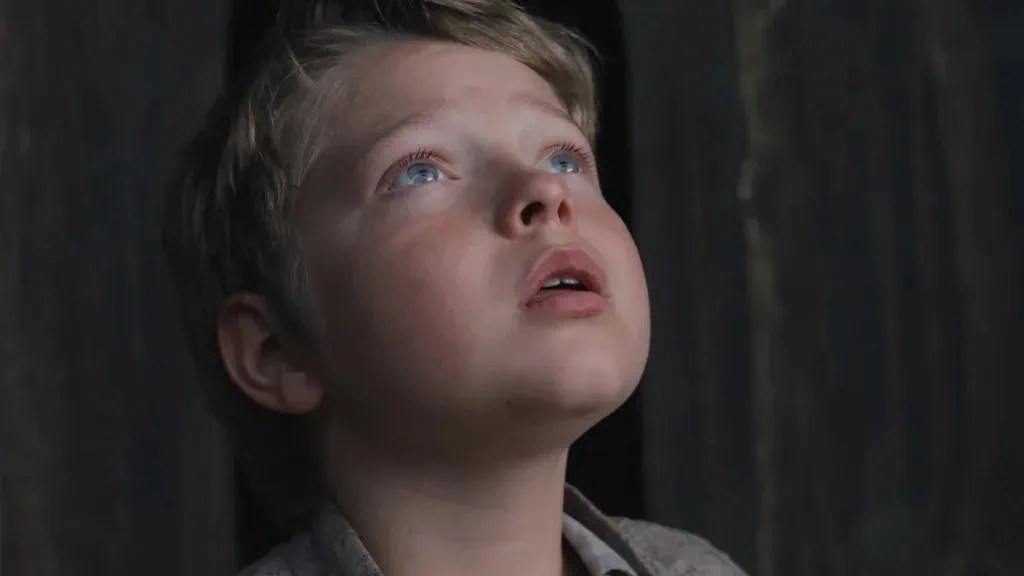
…light years beyond his parents in the film…..
But it’s all a matter of taste!
‘Bye now,

 The Shakespeare Code
Leave a comment