Brothers and Sisters of The Shakespeare Code….
Happy to tell you that copies of Stewart Trotter’s new book – Shakespeare’s Sonnmets Decoded – are flying off the shelves at Magic Flute Publishing!
The question Stewart often gets asked is: ‘How did you discover the Sonnets?’
Here – with the Publisher’s permission – is the answer – in the first chapter of Shakespeare’s Sonnets Decoded.
CAMBRIDGE
Sidney Sussex – Stewart’s old college…
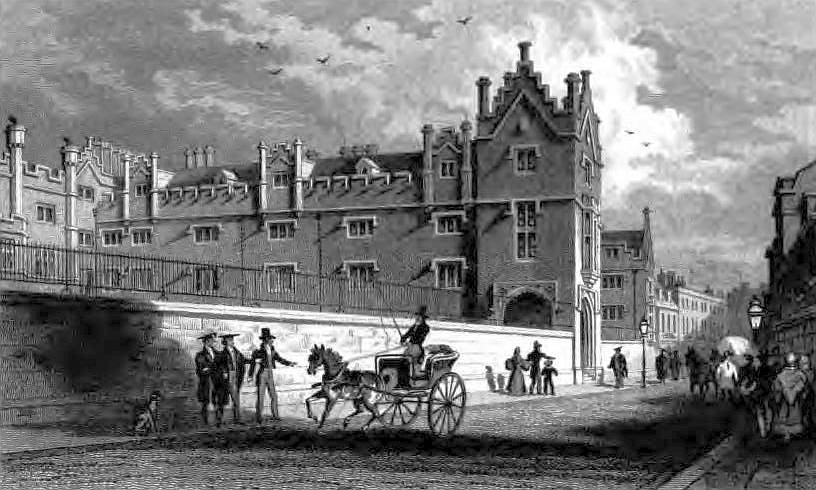
It was in an exam, of all things, that I first encountered William
Shakespeare’s Sonnets. It was my English Prelims at Cambridge University
and Sonnet 138 had been set for analysis. It begins:
When my love swears that she is made of truth
I do believe her, though I know she lies
In this Shakespeare – or ‘Will’ as he calls himself in the Sonnets, and
I’ll call him that as well – explains why he accepts the lies of his lover. He
wants her to think that he is naïve and, by implication, younger than he
really is. But why don’t they both admit the truth? That she is a liar and
he’s getting long in the tooth?
Because love works best when people seem to trust each other and ‘age
in love loves not to have years told’ – spoken of – or tolled like a funeral
bell. The consequence of all this?
I lie with her and she with me
And in our faults by lies we flattered be.
The lies lead on to love making – so both of them are happy in their
falsehood. If lies make you happy, then the truth is stupid.
I could hardly believe that something so warm, tender, wise, honest
and above all human had ever been written. So I went out and bought the
Sonnets and read them through the night…
It soon became clear that not all the Sonnets were warm-hearted – quite
the opposite.
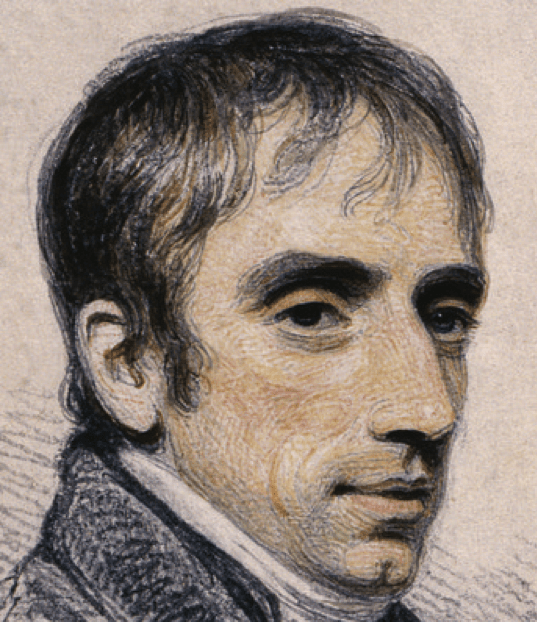
William Wordsworth wrote in 1827 that Will unlocked his
heart in the Sonnets – and unlock it he certainly did. Many of the poems
are romantic and ecstatic, but many of them are poisonous and vindictive.
Some display sublime optimism – others suicidal despair.
At one point Will wants his ‘Lovely Boy’ to live for ever – and at another can’t wait
for him to die. Sometimes his Mistress is beautiful – at other times she is
ugly as sin. Sometimes love-making is bawdy and joyful – at other times
it provokes jealousy and guilt. It became clear to me that there was not a
single emotion the characters in Will’s plays go through that Will hadn’t
gone through himself.
Or had he?
My Prelim exam was in 1969 and the English Faculty was still in the grip
of the New Criticism. This maintained that a writer’s life had nothing to
do with his work and warned against students falling into ‘the biographical
fallacy’. The characters in fictional works are not ‘real’- they are ‘imagined’
and should be treated as such.
Or as Roger Prior described it in 1995: ‘Modern criticism is dedicated to
removing the author from the text. The author’s thoughts and intentions,
it is claimed, can never be known and are in any case quite irrelevant to
our understanding of his work…The literary work of art has nothing to
do with the world.’
Cambridge is particularly prone to intellectual viruses. In the reign
of Queen Elizabeth I, St. John’s College became the breeding ground for
Calvinism.
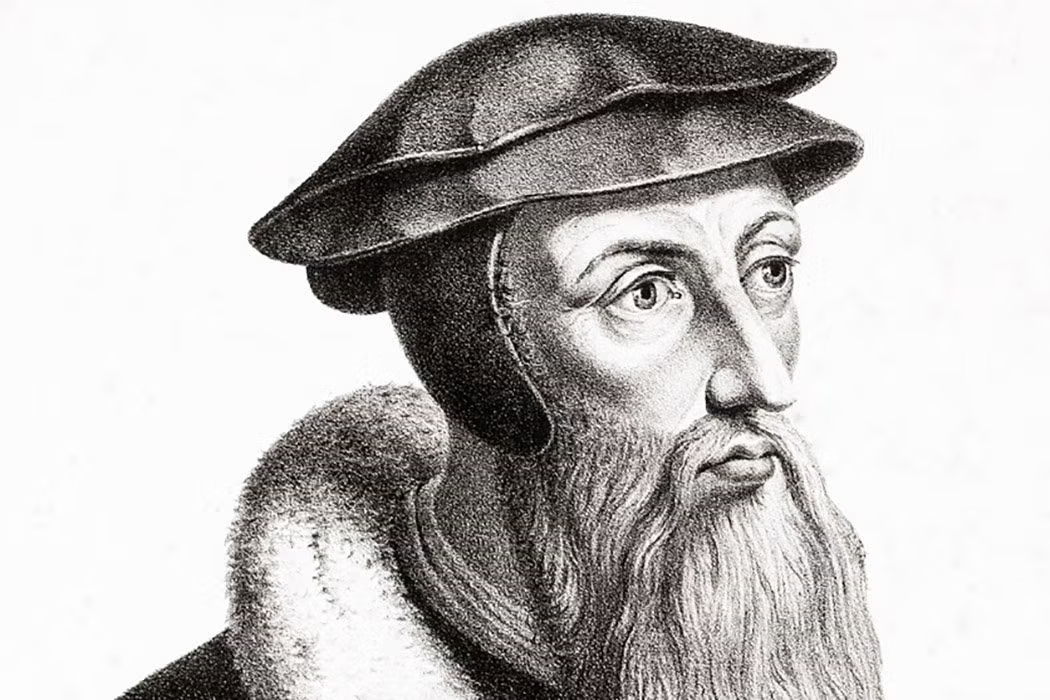
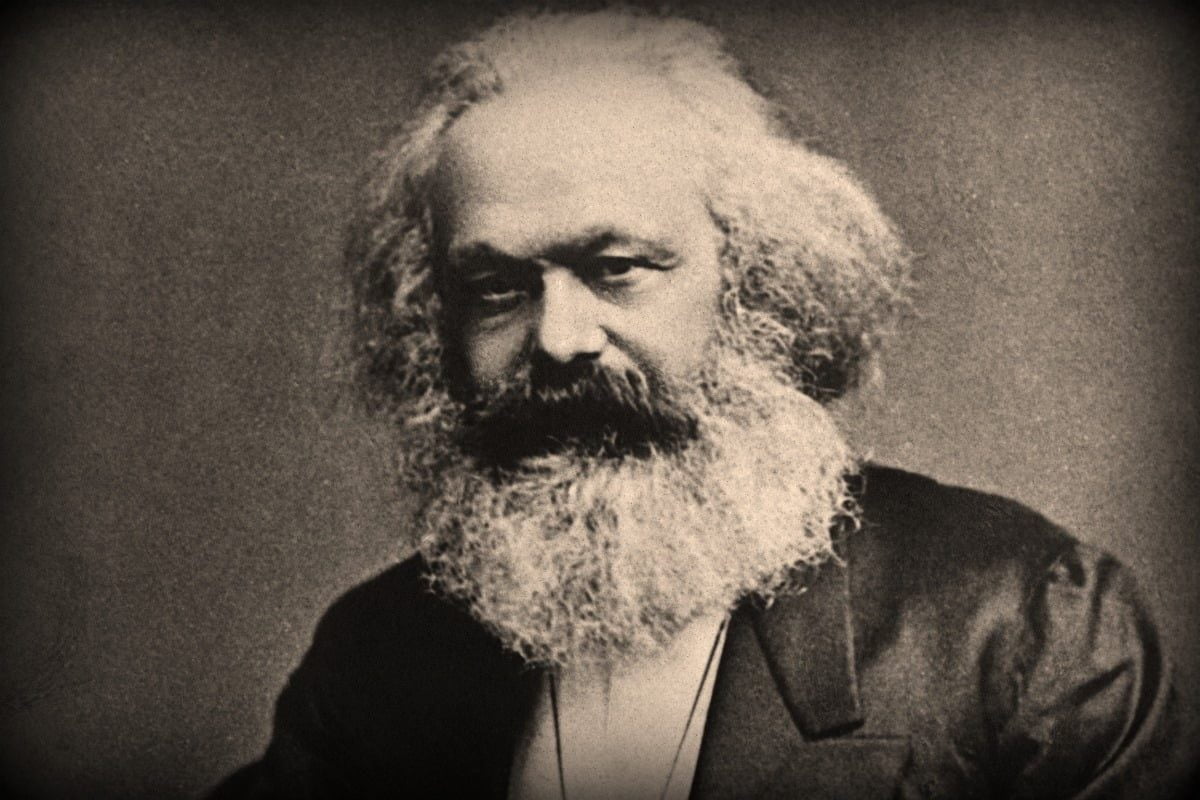
In the 1930s Trinity College and Kings College became hotbeds
of Marxism.
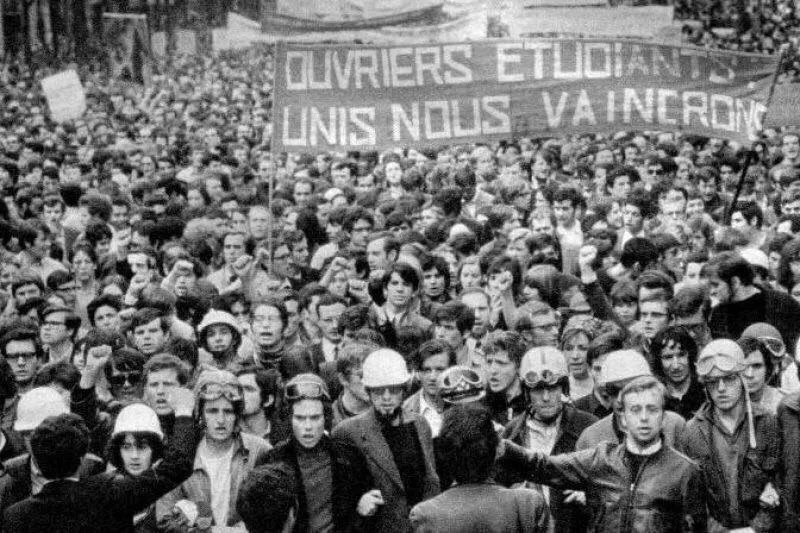
Even in my time, Cambridge had a late, brief flowering of
Marxist thought, following ‘Les événements’ in Paris in 1968.
Will, it seemed to me, was writing about – and to – three real people:
‘The Lovely Boy’, ‘the Dark Lady’ and ‘Rival Poet’. They were not ‘imaginary
friends’ and the Sonnet sequence was not a ‘literary construct.’ If it were a
construct, it would have made more aesthetic sense.
As it is we have 154 Sonnets in random order – random except that
they seem to be in two piles – one to ‘to him’ and one ‘to her’ – with far
more in the ‘to him’ pile.
But it was not only the New Criticism that was preventing a true
appreciation of the Sonnets – it was the year 1969 itself. In the Sonnets
Will writes love letters to the Lovely Boy – but homosexual love in Britain was a criminal offence until 1967. To suggest that our National Poet wasgay – or even bisexual – caused outrage.
I know this personally. For my Finals I wrote a 5,000 word essay on two
Sonnets. The first was Sonnet 94 ‘They that have power to hurt and will
do none’ which I interpreted as Will’s advice to the Lovely Boy to refrain
from sex with lower class young men.
The second was Sonnet 7 ….
Lo in the Orient when the gracious light/Lifts up his burning head
……which I took to
be a light-hearted attack on the Lovely Boy’s masturbation. My Director of
Studies was horrified and ordered me not to submit my essay.
I had nothing else, so I had to….
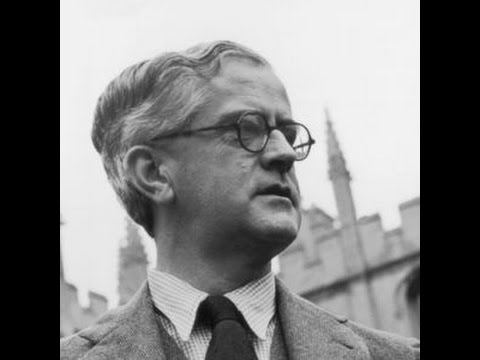
But a couple of years later I was listening to the radio and heard the
historian A.L. Rowse put a name to the Dark Lady.
She was Aemilia Bassano. The whole Eng Lit Establishment – led by Stanley Wells – jumped
on him – as they had jumped, to a much smaller degree, on me.

Wells had pounced on two trivial mistakes Rowse had made in his rush
to get his discovery into print. As a consequence the whole theory – which
completely fits the facts – was dismissed. Wells had put back Shakespeare
scholarship a quarter of a century.
But this broadcast re-ignited my passion for the Sonnets. I wanted to
find out who everyone was and what their stories were. Even in 1969 New
Criticism heretics were whispering in corners that the Lovely Boy might
be Henry Wriothesley, the Third Earl of Southampton.
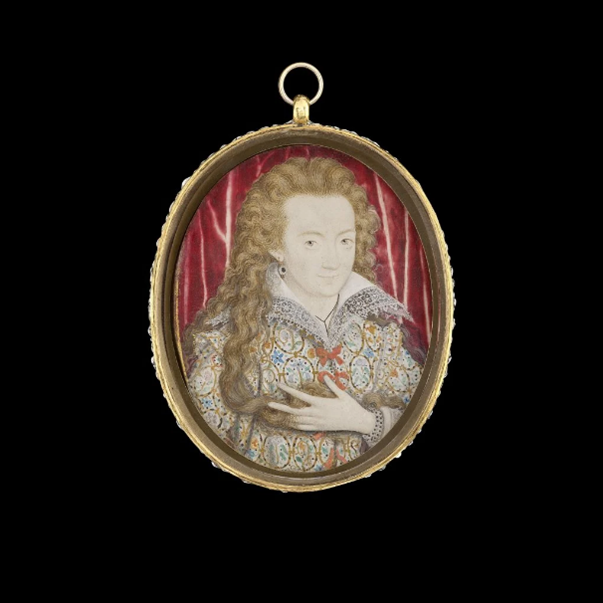
What I didn’t know then was that Nathan Drake had come up with same idea in 1817.
Artificial Intelligence hadn’t been invented then.
Southampton signed his letters ‘Harry Southampton’ – so from now on
he shall be ‘Harry’.
The identity of the Rival Poet suggested itself in a moment of truly
Jungian synchronicity. For many years I had been fascinated by Love’s
Labour’s Lost and directed a student production of it in Clare Gardens.
A great friend of mine called Gerald Chapman played the Arch Flatterer,
Boyet.
His extravagant praise of the Princess of France earns a rebuke from her:
Good Lord Boyet, my beauty, though but mean
Needs not the painted flourish of your praise.
Beauty is bought by judgement of the eye
Not uttered by base sale of chapmen’s [merchants] tongues’.
This got a laugh from the audience because they knew Gerald’s surname.
I believe there was an identical laugh in the original production. I hope to show that Boyet was a caricature of the poet and medium, George Chapman……
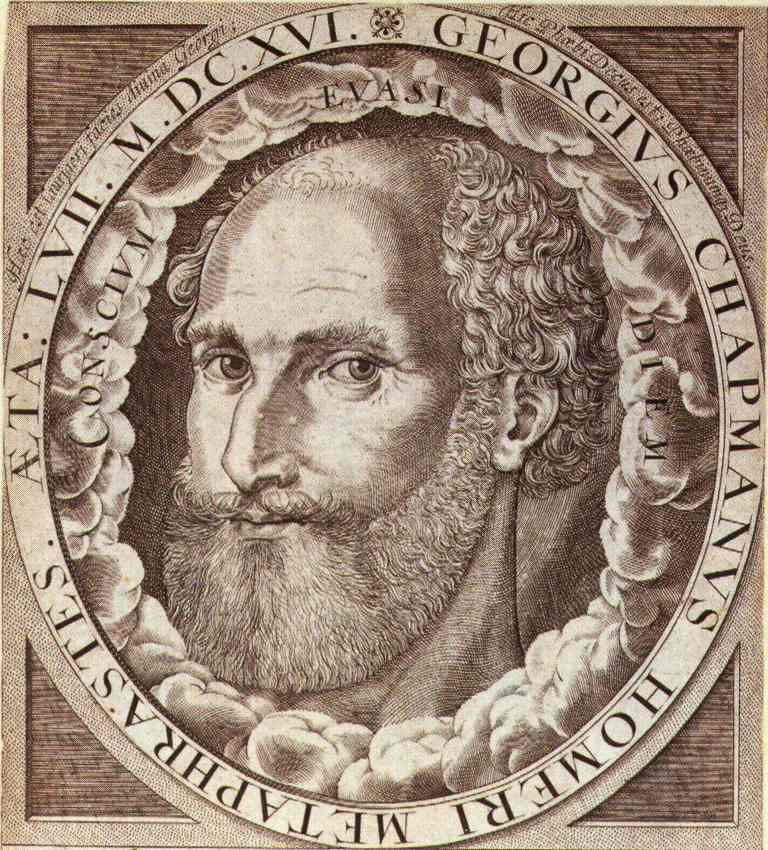
…..and that Chapman is the Rival Poet of the Sonnets. William
Minto came to the same conclusion in 1874.
I later did a professional production of the play at the Northcott
Theatre in Exeter where I was Artistic Director. In the same way I thought
the Sonnets were about real people, I began to think Love’s Labour’s Lost
was about a real place, with its ‘curious knotted garden’ and it’s ‘steep
uprising of the hill’.So, towards the end of the last century, my teenage
daughter Amy and I went for a picnic to the ruins of Harry’s stately home
at Titchfield in Hampshire
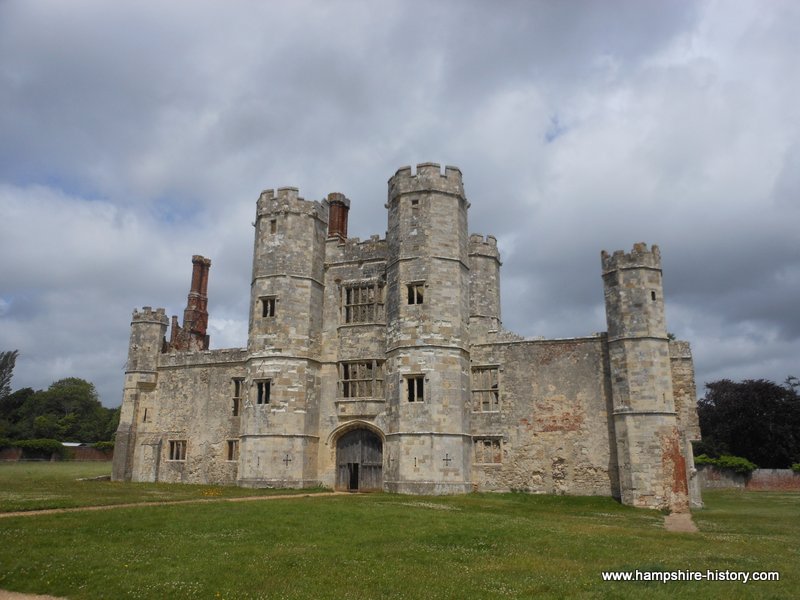
We found ourselves on the set of the play.
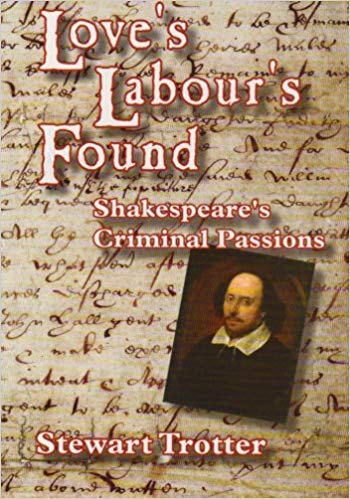
I wrote a book called Love’s Labour’s Found (published 2002) which
argued that Harry was the Lovely Boy, Aemilia was indeed the Dark Lady
and there was a whole love-triangle played out at Titchfield. Meridian
turned the theory into a T.V. documentary.
Having written Love’s Labour’s Found I had a detailed Elizabethan/
Jacobean time line, so I started to commit the ultimate Cambridge
heresy – of fitting the Sonnets into ‘real’ time and place. I posted them,
with ‘translations’ into modern English, on my blog The Shakespeare
Code, which, over the years, has had over 400,000 Views.
In Science, you are allowed to present a theory to be tested. I want to do
the same with the Sonnets. I will say directly what I think happened and
base my evidence on the Sonnets themselves. So ‘probably’ and ‘perhaps’
will be banned. My hope is that people will test these ideas with the help
of computers.
It is already starting to happen. In 2013 I first suggested on my blog
that the famous attack on Will as ‘an upstart crow’ by Robert Greene was
in reality written by Thomas Nashe. This year, 2025, the theory has been
‘proved’ true by the team work of Shakespeare Scholars and Computer
Programmers.
I have assumed the reader can have access to AI, so instead of footnotes
I’ll give names and dates in the text which can be checked.
But back to the Sonnets and, briefly, what I think Will got up to before he wrote them…
If you want to find out what Will got up to click the link above!
Happy reading!
‘Bye now

 The Shakespeare Code
Leave a comment