In 1964, George P. V. Akrigg, of The University of British Columbia, Vancouver, visited Titchfield in Hampshire, England.
He was doing research for his book, Shakespeare and the Earl of Southampton, which was published in London in 1968….
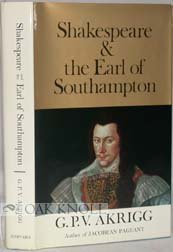
He called in at St. Peter’s Church, where the magnificent tomb of the Southampton family lies, and saw a ‘little guide’ to the Parish which was ‘sold at the door there’.
Written by Rev. G. Stanley Morley, M.A., it had been published in 1934, for sixpence.
Morley had graduated from Magdalen College, Cambridge in 1898, had been a Curate at Huntingdon, a Chaplain and Assistant Master at Seafield Park College in Fareham and an Inspector of Schools for the Diocese.
He became the Vicar of Titchfield in 1919 and stayed in the post till 1936. He was clearly a Shakespeare enthusiast…
Morley states that it was the Third Earl of Southampton’s……
romance…….
…..i.e. his wooing of Queen Elizabeth’s Lady-in-Waiting, Elizabeth Vernon…
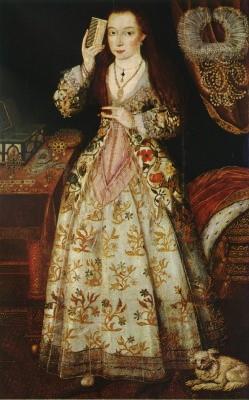
….against the express wishes of the Queen herself…..
….on which Shakespeare….
……founded his play Romeo and Juliet, which is believed to have been acted for the first time in Titchfield.
Akrigg responds:
A local tradition that Romeo and Juliet was performed at the great house by Shakespeare’s company is too late to have any authority…
But how can Akrigg possibly know WHEN the tradition started?
A Vicar who had stayed fifteen years in his post would have been given access to generations of old family stories.
Akrigg then cites Morley’s Guide, without even mentioning the author’s name, and adds:
Those who place faith in such traditions would do well to read Lord Raglan’s chapter on Local Traditions in The Hero (London, 1936).
●
Fitzroy Richard Somerset, Fourth Baron Raglan, anthropologist, self-styled debunker-of-myth, lapsed soldier and bee-keeper….
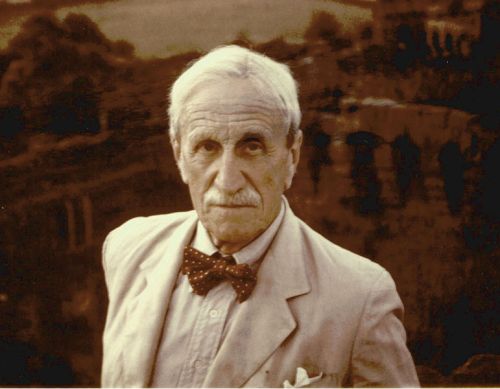
…….writes:
There are various ways in which a local tradition, so called, comes into existence. In the first place there is to be found, in most rural areas, some clergyman or schoolmaster with a smattering of history or archeology who enjoys speculating about the past and invariably ends, if he does not begin, by regarding himself as a more than sufficient authority for his own statements. He is regarded as the expert and nobody dreams of questioning what he says or of checking it, even with the most readily accessible works of reference….
One would expect Rev. Canon Morley, as a Cambridge M. A., to have had more than ‘a smattering of history’.
And what if ‘local tradition’ tallies exactly with known history?
Jane Wriothesley, later 1st Countess of Southampton, had hosted theatrical entertainments at Titchfield before the conversion of Titchfield Abbey to a Stately Home had even been completed.
In 1538, one of Thomas Wriothesley’s servants wrote to him….
She [Jane] also handleth the country gentlemen, the farmers and their wives to your great worship and every night is as merry as can be with Christmas plays and masques with Anthony Gedge and other of your servants…
Thomas Wriothesly himself…..

…… was a keen amateur actor. John Leland recalled how, when he acted in college plays at Cambridge…
Your beauty so shone upon your brow, your head of golden hair so glistened, the light of your keen mind was so effulgent, and your winning virtue so adorned you, that, one amongst many, you were seen to be a pattern for all.
The Code’s Chief Agent, Stewart Trotter, has also found a letter, written in 1543, from Nicholas Udall to Thomas Wriothesley, thanking him for trying to get his old job back as a schoolmaster at Eton.
Udall had been sacked for suspected theft of college plate and ‘buggery’ of one of his ex-pupils…
But Udall was also the author of one of the first English language comedies, Ralph Roister Doister. Udall scholars believe that the play was performed by schoolboys after 1541, but before 1551. They do not know, though, at which school.
It cannot have been Eton as plays were only performed in Latin there till 1560. A monitor would hold up a stick so that the boys knew when to laugh…
In his letter to Wriothesley, Udall writes…..
….since my coming from Titchfield…
….which implies that he was once living there.
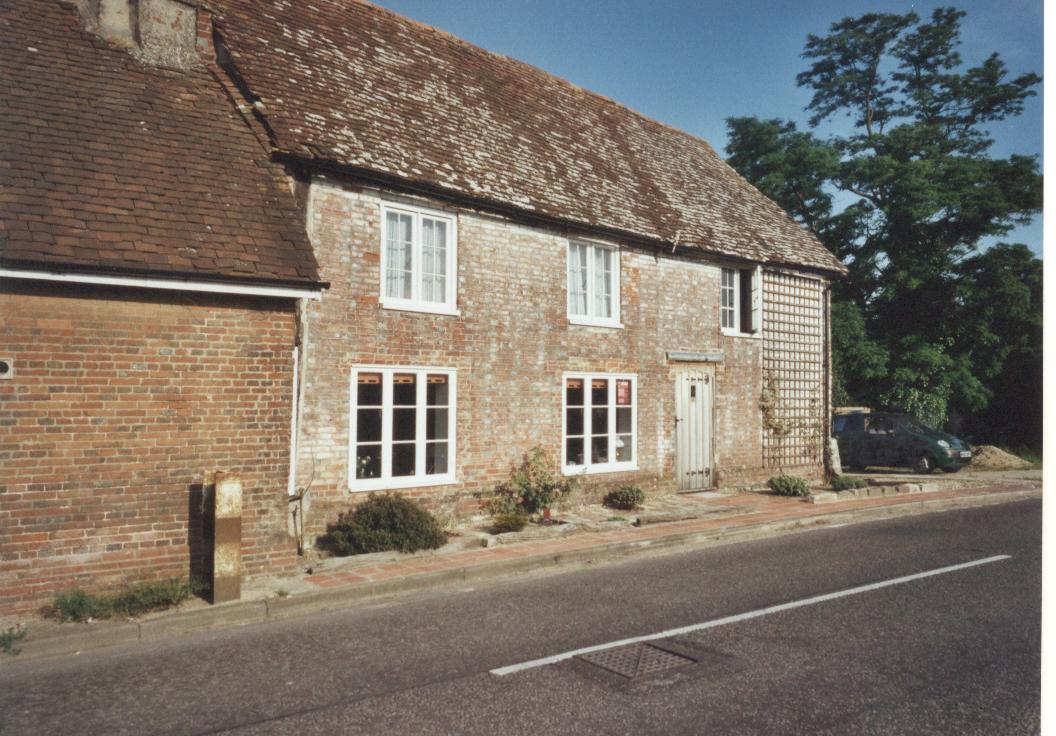
There is an Old Schoolhouse in Titchfield, where, The Shakespeare Code believes, Shakespeare once taught….

It is entirely possible that Ralph Roister Doister was first performed at Titchfield by local schoolboys as another Christmas entertainment….
●
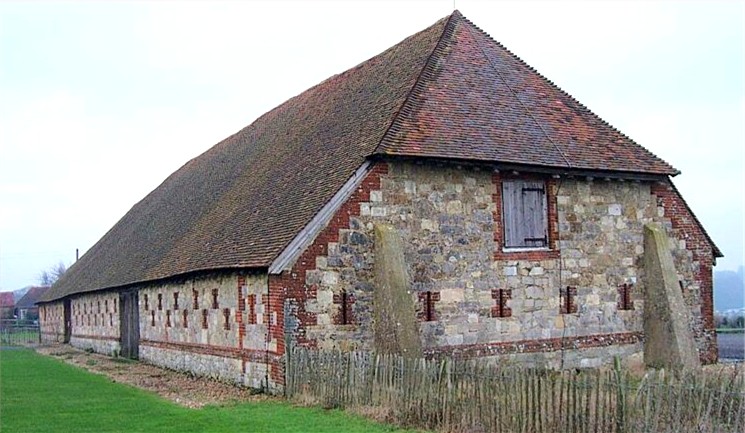
Morley (contra Akrigg) does not say that Romeo and Juliet was performed by Shakespeare’s company or that it was performed in Place House. Indeed, one local tradition has it that Romeo and Juliet was first performed in The Great Barn…..

The Shakespeare Code has always argued that many of Shakespeare’s early plays were performed at Titchfield and Wilton and that the casts were a mixture of aristocrats (including women) and the emerging ‘professional’ players.
See: Shakespeare: The Movie
The Code believes that Morley was right. Romeo and Juliet WAS first performed in Titchfield for the following reasons…..
1. The story had deep resonance for the Southampton family. The Third Earl of Southampton’s maternal grandfather, Antony Browne……

….. was one of England’s leading Roman Catholics. King Philip II of Spain (when he was King of England) first made him his Master of Horse and then created him Viscount MONTAGUE in September, 1554
Browne had some claims to the old name of Montague, but it was chosen primarily because Henry Pole, the last ‘Baron’ Montague, had been ‘attainted’ (stripped of his title and lands) and beheaded five years earlier.
King Philip then appointed Browne the English Ambassador to the Pope and to Venice. So in 1555, the new Viscount Montague travelled to Italy…
Here the story of the rivalry between the houses of Montecchi and Capuletti went back to Dante in the fourteenth century…..
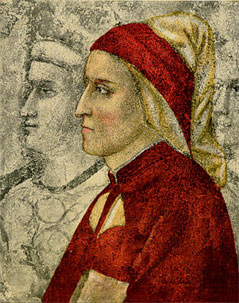
2. By 1562, when Arthur Brooke published his Romeus and Juliet – a verse translation into English from the Italian poem by Bandell – the two families were called the ‘Montagews’ and ‘Capelets’ and were said to have lived in Verona.
Indeed, Brooke states that he had by then seen…..
the same argument lately set forth on the stage with more commendation than I can look for….
This means there was already a stage version of the Romeo and Juliet story TWO YEARS before Shakespeare was born!
3. In 1572, Viscount Montague decided to hold a double wedding for two of his children, Anthony and Elizabeth. (Anthony was the twin brother of Mary Browne, mother to Shakespeare’s patron and lover, the Third Earl of Southampton). They were to marry Mary and Robert, children of Sir William Dormer.
Eight of Viscount Montague’s relatives decided it would be fun to present a Masque for the event, dressed up as Venetians. They bought…..
furniture of silks etc. and had caused their garments to be cut of the Venetian fashion.
But it suddenly dawned on them that dressing as Venetians for an English wedding….
…. would seem somewhat obscure.
…..so they asked George Gascoigne to come up with an entertainment that would explain their dress….
Gascoigne remembered Montague was an Italian name. So for the purpose of the Masque, he made Montague a….
noble Venetian.
The entertainment featured a ‘pretty boy’, born in England, whose mother was from the house of Montague but whose father was from the house of Mounthermer – a branch of Viscount Montague’s family.
In the story, the boy’s father is slain fighting the Turks and the boy himself is carried off to Turkey. However, some wandering Montagues from Venice rescue him because the boy had taken care to wear a ‘token’ in his hat….
…..which the Montacutes do bear always, for
They covet to be known from Capels when they pass
For ancient grutch which long ago tween those two houses was.
The Montagues embrace the lad and sail back to Venice. However a storm blows them to the shores of England instead – just in time for the double wedding.
The notion that ALL the wedding guests should be dressed as Venetians was abandoned on grounds of cost….
4. The Montague and Southampton families were soon acting out the original Romeo and Juliet story for real. The 2nd Earl of Southampton in 1577 suspected his wife, Mary (the daughter of Viscount Montague) of adultery with ‘a common person’ called Donesame. He warned her never to see the man again and snatched their eight year old son, Harry, away from her….
Then, in 1580, the Earl was told his wife had been seen with Donesame in Dogsmerfield…
….in compromising circumstances…
It was war between the Southamptons and the Montagues.
As Gregory, the Capulet family servant, says in Shakespeare’s play:
The quarrel is between our masters and us their men
And on 23 February, 1580…..
This day Edmund Prety, servant to the Earl of Southampton was, for certain misdemeanours by him used against Mr. Anthony Browne, the eldest son of the Lord Montacute…committed to the Marshalsea….
5. Years later, at Harry Southampton’s coming of age party in 1594, his two friends, the Danvers brothers, arrived a day early and covered with blood. They had just killed Henry Long. The Long family and the Danvers family had long borne an ‘ancient grudge’ in Wiltshire.
●
The following year, 1595, Harry Southampton went to the Court of Queen Elizabeth. The Earl of Essex was tired of being the Queen’s lover and hoped the dashing Harry would take over…..

In 1592, Harry had fallen in love with the dark-skinned beauty, Amelia Bassano, when she had played Rosaline in Love’s Labour’s Lost at Titchfield.
This had infuriated Shakespeare. He was trying to have an affair with her himself….
But it had made him realise that he was more in love with Harry than he was with Amelia. When Amelia became pregnant and was married off ‘for colour’ to a ‘minstrel’, Shakespeare and Harry began their affair…
But, by decoding the anonymous Willobie his Avisa, we know that Amelia was back on the scene a couple of years later, playing Hermia in A Midsummer Night’s Dream at Copt Hall…

….and making another bid for Harry.
Her technique, though, was to play hard to get…..
So Harry fell in love with her all over again…..
……sighing and weeping and hiding himself away….
Then he went to the Court and proceeded to fall in love yet AGAIN – this time with one of the Queen’s Ladies-in-Waiting, the beautiful, if highly volatile, Elizabeth Vernon….
She was a far more suitable match for Harry as she was a cousin, albeit poor, of the Earl of Essex.
It was good news for Harry’s Mother, Mary, as the Southampton line now had a chance of surviving….
It was ambivalent news for Shakespeare. He wanted Harry to procreate; but it would mean sharing Harry’s love with yet another person…
It was dreadful news for Queen Elizabeth. She was jealous of her young Ladies-in-Waiting and hated them to have love affairs – or even get married – without her permission.
In the circumstances, Essex decided that Harry and Elizabeth Vernon needed a lot of encouragement.
He commissioned Shakespeare to write Romeo and Juliet because:
1. The names and story had long been associated with the Montague/Southampton family and….
2. It showed that love could be stronger than the tyrannical forces opposed to it…..
…..in this case the Queen of England!
As a bisexual man, Shakespeare could also empathise with Juliet’s forbidden love for Romeo. He loads the language of the two lovers with Catholic imagery – just as he loads his own language in his love sonnets to Harry.
Shakespeare also calls Harry his ‘rose’: and Juliet famously says….
A rose by any other name would smell as sweet.
Shakespeare expresses the turmoil of his own feelings in the figure of Mercutio – a character profoundly disturbed by the sex-life of his friend, Romeo.
John Dryden claimed that Shakespeare had to kill Mercutio before Mercutio killed him.
The Shakespeare Code believes that Shakespeare played Mercutio in the premiere of the play at Titchfield….
And that Harry and Elizabeth Vernon played the star-crossed lovers….
……as a form of therapy….
Romeo/Harry at the beginng of the play, is still tearfully in love with the dark-eyed Rosaline – the name of the character Amelia played in Love’s Labour’s Lost.
In the course of the action, Romeo/Harry transfers his love to Juliet/Elizabeth Vernon as his passion for her grows stronger….

All this would have been kept from Elizabeth for as long as possible…
(But the play, of course, went on to be a smash hit in public performance)
There was another good reason for the play’s initial secrecy…..
It contains a coded attack on the Queen….
Elizabeth loved to be associated with the Moon – cool, mysterious and chaste….
So Shakespeare plays with fire when he has Romeo say:
But soft, what light through yonder window breaks?
It is the east and Juliet is the sun!
Arise fair sun and kill the envious moon
Who is already sick and pale with grief
That thou her maid art far more fair than she.
Be not her maid since she is envious,
Her vestal livery is but sick and green
And none but fools do wear it…
Richard II was written at the same time as Romeo and Juliet and given in private performance for the same reason….
Both plays fore-shadow the 1601 Rebellion, led by Essex and Southampton, against the Queen….
Please now read: In Defence of the Vicar of Titchfield: (2) ‘The Beeston Family.’
Read Full Post »







 The Shakespeare Code