Feeds:
Posts
Comments

Archive for August, 2011

(It’s best to read Shakespeare in Titchfield first)

John Aubrey (1626-97), the collector of gossip and tittle-tattle about the rich and the famous…
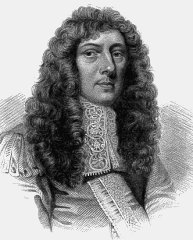
John Aubrey


…..records that William Shakespeare ‘in his younger years’ was ‘a schoolmaster in the country.’
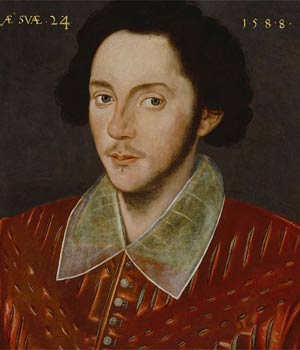
William Shakespeare? The Grafton Portrait.

He gleaned this information from William Beeston (c. 1610/11-82) who was an actor and impressario whom John Dryden called ‘the chronicle of the stage’.

He was the son of Christopher Beeston (c. 1582-38) who was an actor and impresario himself. Christopher Beeston is thought to have been the boy actor ‘Kit’ mentioned in the ‘plott’ (treatment) of the play The Seven Deadly Sins written by Queen Elizabeth’s favourite jester, Richard Tarl(e)ton…
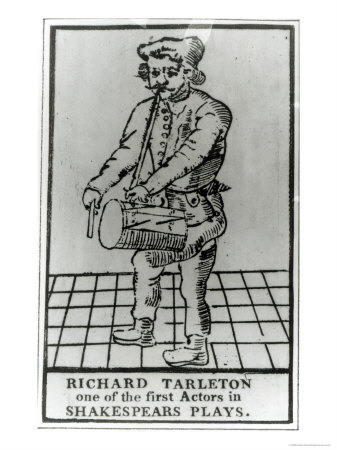
….and presented in a revival by Lord Strange’s troupe in 1591/2

Ferdinando Lord Strange

In 1598 Christopher acted with Shakespeare himself (in a production by the Lord Chamberlain’s Men) of  Ben Jonson’s play, Every Man in his Humour…


Thomas Nashe (1567-1601) the diminutive, buck-toothed, pamphleteer, poet, novelist and playwright…. 
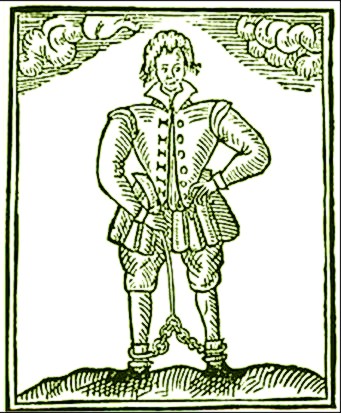
Thomas Nashe

….wrote a pamphlet in 1592 called Strange Newes….

He  dedicated it to a mysterious ‘William Apis Lapis’…

Nashe was using a Latin code. ‘Apis’ means ‘bee’ and ‘Lapis’ means ‘stone’ – so William’s real name was William Bee-stone, or Beeston.

[Note: This cannot be the same William Beeston who told Aubrey that Shakespeare had been ‘a schoolmaster in the country’. The ‘Aubrey’  William Beeston was not born till around 1610/11, nearly twenty years after Nashe’s 1592 Strange Newes pamphlet.]

By further decoding the complex language of Nashe’s pamphlet, we learn that this ‘Apis Lapis’ Beeston…

1.  Was mean.

2. Was bad at grammar, both English and Latin.

3. Was a bit of a crook.

4. Loved alcohol, which he sold to lawyers.

5. Loved food.

6. Loved poetry, especially Chaucer in English and Terence in Latin.

7. Had a massive sex drive.

8.  Had illegitimate children.

9. Was great company and formed strong and loyal friendships.

Although the ‘Apis Lapis’ William Beeston and the ‘Aubrey’ William Beeston cannot be the same man, scholars have often suggested that there might be a link between the two.

But what link?

Titchfield in Hampshire (and The Shakespeare Code) provide the answer!

The Code has discovered that there was a William Beeston living in Titchfield in Hampshire who matches the  ‘Apis Lapis’ profile exactly.

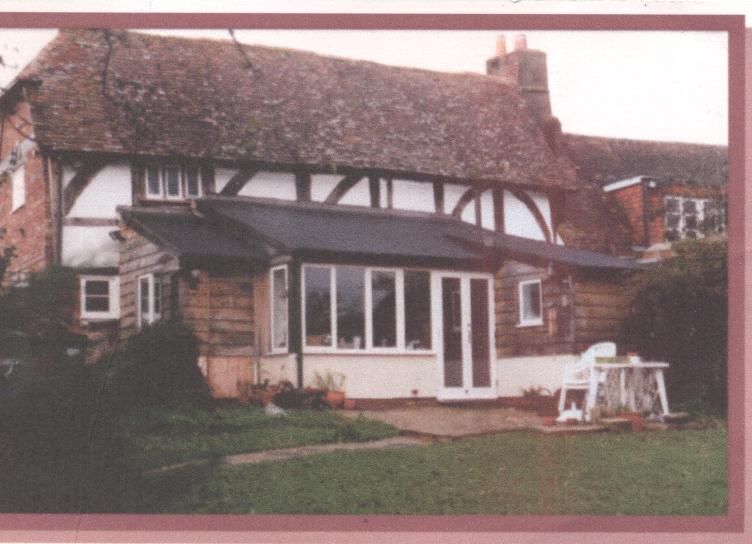
At the end of his life (1638) he was living at Posbrook Farm, a magnificent building (now called Great Posbrook Farm) which is still standing….
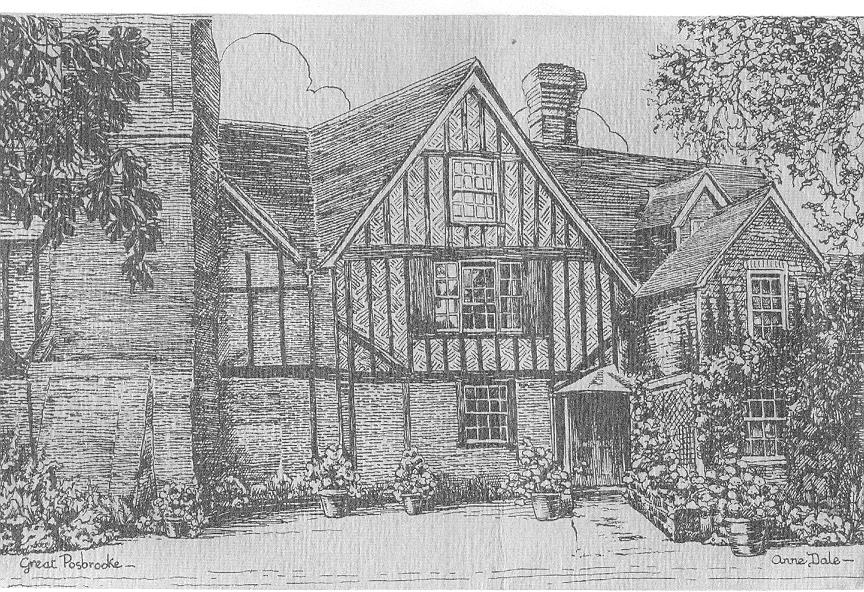
 

By then he had become an intimate friend of the Southampton family, which had included the third Earl, Henry Wriothseley, Shakespeare’s patron and lover….
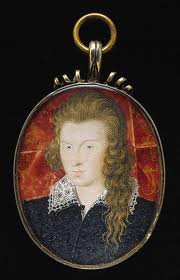
In 1624 it had been Beeston’s melancholy duty to bring back the bodies of both the third Earl and his son from the Low Countries where they had died on campaign. 

Beeeston then became the mentor of the teenage fourth Earl of Southampton, Thomas…
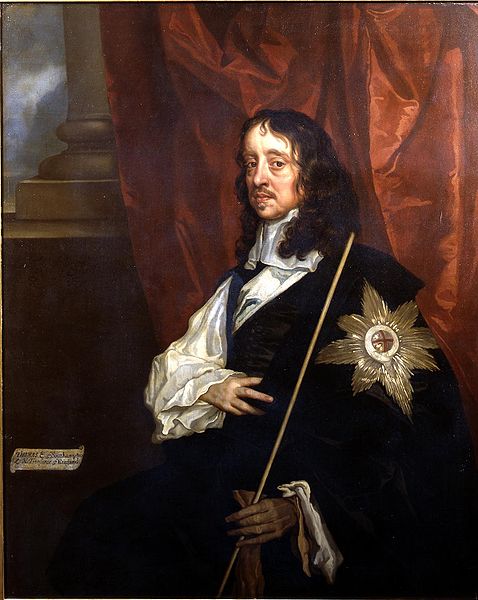
Thomas later in life...

Beeston even lodged near the Earl in St. John’s College when the young lord went up to Cambridge to study.

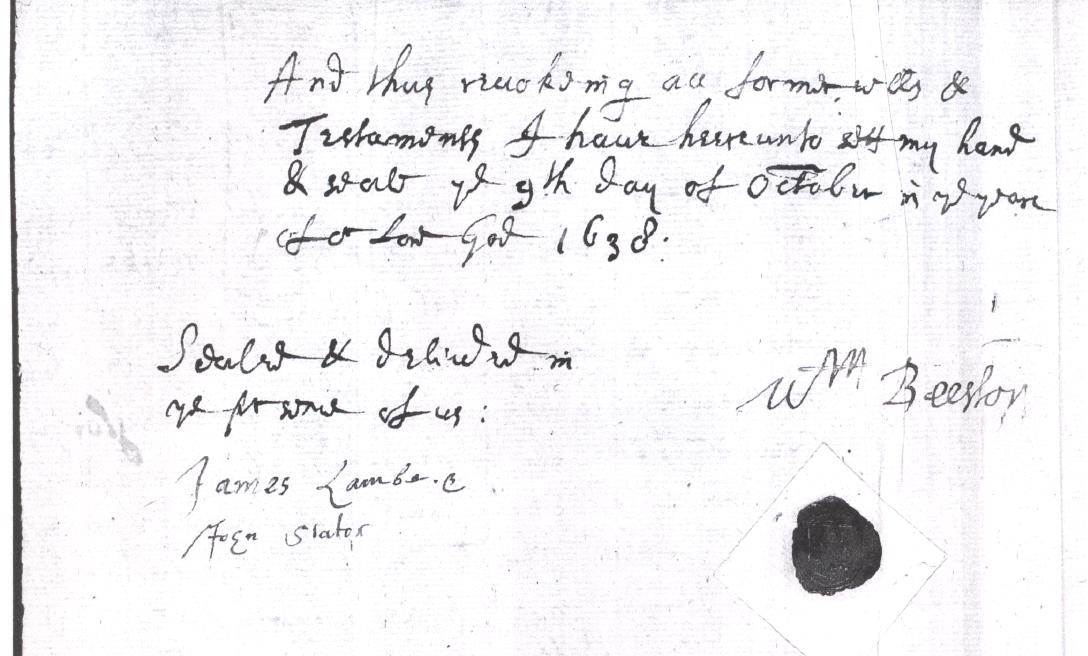
Beeston’s will survives at the Hampshire Record Offices, written, signed and sealed in his own, bold  hand….
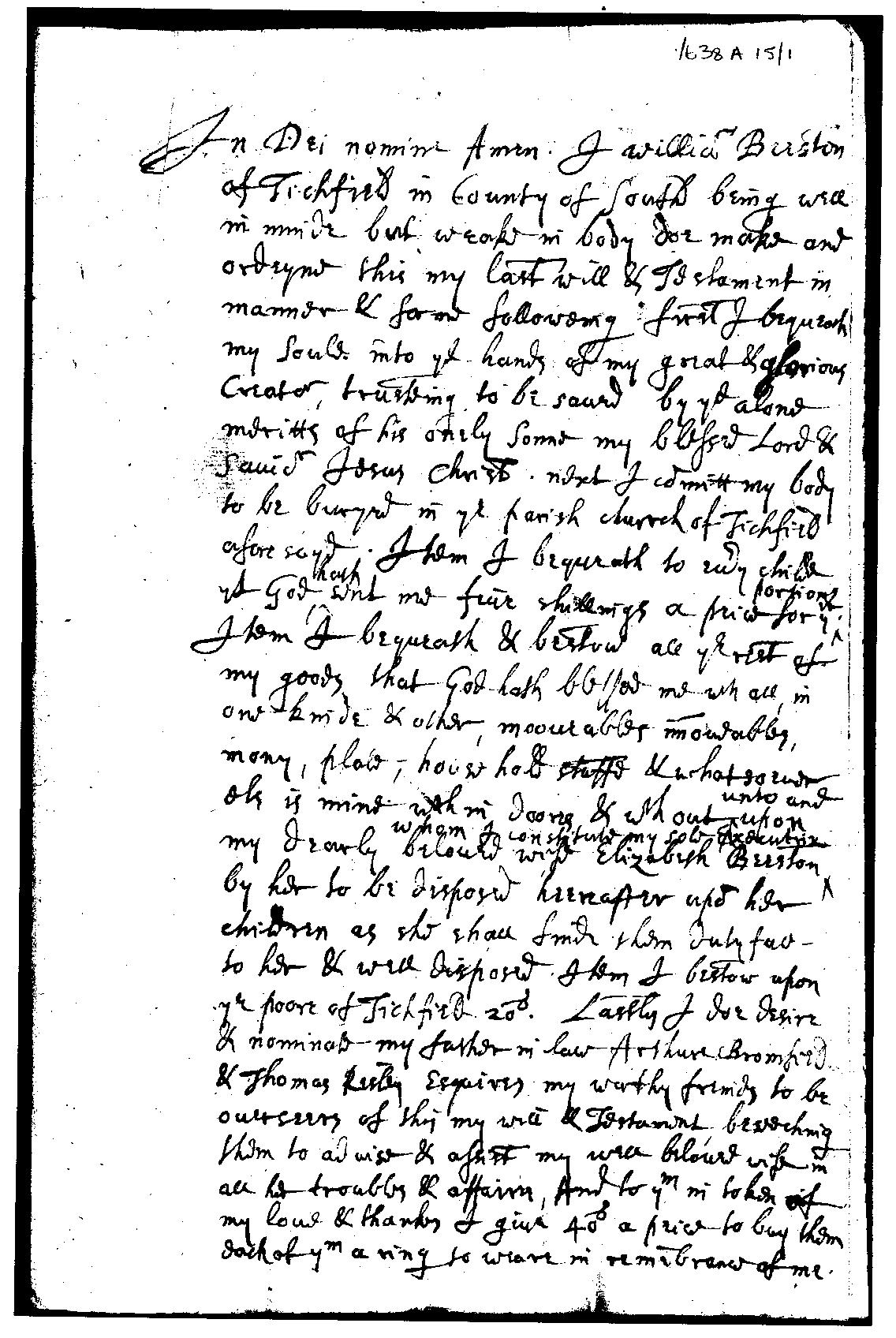
Like Apis Lapis, Titchfield Beeston uses bad grammar.  He writes about ‘the alone merits’ of Jesus Christ….

 ….when he means ‘the sole merits.’

Like Apis Lapis, he loved food and wine. We learn, from the inventory taken after his death, that he had over £2.10.0 worth of cheese in his loft  – over £1,000 in today’s money…

He also possessed his own brewhouse and a buttery with presses, vats, barrels and flaggons and a loft crammed with hops.

Like Apis Lapis, he also loved literature. In his study he had a library of books worth £10 – £5,000 in today’s money…

Also, like Apis Lapis, he was mean.

In his will he leaves a paltry five shillings (£125) to every child ‘that God hath sent me’….

(As we can see, Beeston originally wrote ‘every child that God sent me’ but changed it later to the more gramatically elegant ‘that God hath sent me’).

Beeston had married Elizabeth, the much younger daughter of his business partner, Arthur Bromfield, and by 1638 had fathered a family of two boys and four girls.

Why doesn’t he refer to them by name in his will?

For the answer we have to go back to the 1592 Strange Newes pamphlet.

Here Nashe describes how Apis Lapis’s ‘hospitality’ (code for ‘lust’) has brought forth ‘fruits’ (code for ‘illegitimate children’)  ‘who are of age to speak for themselves’.

Christopher Beeston was a child actor by 1592 and certainly able to speak for himself.

But even more intersesting, he sometimes used an alias, Christopher Hutchinson.

This might suggest he was one of Apis Lapis Beeston’s illegitimate children….

By using the catch-all phrase ‘every child that God hath sent me’ ‘Apis Lapis’ Beeston could be including his illegitimate children in his five shilling gift…

But the strongest evidence of a link between ‘Apis Lapis’ Beeston and Christopher is the date of their respective wills…

Christopher wrote his will on 4 October, 1638 – then added a codicil on 7 October.

‘APIS LAPIS’  BEESTON WROTE HIS WILL ON 9 OCTOBER – TWO DAYS LATER!

Either this is a coincidence of monumental proportions or there was a link between the two men.

And the obvious link is father and natural son.

Christopher, as a boy, would have attended the grammar school at Titchfield, which still stands at the gates of the Southampton family’s Place House…
 

He would  have been taught by Shakespeare…

Shakespeare would have recommended his talented young pupil to Lord Strange’s Company…

Christopher would have told his own son, Wiliam, about all this… 

And William would have told Aubrey…

CODA

The Shakespeare Code believes that…

‘Apis Lapis’ Beeston was, ‘in younger years’, a bit of a rogue. Wearing a greasy cap, with a huge dagger at his back,  he hung round taverns with low-life criminals.

But as he became more and more closely involved with the Southampton family, he became more respectable.

His actor son, Christopher, pursuing the life of an actor, did not….

In fact in 1602 Christopher was up on a rape charge…

Even for actors, this was too much. He was forced to leave the Lord Chamberlain’s Men and join the less repectable Worcester’s Men.

It was also too much for his natural father, ‘Apis Lapis’ Beeston, who cut off all communication.

But there was always the possibility that when ‘Apis Lapis’ Beeston died, Christopher would make a claim on his natural father’s property.

(‘Apis Lapis’ Beeston was on the way to becoming wealthy enough, and respectable enough, to become an ‘esquire’ with his own coat of arms…)

To prevent this, ‘Apis Lapis’ Beeston married the young daughter of his business partner, Bromfield, around 1628.

(Bromfield was also close to the Southampton family: he had helped cover up a murder by the third Earl’s friends, the Danvers brothers, and had been rewarded with property and a coat of arms…)

Christopher, by this time, had his own son, whom he pointedly named William after his natural father. ‘Apis Lapis’ Beeston, with equal point, named his second son William as well. 

For him, his natural grandson did not exist…

When Christopher was dying, he asked to see his natural father. He was desperately worried about his ‘many great debts’ and begged ‘Apis Lapis’ Beeston to provide for his natural grandson – who in turn would provide for his wife and family.

It was worry about the finances of his son that motivated a codicil to Christopher’s original will.

‘Apis Lapis’ Beeston refused and immediately wrote a will that left everything to his wife. The  ‘five shilling’ gift to each of the children that God had ‘sent him’ made it clear to Christopher that he could expect nothing more from his natural father.

It also blocked any further claims on his estate, rather like Shakespeare’s infamous gift of his ‘second-best bed’  to his wife.

‘Apis Lapis’ Beeston’s legitimate children could expect to inherit from his ‘dearly beloved’ wife ‘as she shall find them dutiful to her and well-disposed’…
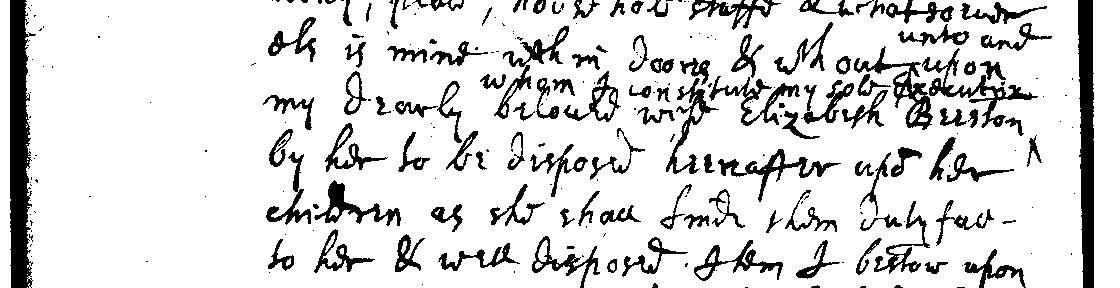
Christopher Beeston was buried on 15 October, 1638, less than a fortnight after he had written his will.

‘Apis Lapis’ Beeston must have caught his son’s disease. He was buried in the graveyard of St. Peter’s, Titchfield on 3 December.

The week after his own baby daughter, Anne, was baptised in the same beautiful church…
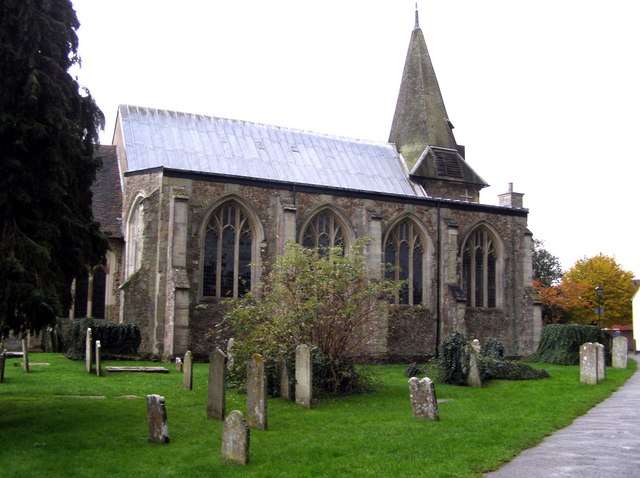
‘Apis Lapis’ Beeston had retained his massive sex drive to the end…

CELEBRITY ENDORSEMENT


Prof. Jonathan Bate, Professor of Shakespeare and Renaissance Studies at the University of Warwick and a Board Member of the Royal Shakespeare Company writes of The Strange Case of Mr. Apis Lapis (upon which this article is based)…

It’s a terrific article and very persuasive that Beeston [of Posbrook Farm, Titchfield] is Apis Lapis. All very interesting….

(To read a full account of The Code’s theory, please click: The Strange Case of Mr. Apis Lapis. )


Read Full Post »

Brothers and Sisters of The Shakespeare Code…

On 15th August, 2011, The Code received its 5,000th View!

The Agents of The Code would like to thank you for your continued interest from all over the world and present to you the customary bouquet of Southampton roses…

We know (from information passed on to us from Google) that there are at least TWENTY-TWO participating nations.

SINGAPORE…

…..joined The Shakespeare Code on 16th August, 2011.

See: ‘The Shakespeare Code’ salutes the Nations’. If the flag of your nation is not amongst those listed, please let us know…

WE WOULD BE PROUD TO FLY IT FOR YOU!

The Shakespeare Code now has more flags than the exterior of Harrods!

To celebrate this event, a great poet and editor, EDDIE LINDEN, has been gracious enough to accept a Fellowship – the highest accolade The Code can offer.

Here is the photograph of Mr. Linden which hangs in the National Portrait Gallery in London:

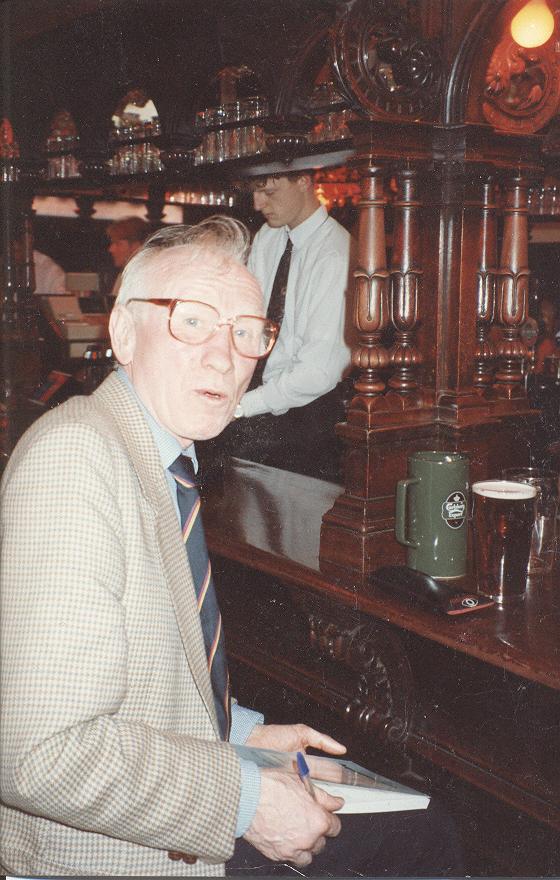
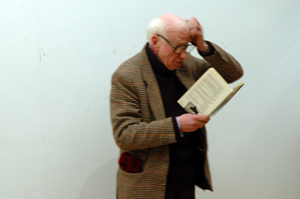
And here is a less formal photograph of Mr. Linden extracted from The Code’s confidential files:

Mr. Linden now has the inalienable right to use the designated letters F. S. C. (Fellow of the Shakespeare Code) after his name.

As a Fellow, his name will also be automatically inscribed in The Code’s coveted ‘Roll of Honour’.

He is also responsible for covering the Sonnets and Poems of Shakespeare.

On accepting his Fellowship he said:

I’m overwhelmed. I come from the working classes, so I am very proud to be given this honour by Stewart.  He’s been a great friend and influence on me for many years now – and comes from the same sort of background as myself…I’m really looking forward to the Fellowship Dinners….

On being asked which of his poems he would like The Code to print in honour of his Fellowship, Eddie unhesitatingly chose a poem first published in the celebrated British newspaper, The Guardian on Saturday, in 2009.

It was inspired by a mining disaster that happened in 1950 in the Scottish village where Eddie grew up…

THE NEST

The echo of the burn as it runs yellow 

And the dark blue slag on the pit surface

Reminded him of his past.

The wheel of life sounded its

Message of time.

The blast of death

Rang its bells in the hearts of the homes.

The grim face in the mirror

Faded with time into the slag heaps

From where he came.

The moon revealed its ugly village casa.

A dog howled its death-like sound,

A baby cried from the cold of the night,

A father knelt in

the bowels of the earth, waiting for light

In the darkest hell, where he never saw.

Only winter remained.

And nothing returned to the nest

In the tree, but the snow that covered

The world of his past

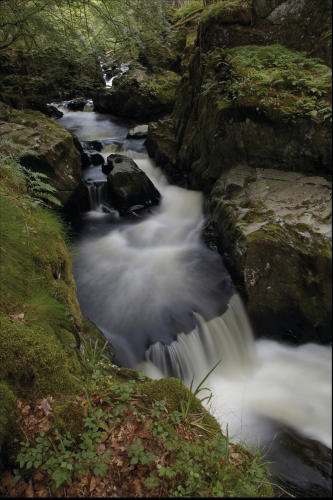
‘Deil’s Cauldron’ in Comrie, Scotland. Hard to see here, but Scottish ‘burns’ do literally ‘run yellow’.

But perhaps Eddie’s most celebrated achievement is his uncompromising poem about Glasgow, anthologised the world over and translated into French, German and Spanish…

CITY OF RAZORS. 

Cobbled streets, littered with broken milk bottles,
 
Reeking chimneys and dirty tenement buildings,
 
Walls scrawled with FUCK THE POPE and blue-lettered
 
 words GOD BLESS THE RANGERS.
 
Old woman at the corner, arms folded, babe in pram,

a drunk man’s voice from the other pavement,

 And out come the Catholics from evening confessional;
 
A woman roars from an upper window
 
‘They’re at it again, Maggie!
 
Five stitches in our Tommie’s face, Lizzie!

Eddie’s in The Royal wi’ a sword in his stomach

 and the razor’s floating in the River Clyde.’
 
There is roaring in Hope Street,
 
They’re killing in the Carlton,
 
There’s an ambulance in Bridgeton,

And a laddie in the Royal.


The old ‘Gorbals’ in Glasgow, where ‘City of Razors’ is set.


THE TRIXIE INTERVIEW

Brothers and Sisters, I can tell you I was all ‘claws and paws’ waiting to interview Eddie. Not only is he the greatest poet in the world, but everyone tells me he is:

‘THE WILDEST MAN IN THE WORLD’!

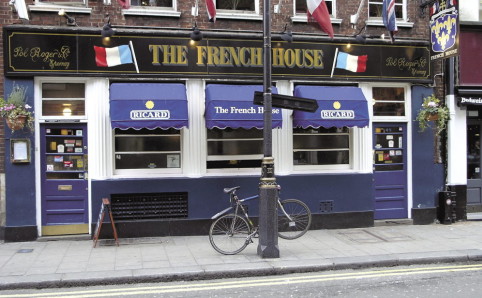
Eddie has been barred every pub in London’s Soho – even the notorious French House who will take ANYBODY’S MONEY!

The French House in Soho.


Our Chief Agent, Stewart, first met Eddie forty years ago at a poetry reading at the Edinburgh Festival. Eddie was in the audience and shouted out that the poetry was ‘f……g crap’. He was hurled down a staircase and Stewart immediately ran to his aid – not out of compassion but out of literary discrimination.

The poetry WAS  ‘f…..g crap’.

The two became great friends as a result and often ‘banged about’ about with the the late, great,  D. A. N. Jones, who, like Stewart, worked for the B.B.C. magazine, The Listener.

There are certain things, though, a man will not tell his  friends…

But he’ll sometimes tell a cat…

The moment Eddie stepped into Head Office, I knew all would be well.

GONE was the old wildness – now there was only sweetness and light. The strongest thing Eddie now drinks is coffee – and even that was too strong for him.

I had to give him some more milk from my saucer.

He opened up to me COMPLETELY as he sipped his coffee and I sat purring in his wise old lap…

It was all to do with his childhood. He’d been born a bastard in Ireland and smuggled, as a package of shame, into Scotland. He was adopted by a foster mother who died when he was ten and his second foster mother wanted nothing to do with him. So he was sent away to an orphanage..

in a big black car….

So no wonder Eddie drank! Denied ‘the milk of human kindness’, he sought it, as anyone would, in the bottle…

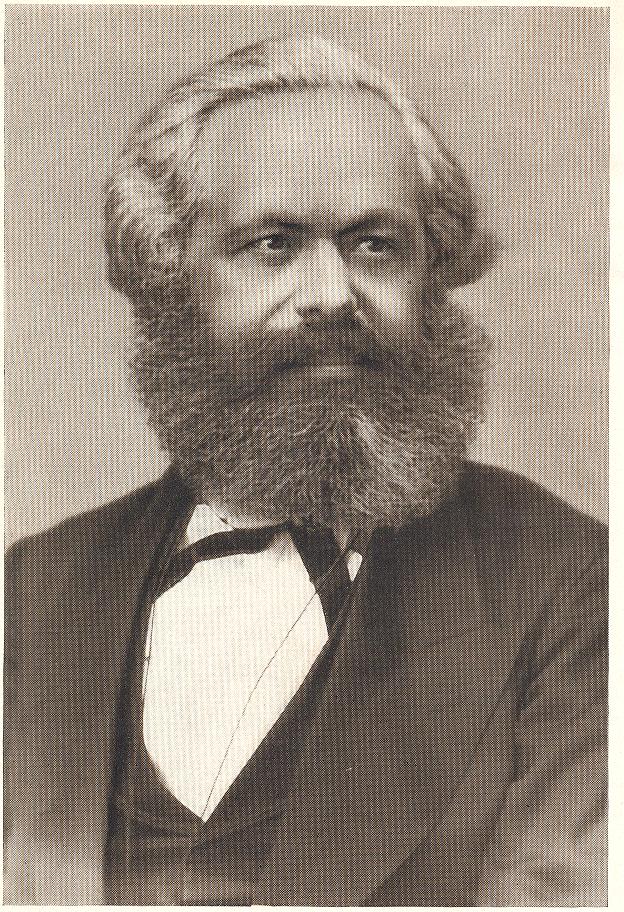
But two things saved him: Karl Marx….


…..and Literature


A. J. Cronin – a Scottish novelist so popular he made it onto ‘fag’ cards…

 Eddie, like Stewart, discovered the work of the passionate Scottish socialist, A. J. Cronin, when he was a teenager. Cronin, like Eddie, was illegitimate and grew up in Greenock, a ship-building town on the Clyde.

This was the town where Stewart’s father was  born and brought up…

Scottish Communists took Eddie’s education in hand – and this led to a violent, spiritual struggle for Eddie’s soul. Eddie was a cradle Catholic and priests wielded over-whelmingly power in working class Scotland.

They even sent him to a Catholic Working Men’s College in Oxford – but he escaped from everyone’s hands (and jobs in steelmills) when he moved to London…

There he discovered even more literature and even more life….

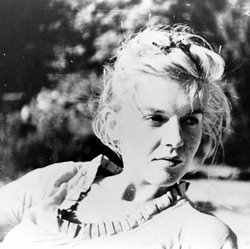
He was taken up by the great poet, and ravishing beauty, Elizabeth (‘By Grand Central Staion I sat down and wept‘) Smart…

Elizabeth Smart

 …and started to give poetry readings with the blind, retro-Augustan poet, John Heath Stubbs….

John Heath-Stubbs

 ….at John Dryden’s old hostelry, The Lamb and Flag

The Lamb and Flag – Dryden’s old stamping ground…
These readings were so popular, the landlady feared the floor in the upstairs room would cave in!
 
But – and this is the point that your Cat feels is important to make –
 
THE READINGS WERE NOT OF HIS OWN POETRY!
 
All through the interview, Eddie would mention the work of everyone else – and never his own. He has a passion for poetry PER SE, because, he said, (as he stroked my ears)…
 
It saved my life….
 
It gave Eddie a reason to get up each day….
 
He managed to save £70 and,  with a gift of £100 from his friend the playwright and poet Harold Pinter….

Harold Pinter, patron of Eddie.

 ….he  started the famous poetry magazine AQUARIUS.
 
Over the years, Eddie has published (amongst countless others) Brian Patten, Seamus Heaney and Hugh McDiarmuid. He  has even devoted whole issues to Canadian, Scottish and Australian writing.
 
And, apart from the first issue….
 
EDDIE HAS NEVER USED THE MAGAZINE TO PUBLISH HIS OWN WORK!
 
This was left to other people and in 1980 a collection of his poems appeared under the title of his masterpiece, City of Razors. Around that time his biography (Who is Eddie Linden by Sebastian Barker) was also published by Jay Landesman.
 
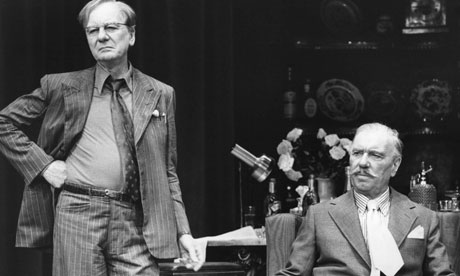
One of the reviewers asserted that in Pinter’s play, No Man’s Land, the down at heel poet and editor, Spooner, whom the drunken grandee, Hirst, ‘picks up in a pub in Hampstead’….
 
Spooner (Gielgud) and Hirst (Richardson)
 ….was none other than Eddie himself…
 
I was about to ask Eddie if this was true, but he suddenly started to shift in his chair…
 
I jumped off his lap.
 
He had divined, in his Bardic way, that I was about to touch on his private life….
 
He looked at the office clock, smiled at me, then darted off to ‘another meeting’…
 
Trailing his mystery, and his genius,  behind him….
 
© Trixie the Cat, August 2011.
 

The Shakespeare Code welcomes Eddie Linden, F. S. C. to the hallowed ranks of the Fellows….

 Janet St. John-Austen, F. S. C.
 
 
Karen Gledhill, F. S. C.
 
Sister Janet, F. S. C., has invented an enitirely new verse form, The Trixameter, with which she welcomes Brother Eddie, F.S.C., to the Fraternity…
 
Ode to Linden

Hail the Code

Poet Fellows

Ed and Will

 
And on the auspicious occassion of the 5,000th view, The Code itself would like to take the opportunity of unfurling its….
 
 ROLL OF HONOUR

Eddie Linden, F. S. C.

Karen Gledhill, F. S. C.

Janet St. John-Austen, F. S. C.

Michael Hentges

Martin Green

Alan Samson

Lord Bragg of Wigton

Sir Nicholas Hytner

Jane Howell

Greg Doran

Maggie Ollerenshaw

Simon Callow

Prof. David Womersely (Thomas Wharton Professor of English at Oxford University)

Prof. Jonathan Bate (Professor of Shakespeare and Renaissance Studies at Warwick University)

Dr. James Kelly (Senior Tutor at Queen’s College, Cambridge)

China Miéville

Martin Jarvis


‘IN VINCULIS, INVICTUS’


Read Full Post »

(It’s good to have read the ‘Twelfth Night Decoded’ series first: The Introduction, Part One, Two, Three, Four, Five, Six and Seven. )

As Brothers and Sisters of The Code well know, Countess Olivia in Twelfth Night….


…asks ‘Caesario’ (Viola in drag)…..


….what ‘he’ would do if ‘he’ were in love with her….

Viola, thinking of her own love for Orsino,  answers in one of William Shakespeare’s most beautiful speeches….

Make me a willow cabin at your gate,

And call upon my soul within the house;

Write loyal cantons of contemned love,

And sing them loud even in the dead of night;

Halloo your name to the reverberate hills,

And make the babbling gossip of the air

Cry out ‘Olivia!’ O, you should not rest

Between the elements of air and earth,

But you should pity me…

But what is a ‘willow cabin’? 

According to the current proprietors of ‘Anne Hathaway’s Cottage’ in Shottery (a mile from Stratford-upon-Avon) it looks like this:

They have constructed a ‘willow cabin’ out of living willows. Tourists can sit inside it, push a button and listen to a recording of a famous actor reading a Shakespeare Sonnet…

Of course, if Viola in Twelfth Night had constructed her ‘willow cabin’ out of living willows, it would have been some time before she could have taken up residence.

Even her passion might have waned a  little…

But what did the Elizabethans mean by a  ‘willow cabin’ ?

The late D. A. N. Jones, the literary journalist and novelist…


….argued (privately, to The Code’s Chief Agent) that it would have the same linguistic associations that it has for us. He reported that Viola’s speech always made him ‘weep’ because the word ‘willow’ triggered the word ‘weeping’ as in ‘weeping willow’.

Willows often grow by water that looks like the 'tears' they have 'wept'.

The Shakespeare Code believes that the meaning for the Elizabethans of  ‘willow cabin’ is not to be found in  linguistics.

It is to be found in politics.

The Shakespeare Code has already argued that the character of Olivia is based on Queen Elizabeth  (at her very best). 

(See ‘Twelfth Night Decoded: Part One.)

Viola, dressed as the page-boy, Caesario, pleading her master’s love, would have evoked memories (in the courtly, first-night audience) of  Simier, the Duc d’Anjou’s envoy, with whom Elizabeth had fallen in love.

In the end, Elizabeth broke free, both from Simier (‘the monkey’) and his master, Anjou (‘the frog’). She put the needs of England before the needs of her heart.

The Shakespeare Code believes that the image of ‘a willow cabin’ evokes a further memory of the Queen’s selflessness.

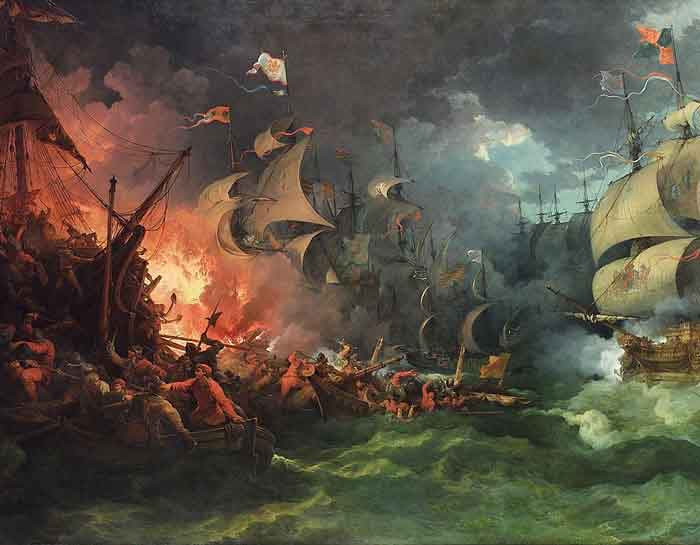
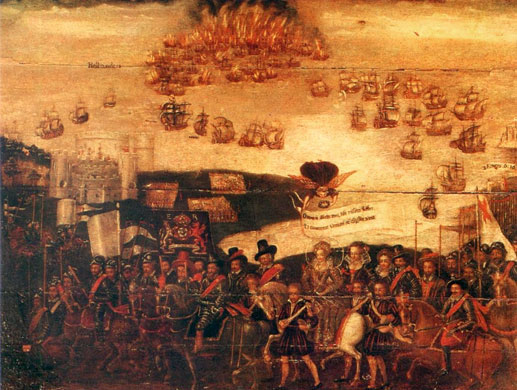
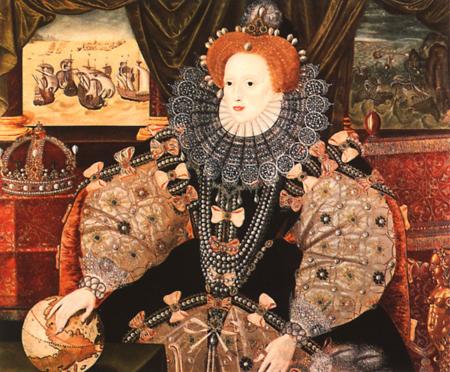
The memory of the Armada….

In 1588, England  ‘stood alone’ against its enemy Spain.

Lucy Aikin, the great Regency/Victorian historian, points out that not a single Continental power came to Elizabeth‘s aid.

Elizabeth relied entirely upon the people of England – and the people rose magnificently. 

Aikin describes how…

…the Corporation of the City of London asked the Queen’s Councillors what was required of them: they replied ‘fifteen ships and five thousand men’. Two days later the city  ‘humbly intreated the council, in sign of their perfect love and loyalty to prince and country, to accept ten thousand men and thirty ships amply furnished’. And, adds the chronicler, ‘even as London, London like, gave precedent, the whole kingdom kept true rank and equipage’.

Even the English Roman Catholics, who the Jesuits confidently predicted would join with Spain to overthrow ‘the incestuous bastard’ Elizabeth, found, in the event, that they loved England rather more than they loved Spain.

Some even found that they loved Elizabeth more than they loved the Bishop of Rome….

Anthony Browne, 1st Viscount Monatague, the third Earl of Southampton‘s maternal grandfather….

 ….and one of the leading Catholics in England was… 

the first that showed his bands to the Queen (though he was very sickly and in age) with a full resolution to live and die in defence of the Queen and of his country, against all invaders, whether it were Pope, King or potentate whatsoever…

Thanks to the brilliant seamanship of Sir Francis Drake…

….the unleashing of the English fire-ships at Calais against the Spanish….

….and ‘The Winds of God’ that blew the Spanish ships northwards…..

……the enemy was routed at sea.

But everyone thought the Spanish would re-group, return and invade England.  If that happened, the English army was finished.

Yet everyone wanted to be part of that army. In fact, so many many men rushed to join the Earl of Leicester at Tilbury (on the  Thame’s estuary) that people were begged to stay in their own Shires!

Modern map of Tilbury.

A regiment from Dorset was so keen to face the enemy on the coast that it paid £500 [£250,000] for the privilege of doing so.

A man from Essex not only provided 500 men at his own cost; he seized a musket and insisted on fighting with them himself.

It was all a pre-figurement of Henry V’s ‘Crispin Crispianus’ battle-cry that…

Gentlemen in England now a-bed

Shall think themselves accursed they were not here…

And why, apart from a love of England, did everyone want to be at Tilbury? 

Certainly not to be with the hated Leicester…

It was to be with the Queen.

She had made it known she would lead her troops from the front and die fighting with them.

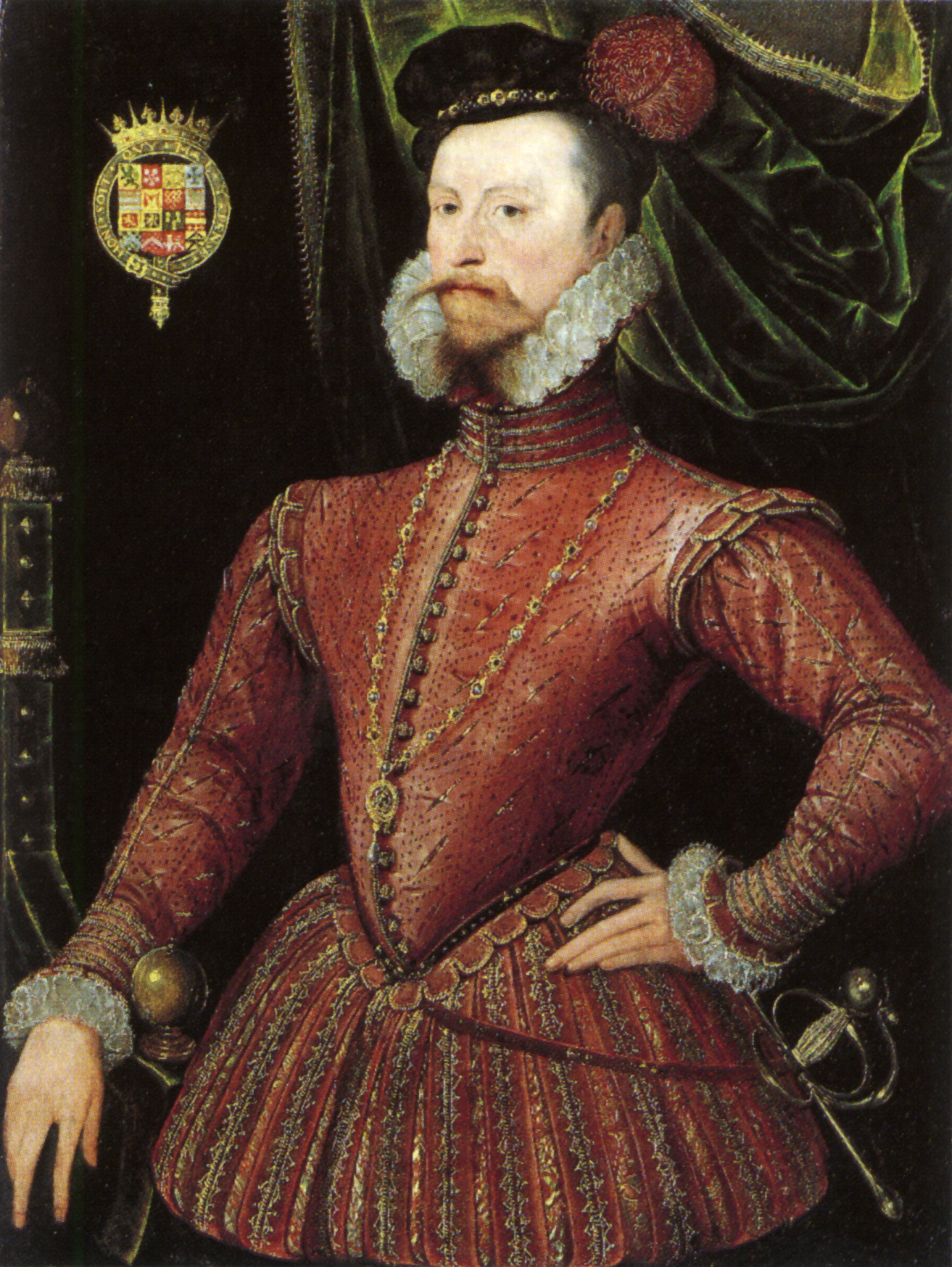
But the Earl of Leicester finally said ‘No’ to the fifty-five year old Elizabeth. He was the only man in England brave enough to do so.

As Elizabeth’s Lieutenant-General he wrote, lovingly but firmly, to the Queen on 27  July, 1588:

Now, for your person, being the most dainty and sacred thing we have in this world to care for, much more for advice to be given in the direction of it, a man must tremble when he thinks of it, specially finding your majesty to have that princely courage to transport yourself to our utmost confines of your realm to meet your enemies and to defend your subjects.

I cannot, most dear queen, consent to that, for upon your well doing consists all and some, for your whole kingdom; and, therefore, preserve that above all.

Yet will I not that (in some sort) so princely and so rare a magnanimity should not appear to your people and the world as it is…..In the meantime, your majesty, to comfort this army and people, of both these counties, may, if it please you, spend two or three days to see both the camp and forts…

To rest you at the camp, I trust you will be pleased with your poor lieutenant’s cabin; and within a mile there is a gentleman’s house, where your majesty also may lie. Thus shall you comfort, not only these thousands, but many more that shall hear of it; and so far, but no farther, can I consent to adventure your person…

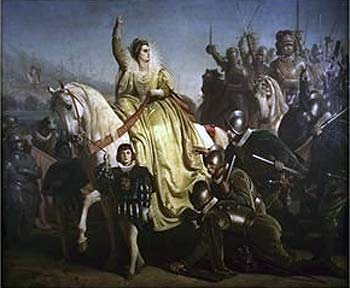
On 8 August Elizabeth visited Tilbury…

She was  ‘mounted’ Akin says….

…on a noble charger, with a general’s truncheon in her hand, a corselet of polished steel laced over her magnificent apparel, and a page in attendance bearing her white-plumed helmet. She rode bare-headed from rank to rank with a courageous deportment and smiling countenance..’

William Camden, the contemporary historian, describes how…

the Queen with a masculine spirit came and took a view of her army and camp at Tilbury, and riding about through the ranks of armed men drawn up on both sides her, with a Leader’s truncheon in her hand, sometimes with a martial pace, another while gently like a woman, incredible it is how much she encouraged the hearts of her captains and soldiers by her presence and speech to them…

Dr. Lionel Sharp, attached to Leicester’s forces, also gave an eye-witness account of how…

 The Queen… rode through all the squadrons of her army as armed Pallas attended by noble footmen, Leicester, Essex and Norris, then Lord Marshall, and divers other great lords. Where she made an excellent oration to her army, which the next day after I was commanded to redeliver all the army together, to keep a public fast…

Here is Elizabeth’s famous speech, as fine as anything penned by Shakespeare himself….

My loving people, we have been persuaded by some that are careful of our safety, to take heed how we commit ourselves to armed multitudes, for fear of treachery, but assure you, I do not desire to live to distrust my faithful and loving people.

Let tyrants fear: I have always so behaved myself that, under God, I have placed my chiefest strength and safeguard in the loyal hearts and good-will of my subjects. And therefore I am come amongst you at this time, not as for my recreation or sport, but being resolved in the midst and heat of battle, to live or die amongst you all; to lay down for my God, and for my kingdom, and for my people, my honour and my blood, even in the dust.

I know I have the body of a weak and feeble woman, but I have the heart of a king and of a king of England too, and think foul scorn that Paramor Spain, or any prince ofEurope, should dare to invade the borders of my realms. To which, rather than any dishonour should grow by me, I myself will take up arms, I myself will be your general, judge and rewarder of every one of your virtues in the field.

And here is a verse version of the same speech which James Aske, another eye-witness, reconstructs in his poem Elizabetha Triumphans published in Armada year…

We will them know that now by proof we see

Their loyal hearts to us their lawful Queen.

For sure we are that none beneath the heavens

Have readier subjects to defend their right:

Which happiness we count to us as chief.

And though of love their duties crave no less

Yet say to them that we in like regard

And estimate of this their dearest zeal

(In time of need shall ever call them forth

To dare in field their fierce and cruel foes)

Will be ourself their noted General

Ne dear at all to us shall be our life,

Ne palaces or Castles huge of stone

Shall hold as then our presence from their view:

But in the midst and very heart of them

Bellona-like we mean as then to march;

On common lot of gain or loss to both

They well shall see we recke shall then betide.

And as for honour with most large rewards,

Let them not care they common there shall be:

The meanest man who shall deserve a might,

A mountain shall for his desart receive.

And this our speech and this our solemn vow

In fervent love to those our subjects dear,

Say, seargeant-major, tell them from our self,

On kingly faith we will perform it there…

 But what, Brothers and Sisters might well ask, has all this to do with ‘the willow cabin’?

EVERYTHING!

Aske,  in the same poem quoted above, describes the fields round Tilbury which, being on the Thames estuary, would have been filled with willow trees…

Now might you see the field late pasture green

Wherein the beasts did take their food and rest,

Become a place for brave and worthy men.

Here noble men, who stately houses have,

Do leave them void, to live within their tents.

Here worthy Esquires who lay on beds of down

Do cabin now upon a couch of straw:

Instead of houses strong, with timber built

They cabins make of poles, and thin green boughs….

So when ‘Caesario’ talks of constructing a willow cabin to express his ‘loyal’ love for Olivia, it would evoke the time when the gentry of England constructed their own willow cabins at Tilbury to express their own ‘loyal’ love for their great Queen…


        Shakespeare is reminding Elizabeth – and her audience – of a time when love filled the land of England.

It was only days to go before the rebellion of the Earl of Essex…

(See, if you haven’t already, Twelfth Night Decoded Part Five:Orsino as the Earl of Essex. )

Read Full Post »